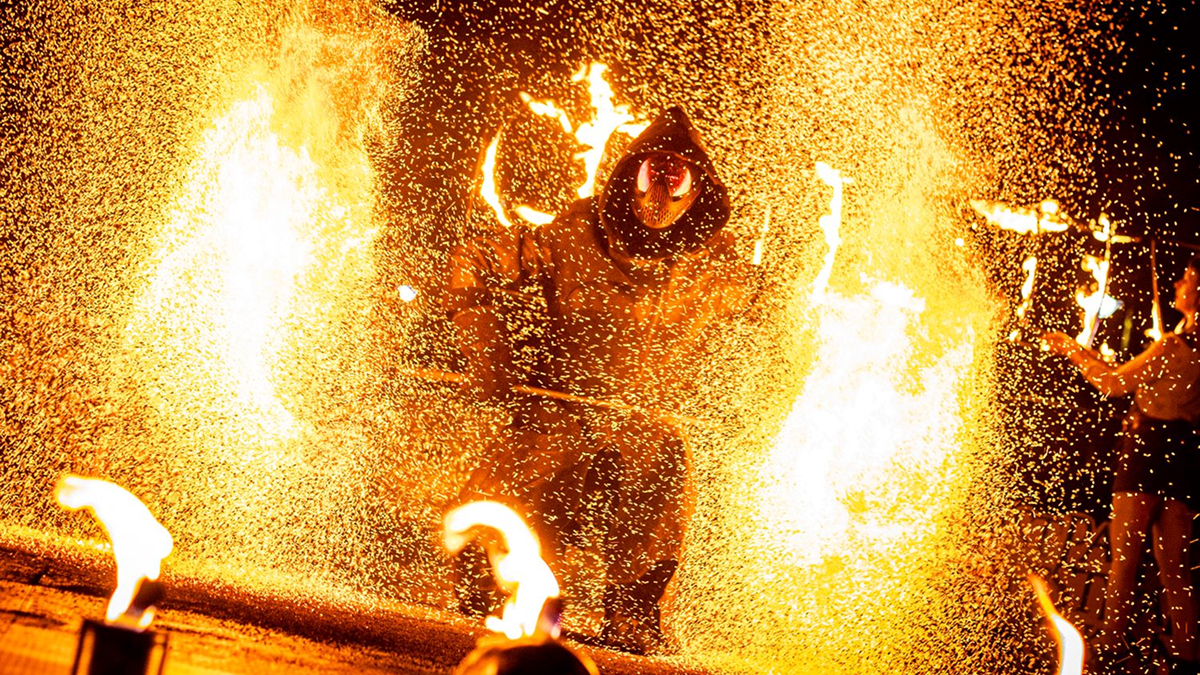
Event pyrotechnics are often discussed in the context of large international events and rightfully so. That said, more event planners and promoters at the mid-tier level and below are considering the use of pyrotechnics to add to their show.
Even for a mid-tier club show or local festival, a well-timed pyro burst during the headliner’s finale can turn heads, pack social feeds with user-generated content, and justify that premium ticket price.
Here’s the risk: Get it wrong and you are looking at emergency shutdowns, injury claims, and insurance nightmares that wipe out your event’s profits. Whether you are a promoter booking a 500-cap venue, a venue manager greenlighting effects for weekly residencies, or an artist pushing for that signature flame wall, event pyrotechnics demand respect for their power.
Mastering event pyrotechnic safety, permits, and planning is non-negotiable for delivering wow without the worry.
In this guide, we unpack event pyrotechnics, covering pyrotechnics fundamentals for events, core event safety protocols with data-backed insights, the permit maze across jurisdictions, and practical planning frameworks to integrate effects without derailing your budget or timeline.
What Are Event Pyrotechnics? Effects for Every Scale
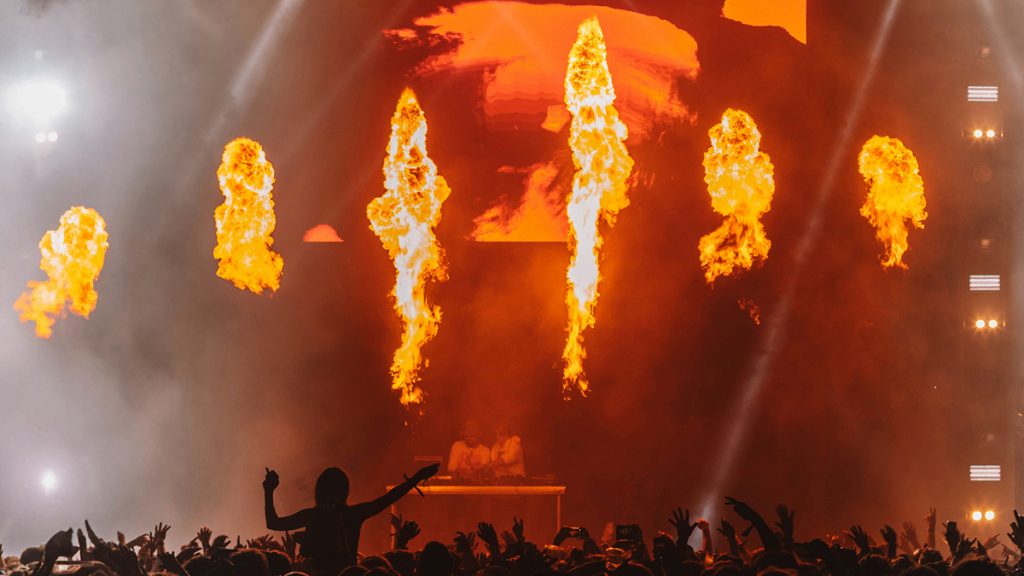
Event pyrotechnics involve professional-grade devices that create controlled bursts of flame, sparks, smoke, and light through pyrogenic chemicals, scaled perfectly for proximity to audiences and performers in venues from 200-cap clubs to 5,000-seat theaters.
Common mid-tier event staples include:
- Gerbs – fountain-style spark effects that shoot up to 20 feet, often placed along stage edges
- Flash pots – quick bursts of light and sparks, typically synchronized with musical drops or dramatic cues
- Mine bursts – star clusters that launch 30–50 feet into the air for short, dramatic accents
- Flame projectors – gas-powered units (technically non-pyrotechnic) that create controlled walls or bursts of fire during key moments
Unlike consumer fireworks, professional event pyro relies on preloaded cartridges and electronically triggered modules that can fire with millisecond precision. That level of timing control is essential for smaller stages, where the distance between performers and the audience may be only 10–15 feet.
For mid-tier productions, pyrotechnics are less about massive arena-style finales and more about carefully placed visual accents that elevate the overall experience. A $2,000–$5,000 pyro package can dramatically upgrade a local metal show, festival closer, or special event.
According to a 2025 Events Industry Council (EIC) report, events incorporating pyrotechnics see attendee satisfaction scores increase by 18–25%, which often translates into stronger repeat attendance and word-of-mouth promotion.
The psychological impact is significant as well. A study published in the Social Psychological and Personality Science Journal found that audiences show roughly 30% better recall for moments that include pyrotechnic effects compared to lighting alone, making them a powerful tool for promoters looking to create memorable highlights and shareable social media clips.
It’s also important to distinguish proximate audience pyrotechnics (classified under NFPA 1126) from traditional display fireworks.
Mid-sized venues typically use proximate systems, which are designed for indoor or close-range outdoor use with safety clearances of roughly 5–15 feet. That flexibility allows venue operators to offer pyrotechnics as an event upgrade, while artists increasingly include them in performance riders without creating major logistical hurdles for the venue.
Core Safety Principles for Event Pyrotechnics: NFPA Standards and Real Risks
Safety in event pyrotechnics begins with NFPA 1126: Use of Pyrotechnics Before a Proximate Audience, the industry’s primary safety standard.
The code outlines minimum safety distances – typically about 15 feet for gerbs and up to 50 feet for airburst effects – while also requiring certified operators, detailed cue sheets, and pre-event site inspections.
For mid-sized venues, the first step is evaluating the physical layout. The distance between the stage and audience barricade often determines whether certain effects are even possible. Many 300-capacity clubs barely meet the clearance required for basic gerb effects, forcing operators to reduce effect size or eliminate pyro entirely.
Fire watch procedures are another critical component. Standard protocols call for at least two trained spotters monitoring the stage and surrounding areas for 30 minutes after the show ends. Fire extinguishers – typically ABC-rated – should be placed roughly every 50 feet, and exit paths must remain completely unobstructed.
According to 2024 U.S. Fire Administration data, about 12% of pyrotechnic-related incidents were linked to failures in basic safety compliance.
The statistics highlight the real risks involved. While major disasters such as the 2003 Station Nightclub fire dominate public memory, smaller incidents account for the majority of annual insurance claims.
The Insurance Information Institute reported in 2025 that roughly 65% of pyro-related claims occur at small and mid-tier venues, often due to improper storage, unstable equipment, or electronic firing failures. Gerbs tipping over account for a large share of these incidents, which is why professionals secure them with weighted bases, typically sandbags at least three times the device’s weight.
Electrical safety is equally important. Most modern systems use low-voltage firing controls, often DMX-based systems operating at 24 volts or less, along with backup manual ignition options. Equipment should be tested daily without live charges to ensure proper signal flow before loading effects. Venue managers should also conduct a final walkthrough before load-in to confirm that no combustible stage materials – such as drapes or decorative props – are within roughly 20 feet of pyro positions.
Finally, safety depends on clear communication with artists and crew. Performers should be briefed on designated “pyro zones,” often marked with tape on the stage floor, and instructed to avoid improvising near active effects. A 2025 Pyrotechnics Guild International survey of 400 operators found that structured performer briefings reduced unauthorized interaction with pyro equipment by 92%. In many cases, that simple step prevents the kind of accidental contact that leads to burns, damaged gear, or halted shows.
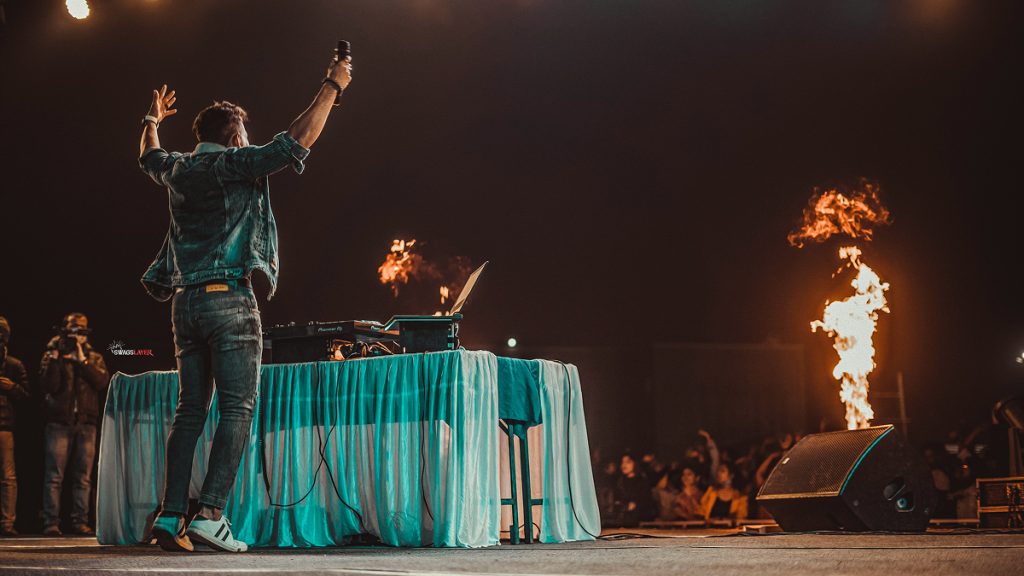
Venue-Specific Safety for Pyrotechnics: Indoor Clubs vs. Outdoor Mid-Sized Stages
Indoor Venue Pyrotechnics Require an Abundance of Caution
Indoor club pyrotechnics require extra caution because of lower ceilings and limited airflow.
HVAC systems can recirculate smoke and particles, so operators often choose low-smoke effects such as lancework instead of larger airbursts, keeping plume height under roughly 10 feet.
Fire suppression systems are another consideration. NFPA guidelines rarely allow sprinklers to be disabled without fire department approval, which is uncommon for mid-sized venues. Instead, venues often rely on pre-action sprinkler systems that activate based on heat rather than smoke.
Incidents highlight the importance of restraint: a 2024 Chicago club fire caused by an overloaded flash pot resulted in about $150,000 in damages. As a rule of thumb, operators limit flash pots to about 500 grams per cue and allow a minimum five-second cooldown between firings.
Outdoor Venue Pyrotechnics Carry Weather Risks
Outdoor mid-sized festivals (typically 1,000-3,000 capacity) provide more space but introduce weather risks.
Wind is the biggest factor. Industry guidelines generally recommend suspending pyro effects when gusts exceed 15 mph. In breezy conditions, ground-mounted gerbs tend to be safer than truss-mounted effects, as they can be anchored securely to weighted or plywood bases.
Weather preparation also includes protecting electronic firing modules from moisture, since damp electric matches can fail frequently in wet conditions. Promoters should also build a 30-minute buffer before showtime for a full site sweep to remove debris that could ignite from sparks or falling embers.
For Indoor & Outdoor Events, Use Post-Event Procedures
Both environments require careful post-event procedures.
After the show, operators should inspect the stage and surrounding area for dross, which are small, hot pieces of metal or debris left behind by pyrotechnic effects. Stages should be swept thoroughly, and indoor spaces ventilated for at least an hour to clear lingering smoke or residue.
From an insurance perspective, venues that maintain documented safety protocols and conduct annual pyrotechnic audits often see lower premiums – sometimes by 15–20% – because underwriters view those procedures as a sign of strong risk management.
Navigating Event Pyrotechnics Permits: Federal and Local Requirements
Permitting is one of the most important steps in safely staging event pyrotechnics.
In the United States, operators typically need an ATF Federal Explosives License (FEL) to purchase, transport, or store professional pyro materials. For proximate audience effects, this usually falls under a Type 54 license, which must be renewed annually and involves background checks and licensing fees.
Many mid-tier venues or promoters work with subcontracted pyro professionals who already hold these credentials, but it remains the promoter’s responsibility to verify that all licensing is valid.
At the state level, many jurisdictions require individual operator certification as well. Examples include California’s C-47 Pyrotechnic Operator license or similar credentials in states like Texas and Nevada. These certifications typically require passing an exam and must be renewed every one to three years depending on the jurisdiction.
Local approval is often the most time-sensitive step. Fire marshal permits are usually issued on an event-by-event basis and often must be submitted 30–60 days before the show. Applications typically include detailed site plans, a list of planned effects (for example, quantities of gerbs or flash charges), safety distances, and material safety data sheets (MSDS). Permit costs vary widely but often fall between $100 and $500 depending on the municipality and event size.
Regulations can vary significantly between regions. In some areas of Canada, including Ontario, indoor proximate pyrotechnics may require special fire authority approval, which can be difficult to obtain in smaller venues.
In the United States, certain states and counties impose additional requirements such as minimum liability insurance coverage or stricter separation distances for larger crowds. Because of these variations, touring productions should always confirm requirements with the local Authority Having Jurisdiction (AHJ) well before the event.
Incomplete applications are a common reason for delays or denials. According to industry venue management surveys, a notable share of permit requests are rejected due to missing documentation or unclear safety plans. Working with experienced pyrotechnic operators – and including detailed diagrams, safety procedures, and equipment specifications – greatly improves approval odds.
Promoters and artists can also reduce risk by including permit contingencies in performance agreements. If pyro approval is delayed or denied, contracts may allow for modified staging or alternative effects.
Some venues hosting recurring events streamline the process further by establishing annual approval frameworks with local fire authorities, reducing paperwork for each individual show while maintaining full safety compliance.
Event Pyrotechnics Initial Planning Framework: Timeline and Site Assessment
Effective pyrotechnic planning should begin at least 90 days before the event, especially for mid-tier productions where permitting, logistics, and technical integration all require lead time.
The first stage is a creative and technical planning session with the artist, production manager, or technical director to define the vision for the show. This includes mapping out where effects will appear in the performance, such as a series of gerbs firing during a chorus or a flash effect synced to a musical drop.
For event budgeting purposes, pyrotechnics typically account for about 5–10% of a show’s production budget, often falling in the $3,000–$8,000 range for mid-sized events.
Around the one-month mark, a detailed site survey should take place. This involves measuring stage-to-audience distances, identifying safe effect placement zones, confirming available power sources (such as dedicated 20-amp circuits), and reviewing load-in logistics for equipment. Some venues have restrictions on elevator capacity or backstage access, which can affect how pyrotechnic gear is transported and staged.
A well-structured cue sheet becomes the operational blueprint for the entire system. Most teams build these in spreadsheet form, listing timestamps, effect types, safety clearances, and backup procedures in case of technical issues.
Modern pyrotechnic systems can synchronize with lighting and show-control networks using protocols such as DMX or Art-Net, allowing precise timing with music and lighting cues. Full off-site testing is critical, since many technical issues stem from control-system integration problems that were not rehearsed beforehand.
Risk assessment should also be built into the planning process. Using guidance from safety standards like NFPA 1126, operators evaluate the likelihood and severity of each effect and adjust plans accordingly. Higher-risk effects may require additional spacing, protective barriers, or extra operator oversight during the show.
Finally, coordination among all stakeholders ensures smooth execution. This often includes a fire marshal walkthrough several weeks before the event, artist approval of stage safety zones, and venue operations confirming emergency access routes and crowd flow. When this type of structured planning is followed, pyrotechnics can be integrated safely and effectively—turning a mid-sized production into a memorable visual experience for audiences.
Pyrotechnics Vendor Selection: Vetting Pyro Pros for Mid-Tier Reliability
Choosing the right pyrotechnics vendor can be the difference between a show-stopping moment and a show-stopping disaster, especially for mid-tier events where budgets are tighter but the safety risks remain just as high.
Start with credentials. Vendors should hold an ATF Type 54 explosives license for proximate pyrotechnics and any required state certifications (such as Display Operator credentials for 1.3G effects).
Insurance coverage is equally critical; reputable companies typically carry $5 million or more in general liability coverage and maintain memberships in organizations such as the Pyrotechnics Guild International (PGI) or the American Pyrotechnics Association (APA), signals of professionalism that venues, insurers, and regulators recognize.
For a 1,000-capacity festival or club-scale production, prioritize vendors with proven mid-tier experience rather than those focused solely on arena-scale productions. Companies familiar with touring club shows, theater runs, or regional festivals are often better equipped to handle tight stages, quick load-ins, and limited rigging options.
Ask for documentation of at least three recent event reports demonstrating safe operations across 50 or more shows without incidents.
Reference checks are essential and often more valuable than demo reels. Contact previous clients and ask specific questions about response times during technical issues (ideally under two hours for emergencies), the condition and maintenance of equipment, and the vendor’s ability to adapt during compressed load-in windows.
Equipment condition matters as well. Devices and pyrotechnic compositions must comply with ATF storage and handling regulations under 27 CFR Part 55, which govern proper transport, storage, and inventory management. According to a 2025 International Association of Venue Managers (IAVM) survey, promoters who thoroughly vet vendors reduce insurance claim rates by about 78% compared with those hiring unverified operators. Experienced crews also arrive with pre-rigged firing racks and organized effect modules, often saving four to six hours of technical setup time during production load-in.
Contracts should include several non-negotiable protections. Require per-event insurance certificates naming the promoter and venue as additional insured, along with clear indemnity clauses covering potential artist or venue claims.
Some promoters also request a $1,000 performance bond to guarantee vendor delivery and compliance. For mid-tier productions, many vendors offer flat day rates in the $1,500–$3,000 range, typically including equipment, operator labor, and travel within a 200-mile radius. Contracts should also include change-order provisions so last-minute cue adjustments or additional effects can be added without disrupting the production schedule.
Early technical evaluation is just as important as paperwork. A pre-bid site visit allows vendors to confirm whether their equipment suits the venue. For example, gerb effects must be matched to stage dimensions. Spark fountains designed to reach 15–20 feet may be unsuitable for a venue with a 12-foot stage lip or low truss clearance. Outdoor events may also require wind screens or modified effect placements if weather conditions become a factor.
Professional vendors maintain detailed inventory documentation, including MSDS (Material Safety Data Sheets) and traceable product lot numbers for every pyrotechnic device. This documentation simplifies fire marshal approvals and speeds up the permitting process.
Vendors associated with recognized industry groups and safety councils also tend to maintain more rigorous inventory and inspection protocols, making them easier partners for promoters navigating complex event regulations.
For mid-tier promoters, the takeaway is simple: thorough vetting upfront saves time, reduces risk, and protects both the show and the audience. The right vendor brings not just effects, but compliance expertise, reliable equipment, and the operational discipline needed to deliver safe, repeatable pyro performances.
Event Pyrotechnics Budgeting Breakdown: Cost Reality for Mid-Tier Pyro Packages
Mid-tier event pyrotechnics typically consume 4–8% of a show’s total production budget.
A basic $2,500 package generally covers 10–15 cues, such as 8 gerbs, 4 flash effects, and 2 mine bursts. Vendor labor makes up the largest share – about 50–60% of the budget ($1,200–$1,800) – while the pyrotechnic devices themselves account for around 25% ($600–$1,000) at $50–$150 per unit.
Transport and permitting add another 10–15% ($300–$500), with DMX or lighting-console integration typically costing 5–10% more.
Safety requirements under NFPA 1126 can increase costs by 15–20%, including fire watch staffing at about $50/hour for four personnel, post-show residue cleanup ($200–$400), and a 10% contingency holdback for weather or schedule disruptions.
Despite the cost, pyro can deliver strong ROI.
A $4,000 package has been shown to drive 15–25% ticket sales increases for mid-tier metal tours, according to 2025 Pollstar data, along with a 10% bump in food, beverage, and merch sales due to higher crowd energy.
Some venues offset expenses through production surcharges of around 5% per ticket, recovering 40–60% of pyro costs while promoters retain the marketing impact.
Costs are rising, however. Pyrotechnic compositions increased about 12% in 2025 per ATF import logs so booking vendors early helps lock pricing. Promoters running multiple events can often secure 15–20% discounts, while LED pyro simulation units ($1,000 packages) offer a hybrid alternative when indoor restrictions limit traditional effects.
Event Pyrotechnics Rehearsal Protocols: From Dry Runs to Live Fire
Rehearsals turn a pyrotechnics plan into a precise show execution.
The process typically begins 48 hours before the event with a no-fire walkthrough. Technicians position firing racks, mark performer safety zones with red “X” tape and 10-foot safety radiuses, and outline potential fallout areas with chalk. This ensures artists, crew, and stage managers clearly understand where effects will fire and where performers must stay clear.
About one week prior, many vendors run offsite firing tests using the same equipment planned for the show. The full cue sheet is executed and recorded on video so timing can be fine-tuned, such as confirming a gerb burns out at 22 seconds instead of the planned 25-second cue.
Lighting and control integration must also be tested: DMX or Art-Net communication with the lighting desk should complete at least three full dry cycles, since around 30% of pyro control failures originate from network dropouts, according to Pyrotechnics Guild International (PGI) logs.
The on-site rehearsal usually happens about four hours before showtime. Crews often perform a half-scale firing test (around 50% of the planned devices) with the artist present to confirm stage sightlines, audio cues, and performer movement. Improvised movements are strictly avoided during these tests.
A designated safety captain monitors every cue and has authority to halt the run if issues appear, such as a misfiring electric match or unexpected wind shifts.
In mid-tier clubs, rehearsal also includes cue-to-cue testing with house lights on so staff can confirm barricade placement and audience distance. This step matters because about 40% of device tip-overs occur before doors open, often due to unstable staging or rushed setup.
After the rehearsal, the team conducts a brief technical debrief, documenting any hazards – such as sparks reaching nearby truss or unexpected fallout patterns – and adjusting the cue plan before the show. Artists are typically required to participate in at least one dry run as specified in their technical rider (for example, confirming they remain 15 feet away from specific gerb positions).
The payoff for thorough rehearsals is substantial. According to Events Industry Council production metrics, shows that complete structured pyro rehearsals achieve about a 95% success rate, compared with roughly 72% for productions that skip formal testing. This is a difference that matters not only for show quality, but also for insurance compliance and overall event safety.
Troubleshooting Common Event Pyrotechnic Issues
Even with careful planning, event pyrotechnic setups encounter technical hiccups.
E-match failures are the most common, responsible for roughly 25% of glitches, usually due to moisture or poor soldering. Mitigate risk by requiring vendors to perform a 48-hour pre-bake and bring 20% spares for every device.
Gerbs extinguishing early – about 15% of cases – typically indicate clogged nozzles or residue buildup. Each unit should be pre-fire tested and swapped as needed to ensure 100% reliability. Wind shear can scatter mines and spark debris unpredictably. In anticipation, deploy anemometers with a 12 mph auto-abort threshold and favor ground-stacked effects over truss-mounted devices for better control.
Overheating flash pots, which account for roughly 10% of insurance claims, require thermal breaks such as asbestos or fire-rated cloth under each unit and 7-second inter-cue gaps to allow cooling. Indoor smoke accumulation triggers alarms about 18% of the time. Try to position exhaust fans or vents to keep proximate compositions clear.
Power brownouts can disable DMX networks so it’s best to run dual 20A feeds with UPS backup, and always test under full load before doors open.
If an incident occurs, follow a strict post-event protocol: halt all pyrotechnics, evacuate if needed, and document with photos and timestamps for ATF reporting on misfires. A well-stocked spares kit and trained crew can resolve about 80% of issues onsite, preserving show integrity and maintaining your reputation in mid-tier circuits.
Emerging Tech and Event Pyrotechnics: Safer, Smarter Pyro Alternatives
New pyrotechnic technologies are transforming events, offering dramatic effects with lower risk and cost.
- LED and laser pyro hybrids can replicate gerbs and mine bursts, reaching 25-foot RGB “fountains” indoors with no residue. This is ideal for venues restricted by fire codes. Cryogenic effects like CO₂ jets combined with fog produce 40-foot bursts for around $800 per package, and are NFPA-exempt since they emit no flame.
- In the past two years, there has been advances in AI-assisted firing, using motion-capture tracking of performers to automatically abort cues if someone enters a restricted zone. Early tests at different music festivals show 99.9% precision in cue timing.
- Water-based pyro – aka mixing mist with electrolytes – creates magnesium-like sparks outdoors without fire, giving a similar visual impact safely.
Event Pyrotechnics Elevates an Event But Should Be Done With Safety in Mind
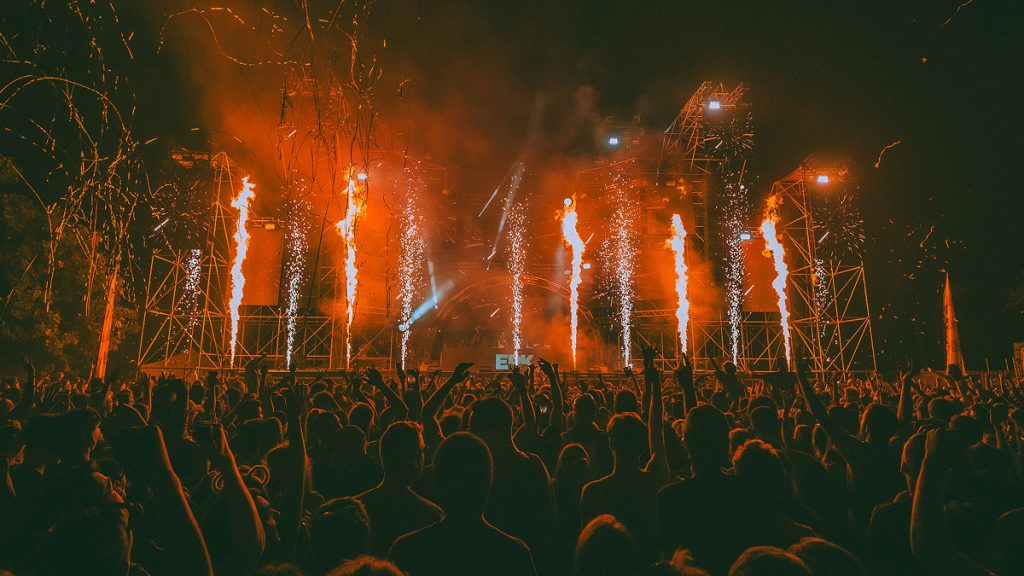
When executed properly, event pyrotechnics turns a show into an unforgettable experience.
Success depends on attention to detail: strict adherence to NFPA 1126 safety standards, timely permit acquisition, thorough vendor vetting, and disciplined rehearsals all combine to make pyro a reliable production asset rather than a liability.
Event organizers, promoters, and event ticketing professionals gain an edge by planning early, documenting every cue, and integrating emerging technologies alongside traditional effects. With the right protocols, your pyro moments are anything but risky experiments. They are highly engineered spectacles. By making safety the foundation of your strategy, you ensure that every flame, spark, or burst thrills audiences while protecting performers, venues, and your brand.