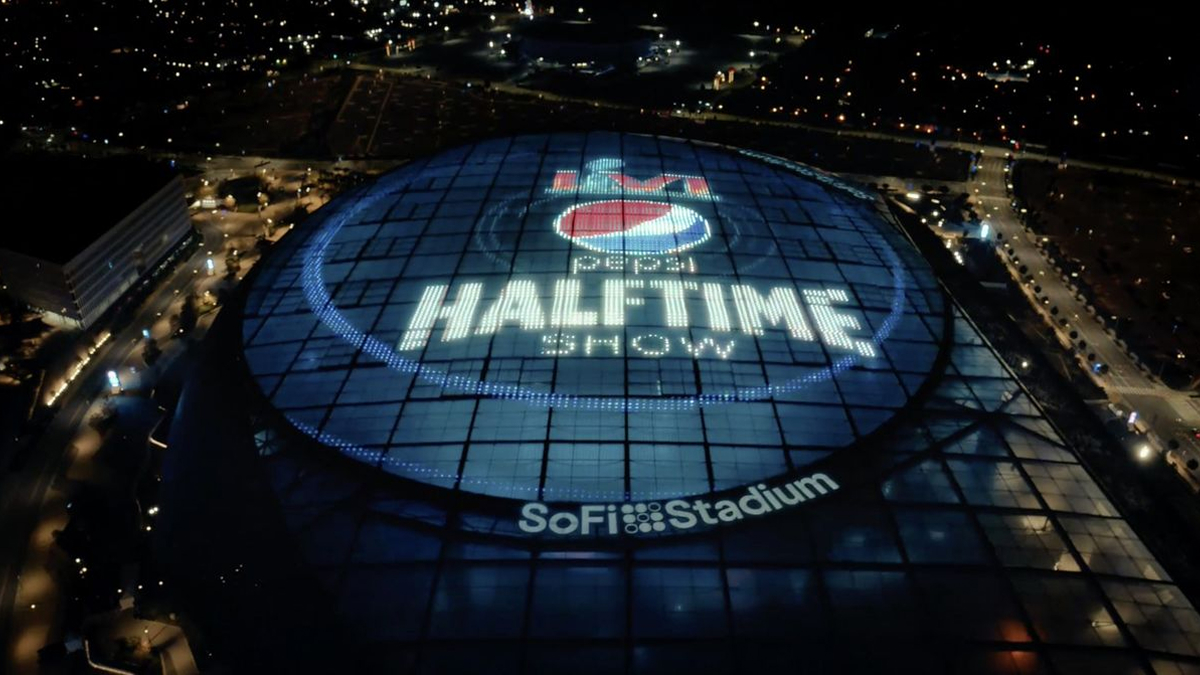
The history of the Super Bowl halftime show is extensive and, in part, a success produced by unexpected circumstances, iconic artists delivering performances, and commerce. The Super Bowl halftime show has evolved from marching-band filler into arguably the most visible live-performance slot in the United States, commanding budgets in the tens of millions and viewership that can even edge out the game itself. For event planners, venue managers, promoters, and artists, the Super Bowl halftime show has become a masterclass in how to design, sell, and safely execute a 12-13 minute cultural spectacle that has to land perfectly the first time.
Super Bowl Halftime Show Was Originally a Marching Band Showcase
In the Super Bowl’s early years, halftime entertainment was designed primarily for the in-stadium crowd, with college marching bands, drill teams, and themed variety shows filling the break between halves.
Grambling State’s band alone has appeared in a record 6 Super Bowl halftime shows, and groups like Up with People were used because they could visually fill the field and deliver family-friendly, patriotic themes.
This model reflected the broader football culture of the time over the 1960s, 1970s, and 1980s, with pageantry, bands, and local or collegiate performers at the helm rather than star-driven concert production.
During this period, halftime was a bathroom-break window, not a ratings engine, and the NFL’s entertainment strategy was far more about in-venue ambiance than national or global broadcast storytelling.
As television audiences grew and ad inventory became more valuable, the calculus slowly changed. By the late 1980s and early 1990s, competing networks experimented with counter-programming against halftime, pushing the NFL to reimagine the slot as a broadcast tentpole instead of a throwaway segment.
A pivotal moment came in 1992 when a Fox airing of In Living Color successfully siphoned viewers during halftime, making it clear that the status quo was no longer defensible from a ratings or sponsorship perspective.
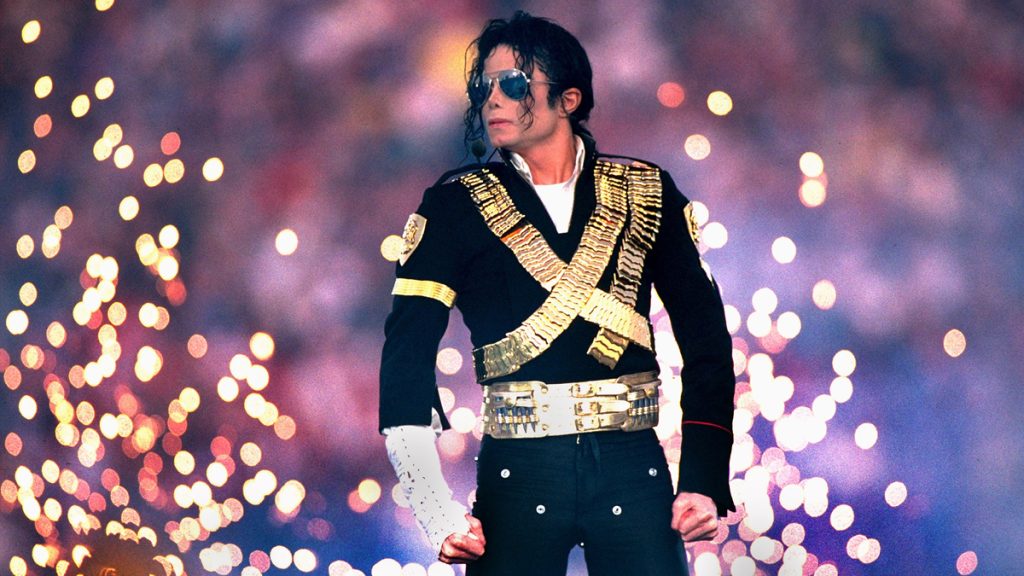
The Michael Jackson Turning Point: 1993 Sets the Super Bowl Halftime Template
The true birth of the modern halftime “super-show” is widely tied to Michael Jackson’s 1993 performance at Super Bowl XXVII, which reframed halftime as appointment television.
Michael Jackson’s show was produced with broadcast as the primary customer: cinematic camera blocking, a tight medley, massive audience card stunts, and a clear emotional arc anchored by “Heal the World.”
From an event-planning perspective, that show locked in several now-standard success factors:
- A singular global headliner with a curated supporting cast and narrative arc, rather than a loose theme show.
- An integrated broadcast, sponsorship, and live-production plan built months in advance around a 12–13 minute window.
- Deliberate alignment between artist brand, NFL brand, and sponsor goals, with Frito-Lay participating via donations and commercial time for Jackson’s foundation rather than a simple logo slap.
The results were undeniable: the halftime segment not only stabilized viewership against competitors but helped position the Super Bowl as a cultural event where music, politics, and brand storytelling intersect. For planners and promoters, Jackson’s show is the template: if your marquee slot can be engineered as a must-watch story, it becomes a multiplier for ticketed events, sponsorship value, and long-term brand equity.
How The NFL Scaled a Super Bowl Success Into A Cultural Institution
As expectations rose over the years, so did the production values, with elaborate staging, field-wide LED systems, pyrotechnics, drones, and cinematic broadcast language becoming baseline requirements rather than luxuries.
Viewership numbers reveal why the show is treated as a standalone “event within the event.”
Bad Bunny’s 2026 halftime performance drew about 135 million viewers, while multiple shows in the modern era – such as those by Michael Jackson, Usher, and Kendrick Lamar – have broken the 120–130 million viewer threshold.
In some years, the halftime show has even out-rated the game itself, underscoring its independent value as a media product and its pull for non-sports audiences.
For artists and their teams, the appearance fee is famously zero: the NFL does not pay a traditional performance fee but covers massive production expenses for the artist’s entourage and technical teams.
In exchange, performers typically see spikes in music sales and streaming, plus global exposure that can anchor arena tours and festival bookings for years afterward, making the show an extraordinarily powerful promotional lever from a live-events perspective.
Behind The Scenes of the Super Bowl Halftime Show: Logistics Of The Impossible
Behind every 13-minute halftime show sits months of meticulous event planning involving the NFL, a dedicated halftime production company, stadium operations, unions, local authorities, broadcast networks, and specialist vendors.
In recent years, Roc Nation and Jesse Collins Entertainment have co-produced the show, working closely with the league’s head of music and the broadcast director to build a plan that satisfies creative, technical, safety, and commercial requirements.
The core logistical challenge is time.
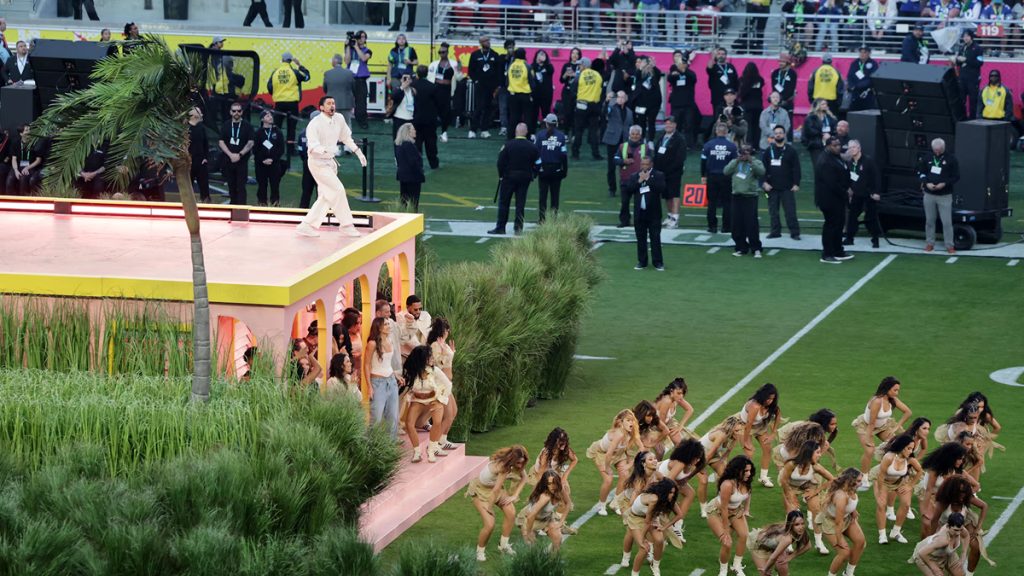
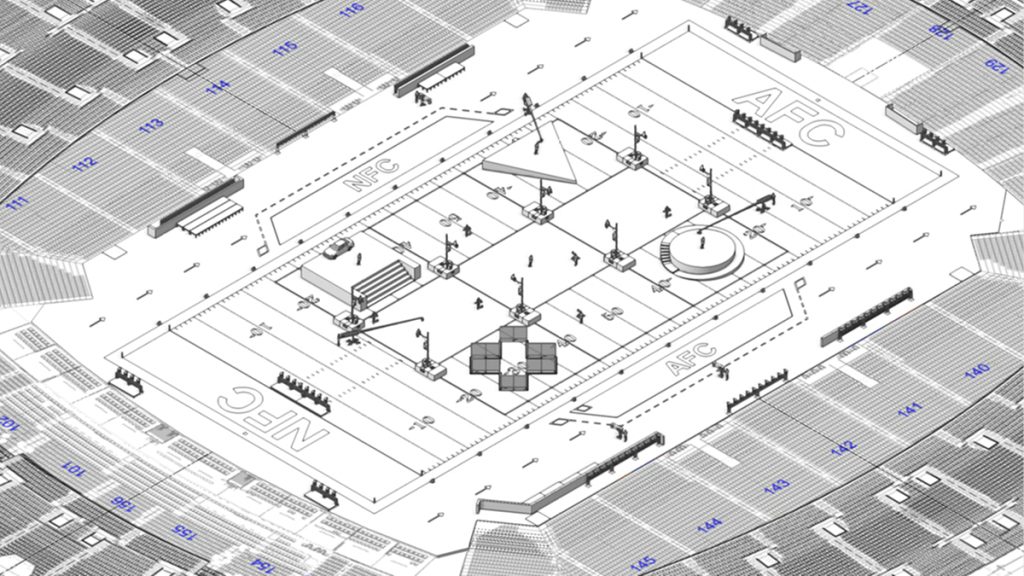
The stage and show infrastructure must be installed in roughly 6–7 minutes, then removed in similar time, without damaging the playing surface or compromising broadcast camera lanes and emergency access routes.
Recent shows have operated with hard caps on the number of mobile platforms allowed on the field, such as a 25-cart limit, which forces designers to build modular, ultra-efficient staging that can be wheeled in, locked together, and powered in minutes.
Each cart in a modern halftime show is color-coded, weighted, and pre-wired, with crews trained to place components to within inches of their marks. Power, audio, and fiber connections use quick-release systems; LED floors and risers drop into place; broadcast cameras are reprogrammed for new paths; and lighting towers or flown elements synchronize with the stadium’s existing rigging plan.
For event planners used to full-day load-ins, this environment represents the extreme: a full concert-grade show that must behave like a practiced pit stop.
Super Bowl Halftime Planning Timeline: From Concept To the Day Of
For an event planner or promoter, the Super Bowl Halftime Show’s planning cadence offers a model of structured creativity.
Artist selection is typically finalized months in advance and now often involves input from the NFL’s entertainment director and its partner Roc Nation, with the host city more informed than decisive. Once a headliner is confirmed, creative direction and production design move quickly into parallel development.
Show direction, set lists, scenic design, camera blocking, and choreography are usually locked in well before game week, with partial rehearsals taking place on full-scale replicas of the stage in warehouse environments. This allows teams to refine camera moves, pyro cues, lighting states, and special effects away from the constraints of the actual stadium calendar.
For venue managers and promoters, this is a critical learning point: serious shows require off-site prototyping to minimize security risk on the primary date.
During Super Bowl week, rehearsals in the host stadium are highly regimented. The crew practices rolling carts on and off the field, verifying timing down to the second, and running contingency drills for equipment failures or field obstructions.
Weather scenarios, power redundancy plans, alternate routing, and emergency teardown procedures are all scripted and rehearsed, reflecting a risk management culture that high-stakes venues increasingly adopt for major festivals and stadium shows.
Managing Risk, Safety, And NFL Family-Friendly Brand Protection
In the wake of the 2004 Janet Jackson–Justin Timberlake “wardrobe malfunction,” the NFL entered what has been described as an “age of reactionary halftime shows”, booking legacy rock acts like Paul McCartney, The Rolling Stones, and The Who to reset perceptions and reduce regulatory and sponsor risk.
This period is instructive for event planners: a single incident at a global broadcast scale can reshape booking strategies and content guidelines for years.
Every modern halftime show now sits under a complex compliance and approvals ecosystem, involving lawyers, standards-and-practices teams from broadcasters, stadium security, and sometimes local authorities.
Wardrobe designs, lyrics, camera angles, and choreography are mitigated against potential controversy, while still attempting to preserve the artist’s identity and storytelling. This tension mirrors what many venue managers and promoters navigate with brand-sensitive sponsors in festivals and arena tours.
The risk matrix extends into physical safety and infrastructure. With thousands of on-field participants – including performers, volunteers, technical crew – operating in a compressed timeline, planners must engineer crowd flows, fire lanes, and egress routes that can flex between football and concert configurations instantly.
For every headline-making artist moment, there is an invisible network of stage managers, floor managers, riggers, and safety officers making go/no-go calls in real time.
Budget, Sponsorship, And Super Bowl Halftime ROI: Who Makes the Money
Production budgets for contemporary halftime shows are typically estimated in the USD 13-18 million range, or close to USD 1 million per minute of performance.
These costs cover staging, lighting, audio, video, special effects, rehearsals, freight, and the extensive creative and technical staff required to deliver a zero-failure show in a live global broadcast environment.
For context, this puts the halftime show on par with a major tour opener compressed into a single quarter-hour.
Historically, brands like Pepsi and now Apple Music have taken on presenting sponsorship of the halftime show, integrating their identity into on-air promos, digital content, and in-stadium branding without over-commercializing the performance itself.
For event promoters, this is a blueprint: a strong presenting sponsor can underwrite premium production in exchange for global exposure and association with cultural currency, as long as the partnership respects the creative core of the show.
- For the NFL and broadcasters, the halftime show helps protect and grow ad inventory values by keeping audiences glued to the screen, dampening channel switching during what would otherwise be a lull.
- For artists, the payoff lies in streaming surges, catalog sales, and tour demand, which often spike immediately after the performance and can support higher ticket pricing and stronger advance sales for months.
- For venues and local markets, the halo effect includes hospitality revenue, future event bids, and an enhanced reputation as a city capable of hosting complex mega-events.
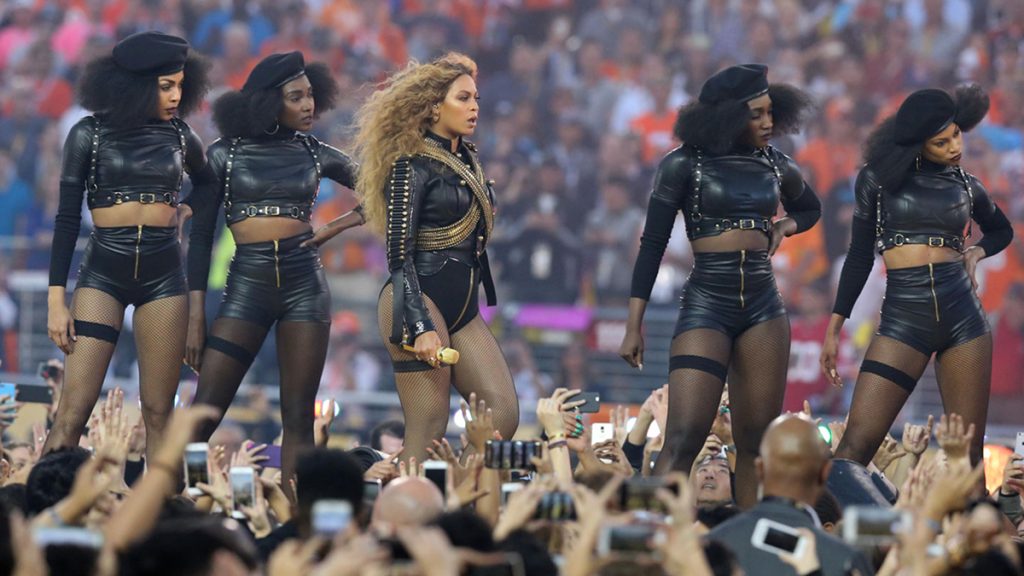
Today’s Super Bowl Halftime Show Exhibits Cultural Representation And Storytelling Strategy
From Up with People’s saccharine optimism to hip-hop’s full arrival as the core genre in the 2022 Dr. Dre–anchored show and the Latin and global-pop focus of Shakira/Jennifer Lopez and Bad Bunny, halftime has increasingly become a canvas for cultural narrative.
The NFL’s partnership with Jay-Z’s Roc Nation explicitly aims to align the show with “what’s happening in culture” and to empower artists to bring their own storytelling and identity to the stage.
For event planners and promoters, the modern halftime show demonstrates how to build cultural relevance into production planning.
Rather than simply stacking hits, successful shows use staging, musical transitions, and guest appearances to tell a story:
- Beyoncé’s performance that reunited Destiny’s Child
- U2’s post-9/11 tribute
- The West Coast hip-hop revue at SoFi Stadium
This storytelling extends to audience segmentation as well. The 2020 Shakira/Jennifer Lopez show and the 2026 Bad Bunny headliner both strategically courted Spanish-speaking and international audiences, with the 2026 show driving record social media consumption, with over 4.157 billion global views in the first 24 hours and more than half of those coming from international markets. Spanish-language broadcasts have grown in tandem, with Telemundo’s Super Bowl coverage peaking at 4.8 million viewers during halftime, reflecting how a well-planned performance can grow new audience verticals for the host and participants.
Production Breakdown: How the Super Bowl Halftime Show Runs a 13-Minute Miracle
The halftime show’s run-of-show is a precision instrument, orchestrated by a central stage manager who calls cues via headset to dozens of departments, from lighting and audio to pyro and camera teams.
In a typical modern production, the sequence begins with carts rolling onto the field at the exact moment the game clock hits zero, with performers entering from tunnels or elevated platforms as the first notes hit.
This choreography ensures seamless transitions, such as when Rihanna’s 2023 show used suspended platforms that lowered her into the action while LED floors activated beneath her feet, all synced to within milliseconds of the broadcast feed.
Crew roles are hyper-specialized, with rigger teams handling flown elements, deck crews managing cart placement, and follow-spot operators tracking performers across a 120-yard field. The tech stack leans heavily on modular LED video walls, fiber-optic data networks for low-latency camera feeds, and automated lighting consoles that pre-program every state change.
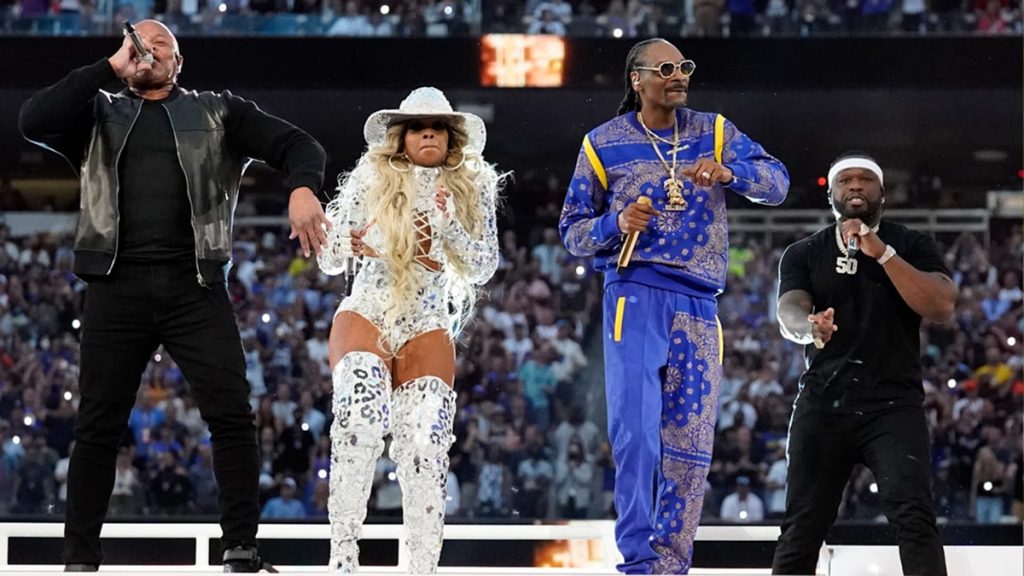
For the 2022 Dr. Dre, Snoop Dogg, Eminem, and Kendrick Lamar show at SoFi Stadium, producers integrated the venue’s permanent halo video board with field-level screens, creating a 360-degree visual environment that amplified the West Coast hip-hop narrative without obstructing sightlines or field integrity.
Safety protocols run parallel to creative execution. Every cue includes a backup trigger for aborts, and ground crews monitor turf conditions in real time to prevent slips or equipment shifts.
Event planners can adopt this by building redundant systems into their own high-pressure shows. Think festival mainstages where weather or tech failures demand instant pivots without losing audience momentum.
Case Studies: Lessons from the Most Iconic Super Bowl Halftime Shows
Michael Jackson (1993) Super Bowl XXVIII
Michael Jackson set the blueprint for artist-driven storytelling in a stadium context, with Jackson emerging from darkness into a spotlight cascade that built to the “Heal the World” finale. Producers focused on simplicity – minimal staging, audience participation via card stunts, and a single emotional peak – to prove that star power could carry a broadcast without overwhelming logistics. For promoters today, this underscores pre-selling narrative over spectacle: Jackson’s mere presence drove a 25% viewership bump, a tactic artists can replicate by teasing story arcs in pre-event marketing.
U2 (2002) Super Bowl XXXVI
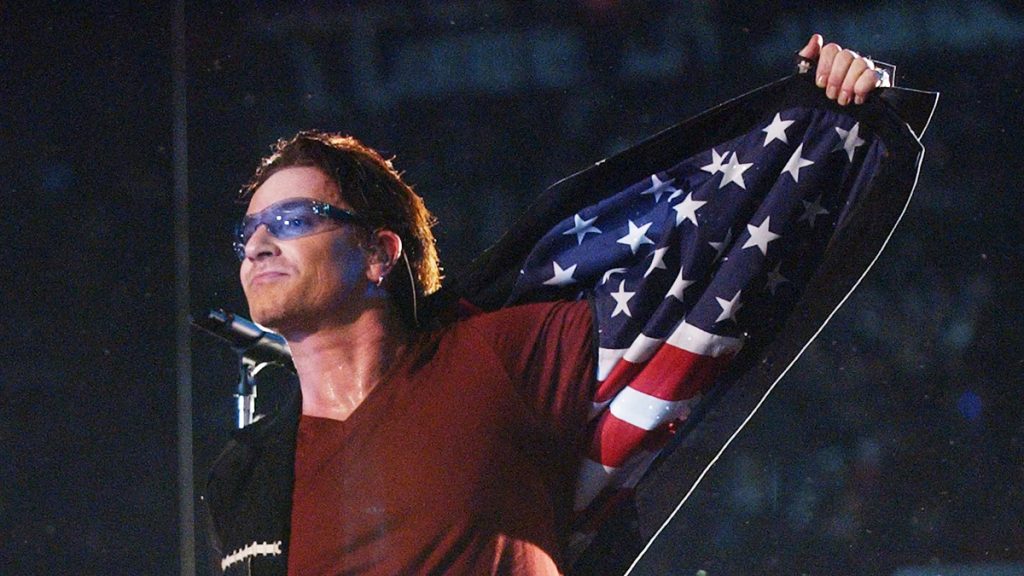
U2’s Super Bowl XXXVI halftime show served as a poignant 9/11 tribute, with Bono leading “Where the Streets Have No Name” on a heart-shaped stage while victims’ names scrolled across a massive LED band and Superdome ceiling. The design featured tight camera coordination to keep the memorial legible amid stadium energy, culminating in Bono revealing an American flag jacket liner for a unifying emotional peak. For promoters today, this highlights contextual storytelling over flash: it stabilized post-9/11 viewership at 86 million and boosted U2’s album sales by 200%, a model for tying events to cultural moments through precise visual and emotional scripting.
Prince (2007) Super Bowl XLI
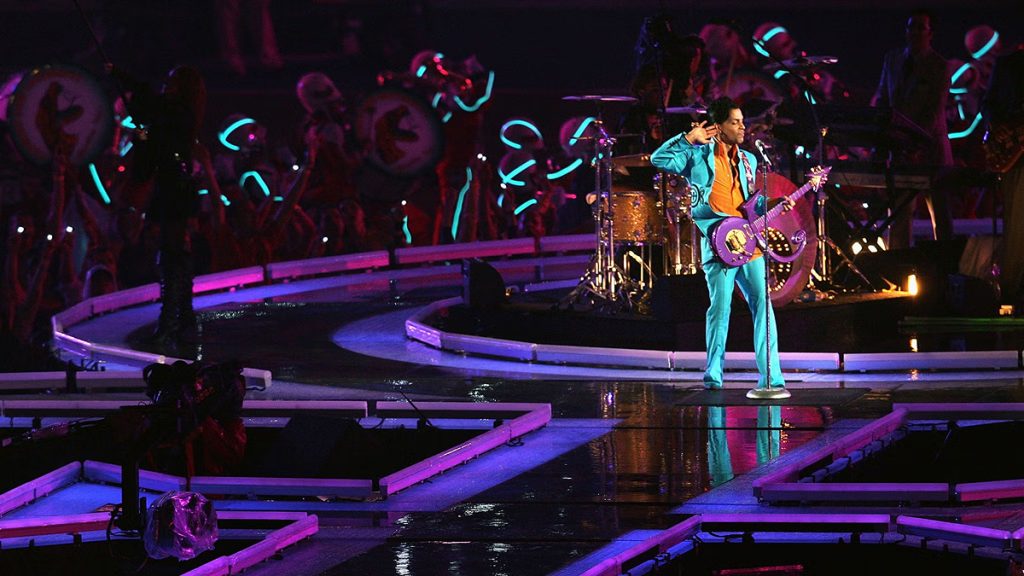
Prince’s Super Bowl XLI halftime show embraced a torrential Miami downpour, transforming “Purple Rain” into an iconic, weather-amplified climax that redefined live adaptability. Producers opted for a minimalist stage shaped like Prince’s symbol, with the rain-slicked surface and unscripted water effects enhancing the guitar solo rather than derailing it. For event planners today, this underscores weather-proofing as creative fuel: the performance drew 140.4 million viewers and remains one of the most streamed Super Bowl moments ever, proving adaptability can turn crisis into viral legend.
Shakira & Jennifer Lopez (2020) Super Bowl LIV
Shakira and Jennifer Lopez’s Super Bowl LIV halftime show celebrated Latin heritage with a dual-headliner format, using rotating poles, elevated LED platforms, and guest spots from Bad Bunny and Emme Muñiz to weave empowerment themes. Producers managed the tight window with vertical staging – Shakira’s hip-shake opener on integrated floors, Lopez’s pole routine on stacked risers – while symbolic elements like caged-child dancers and flag capes sparked global conversation. For venue managers today, this emphasizes multi-act efficiency: it peaked at 103 million viewers, drove a 335% streaming spike for Shakira, and showcased Miami’s Hard Rock Stadium tunnels enabling sub-6-minute load-ins without field disruption.
Dr. Dre (2022) Super Bowl LVI
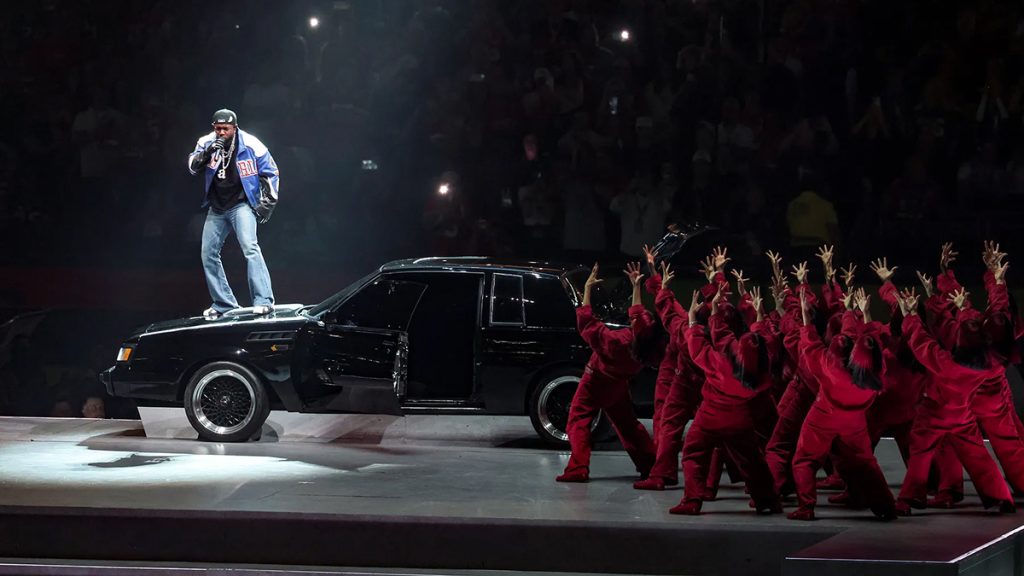
Fast-forward to Super Bowl LVI (2022) at SoFi Stadium, where Dr. Dre’s ensemble leveraged the venue’s tech-forward design for a genre-defining hip-hop takeover. The production team deployed 80+ LED carts forming a cityscape backdrop, with Snoop Dogg’s entrance on a lowrider that rolled directly from backstage tunnels. This show highlighted venue-specific adaptations: SoFi’s fixed video ring and underground service tunnels allowed faster load-ins than older stadiums, cutting setup from 7 minutes to under 6, while 50 Cent’s surprise rooftop rap added viral surprise without taxing field logistics.
Rihanna (2023) Super Bowl LVII
Rihanna’s 2023 anti-gravity performance pushed boundaries further, using drone-assisted aerial platforms and a custom AR overlay synced to her floating runway design. Challenges included FAA approvals for drones over a packed stadium and wind modeling for her suspension rig, but the result was a 133 million viewer peak and a 40% streaming surge for her catalog post-show. Venue managers note how such innovations demand pre-event infrastructure audits, ensuring power grids, HVAC clearances, and emergency overrides align with artist visions.
Actionable Lessons You Can Take from the Super Bowl for Event Professionals
Are you planning a gig the magnitude of a Super Bowl Halftime Show? Let’s say you are.
Event planners can extract halftime-level efficiency by adopting a pit-stop mindset for load-ins and transitions in multi-act festivals or arena residencies.
Start with a master timeline broken into 30-second increments, rehearsing every cart, riser, and cue in a warehouse mockup weeks ahead, just as halftime teams do. This reduces on-site errors by up to 70%, per industry logistics reports, and allows promoters to promise sponsors flawless execution that protects brand investment.
For venue managers, the key is flexibility in field-to-stage conversions. Invest in modular turf protection systems and quick-lock power distros, mirroring how Allegiant Stadium or MetLife Stadium now feature halftime-ready underbelly access for carts.
Pair this with union-trained crews who drill weekly on Super Bowl-style resets, turning your venue into a go-to for promoter bids on high-profile bookings. Boldly, pre-qualify your venue by hosting dry-run events that simulate 12-minute turnarounds.
If you’re engaged in an event similar in design to this, promoters should prioritize artist-sponsor synergy early, as Roc Nation does by aligning performer narratives with NFL inclusivity goals.
Any artists secured for such an event, meanwhile, treat marquee slots as zero-fee marketing engines: negotiate full production coverage in exchange for further promotion and possible tour tie-ins, ensuring your big moment fuels the next 6-12 months of event revenue.
Risk mitigation follows the NFL’s post-2004 playbook: embed legal reviews into creative briefs from day one, covering wardrobe, lyrics, and crowd interactions.
Develop tiered contingency plans – such as Plan A for ideal weather, B for rain, C for blackouts – and test them publicly to signal professionalism to insurers and partners. Data shows events with such protocols see 15–20% lower premiums, freeing budget for creative risks that pay off in buzz.
Measuring Success on a Super Bowl Halftime Show: Socials, Sales, and More
Success metrics for the Super Bowl halftime show extend far beyond initial viewership, even though those eye-popping numbers – often 120–140 million globally – dominate headlines the morning after.
The true impact lives in the downstream effects that event professionals obsess over: sustained audience engagement, revenue multipliers, and long-term brand elevation. For promoters and artists, treating the halftime slot as a 12-minute launchpad means tracking how it ignites ticket sales, streaming surges, merchandise velocity, and even venue bidding power for years to come.
Social Media Engagement
Social engagement offers the most immediate pulse-check on cultural penetration.
Kendrick Lamar’s 2022 Super Bowl LVI performance, for instance, racked up 1.2 billion TikTok views within 24 hours, with user-generated content loops featuring his “Lose Yourself” mic-drop fueling viral challenges that extended the show’s life for weeks.
Similarly, Bad Bunny’s 2026 Latin-infused set shattered records by driving Telemundo’s Spanish-language audience to 4.8 million – a 35% jump year-over-year – while generating over 4.1 billion global social impressions, half from international markets outside North America.
These metrics translate directly to ROI: Kendrick Lamar saw a 25% spike in tour presales within 48 hours, while Bad Bunny’s catalog streams leaped 500% overnight, anchoring his subsequent arena run with premium dynamic pricing that held firm through sellouts.
Streaming and Sales Data
Streaming and sales data reveal the economic engine at work as well.
Rihanna’s 2023 floating-platform spectacle, which peaked at 133 million viewers, triggered a 40% surge in her full discography streams on Spotify and Apple Music, per official charts, while physical vinyl reissues sold out in hours due to pre-planned merch tie-ins teased during the broadcast.
Usher’s 2024 show followed suit, with a 335% immediate streaming bump across his hits and a documented 20% uplift in Vegas residency ticket renewals, proving how halftime exposure compresses years of marketing into minutes.
Secondary Spend Metrics
Secondary spend metrics paint an even broader picture of ecosystem value. For host cities and venues, a standout halftime performance boosts hospitality and secondary markets.
Beyoncé’s 2013 show correlated with a 15% rise in Miami hotel bookings for her subsequent tour dates, while the 2020 Shakira/J.Lo pairing lifted Latin festival bids in South Florida by 28% the following season.
Sponsors like Apple Music, the current presenting partner, quantify success through branded hashtag volume. Rihanna’s 2023 edition alone generated 2.5 million #AppleMusicHalftime posts and attribution modeling that ties ad recall to a 12% lift in app downloads during game week.
Brand Building
For venue managers, success loops back to operational prestige.
A flawless halftime execution – as in zero delays, no safety incidents – positions a stadium as a Tier 1 asset for future NFL events, music residencies, or international spectacles.
SoFi Stadium’s hosting of the 2022 hip-hop extravaganza, for example, led to a 30% increase in non-Super Bowl booking inquiries within six months, with promoters citing its underground cart tunnels and halo screen as “halftime-proven” differentiators.
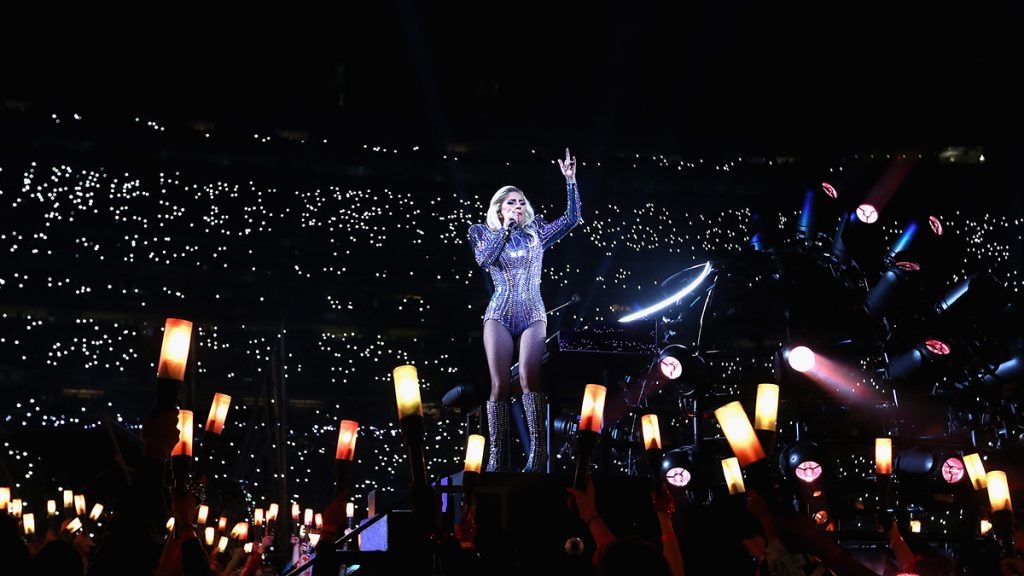
Future Super Bowl Halftime Show Expectations and Where the Event is Heading
Looking ahead, AR/VR integrations and AI-driven personalization will redefine success metrics entirely.
Prototype pilots from the 2026 Bad Bunny show tested fan-voted setlist tweaks via a companion app, where 2 million users influenced encores in real time, boosting app retention by 45% post-event. Holographic guest appearances – imagine a virtual Tupac alongside Dr. Dre, scaled stadium-wide – loomed in 2022 discussions and now edge toward reality with edge-computing advancements.
Event pros must prepare: upgrade venues with 5G backbones and beacon networks for seamless hybrid experiences, while promoters package virtual tickets that unlock metaverse replays or personalized highlight reels.
In a decade, halftime success could mean global hybrid audiences exceeding 500 million, blending live broadcasts with VR streams and AI-curated fan cams.
Super Bowl Halftime Show is Your Best Example of a 12-Minute High-Efficiency Event
The Super Bowl halftime show stands as the ultimate case study in transforming a 15-minute intermission into a global cultural juggernaut, blending ruthless logistics, bold artistry, and ironclad risk management.
Event planners, venue managers, promoters, and artists who internalize its lessons – modular staging, narrative-driven bookings, sponsor-aligned storytelling – can elevate their own productions to must-see status, driving ticket sales, sponsorships, and legacies that endure.