
Here is a common Ticketmaster experience regarding how ticket fees impact the buyer experience.
A fan clicks “buy” on your event tickets, only to face a final cart total 25-35% higher than the listed price due to processing, service, and facility fees. That sticker shock kills conversions, sparks social media backlash, and leaves promoters explaining themselves to furious artists and empty seats.
The real question is not just who pays these fees – ticket buyers or promoters – but how you structure them to maximize revenue, trust, and long-term fan loyalty without eroding your event’s perceived value.
This guide dives deep into the ticket fee debate, unpacking the event ticketing models, economics, psychology, and real-world strategies that an event promoter can use to navigate this minefield.
Understanding Ticket Fees: The Hidden Revenue Layer for Events
Ticket fees are not arbitrary annoyances. They are the operational backbone of most live events, covering credit card processing (2-4%), platform licensing, customer service, box office staffing, and venue-specific costs like security or cleaning.
In 2025, average all-in ticket fees hit $15-25 per ticket for mid-tier events, representing 20-30% of face value on $50-100 seats, per Ticketscene and Ticketmaster industry reports. Event promoters often overlook that these fees generate $5-10 billion annually across North America alone, split between platforms, venues, and sometimes back to artists via net revenue shares.
The confusion stems from opacity. Fans see “service fee” as a promoter gouge, while insiders know ticketing platforms such as Ticketscene retain its service fees as its business model and to pay its own fees.
From a promoter’s perspective, it is important to have transparent fees for the ticker buyer, positioning your brand as a fair-player amid growing “all-in pricing” mandates in places like Canada and parts of Europe.
When fees are mismanaged, they create friction. A 2024 study by Ticketing Professionals Association found 22% cart abandonment directly tied to surprise fees at checkout.

The Psychology of Ticket Fees: Why Fans React So Strongly
Ticket fees are more than a pricing issue. They are a psychological trigger in the buying journey.
Behavioral economics shows that people react far more negatively to unexpected costs than to higher upfront prices. This phenomenon, known as price partitioning, explains why a $60 ticket plus $15 in fees feels worse to a buyer than a clean $75 “all-in” price.
Fans anchor their expectations to the first number they see. When that number jumps significantly during checkout, it creates what economists call “transactional unfairness.” Even if the final price is still competitive, the feeling of being surprised or misled can break trust instantly. That emotional response fuels the social media complaints many promoters dread.
Research from the Event Marketing Institute in 2018 found that 63% of ticket buyers said hidden fees negatively affected their perception of an event brand, even if they still completed the purchase. That perception matters long term. Buyers who feel misled are less likely to return, recommend the event to friends, or purchase higher-tier tickets in the future.
Transparency counteracts this effect. Promoters who clearly communicate pricing – whether fees are buyer-paid or included – tend to see stronger audience trust and repeat attendance.
Messaging such as “all fees included,” “no surprise checkout costs,” or even simply displaying estimated fees earlier in the purchase flow can significantly reduce friction.
In other words, the structure of ticket fees is not just an accounting decision. It shapes how fans perceive fairness, value, and credibility. Promoters who understand the psychology behind pricing can turn what is often viewed as a necessary annoyance into a trust-building advantage.
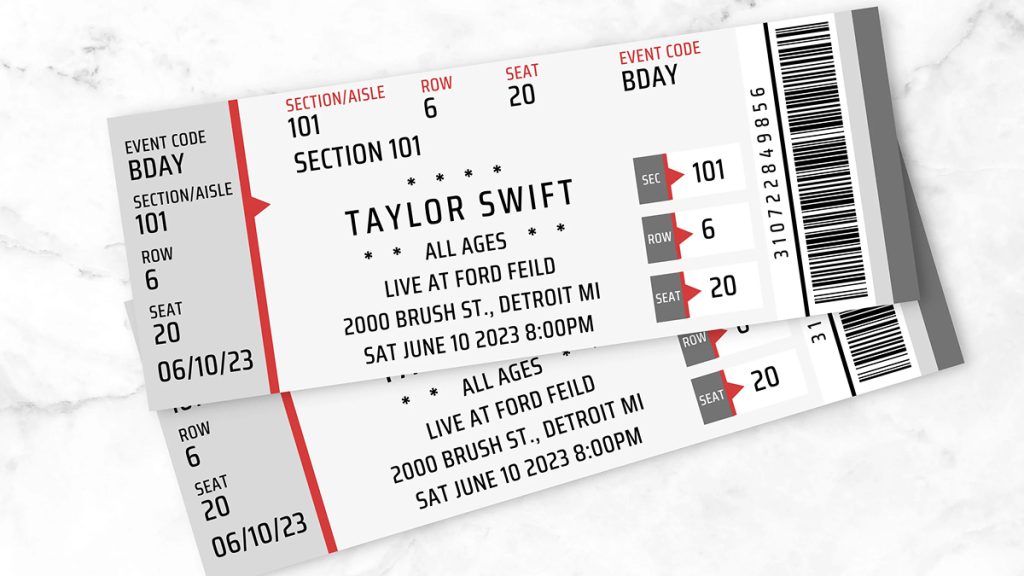
The Two Core Models: Buyer-Paid vs. Promoter-Absorbed Fees
Your Ticket Buyer Pays the Ticket Fees
In the buyer-paid model, fees appear at checkout, padded onto the ticket price fans see advertised. This keeps your listed price clean and competitive in search results while shifting costs downstream.
Platforms love it because their cut flows directly from the buyer, reducing promoter risk if sales flop. Most mass-market events (festivals, comedy clubs, entry-level concerts) default here, as it preserves promoter margins on fixed costs like artist guarantees and production.
You, The Promoter, Absorbs the Cost of the Ticket Fees
Contrast that with the promoter-absorbed (or “no-fee-to-buyer”) model, where you bake fees into the ticket price upfront, advertising “fees included.”
Fans love the transparency – aka no checkout surprises – and promoters gain pricing power to hit revenue targets precisely. High-end tours (think arena residencies or premium club shows) often absorb fees to signal luxury, with stars like Taylor Swift pushing “all-in” pricing in 2025 contracts. The trade-off? Your search snippets show higher base prices, potentially hurting impulse buys from price-sensitive segments.
Which is the Right Event Ticket Fee Model?
Neither model is universally superior. It depends on your event’s demand curve, audience demographics, and competitive set.
Data from a 2025 survey of 500 U.S. promoters shows buyer-paid fees yield 12% higher sales volume for under-$50 tickets, while absorbed fees boost ATP (average ticket price) by 18% for premium events over $100. This may provide some insight into how you wish to approach your ticket fee structure.
Ticket Fees’ Impact on Sales Velocity and Cart Conversion
Buyer-paid fees excel in high-velocity, low-margin events where clean listed prices drive clicks and SEO traffic.
Fans searching “affordable comedy nights Hamilton” land on your $25 seats and not your competitor’s $35 all-in equivalent.
A/B tests reveal a 15-20% uplift in click-through rates for fee-transparent ads, as shoppers anchor to the base price. However, that velocity crashes at checkout: industry abandonment averages 18-25% when fees inflate carts by over 20%, per BigCommerce event data.
Promoter-absorbed fees flip the script for trust-driven, premium sales. No surprises mean higher completion rates. Ticketscene reports 28% lower abandonment on “fees included” listings and stronger word-of-mouth. Fans feel respected, posting “Finally, honest pricing!” which amplifies organic SEO via shares and reviews.
The downside hits discovery: higher listed prices tank in “best deals” queries, forcing reliance on branded search or email lists. For artists building cults (e.g., indie residencies), this loyalty premium outweighs volume dips.

When Buyer-Paid Ticket Fees Make Sense: High-Volume Event Scenarios
Opt for buyer-paid ticket fees on volume-driven events where “cheap tickets [genre] [city]” is your lifeline.
Comedy clubs, EDM nights, and sports bars. Here, fans prioritize affordability over polish, tolerating fees for $20-40 seats. A 2025 Live Nation analysis of 200 club shows found buyer-paid boosted sell-outs by 14% versus absorbed, as low base prices dominated Google Shopping and Eventbrite searches.
Timing also matters in the sales cycle. Launch buyer-paid for early momentum, switching to absorbed if mid-cycle stalls demand trust. Festivals nail this hybrid: general admission buyer-paid for mass appeal, VIP absorbed for premium tickets.
Artists on the rise love it too. No fee absorption means purer net payouts. Actionable tip: try to cap fees at no more than 20% of a ticket’s face value, something which you can do during platform negotiations.
When Promoter-Absorbed Wins: Premium and Brand-Building Events
Absorb fees for events where trust and exclusivity drive revenue. Arena residencies, art installations, or chef-led dinners position as experiences, not commodities.
Billie Eilish’s 2025 tour absorbed fees entirely, netting 22% higher ATP and 30% repeat rates, per Billboard data, by advertising clean $150 prices that felt “fair.”
This model shines for loyalty-heavy audiences: superfans ignore listed price for artist directness, boosting email captures and merch.
Venue managers at premium locations (such as 1,500-capacity theaters) often favor this model to justify $10K+ rental fees, since all-in pricing helps stabilize overall cash flow. For promoters, the trade-off typically means a projected 10–15% dip in ticket volume, but a 20%+ increase in per-attendee spending through concessions and VIP upgrades.
One practical strategy is dynamic absorption: include fees in higher-tier ticket prices while keeping them buyer-paid for lower tiers.
Conferences have adopted a similar approach, absorbing fees into full-pass registrations while leaving them separate on single-day passes. According to 2026 PCMA benchmarks, this structure has produced a 16% increase in attendee satisfaction.

Advanced Financial Modeling for Fee Decisions
Choosing whether ticket fees are buyer-paid or absorbed by the promoter should start with a financial model that reflects the full economics of an event – not just the headline ticket price.
Build a dynamic spreadsheet that projects total revenue under both scenarios, factoring in sales volume, average ticket price (ATP), platform commissions, ancillary spending, and cart abandonment rates.
For example, a 1,000-capacity show with a $60 face value and $15 in average fees might project 850 tickets sold at $75 all-in under a buyer-paid model (netting about $42 per ticket to the promoter after cuts). If the promoter absorbs the fees and lists tickets at a clean $75, the event might sell 780 tickets but net closer to $52 per attendee due to stronger completion rates and higher on-site spending.
Add sensitivity analysis to stress-test the model.
Adjust variables such as abandonment (around 18% buyer-paid versus roughly 8% absorbed), no-show rates, which often increase when buyers encounter surprise fees, and per-head spending on food, beverages, and merchandise (for example, a $20 baseline with a potential 15% boost when pricing feels transparent).
Industry data from 2025 reports suggests absorbed-fee models outperform by roughly 12–18% in net revenue for events with ATPs above $100, while buyer-paid structures can outperform by about 10% in high-volume events under $50.
A practical step is to determine the break-even attendance level under each model, then stress-testing results against a potential 20% demand drop. In many cases, promoter absorption performs better in risk-averse scenarios where concessions and premium upgrades represent a meaningful share of revenue.
Finally, factor in long-term lifetime value (LTV). Transparent, all-in pricing can increase repeat attendance by roughly 25%, strengthening email lists and loyalty programs over time.

Real-World Case Studies: Winners and Lessons
Live Nation: Mid-Level Concerts for Buyer-Paid Ticket Fees
Live Nation’s hybrid shift in 2025 arenas highlights how buyer-paid models are evolving. For mid-tier pop tours, the company kept processing fees (around 3%) visible to buyers while rolling service and facility fees into the face value. Checkout messaging emphasized “just $2.50 extra” at the cart stage. According to Pollstar Q4 data, the approach increased sales velocity by 16% compared to fully buyer-paid structures, while the average ticket price (ATP) held steady at about $112. Promoters later applied a similar model in markets like Toronto, reducing abandonment rates by roughly 11% while ensuring venues still received predictable facility-fee revenue.
Laughline Productions: Comedy Promoter for Absorbed Ticket Fees
Indie comedy promoter LaughLine Productions adopted a fully absorbed-fee strategy for a 2025 residency in Toronto. Tickets were listed at $45 with “all fees included,” helping shows reach 92% capacity compared with 78% under earlier buyer-paid runs. The fuller rooms drove a 28% increase in bar revenue and stronger group bookings, more than offsetting roughly $8,000 in absorbed ticketing fees. One key takeaway was marketing: positioning the shows as “hassle-free pricing” and using SEO-friendly phrases such as “all-inclusive comedy tickets Toronto” helped capture local search traffic.
Coachella 2026: Sold Out Faster with Tiered Pricing and Ticket Fees
Coachella’s 2026 pre-sale experimented with tiered pricing. Fees were absorbed for VIP and multi-day passes while remaining buyer-paid for general admission. The structure balanced accessibility with premium trust. Weekend 1 reportedly sold out 22% faster, and merchandise spending rose 34% as attendees responded positively to the transparent pricing on higher-end packages. For festivals, this kind of tiered approach helps preserve $250+ ATP bundles while protecting the margins that come with premium experiences. Venue operators also reported smoother planning thanks to more predictable revenue from those bundled packages.
High-Expense Corporate Events: Absorbing the Cost of Tickets
Corporate events have seen similar benefits. At PCMA’s 2025 Convening Leaders conference, organizers absorbed all ticketing fees into the listed $1,200 full-registration price. Post-event surveys showed satisfaction scores rising 19%, while repeat bookings increased by about 15%. In B2B environments, transparent pricing simplifies expense reporting and procurement approvals, while giving organizers flexibility to bundle workshops, networking events, and add-ons without creating extra checkout friction.
Buyer-Paid or Promoter-Paid: Structure Ticket Fees to Your Strategic Advantage

The question of who pays ticket fees ultimately comes down to alignment. Buyer-paid structures tend to work best for high-volume events focused on discovery and lower price points. Promoter-absorbed fees, on the other hand, build trust and support premium pricing. Hybrid approaches fill the middle ground.
When applied strategically, data suggests the right model can increase total revenue by 10–20%, strengthen audience loyalty, and help promoters stay ahead of tightening pricing regulations, turning a common frustration into a competitive advantage.
Successful event operators treat fee strategy as an ongoing discipline. That means building strong financial models, negotiating assertively with platforms and venues, and testing new approaches as ticketing technology evolves.
Conducting annual fee audits tied directly to KPIs – such as conversion rates, average spend, and repeat attendance – helps ensure the model stays aligned with your audience and market conditions.
In an era where pricing transparency matters more than ever, mastering ticket fee strategy can be a real edge. Fans benefit from clearer pricing and fewer surprises at checkout, while promoters gain a stronger, more sustainable revenue engine behind every event.