Event merchandise is a high-margin revenue stream that goes beyond a stack of T-shirts with a logo. Merchandise can cover production costs, boost profit, and turn casual attendees into long‑term fans.
Industry data shows that merchandise can account for 10–30% of total event revenue for artists, festivals, and large live experiences. At bigger concerts and festivals, fans often spend $40 to $60 per person on merchandise alone.
These stats highlight how meaningful merch sales can be to the financial success of an event.
If merchandise planning is treated as an afterthought rather than a core revenue strategy, promoters and organizers risk leaving significant money on the table. A well-designed merch line not only boosts sales during the event but also extends your brand’s visibility long after attendees leave the venue.
Why Event Merchandise Matters in Terms of Revenues and Profits
Event merchandise is one of the most profitable components of the event ecosystem because production costs are relatively low while perceived value remains high.
After the initial expenses for design and manufacturing are covered, each additional sale tends to deliver strong margins. These profits can help offset other event costs such as staffing, marketing campaigns, venue fees, and artist payments. For artists, promoters, and event organizers, merchandise also provides an important revenue stream beyond ticket sales and bar splits, which is increasingly valuable as touring and production expenses continue to rise.
Consumer behavior supports the financial potential of merchandise. At festivals, attendees spend an average of about $13.81 per person on merchandise, while the typical transaction totals around $50. At large-scale festivals, this level of spending can push total merchandise revenue to roughly $421,000 per event.
Additional research from a 2024 fan spending report found that about 19 percent of attendees purchase merchandise, spending an average of $57 each and buying roughly 1.7 items per transaction. For many pop and rock artists, merchandise accounts for 10–30 percent of total revenue, with some major tours seeing merch represent up to 40 percent of earnings.
Merchandise also provides marketing value beyond direct revenue.
Items like hoodies, tote bags, and posters continue to circulate long after the event ends, effectively acting as mobile advertisements for your brand. Every time a fan wears or shares those items online, it increases visibility and awareness.
Over time, that exposure strengthens recognition, fuels word-of-mouth promotion, and makes future events easier to market and sell.
Start With an Event Merchandise Strategy: What Are You Trying To Achieve?
Before choosing specific merchandise items to sell, get clear on your strategic goals so you do not end up with boxes of unsold stock.
Some events prioritize profit per head, squeezing maximum dollars from a smaller crowd, while others aim for reach and branding, pushing low‑priced, high‑volume items like stickers or lanyards. You may also want collector appeal, using limited editions to build hype and deepen loyalty among superfans.
Think about your audience and event type as well. Music fans at club shows will buy different items than delegates at a B2B conference or families at a community festival. Your event genre matters too. As an example, T‑shirts, hoodies, and sweatshirts dominate across pop, rock, and alternative, but vinyl and posters rank higher for indie/alt audiences, while hats and bags perform well in rock and festival environments.
Price sensitivity and taste should guide whether you lean into premium apparel, practical accessories, or small impulse buys.
Decide on your primary channels as well. Are you only selling on‑site, or will you also offer pre‑orders at checkout and a post‑event online store for late buyers? Bundling merch with tickets, VIP packages, and digital content often outperforms stand‑alone items because you lock in high‑margin sales before the event even begins.
Best‑Selling Event Merchandise Categories
Across genres and event formats, a few event merchandise categories consistently rise to the top in sales data. Building your line around these “workhorse” items gives you a solid base before you experiment with more niche ideas.
1. Apparel: T‑shirts, Hoodies, and Beyond
If you can only offer one merchandise category, apparel should be the priority.
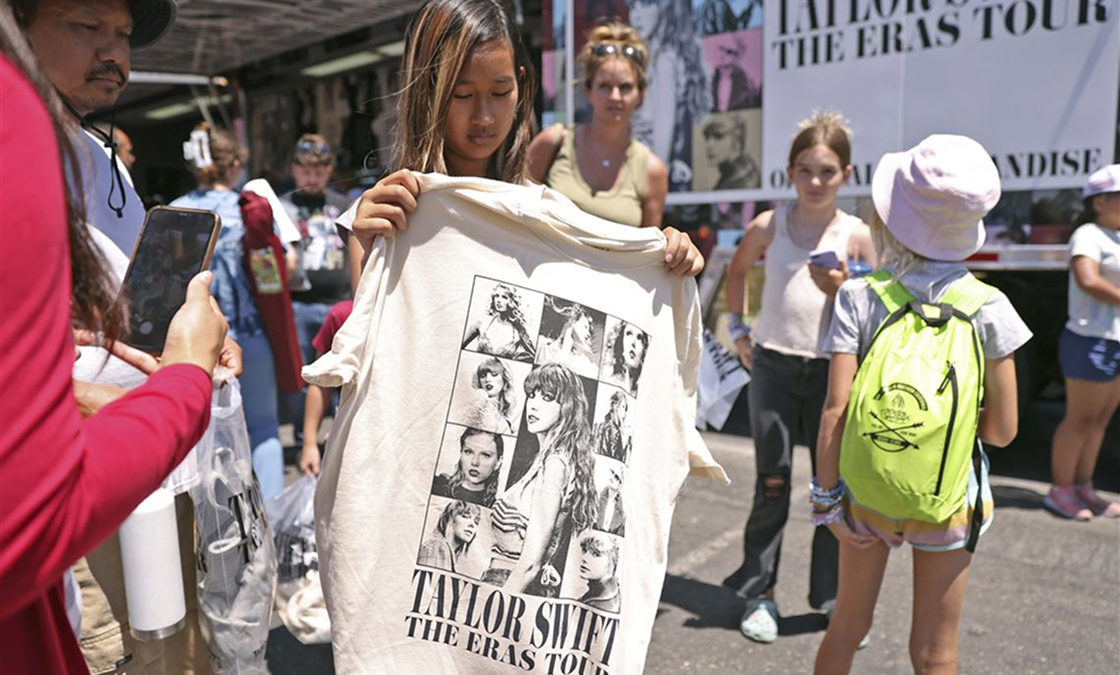
T-shirts are consistently the top-selling merch item across touring artists and live events because they are easy to design, relatively inexpensive to produce, and fans immediately recognize their value. Industry analyses show that T-shirts, pullover hoodies, and sweatshirts regularly rank as the three best-selling merchandise items for pop, rock, and alternative artists, with hats also joining the top tier in many rock and festival settings.
For many performers and promoters, T-shirts and hoodies alone generate the majority of booth revenue.
Success with apparel comes from strong design and a focused product lineup. Instead of offering dozens of variations, most events perform best with a streamlined selection – typically two or three T-shirt designs and one or two hoodie or crewneck options in carefully chosen colors.
Black T-shirts remain perennial best sellers because they are versatile and easy for attendees to wear in everyday settings. Adding one more visually striking design can help highlight the event’s branding or artwork.
It is also important to consider inclusive sizing and fit as part of your brand approach. Limiting size ranges may reduce initial costs but can alienate fans and result in missed sales opportunities.
Hoodies and sweatshirts typically carry higher price points and stronger margins, which makes them especially valuable for events held in cooler climates, outdoor festivals, or late-night shows. Because the production cost per unit is higher, many organizers position these items as premium merchandise or include them as part of VIP ticket bundles to guarantee a baseline level of sale.
2. Event‑Branded vs. Artist‑Branded Merchandise
If your event features bands, DJs, speakers, or comedians, you will need to decide how to balance event-branded merchandise with artist-branded merchandise. Event-branded items promote the festival, venue, or conference itself, while artist merchandise highlights individual performers.
Research from festival merchandise studies shows that event-branded products often generate the majority of sales, accounting for about 61 percent of total merchandise revenue, compared with roughly 26 percent for artist-specific items.
Even though attendees may initially come for the headline acts, many ultimately want a souvenir that represents the overall experience of the event.
Artist-branded merchandise still plays an important role, particularly at club shows and tours where the primary draw is a single performer rather than the broader event brand. For many performers, merchandise represents a substantial portion of earnings, often 10 to 30 percent of total revenue, and sometimes up to 30 percent of tour income, making it a vital financial stream beyond performance fees.
Collaborative merchandise can be especially effective. Products that combine festival branding with a headliner’s identity, such as co-designed T-shirts or city-specific posters, often sell well because they feel more exclusive and celebrate both the event and the artist involved.
3. Practical, Everyday Merchandise Fans Actually Use
Not everyone wants another shirt. Practical merch that fits into a ticket buyer’s daily life can broaden your buyer base and push average order values up without much extra risk.
Popular, low‑friction items include:
- Hats and beanies, which are top sellers in rock and outdoor events and appeal across genders and age groups.
- Tote bags and backpacks, especially at conferences, festivals, and markets where attendees carry programs, samples, or layers.
- Reusable drinkware, such as branded water bottles, travel mugs, or pint glasses, which tie neatly into bar sales and sustainability efforts.
These types of merchandise work well because they combine practical use with strong brand visibility. Items like tote bags or reusable water bottles branded with your logo or artwork tend to be used repeatedly in public, effectively turning each buyer into a mobile advertisement for your event.
They are also less dependent on sizing compared with apparel, which reduces the risk of unsold inventory and makes planning quantities much simpler.
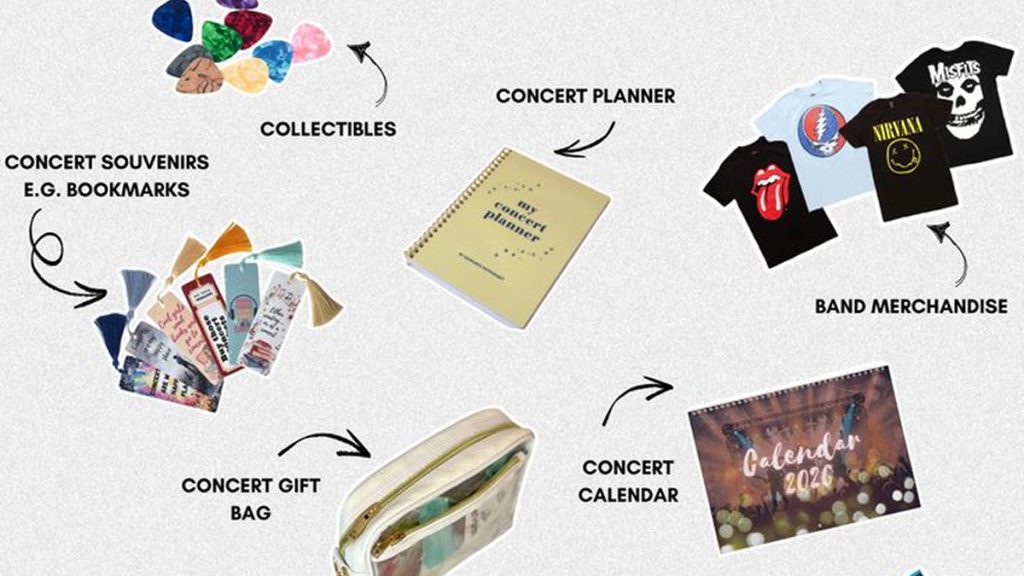
4. Collectibles, Posters, and Limited-Edition Merch
While core merchandise products generate most of the sales volume, collectible items are what create hype, social buzz, and higher per-item spending.
Posters, art prints, enamel pins, and numbered merchandise tap into scarcity and nostalgia, making them especially appealing to superfans and VIP buyers. At larger festivals – particularly those drawing more than 5,000 attendees – official merchandise lines that include posters and art pieces can help push total merch revenue into the hundreds of thousands of dollars when scaled effectively.
Posters and art prints consistently rank among the top five merchandise items across many genres, often appearing just behind shirts and hoodies in popularity. They are relatively inexpensive to produce, simple to transport, and highly shareable on social media when the design stands out.
Limited runs, city-specific artwork, or artist-signed editions can justify higher price points and frequently sell out quickly. For conferences and professional events, thoughtfully designed prints featuring key themes, quotes, or visual motifs can double as decorative pieces and meaningful takeaways for attendees.
Limited-edition merchandise is particularly powerful because it creates urgency. Timed releases during an event, pre-order-only designs, or numbered collectibles can significantly increase perceived value and trigger “buy now” behavior. A 2024 fan spending report found that exclusives and limited items are among the most effective strategies for raising average purchase value and moving higher-margin products.
A common approach is to anchor your merch table with dependable staples – like apparel – while introducing one or two limited pieces per event run to generate excitement and conversation.
Certain audiences, particularly in alternative and indie music scenes, also show strong demand for vinyl records and other physical media. Vinyl regularly ranks among the top-selling merchandise items for these genres. Although production costs and lead times are higher, vinyl releases can be incorporated into a tour schedule or launched as pre-order campaigns ahead of an event. Selling records at shows then positions them as premium anchor products. Bundling vinyl with shirts or posters can further increase the total transaction value without adding much extra complexity to fulfillment.
5. Small, Impulse‑Buy Items That Add Up
Every merch setup should include a tier of low‑priced, impulse‑buy items that attendees can grab even if they are on a budget.
These products help convert “maybes” into buyers and are especially powerful for younger audiences, multi‑event attendees, or people who already spent heavily on tickets and drinks.
Top examples:
- Stickers and decals, which are cheap to produce, easy to pack, and ideal for laptops, water bottles, and cases.
- Pins, patches, and keychains, which create collectible series across tours or festival years and often become conversation starters among fans.
- Wristbands and bracelets, which extend the event’s identity into everyday wear and work well for charity tie‑ins or fan clubs.
These types of items make merchandise an easy entry point for more budget-conscious attendees. At events where guests may already feel stretched financially, a $5 sticker or $10 enamel pin still allows them to take home a souvenir. That small purchase increases brand connection while generating additional revenue through high-margin micro-sales.
From an operations standpoint, these products are also efficient because they allow you to repurpose existing artwork. Designs created for posters, stage visuals, or promotional graphics can easily be adapted into smaller merchandise formats.
Impulse-buy items also perform well when they are packaged into bundles. Offering a small set – such as a sticker, pin, and lanyard – at a slight discount encourages customers to spend more per transaction than they might on a single item. Many promoters and venues now incorporate these bundles into VIP packages, presale offers, or checkout upsells, both online and at in-person merchandise tables.
By positioning them as quick add-ons, you can increase average order value while giving fans affordable ways to engage with your brand.
6. Digital and Experiential Merch for Your Event
Digital merchandise and experiential offerings can be highly profitable, particularly when integrated with your event tech stack and fan community.
This category is still evolving, but it provides powerful opportunities for events with strong online engagement or hybrid formats.
Digital merchandise can include exclusive recordings of performances or talks, downloadable photo packs, or behind-the-scenes mini documentaries available only to attendees. Distribution costs are negligible once the content is produced, which means margins are very high. The main factors are production quality, platform choice, and content security. For conferences and workshops, on-demand access to session recordings often delivers some of the highest ROI in merchandising, appealing both to virtual attendees and those who want to revisit key content.
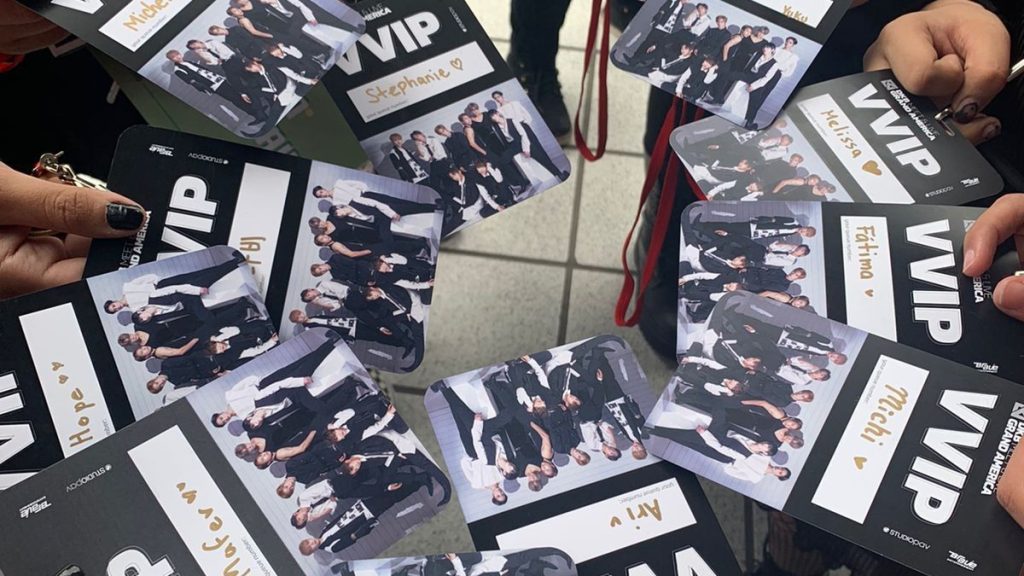
Experiential merchandise encompasses VIP add-ons like early entry, meet-and-greets, soundcheck access, or side-stage viewing. These experiences are frequently bundled with physical items such as exclusive pins, lithographs, or tote bags, creating high perceived value packages with relatively low incremental cost. Industry data shows that VIP bundles often achieve the highest margins of any merch category, allowing organizers to combine low-cost quality items with premium ticket tiers. For promoters and venues, these bundles help cultivate loyalty among top-spending fans, increasing the likelihood of repeat attendance.
As web3 and digital collectibles gain traction, some events are experimenting with tokenized tickets, digital badges, or NFT art as premium collectibles.
While still a niche market, these offerings complement core merchandise by providing unique ownership and status symbols for tech-savvy or crypto-focused audiences. The key is to use digital and experiential items as supplements rather than replacements for traditional physical merchandise, which remains the most reliable driver of revenue and fan engagement.
Event Merchandise Pricing Strategies and Margins: How to Make Merch Profitable
Once you know which items to sell, the next critical lever is pricing. That is, ensuring you cover costs, protect margins, and still move volume.
A common approach is targeting a keystone markup of roughly 2x–3x the cost of goods, then adjusting for perceived value, audience, and demand. For example, a T-shirt costing $8–$12 to produce might retail for $30–$40, while hoodies with production costs of $20–$30 often sell for $65–$90, especially at tours and festivals. Smaller items like stickers or pins, which cost $1–$2 per unit, can be priced $5–$10, generating very high percentage margins.
Many promoters structure their pricing into good/better/best tiers.
- The “good” tier includes low-cost impulse items under $15.
- The “better” tier covers staple merch like shirts and hats in the $25–$45 range.
- The “best” tier encompasses high-ticket items such as hoodies, vinyl, premium posters, and VIP bundles priced at $60+.
This tiered approach gives fans at every budget level a way to participate while subtly nudging many toward mid- or top-tier purchases. Psychologically, anchoring a high-priced item – like a $120 deluxe box set – can make a $60 hoodie feel more reasonable, even if both items have similar cost bases.
Inventory Planning for Your Event: How Much Merch Should You Order?
Ordering the right amount of merchandise is a delicate balance. Too much ties up cash and leaves unsold boxes, too little creates early sell-outs and missed revenue.
The sweet spot comes from combining historical data, pre-event indicators, and event-type benchmarks. For recurring events or touring artists, past sales per head and item mix are the most reliable predictors.
A typical target for mid-sized music events is $3–$8 in merch revenue per attendee, with larger festivals exceeding that. For instance, a 1,000-person show aiming for $5 per head translates to $5,000 in gross merch revenue. From there, you can work backward from expected item prices to estimate quantities.
If no historical data exists, use conservative ratios. A common approach is to assume 10–20% of your audience will buy merch, with each purchasing 1.5–2 items on average. For a 500-person show, that means planning for 75–100 buyers purchasing 1.5–2 items each, or roughly 125–200 units across all SKUs.
Apparel usually dominates. Expect the split to be about 60–70% shirts and hoodies, 10–20% hats or totes, and the remainder small impulse items like stickers or pins. Conferences or business events may skew toward practical items with lower apparel penetration, so adjust inventory according to audience and event type.
Pre-orders and bundles are excellent tools to reduce inventory risk. Allowing fans to pre-purchase shirts, hoodies, or vinyl at checkout and pick them up on site gives concrete demand signals, helping you size your main production run accurately.
It is also worth mentioning that sizing is a frequent challenge. Many organizers overproduce XS or 3XL while selling out of M–XL.
For first-time or one-off events, consider shorter production runs or print-on-demand options for post-event orders instead of gambling on large stock that may not move. These strategies help maximize sales, minimize leftover inventory, and keep cash flow healthy.
How to Strategize an Event Merchandise Booth Layout and On‑Site Sales
Even the strongest merch line can underperform if your booth is poorly located, cluttered, or slow.
A successful setup prioritizes visibility, flow, and speed. Position your main stand where attendees naturally pass – near entrances, exits, or high-traffic transitions between stages – but avoid narrow corridors that create bottlenecks. Use vertical space to showcase designs with good lighting, and display prices clearly so fans can see them from a distance, reducing friction at the counter.
Clear signage is essential. A simple menu board listing items and prices, accompanied by one large visual per major design (shirts, hoodies, posters), helps attendees make decisions while they are still in line. At festivals, a main “merch superstore” supported by smaller satellite carts near major stages spreads demand and captures impulse buyers who might not walk across the site just for merch. This approach maximizes visibility and ensures sales opportunities are not missed.
Checkout speed is crucial, especially during peak periods like set breaks or after headliners. Offering multiple payment options – such as contactless cards, tap-to-pay, mobile wallets, and cash where appropriate – keeps lines moving and prevents lost sales.
For extra efficiency, consider a small, clearly marked “express” stand that sells only 1–2 best sellers, ensuring you capture quick buyers without slowing down the main line. These layout and sales strategies turn a merch booth from a passive display into a high-performing revenue engine.
Matching Merch to Event Type: Concerts, Festivals, Conferences, and More
Choosing the right merch mix depends heavily on your event category, as each audience has unique expectations and spending habits.
Concerts, Bars and Pubs, and Live Music
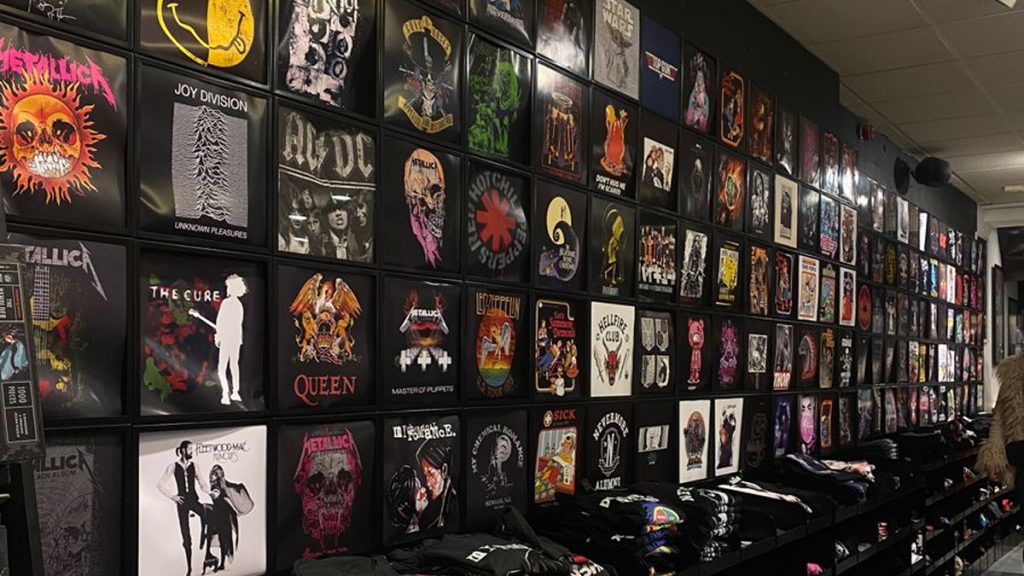
For concerts and club shows, shirts and hoodies form the backbone of sales, supported by hats, posters, and small accessories. Rock, metal, and alternative crowds often favor bold graphic tees, embroidered hats, and patches, while pop and hip-hop fans gravitate toward fashion-forward cuts, crop tops, or coordinated sets. Limited tour designs listing dates and cities drive demand, and signed posters or vinyl act as premium upsells for fans seeking exclusive items.
Multi-Day Music Festivals
At music festivals, where attendees spend full days or weekends onsite, practical and comfort-oriented items perform best. Hats, sunglasses, hydration packs, foldable fans, and weather-adaptive apparel like ponchos or windbreakers see strong traction. Festival-branded shirts and hoodies generally outsell artist-specific merch because fans want a keepsake of the overall experience. Larger festivals often invest in “merch superstores” with visually cohesive annual lines, turning the festival brand itself into a fashion statement.
B2B Conferences, Trade Shows, and Corporate Events
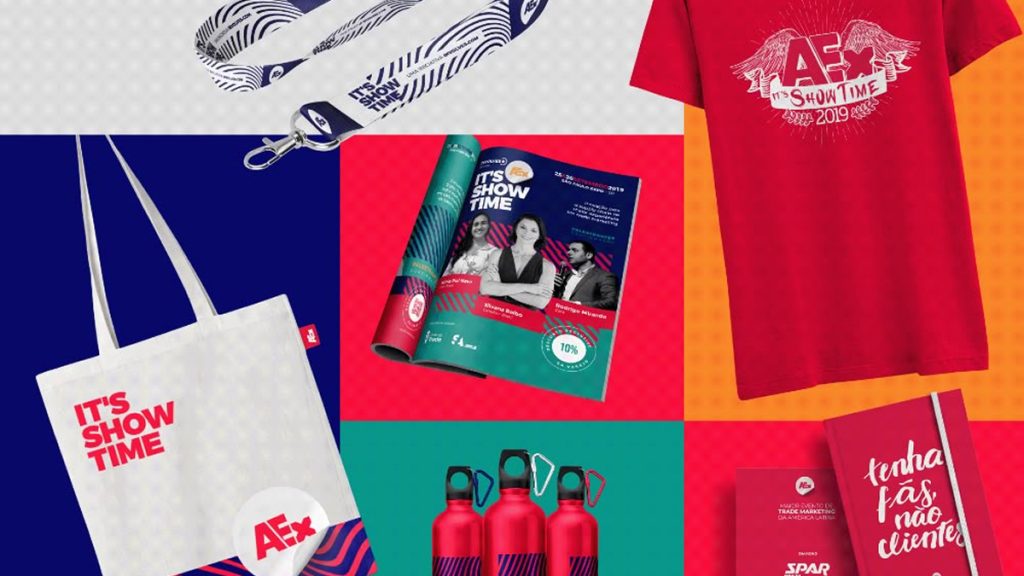
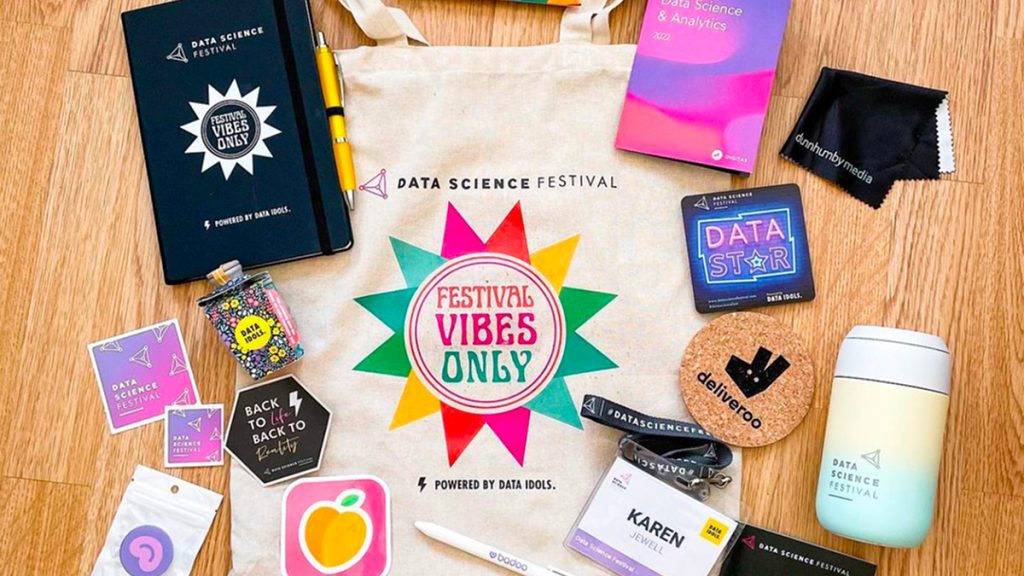
For conferences, trade shows, and B2B events, the merch mix skews toward practical, professional, and subtly branded items. High-quality notebooks, pens, laptop sleeves, tote bags, insulated drinkware, and tasteful apparel perform well because attendees will actually use them in professional settings. Premium gifts for higher-tier tickets or sponsors – like wireless chargers, backpacks, or jackets – can be bundled into registration packages. Here, the focus is less on impulse purchases and more on perceived value integrated into fees and sponsorships.
Community & Cultural Events and Fairs
Community events, fairs, and charity runs thrive on family-friendly, budget-conscious merch. Branded T-shirts, caps, water bottles, and youth items like plush toys or activity books can drive both revenue and a sense of community. With higher price sensitivity, it’s best to focus on a few strong designs at accessible price points, and including a donation component (for example, “$5 from every shirt goes to…”) can increase conversions and justify slightly higher prices.
Across all event types, aligning merch with the emotional core of your event – whether nostalgia, cause support, hometown pride, or professional growth – ensures it resonates with attendees while boosting revenue.
Measuring Event Merchandise Sales Performance and Optimizing Over Time
Organizing what merchandise you want to sell for an event is not a one-time decision. It’s an ongoing system that improves as you collect and act on data.
At every event, track core metrics like total merch revenue, revenue per head, units sold per item, sell-through rate, and average order value. Over multiple shows or editions, trends emerge. Your top 3–5 items by revenue and volume, products that consistently underperform, and event types or locations where sales over- or under-index.
Use these insights to refine your lineup. If shirts and hoodies generate 70–80% of revenue but certain designs lag, introduce new artwork or colorways while keeping your consistently moving core logo pieces. For items that sell out quickly, like hats or tote bags at festival settings, increase their share of your inventory for the next event. Conversely, products that underperform across multiple events should be retired, redesigned, or deeply discounted to clear stock and free capital and space for stronger performers.
Feedback loops are equally important. Ask buyers what they liked, what they wished you had, and which price points felt appropriate.
Social media provides an immediate window into fan preferences. Note which designs spark comments, shares, and “where can I buy this?” questions. By combining quantitative metrics with qualitative feedback, you can gradually build a signature merch identity that fans recognize and actively anticipate.
Over time, your merchandise line can become a key draw in itself, rather than just an afterthought of the event experience.
The Art of Selling Event Merchandise Can Bring in Thousands of Dollars
Effective event merchandise succeeds when creativity meets business discipline.
The most successful organizers and artists treat merch as a planned revenue channel rather than an afterthought, carefully selecting items that resonate with their audience, pricing them to balance margin and accessibility, and supporting sales with smart inventory management and operational strategies.
By combining high-demand staples with limited editions, practical everyday items, and digital or experiential offerings, you increase per-head spend while strengthening the emotional connection with attendees.
When you design the right mix, track performance, and iterate from event to event, your merch table becomes more than just a sales point. It transforms into a profit center, a storytelling platform, and a key part of how attendees remember and share your brand.
Using the strategies outlined in this guide, you can create a merchandise line with purpose, extending your event’s impact long after the final encore or closing keynote.