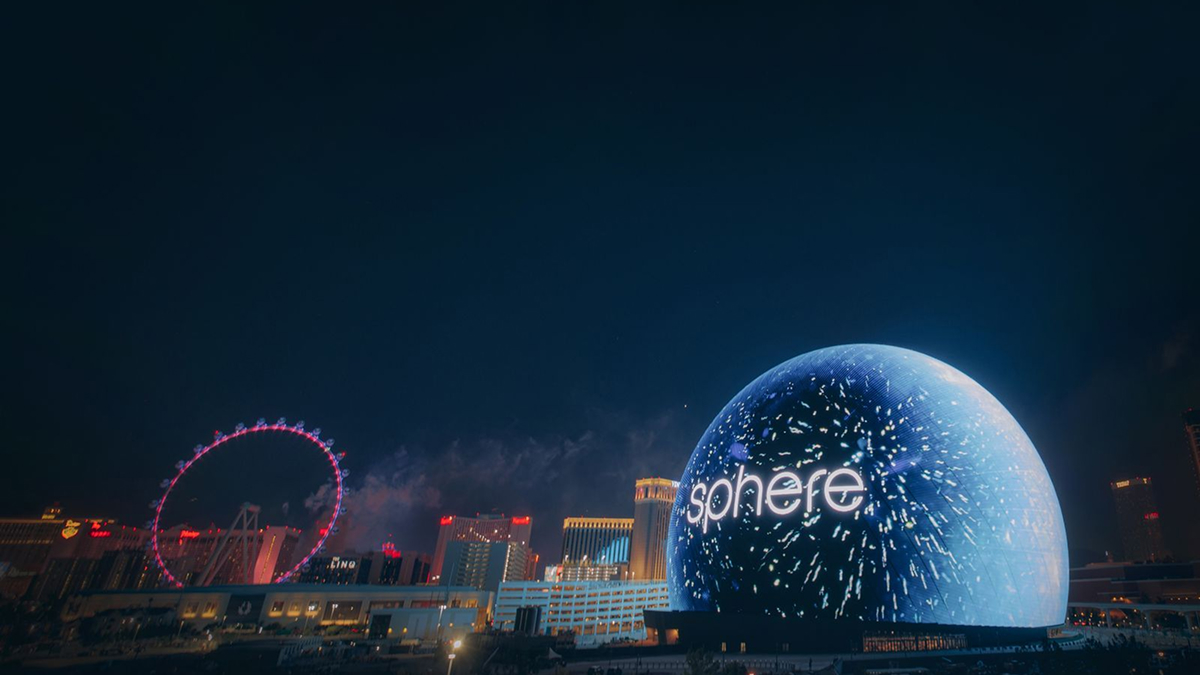
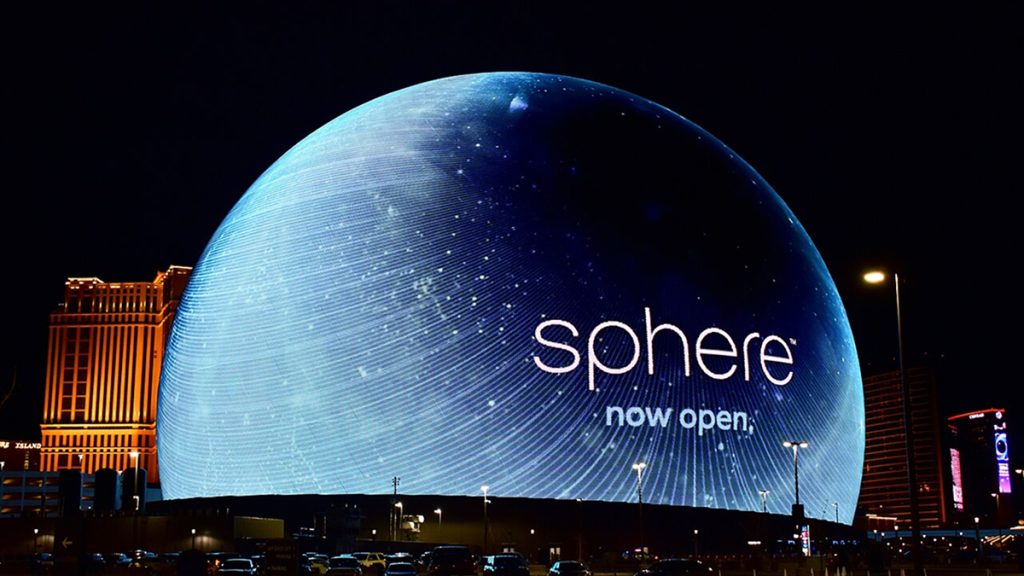
The Las Vegas Sphere can be widely considered to be a structural and sensory reset for what live entertainment can look and sound like. Opened on September 29, 2023, as Sphere, formerly known as the MSG Sphere Las Vegas, it combines a 16K wraparound interior screen, spatial audio, and 4D effects inside a building that cost $2.3 billion to develop.
What Makes the Sphere Such A Unique Event Venue
The Sphere in Las Vegas is, in short, a purpose-built immersive venue designed for concerts, films, residencies, keynote events, and event concepts that depend on large-format storytelling.
The venue sits east of the Las Vegas Strip near The Venetian Resort at 255 Sands Avenue, and its scale is part of the attraction: it stands 366 feet tall and 516 feet wide, which would make it the largest spherical building in the world were it not a geodesic dome.
The Sphere was built on an 18-acre site contributed by the Las Vegas Sands Corporation, an initial co-partner of the venue.
The venue is currently owned by Sphere Entertainment and Vici Properties, with its architecture done by Populous, structural engineering by Severud Associates and Walter P. Moore, and constructed in partnership with the AECOM and Madison Square Garden Company.
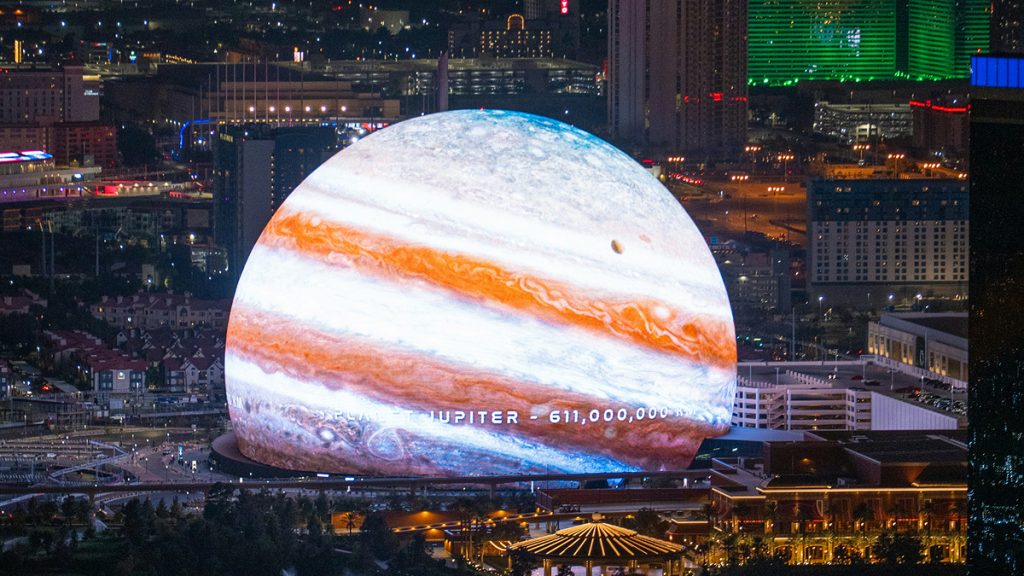
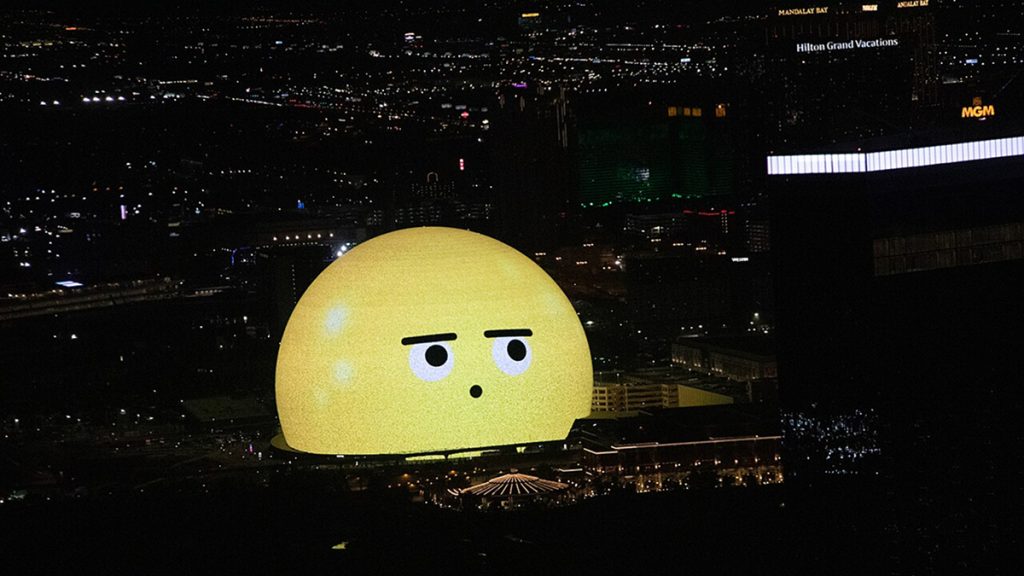
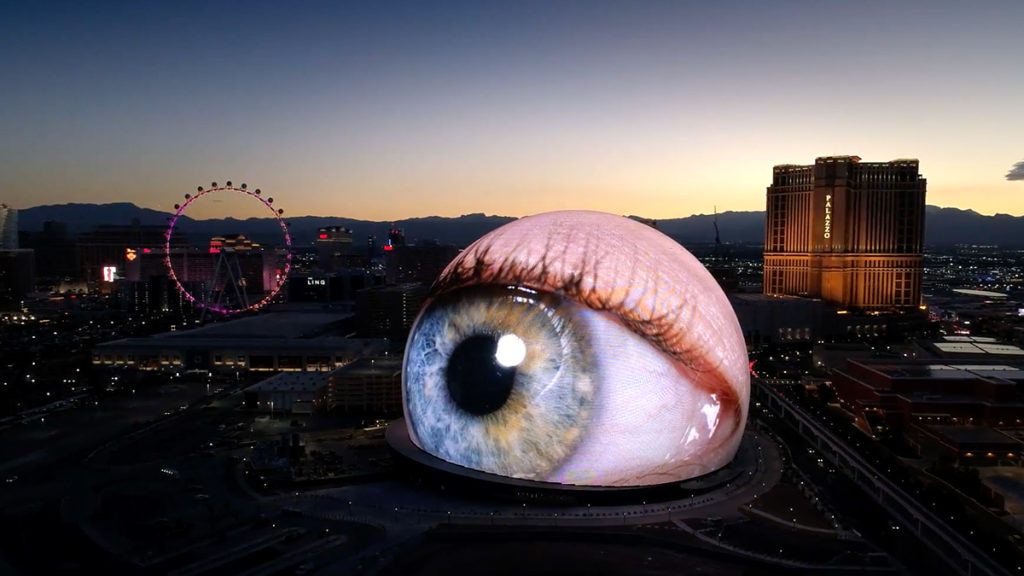
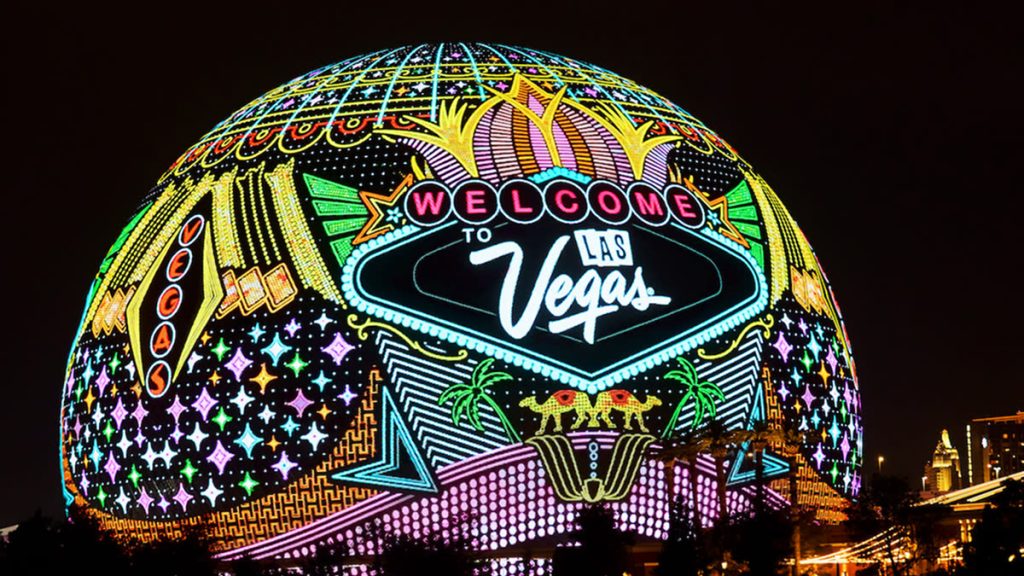
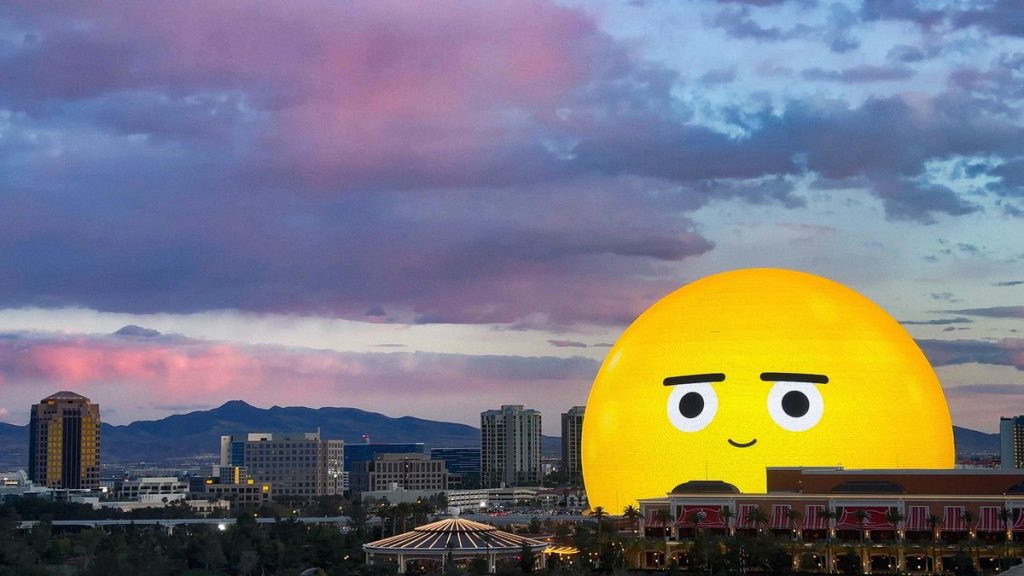
What separates the Sphere Vegas experience from any other standard American arena is that the room itself is part of the content. The building uses a 160,000-square-foot interior LED display at 16,000 x 16,000 resolution, and the exterior exosphere adds another 580,000 square feet of programmable LED coverage, turning the venue into both a destination and a screen.
For event professionals, that distinction matters because the venue does more than act as a host for shows. The Sphere changes how shows are produced, sold, staged, and remembered. The Las Vegas Sphere experience is built around immersion, which means every creative decision has to work at scale, in the round, and often in sync with motion, light, scent, and sound.
How the Sphere Opened with U2 and the Venue’s Initial Interpretation
The Sphere Las Vegas opening happened in a very deliberate way.
Its launch was anchored by U2’s 40-show residency, U2:UV Achtung Baby Live at Sphere, which began on September 29, 2023, and established the venue as a premium home for long-run, high-concept performances rather than one-off touring stops.
That opening strategy was smart from an industry perspective because it let the venue debut with a globally recognized act and a concept that could be tailored to the building’s technology. The Sphere Las Vegas U2 residency became the proof-of-concept for how the venue could reshape fan expectations, especially around screen integration, sound placement, and visually synchronized storytelling.
The venue also launched Darren Aronofsky’s Postcard from Earth shortly after opening, which signaled that the programming would not be limited to concerts alone. That helped position Sphere Las Vegas shows as a broader category, spanning live music, cinematic experiences, sports, conferences, and future hybrid formats.
Las Vegas Sphere: Size And Capacity for Ticket Buyers
The Sphere Las Vegas capacity is one of the first numbers people want to know because it explains both the venue’s business model and its creative limits.
The arena seats 17,600 people, with total standing capacity reaching 20,000, which places it in the upper tier of major live-entertainment venues without functioning like a traditional sports stadium.
That capacity matters because the room is optimized for concentrated, premium demand rather than maximum volume. A venue of this size can support marquee residencies, special-event programming, and high-yield ticketing strategies, but it also requires a strong content pipeline to avoid overreliance on the same few headliners.
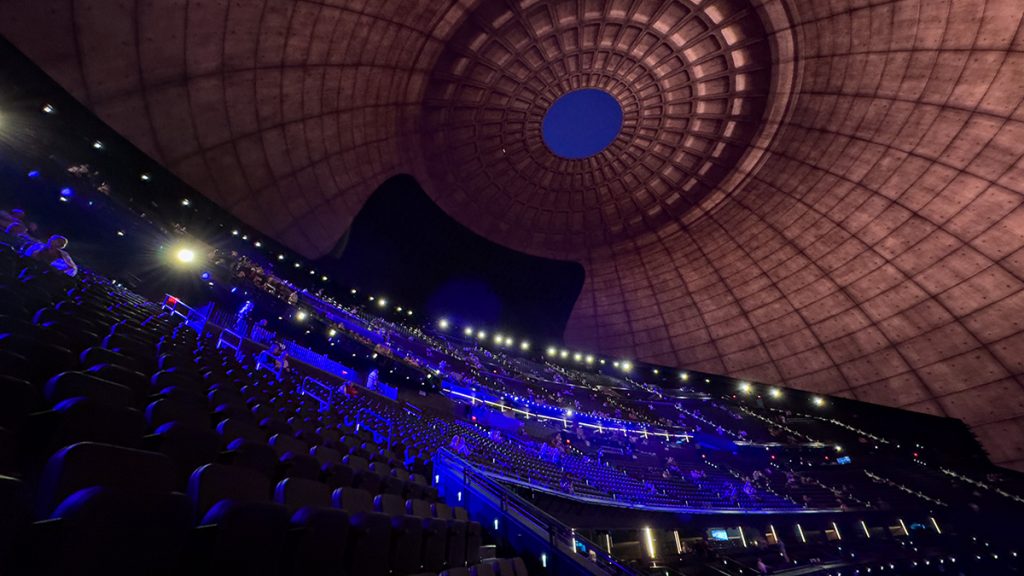
The seating layout is also unusual. Seating covers roughly two-thirds of the interior, with the stage occupying the remaining section, and the venue includes 23 suites plus nine levels, including a basement VIP area. For anyone reading a Sphere Las Vegas seating chart, the key is understanding that the best seat is not always the most obvious one, because the venue was built for wraparound immersion rather than a single front-facing viewpoint.
Exploring the Sphere’s Screen And Impressive Visual Design
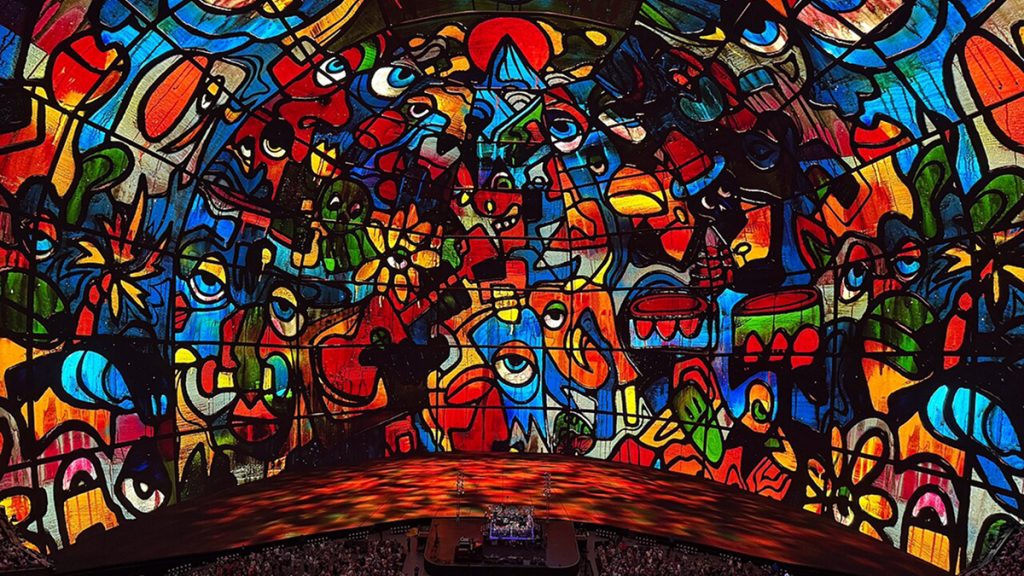
The Sphere Las Vegas screen is the venue’s signature feature and one of the clearest reasons it has become a global talking point.
The interior display wraps around the audience and uses 16K resolution across 160,000 square feet, which means visuals can be engineered at a scale that feels closer to being inside a moving environment than watching a normal production.
The screen was designed by Montreal’s SACO Technologies and is the highest-resolution LED screen in the world.
It is reported to contain over 268 million pixels, spread across 64,000 LED panels, each controlled by a printed circuit board housed in an aluminum frame, with the panels manufactured in 780 different geometric shapes.
Then, there is the exosphere which features a 580,000-square foot LED display comprised of 1.23 million puck-shaped LEDs spaced 8 inches apart, each containing 48 diodes.
Sphere’s internal and external displays are driven by 150 Nvidia RTX A6000 graphics cards, each offering more than 10,752 cores and 48 GB of memory. Media is delivered from outside sources through Nvidia BlueField data processing units and ConnectX-6 DX network interface controllers, with Rivermax media streaming software handling the stream.
That scale changes the vocabulary of event design. At the Sphere, backgrounds function as narrative environments, live motion canvases, and emotional drivers that guide audience attention throughout the show. The exosphere reinforces that effect by acting as a city-scale marketing layer visible well beyond the property.
The practical result is that the Sphere Las Vegas inside experience rewards content that is cinematic, spatial, and highly intentional. A standard touring package can be adapted to the venue, but the strongest Sphere productions tend to be built around custom visuals, synchronized moments, and show flow that treats the room as a storytelling device.
How the Sphere’s Sound And Sensory Technology Sets the Bar For All Events
Sphere’s audio system, called Sphere Immersive Sound, is built for spatial audio and is based on HOLOPLOT’s X1 Matrix Array of speakers.
It includes 1,586 permanently installed speakers and 300 mobile modules, with most of the hardware hidden behind the LED screen so the venue can maintain a clean visual field.
The system is massive, totaling about 167,000 speaker drivers, amplifiers, and processing channels, and it weighs roughly 395,120 pounds. Its proscenium array alone uses 464 HOLOPLOT X1 speakers, making it the largest loudspeaker array of its kind, while additional arrays around the venue handle immersive coverage, effects, surround sound, delays, and low-fill support.
What makes it especially advanced is the way it controls direction and placement. Using beamforming and wave field synthesis, the system can aim sound at specific seats, keep volume consistent across the room, and create precise spatial effects even at the venue’s furthest reaches.
That matters because spatial audio changes the fan experience in a way that most venues cannot replicate. Instead of sound simply being loud, it can be aimed, layered, and localized, which helps preserve clarity even when the visuals are overwhelming or when the production is moving across different zones of the room.
Sphere features around 150 dedicated in-house light fixtures, strategically placed mostly along the balcony rails and behind the massive interior LED screen.
The venue also includes 4D effects such as wind, scent, and haptics in 10,000 seats, with all seats offering high-speed internet access. In practical terms, that means the Sphere Las Vegas immersive experience is designed to stimulate multiple senses at once, which can dramatically increase audience recall and social sharing when the content is built to use those tools well.
Las Vegas Sphere Event Types And Programming
Sphere Las Vegas events have already shown how flexible the building can be when the concept matches the venue.
After U2, the venue hosted Phish, Dead & Company, Eagles, Anyma, Kenny Chesney, Backstreet Boys, and other residencies, while also adding films, sports-adjacent programming, corporate keynotes, and sports events.
That variety matters because it proves Sphere is not locked into one audience segment. The venue has already welcomed a 2024 NHL Draft, a UFC event, and large-format conference keynotes, showing that Sphere Vegas can serve entertainment, media, and brand-driven event formats rather than functioning as a single-genre concert hall.
For promoters and producers, the lesson is straightforward: the venue works best when the format is either highly visual, deeply experiential, or strongly branded. A conventional performance can absolutely fit here, but the room seems to reward content that gives the audience a reason to notice the architecture as part of the show itself.
Who Has Played at the Sphere in Las Vegas: the Best the Sphere Has Offered So Far
U2 — U2:UV Achtung Baby Live at Sphere
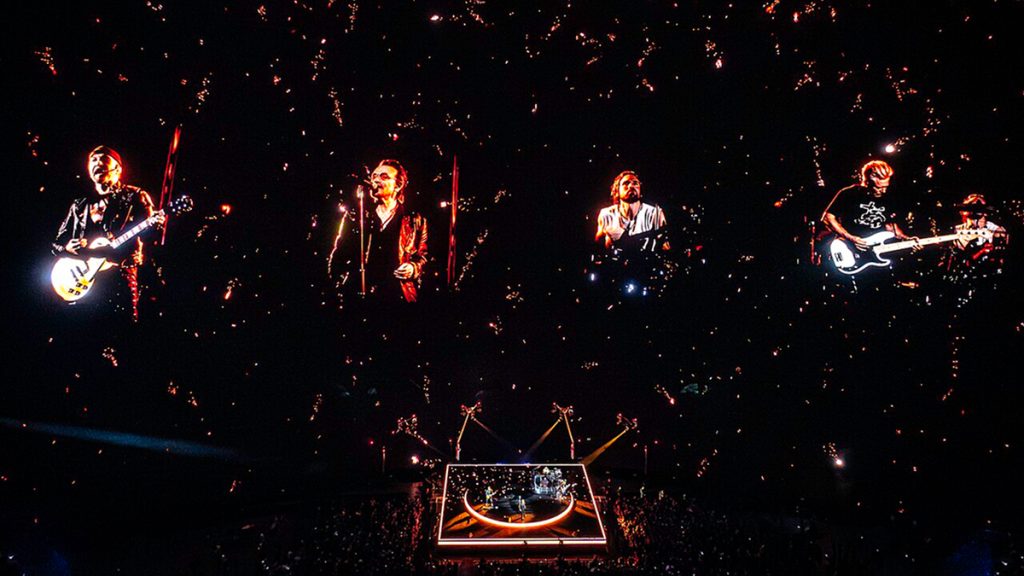
U2 opened the building and effectively defined what the Sphere could be as a concert venue. Their residency ran from September 29, 2023 to March 2, 2024, and it consisted of 40 shows. The residency launched Sphere’s live-performance era and was built around the band’s Achtung Baby era, with the venue’s visuals and sound design integrated into the production from day one.
Darren Aronofsky — Postcard from Earth
The Sphere’s first non-concert headlining presentation was Darren Aronofsky’s immersive film Postcard from Earth. It debuted on October 6, 2023 and helped establish the venue as more than just a music room. This was important because it introduced the venue’s cinematic side, including the broader “Sphere Experience” framework.
Phish — Phish Live at Sphere
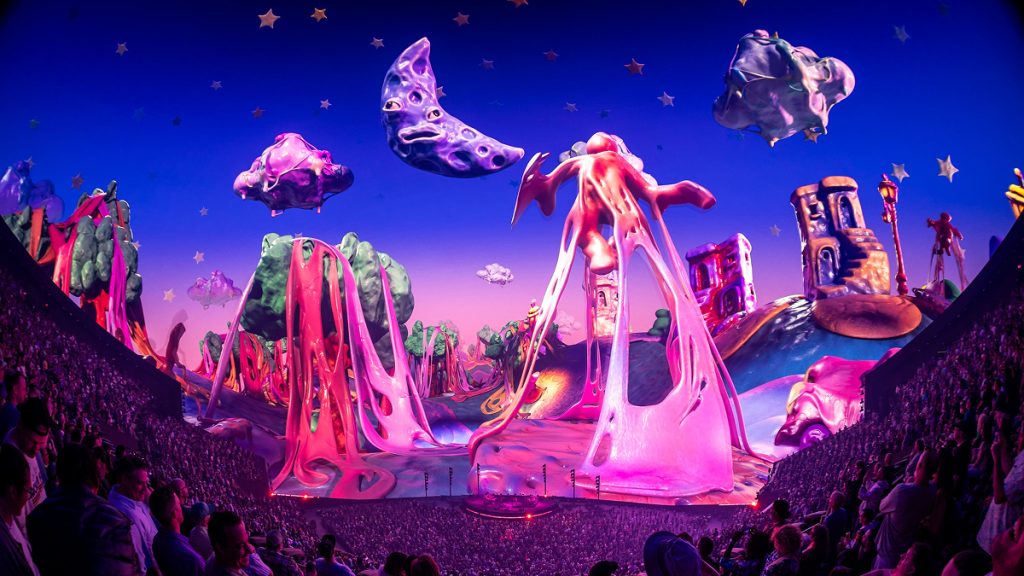
Phish were the first major jam-band residency after U2, and their run became one of the venue’s defining early concert chapters. Their initial Sphere engagement took place from April 18–21, 2024, for 4 shows. Phish’s improvisational style made them a natural fit for the immersive environment, and their shows helped prove the room could support a different kind of repeat-performance culture.
Dead & Company — Dead Forever: Live at Sphere
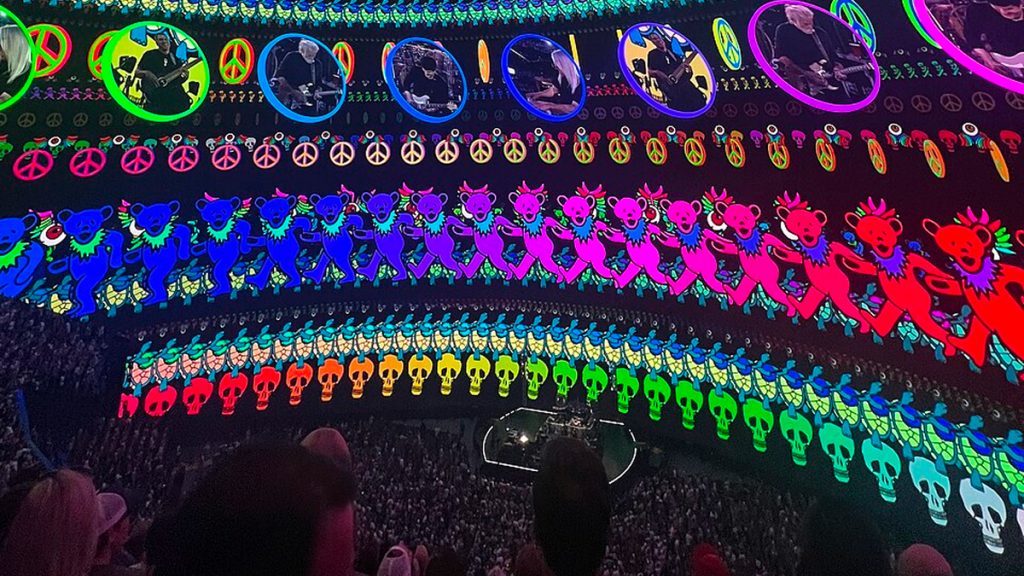
Dead & Company brought a longer summer residency model to the venue and leaned into the venue’s visual scale in a very different way than U2 or Phish. Their Sphere run lasted from May 16, 2024 to May 17, 2025, totaling 48 shows. This was one of the venue’s most important long-form residencies because it established a sustained, high-demand booking pattern at the Sphere.
2024 NHL Entry Draft
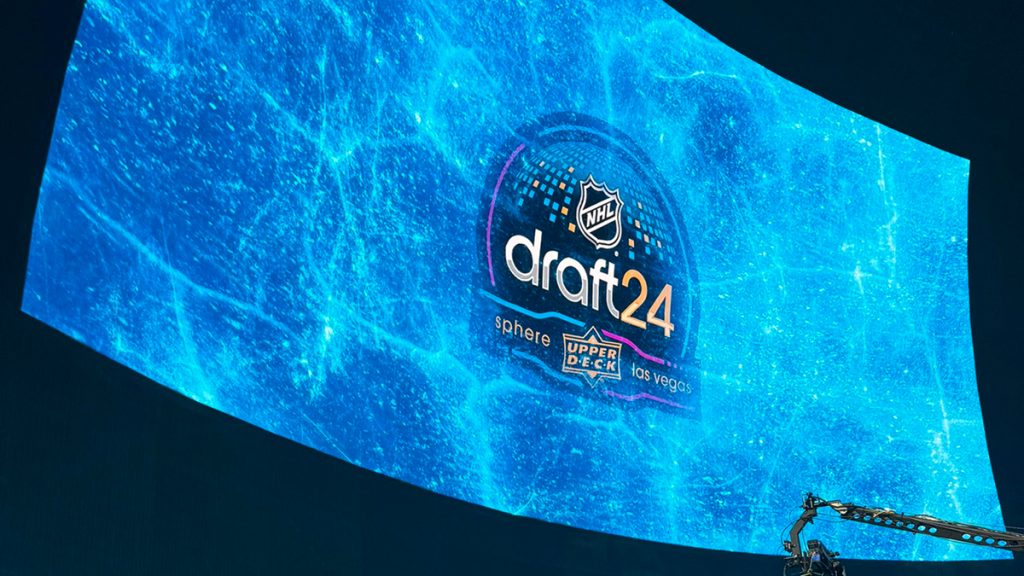
The Sphere hosted a major league sports event on June 28–29, 2024, when the 2024 NHL Entry Draft took place there. That event showed the venue could handle more than concerts and films, especially when the production was built around a large-format broadcast and dramatic reveal structure. It was also a sign that the building could function as a prestige venue for sports-media moments rather than only live music.
UFC 306 — Riyadh Season Noche UFC
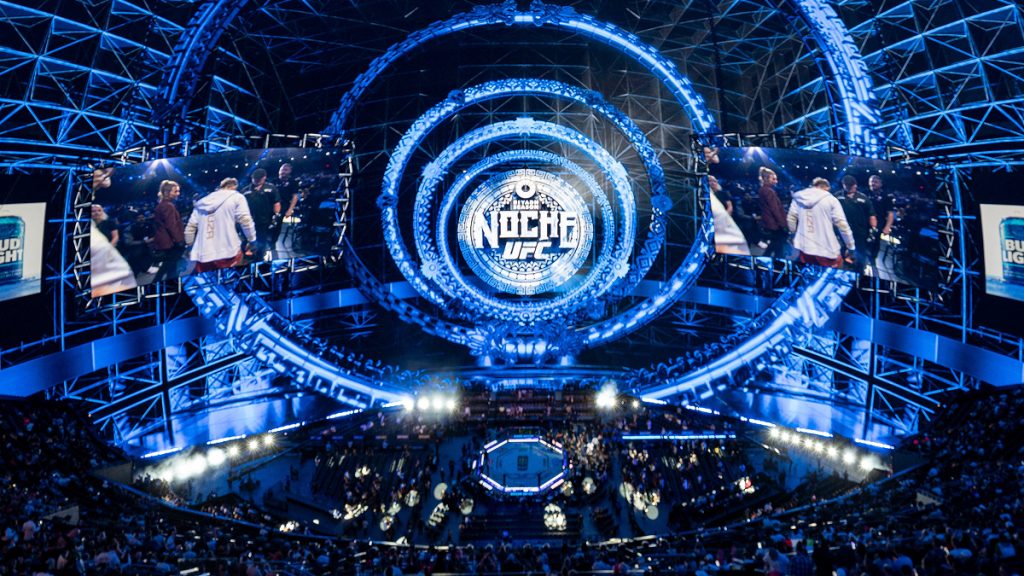
The first live sporting event at the Sphere was UFC 306, held on September 14, 2024. The event was promoted as Riyadh Season Noche UFC and became a major proof-of-concept for combat sports in the venue. The production used the Sphere’s screens and visual architecture in a way that made the event feel unlike a standard fight-night arena show.
Eagles — Eagles: Live in Concert at Sphere
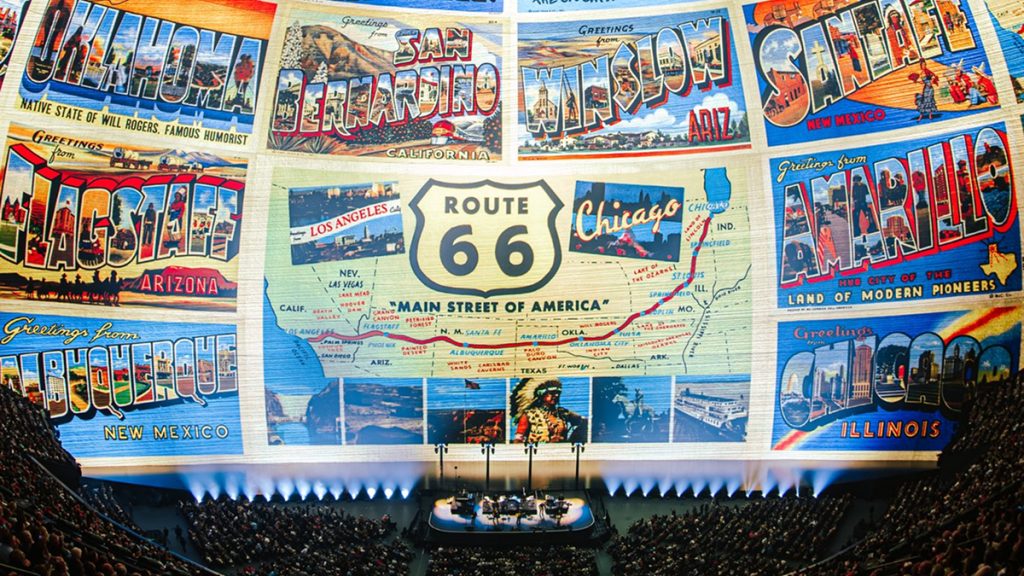
The Eagles brought classic-rock residency appeal to the Sphere beginning in late 2024, and the run has become one of the venue’s longest and most commercially significant. Their engagement began on September 20, 2024 and is listed in the venue’s history as running through April 11, 2026, for 58 shows. The Eagles’ catalogue, audience profile, and legacy status make them one of the most fitting acts for a premium Las Vegas residency model.
Anyma — Afterlife presents Anyma: The End of Genesys
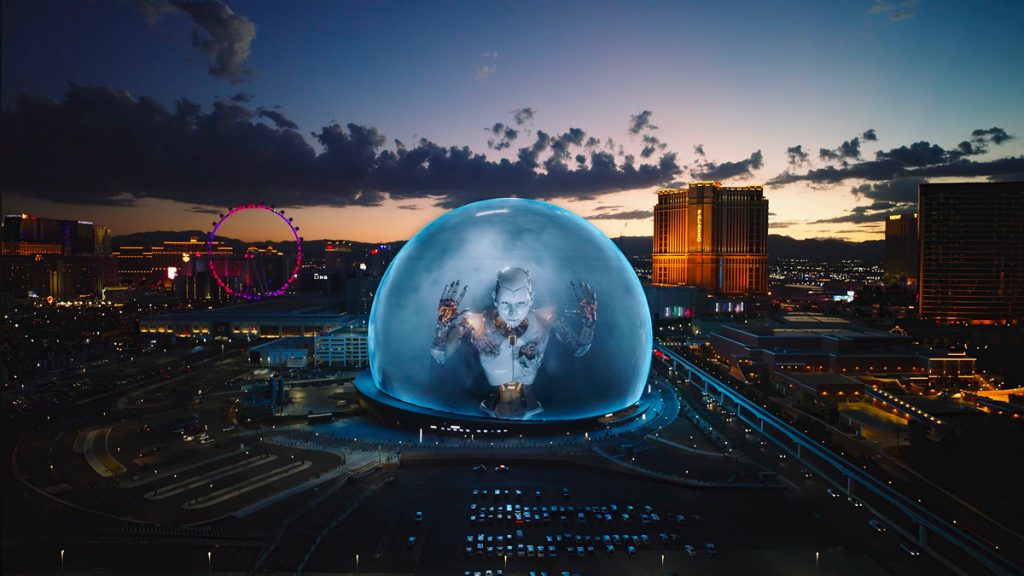
Anyma’s run was one of the earliest electronic-music presentations at the Sphere and showed how well the venue can support visual-heavy dance productions. The residency ran from December 27, 2024 to March 2, 2025, for 12 shows. The project’s audiovisual design aligned closely with the Sphere’s immersive capabilities, especially for fans who respond to concept-driven production.
HPE Discover 2024 — Antonio Neri Keynote Address
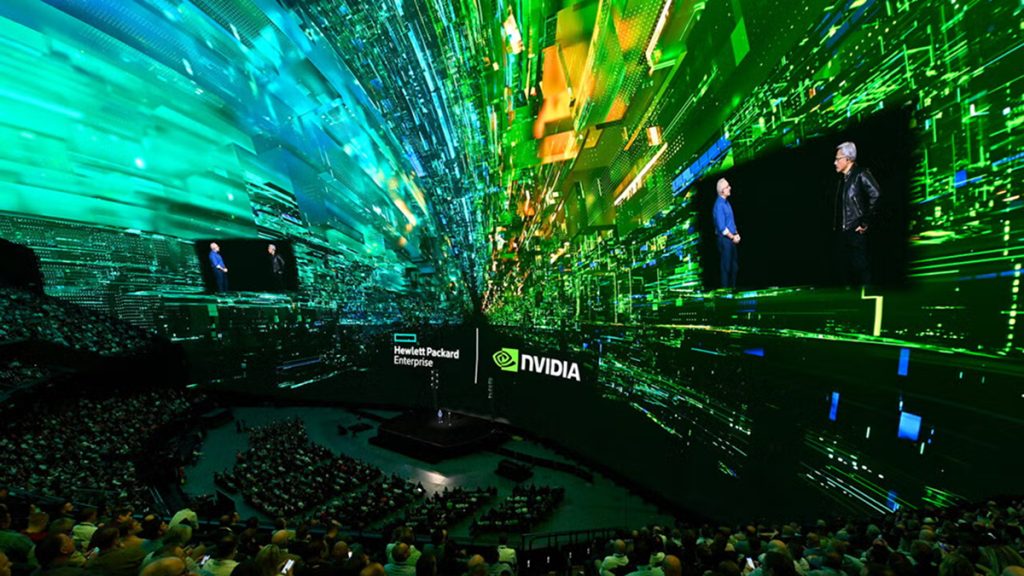
The Sphere hosted its first keynote-style corporate event on June 18, 2024, when Hewlett Packard Enterprise president and CEO Antonio Neri delivered a keynote at HPE Discover 2024. Nvidia CEO Jensen Huang joined him, which gave the event extra industry weight. This was a meaningful milestone because it showed the venue could function as a high-end corporate stage, not just an entertainment room.
Delta Air Lines Keynote at CES
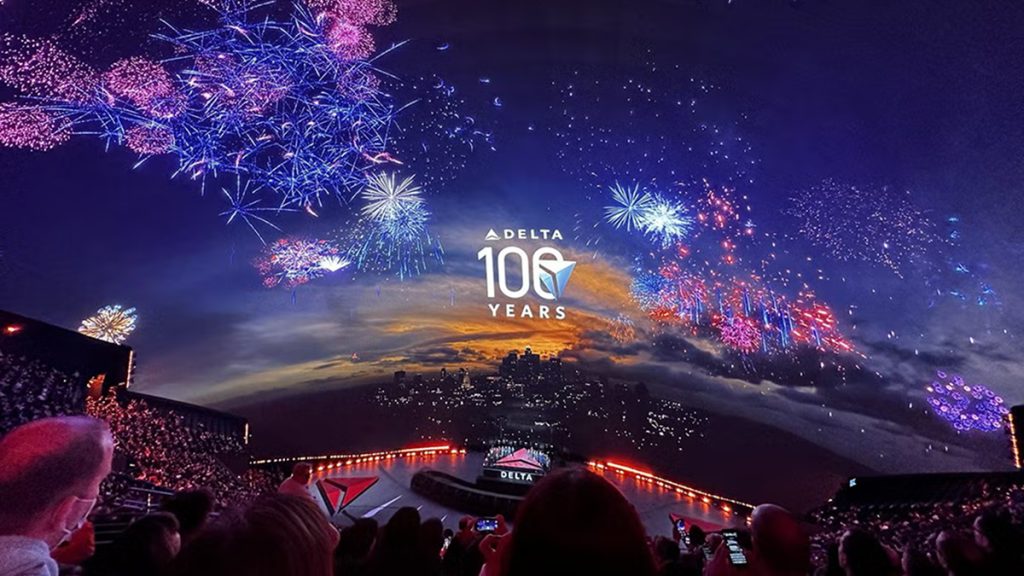
Delta Air Lines CEO Ed Bastian delivered a keynote at the Sphere on January 7, 2025, during CES. The keynote was followed by a performance by Lenny Kravitz, which underlined the venue’s flexibility for hybrid corporate-entertainment programming. That combination made the event feel like both a business presentation and a premium live spectacle.
Gwen Stefani Private Concerts
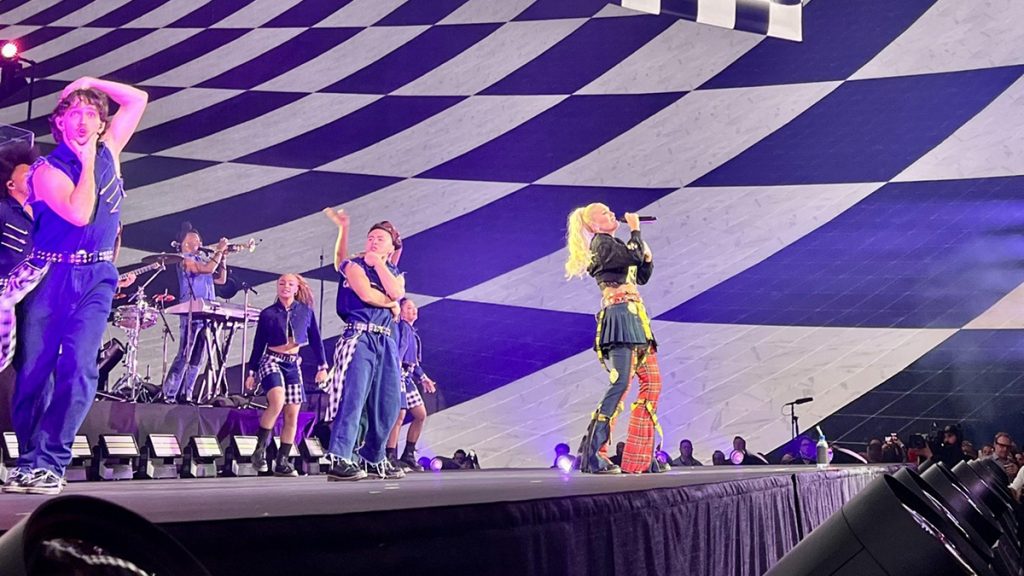
Gwen Stefani has performed private concerts at the Sphere on December 17, 2024, May 8, 2025, and January 6, 2026. These appearances were tied to conference-related events rather than public ticketed residencies. They matter because they show the venue’s value in the private-event and brand-experience market.
Kenny Chesney — Kenny Chesney: Live at Sphere
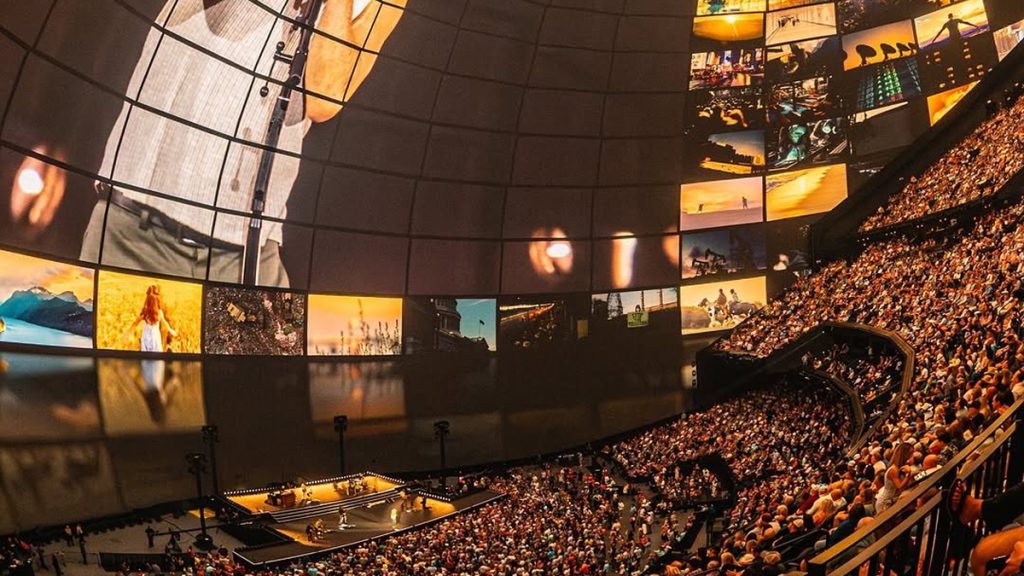
Kenny Chesney’s residency began on May 22, 2025 and is listed through July 11, 2026, for 25 shows. His presence at the Sphere reflects the venue’s ability to attract major country headliners who can sell a destination experience at premium prices. Chesney’s show works especially well in this room because his live brand depends on big emotional payoff and audience singalongs.
Backstreet Boys — Into the Millennium
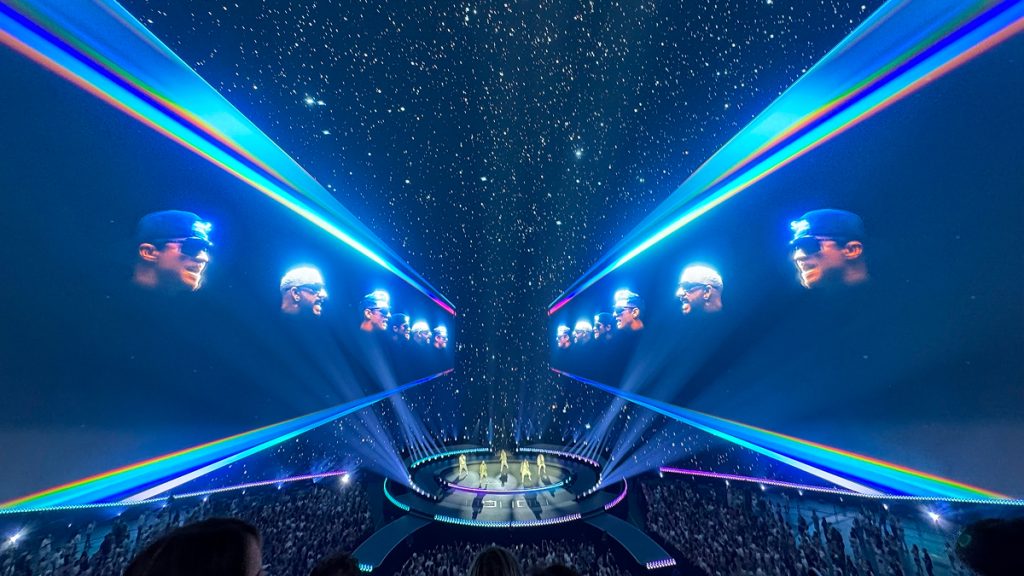
The Backstreet Boys residency began on July 11, 2025 and is listed through August 22, 2026, with 53 shows. This is one of the venue’s clearest pop-residency examples, leaning on nostalgia, choreography, and visual polish. Their stay at the Sphere reinforces the building’s appeal for legacy pop acts that can turn catalogue familiarity into a high-value event.
Zac Brown Band — Love & Fear
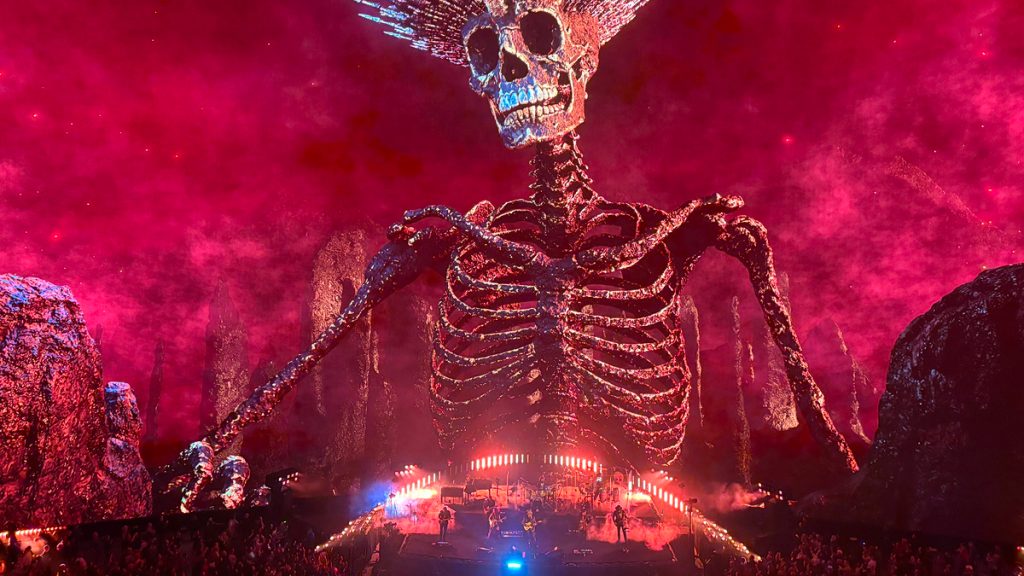
Zac Brown Band’s run at the Sphere took place from December 5, 2025 to January 17, 2026, totaling 8 shows. Their presence expanded the venue’s country and roots-music reach, while also showing that the Sphere can support artists whose live shows depend on musicianship as much as visual production. The run helped maintain the venue’s residency cadence through the winter season.
ILLENIUM — Odyssey
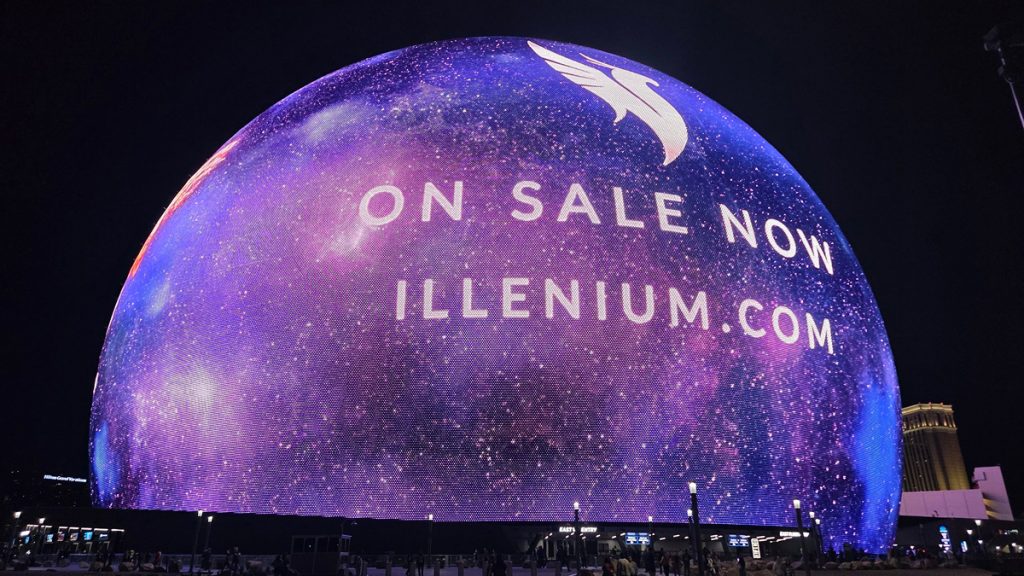
ILLENIUM’s residency is listed from March 5 to July 4, 2026, for 11 shows. His project is a strong fit for the venue because electronic music benefits from the Sphere’s immersive screen and spatial audio design. This residency continues the venue’s pattern of pairing high-concept productions with artists whose audience expectations already lean visual and emotional.
Phish — Phish at Sphere
Phish returned to the venue with a second 2026 run from April 16 to May 2, 2026, for 9 shows. Their return is notable because it shows the Sphere can support recurring multi-run bookings from the same act when demand and concept remain strong. Phish’s improvisational identity again makes them a natural match for a venue that rewards variety from night to night.
No Doubt — Live at Sphere
No Doubt’s residency begins on May 6, 2026 and runs through June 13, 2026, for 18 shows. This is a big cultural booking because the band’s reunion has strong crossover appeal and a highly recognizable visual identity. The Sphere gives them a stage that can support both nostalgia and reinvention at the same time.
Carín León — De Sonora para el Mundo
Carín León is scheduled for September 4–13, 2026, with 7 shows. His run extends the Sphere’s reach into Latin music at a major scale and reflects the venue’s ability to book internationally significant artists across multiple genres. It is one of the clearest signs that the Sphere is becoming a global-facing residency destination.
Metallica — Life Burns Faster
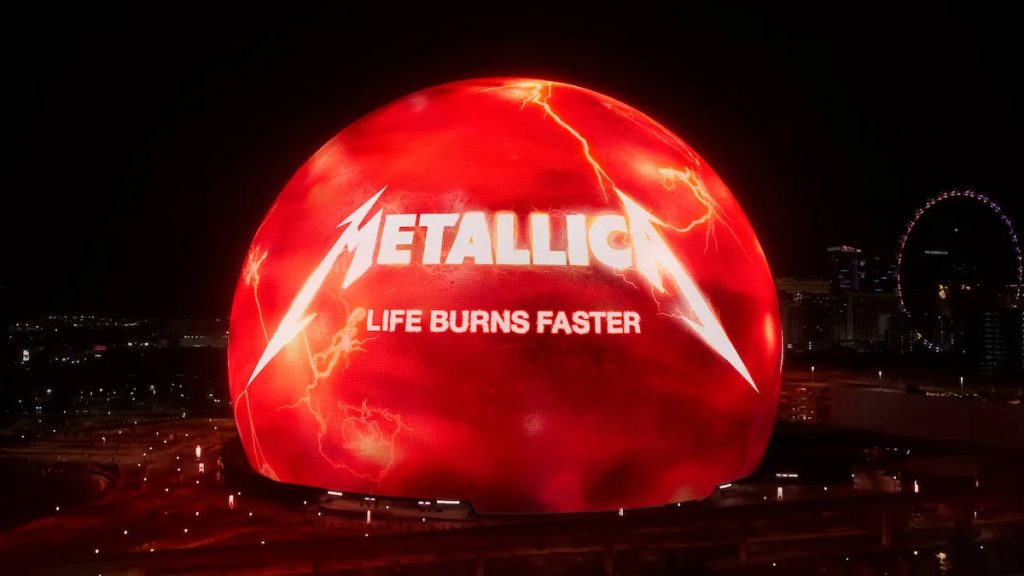
Metallica’s Sphere residency is listed from October 1, 2026 to March 13, 2027, with 24 shows. This is one of the biggest rock bookings the venue has secured and a natural fit for a band known for large-scale production and a massive worldwide fanbase. The run also suggests that the Sphere will continue leaning into premium legacy rock while expanding the venue’s long-term calendar.
The Wizard of Oz at Sphere
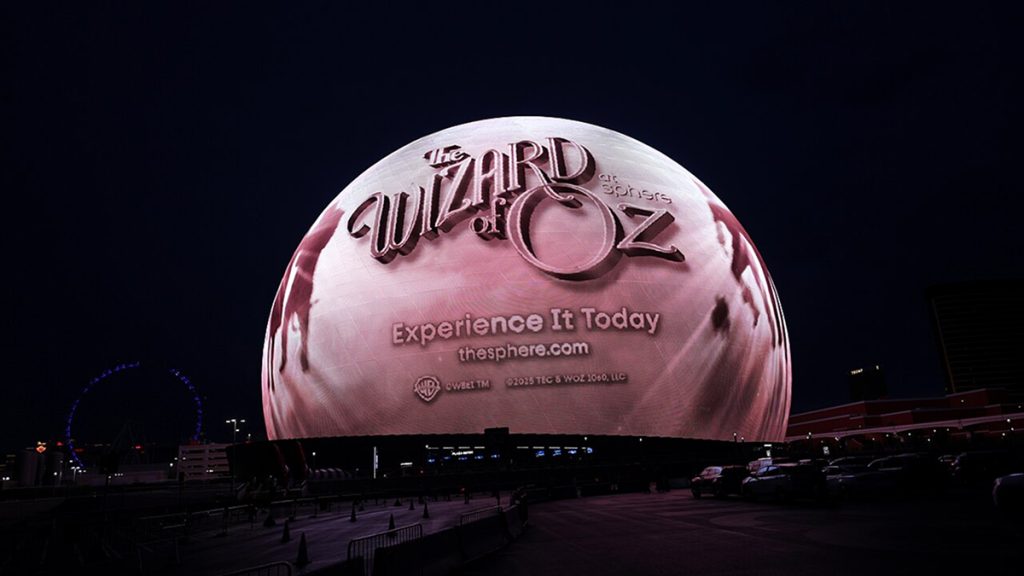
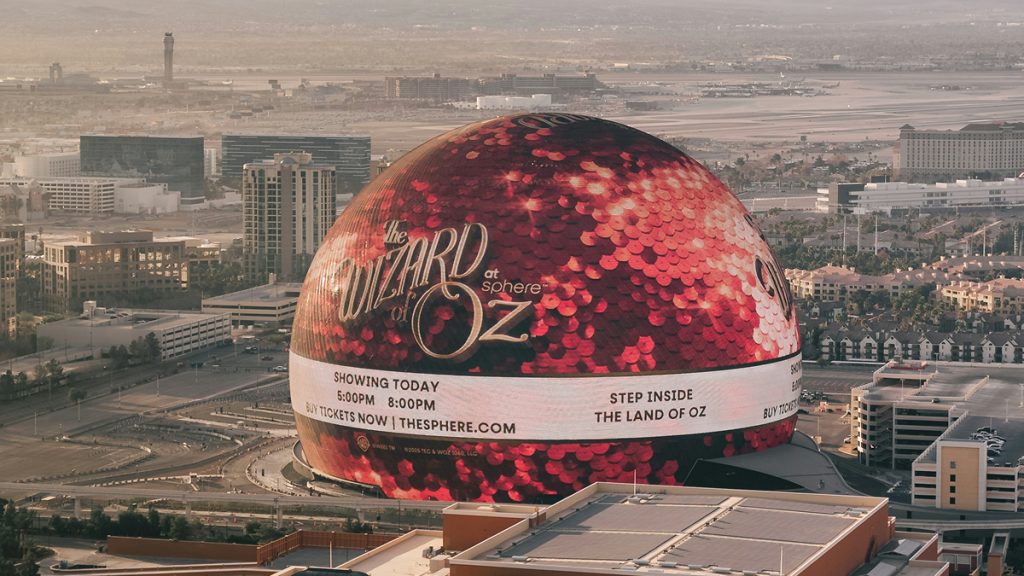
The immersive version of The Wizard of Oz began screening on August 28, 2025. This is one of the venue’s clearest examples of classic film repurposed for a very modern presentation format. It also shows how the Sphere’s non-concert programming has become a meaningful part of the building’s identity.
V-U2 An Immersive Concert Film
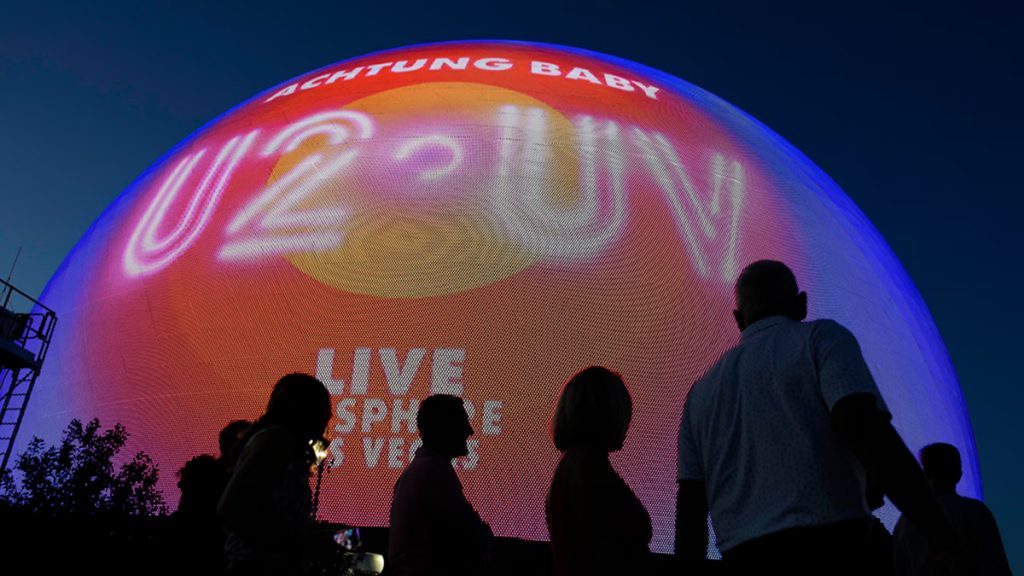
The U2 concert film V-U2 An Immersive Concert Film opened at the Sphere on September 5, 2024. It documents the band’s residency and extends the life of the U2-era content beyond the live run itself. As a format, it shows how the venue can convert a concert residency into a film-based revenue stream.
“From the Edge”
From the Edge is listed as a future Sphere Experience film that will profile five extreme sports athletes and is expected to begin screening in 2026. While a precise release date has not been shared yet, it is part of the venue’s continuing push into cinematic, experiential programming.
Buying Tickets for the Sphere in Las Vegas is a Unique Process
Sphere Vegas tickets can vary widely depending on the event, the artist, and how close the performance is to the venue’s most premium dates.
The Venetian has stated that ticket pricing for immersive presentations can start in the low hundreds for some film experiences, while concerts and special events can range from under $100 to well over $1,000 depending on demand and seat location.
That pricing spread is important because the Sphere operates in a premium market where value is tied not just to the performer but to the format of the experience. Fans are buying a ticket into one of the most technologically ambitious rooms in live entertainment, which makes packaging, presales, and VIP inventory especially important.
A useful way to think about the Sphere Las Vegas seating chart is to treat it as an experience map rather than a simple distance chart. Because the screen and audio are engineered for broad coverage, the “best” seat depends on whether the buyer wants maximal immersion, a centered sightline, or a more comfortable viewing angle for long-duration events.
Why the Las Vegas Sphere Matters in the Premium Event Space
The real significance of the Las Vegas Sphere is that it pushes the live-events industry toward content-first venue design.
Rather than asking how a venue can fit more seats into a conventional bowl, the Sphere asks how architecture, software, audiovisual engineering, and show production can be integrated into one single experience.
That has implications for touring, sponsorship, corporate entertainment, and even destination marketing. The Sphere Las Vegas cost of $2.3 billion set a high bar, but the venue has also shown strong revenue potential; in 2024, it reportedly grossed $420.5 million from 1.3 million concert tickets sold, which suggests that premium experiential programming can generate major commercial returns when demand is there.
It also creates a new benchmark for audience expectations. Once fans see what is possible inside Sphere Las Vegas, they begin to expect more from other venues in terms of sightlines, audio fidelity, and immersive storytelling, which is why the building is already influencing how people talk about the future of event presentation.
The organizers and partners involved in managing the Sphere know this which is why there could be similar venues built over the next decade. MSG Entertainment has ambitious plans to expand the Sphere concept globally, starting with early proposals that didn’t pan out but leading to confirmed projects and ongoing talks.
Initially, the company eyed multiple locations beyond Las Vegas, including a full-scale venue in Stratford, East London, which was rejected by Mayor Sadiq Khan in November 2023 over light pollution concerns. Alternatives like Teesside in North East England were floated by local leaders, while discussions for a K-pop-focused Sphere in Hanam, South Korea, and other Middle Eastern sites eventually shifted focus.
- On October 15, 2024, when Sphere Entertainment confirmed a second venue, and one that will be identical to the Las Vegas original, in Abu Dhabi, UAE, as part of that country’s tourism strategy.
- In March 2025, CEO James Dolan announced exploration of smaller “mini-Spheres” with around 5,000 seats, designed for easier replication in mid-sized markets while keeping the core immersive tech.
- A 6,000-seat version was proposed in January 2026 for National Harbor, Maryland, near the MGM National Harbor casino.
Most recently, in April 2026, MSG Entertainment entered talks with Japan’s SBI Holdings for a 20,000-capacity Sphere in Tokyo’s Odaiba district, featuring the full enclosed spherical design at an estimated cost of $2.2–3 billion.
These developments show a blueprint, pushing full-scale builds where demand matches scale, while scaling down for broader feasibility.

Visiting the Sphere: What You Can Expect
For anyone planning an actual visit, the Las Vegas Sphere is as much about logistics as it is about spectacle.
The venue sits beside The Venetian on the Strip, which makes it relatively easy to reach from major hotel corridors, but the experience begins before you enter because arrival timing, security, and crowd flow all affect how smoothly the night feels. The venue’s size, visibility, and premium positioning also mean that peak-event nights can feel busy well before showtime.
One of the most useful things to understand is that the Sphere Vegas experience is not built around casual wandering. This is a destination venue, and that changes how people should plan their arrival, dining, and transport.
For high-demand Sphere Las Vegas shows, early arrival is not just a comfort choice; it is the simplest way to reduce friction and make the most of the venue’s pre-show environment.
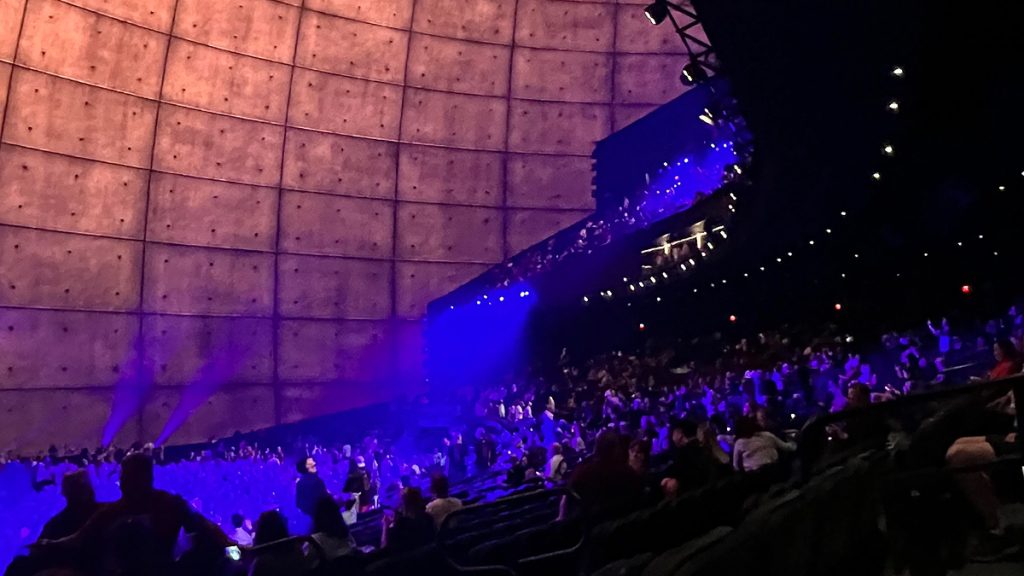
The Las Vegas Sphere Seating Strategy and What It Feels Like Inside
The Sphere Las Vegas seating chart deserves more attention than a typical arena map because the venue was designed for wraparound immersion, not just stage-facing viewing.
That means seat selection depends on what the buyer values most: centered sightlines, proximity to the stage, comfort, or the widest possible view of the screen. In many venues, the “best seat” is easy to define, but inside Sphere Las Vegas, the answer changes depending on the show format and the production design.
For concertgoers, the most premium seats often are not automatically the most immersive. A farther seat with a broader field of view can sometimes be better for content-heavy shows, especially when the screen is a major part of the performance language. That is why Sphere Las Vegas reviews often describe the experience in terms of sightline quality, visual scale, and how fully the screen and sound system are integrated, rather than only discussing proximity to the stage.
The most common reaction to the Sphere Las Vegas inside experience is that it feels bigger than a venue and more like being placed inside a moving environment. The screen wraps across the audience with enough scale to make landscape shots, abstract graphics, and cinematic sequences feel physically enveloping, while the audio system keeps the sound field coherent even in a massive interior. That combination is what gives the Las Vegas Sphere immersive experience its distinct identity.
This is also where the venue’s value proposition becomes clear. Fans are stepping into a format that can make the same artist, film, or event feel materially different from how it would play elsewhere. For first-time visitors wondering what the Sphere Las Vegas actually is in practical terms, it is best understood as a hybrid of concert hall, theater, digital canvas, and experiential attraction.
Production Lessons an Event Organizer or Venue Can Take From the Sphere
From a live-events standpoint, the Sphere Las Vegas cost and design choices make sense only if the content is built to justify them.
A venue with this much visual and audio capability rewards productions that plan for synchronized content, dramatic pacing, and a strong relationship between narrative and environment. It is not a room that benefits from generic scenic design. The Sphere rewards custom material that uses the architecture as part of the storytelling.
That is one reason the Sphere Las Vegas U2 residency became such an important reference point. It showed how a legacy act could be reframed for a future-facing venue without losing its core identity. The broader lesson for event producers is that the Sphere amplifies the creative choices behind it, which raises the bar for direction, content management, and technical rehearsal.
There is also a clear commercial reason the Sphere has become such a major talking point in the events industry.
Premium-format venues can command higher ticket prices when the audience understands that the experience cannot be replicated easily elsewhere. In that sense, Sphere Vegas tickets are sold on scarcity, novelty, and perceived technological value.
The venue’s economic model benefits from repeatable residencies, destination travel, and event programming that can sustain high interest over time. A traditional arena depends heavily on throughput, but the Sphere can operate more like a prestige attraction, where the venue itself becomes part of the marketing story.
That makes Sphere Las Vegas events especially compelling for brands and event promoters who want the building to do part of the promotional heavy lifting.
Why the Las Vegas Sphere is One of Today’s Most Successful Event Venues
The biggest strength of the Sphere Las Vegas experience is that it unites technology and emotion instead of treating technology as a novelty layer.
The visuals are impressive, but they work best when they are connected to story, music, or movement in a way that feels intentional. When that happens, the venue feels less like a giant gadget and more like a new creative medium.
That is the core reason the Sphere has attracted so much attention from the event world. It is not simply bigger than standard venues, and it is not merely more expensive to build or operate. It represents a new standard for what can happen when content, architecture, and sensory engineering are developed as one system rather than as separate parts.
The Sphere Las Vegas matters because it is changing the definition of a premium live-event venue.
From ticketing strategy and seating decisions to production design and audience expectations, the building affects every part of the live experience, and that is what makes it such a powerful case study.
For anyone evaluating the future of large-scale entertainment, the lesson is simple: the most successful shows inside Sphere Las Vegas are the ones that fully embrace what the room can do. That is why the venue has become more than a Las Vegas attraction and has become a blueprint for what will most likely be the next era of immersive events.