When there is a security incident that occurs at an event held at a bar, pub, or live music venue, the security team is often what determines whether the night ends with applause or with an ambulance.
In a province like Ontario, that team operates at the intersection of three legal regimes: the Private Security and Investigative Services Act that licenses every guard, the Liquor Licence and Control Act and AGCO rules that govern every licensed room, and the Criminal Code and Trespass to Property Act that set the hard boundaries on what security can do.
This guide covers the full job — staffing, licensing, the door, the crowd, de-escalation, force, alcohol, emergencies, backstage, paperwork, and planning — with the detail a working venue needs.

Why Venue Security Is an Important Profession and Not Just a Presence
Venue security is the organized practice of keeping a licensed premises safe: controlling who enters, managing the crowd inside, preventing and defusing conflict, responding to emergencies, and documenting everything that happens.
- In a bar, that means the door team checking IDs and the floor staff watching for the patron who has had too much.
- In a pub, it means managing a busy room where regulars and strangers mix over pints.
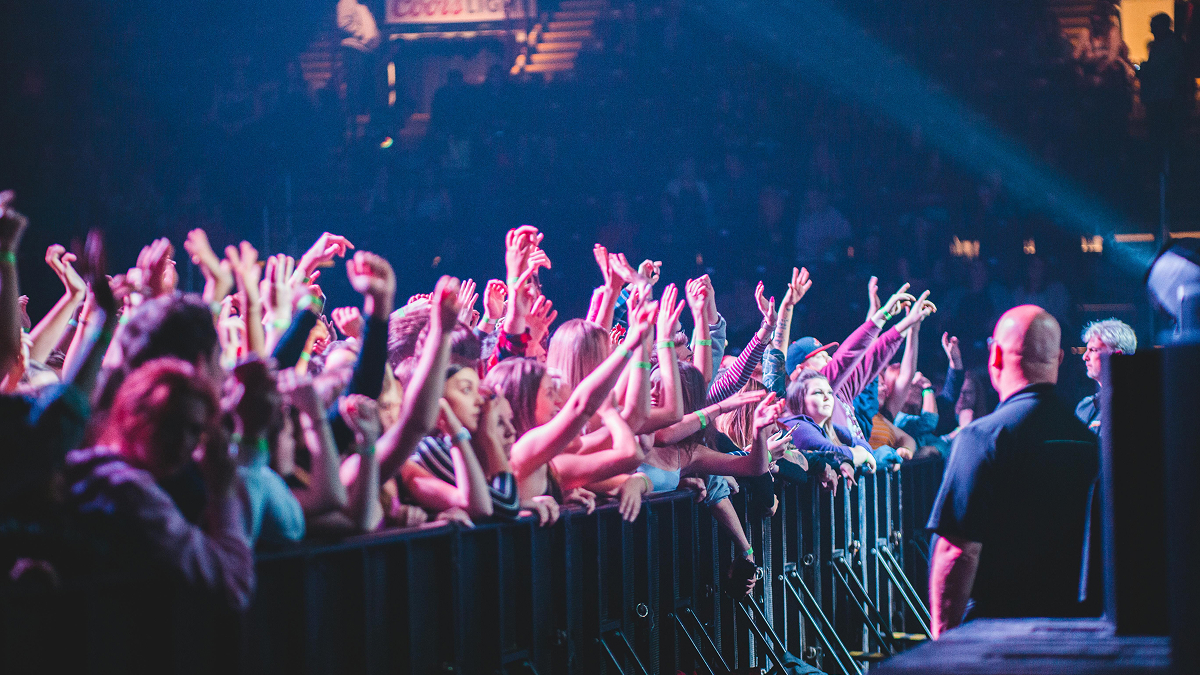
- In a live music setting, it means everything above plus stage barriers, mosh pits, backstage access, and crowds that surge as one when the headliner walks on.
The stakes are not theoretical. The Station nightclub fire in 2003 killed 100 people. Astroworld in 2021 killed 10. In Toronto in 2021, the AGCO moved to revoke a bar’s liquor licence for permitting drunkenness and disorderly conduct. Every one of those outcomes traces back to decisions security personnel made or failed to make.
Good venue security is invisible — the night just works. Bad venue security is unforgettable, and not in the way anyone wants.
Staffing: How Many Guards and Where to Stand Them
There is no single province-wide formula for guard numbers, but Toronto sets a legal floor worth knowing.
Toronto’s municipal licensing rules for entertainment establishments and nightclubs require at least one security guard for every 100 patrons in attendance while the venue is open.
Prudent venues staff above it based on risk: the genre and crowd history, expected alcohol consumption, how full the room will be, the weather, and what has happened at the venue before.
A working framework looks like this.
- A small bar or pub under 100 capacity on a routine night can run with one or two door staff handling ID checks while trained bar staff monitor the floor.
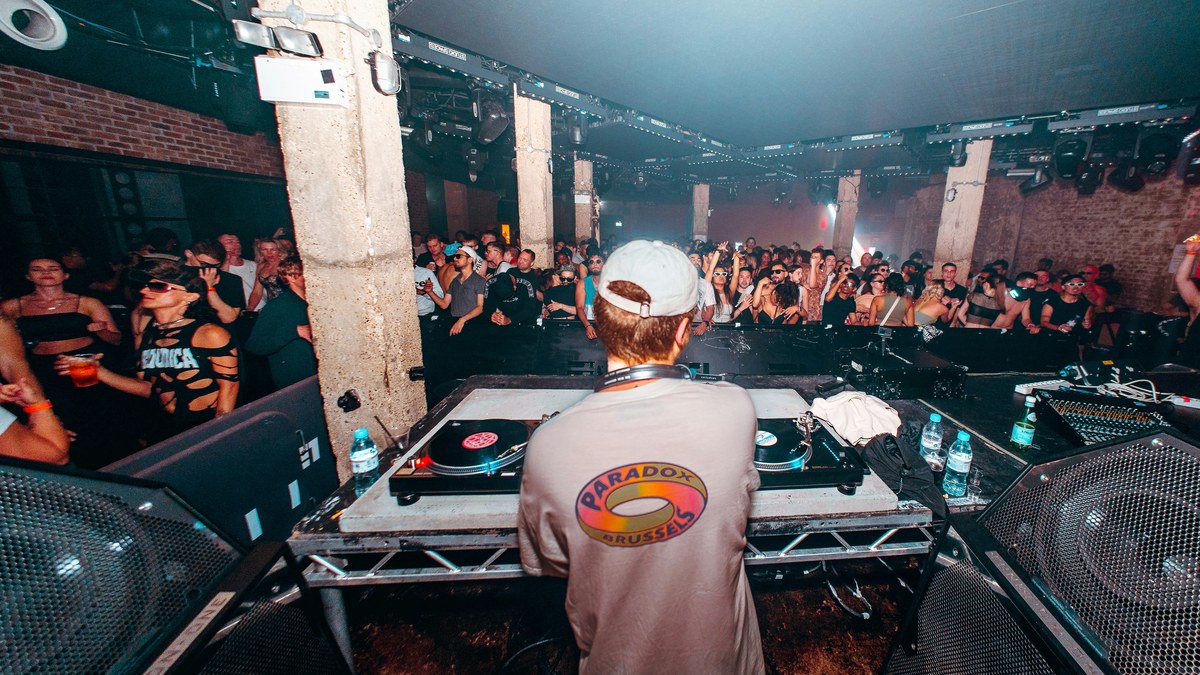
- A mid-size bar or nightclub at 100 to 300 capacity with a DJ or live band wants roughly one guard per 50 to 75 patrons on peak nights: two on the door, one or two floor walkers, and a supervisor.
- A large nightclub at 300 to 1,000 needs dedicated coverage at every entrance and exit, floor zones, bar areas, and the stage.
A live music show with a general-admission floor needs the door team plus floor walkers plus a dedicated front-of-stage team plus a backstage guard. Festivals and special events scale further, with perimeters, gates, pit teams, backstage, and paid-duty police.
Positioning matters as much as numbers.
The door is the primary control point: ID checks, bag searches, guest lists, capacity counting, and the first refusal decisions all happen here, and every entrance needs a counter — a clicker, a scanner, something that produces a real number. Floor walkers roam in pairs, watching for intoxication, harassment, theft, and conflicts developing. They should be visible, because deterrence is most of the job.
Bar areas need monitoring for crowding, unattended drinks, and aggressive queue behaviour. The stage and pit need a dedicated team managing the barrier, crowd surfers, and medical extractions. Backstage gets an access-control post. Exits and smoking areas get staffed or patrolled — they are common flashpoints and re-entry control points.
And every shift needs one clearly identified supervisor with radio contact to all posts, the authority to order ejections and call 911, and ownership of the incident log.
A well-run venue in one enforcement case had door staff keeping counts on each level and a roamer doing cluster counts in every area every 20 minutes, reporting back to the head of door security. That is the standard to aim for.
Licensed and Trained: What Ontario and Other Provinces in Canada Requires of Guards
Everyone performing security guard functions at an Ontario venue — in-house or contracted — must hold a security guard licence under the Private Security and Investigative Services Act, administered by the Ministry of the Solicitor General.
The requirements are specific: applicants must be at least 18, legally entitled to work in Canada, and have a clean criminal record. They must complete a 40-hour basic training course that includes Emergency First Aid and CPR (Level C), then pass a 60-question ministry exam.
Smart Serve certification is a separate, additional requirement at licensed premises — and it explicitly includes security staff, not just bartenders and servers. Managers, anyone selling or serving liquor, and security personnel must all hold it. The course runs about four hours online with a proctored exam, and operators should verify the current format with Smart Serve Ontario before enrolling staff.
Training should not stop at licensing. De-escalation technique, venue-specific emergency procedures, radio discipline, and the property’s own use-of-force and ejection policies all need regular refreshers.
A guard whose licence is current but who has never drilled the venue’s fire plan is only half trained.
The Door: ID Checks, Searches, and Refusing Entry
The door is where most liability is created or prevented, and ID checking is the highest-stakes task in the building.
Ontario law sets the test at “appears to be under 19”: the licensee must ensure photo ID with a date of birth is inspected before liquor is sold, served, or delivered to — or, where the licence bars underage entry, before admitting — anyone who appears to be under 19. The ID must include a photograph and date of birth and reasonably appear to have been issued by a government.
The established regulatory list includes Ontario driver’s licences, Canadian passports, citizenship cards with photos, armed forces ID, secure certificates of Indian status, LCBO-issued photo cards, permanent resident cards, and Ontario photo cards. Operators should confirm the current list against the in-force liquor regulations, since some provisions trace to older regulation numbering.
Many venues voluntarily card anyone who looks under 25 or even 30, building a margin of error into the statutory test. That is good practice — but the enforcement test remains the law, and the AGCO enforces it aggressively. Its inspectors run a Youth Compliance Monitor program using 16- to 18-year-old test shoppers, supervised at all times, to probe ID checks.
Penalties for selling to a minor can reach $100,000 per the AGCO’s penalty schedule, plus suspension or revocation of the licence. The 2021 CAGE KTV & Bar case in Toronto, where the AGCO suspended and moved to revoke a licence, shows these are not theoretical numbers.
Train door staff on the genuine article, not on every possible fake. A real Ontario driver’s licence is rigid polycarbonate with laser-engraved photo, signature, and personal information; fine-line background printing; a 2D barcode; micro and rainbow printing; a secondary laser-etched “ghost” photo; and ultraviolet features.
Practical checks: feel the card’s rigidity, tilt it to watch holograms and rainbow printing shift, verify the ghost image’s alignment, and where scanners are used, confirm the barcode data matches the printed name and birthdate. A small black light at the door reveals UV features cheap fakes lack.
Watch behaviour too — reluctance to hand over the card, or a group where everyone suddenly forgot ID, tells its own story. If doubt remains after a second piece of ID is requested, the default is refusal. Staff are never obliged to admit or serve someone just because ID was produced.
Bag checks and pat-downs follow one iron rule: consent.
Security guards in Canada have no general power to forcibly search patrons. The workable model is consent as a condition of entry — clear signage stating that bags are subject to search, staff asking for consent, and a patron who refuses being denied entry rather than searched. Search bags, not bodies, as the default.
Pat-downs happen only with clear consent, by a guard of the same gender where possible, and never as punishment. Never detain someone to finish a search; if they walk away, let them go and deny re-entry. Weapons or drugs found in a bag mean police, not improvisation.
Guest lists, wristbands, and stamps need the same discipline as IDs. Keep one authoritative list at the door and reconcile it with the capacity count. Use wristbands for age tiers and hand stamps for re-entry, changing stamp designs regularly and keeping spares secure. Log every refused entry with the time and reason — patterns are intelligence.
Refusing entry is lawful — a licensed venue is private property — provided the refusal is not based on prohibited grounds under Ontario’s Human Rights Code, so policy wording deserves legal review.
Lawful grounds include underage or unacceptable ID, intoxication on arrival, no ticket or list spot, capacity reached, dress code, prior bans, aggressive behaviour, or refusal of a bag check. The protocol is brief and professional: be polite, give the reason once, do not debate, offer an alternative where possible, and call the supervisor if the person escalates.

Inside the Room: Crowd Management That Prevents Disasters
Capacity is not a suggestion. Ontario liquor regulations require that the number of persons on the premises, including employees, never exceed the licensed capacity — a figure derived from building and fire-code occupant-load calculations, not set by the venue.
Enforcement is mechanical: counters, clickers, or scanners at every entrance, real-time counts visible to the door supervisor, and periodic zone counts by floor roamers. At capacity, run a managed one-out-one-in queue and communicate wait times honestly; nothing breeds line conflict like silence.
Density is the early-warning metric. Event-safety practice treats roughly four persons per square metre as the caution threshold in general areas and roughly two per square metre in high-risk zones — front of stage, pits, choke points. Train floor staff to recognize the danger signs: people unable to lift their arms freely, being moved involuntarily by the crowd, or unable to turn around.
Those are compression-asphyxia precursors, and they demand immediate action: stop the pressure, open space, and if necessary stop the show.
Map choke points before doors open: entrances and exits, corridors, stairwells, washroom lines, the bar. Keep walkways wide and unobstructed, post staff at natural bottlenecks, use barriers to create orderly bar queues instead of scrums, and never let anything block an emergency exit — not for crowd control, not for any reason.
Mosh pits at rock, punk, metal, and hardcore shows are foreseeable, so plan for them instead of pretending they will not happen. Industry practice calls for a dedicated front-of-stage team, a defined pit area with controlled access and reduced operating capacity, real-time counting of the pit enclosure, and barrier design that gives the crowd a visible limit — research on crowd behaviour notes that when people perceive the barrier’s limits, the impulse to push drops.
Brief the artist’s tour manager on house rules for pits, crowd surfing, and the exact conditions under which the show gets paused. And know the predictable surge moments — lights-down, the first song, the biggest chorus, the encore — with staff pre-positioned and sightlines clear before each one.
The line outside is part of the venue. Run it with barriers or queue mazes, keep it off the roadway, post guards at the head and tail, communicate wait times, watch for intoxication and conflicts developing in the queue, and have a closing dispersal plan: staged release, taxi and rideshare staging areas, and for large events, paid-duty officers visible outside.

Talking People Down: De-escalation That Works
Most venue incidents are resolved — or created — in the first sixty seconds of contact. The goal is compliance through verbal technique, not dominance.
The core sequence, distilled from professional security guidance: get the person’s name, which personalizes the encounter and makes them more likely to listen.
- Practice active listening — clarify, paraphrase, ask open-ended questions so they feel heard; frustration drops when people believe you understand.
- Slow down: speak slowly, suspend judgment, show empathy even when you disagree.
- Get them to say “yes” through reflective summaries (“So you’re frustrated because you can’t get back in — is that right?”), because agreement defuses anger.
- And never say “calm down” — it signals you are not listening and reliably makes things worse.
Explain what you are doing and why.
Offer limited alternatives: “I can’t let you back in tonight, but I can get your jacket from coat check.” State consequences plainly. Give people adequate time to comply rather than demanding instant obedience.
Read the warning signs early. Raised voices, clenched fists, pacing, invading personal space, fixed staring, the shift from complaining about a problem to threatening you — and in venues, intoxication as the great accelerant. Slurred speech, loss of coordination, and emotional volatility should trigger early, low-key intervention before a flashpoint.
A gathering crowd with phones out is both a warning sign and a reason to resolve things quickly and professionally.
Physical positioning matters. Hands visible, relaxed, in front of the body above the waist. A bladed 45-degree stance, not squared-up confrontation. Roughly 1.5 to 2 metres of reactionary distance. Stay at eye level, never turn your back, never block their exit, and stand at an angle so you can sidestep.
Know the four modes.
- Observe and monitor low-level rowdiness — keep it in sight, position nearby.
- Engage verbally on harassment, aggressive posturing, disputes, early intoxication — one officer speaks while the others support silently.
- Go hands-on, with minimum force and backup, only for imminent assault, an assault in progress, or someone who must be removed and will not leave.
- And withdraw and call police for weapons, serious injuries, being outnumbered, or anything beyond training.
Intoxicated patrons get the Smart Serve intervention model: slow service first — count drinks, serve one at a time, offer water and food, manage rounds — then stop service if needed. To stop service: alert a backup person, seek privacy away from the crowd, watch body language, avoid judgment, show empathy, be firm, communicate the decision clearly, and stay on guard.
An already-intoxicated person should not have been admitted in the first place. Arrange safe transport — a taxi, a sober friend, or EMS in extreme cases — and never put an incapacitated person out on the street alone.
Breaking up fights has its own protocol. Approach with backup and announce loudly: “Security — break it up!” Separate the parties and move them to open space rather than wrestling in a crowd. Do not place yourself between two actively swinging combatants; use verbal commands and, if hands-on is unavoidable, control one party while your partner controls the other.
Once separated, keep them apart — the most common failure is letting them re-engage. Call 911 for weapons, serious injuries, or multi-person brawls. Then document everything immediately.

When Words Fail: Force, Arrest, and the Law
This section summarizes research and is not legal advice. Get venue policies reviewed by counsel.
Ontario security guards are licensed, but the licence confers no peace-officer status. A guard’s powers are those of an ordinary citizen plus whatever authority the property owner or occupier delegates. That boundary shapes everything.
Citizen’s arrest, under section 494 of the Criminal Code, allows a person authorized by the owner or lawful occupier of property to arrest without warrant someone found committing a criminal offence on or in relation to that property — at the time, or within a reasonable time afterward where a peace officer cannot feasibly make the arrest.
The arrested person must be delivered to a peace officer without delay. The limits are strict: the power is triggered by criminal offences — assault, theft, weapons offences, mischief — not by rudeness or rule-breaking. Only reasonable, proportionate force may be used, no more than necessary. Excessive force exposes the guard and the employer to criminal assault charges and civil liability.
Self-defence and defence of property are separate provisions, assessed on all the circumstances — “lawful” does not automatically mean “reasonable.”
Most ejections, though, rest on trespass law, not arrest powers. Under Ontario’s Trespass to Property Act, it is an offence to enter where entry is prohibited, engage in prohibited activity, or fail to leave immediately when directed by the occupier or an authorized person — and venue security staff are authorized persons.
The practical ejection sequence: clearly direct the person to leave; if they refuse, they are trespassing — repeat the direction and warn that police will be called; escort with minimum force only if safe and lawful; call police if they will not leave or if they return. Issue written trespass notices for serious cases and keep a ban list with photos at the door.
What security can do: observe and report; ask for ID and consent to searches as a condition of entry; refuse entry; direct trespassers to leave; use reasonable force to remove a trespasser or effect a lawful citizen’s arrest; defend themselves and others; detain briefly pending police arrival after a lawful arrest.
What security cannot do: conduct non-consensual searches; use force as punishment or to teach a lesson; prolong detention after the justification ends; carry prohibited weapons without proper authority — batons, pepper spray, and handcuffs each raise distinct legal issues that need counsel’s input; pursue offenders far beyond the property; or discriminate in admissions.
Call police for weapons of any kind, serious assault or injury, sexual assault, drug dealing, an ejected person who refuses to leave or returns, any arrest staff have made, and any situation where staff are outnumbered or the risk exceeds training.
Set up the relationship before the crisis: know the local division’s non-emergency line and have a direct routine for event nights.

Alcohol: The Industry’s Biggest Security Challenge
Alcohol causes more venue security incidents than everything else combined, and Ontario law treats over-service as a serious matter. A licensee must not sell or supply liquor to a person who is or appears to be intoxicated, nor permit practices that encourage immoderate consumption.
Beyond AGCO sanctions — monetary penalties, suspension, revocation — licensees face civil liability for harms caused by intoxicated patrons, including harms outside the premises, and courts have awarded six-figure damages against establishments that overserved. Liability does not end when the patron walks out the door; it continues until they are sober.
And only time removes alcohol from the blood — not coffee, food, or cold air.
Security and bar staff are one team with different vantage points, and the relationship needs deliberate building. Agree on intoxication indicators — slurred speech, glassy eyes, stumbling, aggression, emotional swings — and a discreet signal or radio code for “cut this person off.”
When a bartender stops service, security delivers and enforces the message; never undermine it by serving the person elsewhere in the venue.
Last call and closing need choreography. Announce last call clearly and stop serving at the legal hour; remove or secure alcohol promptly, because lingering drinks extend both the night and the liability. Bring house lights up in stages, change the music, stop entry well before close. Security sweeps every zone in pairs — washrooms, patios, smoking areas, backstage, stairwells — announcing the sweep as they go.
Manage the exit flow with staged release rather than a single surge, position staff at the doors and along the dispersal route, and coordinate taxi and rideshare staging. For large or high-risk closings, have paid-duty officers visible outside. And never eject an incapacitated person alone onto the street: arrange transport, a sober friend, or EMS.
When Everything Goes Wrong: Emergencies
Fire is the fastest killer in a venue, and the Station nightclub fire wrote the lesson in 100 deaths: fire can make a room unsurvivable in under 90 seconds, and crowds flee by the familiar route — the door they entered — even when other exits stand open.
Every shift must know the fire plan: who calls 911, who grabs the extinguisher, who directs each zone to which exit, and where the muster point is for a headcount. All exits stay unlocked, unobstructed, and marked during operating hours. Detection and suppression systems must be maintained — the Station had no sprinklers and an alarm not connected to the fire department.
Train staff to counter familiar-route bias by actively directing patrons to the nearest exit, not the main entrance. Special effects, pyrotechnics, and open flames need permits, professional operators, and venue sign-off. Never improvised.
Medical emergencies follow a simple order: call 911 first, then render aid within training.
For overdoses, know the signs — difficulty staying awake, slow or absent breathing, blue or grey lips or nails, gurgling sounds, tiny pupils, cold clammy skin. Call 911, give naloxone — it cannot harm someone who has not taken opioids, and repeat doses may be needed because opioids outlast it — give rescue breaths, place an unconscious breathing person in the recovery position, and stay until help arrives.
Ontario pharmacies provide free naloxone kits without a prescription, so there is no reason for a venue not to stock them.
Brief staff on the federal Good Samaritan Drug Overdose Act, which protects callers from simple drug-possession charges — fear of police must never delay a 911 call. Keep a stocked first-aid kit and, where feasible, an AED and naloxone kit behind the bar and at the security post, and log every medical incident.
For an active threat, Canadian police services teach Run–Hide–Defend. Run if a safe path exists: escape immediately, leave belongings, call 911, warn others not to enter. Hide if escape is impossible: lock and barricade doors, turn off lights, silence phones, stay out of sight.
Defend as a last resort: commit fully, improvise weapons, work together. Venue planning means identifying multiple escape routes from every zone including the stage and green room, deciding in advance who makes the “evacuate now” call, and establishing how that order reaches hundreds of people over the PA without causing a crush — short, authoritative, repeated instructions naming the exits.
Severe weather needs its own plan wherever patios, rooftops, or festival components exist: pre-defined triggers for lightning, high winds, and extreme heat; a shelter-in-place versus evacuate decision matrix; and a named decision-maker.
None of this works without communications. Issue two-way radios with disciplined channel use, call signs, and plain-language emergency codes, and test them before doors. Designate a muster point away from the building for staff accountability after any evacuation, with the supervisor running a headcount and reporting missing persons to fire and EMS.
Keep an emergency contact card at every post: 911, the local police division’s non-emergency line, the venue manager, and the alarm company.
Backstage, Barriers, and the Stage: What Security Personnel Need to Know
Backstage is a controlled zone, and control is the whole job. Run a single controlled entry to backstage and green room areas, staffed for the entire event. Use tiered credentials — artist, crew, venue staff, media, VIP — as laminated passes or wristbands checked on every entry, not just the first, and keep a sign-in log.
The green room should be lockable, with a guard or controlled access while the artist is present, no unescorted guests, and the tour manager briefed on emergency exits and the venue’s emergency plan.
The front-of-stage barrier is safety infrastructure, not decoration. A properly engineered barrier with a pit lane lets security extract crowd surfers and distressed fans without entering the crowd. Barriers must be specified and installed by competent suppliers — improvised barriers fail under load, and the Event Safety Alliance publishes guidance venues should consult directly.
Set the house policy on crowd surfing and stage diving in advance with the promoter and artist. Many venues prohibit stage diving outright and manage crowd surfing through the pit team: surfers passed forward, lifted over the barrier, and redirected. Whatever the policy, brief it at the pre-show security meeting so every guard enforces the same rule.
Meet-and-greets need their own plan: a controlled room, searched or wanded entry where appropriate, a fixed time window, the artist’s security lead in charge, a clear path from the room to the stage or vehicle, and a plan for overzealous fans.
Write It Down: Incident Reports and Evidence
Good paperwork protects the venue, the staff, and — when done right — the patron. Every incident gets a report, written as soon as practicable: ejections, fights, medical events, refusals, thefts, property damage, police or EMS attendance.
Number each report and record the date, time, exact location, author, and supervisor notified. Name everyone involved, or provide detailed descriptions where names are unknown, with roles and contact details where obtainable. Write the narrative chronologically, factually, and neutrally — what was observed and done, in order, with no opinions on fault and no slang.
“His speech was slurred, he stumbled twice, his eyes were glassy” beats “he was drunk” every time. Record actions taken: warnings given, force used with type, duration, and by whom, first aid rendered, items seized. Note the evidence: CCTV camera numbers and time ranges, photos, seized items bagged and tagged, witness statements.
Record the outcome and notifications: police or EMS called with times and badge or event numbers, and the patron’s disposition — ejected, banned, arrested, transported to hospital. Close with supervisor review and sign-off, then file for retention.
Preserve evidence immediately. Most CCTV systems overwrite within days, so export and back up the relevant time ranges at once. Maintain a simple chain of custody for physical items — weapons, drugs, fake IDs — and hand them to police rather than storing them.
As a benchmark, some jurisdictions require footage of violent crimes to be kept at least 30 days and produced to authorities within 48 hours on request; Ontario venues should set their own retention policy with counsel.
CCTV itself carries privacy obligations. Under Canada’s federal privacy law, video surveillance needs clear signage and an appropriate consent framework, and there are breach-reporting duties when personal information is compromised. Post the cameras’ presence plainly, limit access to footage, and get the policy reviewed — surveillance that protects the venue in a lawsuit can create a privacy complaint if handled carelessly.
Before the Doors Open: Planning and Briefings
The safest nights are won before doors open. Start with a written risk assessment for the event: the artist and genre, expected crowd profile and size, alcohol expectations, the venue’s incident history, weather, and any specific threats or rivalries.
Size and position the team from that assessment, not from habit.
Hold an all-hands briefing before doors: post assignments, radio channels and call signs, the night’s specific risks, the ejection and use-of-force policy in plain language, emergency roles and muster points, and — critically — who has show-stop authority and under what conditions.
The Astroworld case study below is the reason this matters: when nobody clearly owns the decision to stop the show, the show does not stop.
Coordinate outward. For large or high-risk events, hire paid-duty police officers — in Toronto, a constable runs about $94.50 per hour at 2025 rates with a minimum two weeks’ notice for security requests, booked through the police service’s paid-duty office. Liaise with fire and EMS in advance for major events: share the site plan, the expected attendance, and the emergency access routes.
Confirm insurance certificates are in place for the event, including any promoter or contractor coverage.

Three Nights That Changed the Industry: Case Studies in Event Security Personnel
Standards
Three case studies, all verifiable, each carrying a lesson no venue can afford to ignore.
Astroworld, Houston, November 2021
Ten people died of compression asphyxia during a crowd surge at a Travis Scott festival set.
Investigations found no unified command structure, inadequate surge planning for a general-admission floor, and a show that continued for roughly half an hour after a mass-casualty declaration. No criminal charges resulted; civil cases settled.
The lesson for every venue with a GA floor: designate who can stop the show, plan for surges at predictable moments, monitor density in real time, and act on the first signs of crowd distress — not the tenth.
The Station nightclub fire, Rhode Island, February 2003
100 people died when pyrotechnics ignited flammable acoustic foam during a Great White concert.
The venue had no sprinklers, an alarm not connected to the fire department, and a crowd that crushed toward the familiar main entrance while other exits went unused. The lesson: exits unlocked, unobstructed, and actively directed; suppression systems maintained; pyrotechnics only with permits and professionals; and staff trained to fight familiar-route bias in an evacuation.
CAGE KTV & Bar, Toronto, 2021
The AGCO suspended the licence and moved to revoke it after finding the holder permitted drunkenness and allowed quarrelsome, violent, and disorderly conduct on the premises.
No one died — but the business did. The lesson: the regulator watches, over-service and disorder are licence-ending offences, and the paper trail of incident reports, ID checks, and intervention logs is what stands between a venue and revocation when the AGCO comes calling.

Is Your Venue Ready for Saturday Night with the Right Security Personnel in Place?
Walk your room this week with fresh eyes. Count your guards against your capacity and your risk, not your habit.
Check every exit — unlocked, unobstructed, marked. Test the radios. Read the last month of incident reports and ask what pattern they show. Brief the team on de-escalation before the rush, not after the fight. Confirm the naloxone kit is stocked and someone on every shift knows the overdose signs. Make sure the person with show-stop authority knows they have it.
Venue security is about systems: the right number of trained, licensed people in the right positions, with clear rules, working radios, practiced emergency plans, and paperwork that proves it all happened.
The venues that do this work rarely make the news. That is the entire point.
Build the system, drill the system, document the system — and give your patrons the only thing they came for: a safe night out.