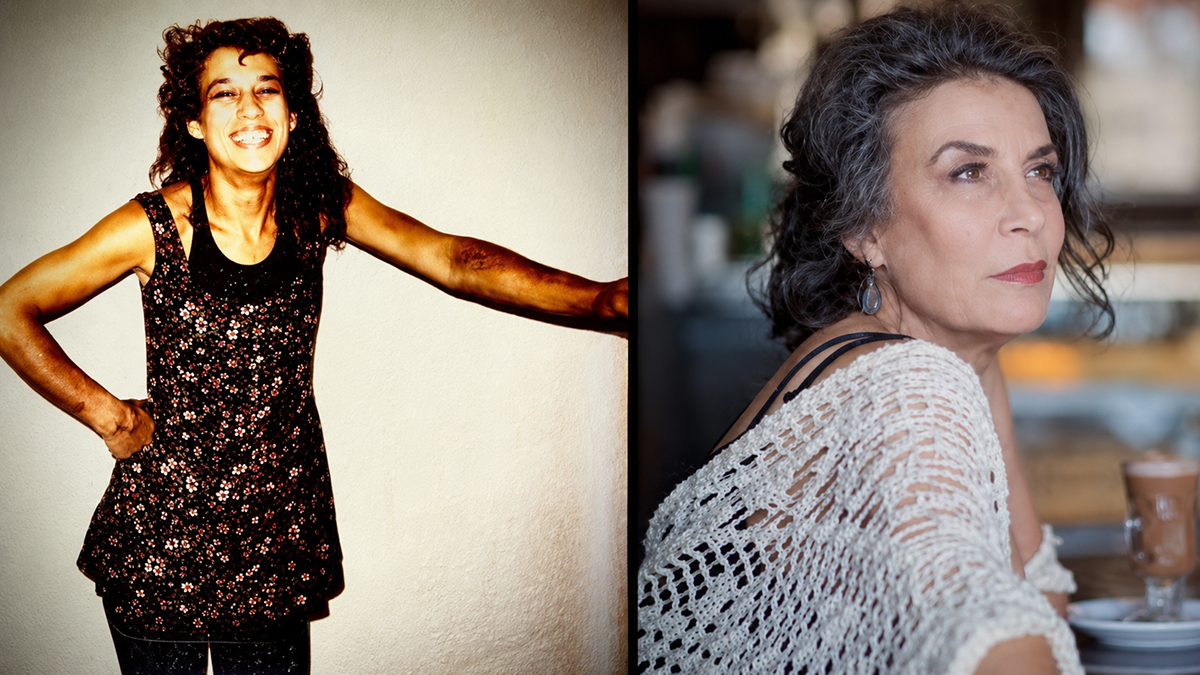
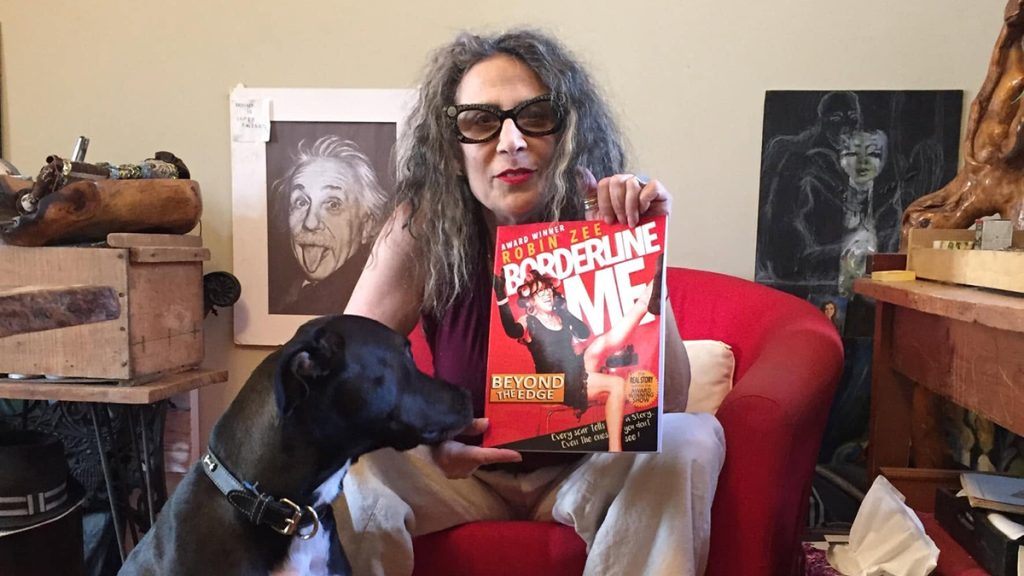
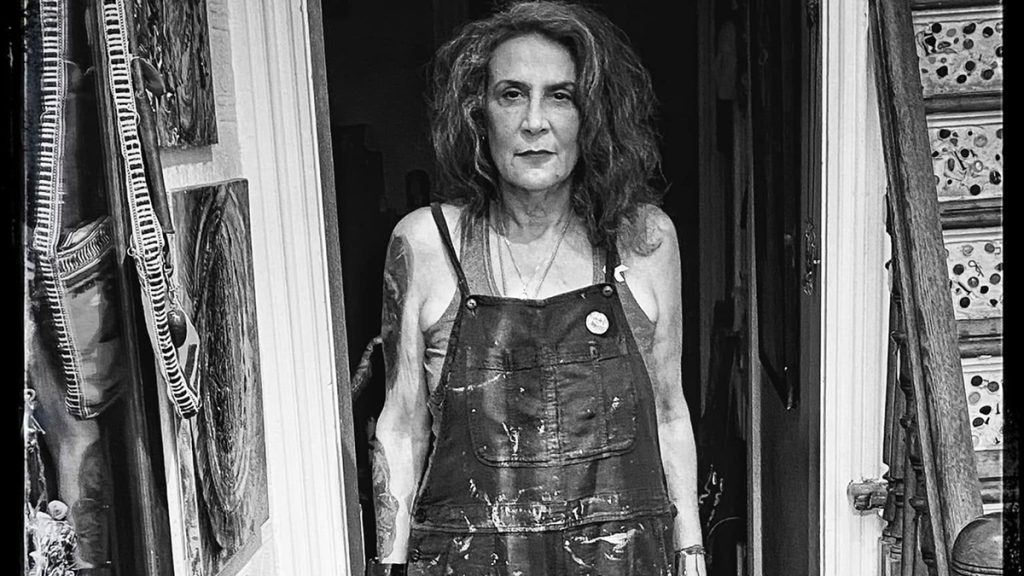
Robin Zee is a Hamilton-based artist, public speaker, storyteller, and author whose work is rooted in lived experience, resilience, and healing. Best known for her autobiographical solo show, BorderLine Me, she has used performance and public speaking to explore trauma, recovery, mental health, exploitation, and the long road toward empowerment. Her work is deeply personal, but it also speaks to wider social issues, including abuse, human trafficking, addiction, homelessness, and the need for protection and education. Through her art and advocacy, Robin has built a reputation as a brave, honest, and compassionate voice who brings difficult truths into the open with clarity and humanity. Her story is one of survival, creativity, and using lived experience to help others feel seen, informed, and less alone.
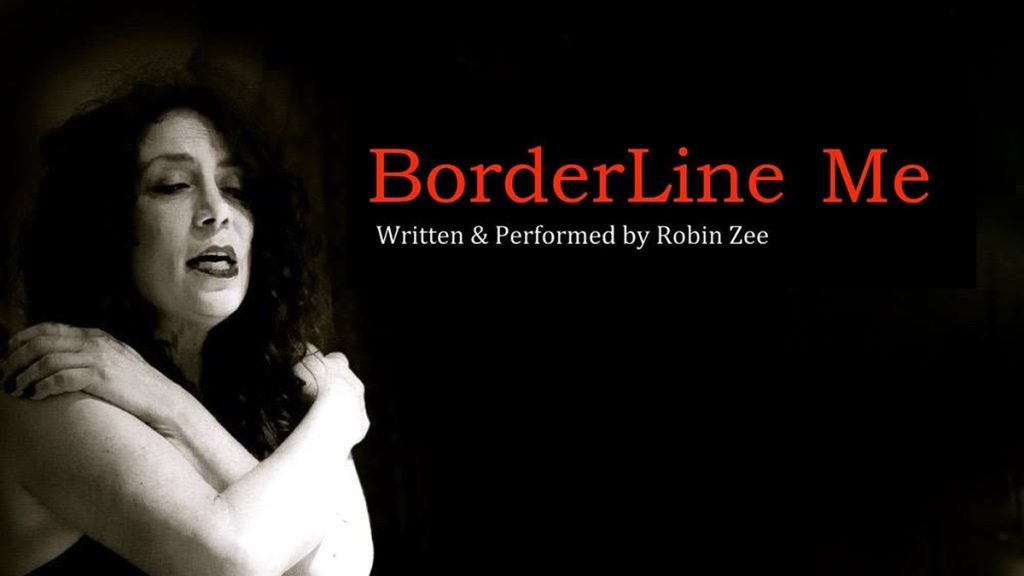
BorderLine Me: A First-Person Telling of Abuse and Human Trafficking
BorderLine Me is Robin Zee’s best-known solo performance, a 40-minute autobiographical piece based on true events from her life.
The show tells the story of how she survived a childhood marked by abuse and human trafficking, and how she eventually turned that pain into a form of storytelling and witness. While part-memoir, BorderLine Me is a piece of personal theatre designed to reveal the emotional cost of trauma while also pointing toward healing, strength, and self-definition.
The show has been described as a powerful and affecting performance that blends raw honesty with emotional intelligence.
Robin’s approach is rooted in disclosure, but not sensationalism. She brings difficult subject matter forward in a way that invites empathy rather than pity, and she uses the stage to show how survival can lead to insight, advocacy, and transformation. That balance is one reason the piece resonated so strongly in performance settings and became part of broader conversations around trauma and recovery in Ontario, Canada.
BorderLine Me also reflects the larger themes that appear throughout Robin’s public work: secrecy, shame, survival, and the need to speak openly about exploitation and mental health. Because the piece is rooted in her own life, it carries a level of authenticity that makes it especially impactful for audiences hearing these issues discussed in an educational or community context. It stands as both an artistic statement and a testimony of endurance, showing how one person’s story can become a tool for awareness, compassion, and change.
BorderLine Me was most notably performed at the 2014 Hamilton Fringe Festival, where it ran for eight sold-out shows, and later performed for the psychiatric ward at St. Joseph’s Hospital in Hamilton.
Where Went Robin Zee Post-Pandemic
Since the end of a string of BorderLine Me performances in 2020 before the COVID-19 pandemic, Robin Zee has pivoted away from live theatre performance toward public speaking, driven by health considerations and the volatile political climate surrounding antisemitism.
She paused BorderLine Me, which she had been performing since 2014, after receiving numerous threats and harassment via Facebook following the October 7, 2023, Hamas attack on Israel, including warnings of disruptions and audience harassment.
These messages made her wary, for a time, of subjecting audiences or herself to potential violence during such a vulnerable show, leading her to prioritize self-preservation.
These days, Robin is ramping up in-person and virtual and educational engagements, including a keynote presentation to the NCJWC Winnipeg and the National Council of Jewish Women of Canada in Winnipeg.
Her focus remains her personal story as a mother, survivor of grooming and trafficking from ages 8–34, and advocate for protection and education around abuse, addiction, mental health, and empowerment. While she misses performing and has left the door ajar, she feels the current environment makes stage work too risky.
This shift reflects both resilience and strategic adaptation, turning inward challenges into outward impact through safer platforms.
Our Interview with Robin Zee
In early June, Ticketscene had the privilege of sitting down with Robin Zee to discuss a wide variety of topics surrounding BorderLine Me as well as what Robin’s been up to since the show wrapped.
Q: Can you share what inspired you to first step into public speaking and performance after years in social services?
ROBIN: This actually happened prior to working in social services. I was in recovery, and now I have 35 years under my belt. Part of recovery is sharing one’s experience. With time and effort, I began being asked to speak at other people’s one-year and multi-year anniversaries. That grew into speaking at conferences, including an international one. I loved the experience and the opportunity to make a difference in the lives of others using my personal story. To be perfectly honest, being on centre stage had its appeal, going from invisible to visible. It also provided another challenge: keeping my ego in check. Nothing good comes from feeding the ego, just my two cents. Public speaking became an integral part of my personal recovery and continues to this day. While speaking, people often suggested I write a book. My first thought was that the world needed another recovery book like it needed a hole in the head. Plus, my first learned written language was French, and my English spelling is atrocious. I then returned to school, excelled, and focused on addiction, mental health, and life skills coaching before entering the workforce.
Q: What was the turning point that made you decide to transform your personal experiences?
ROBIN: I wanted to see myself as a kind, generous, and courageous woman. I knew that courage doesn’t exist without some fear. I had spent a lifetime stuck behind that line of fear, immobilized. I survived the streets and the underbelly of society. That wasn’t courage, it was sheer survival. CPTSD and dissociation fuelled my drive to grow into a courageous, kind, and generous person.
Q: How did discovering solo theatre, like Shelley Marshall’s work, change the way you saw your own story?
ROBIN: When I semi-retired, I was invited to attend Shelley Marshall’s one-woman show. I was deeply moved and inspired. One thing led to another, and she connected me with Tracey Erin Smith, founder of Soulo Theatre. This was an opportunity to bypass writing a book and provided an alternative way to deliver my story that had never occurred to me. When Tracey first invited me to attend her workshop, it was February, and my response was, “I don’t do February.” Fear probably played a part in that. But another workshop came around in March, and I signed up and made the commitment. It was an amazingly nerve-wracking opportunity. My fear rose to the top, but I didn’t let it stop me. I had no theatre experience, but I knew I didn’t know much of anything, including how to bridge my past to my present. With Tracey’s amazing guidance, BorderLine Me was born. The bridge we came up with was the birth of my daughter. To some degree, BorderLine Me changed my life so profoundly. As I witnessed myself growing into my own skin and power, I am so grateful. It gave my story a completeness, as opposed to the fragmented pieces, which almost became the title, because that’s very much how my life had felt.
Q: When BorderLine Me debuted at the Hamilton Fringe in 2014, what surprised you most about audience reactions? Did the audience reaction change over time as the cultural landscape shifted?
ROBIN: I was blown away. First off, I struggled with self-promoting. I eventually grew weary of posting “me, me, me” content and began posting in support of other shows and artists I had met along the way. It transformed into an encouraging, supportive network. I fed off the audience energy and had pretty much all sold-out shows. Some were so popular that the gallery owner suggested we extend the number of seats to include standing room. We were at capacity, and I felt the magic of all that was unfolding. When it came time for the Art Awards, I had no idea. When I heard my name called, it was surreal. I had won. From the back row of Theatre Aquarius, my daughter yelled, “Way to go, Mom!” As I went to wave, the shot they got looks like I’m giving the Hitler salute. “Give the little Jew a gold star” came to mind as I chuckled at the reality of how easily things can be misconstrued. I tucked that away for a possible future comedy bit. As I continued to perform beyond the Fringe, we incorporated a Q&A. A beautiful shift came to life with the audience, and for me, that was the cherry on top. I wouldn’t have been able to do this without my background in group facilitation.
Q: You’ve described the show as a “zany journey”. How did you weave humor into such heavy subject matter?
ROBIN: It has been a zany ride. To my core, I truly believe that without a sense of humor I would have been institutionalized. There were so many years drowning in gut-wrenching pain. I can’t imagine living drug-free in that pain and keeping some semblance of sanity. One of the things that saved me is my humor. Without it, a person could drown. I believe we all have a line that can be crossed into the land of no return. Certainly, with some of what I endured, I could easily have crossed over. But there was this one thread – like the strength of a spider’s web – that unbeknownst to me, saved me.
Q: Is there any one moment from performing BorderLine Me that still stands out as particularly powerful or healing for you?
ROBIN: Yes, I have a few, but one in particular stands out. I was standing behind the curtain, waiting for my cue. My fear and insecurities rose to what felt like a panic attack. I wanted to curl up into a ball. Within a few seconds, I ran the gamut of thoughts: “If I don’t go out on stage, someone is bound to come check on me, and in front of a full house my vulnerability will be totally exposed.” That’s worse. I gave my head a shake and reminded myself that I had gone through much worse. After all, I had been drugged, tossed into the trunk of a car, and trafficked across state lines, just one example. I heard my cue, walked out onto the stage, and once there, the demons that tried to stop me dissipated. I was back in my power, delivering my story.
Q: What prompted you to put BorderLine Me on hold in 2020?
ROBIN: I initially put the show on hold due to some health issues that both scared me and intrigued me. With emphysema, one’s breath is taken away. I couldn’t imagine charging people to witness a painful delivery, and flare-ups can’t be scheduled. I often felt at the mercy of my condition and needed a breather. Funny, when I look back on my childhood and up to the age of 34 when I initially escaped, there was never any room to breathe, despite having young, healthy lungs. Isn’t it ironic how things unfold and come full circle?
Q: How has being a mother shaped the way you frame your story of protection, survival, and empowerment?
ROBIN: Whoa. I thought I was constipated, so you can imagine my surprise when I found out I was pregnant at 42 while in a trauma program at Homewood, doing inner child work. I was terrified and gobbled up all kinds of reading material that resonated, such as Barbara Coloroso’s Kids Are Worth It and Gavin de Becker’s Protecting the Gift. It was the fuel that motivated me even further in my healing because I wanted to be an emotionally present mom. I wanted to feel secure in my ability to protect my child, considering I didn’t have parents who excelled in that area. Becoming a mom taught me the true essence of pure, godly unconditional love. It was foreign to me, and much to my surprise, it came naturally once she arrived. Now, as I am hired to speak as an expert with lived experience, I often lean toward the role of parent and protector. We live in a society that mostly leans on the illusion of safety, and that makes me mad, frustrated, and is a top pet peeve.
Q: In your work, you emphasize secrecy and shame around trauma. Why do you think that’s so universal?
ROBIN: I think much of it has to do with societal norms. We live in a society that resists shining a light into the darkness, that promotes sweeping things under the carpet, and that serves up the illusion of safety. Kids don’t tell for a couple of reasons: fear of being blamed, like the old “she was asking for it, her skirt was too short”, victim-blaming, and concern about what the neighbours will say. Children also often have a desire to protect their parents from bad or shameful information. There’s shame, embarrassment, and a vulnerability that no one really wants to feel. Once spoken, it solidifies that emotion, and it can be overwhelming, especially if there is any hint of lack of support and understanding.
Q: What role has your Jewish identity and community played in your healing and advocacy?
ROBIN: When I was around three, bigger people threw stones at me and called me a “dirty Jew.” I didn’t know what that meant, but I internalized it as bad. Most of my life I was removed from my roots, like a fish out of water. When I became a mom, I realized I couldn’t teach my child anything because I didn’t know much. I had learned long ago to always access those who know. So I turned to my community leaders to learn and gain support in order to give my daughter a foundation I didn’t have. It was intimidating because my personal life experience was not common in my community, so I kept it under wraps for the sake of my daughter and possible judgment. But I was welcomed with open arms. I didn’t broadcast my history until BorderLine Me came out. Now the cat’s out of the bag, and we ain’t in Kansas anymore. I had reached a place of healing where I felt secure enough to cope, and my daughter was 15 and old enough. Coming into such a wonderful Jewish community felt like home, despite the awkwardness.
Q: As a volunteer with the Hamilton Jewish Federation’s Holocaust Education Committee, what drew you to that role?
ROBIN: My own torture lasted alone for over 20 years. However, it is not uncommon to gravitate toward traumas that bind us, and I felt a bond and connection with that pain. It’s actually quite common in the fields of social services and medicine, if you ever ask someone what drew them to tackle cancer or bipolar, there is almost always something personal.
Q: After the October 7, 2023, Hamas attack, you received threats daring you to perform. What was your immediate reaction?
ROBIN: I remembered being tied to a tree, doused in gasoline while 3 or 4 guys stood with beer in hand, laughing and flicking lit matches at me. I remembered being pinned down and cigarettes being put out on my arms. Those emotions and flashbacks surfaced initially. I felt sucked back in time, shrinking and frozen in stillness. It was exhausting. I was in shock. It took a fair amount of time for me to shed that, and in all honesty, it never sheds completely. Canada is now, I think, the number one most antisemitic country, particularly Toronto.
Q: How has the rise in antisemitism, especially in the arts, impacted your sense of safety as a Jewish performer?
ROBIN: It has been very difficult, from the threats I received and knowing others have faced the same. Even Hamilton Artists Inc., a place where I once had membership, has made it very clear that Jews are not welcome. Not overtly, but if looks could kill, I’d be dead. The power of words is not to be underestimated. Since October 7, all Jews were kicked out of the Strathcona Neighbours Group on Facebook. The kicker? The admin works for the federal government in the housing minister’s office. It’s the flavour of the year and has infiltrated the arts especially. The “peace, love, and freedom” crowd, unless of course you are a Jew. How hypocritical.
Q: With BorderLine Me on hold, what’s it been like leaving that door “ajar” while prioritizing self-preservation?
ROBIN: On one hand, I feel sad, resentful, and frustrated, as it’s a combination of health issues and societal hate, racism, and antisemitism. Whatever you call it, I call it the ugly. It’s out of my control. On the other hand, I feel proud of my decision, despite it not being an easy one, as it reflects self-love, self-respect, adulting, and self-care. Overall, I am very sad with the state of the world in general at times.
Q: Health changes played a role in pausing performances. How do you navigate performing at your best now?
ROBIN: Health changes are definitely an adjustment, like walking on shaky ground. Sometimes you have to pace yourself differently, hold onto banisters, use a walker, know your path ahead of time, and remove stressors as they impact my breathing. I’ve had to learn what I can do to give myself a better chance at a smooth delivery for my audience. For example, not consuming carbonated drinks because they impact lung capacity, or promoting scent-free environments. I do what I can, but the bottom line is there is always a possibility my breathing can go sideways. My dear friend Kathleen Burke once told me I suffer from the “What If Syndrome,” as many of us do. Then she blurted out, “What if it’s wonderful?” I’ve held onto that like a lifeline.
Q: Tell us about your upcoming Zoom keynote for NCJWC Winnipeg. What’s the core message you want them to take away?
ROBIN: The core message I want the audience to take away is the importance of teaching, sharing, and incorporating inner strength, self-awareness, self-esteem, and confidence in our children so they can trust their inner voice and gut feelings. How many times have adults overlooked red flags in their relationships? I want to highlight the illusion of safety that we cling to in order to lower our own stress. I also cover the list of signs for human trafficking, which crossover and cover many other issues. Traffickers are master manipulators. A relationship is good until it’s not. Parents need to support each other. No one should go through this alone.
Q: As you expand speaking to agencies on protection and education, what’s one myth about trafficking you most want to dispel?
ROBIN: Sadly, many still believe it doesn’t happen here, or have the preconceived notion that it only involves people from other countries. All children are prime targets, as is any human being where there is a possibility of cash flow. Awareness is key, along with empowerment, not curling up and letting fear consume us. The laws need to change, and there is power in numbers.
Q: How do you balance vulnerability in your talks with protecting your own energy as an advocate?
ROBIN: Initially after speaking, I’m on a high. There’s an energy after performing or storytelling. I feel like I’ve had a lot of practice walking the emotional tightrope. To a certain degree, I dissociate from the vulnerability, though it does hit me later – sometimes for a day or two – where I feel exposed. I always carve out gentle downtime: comfort food, music, safe mindless TV like nature and universe series, my dog next to me, and garden time. It’s where I retreat and need to just spend time with myself.
Q: What advice would you give young survivors or parents navigating similar traumas today?
ROBIN: In my past private practice, I created a safe space for them to share or even sit silently if need be. We all heal at our own pace. Never underestimate someone’s ability to shine. I validate what I hear and acknowledge their experience. When appropriate, I may share a sliver of my story for the purpose of hope. There is life after trauma. To parents, I advise them not to ask a bunch of questions and to adjust their desire/need to know with the welfare of the child’s healing in mind. Sometimes you just need to be present and silent. Seek external supports, because the weight is too heavy to carry alone. A victim is the expert, not the parent, and sometimes not even the therapist.
Q: Looking ahead, what’s the legacy you hope BorderLine Me—in theatre, book, or talks—leaves behind?
ROBIN: That’s a big one. I love that you brought up legacy. It’s funny. As I thought of the question, I realized there is no difference between BorderLine Me and me, as it is a part of who I am. I know I have impacted audience members. People have come to my show on repeat at least half a dozen times. I’ve seen audience members cry and knew which aspect touched them personally. I believe the few health scares I’ve had made me aware that one of my fears is to be forgotten. I hope BorderLine Me leaves its mark. I believe it’s not what life throws at you, but what you do with it. I have transformed my experience into something useful and constructive. I’ve made a difference. That is my legacy.
Q: If the world felt safer tomorrow, what would bring you back to the stage for one more BorderLine Me show?
ROBIN: The quickest and shortest answer is absolutely, I would. I have a feeling that when the book is ready, the world may have calmed down somewhat, and I will – if able – do another performance. Perhaps I will hire someone to professionally film it so it will last forever in the wild world of the internet and “remember whens”.