The path begins in the light.
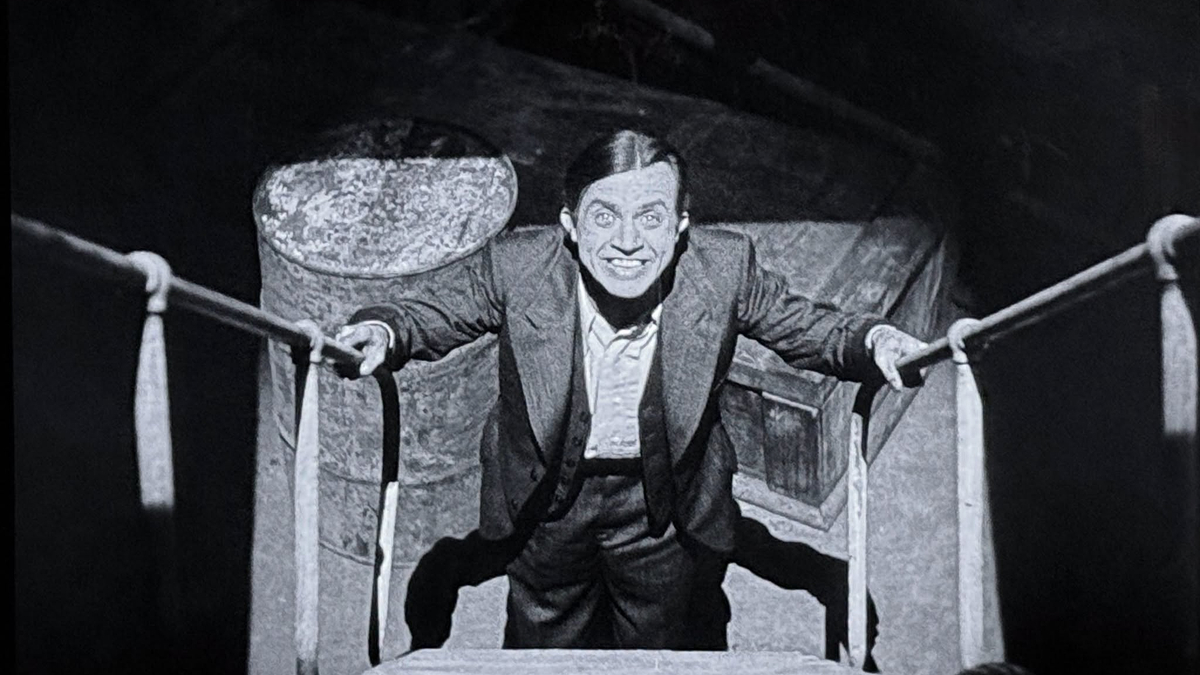
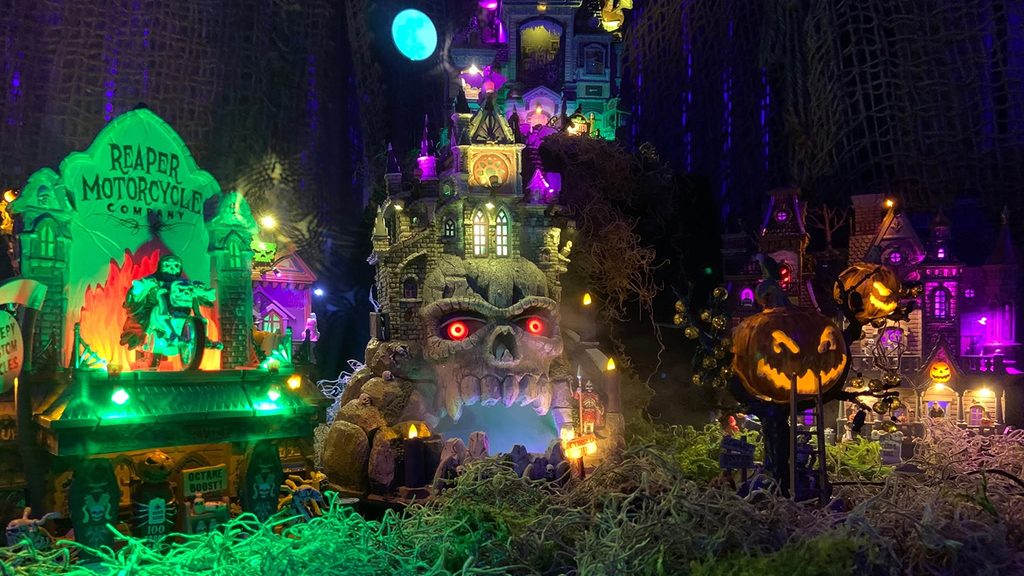
In the town square at Georgian Bay Park, a miniature Halloween town glows in purple and green. Carved jack-o’-lanterns are lit nearby. A DJ stage waits for its crowd, and an outdoor screen waits for a family-friendly horror film. An homage to clowns grins at everyone who walks past.
Then the path bends toward the trees.
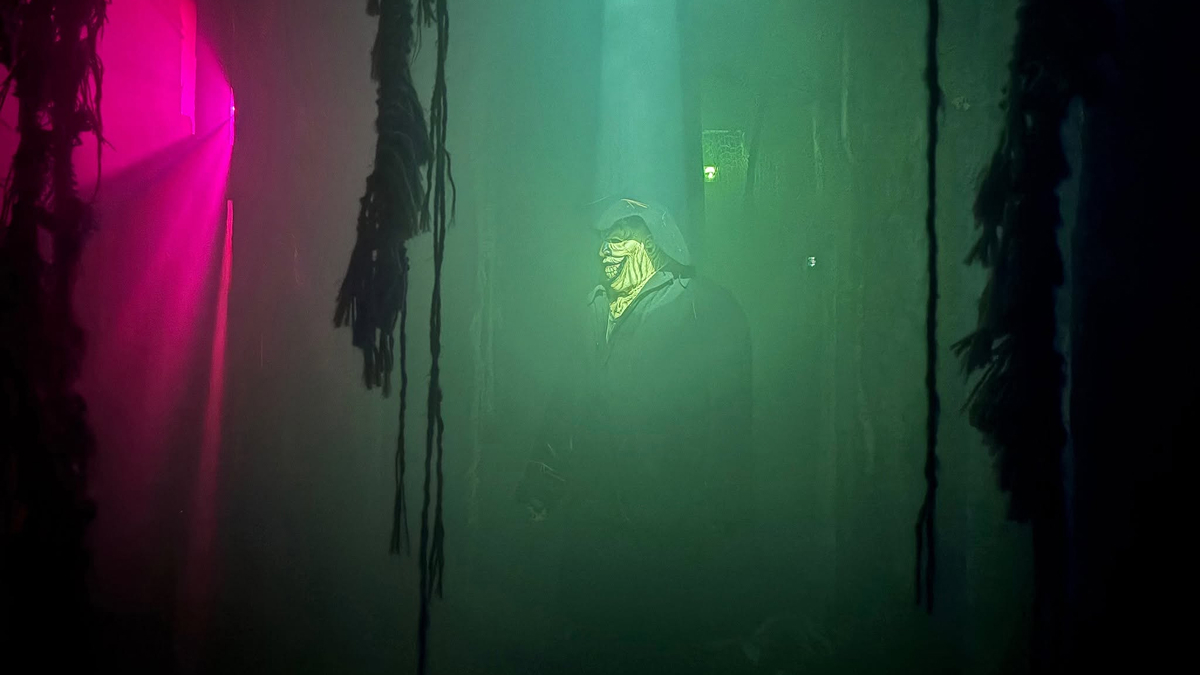
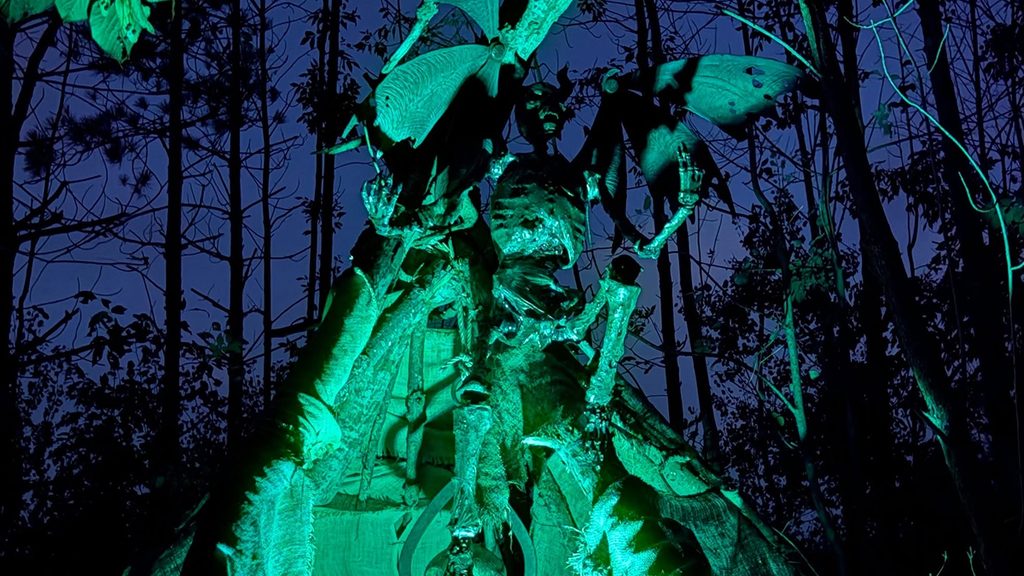
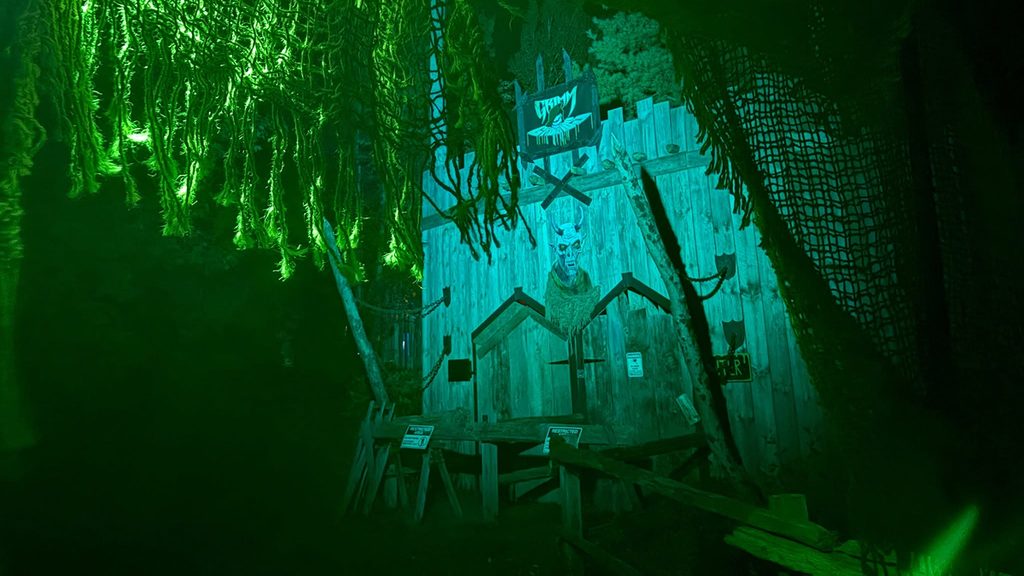
The Wendigo Trail slips into a very dark forest where monsters and folklore creatures stand among the branches. It carries visitors all the way to the back of the park. That is where Grimm Grounds waits: a custom-built, linear, large-scale, medieval-themed horror maze with live actors, theatrical lighting and a talent for jump scares.
That walk is the whole idea. Light to dark. Nostalgia to folklore to nightmare. Halloween staged as a journey rather than a product, at 4230 Crossland Road in Tiny, Ontario, on forested land above Georgian Bay.
Here’s our deep-dive into how Grimm Grounds works, where it came from and why a scare maze in Simcoe County deserves more attention than most. The thesis is simple. Halloween belongs to places. Grimm Grounds is what happens when someone takes that seriously.
It is also what happens when someone keeps going. The attraction has grown season after season, and 2026 brings the largest set of additions in its history. For anyone in Midland, Penetanguishene, Barrie, Elmvale or the villages between them, it has become the kind of October appointment that regional Halloween is made of.
A Scare Maze Built Around One Path
Most people picture a maze as a puzzle. Wrong turns. Dead ends. A map assembling itself in your head.
Grimm Grounds is not that. It is a linear maze, which means one route and no decisions. You walk forward because forward is the only direction on offer.
That choice is a trade. A puzzle maze asks you to think. A linear maze asks you to feel, and it can aim at that feeling with precision. When the route is fixed, the designers know what every visitor will see, in what order and from what angle. They can pace dread the way a director paces a film: a slow build, a held breath, a payoff.
This is why “theatrical” is the right word for the attraction and not just a marketing flourish. A theatrical maze treats the forest as a stage and the visitors as an audience that happens to be standing inside the set. Live performers supply the one thing no prop can: the sense that something is paying attention to you.
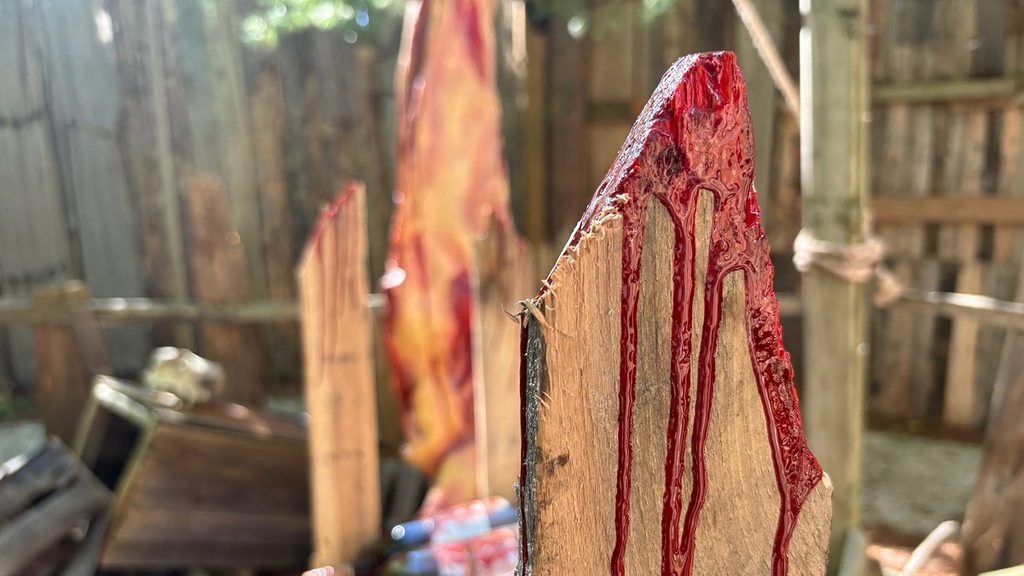
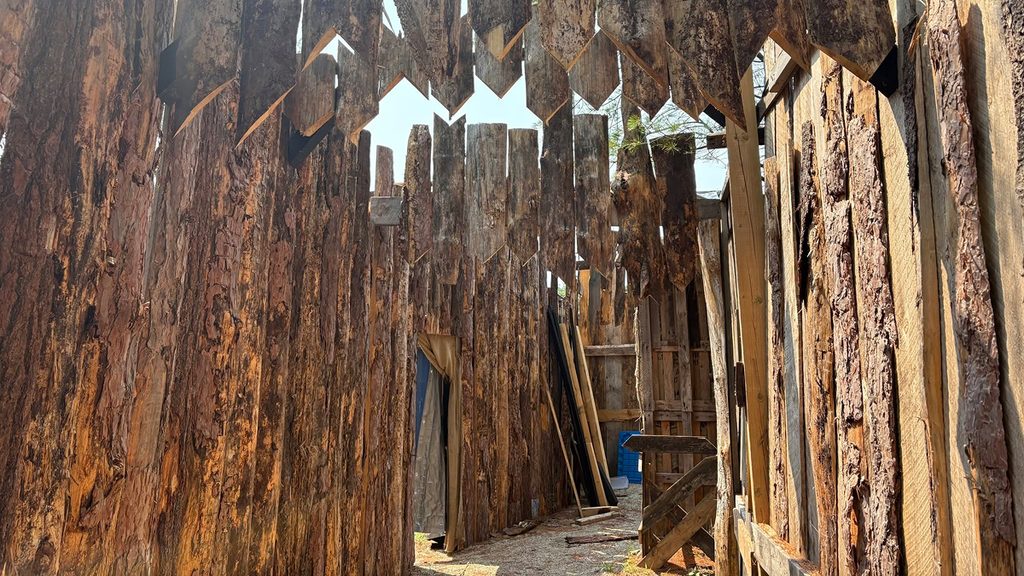
The design promises monsters at every turn, horror scenes, and a route that draws visitors deep into the forest before the jump scares and the terrifying sounds take over. Scale matters here. Grimm Grounds is large by design, and that is the logic of a single-path format: the longer the path, the longer the story. By 2024 the maze already covered an acre. The 2026 season adds a massive new section on top of it.
The theme gives that path its logic. Visitors have praised Grimm Grounds for a medieval and French Revolution demon motif, along with its effects, props and scares. The pairing sounds odd until you consider what each era contributes.
The medieval half brings the old furniture of fear: stone, torchlight, superstition, the belief that evil is a physical thing that lives in a particular place.
The Revolution half brings something more modern and more unsettling. From September 1793 to July 1794, during the Reign of Terror, France’s revolutionary government made fear official policy and sent thousands of people to the guillotine. Demons are frightening. A system that decides who counts as an enemy is worse.
Put the two together and you get a nightmare with both a creature and a courtroom in it. That is a richer proposition than a monster jumping out from behind a wall, even though the jump scares are very much on the menu.
Organizers say thousands of visitors have called it one of the best horror mazes they have ever walked. One rule protects the surprise: no photography inside the maze. Photos are welcome in the queue line and elsewhere on the grounds. Leave the phone in your pocket. The maze works best when it is the only thing you are looking at.
From Brampton to the Edge of Georgian Bay
Every haunt has an origin story, and this one starts in the suburbs.
An earlier edition of Grimm Grounds operated in Brampton. By 2017, Toronto-area roundups of haunted attractions were including it among the region’s scare destinations, and another described a large maze built from props, theatrical lighting and live actors. The recipe was already in place. What it lacked was a setting that could match its ambitions.
In 2019, Grimm Grounds moved exclusively to Georgian Bay Park. The change of address changed the attraction.
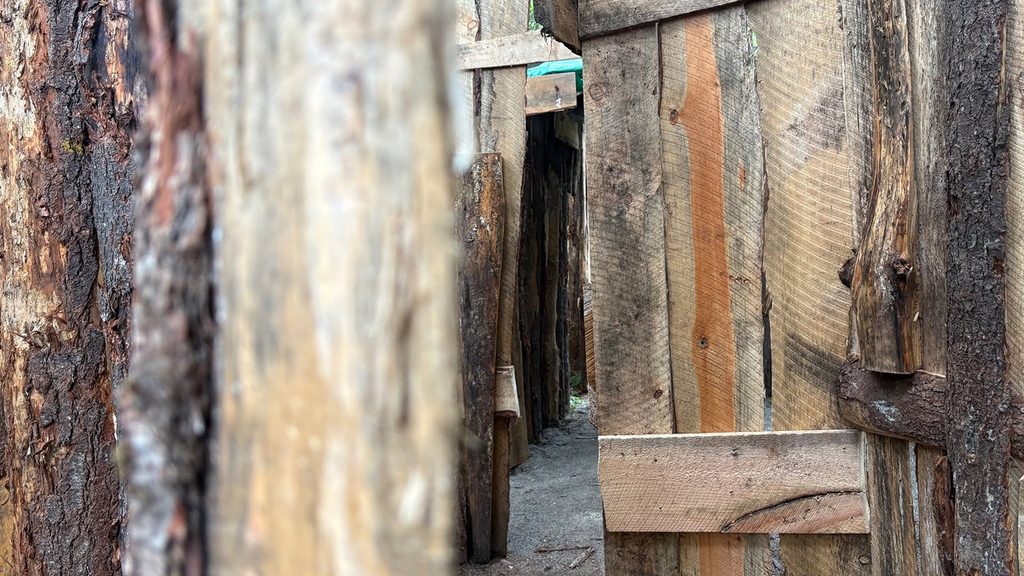
A suburban haunt has to manufacture its darkness. It builds walls, hangs blackout, runs fog. A forest hands darkness over for free, and adds the things a set builder can only imitate: uneven ground, rustling branches, the uneasy feeling that the walls go on forever. The move traded a controlled box for a landscape, and the maze grew to fit it.
Georgian Bay Park is 200 acres of private land on the escarpment overlooking Georgian Bay. In summer it is a campground and RV park with a pool, a clubhouse, a lookout tower, a working farm and a network of trails. Those trails connect to the Nipissing Ridge and Nipissing Lakebed.
The surrounding Township of Tiny is the most northerly township in Simcoe County. It occupies most of the Penetanguishene peninsula, wraps around the towns of Midland and Penetanguishene, and runs along more than 70 kilometres of Georgian Bay coastline. It is cottage country, and cottage country has a particular relationship with October. By then the summer rush has passed. The roads are quieter and the light is gone by the time a 7 PM gate opens.
A campground that spends the warm months on swimming and bike trails spends its October on dread. That contrast is part of the appeal. The same land holds both seasons.
The numbers tell the growth story plainly. The 2024 season ran across three weekends, Fridays and Saturdays only, with a single daytime walk-through. In 2026 the event runs seven nights and four daytime dates, and Halloween itself falls on a Saturday that gets both. The maze went from an acre to a massive new section. The Wendigo Trail joined the lineup as a new attraction in 2024 and returns this year with new sets and scares. Nothing about the trajectory suggests a haunt that has found its ceiling.
SpookyTown and the Art of Nostalgia
Before the dark, there is the diorama.
SpookyTown is a miniature Halloween town of handcrafted buildings and amusement rides, populated by strange residents and lit like a fairground at midnight. Organizers say it is the only display of its kind open to the public. That claim is easy to believe. Miniature towns of this kind usually live in private basements and garages, built by one obsessive over many winters and seen by a handful of guests.
There is a reason the format works. A miniature turns the viewer into a giant. You look down on a world, notice the tiny details, follow the rides with your eyes. It appeals to something older than horror: the collector’s instinct, the model railway, the Christmas village on the mantel. SpookyTown borrows that domestic tradition and gives it a Halloween accent.
Nostalgia is the real subject. The display is a memory of a fairground, a main street, a Halloween when the scariest thing on the porch was a neighbour in a good costume. It sets the emotional baseline for the walk that follows. You are charmed first. The rest of the evening works against that charm.
In 2026, SpookyTown gets bigger, with more detail and more to find. Miniatures reward the second look, so expansion here means something different than it does in the maze. It means a visitor who studied the town last year will still discover something new.
Around it, the town square works as the event’s front porch. Carved jack-o’-lanterns glow along the paths. An homage to clowns stands among a group of infamous horror characters, the genre’s most dependable nightmares arranged like a gallery. A DJ stage gives the square a pulse. And an outdoor movie screen shows family-friendly horror films.
That last detail deserves attention. Family-friendly horror is the genre’s gentlest doorway: spooky enough to feel like Halloween, safe enough to share with a seven-year-old. A film under an October sky is how many people first learn that being a little scared can be fun. The square is built for that lesson. It gives children and cautious visitors a place to belong while the braver members of the group walk into the trees.
There is a social intelligence in that layout. Few attractions manage to hold a toddler and a lifelong horror devotee in the same field. Grimm Grounds does it by sequencing the experience, with light and comfort at one end and the forest at the other, and letting each visitor decide how far down the path to go.
Walking the Wendigo Trail Through Folklore
The trail is where the evening changes key.
The Wendigo Trail is an Indigenous folklore-themed horror attraction, a very dark forest path lined with sets, lighting and live actors. Displays of monsters and folklore creatures wait along the way, and the route ends at the back of the park, where the maze begins. In 2026 the trail gets new sets and new scares hidden among the trees. Tattered fabric hangs from its branches, even in daylight.
The subject carries real weight. The windigo is a supernatural being from the spiritual traditions of Algonquian-speaking First Nations, a group that includes the Ojibwe, Algonquin, Mi’kmaq and Innu. In most oral traditions it is a cannibalistic monster that hunts the weak and the socially disconnected. Its eyes are described as sunken or glowing like embers. The legend is centuries old and predates the arrival of Europeans in North America.
What makes the windigo remarkable, as a figure of horror, is its moral shape. These stories are cautionary tales about isolation and selfishness, and about the importance of community. The monster does not stalk people at random. It punishes the ones who drift away from the group.
That is an unusual premise for a scare, and an oddly fitting one for a trail. Visitors move through the forest together. The unsettling feeling of falling behind, of a gap opening between you and your friends, is the oldest fear in the story, delivered by the simplest of means. A path through the dark turns folklore into physical sensation.
The windigo has also become a fixture of modern art and storytelling. Norval Morrisseau painted one in tempera around 1963, and the creature has since turned up in films, comics and graphic novels. The trail joins that tradition. It treats a story with deep roots as something that still frightens people, which is exactly why it has lasted.
It is worth treating that story with respect. A haunted trail is an introduction, not a full account. The Canadian Encyclopedia entry on the windigo is a good place to continue, and the legend becomes more interesting once you know what it was meant to teach.
The trail also does structural work for the event. It is the bridge between the square and the maze, a long, dark approach that lowers the lights, quiets the group and builds anticipation. By the time you reach the back of the park, you have been walking in the dark long enough to believe in it.
Why 2026 Is the Biggest Year Yet for Grimm Grounds Halloween
Organizers say 2026 brings the most additions in the event’s history. The list reads like a map of the whole walk.
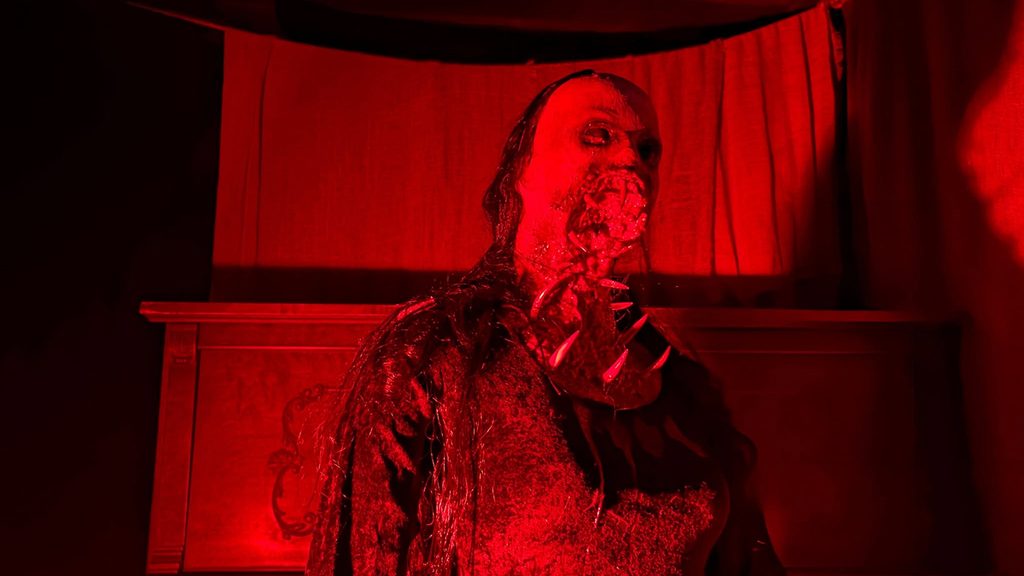
The maze gets a massive new section, along with more live performers and major new sets. The Wendigo Trail gets new sets and scares. SpookyTown grows. And a new horror art exhibit joins the grounds as a collection of dark artwork added to the experience.
The breadth matters. Many attractions put their investment into a single headline feature and let everything else coast. Here, every stage of the path has been touched: the town square, the forest trail and the maze itself. A returning visitor will notice change from the first step.
That is how a seasonal attraction survives its own success. Horror has a memory problem. The people most likely to come back are the people who already know the tricks, and a maze that never changes becomes a rerun. Expansion is the answer. Each new section is a dare to the visitor who thought they had the route figured out.
The extra live performers may matter most. Scare actors are the most flexible effect in any haunt. A prop does the same thing every time. A performer reads a group, notices the person lagging at the back, waits for the nervous laugh to fade and chooses the moment. More performers means more of that judgment spread across the route.
The art exhibit points somewhere different. Horror has a long visual history long before it had a film industry, and a gallery gives it room to be looked at slowly rather than survived quickly. Placing one inside a forest event is a quiet claim that the genre deserves both kinds of attention, the adrenaline and the study.
Together, the additions describe an event with confidence. Grimm Grounds is no longer content to be one scary walk. It is assembling something closer to a small festival of the macabre, with the maze as its centrepiece.
Where to Buy Tickets to Grimm Grounds Halloween? Daylight or After Dark: Two Ways In
Grimm Grounds offers two versions of itself, and the choice shapes the whole visit.
The night experience is the full production. It runs 7 PM to 10 PM on October 10, 16, 17, 23, 24, 25 and 31, with live scare actors, theatrical lighting, sound and effects. Admission is $16. This is the version built for horror fans, for teenagers daring each other, and for adults who plan their Octobers around a good fright.
The day experience is the gentler introduction. It runs 1 PM to 4 PM on October 10, 17, 24 and 31, with no live scare actors. Admission is $10, and daytime tickets are sold only at the park. There is nothing to book in advance. Families simply arrive and pay at the gate.
The daytime option does something clever. Seeing the grounds in daylight lets younger children and nervous visitors explore without the performers, and it turns the attraction from a scare into a place. You see how the forest sits on the land, how the town square is laid out, how far the path travels. For anyone who might return after dark, it works as a scouting trip.
It also serves a different kind of visitor entirely: the person who loves the craft. Sets look different in daylight. Detail that disappears into shadow after sundown becomes visible, and a miniature town reads differently when you can see all of it at once.
Parents should weigh the content. Organizers say the attraction includes some gore and scary monsters but no sexual themes, and that it is intended for all ages. The night version includes jump scares and an uneasy atmosphere by design. For younger children, the daytime visit is the natural fit. For older kids and teens, the call belongs to the family.
A Local Ontario Scare Maze That Will Send You Home With A Real Fright
A large, custom-built horror maze in a township of cottages and farms is an improbable thing. Its existence is worth a moment of thought.
Halloween has become an industry, and much of it arrives in a box: costumes, decorations, streaming marathons. Those pleasures are real, and they are mostly private. A scare maze is the opposite. It is communal and physical, and it cannot be paused. You have to show up, stand in a queue with strangers, and walk into the dark with people you know.
That is an old form of Halloween, and Grimm Grounds revives it with unusual ambition. Regional Halloween guides across the Barrie area list it alongside the family activities, ghost walks and community events that fill the October calendar. It belongs on that list. What sets it apart is the craft involved, a custom-built maze, a handmade town in miniature and a trail that draws on genuine folklore.
There is also something quietly theatrical about what it asks of a community. Live performance is hard to find in many small places. A scare actor working a forest path is performing for an audience that is physically within arm’s reach, and there is no more direct form of theatre. Whatever else it is, Grimm Grounds gives people a chance to see live performance up close, for the price of a movie ticket.
It matters, too, as a statement about place. Tiny, Ontario does not need to borrow a big-city attraction. Its forest, its escarpment and its long October nights supply the raw material, and the people behind Grimm Grounds have shaped them into something with a point of view. A haunt like this tells its visitors that the ground beneath them is worth taking seriously, even when the lesson arrives as a scream.
And it belongs to its audience in the most literal way. Families from Midland and Penetanguishene, friends driving up from Barrie, groups out of Elmvale, couples looking for something different on a Friday night: all of them end up on the same path in the same dark. Shared fear is a surprisingly effective way to make a crowd feel like a community.
Grimm Grounds takes place at Georgian Bay Park, 4230 Crossland Road, Tiny, Ontario. Are you ready to walk the path? Get your tickets here.