Mitch is alone in an attic. Boxes he hasn’t opened in decades sit under a film of dust, and somewhere among them is a trumpet case, a stack of photographs curling at the corners, and a letter he was never supposed to find. He is selling the family home. He tells himself he is just clearing it out.
But the moment his hand closes around that case, the walls of the present start to thin, and the room fills with the sound of a brass section warming up sixty years in the past.
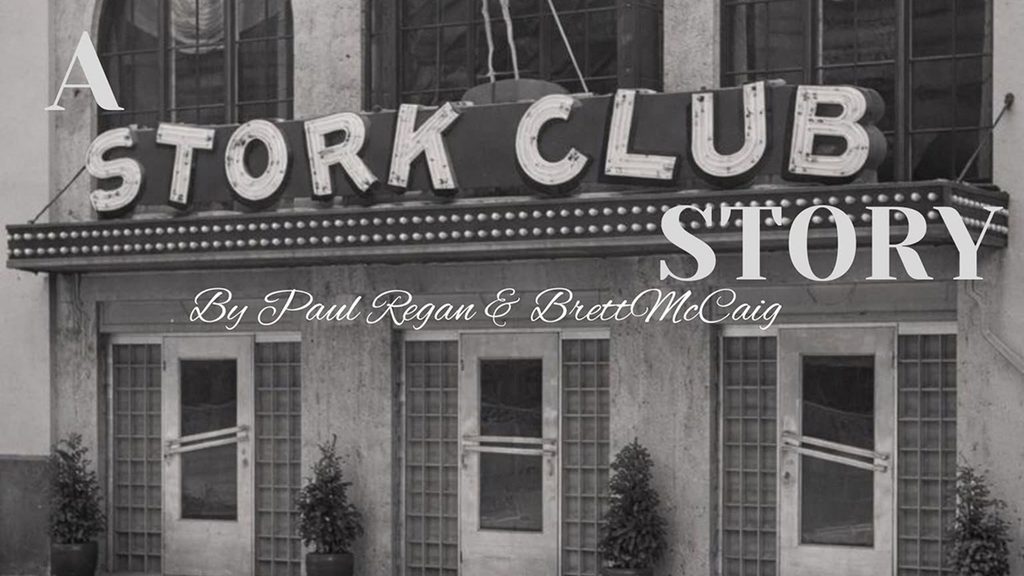
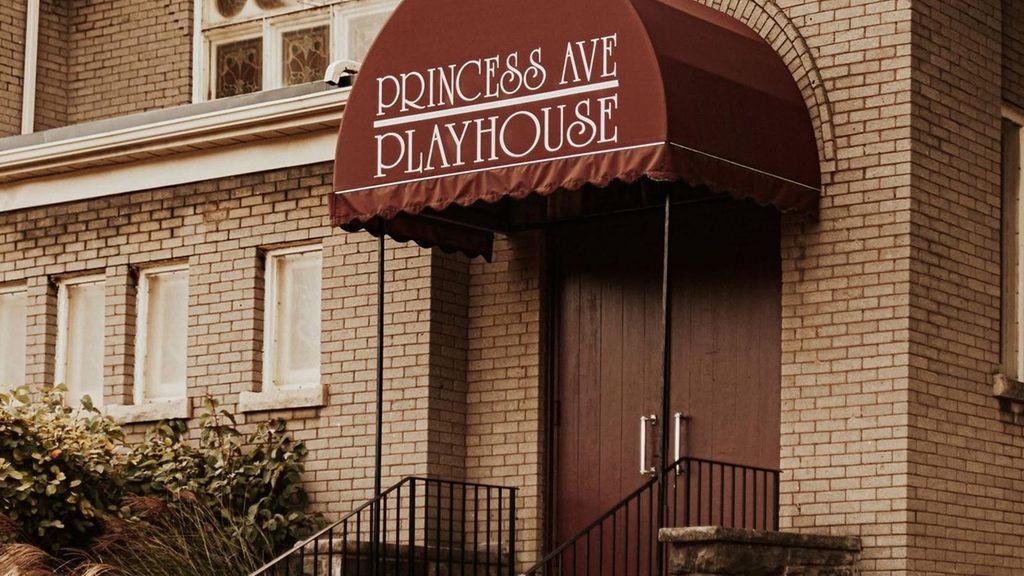
That’s the opening image at the heart of “A Stork Club Story,” a brand-new Canadian play by Paul Regan and Brett McCaig, and it is about to receive its world premiere at the Princess Avenue Playhouse in St. Thomas, Ontario with a series of performances from November 5th, 2026 to November 15th, 2026.
The show’s own tagline gets to the point faster than any critic could: “Big band music. First love. Second chances. And a letter that could change everything.”
This is a premiere in the fullest sense of the word. Nobody has ever performed this script before this run. No other cast has spoken these lines, no other audience has watched Mitch open that trumpet case, and no other town has had the chance to claim this particular story as its own.
The Story of ‘A Stork Club Story’: A Letter, an Attic, and the Girl at the Coat Check
The play is structured as a ‘memory play’, a dual-timeline narrative that toggles between an older character’s present-day reality and the vivid, half-remembered world of his youth.
In “A Stork Club Story,” that structure is built around Mitch, an aging man sorting through his late family’s belongings before the house is sold, and the memories that surface pull the audience out of the present and into a 1950s lakeside dance hall in full swing.
Once inside that flashback, the play introduces its two young leads: an impulsive trumpet player and a sharp-witted coat-check girl who collides with him in a way that looks, almost immediately, like it might be the love of his life.
Pride gets in the way. So does ambition, along with a few rivals who have their own designs on the dance floor and the people on it. It’s a setup that owes something to classic big-band-era romantic comedy.
What gives the piece its emotional spine, though, is the letter. It’s the hinge on which the entire play turns, the object that yanks Mitch’s present-day reckoning and his younger self’s romance into the same orbit.
The script poses its own thesis question directly: what do we hold onto when everything else is slipping away?
The writers describe the finished result as filled with humor, nostalgia, and emotional resonance, a show meant to celebrate the music that moves people, the risks that shape them, and the persistence of love even as memory starts to fail.
A World Premiere in the Truest Sense: Two First-Time Produced Playwrights
“A Stork Club Story” is the only writing credit currently listed for its authors, Paul Regan and Brett McCaig.
There’s no prior production to compare it against, no existing reviews to calibrate expectations, no starry original cast recording or film adaptation shaping how audiences walk in the door. Every choice the Elgin Theatre Guild‘s team makes, from pacing to blocking to how the trumpet motif gets woven through the sound design, is effectively the first interpretation this text has ever received.
Whatever works, and whatever doesn’t, will be discovered here first, in a converted church on Princess Avenue, by a volunteer cast and a hometown audience, before anyone else in the world gets the chance to see it.
That’s also, quietly, a story about how new Canadian plays actually get made. The popular image of a new play’s birth usually involves a big regional theatre, a commissioned reading series, or a prestigious playwrights’ unit.
In reality, a huge amount of new Canadian dramatic writing gets its first breath in exactly this kind of room: a community playhouse willing to take a chance on an unproduced script instead of programming another known commodity.
Whether “A Stork Club Story” goes on to a second production somewhere else entirely depends on what happens on this stage first.

The Real Stork Club: Why This Story Could Only Come From Here
Here’s where the play’s setting stops being generic period nostalgia and becomes something much more specific to this exact part of Ontario.
Roughly a fifteen-minute drive south of St. Thomas sits Port Stanley, a small Lake Erie harbour town that was, for more than five decades, home to one of the most famous dance halls in the country.
It opened on July 29, 1926, as the London and Port Stanley Railway Pavilion, drawing more than six thousand people through its doors on opening night to dance to the Vincent Lopez Band, and it was later renamed the Stork Club sometime in the early 1950s. At 13,000 square feet, it had the largest dance floor in the region, built partly out over the water on pilings at the far end of Port Stanley’s boardwalk, across from Hopkin’s Casino.
Port Stanley, in that era, was genuinely known as the “Coney Island of Canada,” a beach town packed with a Ferris wheel, two carousels, a bowling alley, a penny arcade, miniature golf, and a boardwalk that funneled almost every visitor toward the Stork Club by nightfall.
The names that played there read like a big-band hall of fame: Count Basie, Glenn Miller, Duke Ellington, Guy Lombardo, Louis Armstrong, and Benny Goodman all took that stage at various points, with a September 1950 Guy Lombardo performance drawing a reported crowd of more than seven thousand people, the largest in the club’s history.
The house band for most of the 1950s was the Johnny Downs Orchestra, and Downs himself, reminiscing decades later, put it about as simply as anyone could: “We never found a better place than the Stork Club.”
He wasn’t just being sentimental about the venue, either. Downs met his own wife on that same boardwalk, a real-life romance that unfolded in almost exactly the setting this new play conjures for its fictional trumpet player and coat-check girl.
The real Stork Club’s story doesn’t have a happy ending, at least not architecturally.
It closed for renovations over the winter of 1973 and 1974, staggered on for a few more years, and hosted its final performance on New Year’s Eve of 1978.
Twelve days later, on January 13, 1979, a dumpster fire spread to the building and destroyed it beyond saving; Johnny Downs and a few friends reportedly returned to the charred stage afterward to play a short, symbolic farewell set.
Local residents later formed a nonprofit to preserve that memory, which eventually led to the Stork Club Music and Memories Interpretive Centre in downtown Port Stanley, complete with a mural, big-band memorabilia, and a white grand piano believed to have once belonged to Guy Lombardo.
Big Band as Storyteller: How Music Carries the Play Across Decades
Most memory plays rely on lighting shifts, a narrator, or set changes to signal a jump in time.
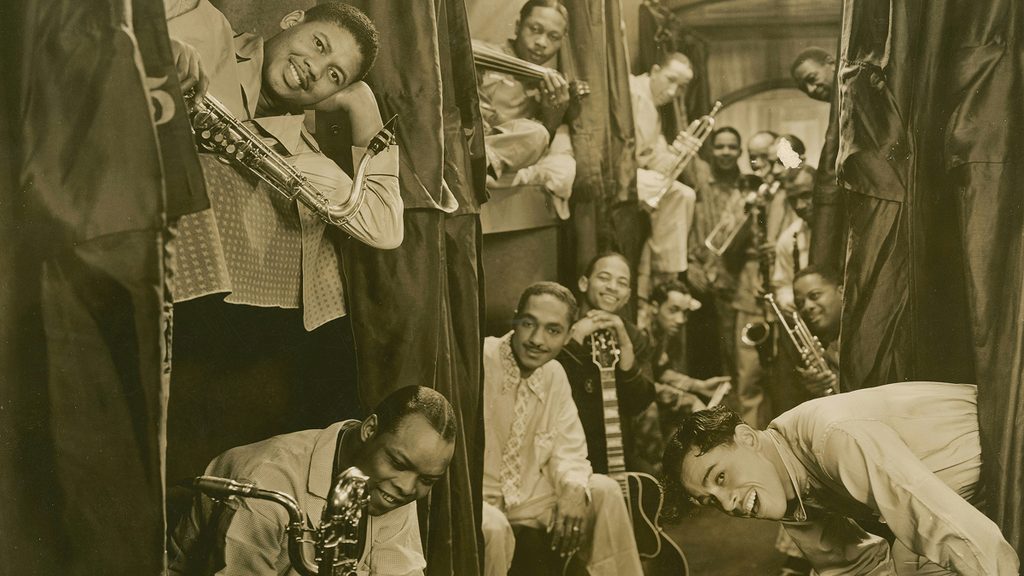
“A Stork Club Story” has a more organic tool built directly into its premise: live big band energy woven throughout the production, functioning less like background atmosphere and more like connective tissue between its two timelines. When swing music swells, it’s doing narrative work, pulling both Mitch and the audience out of a quiet attic and back into a room full of dancers, brass, and noise.
That choice also does something useful for the play’s tone.
Big band swing carries a specific emotional register that straight dialogue can’t replicate: it’s celebratory and a little frantic, built for crowds, built for flirtation, built for the exact kind of collision the script needs between its trumpet player and its coat-check girl.
The trumpet itself, given that Mitch’s attic discovery centers on an instrument case, becomes a literal object bridging both timelines, a prop that is simultaneously a period detail and a piece of unresolved personal history.
Directing the Swing Era in ‘A Stork Club Story’ is Heather May and a Cast of Ten
Behind the script sits a director with real history at this specific venue.
Heather May, who directs this production, has been staging shows at Theatre in London-tracked venues since at least 2010, with credits that include “The Love List” in 2010, “Outer Space” in 2010, “Bucket List” in 2011, “Swing Dance” in 2013, “Sylvia” in 2014, “Jake’s Women” in 2015, and “1-900-DEE-LITE” in 2016 among others.
That kind of institutional memory matters in community theatre, where a director’s familiarity with a specific stage’s sightlines, backstage limitations, and volunteer rhythms can make the difference between a show that merely runs and one that actually sings.
The cast assembled for “A Stork Club Story” includes Imogen Ballantyne, Reece Rayner, Mark Currie, Lisa Eastick, Rob Faust, Georgia Fuller, Gabe Lazenby, Kim Braine-Ott, Kevin Pegg, Dave Semple, and Christopher Staddon.
That’s a substantial ensemble for a community production, and it lines up with a script that explicitly promises a colorful cast of small-town characters rather than a tight two- or three-hander. Between two timelines, a big band’s worth of onstage energy, and a supporting cast large enough to populate an entire dance hall, this is a logistically ambitious undertaking for a volunteer-run theatre, and the size of the cast list is itself a signal of how seriously the Guild is treating this world premiere.

A Church Turned Playhouse: Inside the Elgin Theatre Guild’s Century-Old Home
The venue hosting all of this has its own layered history.
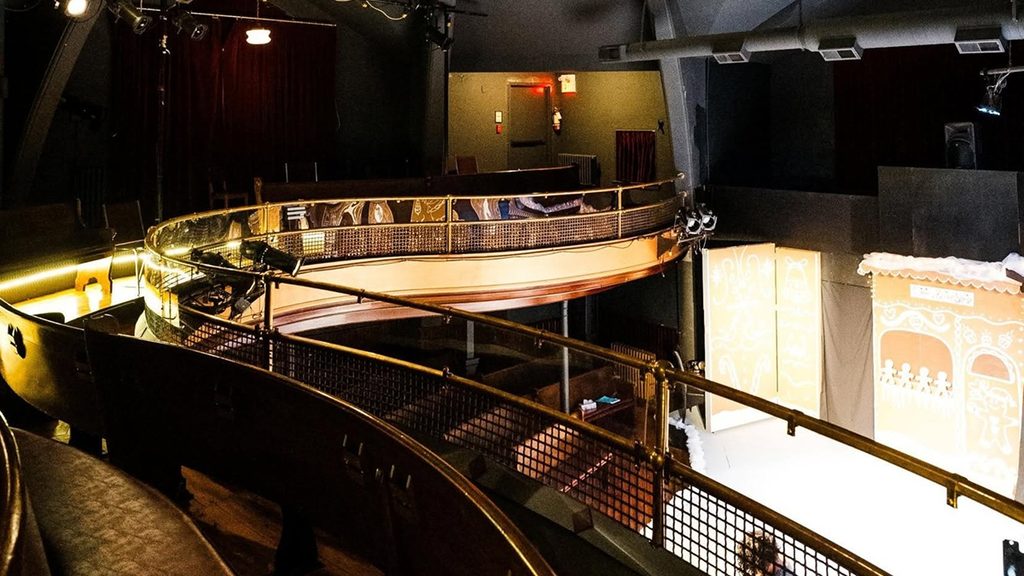
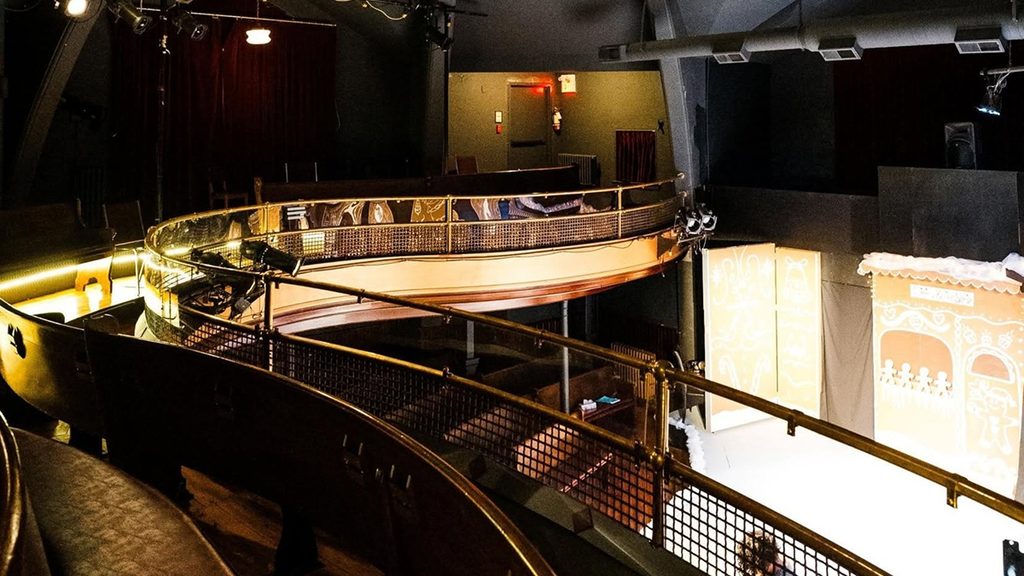
The Princess Avenue Playhouse, located at 40 Princess Avenue in St. Thomas, was originally constructed in 1907 as a church, and it wasn’t until 1987 that the Elgin Theatre Guild purchased the building and converted it into the community theatre it is today.
Today, the Guild is entirely volunteer-run and produces four shows a season inside that repurposed church, drawing more than two thousand patrons through its doors annually.
It has also branched into live music programming over the years; thanks to a donation from the Dorothy Palmer Trust/Estate, the Playhouse has hosted touring Canadian acts including Hawksley Workman, the Ennis Sisters, and Bruce Cockburn, alongside its regular slate of dramatic and comedic productions.
That combination of a heritage building, an all-volunteer operating model, and a genuine commitment to new work is precisely the kind of infrastructure that makes a world premiere like “A Stork Club Story” possible in a city the size of St. Thomas rather than only in Toronto or Stratford.
There’s a nice bit of symmetry in staging a play about a demolished dance hall inside a building that was itself repurposed from one form of public gathering space into another.
Both the fictional Stork Club and the real Princess Avenue Playhouse are, in their own ways, structures that outlived their original purpose and got handed a second life by a community that refused to let the building simply disappear.
How to Get Tickets to A Stork Club Story at Princess Avenue Playhouse: Dates, Tickets, and Details
“A Stork Club Story” runs as part of a full production series from November 5 through November 15, 2026.
Doors open at 7:00 p.m., with the show beginning at 7:30 p.m. Eastern time, and the event is listed as all ages and licensed, meaning younger patrons are welcome alongside a bar service for adults.
General admission tickets are priced at $25.00 CAD plus applicable fees, with a discounted group rate of $20.00 CAD plus fees available for parties of ten or more, which makes this a reasonably practical option for theatre groups, workplace outings, or extended family gatherings looking to catch a world premiere together.
The real Stork Club in Port Stanley is gone, burned down more than four decades ago, but the region around St. Thomas has never entirely let go of what that dance hall meant: the music, the romances that started on its boardwalk, the sheer scale of a 13,000-square-foot room packed with strangers moving to the same big band.
Paul Regan and Brett McCaig have taken that lingering local memory and given it a new vessel in ‘A Stork Club Story’, one built out of an aging man, an attic full of boxes, a trumpet case, and a letter that refuses to stay buried.
Whether “A Stork Club Story” goes on to future productions elsewhere is genuinely an open question, and that uncertainty is part of what makes this particular run so worth paying attention to. Audiences who show up at the Princess Avenue Playhouse this November are watching the first draft of that play’s public life, staged inside a hundred-and-nineteen-year-old former church, by a cast and director with deep roots in this exact community, telling a story that borrows its name and its heartbeat from a dance hall that once made this stretch of Lake Erie shoreline one of the liveliest places in the country.
That’s not a small thing for a small stage to be doing, and it’s exactly the kind of premiere that rewards showing up for in person.
Get your tickets here to a date of your choosing to see A Stork Club Story this November.