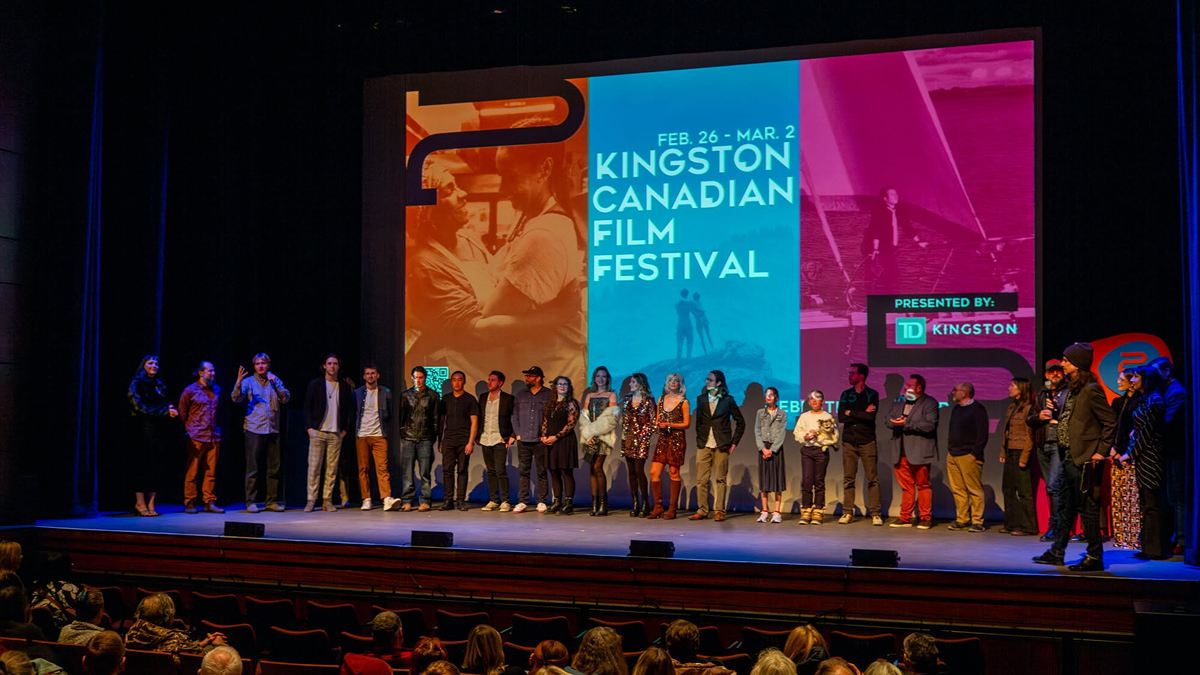
Every February, a small city on the shore of Lake Ontario transforms into one of the most important gathering places for Canadian storytelling.
Theaters fill with directors, actors, and cinephiles. Downtown storefronts turn into pop-up screening rooms. And for five days, Kingston, Ontario becomes the epicenter of a national film culture that many Canadians don’t even realize has its own dedicated stage.
That stage is the Kingston Canadian Film Festival, known widely as KCFF, and its story is one of the more remarkable grassroots success stories in Canadian arts and culture.
What began in 2001 as a scrappy three-day showcase run by a film student has grown into the largest festival in the world dedicated exclusively to Canadian film, drawing thousands of visitors, hundreds of filmmakers, and millions of dollars in cultural and economic impact to a mid-sized university town.

Have You Heard of the Kingston Canadian Film Festival?
The Kingston Canadian Film Festival is an annual, non-profit, week-long film festival held each winter in downtown Kingston, Ontario, and it is the only major festival in the world built entirely around Canadian-made films.
Unlike broader international festivals that program a handful of Canadian titles alongside global cinema, KCFF exists purely to showcase homegrown feature films, documentaries, and short films, alongside Q&As, panels, live music, comedy, and industry events.
Since its founding, the festival has screened more than 700 feature films and over 1,000 short films, giving audiences access to everything from first-time filmmakers to Academy Award winners.
It operates as a registered charitable organization, governed by a volunteer board of directors and run by a small, dedicated staff team, and it now extends well beyond its festival week through year-round educational and mentorship programming.
Understanding how it got here requires going back to a single repertory cinema in downtown Kingston at the turn of the millennium.
The Origins: A Queen’s University Film Student With a Big Idea
The Kingston Canadian Film Festival was founded in 2001 by Alex Jansen, who at the time was a film student at Queen’s University and the manager of The Screening Room, a two-screen repertory cinema in downtown Kingston.
Jansen used the industry contacts he had built through running The Screening Room to launch the very first edition of the festival, and the results were immediately promising for such a modest debut. That inaugural event ran for just three days and featured 20 feature film screenings, and remarkably, 15 of those 20 screenings sold out. For a first-year, volunteer-driven event with no track record and no brand recognition, that kind of audience turnout signaled that Kingston, with its large student population and deep-rooted arts scene, was genuinely hungry for a dedicated home for Canadian film.
The festival’s earliest support came from Moving Pictures: Canadian Films on Tour, an organization that toured Canadian titles across the country, giving the young festival credibility and access to films it otherwise might not have secured.
Jansen’s own career trajectory mirrored the festival’s early momentum. His success with KCFF opened doors to work with the Vancouver International Film Festival and with Moving Pictures itself, and he continued to consult and stay involved with the Kingston festival for years afterward even as his career expanded nationally.
He would later go on to found the multimedia production company Pop Sandbox and serve as the founding Commissioner of the Kingston Film Office, where he helped build the infrastructure that would eventually attract major productions like Star Trek: Discovery, DC’s Titans, Reacher, Locke & Key, and The Mayor of Kingstown to the region.
But it all traces back to that first three-day festival built on a shoestring budget and a repertory cinema’s contact list.

Early Growth: Becoming Canada’s Largest Standalone Showcase
If the first year proved there was demand, the second year proved there was staying power.
By 2002, just twelve months after launch, the festival added a second and considerably larger venue on the Queen’s University campus, which allowed organizers to expand programming dramatically. A shorts competition was introduced, an additional day was added to the schedule, and the overall number of screenings increased substantially.
This rapid expansion was enough to make KCFF the largest stand-alone showcase of feature films from across Canada, a title it has essentially held ever since. Growth this fast in a festival’s sophomore year is unusual in the events industry, where most cultural festivals take five to ten years to reach a comparable scale, and it speaks to how precisely Jansen and his early collaborators had identified an underserved niche in the Canadian cultural calendar.
The momentum continued in 2003, when the Toronto International Film Festival Group succeeded Moving Pictures as the festival’s key backing partner through its Film Circuit division, connecting KCFF to a much larger national distribution and programming network.
That same year, the festival launched one of its most enduring community initiatives: the Local Filmmaking Initiative (LFI), developed with support from the City of Kingston’s Healthy Community Fund. The LFI was designed as a multi-tiered program to nurture local filmmaking talent rather than simply importing films from elsewhere, reflecting a philosophy that has stayed consistent throughout KCFF’s history — the festival was never meant to be just a screening series, but an engine for developing Canadian filmmakers directly in the community that hosted them.
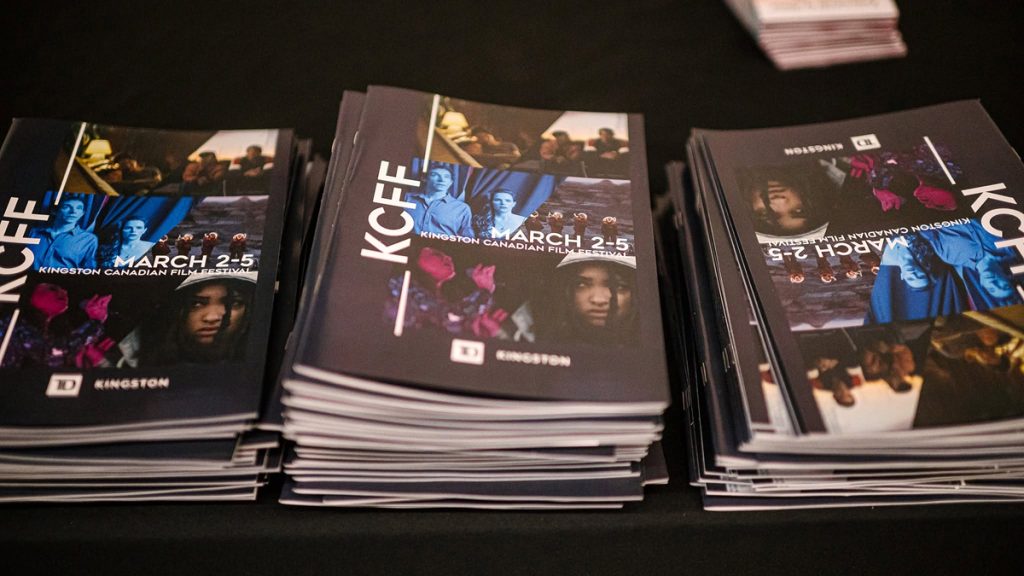
A Decade of Outreach and Leadership Transition Followed
The years between 2005 and 2011 were defined by steady institutional growth and an expanding sense of civic mission. Alison Migneault, a marketing and communications professional connected to Queen’s University, joined the festival team in 2005 as co-director and was promoted to Festival Director in 2006, at which point Jansen shifted into a consulting role while remaining connected to the organization he had built.
That same year, KCFF added a French Community Outreach program, acknowledging Canada’s bilingual film landscape and ensuring French-language Canadian cinema had a genuine presence at the festival rather than a token slot. This commitment to French-language film would prove prescient decades later, when French Canadian productions swept the festival’s top prizes in both 2025 and 2026.
In 2007, the festival launched its first-ever retrospective series, built around the 50th anniversary of filmmaking by the acclaimed director Allan King, signaling that KCFF wanted to be more than a showcase of new releases — it wanted to actively participate in preserving and honoring Canadian film history.
The following year, in 2008, the festival partnered with Reel Canada to introduce high school outreach programming, bringing Canadian cinema directly into classrooms and building the next generation of festival-goers and filmmakers before they ever set foot in a theater.
By the time KCFF reached its tenth anniversary in 2011, it had become a genuine cultural institution rather than a scrappy student project. To mark the milestone, organizers ran a local short film competition called 10 Years, 10 Minutes, inviting a Kingston-based team to produce a short film that would premiere at the anniversary festival, complete with a $5,000 cash prize and professional mentorship for the winning team. The tenth edition also included a special screening of the 1928 silent film Carry On, Sergeant!, tying the festival’s modern programming back to the earliest days of Canadian cinema itself.

KCFF Through the COVID-19 Pandemic and A Crisis Navigation
Like nearly every live event organization on the planet, KCFF faced an existential challenge in 2020. The 2020 festival was cancelled outright due to the COVID-19 pandemic, a difficult but necessary decision that mirrored what happened to festivals worldwide, from Cannes to Hot Docs.
Rather than simply waiting out the crisis, KCFF’s team used the cancellation as an opportunity to reinvent its delivery model.
In 2021, the festival adopted a fully digital format, becoming its first-ever virtual edition and allowing audiences across Canada, not just in Kingston, to participate in the programming from home. This demonstrated that a regional festival with a national mandate could reach a genuinely national audience when the right technology and licensing structures were in place, a lesson that has informed hybrid programming strategies across the events industry ever since.
By 2022, the festival shifted to a hybrid model, blending in-person screenings with continued digital access, and by 2023 it had returned fully to in-person programming.
That 2023 return came with a significant physical milestone: the festival incorporated the newly renovated Broom Factory as an official venue, a building developed in partnership with RAW Design and KPP Concerts that would go on to become both a screening space and the organization’s main office.
The pandemic years, difficult as they were, ultimately left KCFF with a more resilient and diversified programming model than it had going into 2020, along with a permanent new home base in the Broom Factory that continues to anchor its year-round activities today.
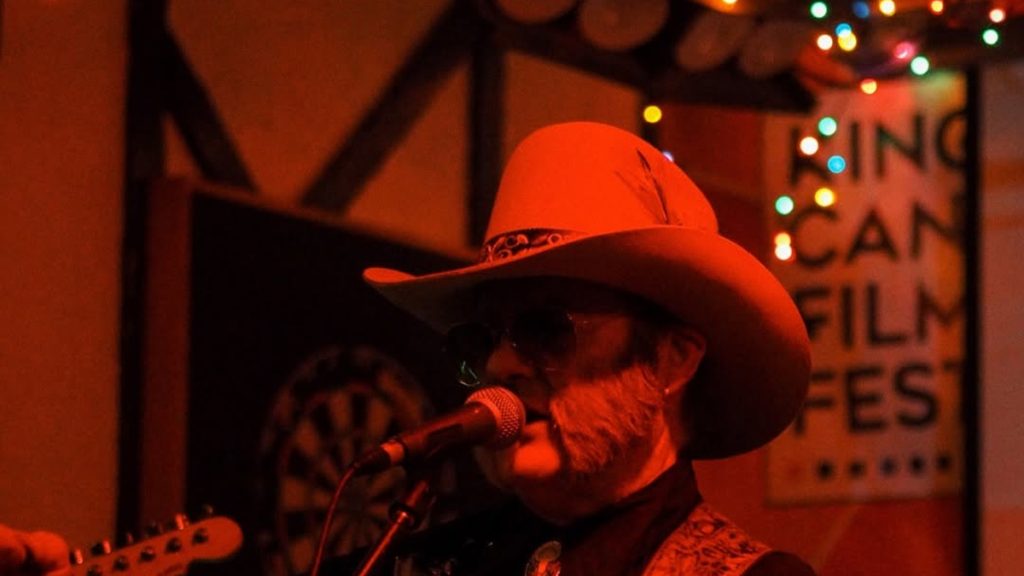
Building for the Future: Year-Round Programs Beyond the Festival Week
One of the most important shifts in KCFF’s recent history has been its evolution from a once-a-year event into a year-round cultural and educational organization. This transition accelerated notably after the pandemic.
The Slaight Music Video Program, which pairs local filmmakers with musicians to produce original music videos, launched in 2019 and has since become a signature initiative that blends KCFF’s film mission with Kingston’s celebrated music scene, a city that is also home to the Tragically Hip and more than 200 music venues, studios, and festivals.
The 18MM Program, a mentorship and production initiative aimed at youth filmmakers, launched in 2023, giving young Kingston creators structured pathways into filmmaking long before they might otherwise have access to industry mentors.
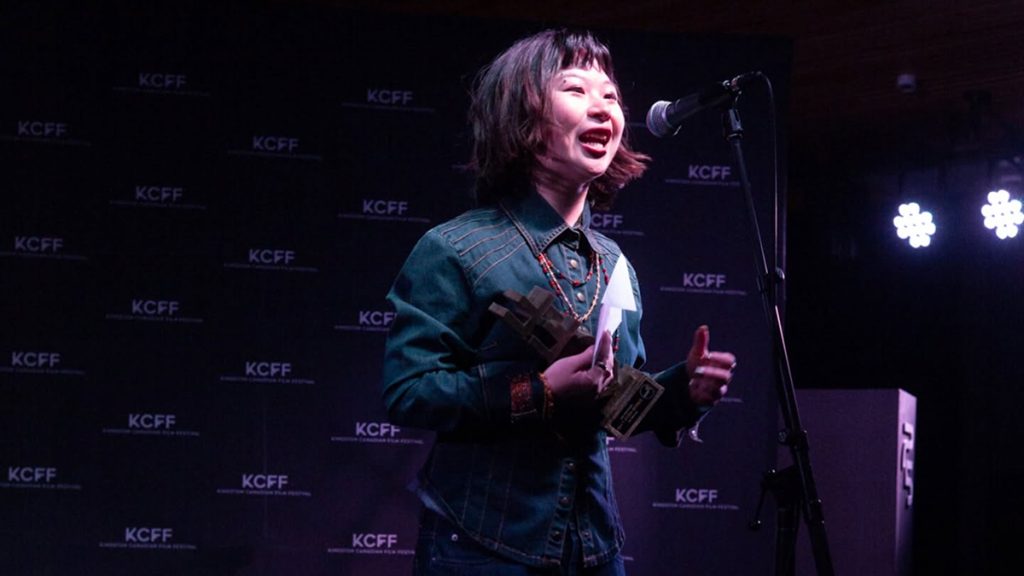
Most recently, the KCFF Doc Factory launched in 2025, providing hands-on training for emerging documentary creators and reflecting the festival’s growing recognition that documentary filmmaking represents one of the fastest-growing and most competitive corners of the Canadian screen industry.
These year-round programs are not just goodwill gestures; they have already produced measurable results.
Kingston filmmaker Annie Stewart, for example, participated in the 18MM program in 2024 and returned to the 2026 festival with her own feature documentary, Team of the Century, illustrating how the pipeline from local mentorship program to festival premiere now genuinely functions in practice. The 2025 festival showcased a record five locally produced films, a clear sign that the Local Filmmaking Initiative launched back in 2003 has matured into a durable talent pipeline more than two decades later.
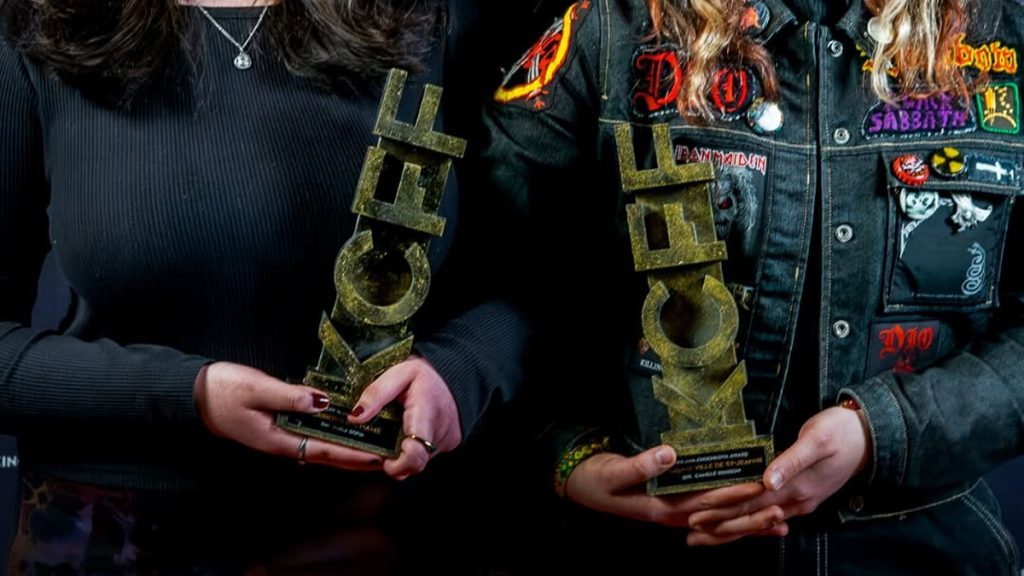
KCFF Celebrating 25 Years: A Landmark Anniversary for Canadian Cinema
The 25th anniversary edition of KCFF, held from February 26 to March 2, 2025, stands as one of the most significant moments in the festival’s history.
To mark the milestone, organizers introduced two brand-new monetary prizes: the KCFF Best Canadian Film Award, worth $5,000, and the KCFF Best Canadian First Film Award, worth $2,500, giving the festival its first-ever juried cash prizes for excellence in filmmaking rather than purely audience-voted honors.
In the lead-up to the anniversary, KCFF also ran a 25 Years, 25 Minutes Pitch Competition, awarding filmmaker Blaine Watters $25,000 in 2024 to produce a short film that would premiere at the anniversary edition itself, a fitting full-circle nod to the 10 Years, 10 Minutes competition held back in 2011.
The scale of the 25th edition reflected just how far the festival had come from its 20-screening debut. KCFF25 presented more than 80 individual films across nearly five dozen screenings, opened with Québec director Sophie Deraspe’s Shepherds and closed with the documentary Blue Rodeo: Lost Together, and welcomed a guest list that included Jay Baruchel, musicians Jim Cuddy and Greg Keelor of Blue Rodeo, filmmaker Matthew Rankin, actor and broadcaster Sook-Yin Lee, and comedians Carolyn Taylor and Jeremy Hotz, among many others.
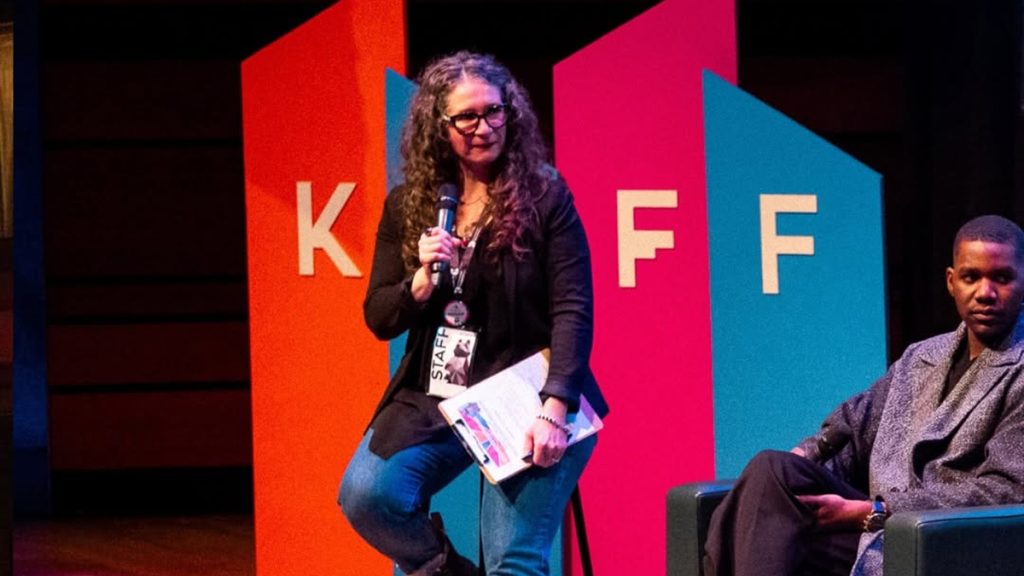
Executive Director Marc Garniss described the festival as having grown into something considerably broader than a film showcase, noting that KCFF now intersects film with comedy and live music in ways that reflect Kingston’s wider cultural identity.
Nearly every film screened at the festival featured a live post-screening Q&A with visiting talent, a detail that consistently distinguishes KCFF from larger international festivals where audience access to filmmakers is far more limited.
Awards That Matter: How KCFF Recognizes Canadian Storytelling
KCFF’s awards program has expanded considerably since its earliest years and now functions as a genuine marker of prestige within the Canadian film industry, comparable in influence to regional prizes at other major national festivals.
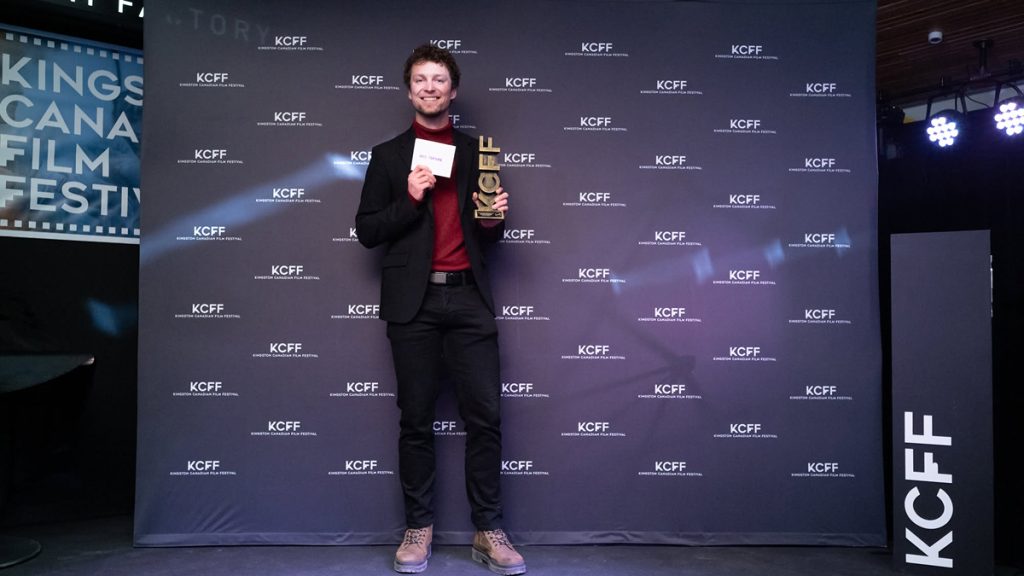
The festival’s top juried honor, now known as the Mark Gardiner Award (previously the Playback Best Canadian Film Award), carries a $5,000 cash prize and is awarded to the strongest Canadian feature in competition, as judged by a jury of working filmmakers and industry professionals.
A companion prize, the Visual Menace Best First Feature Award, comes with a $2,500 cash prize and recognizes standout work from directors making their feature debut.
The Cogeco People’s Choice Award, one of the festival’s longest-running honors, is voted on entirely by festival-goers rather than a jury, making it a genuine barometer of public sentiment toward each year’s slate of films.
Beyond these headline prizes, KCFF presents a full slate of additional honors that reflect its layered programming structure, including the Best Canadian Short award sponsored by RBC Dominion Securities, a Best Local Short award specifically for Kingston-region filmmakers, a Best Youth Short award tied to the 18MM program, and both a juried Best Music Video award and an audience-voted Favourite Music Video award connected to the Slaight Music Video Program.
The Douglas J. Falconer Award of Excellence, named for a late local film producer, is presented annually to a Kingston-based film professional for sustained contributions to the region’s film community, most recently going to producer Ryan Randall in 2026.
At the 2026 ceremony, marking the festival’s 26th edition, organizers presented a record 13 awards in total, and French Canadian productions won the top prizes for the second consecutive year: Mathieu Denis’s The Cost of Heaven took the Mark Gardiner Award for Best Canadian Film, Éric K. Boulianne’s Follies won Best First Feature, and Xiaodan He’s Montréal, My Beautiful claimed the People’s Choice Award. The 2026 edition also drew an audience sell-through rate of roughly 85 percent across its more than 60 screenings, a figure that would be considered exceptionally strong by any regional festival’s standards.

Where the Magic Happens: KCFF’s Venues Across Historic Downtown Kingston
Part of what makes KCFF distinctive within the broader events industry is its refusal to confine itself to a single theater complex. The festival deliberately transforms both traditional and unconventional spaces across Kingston’s historic downtown into screening venues, and in recent years it has operated across as many as nine different locations in a single edition.
- The Screening Room, the original two-screen repertory cinema that Alex Jansen managed back in 2001, remains part of the festival’s venue lineup more than two decades later, giving longtime attendees a direct link back to KCFF’s earliest days.
- The Isabel Bader Centre for the Performing Arts, located on the Queen’s University campus, now hosts many of the festival’s marquee gala screenings and larger events, including the 2026 opening night presentation of Hubert Davis’s Youngblood.
- The Grand Theatre, one of downtown Kingston’s premier historic performance spaces, also serves as a regular festival venue for larger-format screenings and special presentations.
As previously mentioned, the most recent addition to KCFF’s venue roster is the Broom Factory. It houses many of the festival’s year-round educational and filmmaking initiatives and serves as the main office of the organization itself, giving KCFF a permanent physical presence in Kingston for the first time in its history rather than a purely seasonal footprint.
This concentration of venues within walking distance of one another, combined with festival passes, hotel packages, and even a 10 percent VIA Rail discount offered to attendees traveling from across Ontario and Quebec, has helped position KCFF as both a cultural event and a genuine tourism driver for the city.
The Economic and Cultural Impact on Kingston From the Film Festival Is Massive
KCFF’s significance extends well beyond ticket sales and red-carpet moments, also contributing to Kingston’s broader creative economy.
Between 2014 and 2025, Kingston saw a 60 percent increase in creative businesses, with more than 400 firms now operating in the sector, and the city recorded over 30 film and television productions completed in 2024 alone, a boom that local economic development officials directly credit in part to the infrastructure, talent pipeline, and visibility that KCFF has helped build over two decades.

Kingston’s own Film and Media Office, itself founded by KCFF’s original founder Alex Jansen, reported that the local film sector generated more than $5 million in direct spend annually by 2021, supporting major television productions that chose to film in the region.
Tourism Kingston actively promotes KCFF as one of its signature winter marketing priorities alongside events like Family Day and March Break, targeting visitors from Toronto, Ottawa, and Montreal as well as the northern United States drive market, and the festival’s downtown footprint means that hotels, restaurants, and retail businesses along Princess Street and the surrounding core see a direct bump in activity during festival week.
For a city whose downtown otherwise experiences a seasonal winter lull in tourism, a five-day event that fills hotel rooms, restaurants, and retail storefronts in late February represents genuine economic value, not just cultural prestige.
Kingston Canadian Film Festival Believes in the Art of Canadian Filmmaking
At its core, KCFF was built on a simple but powerful belief: that Canadian film and Canadian filmmakers are distinctive enough, and important enough, to deserve a festival entirely of their own.
That founding philosophy has never wavered, even as the festival’s scale has grown from 20 screenings in a single repertory cinema to more than 100 films and television episodes across nine venues and 60-plus screenings in its most recent edition.
Along the way, KCFF has hosted an extraordinary range of Canadian talent, including Atom Egoyan, Deepa Mehta, Alanis Obomsawin, Don McKellar, Mina Shum, Elliot Page, Gordon Pinsent, and Jeff Barnaby, alongside performers from beloved Canadian comedy institutions like Kids in the Hall, Letterkenny, This Hour Has 22 Minutes, and Trailer Park Boys. It has also nurtured homegrown talent directly, through the Local Filmmaking Initiative, the 18MM Program, the Doc Factory, and the Slaight Music Video Program, proving that a regional festival can serve both as a national showcase and a grassroots incubator at the same time.
What sets KCFF apart within the crowded landscape of Canadian arts events is that it has never tried to be something it isn’t. It built its identity entirely around Canadian stories, told by Canadian filmmakers, for audiences who wanted the chance to actually meet the people who made them.
The story of the Kingston Canadian Film Festival is, in many ways, the story of Canadian cinema itself over the past quarter-century: resourceful, community-driven, occasionally overlooked on the world stage, but consistently punching above its weight.
As it moves past its 25th anniversary and into its next chapter, with year-round programs now feeding a genuine pipeline of local and national talent, the Kingston Canadian Film Festival stands as proof that a festival built with focus, patience, and genuine community investment can grow into something the entire country can claim as its own.