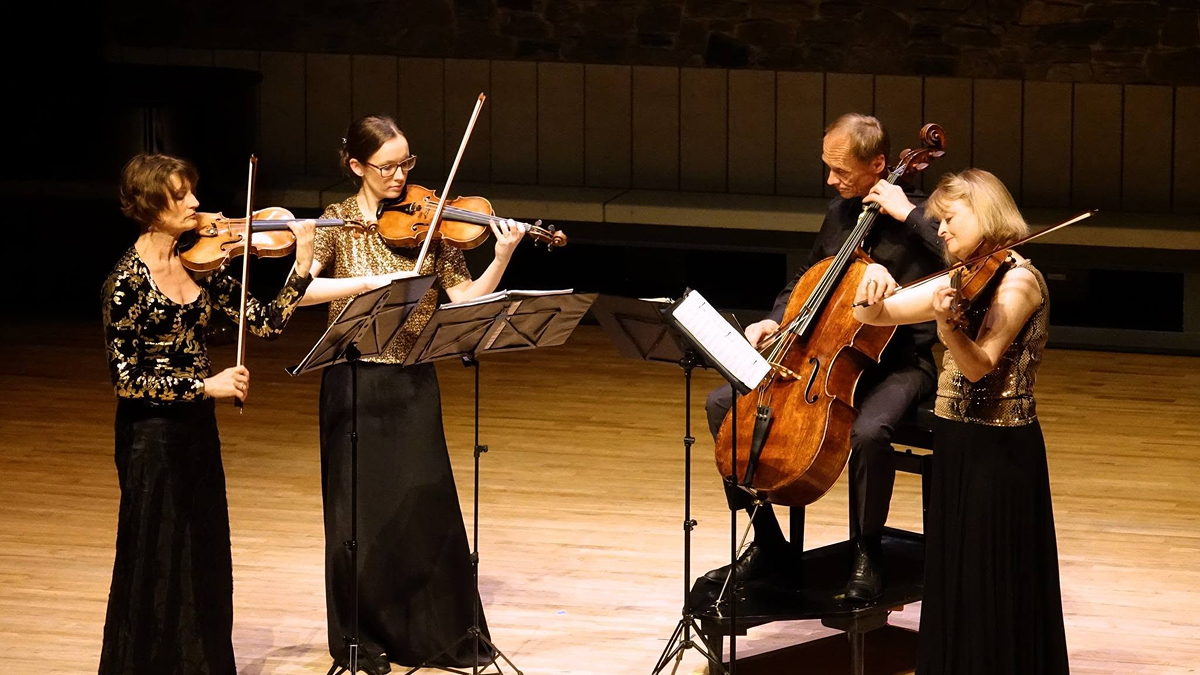
Tucked into a converted living room in Waterloo, Ontario, an audience of eighty-five people once sat close enough to a Steinway grand piano to watch a world-renowned pianist’s fingers move across the keys.
That living room, known simply as the Music Room, became one of Canada’s most unlikely and beloved classical music institutions. For more than fifty years, the Kitchener Waterloo Chamber Music Society (KWCMS) has quietly built one of the country’s most active chamber music programs, drawing performers of international stature into an intimate setting that most concertgoers in bigger cities can only imagine.
This is the story of how a philosophy professor’s side project became a fixture of Ontario’s classical music scene, and why it still matters today.
What Is the Kitchener Waterloo Chamber Music Society?
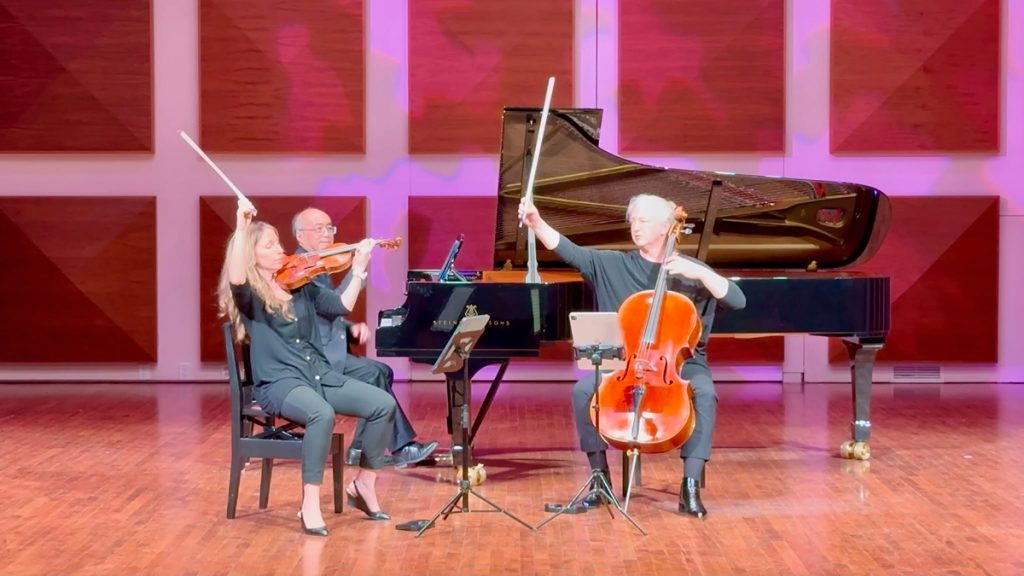
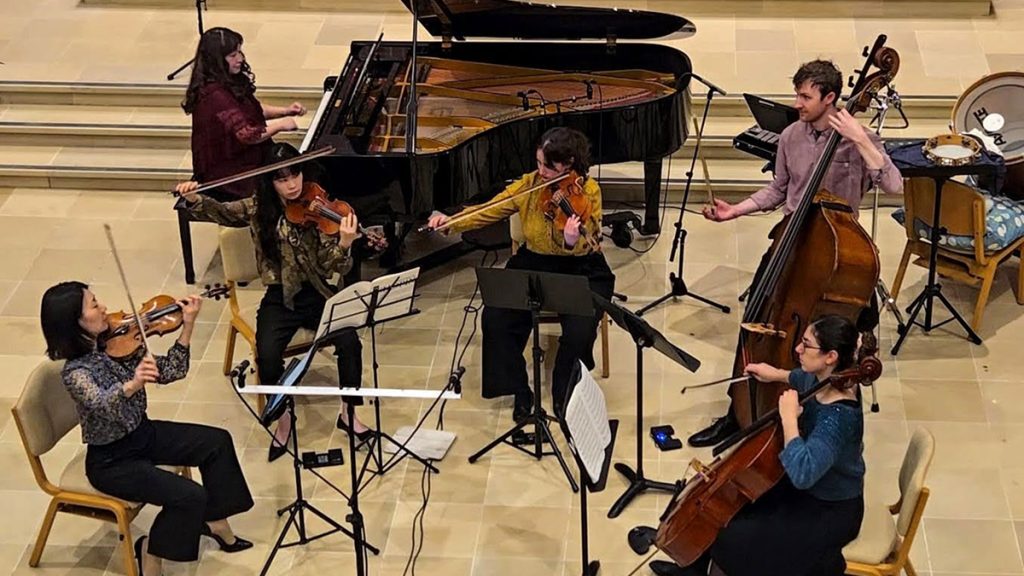
The Kitchener Waterloo Chamber Music Society has been presenting world-class chamber music concerts for over 50 years, with a typical season running from June to May and including roughly 30 concerts by musicians from around the world.
The organization began as an informal auxiliary group connected to the Kitchener-Waterloo Symphony Orchestra, though it has never technically been part of the symphony itself.
Registered as a Canadian nonprofit charity, the society exists to present chamber music, string quartets, piano recitals, and unusual instrumental combinations rather than to perform the music itself, functioning as a presenter rather than a performing ensemble. It is this presenter model, combined with an unusually intimate venue tradition, that has allowed the KWCMS to punch far above its weight for the entire Waterloo Region classical music community.
The 1974 Founding: Jan Narveson and a New Kind of Music Society
The Kitchener-Waterloo Chamber Music Society was founded in 1974 by Jan Narveson, a philosophy professor at the University of Waterloo.
Narveson, an anarcho-capitalist and contractarian philosopher whose ideology was shaped by thinkers like Robert Nozick and David Gauthier, had come to Waterloo by way of the University of Chicago, Oxford, and a doctorate from Harvard. He taught philosophy at the University of Waterloo for 41 years before retiring, all while running the society’s demanding concert schedule on the side. In 2003, his contribution to the region’s cultural life was formally recognized when he was made an Officer of the Order of Canada by then Governor-General Adrienne Clarkson.

Interestingly, Narveson’s organization was not the first to carry the Kitchener-Waterloo Chamber Music Society name.
A similarly named organization had actually been formed decades earlier, in 1947, by a musician named Nathaniel Stroh. That earlier group never grew into the institution we recognize today, but its existence is a reminder that chamber music has deep roots in the Kitchener-Waterloo area, a region long known for its German-Mennonite choral and instrumental traditions. Narveson’s 1974 version, however, is the one that would go on to reshape the local classical music landscape permanently.
From the Stratford Ensemble to Conrad Grebel College: The Early Years
In its first two years, the society functioned primarily as a concert venue for the Stratford Ensemble, also known as the Canadian Chamber Ensemble, though it occasionally hosted other groups including the Orford String Quartet.
That ensemble had been formed by conductor Raffi Armenian, who took over the Kitchener-Waterloo Symphony in 1971 and assembled a thirteen-member chamber group affiliated with the Stratford Festival that toured across Canada, the United States, Europe, and South America. Once the Stratford Ensemble came fully under the Kitchener-Waterloo Symphony’s umbrella, the society pivoted between 1976 and 1980 to hosting regular dinner-concert combinations at Conrad Grebel College on the University of Waterloo campus.
Those early Conrad Grebel years produced some of the society’s first genuinely ambitious programming.
The 1977-78 season featured a complete performance of Beethoven’s chamber music with piano, with conductor Raffi Armenian himself at the keyboard, and the following season brought a complete cycle of Beethoven’s piano sonatas performed by acclaimed Canadian pianist Anton Kuerti at the Theatre of the Arts on the University of Waterloo campus.
These early complete cycles set a pattern the organization would return to again and again over the following five decades, becoming something of a signature move: rather than programming isolated highlights, the KWCMS would commit to performing an entire body of work by a single composer across an extended series.
The Music Room: A Living Room Turned Concert Hall
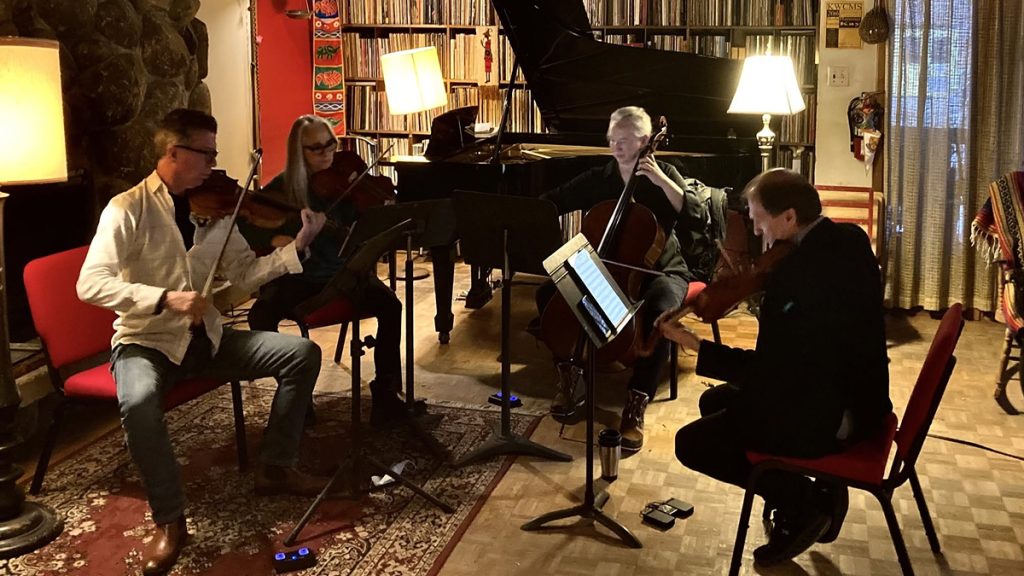
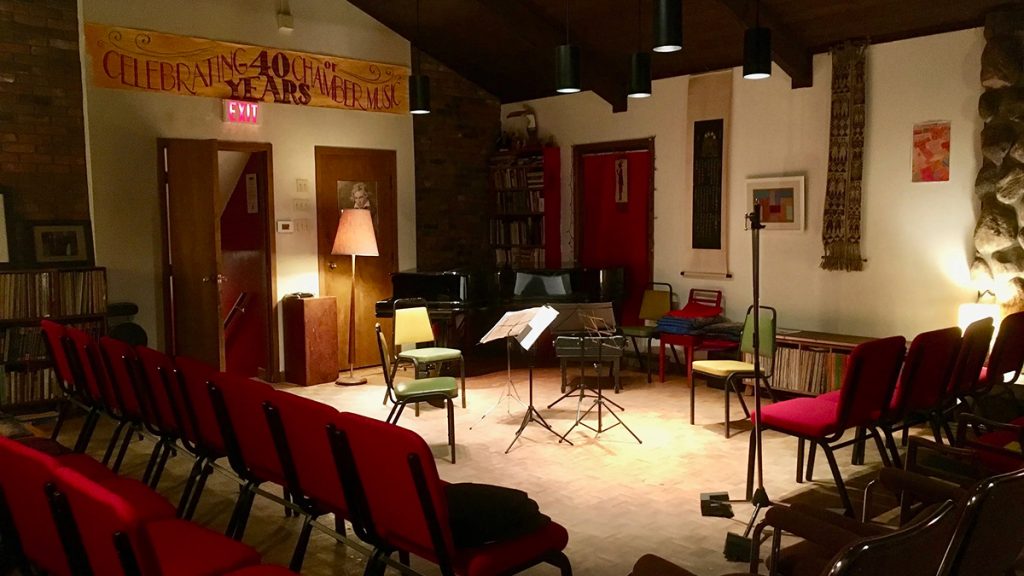
The defining chapter of the KWCMS story began in 1980. The society’s now-legendary Music Room, built inside Jan Narveson’s own home, was inaugurated that year with a concert featuring cellist Ofra Harnoy.
Located at 57 Young Street West in Waterloo, the room held a maximum of roughly 85 people and became the location for the overwhelming majority of the society’s concerts, often more than 60 per year, for the next four decades. Visitors and reviewers repeatedly described it as an acoustically excellent living room, and one of the finest Steinway pianos in the region eventually made its home there, praised by countless touring pianists who performed on it.
The Music Room’s charm went beyond its acoustics. In a widely circulated essay on concert culture, composer and writer Peter Hatch, who lived next door to the venue, offered a memorable description of the space. He noted that although the name suggests a quaint nineteenth-century concert hall, the KWCMS was actually housed in an old home set on the edge of a park, delivering true chamber music in the original sense of music performed in an intimate room rather than a formal concert hall.
Hatch also observed that concerts were advertised through word of mouth, a dedicated email list, and hand-photocopied posters distributed around town by Narveson himself, a striking contrast to the caliber of the musicians who performed there. That grassroots, almost salon-style approach to promotion, paired with genuinely world-class artistry, became part of the KWCMS’s identity.
That identity was cemented further in 1988. As a tribute to Narveson, the society held a gala concert at the Wilfrid Laurier Theatre Auditorium featuring violinist Moshe Hammer, clarinetist James Campbell, pianist Anton Kuerti, cellist Kristine Bogyo, and the Orford String Quartet, with proceeds going toward the purchase of a new Steinway piano for the Music Room.
That piano would go on to host thousands of performances by some of the world’s most celebrated musicians over the following decades.
Five Decades of World-Class Performers and Complete Cycles
By its 46th season, the KWCMS had established itself as one of Canada’s busiest presenters of chamber music, staging over 60 concerts a year ranging from solo recitals to octets, with programming spanning medieval to contemporary repertoire.
The roster of performers who have graced the Music Room reads like a who’s-who of chamber music, including pianists Janina Fialkowska, Till Fellner, André Laplante, and Sofya Gulyak, along with the Penderecki, New Orford, and Alcan string quartets, and ensembles like the AYR and Andromeda trios.
The society’s 50th anniversary retrospective added even more names to that list, including the Beaux Arts Trio, the Guarneri Quartet, the Bartók and Borodin quartets, clarinetist James Campbell, violinists Moshe Hammer and Joshua Bell, and cellist Stephen Isserlis.
What sets the KWCMS apart from most regional presenters, though, is its dedication to complete cycle programming. Over the years the society has presented the entirety of Bach’s solo cello works, Chopin’s Preludes and Études, Ravel’s complete piano music, and Dvořák’s piano quartets.
Perhaps most impressively, between 2013 and 2015 the Attacca String Quartet performed all 68 of Haydn’s string quartets for KWCMS audiences, an undertaking rarely attempted even by major international festivals.
Beethoven has been a particular favorite for complete-cycle treatment, with his piano sonatas performed in full by Anton Kuerti, Robert Silverman, and Till Fellner in different seasons, and his string quartets tackled by the Purcell, Lafayette, and Penderecki quartets. One especially notable cycle stretched from December 2019 to December 2020, timed to mark the 250th anniversary of Beethoven’s birth.
For serious chamber music devotees, that kind of sustained, deep-dive programming is exceptionally rare outside major metropolitan concert halls, and it has become a genuine calling card for the organization.
QuartetFest: Mentoring the Next Generation
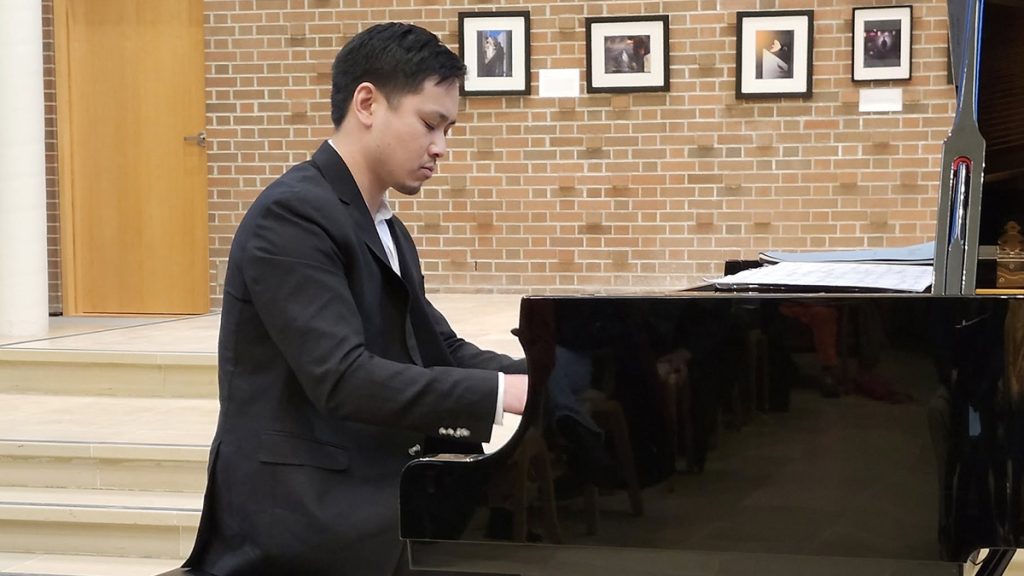
Alongside its regular season, the KWCMS co-hosts one of the region’s most anticipated annual events, QuartetFest.
Since 1992, Wilfrid Laurier University’s quartet-in-residence, the Penderecki String Quartet, has partnered with the Kitchener-Waterloo Chamber Music Society to host QuartetFest, an intensive chamber music program that brings young artists from across Canada and abroad together with world-renowned performers.
The festival has run continuously for over three decades, and by 2026 it was still drawing audiences to Wilfrid Laurier’s Maureen Forrester Recital Hall for programs pairing emerging ensembles with established professionals. A recent QuartetFest concert, for example, paired the Keynote String Quartet with the veteran Penderecki String Quartet for a program including a Beethoven quartet and the premiere of a new string sextet by composer Michael Matthews.
QuartetFest also extends beyond the concert stage into music education.
Laurier’s Faculty of Music runs a companion secondary school workshop as part of QuartetFest, offering a multi-day program of masterclasses and coaching sessions with members of the Penderecki String Quartet for young string players. This mentorship dimension reflects something central to the KWCMS’s mission: it isn’t simply importing famous names for a paying audience, it’s actively investing in the pipeline of Canadian chamber musicians who will carry the tradition forward.
Serving the Local Music Community in Kitchener-Waterloo With Passion
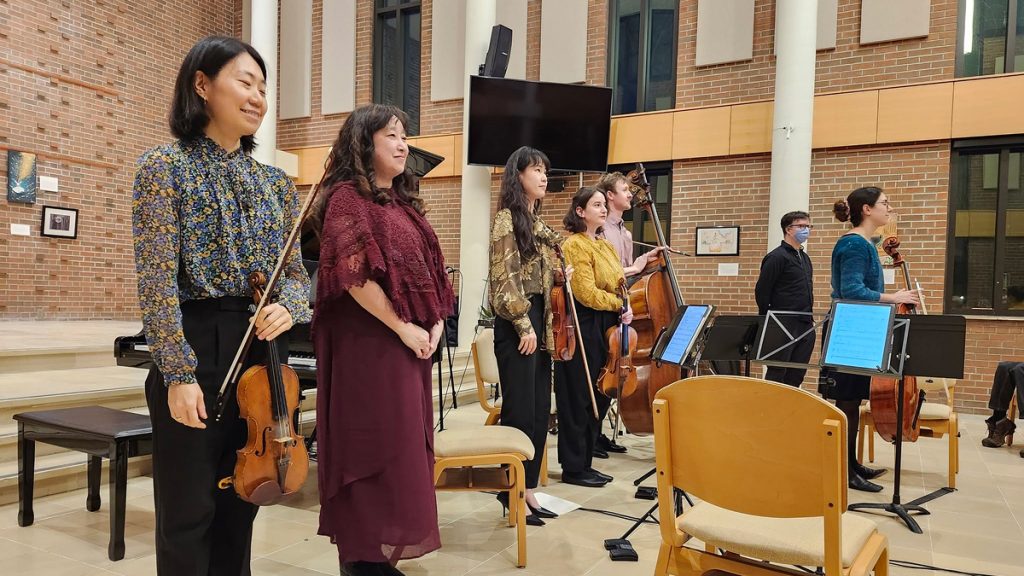
Beyond touring artists and international guest ensembles, the KWCMS has consistently made room for the region’s own musicians.
The society has annually invited members of the KW Community Orchestra to present chamber concerts, and in 1993 it launched additional efforts to support amateur performers in the community.
Its historical concert archive shows recurring appearances by Wilfrid Laurier University’s composers and improvisers ensembles, University of Waterloo student orchestras, National Youth Orchestra members, and winners of the Kiwanis Music Festival, a regional competition that has long served as a launching pad for young Canadian classical musicians.
In an era when many arts organizations struggle to connect professional programming with grassroots community involvement, the KWCMS has managed to do both simultaneously, using its Music Room and, later, its rotating venues as a shared space for legends and local talent alike.
Weathering Change: The Pandemic and a Shifting Local Landscape
For four decades, the Music Room in Narveson’s home was the organization’s beating heart. Unfortunately, that changed with the COVID-19 pandemic.
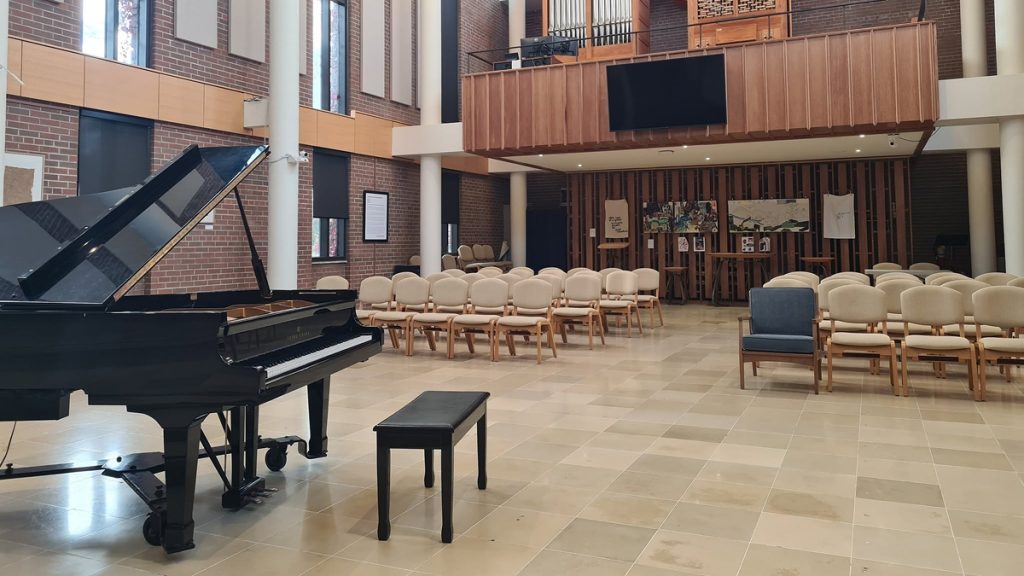
Since the society’s pandemic-related closures in March 2020, its concerts are held at venues across Kitchener and Waterloo.
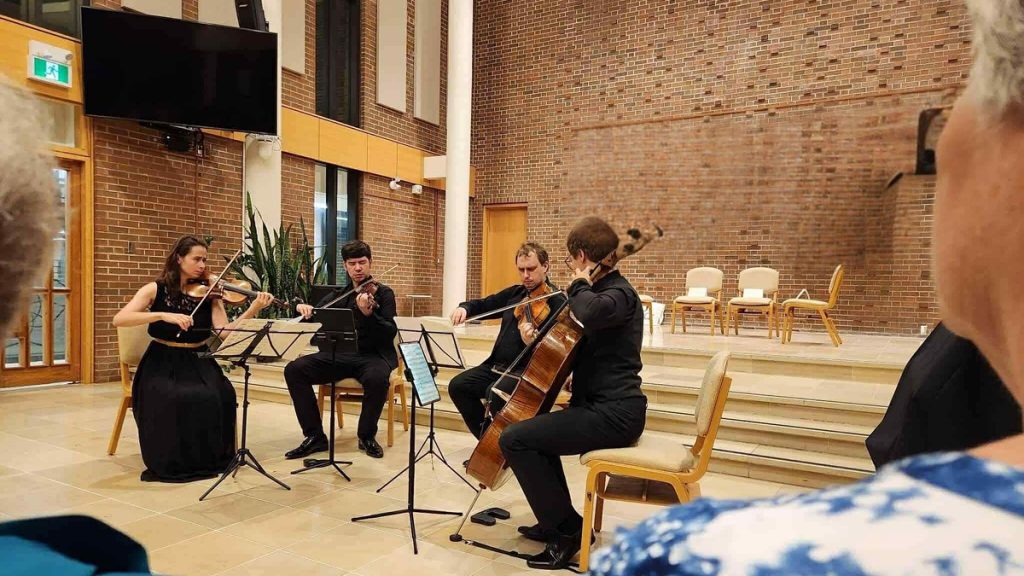
Today the society presents concerts at Erb St Mennonite Church, Maureen Forrester Recital Hall at Wilfrid Laurier University, the Perimeter Institute for Theoretical Physics, the Quantum-Nano Centre at the University of Waterloo, the Registry Theatre in downtown Kitchener, Conrad Grebel College Chapel, St. Andrew’s Presbyterian Church, St. Matthew’s Centre, and Trillium Lutheran Church.
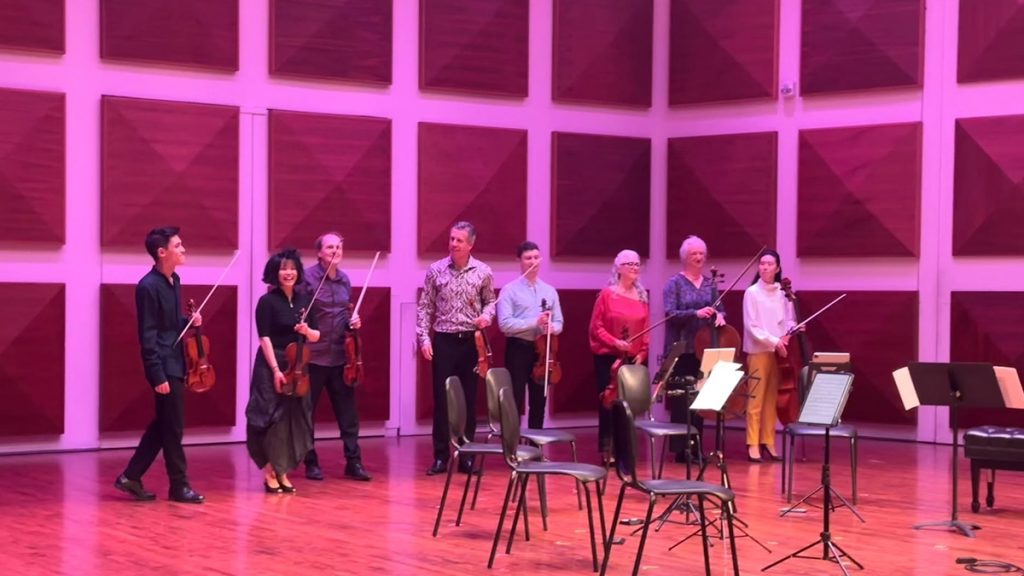
Each venue offers its own acoustic character, and the KWCMS’s website still fondly refers to the original Young Street house as its founding home, even as programming has diversified across the region’s institutional halls.
The broader Waterloo Region classical music ecosystem also underwent a seismic shock in this period.
In September 2023, the Kitchener-Waterloo Symphony abruptly halted its season citing financial difficulties and later declared bankruptcy, despite having previously performed close to 90 concerts a season for a combined audience of over 90,000 people.
That collapse rippled through the local music community. Several former Kitchener-Waterloo Symphony musicians responded by forming the Kestrel String Quartet in 2023, a new ensemble built specifically in reaction to the symphony’s sudden dissolution.
Against that backdrop, the KWCMS’s continuity stands out even more sharply. While the region’s flagship orchestra collapsed, the volunteer-driven chamber society founded in a philosophy professor’s living room kept its season running, a testament to how a lean, community-rooted model can sometimes prove more durable than a large institutional one.
Why the Kitchener Waterloo Chamber Music Society Matters
By its own count, the Kitchener-Waterloo Chamber Music Society has presented over 2,000 concerts since its founding in 1974, currently staging more than 70 concerts a year at its peak years.
That pace has moderated somewhat in the post-pandemic era, with the current season settling closer to 25 concerts, though the organization still ranks among Canada’s most active chamber music presenters relative to its size and budget.
For context, most regional chamber music series in cities of comparable population stage a fraction of that volume, making the KWCMS’s output genuinely unusual within the Canadian arts landscape.
It would be easy to underestimate an organization built around an 85-seat living room, but the KWCMS’s influence extends well beyond its physical footprint. It has offered Waterloo Region audiences a level of programming ambition, particularly its complete-cycle series, that is genuinely rare even in cities many times its size.
It has sustained a four-decade partnership with Wilfrid Laurier University through QuartetFest, actively shaping the next generation of Canadian string players rather than simply consuming finished talent. It has survived the retirement of its Music Room, a global pandemic, and the collapse of the region’s largest orchestra, all while continuing to run a full season built almost entirely on volunteer effort and community goodwill.
Few arts organizations anywhere can claim that combination of longevity, ambition, and resilience.
How You Can Experience the KWCMS Today
The Kitchener Waterloo Chamber Music Society began as a philosophy professor’s side project supporting a touring ensemble in 1974, evolved into a converted living room that hosted some of the finest musicians in the world, and has since grown into a multi-venue institution that remains one of Canada’s most prolific chamber music presenters.
Its history reflects a rare formula: world-class artistic ambition delivered through an intensely local, community-driven structure.
As the broader classical music landscape in Waterloo Region continues to shift, the KWCMS’s five-decade track record of complete cycles, emerging-artist mentorship through QuartetFest, and unwavering community support offers a compelling case study in how small, dedicated organizations can sustain outsized cultural impact.
For anyone curious to attend, the society still welcomes newcomers as warmly as longtime subscribers, with concerts spread across its rotating venues in Kitchener and Waterloo throughout its June-to-May season.
Tickets for most concerts, along with QuartetFest passes, are available through Ticketscene and typically also at the door, priced well below what concerts of similar calibre would cost anywhere else.
The society’s website maintains an updated concert calendar and venue directions, and its connection to Wilfrid Laurier University’s Faculty of Music means visitors can often catch performances in acoustically superb university recital halls in addition to the region’s historic churches and cultural venues.
For anyone in or visiting the Kitchener-Waterloo area with an appreciation for classical music, the Kitchener Waterloo Chamber Music Society’s ongoing season remains one of the region’s quieter but most rewarding cultural treasures.
Interested in attending some of this season’s Kitchener Waterloo Chamber Music Society performances? Here’s where you can buy tickets.