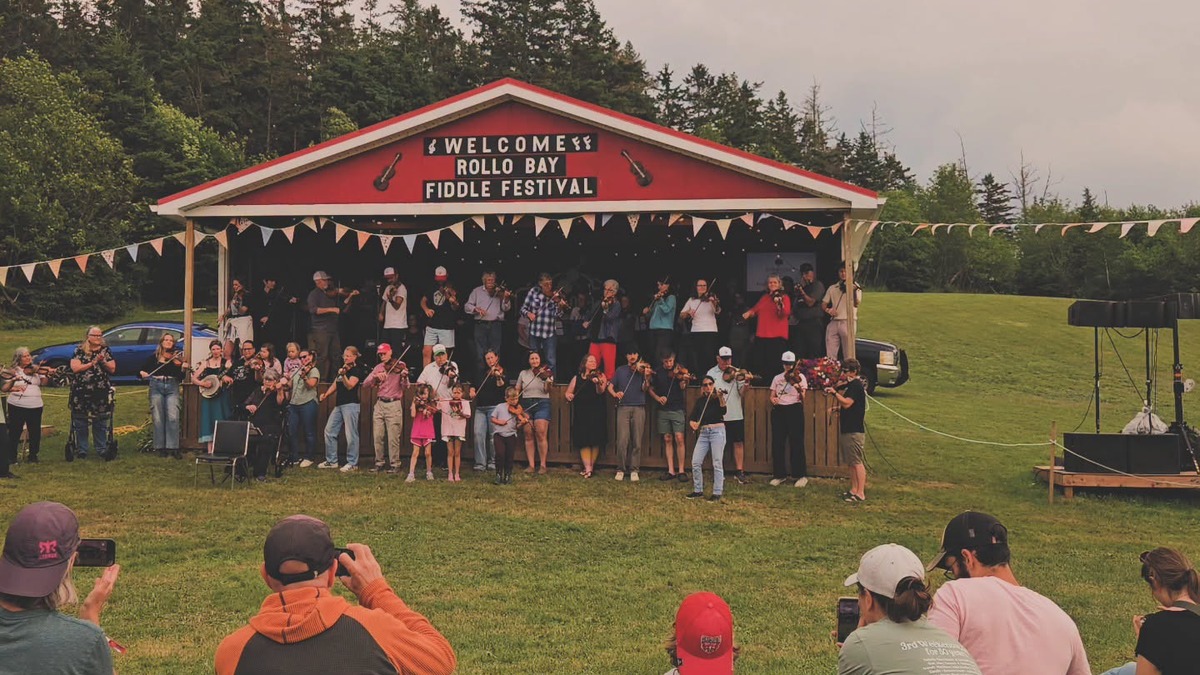
The first stage at the Rollo Bay Fiddle Festival was built from lumber originally set aside for a garage. It was an improvised beginning for an event that would go on to become one of Prince Edward Island’s most enduring celebrations of traditional music.
What started with a hay wagon, a makeshift stage and the determination of a handful of local fiddlers grew into a gathering that would connect generations of musicians, preserve an important part of the Island’s musical heritage and introduce audiences to fiddle traditions from across the Maritimes and beyond.
For five decades, the Rollo Bay Fiddle Festival has occupied a distinctive place in the cultural life of eastern Prince Edward Island.
Its history is closely tied to the Chaisson family, whose members helped establish the event, maintained its grounds, taught generations of young musicians and ensured that the festival survived the deaths of its founders and the uncertainty of its later years. The story also reflects the wider evolution of traditional fiddling on the Island, from community gatherings and informal Sunday afternoon sessions to a recognized musical tradition with performers enjoying international careers.
The festival has experienced considerable changes since its first gathering in 1976, including changes in leadership, programming, facilities and the generations of performers who take the stage.
Yet its underlying purpose has remained remarkably consistent: to keep traditional fiddle music alive by giving musicians a place to play, providing opportunities for young people to learn and bringing communities together through a shared musical heritage. Its history is not simply one of an annual summer event, but of the families, friendships and musical traditions that have sustained it for fifty years.
The Founders Who Brought Eastern Prince Edward Island Fiddlers Together
The Rollo Bay Fiddle Festival grew out of the fiddling revival on Prince Edward Island in the 1970s.
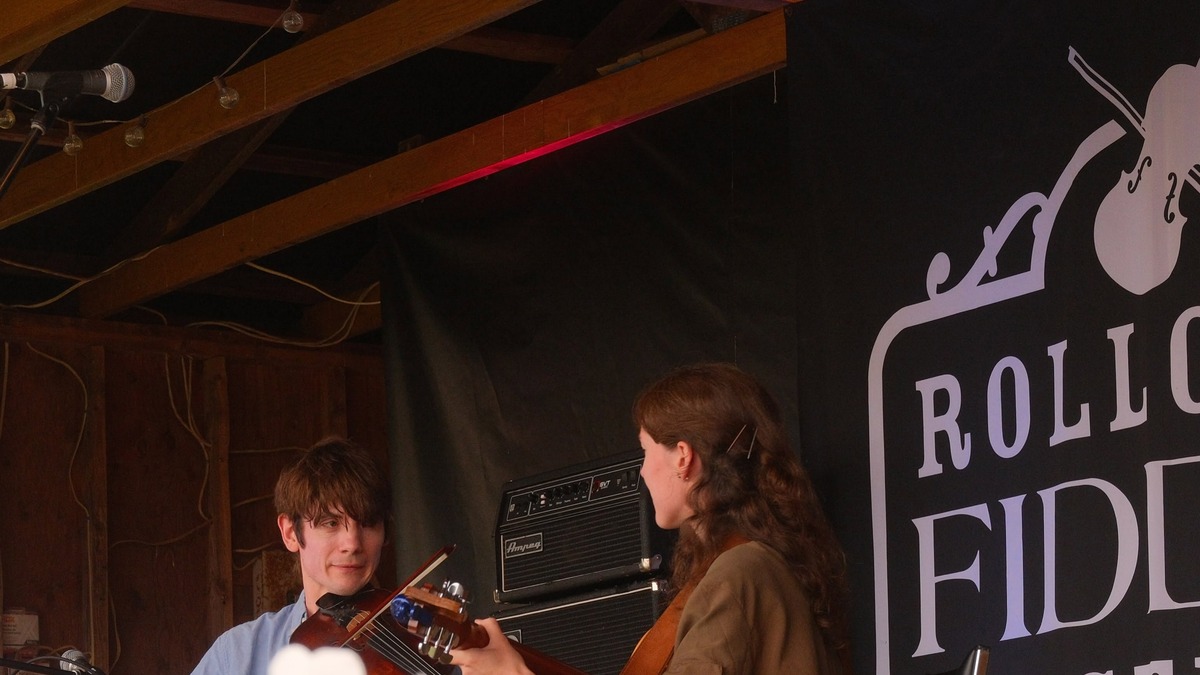
In the middle of that decade the Northeast Kings County branch of the PEI Fiddlers formed to promote and preserve traditional fiddling, and members held jam sessions on Sunday afternoons at St. Mary’s Parish in Souris.
Father Faber MacDonald, a priest from Little Pond, and Joe Pete Chaisson of Bear River led those sessions. Talk among local fiddlers about staging a larger event became a plan, and the first festival took place in the summer of 1976.
The society also banned its members from fiddle contests, which MacDonald said had caused hard feelings among players. The festival that followed was built around performances rather than competition.
Joe Pete Chaisson of Bear River
Joe Pete Chaisson worked as a crane operator and raised ten children with his wife, Margaret, in Bear River, in northeastern Kings County. The family home was a regular gathering place, and fifteen, twenty or thirty neighbours would arrive after church on Sundays to sit in the living room while Joe Pete and his brothers Emmett and “Old Peter” played.
Fiddling came to Joe Pete the hard way. His own father did not want his sons to play, so the brothers learned on the sly.
He reversed that rule with his own children. His son Peter was not allowed onto the neighbourhood pond for hockey until he had learned a tune, and his son Kenny remembers being pulled out of bed at two in the morning to learn one before he could go back to sleep.
Joe Pete kept a large collection of Cape Breton fiddle records, and the family listened to CJFX, the Antigonish radio station, for Winston Fitzgerald, Little Jack MacDonald and Joe MacLean. His admiration for the Cape Breton style carried into the festival’s programming.
He was the first head of the Eastern Kings Fiddlers and died in 1981, five years after the first festival. His sons Kevin, Kenny and Peter took over leadership of the group.
Father Faber MacDonald of Little Pond
Joseph Faber MacDonald was born on January 20, 1932, in Little Pond, a Kings County community where fiddling and dancing were part of daily life. He recalled that when his father finished building a machine shed on the farm, opening it meant holding a dance.
He was ordained a priest of the Diocese of Charlottetown on March 9, 1963. He led the Queens County Fiddlers in their early years and also led the PEI Fiddlers’ Society.
On January 11, 1980, he was appointed Bishop of Grand Falls, Newfoundland, and he was ordained a bishop that March at St. Dunstan’s Basilica in Charlottetown. The appointment meant passing the leadership of the fiddlers’ society to others.
He served as Bishop of Saint John, New Brunswick, from 1998 to 2006, returned to Prince Edward Island in 2008, and died on February 17, 2012, at age 80.
His fiddling is preserved on the CD All Out for the Gullies.
The First Festival in 1976 and the Fiddle Grounds Near Souris
The first Rollo Bay Fiddle Festival was a one-day outdoor event held in the summer of 1976 on newly purchased land of about 60 acres in Rollo Bay. The site was a former potato field near Souris, in the northeastern part of the Island.
Dozens of Chaisson relatives helped. They built the outdoor stage with lumber that had been meant for Kenny Chaisson’s garage.
JJ Chaisson, a grandson of Joe Pete, has said the festival’s first year was staged from the back of a hay wagon. His cousin Tim Chaisson sums up the founder’s outlook this way: “Our grandfather’s whole vision was to promote fiddle music.”
The Chaissons had three aims: restore visibility and viability to local fiddling, build a close connection between Island fiddling and Cape Breton fiddling, and raise money for a weekly fiddle instruction program at the Rollo Bay school.
In its early years the event was called the Rollo Bay Scottish Fiddle Festival, and its programming leaned almost entirely on Cape Breton style and repertoire. Headliners were almost always prominent Cape Breton fiddlers, and several more from Cape Breton were invited each year.
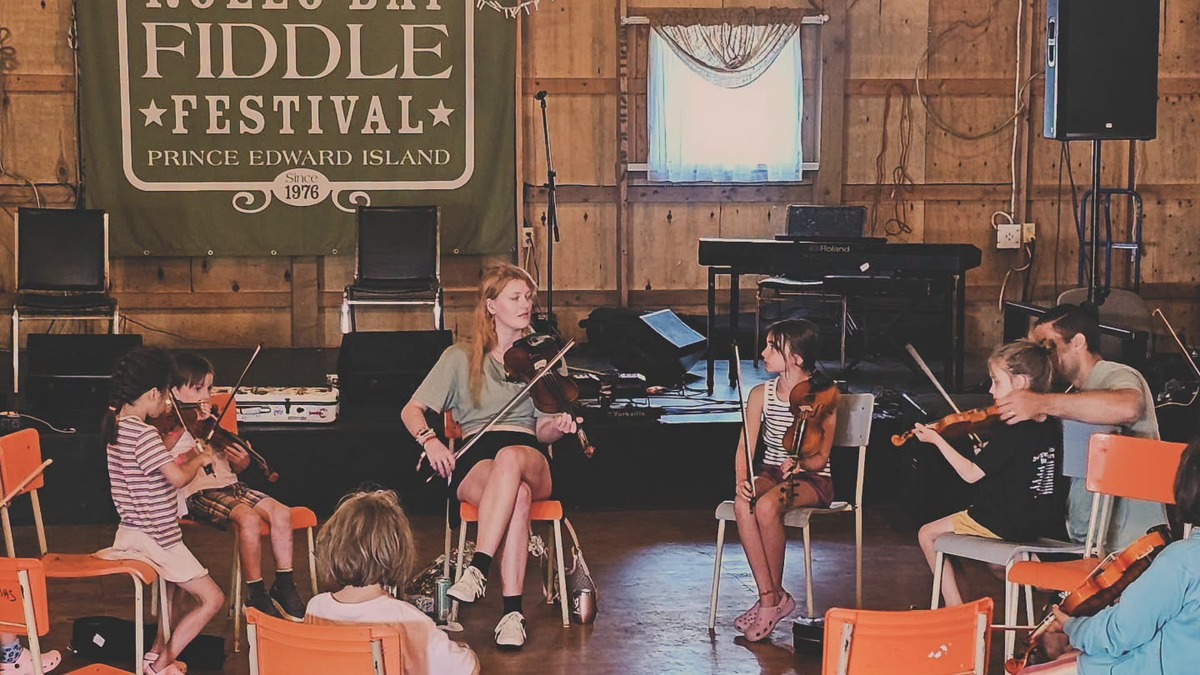
Proceeds paid for the Rollo Bay Fiddle Instruction Program, which offered free weekly lessons at Rollo Bay Consolidated School on Monday nights. The organizers hired violin instructor Kathryn Dau Schmidt, and students of all ages could join.
The festival has always been held on the third weekend of July.
The Early 1980s, Joe Pete’s Death, and the Rise of the Tuning Room
Through the late 1970s, 1980s and 1990s the festival brought in more fiddlers from outside the Island, including players from New Brunswick, Nova Scotia, Cape Breton and the United States. In the mid-1980s attendance reached close to 6,000, with visitors from across North America, from as far away as Alaska, and from Scotland and Ireland.
Joe Pete Chaisson died in 1981, and the festival passed to his sons and the wider Chaisson family. His eldest son, Peter, carried much of the work and eventually took over running the event.
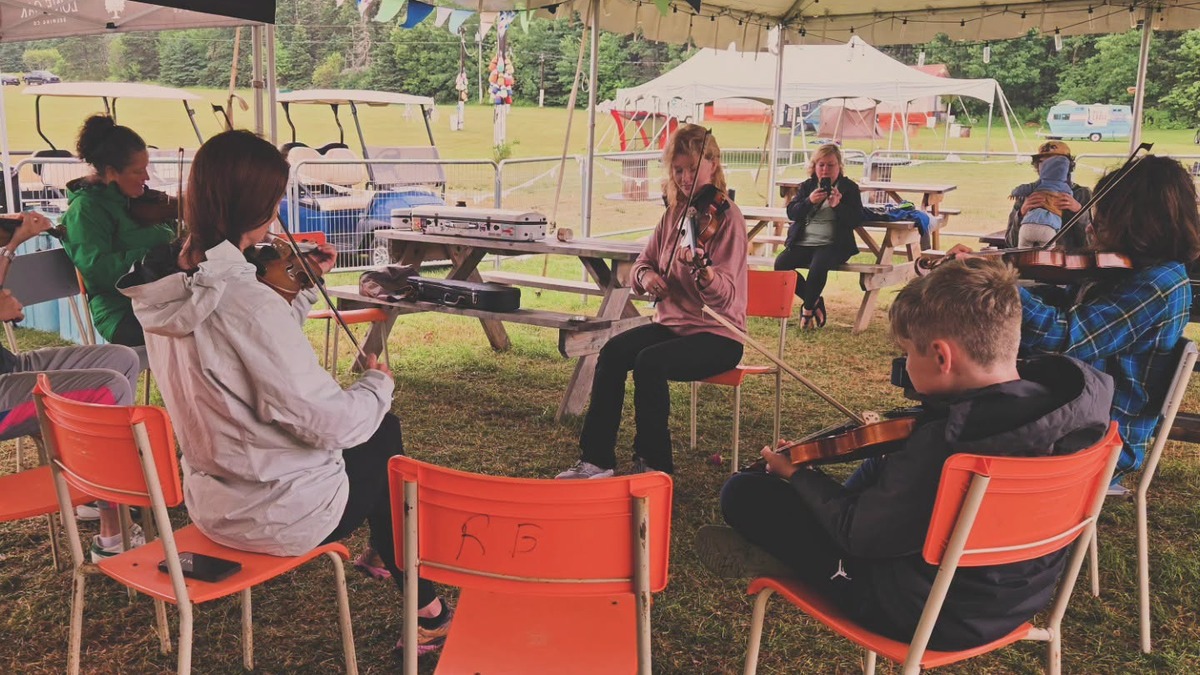
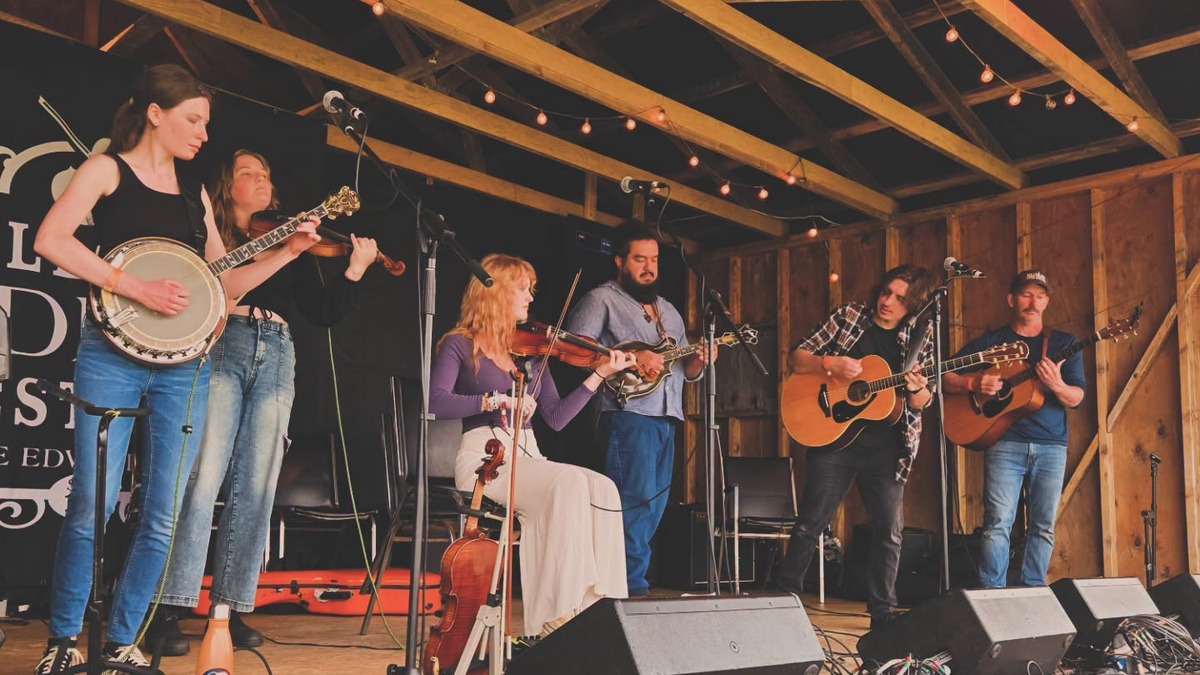
The Tuning Room was built near the main stage in the early 1980s and gave the festival its late-night side. After the official program ends, fiddlers gather in the small corrugated metal building, where one player after another keeps going to exhaustion and listeners step-dance as the mood takes them.
Outside on the dance stage, fiddlers and accompanists play long sets of tunes while people of all ages step-dance or work through the figures of a square set. Staying until the early hours of the morning is considered an honour among regulars.
Richard Wood, the Island fiddler and step dancer, remembers meeting Koady Chaisson in the Tuning Room about thirty years ago and says Rollo Bay was pivotal for many young musicians. Photographs from 1991 and 1992 show Ashley MacIsaac at the piano in the shed while Island fiddlers played and dancers paired off.
Three Brothers Who Ran the Festival After Joe Pete Chaisson Died
Peter, Kenny and Kevin Chaisson led the Eastern Kings Fiddlers after their father’s death, and they are among the most widely respected and influential musicians on Prince Edward Island. They also ran the Rollo Bay Fiddle Instruction Program, and Peter and Kevin spent Monday nights there from early fall through late spring for well over three decades.
Peter Chaisson
Peter Sylvester Chaisson was born in Charlottetown on July 21, 1942, and grew up in Bear River. He was called “Young Peter” to separate him from an uncle, “Old Peter,” who lived across Bear River Road.
In the early 1960s he moved to Westminster, Massachusetts, to work at a furniture store run by his sister Catherine’s husband, and he brought his fiddle with him. He later joined the U.S. Army and returned to Prince Edward Island when troops began being drafted for Vietnam.
Back on the Island he drove an oil truck for his uncle’s company. He met Doreen Manning at a restaurant near work, and they married in 1971.
They had five children who grew up around the festival: Stephen, Melanie, Stanley, Bradley and Andrew. Peter worked as a welder at the shipyard in Georgetown until a heart attack at age 49 forced him onto disability.
He played in a stately, ornate and sensitive style and never learned to read music, carrying thousands of tunes in his head. His playing is on the Rounder CD The Prince Edward Island Style of Fiddling: Fiddlers of Eastern PEI and on self-produced recordings such as The Road to Rollo Bay, which also features his daughter Melanie.
He composed Joseph and Margaret Chaisson in honour of his parents. A tune titled Peter and Doreen Chaisson honours the couple as longtime organizers of the festival.
As an organizer he oversaw the property, handled finances and logistics, and lined up the talent. His brother Kevin called him “Mr. Everything,” and each spring, as soon as the snow was gone, Peter cut the hay and trimmed the grounds.
From about 2003 until 2015 he taught the advanced class at the instruction program and gave private lessons at his Bear River home. He was strict about the priming technique, in which the fourth finger doubles the sound of the neighbouring open string.
Kenny Chaisson
Kenny Chaisson was born around 1947 in Bear River and started on the fiddle at about thirteen. His father passed on an admiration for Cape Breton fiddling and gave him access to a large record collection.
He became a player with a vast repertoire who liked difficult keys such as B-flat and F. He composed tunes including Bradley’s Reel, Names Escape Me and Randy’s Reel.
Kenny worked as an executive at an asphalt plant. His daughter Darla performed with him at the 1991 festival, and his daughter Kirsten step-danced to his fiddling in 1992.
Kevin Chaisson
Kevin Chaisson was born in 1950 and resisted family pressure to take up the fiddle. He started on piano at about sixteen, inspired by the country pianist Floyd Cramer, and became one of the Island’s most requested accompanists for fiddle music.
His style drew on the Cape Breton pianists Dougie MacPhee, Hilda Chiasson and Joey Beaton, and Island pianists have widely copied it. He has recalled sitting at the piano for eight or nine hours straight at family gatherings because there were many fiddlers and only one pianist.
He took up the fiddle in his late twenties, and older players said his style came closest to Joe Pete’s of the three brothers. He is also a composer, and tunes such as Karen Chaisson’s Reel, Carter MacKenzie’s Reel, Darla’s Jig and Dot MacKinnon’s Reel are played across the Maritimes.
Kevin worked as an auto mechanic and spent more than twenty years of Monday nights at the instruction program. His son Tim plays Carter MacKenzie’s Reel.
The Early 1990s, When Local Crowds and Young Players Filled the Field
Documenting the Festival in 1991 and 1992
Ken Perlman, curator of the Bowing Down Home archive of Prince Edward Island fiddle music, photographed and recorded the festival in 1991 and 1992. He later published the book The Fiddle Music of Prince Edward Island in 1996.
The audiences of those years were made up almost entirely of local people. Spectators sat on long wooden benches or listened from rows of parked vehicles, and during the rain of 1992 the parked listeners began honking their horns to show approval of strong performances.
The stage hosted a wide range of Island groups. The Eastern Kings and Queens County Fiddlers shared it in 1991, the Prince County Fiddlers accompanied the Lady Slipper Dancers in 1992, and fiddler Eddy Arsenault played with his son Peter and his daughter Helene Bergeron that same year.
Natalie MacMaster headlined in 1991 and Ashley MacIsaac in 1992. Both were young Cape Bretoners, and both went on to have a large influence on the musical development of the Island’s younger players.
The festival also served as a model. In 1991 the MacKinnon family of Richmond, Prince Edward Island, started a fiddle festival near their home that was patterned closely on Rollo Bay, with Jerry Holland and David MacIsaac of Cape Breton as headliners.
By the turn of the twenty-first century Rollo Bay had become a major tourist attraction.
The Rollo Bay Fiddle Instruction Program and Its Students
In 1991 students from the instruction program performed on the festival stage under Kathryn Dau Schmidt, with Kevin Chaisson accompanying on piano. The program’s students included JJ Chaisson, Tim Chaisson and Sheila MacKenzie.
JJ was nine in 1991. Sheila joined the program in the late 1980s and stayed until 1993.
In 1992 it was still unclear whether the youngsters recently introduced to the instrument would keep playing. By 2006 many of them had, and the revival had succeeded.
The 2015 Festival and the Death of Peter Chaisson
By 2015 the festival had been running for thirty-nine years. Peter, then 72, had decided the work had become too much and planned to sell the land, and he expected that year to be the festival’s last.
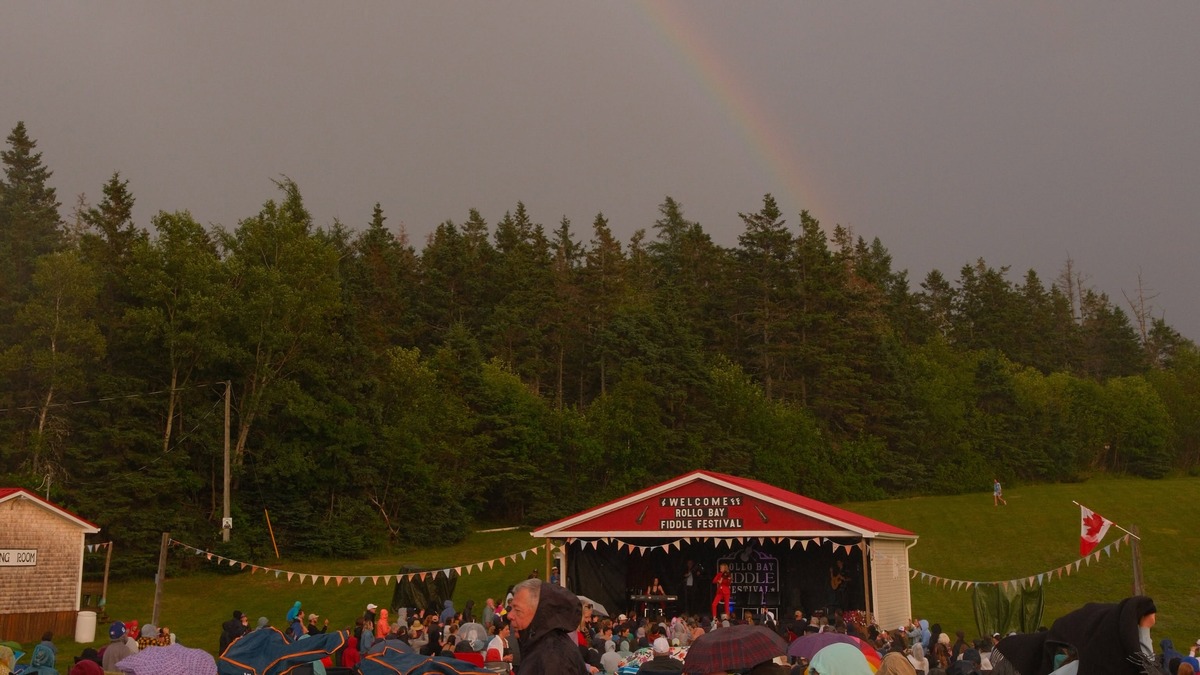
Rain on Sunday, July 19, the final day, moved the music into the barn. Peter was gathering extra chairs for the indoor crowd when his son Andrew, who had just returned from Australia, went on stage to play.
Peter stopped at the back of the barn to listen, and moments later he collapsed from a heart attack. Paramedics could not revive him.
The remaining shows were cancelled, and the festival held an open jam session at 6:30 that night in his honour.
Big Field Traditions Buys the Grounds and Keeps the Festival Going
The festival’s future was in doubt after Peter’s death.
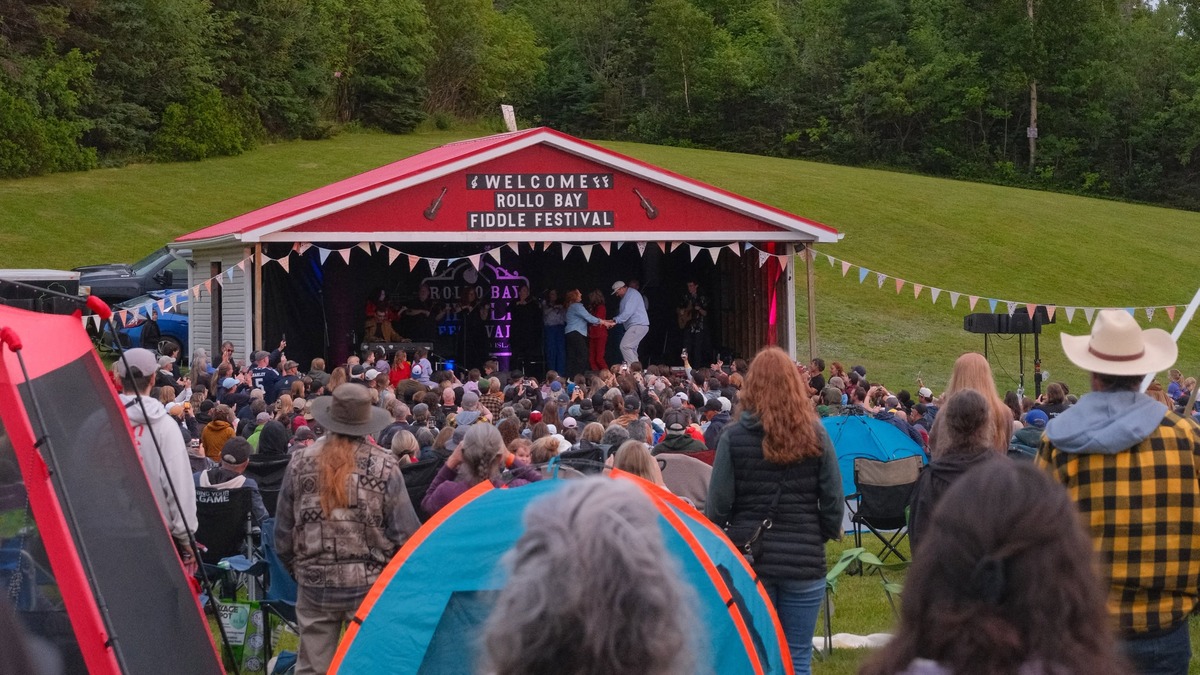
In early 2016 Tim Chaisson, his brothers Brent and Darren, Peter’s sons Andrew and Stanley, and their cousins JJ, Koady and Kyle formed the non-profit Big Field Traditions to run it.
Tim said at the time, “We just couldn’t imagine it not happening.” The group bought the grounds from the original family, and Tim has said he and Koady, with a few other cousins, purchased the land from their parents in 2016.
To pay for repairs to the buildings and for artists, Big Field Traditions launched a GoFundMe campaign with a $60,000 goal and held benefit concerts, including a community fundraiser on April 22 at the Rollo Bay Church. By early June it had raised almost $25,000.
The 2016 festival ran July 15 to 17 as the 40th-anniversary celebration, with tributes to Peter. The same grounds also hosted the PEI Bluegrass and Old Time Music Festival from July 1 to 3 that year.
Tim Chaisson
Tim Chaisson is Joe Pete’s grandson and Kevin’s son, and he is a seventh-generation fiddle player. He learned the basics at the Rollo Bay Fiddle Instruction Program, picked up pointers from relatives and cousins, and listened to recordings.
Before The East Pointers he released solo work, including the 2009 album Broken Hearted Beat with his band Morning Fold, recorded in Dartmouth, Nova Scotia.
In 2014 he formed The East Pointers with his cousin Koady and the guitarist Jake Charron. Their debut album, Secret Victory, came out in late 2015 and won the 2017 Juno Award for Traditional Roots Album of the Year, beating fellow Island band Ten Strings and a Goat Skin.
The follow-up, What We Leave Behind, was nominated for a Juno in 2018, and Yours to Break followed in 2019. The EPs House of Dreams (2022) and Safe in Sound (2023) came after that, and House of Dreams earned a Juno nomination.
The East Pointers returned to Rollo Bay in July 2017, a few months after the Juno win. Tim has served as a spokesperson and board member for Big Field Traditions.
Koady Chaisson
Koady Chaisson, born in 1984, was Tim’s first cousin. He step-danced at the festival as a boy before turning to banjo and tenor guitar, and he was a member of Big Field Traditions and a founding member of The East Pointers.
In 2020 he started the Harvest Home Festival on the same grounds. The first edition in October 2020 was a small, physically distanced four-day event with The East Pointers and the English singer-songwriter Lucy Farrell, and the 2021 edition was cancelled ten days before it began.
Koady died suddenly on January 6, 2022, at age 37. Tim and Jake Charron went ahead with Harvest Home on September 23 and 24, 2022, with Matt Andersen and The Big Bottle of Joy, Reeny Smith, Kaia Kater, Andy Shauf, Ria Mae and others.
The East Pointers now also run their Goolaholla festival on the grounds in September.
JJ Chaisson
JJ Chaisson was born in 1982 and is Joe Pete’s grandson through his mother, Donna, one of Joe Pete’s ten children. His paternal grandfather, Johnny Joe Chaisson of Souris, was also a fiddler and a distant relative of the Bear River Chaissons.
He was one of the first young students of the instruction program and released a solo CD, In the Genes, in 1997. Soon afterward he joined several cousins in a Celtic rock band called Celtic Tide, later renamed Kindle.
Although a music career beckoned, he chose to stay near home and set himself up as a lobster fisherman in Souris. He composes as well, with tunes such as Julie’s Reel, Tiddle Winks and Icing on the Cake.
JJ has said the long-term goal is to hand the festival to his children, nieces and nephews. Kindle was on the 2018 bill and returned for the 50th festival in 2026.
Music Camp, Safer Grounds, and Other Changes Since 2016
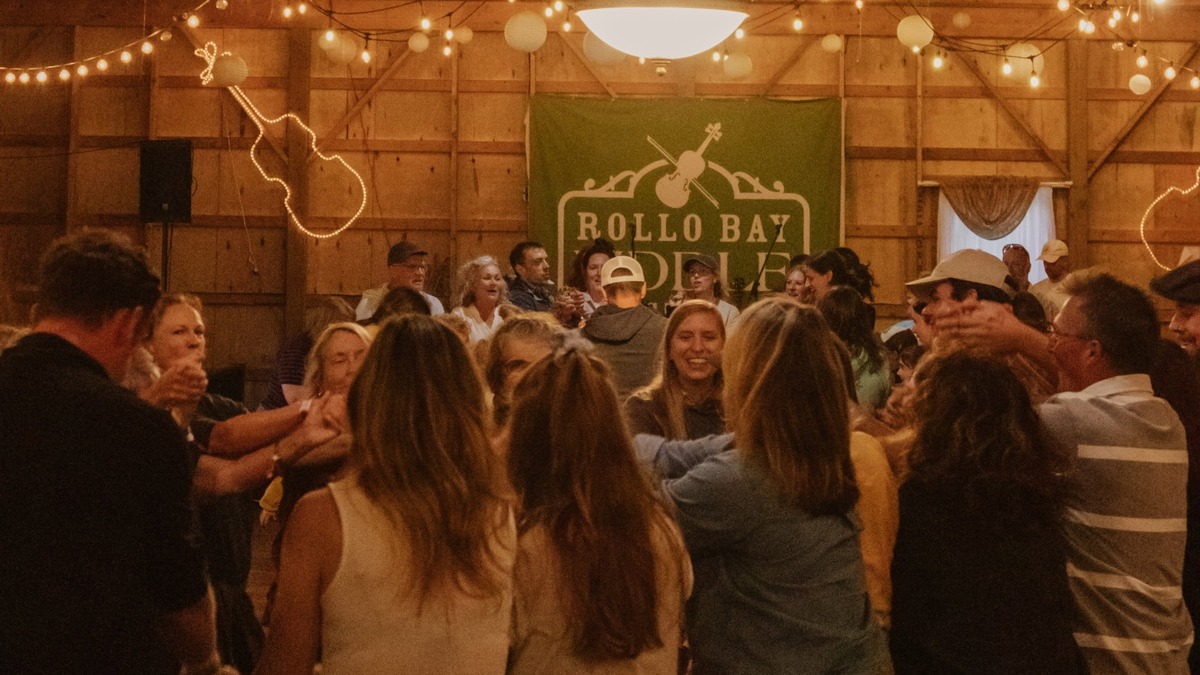
The Rollo Bay Music Camp began in 2016 as a three-day program of fiddle, guitar and step-dancing lessons starting the Tuesday before the festival. It is open to children and adults and grew out of the workshops the festival had held in earlier years.
The camp now draws a large number of students from off the Island, and by 2018 the children’s camp had doubled in size.
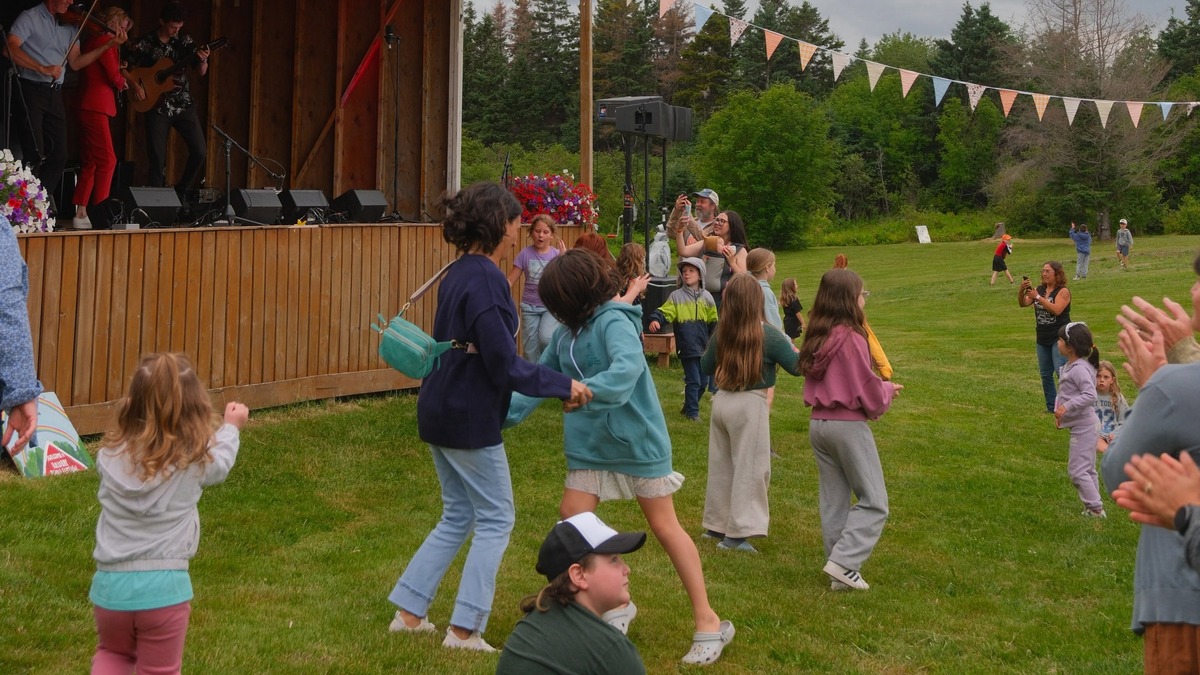
Big Field Traditions made the grounds more family-oriented. It removed the seating benches and moved the parking lot back so children could run in the field without worrying about cars, and about 50 volunteers helped in 2018.
The 2018 bill included Dara Smith-MacDonald and Adam Young, Shane Cook, Sean Gray, Vishtèn and Kindle. JJ Chaisson floated the idea of eventually widening the event into a folk festival.
Programming now draws on artists from as far away as Australia, New Zealand and Scotland. Festival proceeds still fund free fiddle lessons for adults and children through the fall and winter.
From a Twenty-Four-Hour Livestream to Winter Fundraisers in Charlottetown
In 2020 the festival could not welcome people to the grounds for the first time in 44 years. Instead it held a 24-hour live-streamed jam on Zoom that began at 7 p.m. on Friday, July 17.
Performers included The Chaisson Family, Lennie Gallant, Inn Echo, Emmanuelle LeBlanc and Pascal Miousse of Vishtèn, and Rowen Gallant and Jesse Périard of Ten Strings and a Goat Skin. Most of the ticket proceeds were split between Big Field Traditions and the Souris Food Bank.
People who had bought Music Camp passes for 2020 could take a refund or use the pass in 2021. Brent Chaisson noted that visitors from near and far build their whole summer vacation around the festival.
By the summer of 2022 the festival was back on the grounds, and Tim Chaisson called the 46th edition the best year yet.
In early 2024 Big Field Traditions started a monthly winter ceilidh series upstairs at the Pour House above the Old Triangle in Charlottetown. The shows raised money for a new washroom facility on the grounds, with raffles and sponsor donations.
Guests included Dara Smith-MacDonald and Adam Young on January 27, and Richard Wood and Darla Chaisson on February 17. The March 16 show featured The Chaisson Family, Karson McKeown, Tuli Porcher, Tom Gammons and Tre Sutherland.
Fifty Years of Rollo Bay Marked at the 2026 Rollo Bay Fiddle Festival
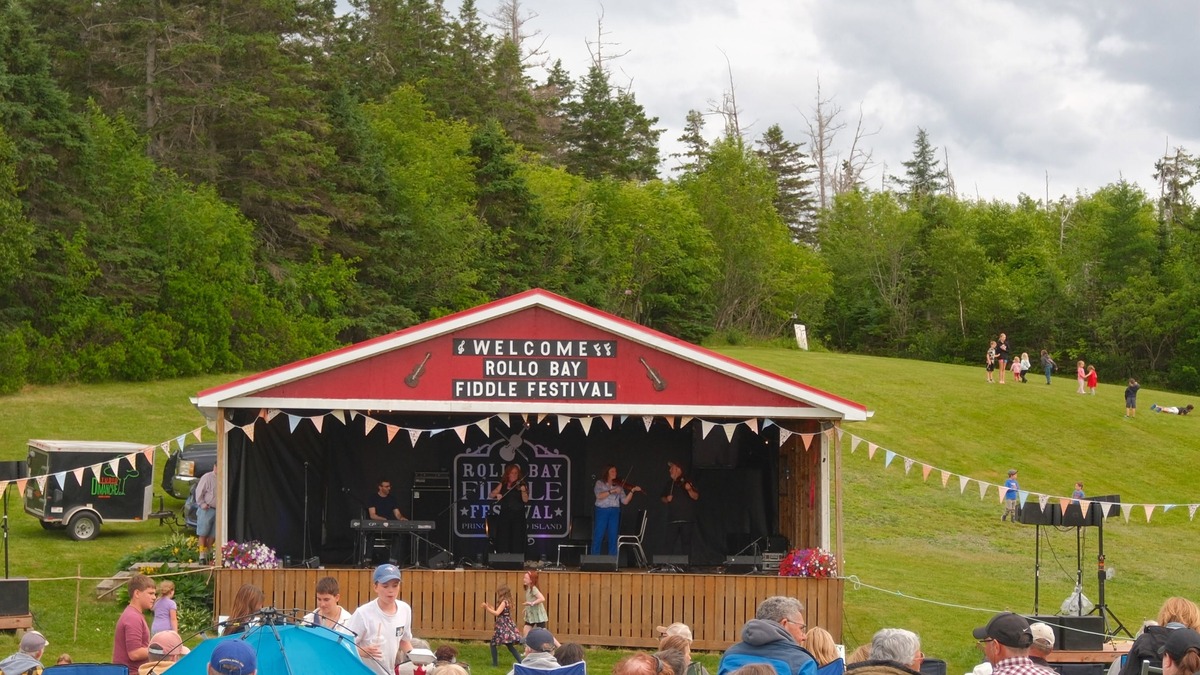
In 2026, the festival ran July 17 to 19, 2026, and was billed as its 50th year.
The milestone lineup was led by Natalie MacMaster and Donnell Leahy, joined by Mary Frances Leahy and Michael Leahy.
The bill also included Mairi Rankin, Richard Wood, The Chaisson Family, Beòlach, Kindle, Ryan Young and Cynthia MacLeod.
The weekend combined concerts, jam sessions, workshops, camping and family entertainment. It was run by Joe Pete Chaisson’s grandchildren, the third generation of the family to organize it.
Fifty Years of Tunes in the Big Field and the 2027 Festival Ahead
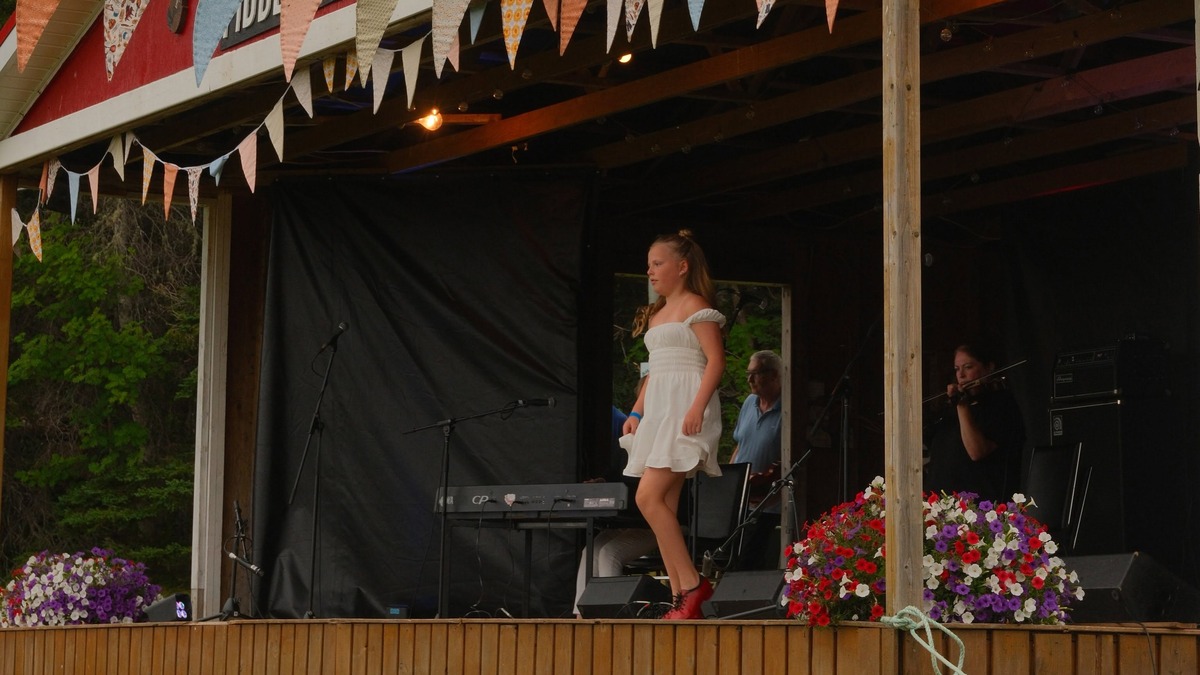
The Rollo Bay Fiddle Festival began in 1976 as a one-day event on a former potato field and has grown into a weekend festival with a music camp, free lessons and performers from as far away as Australia and New Zealand.
Three generations of the Chaisson family have run it, first Joe Pete and his sons and now his grandchildren, who bought the grounds and formed Big Field Traditions. Proceeds still go to free fiddle lessons for the community.
The 2027 festival has been confirmed. The lineup has not been announced yet.