Every October, a three-acre property on the banks of the Grand River in Breslau, Ontario fills with the smell of schnitzel, the sound of a live oompah band, and a crowd raising steins to a toast that’s been sung in this region since long before most of the people singing it were born.
The Schwaben Club is easy to mistake for just another festival tent. It isn’t.
It’s a 95-year-old immigrant benefit society that helped invent the very idea of a public Oktoberfest in Canada, and its 2026 season — running across seven event nights between October 2 and October 17 — is the latest chapter in one of the longest-running institutional stories in Waterloo Region.
Understanding what happens inside that clubhouse this fall means understanding where it came from, why it moved, and how a mutual-aid group for Danube Swabian immigrants ended up as one of five official Festhallen behind the second-largest Oktoberfest on Earth.
A Sick-Benefit Society Born From the Danube’s Diaspora
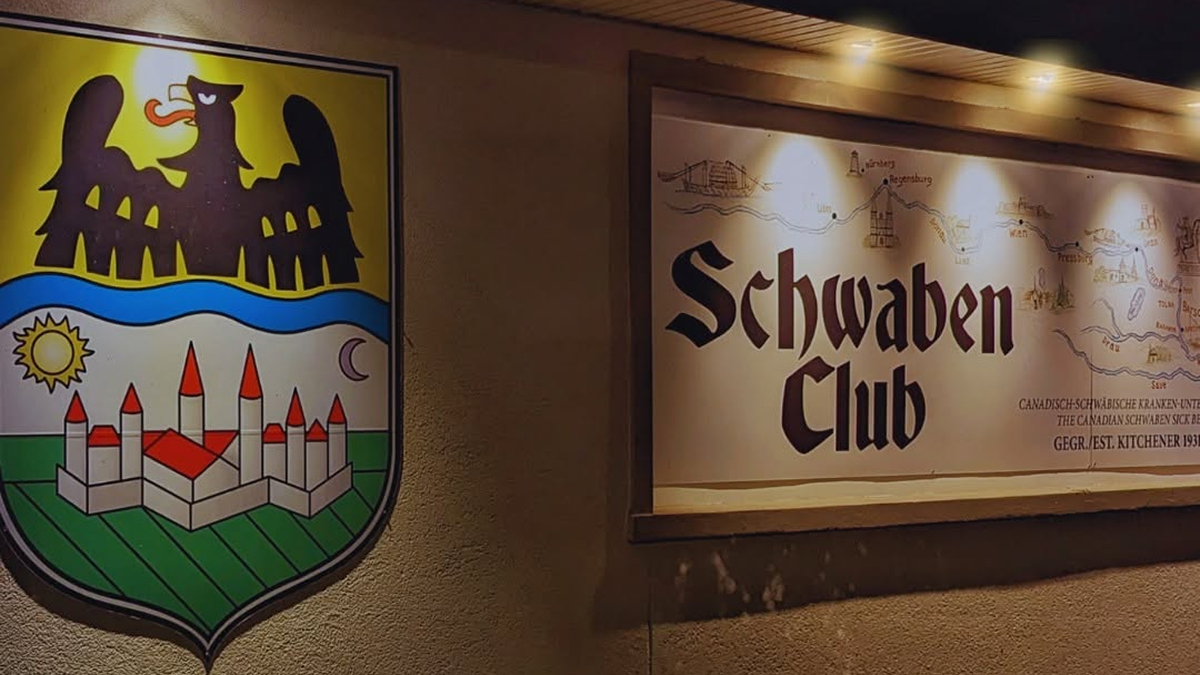
The Schwaben Club traces its members’ roots to the Danube Swabians, German-speaking settlers who moved down the Danube River in barges called “Ulmer Schachtel” during the 17th and 18th centuries to resettle land left ravaged after more than 150 years of Ottoman control in the Balkans and Hungary.
Encouraged by the Habsburg emperors to farm the region back into productivity, these communities became so agriculturally successful that the area was nicknamed the breadbasket of Europe. Population growth pushed land scarce by the late 19th century, sending waves of Danube Swabians to North America, and the collapse of the Austro-Hungarian Empire after the First World War — which split their homeland among Hungary, Romania, and Yugoslavia — sent still more.
The Second World War proved catastrophic for the group: roughly 250,000 Danube Swabians were killed in Tito-era concentration camps, and another 100,000 were deported to forced labour in Russia and Romania’s Baragan steppe, with most survivors fleeing to overcrowded refugee camps in Germany and Austria before Canada’s more liberal postwar immigration policy gave many of them a second chance to resettle.
Long before that second wave of trauma and migration, a smaller group of Danube Swabian immigrants already in Kitchener had organized for mutual protection. The Canadian Schwaben Sick Benefit Association was founded in 1931 under first president Wilhelm Goss, with members initially meeting in each other’s homes and later sharing a room with the Saxon Club at the Winter Garden on King Street.
The arrangement was straightforward insurance for people with no social safety net in a new country: members paid monthly dues, and in exchange the club paid ten dollars a month to anyone unable to work due to illness or injury, an amount the club’s own history calls adequate for the era. It was less a social club at first than a working-class cooperative, and its earliest years reflected that: three men, Goss, John Martin, and a Mr. Neu, all held the presidency in the club’s first year alone as the fledgling group worked out how to govern itself.
From a Rented Room at the Winter Garden to a Warehouse on King Street
The 1930s built the cultural scaffolding that would eventually make Oktoberfest possible. A youth group formed in the club’s second year and began holding weekend dances at the Winter Garden, a German-language school opened in 1933 under Pastor H. Walter, and by 1935 the club staged its first Trachtenfest, showcasing traditional Trachten costumes brought over from the old country while a newly formed Ladies’ Auxiliary raised money through bingo nights and bazaars.
That momentum stalled the moment Germany invaded Poland: when the Second World War broke out in 1939, the club suspended nearly all activity, continuing only its Sick Benefit Fund under Canadian government sanction, and a separate Death Fund created in 1941 charged members a single dollar per passing to help cover funeral costs for grieving families.
Peacetime brought both relief and renewed growth. The club resumed full operations in 1947 and was formally recognized by the Province of Ontario as an official Cultural Club on January 19 of that year, adopting the name Canadian Schwaben Sick Benefit Association just as a fresh wave of postwar Danube Swabian immigrants began arriving in Kitchener. Membership outgrew the Winter Garden almost immediately. Real estate agent Wilfrid Bitzer located a vacant warehouse at 1668 King Street East, and through the summer of 1948 members spent their weekends — including late nights — renovating it themselves, with the Frauengruppe cooking meals to feed the volunteer crews, until the building opened that October under the name Sunnyside Gardens.
The address would remain the club’s home for the next 72 years. Within the same year, members organized the Victoria Soccer Club and celebrated the first Kirchweihfest, a Danube Swabian harvest and church-consecration festival that has since become a recurring fixture on the club’s calendar.
The Decade Sunnyside Gardens Became the Schwaben Club — and Threw Its Own Oktoberfest
The 1950s consolidated Sunnyside Gardens as a genuine institution rather than a rented hall.
The club paid off its mortgage, sold a strip of land to the City of Kitchener that made way for Weber Street, secured a liquor licence that had to be renewed monthly in Toronto, and formed a bowling league, the Olympic Bowlers, alongside a Beer Keller that became a members-only social hub complete with pool and ping-pong tables.
Dance groups thrived well enough to perform not just at home but at other German clubs across the region, a sign of how central Schwaben culture had become to the broader Kitchener-Waterloo German-Canadian community.
The 1960s are where this history intersects directly with the festival most people associate with the region today. In 1960, the club hosted the first Tag der Donauschwaben, drawing roughly 1,500 fellow Danube Swabians from across North America over three days and earning Kitchener-Waterloo the nickname “Heart of the Danube Swabians.” That same decade, the club purchased the neighbouring building to create a second hall — named Schwaben Hall — while its youth dance group, under director Günther Haas, performed at Toronto’s Maple Leaf Gardens for Princess Alexandra of the Netherlands and won first prize at a folk dance competition in Tennessee, a run of visibility significant enough that the club formally renamed itself from Sunnyside Gardens to the Schwaben Club.
It was in this same period that the club held its first Oktoberfest with its doors open to the general public, a decision that both improved its finances and attracted new members. A booklet rediscovered decades later, and now archived by the club, shows the celebration had already outgrown the building by 1962: the Schwaben Club rented Kitchener Memorial Auditorium — “the Aud” — to host that year’s Oktoberfest because its own clubhouse wasn’t big enough to hold the crowd. The Schwaben Club had been running its own Oktoberfest for the better part of a decade before the celebration ever became a public, city-wide event.
1969: The Year a Modest Concordia Club Party Became a Civic Festival
Kitchener-Waterloo’s civic Oktoberfest grew out of Canada’s 1967 Centennial celebrations, when the region tested three different festival concepts — a Heritage Festival, a Winterfest, and an Oktoberfest — before settling on one, dropping Winterfest for its unreliable weather and the Heritage Festival for being too generic to distinguish the community from anywhere else.
The first Oktoberfest event ran October 11 to 14, 1967 at the Concordia Club and drew a modest 2,000 people, complete with an opening keg-tapping, dancing, food, and beer. Two years later, the Kitchener Chamber of Commerce asked Concordia’s leadership for a trial run at operating the event as a city-wide festival.
The 1969 launch, remembered by founding organizer Owen Lackenbauer as flying blind, ran on little more than $200 in seed money, a banner strung over King Street, and a promise of enthusiastic support from the German clubs and a visiting tourism official from Munich. The gamble paid off: just under 75,000 visitors showed up over five days, drinking through 57,000 gallons of Bavarian-hopped beer brewed specifically for the occasion and eating more than 50,000 pounds of sausages, pigtails, and sauerkraut. The books closed on a profit of just $703.73, but that was enough to convince organizers the concept had legs.
Kitchener-Waterloo Oktoberfest Inc. was incorporated on December 29, 1970, formally moving control of the festival out of city hall and into the hands of a dedicated nonprofit board that included founding figures Darwin Clay, Jack Bishop, Owen Lackenbauer, and roughly a dozen and a half other local business and civic leaders. The new organization’s mandate went beyond throwing a party: its founding objectives explicitly called for uniting the region’s ethnic clubs and institutions, promoting tourism, running a Miss Oktoberfest pageant, and preserving an accurate record of Kitchener-Waterloo’s German-Canadian heritage.
The early years were not without turbulence. A 1970 promotional poster featuring the word “beer” alongside a woman holding two frothy mugs triggered a public order from the provincial liquor commissioner restricting where it could be displayed, a controversy that ironically generated national media coverage and free publicity for the young festival.
A year later, an accounting error at the Heidelberg Haus festhalle turned an expected $84,700 profit into a $17,704 operating loss, forcing the four participating German clubs and Bingeman Park Farms to each contribute an additional $4,000 to keep the festival solvent
In 1975, a new Liquor Board regulation forced the cancellation of the traditional keg-tapping ceremony entirely — the only year in the festival’s history that the keg-tapping didn’t mark the festival’s official start.
Second Only to Munich: The Numbers Behind Canada’s Biggest Bavarian Festival
Kitchener-Waterloo Oktoberfest is now billed as Canada’s Greatest Bavarian Festival and ranks as the second-largest Oktoberfest celebration in the world, trailing only the original event in Munich, with attendance estimates running around 700,000 visitors annually.
Its Thanksgiving Day parade is the only major parade held on Canadian Thanksgiving and is broadcast nationally on CTV; an estimated 150,000 spectators lined the route during the 2016 edition alone.
The festival’s mascots, a rotund, moustachioed figure named Onkel Hans and his dirndl-wearing counterpart Tante Frieda, have anchored the event’s branding for decades, while the Miss Oktoberfest pageant, launched the same year as the festival itself, sent its 1971 winner, Donna Sawicky, on to capture the national Miss Canada title before rising costs forced organizers to cancel the televised pageant format in 2003 in favour of a locally judged Oktoberfest Ambassador program based on community involvement rather than beauty-contest criteria.
That successor tradition has a direct line to the Schwaben Club: for 2026, the festival named club member Andre Killingbeck as its Oktoberfest Ambassador.
The economics behind the festival have been measured with increasing rigour in recent years.
A 2019 estimate for the festival’s 51st edition put its annual economic benefit to the community at $21.8 million. A more recent third-party economic impact study, conducted in 2022, found the festival generated over $5.4 million in direct economic benefit to Waterloo Region, including more than $6.8 million in tourism spending, over $4 million spent by local residents at concessions and restaurants during the festival, more than $1.9 million in tax revenue, and the equivalent of 59 full-year jobs supported by the event.
Public investment has followed the festival’s growth: the federal government contributed close to $400,000 through its Marquee Tourism Events Program in 2009, and FedDev Ontario invested more than $2.4 million in 2022 — including a $1 million non-repayable contribution directly to K-W Oktoberfest Inc. — to help the festival return to full scale after pandemic-era cutbacks and to fund new accessible bleachers, vendor infrastructure, and signage.
None of it runs without an enormous volunteer base: more than 1,650 volunteers helped stage the 2024 festival alone. Five German clubs anchor the official Festhallen system that makes all of this possible: the Alpine Club, the Concordia Club — the largest ethnic German club in Canada — Hubertushaus, the Transylvania Club, and the Schwaben Club, with additional festhalls and biergartens operated seasonally out of other bars and venues across the region under German-styled names.
Trading King Street for the Grand River
For most of that history, the Schwaben Club operated from its King Street East warehouse-turned-clubhouse in Kitchener.
That changed abruptly in 2020.
Shrinking membership had already forced changes across several of Waterloo Region’s traditional German clubs, and when the Slovenian Association’s Sava Club — which had run the Oberkrainer Haus on Scheifele Place in Breslau for roughly six decades — voted in March 2020 to close entirely, Schwaben’s leadership moved quickly to buy the property.
Club president Glenn Herold said the relationship began almost a year earlier, when Schwaben youth in traditional dress performed at a Sava Club event, and conversations about a possible sale followed from there.
The financial logic mattered as much as the goodwill: the King Street building could seat 700 people but required a heavy schedule of paid rental events just to cover the cost of keeping it, while the smaller Breslau property offered room for roughly 200 people and a chance to refocus on cultural and social programming rather than running the club like a banquet business.
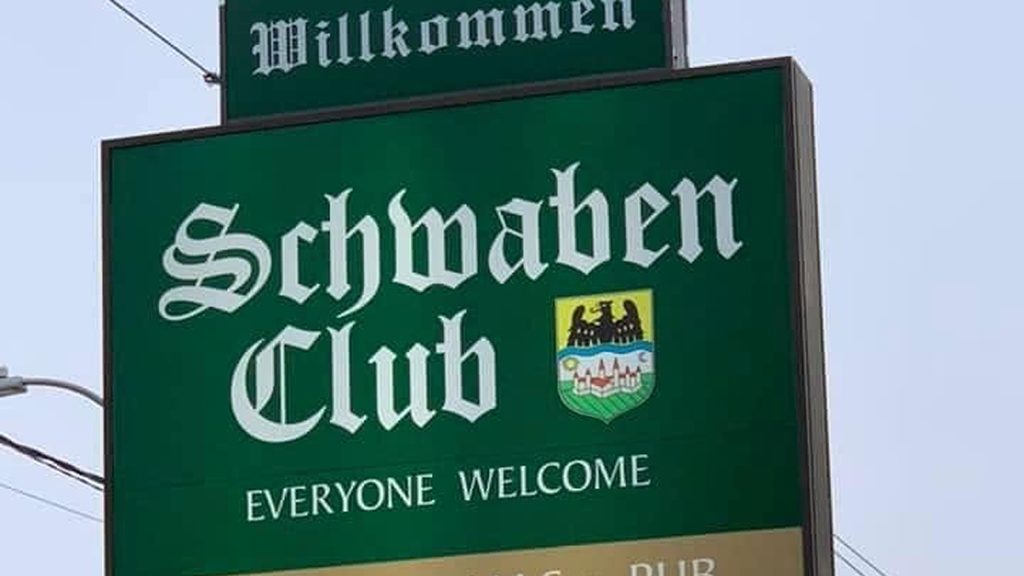
The 1668 King Street property sold in the fall of 2020, and the club relocated to 50 Scheifele Place in Breslau that January, a move club members describe as bittersweet given how many weddings and milestone events had taken place at the old address over seven decades.
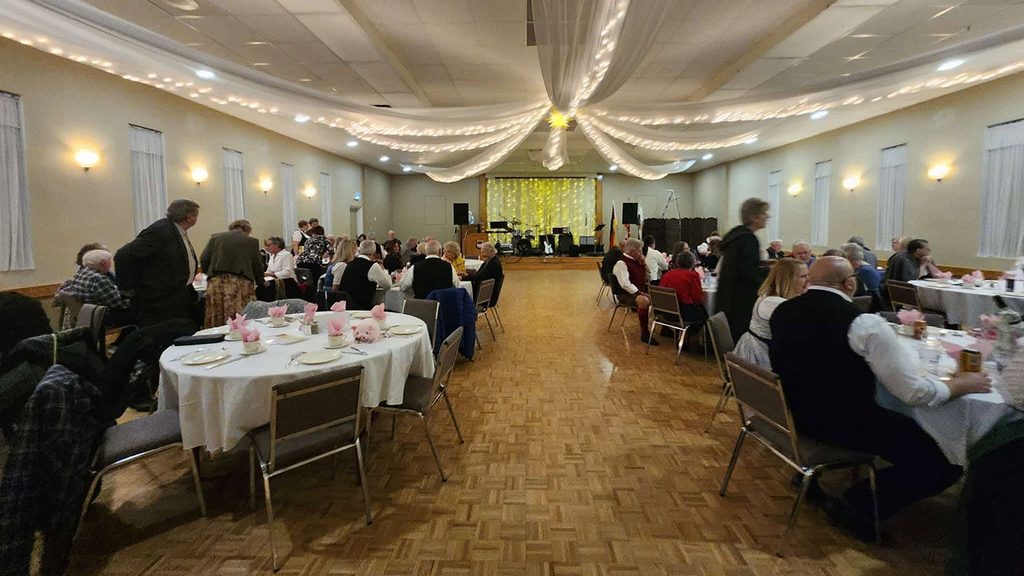
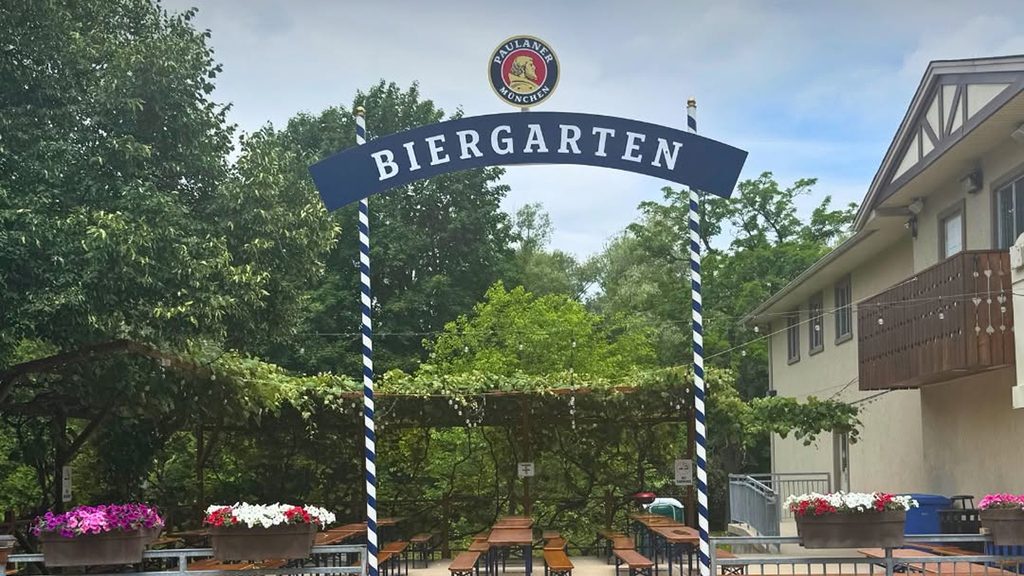
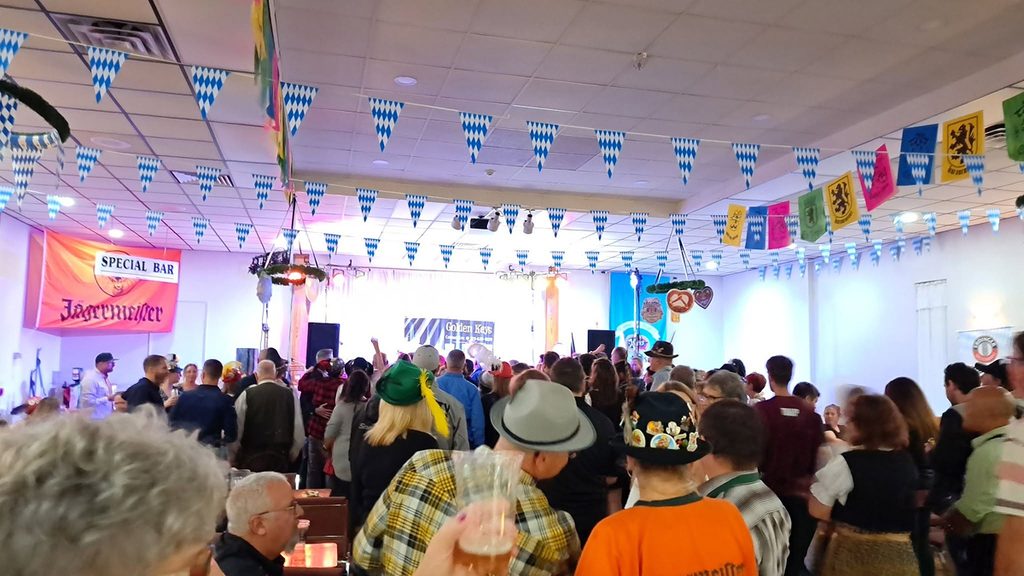
The new site sits on a three-acre property along the banks of the Grand River, able to seat roughly 200 people indoors with an outdoor patio licensed for another 150 guests. The club introduced its outdoor Biergarten in the summer of 2021 and held its first Kirchweih celebration at the new location that September, gradually rebuilding its event calendar as pandemic capacity restrictions eased. The riverside setting turned out to be an asset rather than a compromise: the added green space opened up family-oriented programming that the old urban clubhouse never had room for, and the Breslau community embraced the club’s dinner nights and biergarten events from the start.
Inside Oktoberfest 2026 at the Schwaben Club
This year’s Kitchener-Waterloo Oktoberfest is the 58th annual edition of the festival, running across four weekends from Friday, September 25 through Saturday, October 17, with Festhallen operating at Hubertushaus in Mannheim, the Alpine Club and Concordia Club in Kitchener, and the Schwaben Club in Breslau.
Downtown Kitchener’s free Willkommen Platz celebration returns Thanksgiving weekend, October 9 through 11, spread across Carl Zehr Square, King Street, and the Gaukel Block, with KIDtoberfest, DOGtoberfest, and the second annual Sticks & Steins road hockey tournament joining the traditional biergarten and Circle K stage lineup.
The Sunday of that weekend brings the return of Oktoberfest Goes Country, headlined this year by Nashville-based singer-songwriter Robyn Ottolini.
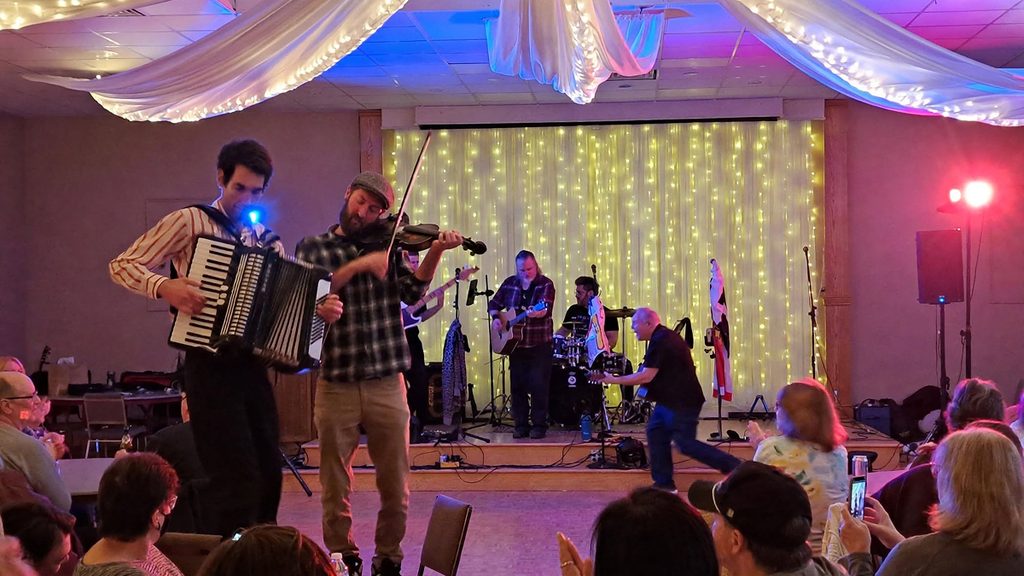
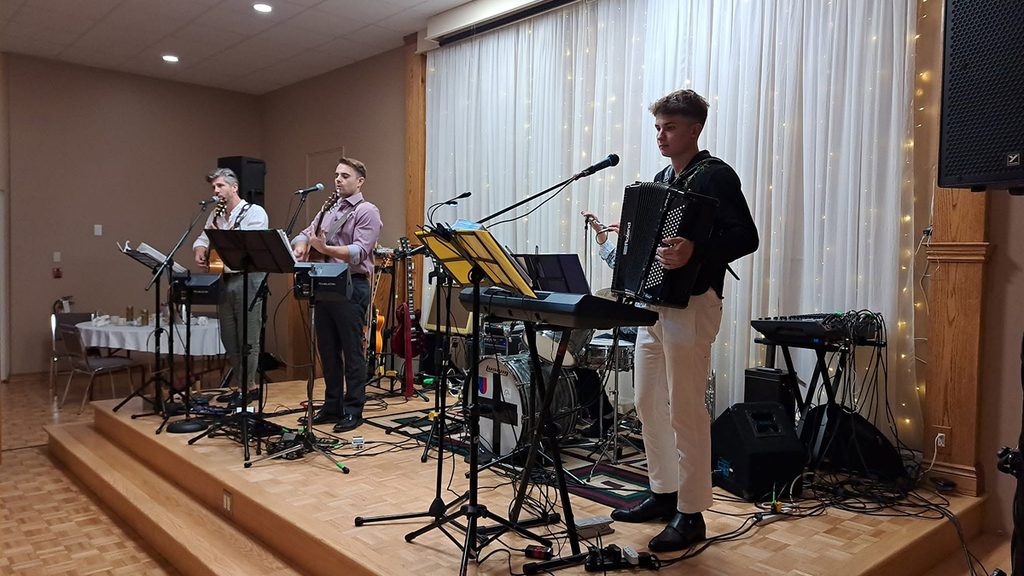
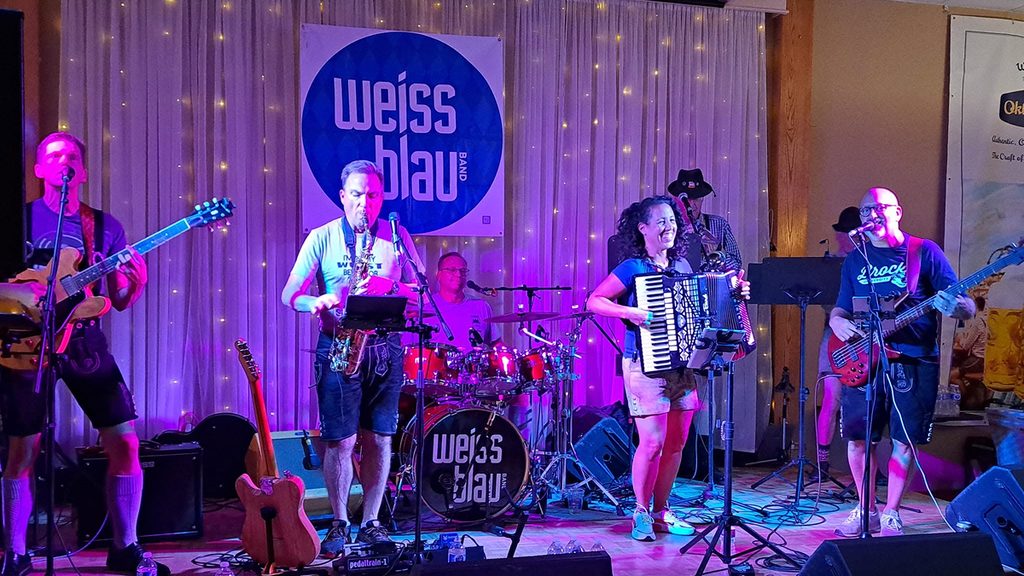
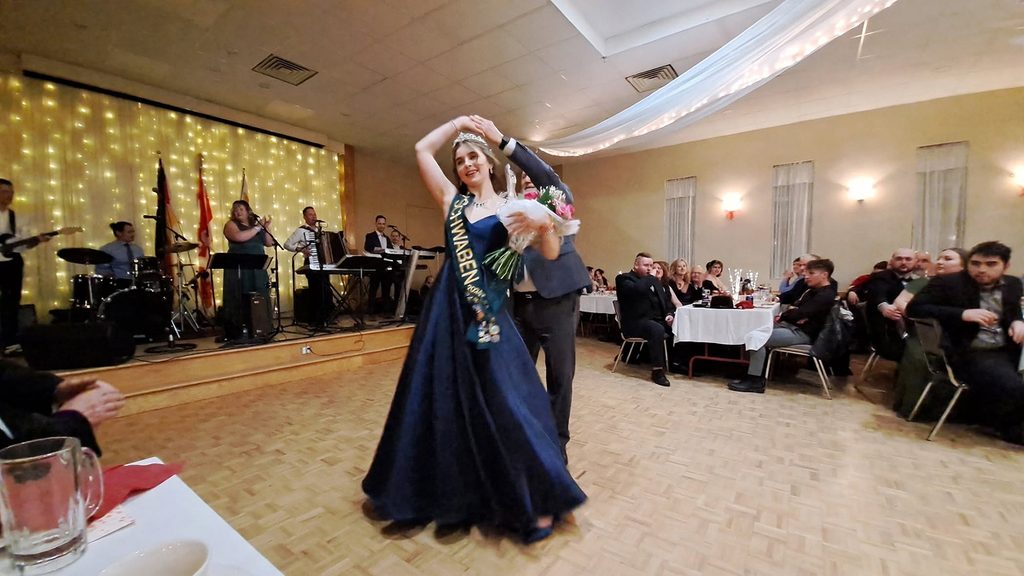
At the Schwaben Club specifically, the season runs seven ticketed evenings between October 2 and October 17, opening with the Edelweiss Trio on Friday, October 2 and a family-oriented afternoon session on Sunday, October 4, before Weiss Blau takes the stage for back-to-back nights on October 9 and again on October 10.
A dedicated Corporate Night on Thursday, October 15 gives way to three closing nights — October 16 and October 17, plus a Fest Hall Crawl on the 16th that links the Schwaben Club with the Alpine Club and Concordia Club for guests who want to sample more than one hall in a single evening.
The full season’s entertainment roster spans the Transylvania Hofbrau Band, performer Marko Kecskemeti, the Edelweiss Trio, Weiss Blau, and the Black Forest Band.
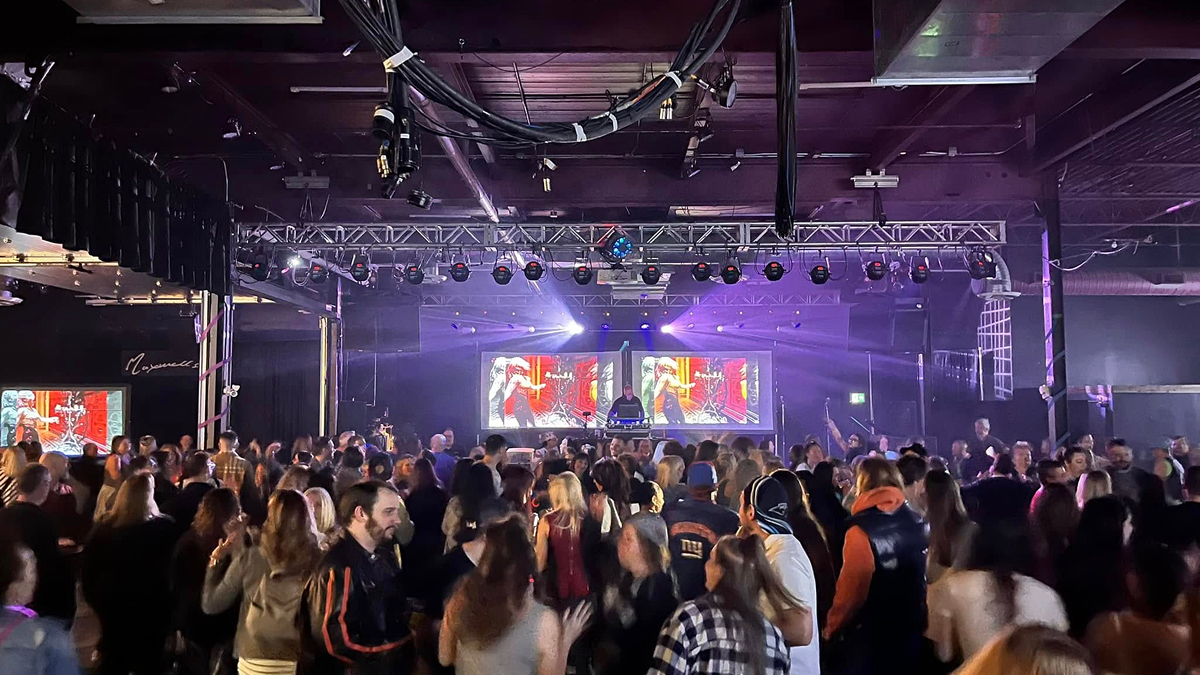
Expect more than a dozen German beers on tap alongside award-winning German food — cabbage rolls, schnitzel, pretzels, and Black Forest cake among the regulars — served up in an outdoor Biergarten built to feel like a European beer garden rather than a festival tent, with live music and authentic entertainment running throughout the evening.
The club also runs Sunday afternoon Family Day sessions built around kids’ crafts, special guests, and the occasional Bird Dance for guests who want the Oktoberfest atmosphere without a late night.
The Dancers, Cooks, and Committees That Keep the Culture Alive
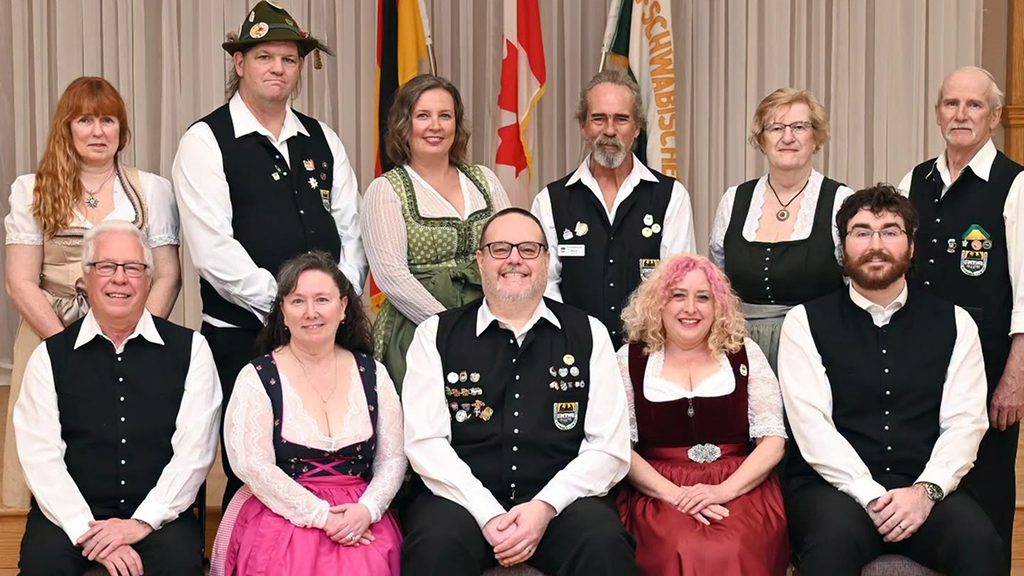
Oktoberfest is the club’s most visible event, but it’s a fraction of what keeps the Schwaben Club functioning as a cultural institution rather than a seasonal beer hall.
The Donau Dancers formed in 2001 as a revival of an earlier Trachten dance group from the 1980s, and today the club fields four active dance groups — including a Kindergruppe and Jugendgruppe restarted in 2008 — that perform regularly at club functions and events across southwestern Ontario.
The club has twice hosted the North American Landestreffen, a rotating continental gathering of Danube Swabian communities, drawing roughly 1,600 people to Kitchener for dancing, singing, a parade, and a memorial mass in 2018 alone. Younger members have their own track through the Freundschaftgruppe, founded by Glenn Herold in 2016, which has sent Schwaben youth to cultural camps in Toronto, Akron, St. Louis, and Cincinnati.
Leadership continuity has mattered too. Stefan Jauch served as club president for 18 years across the 1980s and 1990s, longer than anyone else in the club’s history, and hosted Prime Minister Jean Chrétien on a visit during which the PM sampled the club’s schnitzel firsthand.
More recent changes reflect a club still adapting: under president Glenn Herold, the club amended its constitution in 2019 to allow women to become full Sick Benefit members for the first time in its history, and in July 2024 Herold led a “Return to the Heimat” tour that brought members back to the ancestral villages their families had left generations earlier.
Food remains as central to the club’s identity as any dance troupe or tour. Regular cooking classes teach members to make Nusskipfel, strudel, goulash, cabbage rolls, and Krapfen, dishes drawn from a Danube Swabian culinary tradition the club has documented and sold in its own cookbook, “One Big Family.”
Welcome to Schwaben Haus and Oktoberfest in Canada! Ninety-Five Years On, the Keg Still Gets Tapped
What makes the Schwaben Club worth understanding isn’t that it serves good schnitzel during a popular festival, though it does.
It’s that the club predates the festival it’s now known for by nearly four decades, and it has already survived one world war, one relocation across the city, one pandemic, and one full move to a different municipality without losing the thread that connects a 1931 sick-benefit fund to a 2026 Fest Hall Crawl.
The Danube Swabians who pooled ten cents a month to protect each other from illness could not have imagined that their mutual-aid society would one day help seed the second-largest Oktoberfest on the planet, or that its clubhouse would end up on a riverside property in Breslau rather than a rented room above a downtown storefront.
But the through-line is there in the details: the same instinct that built Sunnyside Gardens by hand in the summer of 1948 is the instinct that rebuilt a biergarten from scratch in Breslau in the summer of 2021. Ninety-five years in, the Schwaben Club isn’t a relic of that history. It’s still writing it, one October at a time.