Strip away the sets and the long evenings, and opera leaves behind a handful of passages that outlast everything around them: an overture that sets the pulse racing, an aria that stops a room cold, an orchestral interlude that says what the characters cannot.
A Night at the Opera is a Greater Toronto Philharmonic Orchestra concert that places conductor David Fallis, tenor Benjamin Done, and soprano Mary Jane Egan in front of overtures, arias, and orchestral suites from eight operas by Mozart, Verdi, Puccini, Bizet, and Debussy.
Here is who stands on the stage, how their careers connect, and what each piece on the program brings to the evening.
What the Greater Toronto Philharmonic Orchestra Brings to an Opera Night
The Greater Toronto Philharmonic Orchestra was conceived in the spring of 2007 and has presented concert seasons across the city since the fall of 2008.
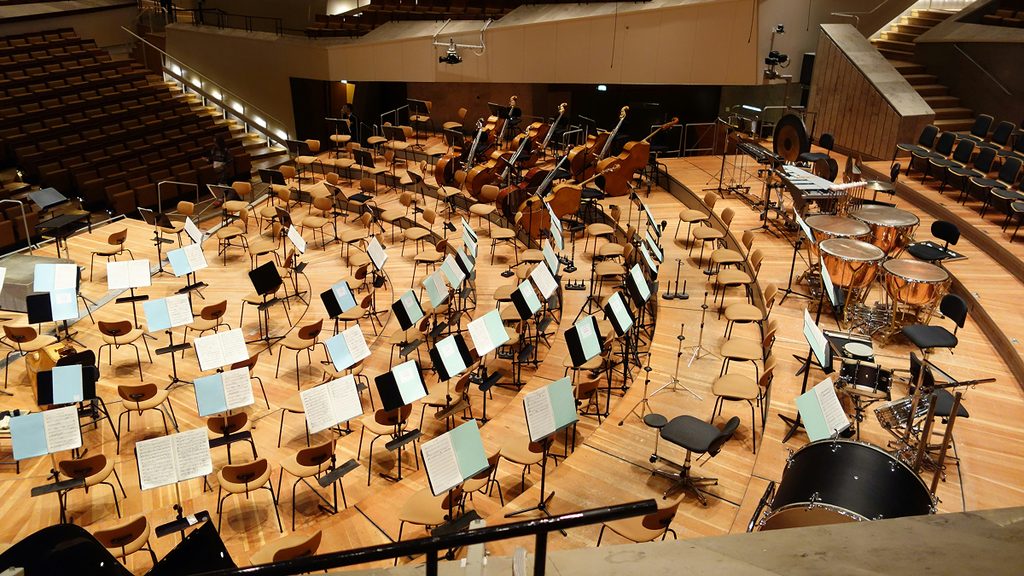
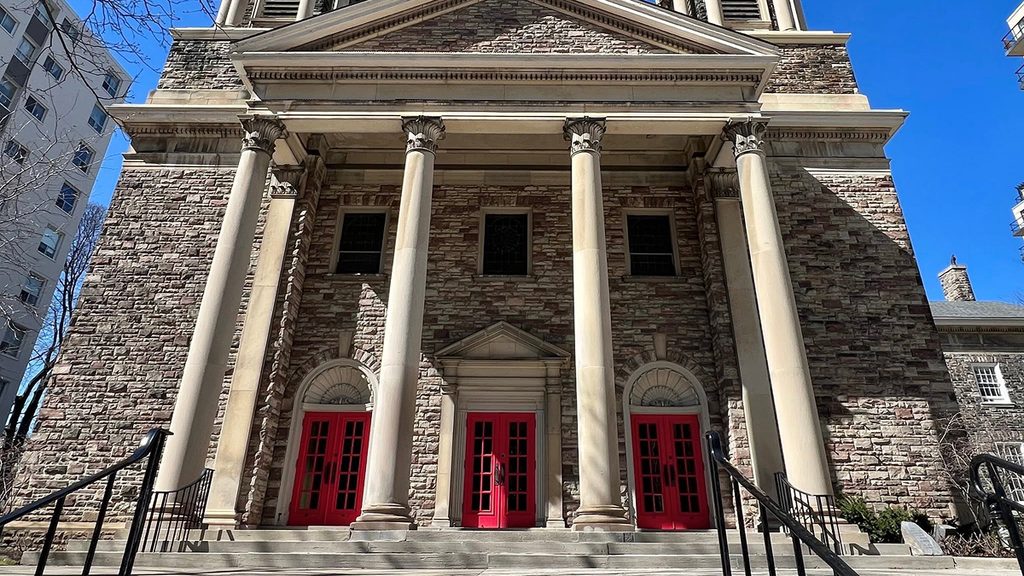
It is a full-size orchestra of more than fifty professional and amateur musicians who rehearse on Sunday afternoons at Timothy Eaton Memorial Church on St. Clair Avenue West.
Its purpose is to bring student, community, pre-professional, and professional players together in a rigorous orchestral experience while helping to cultivate new audiences for the fine arts. Concerts are priced to stay affordable, and the programs lean on guest conductors and young soloists.
Qazim Kallushi has served as executive director since 2011. His own orchestral career began in 1992 with the Albanian National TV Symphony Orchestra, where he later became managing director, and in Canada he has also worked with Masterworks of Oakville and, since 2017, the Richmond Hill Philharmonic Orchestra.
The 2026–27 season opened on October 10 with Drama, Grace and Glory, led by guest conductor Oliver Balaburski. Bassoonist Abigail Minor played Hummel’s Bassoon Concerto between Beethoven‘s Coriolan overture and Brahms‘s Third Symphony.
The rest of the season runs from Beethoven, Brahms, Saint-Saëns, and Dvořák to an evening of opera and a Valentine’s Day collaboration. A Night at the Opera is that evening of opera.
The orchestra also presents free outdoor concerts at venues across the city. Its 2025–26 season included Autumn Classics with conductor Lorenzo Guggenheim on October 4 and Romantica, led by Oliver Balaburski with pianist Thomas Torok, on November 29.
David Fallis is no stranger to this orchestra. The ensemble was rehearsing a Rossini overture with him as far back as February 2012, and he was among the conductors of its 2022–23 season.
On May 30, 2026, he led the orchestra in Water Music, a program built around Handel‘s Water Music Suite No. 2, Smetana’s Moldau, Dvořák’s The Water Goblin, Wagner‘s overture to The Flying Dutchman, Johann Strauss II’s Blue Danube Waltz, and Elizabeth Raum’s Halifax Harbour.
Meet the Three Artists Leading This Night at the Opera in Toronto
David Fallis, Conductor
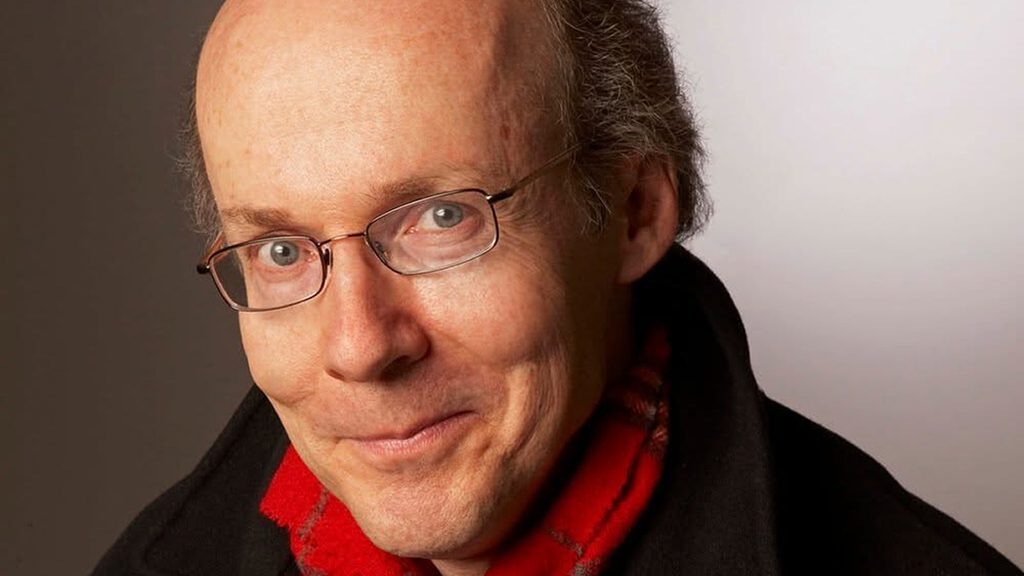
David Fallis is a Toronto-born conductor and tenor who serves as music director of Opera Atelier and directs Soundstreams Choir 21.
He sang in a number of choirs as a boy, among them groups led by Lloyd Bradshaw and Seiji Ozawa. He credits his first piano teacher, Court Stone, and his choral instructor Bradshaw with steering him toward music in the first place.
Fallis describes his family background as mostly Irish, with some English and a little German. Both he and his future wife, bassist Alison Mackay, earned master’s degrees in music at the University of Toronto, and both families kept cottages on Lake Huron, yet the two never really got to know each other until 1979.
That year Fallis, then a young professional tenor, joined the Toronto Consort, the early music ensemble where Mackay was already playing.
Mackay went on to play violone and double bass with Tafelmusik from 1979 until 2019 and to create multimedia programs for the orchestra, including The Galileo Project. While she was in the orchestra, Fallis sometimes found himself conducting his wife when Tafelmusik accompanied Opera Atelier.
During the 2004–05 season he and Mackay co-directed the Metamorphosis Festival, a three-month Toronto festival of music, opera, dance, film, theatre, and design inspired by Ovid’s Metamorphoses.
Fallis became the Consort’s artistic director in 1990 and held the post until 2018. Under his direction the group toured Europe and Canada, recorded for Marquis Classics, Dorian, and SRI, and performed Monteverdi’s Vespers of 1610, a fully staged The Play of Daniel, and the world-music collaboration The Marco Polo Project.
The Consort’s work also reached the screen. Fallis led the ensemble in the music for Atom Egoyan’s film The Sweet Hereafter and served as historical music producer for the Showtime series The Tudors and The Borgias.
At Opera Atelier he has conducted all the major Mozart operas, all the Monteverdi operas, and works by Purcell, Handel, Lully, Gluck, Rameau, and Weber. He led the company in all five of its appearances at the Royal Opera House in Versailles, on two tours to Seoul, and in major houses in Japan, where he conducted Don Giovanni and Le nozze di Figaro.
Beyond Toronto, he has led productions for Houston Grand Opera (Monteverdi’s L’incoronazione di Poppea and Orfeo), Cleveland Opera, and Wolf Trap, and he made his Utah Opera debut in Handel’s Giulio Cesare.
Across Canada he has conducted Orchestra London, the Windsor Symphony, Symphony Nova Scotia, Symphony New Brunswick, and the Manitoba Chamber Orchestra. He also guest conducted the Elmer Iseler Singers on a tour of the United States in a program of Bach motets and led them in Paco Peña‘s Missa Flamenca.
New music has been a second thread. He conducted the 2009 world premiere of R. Murray Schafer‘s The Children’s Crusade at the Luminato Festival, returned in 2015 for Schafer’s Apocalypsis, which was recorded for the Analekta label, and led the 2019 premiere of Cris Derksen‘s Maada’ookii Songlines with more than 200 singers and an Indigenous ensemble.
In 2010 he helped found Choir 21 for Soundstreams. In 2019 he conducted Pimootewin by Melissa Hui and Tomson Highway, described as the world’s first opera in Cree, and Gallabartnit by Britta Byström and Rawdna Eira, described as the first in Sami.
Choir 21 has performed for the Toronto International Film Festival, the Toronto Symphony Orchestra‘s New Creations Festival, the Art of Time Ensemble, and Continuum Contemporary Music. Earlier he conducted the Toronto Chamber Choir, leading the world premiere of Christos Hatzis’s De Angelis.
From 2018 to 2020 he was interim conductor and artistic advisor of the Toronto Mendelssohn Choir through its 125th anniversary season, commissioning Andrew Balfour’s Mamachimowin for the anniversary gala. In 2019 he made his Toronto Symphony Orchestra debut with the choir, conducting Stravinsky’s Symphony of Psalms, Fauré’s Requiem, and a world premiere by Balfour.
He also taught at the University of Toronto, where he was adjunct professor of early music from 2018 to 2022 and conducted the MacMillan Singers from 2018 to 2021. In 2021 the Toronto Musicians’ Association presented him with its Lifetime Achievement Award.
His method with opera starts with the words. He spends time with the text and often checks it with a native speaker to catch references and innuendo that translation loses, and he reads up on the performance practice of the period.
In 2012 he led Opera Atelier’s production of Weber’s Der Freischütz at the Elgin Theatre. To prepare, he listened to Weber’s other operas, Euryanthe and Oberon, and read about how musicians of the period handled trills and staccato markings.
He says his interest in historically informed performance grows out of curiosity about what composers heard in their heads, noting that Mozart did not have a modern piano in mind.
Asked once at a lecture for a favourite piece, he answered, “I try and love the one I’m with.”
Benjamin Done, Tenor
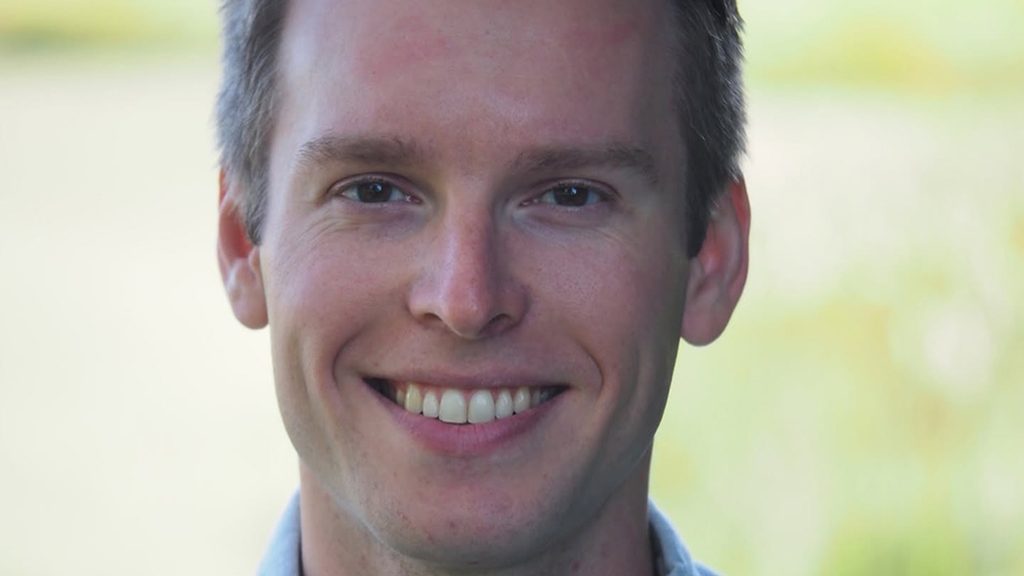
Benjamin Done is a Canadian tenor from Georgetown, Ontario, who holds a Master of Music in Opera from the University of Toronto and sings with the Canadian Opera Company Chorus and the Tafelmusik Chamber Choir.
He grew up singing country music with his family, with a karaoke machine in the living room. He also grew into a horseman: after discovering the television series Heartland, he volunteered at a stable without knowing how to put a halter on a horse and went on to work summers on a thoroughbred farm in Halton Hills.
In 2018 he took part in the Ram Rodeo’s Build-A-Cowboy program and learned to ride broncos.
He studied at Laurentian University in Sudbury, where he earned an honours Bachelor of Arts in Music with a piano major and a Bachelor of Education. Choral singing took hold there, and he became a founding member and soloist of the Sudbury Studio Singers.
With the Laurentian University choir he sang large works including Haydn’s The Creation and The Seasons, Mozart’s Requiem, Orff’s Carmina Burana, Handel’s Messiah, and Mendelssohn’s Elijah.
He has also joined the cast of an Opera for a Cause gala and attended the Summer School for the Solo Voice in Saskatchewan, where he sang in three concerts of choral, solo vocal, and opera excerpts.
In the summer of 2018 he sang in the Ontario Youth Choir under Jon Washburn, an experience that cemented his love of choral music. The following July he was one of three Canadians chosen for the World Youth Choir, which brought together 56 singers from 27 countries in Occitanie, France, for its 30th anniversary and then traveled on to Portugal.
At the University of Toronto Opera School he studied with Darryl Edwards, a longtime voice professor who is himself a tenor. Done made his solo opera debut there as Mr. Splinters in Copland’s The Tender Land, after singing in the chorus of Il barbiere di Siviglia.
His roles since include Hamlet in the student-composer collective premiere of Disobedience, Charles Darnay in A Tale of Two Cities, John Adams in Virgil Thomson’s The Mother of Us All, Marco Palmieri in The Gondoliers, and Colonel Fairfax in The Yeomen of the Guard.
He also sang Casey Baldwin, the pilot and engineer in Alexander Graham Bell’s circle, in The Bells of Baddeck, an opera about the Bell family staged at the Alexander Graham Bell National Historic Site in Baddeck, Nova Scotia.
On the concert stage he has sung the tenor solos in Handel’s Messiah, Bach’s Christmas Oratorio and Magnificat, Mozart’s Requiem and Vesperae solennes de confessore, Haydn’s Paukenmesse and Lord Nelson Mass, Schubert’s Mass in G, and Orff’s Carmina Burana, with ensembles including Tafelmusik and the Sudbury Symphony Orchestra.
On December 18, 2025, he sang the opening tenor solos, Comfort Ye and Ev’ry Valley, in Tafelmusik’s Messiah at Koerner Hall under Ivars Taurins, then returned to the chorus for the rest of the first part. This season he also sings the tenor solos in the Winnipeg Symphony Orchestra‘s Messiah.
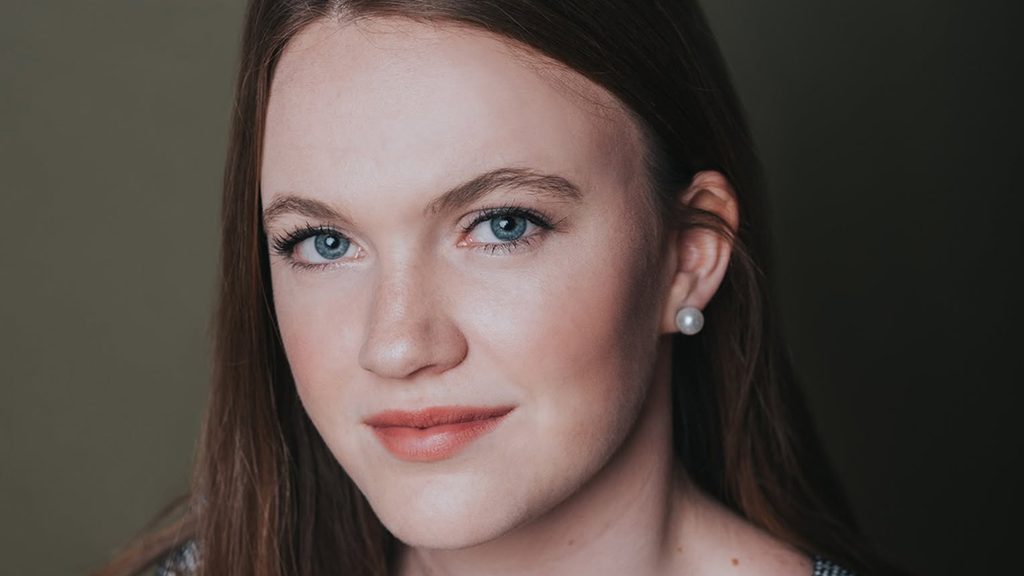
Mary Jane Egan, Soprano
Mary Jane Egan is a Toronto-born soprano with bachelor’s and master’s degrees from the Schulich School of Music at McGill University and a Toronto opera debut in 2023.
She began singing as a child in the Toronto Oratory Children’s Choir, raised in a tradition of Renaissance polyphony and Gregorian chant. At nine she made her Carnegie Hall debut in the children’s chorus of Oratorio Terezin, Ruth Fazal’s setting of poems written by children in the Terezin ghetto.
A decade of ballet training and plenty of high school musical theatre built the discipline a musical career demands.
At McGill she studied with Stefano Algieri and received the Gaelyne Gabora Memorial Prize, the Martha Schiller Memorial Award, and the Duncan Campbell Memorial Award. She took part in Opera McGill’s Dialogues des Carmélites in 2018 and Die Zauberflöte in 2019, and she sang Nora in Vaughan Williams’s Riders to the Sea in the company’s inaugural Horizons Project season.
She completed her master’s in 2020, the year she was chosen as soprano soloist for the McGill Symphony Orchestra’s performance of Brahms’s Ein deutsches Requiem.
Her summer training took her to the Canadian Vocal Arts Institute, Songfest, the Lachine Vocal Academy, the University of Cincinnati College-Conservatory of Music Opera Bootcamp, the Tel Aviv Summer Opera Festival, Summer Opera Lyric Theatre, the Domaine Forget Academy, and the Art Song Foundation of Canada.
She made her Toronto opera debut in 2023 as Blanche in Summer Opera Lyric Theatre’s production of Poulenc’s Dialogues des Carmélites, and she has sung Despina in Mozart’s Così fan tutte with the same company. That year she also joined the chorus of Toronto Opera in Concert.
In 2024 she sang the Soprano in Tom Johnson’s The Four Note Opera at the Canadian Vocal Arts Institute under Simon Charette. She has also sung Suor Genovieffa in Puccini’s Suor Angelica at the Cincinnati opera bootcamp and, in the summer of 2025, covered Micaëla in Bizet’s Carmen at the Brott Music Festival in Hamilton.
In April 2024 she took second prize in the Toronto Mozart Vocal Competition and sang a selection of Mozart arias with David Bowser and the Toronto Mozart Players alongside the other winners.
That concert took place at the Church of the Redeemer on Bloor Street West on April 20, 2024, and also featured fellow winners Jamie Groote and Julia LoRusso.
She was also selected as a district singer in the Metropolitan Opera‘s Laffont Competition in 2024 and won an Encouragement Award in its Pittsburgh District in 2025. That year she was chosen to compete in the 11th Veronica Dunne International Singing Competition in Dublin.
Her oratorio work includes soprano solos in Handel’s Messiah with the Toronto Beach Chorale, Dvořák’s Te Deum and Mozart’s Vesperae solennes de confessore with the Cantabile Chorale, Fauré’s Requiem with Mississauga Chamber Singers, and Haydn’s Paukenmesse with the same choir in 2025. Her 2026 season includes debuts in Orff’s Carmina Burana and Haydn’s Lord Nelson Mass.
Where the Careers of Fallis, Done, and Egan Overlap Before This Concert
Mozart is the thread that runs through all three artists.
Fallis has conducted every major Mozart opera for Opera Atelier, Egan took second prize at the 2024 Toronto Mozart Vocal Competition, and Done has sung the tenor solos in the Requiem and Vesperae solennes de confessore.
The tenor and the soprano have already shared a stage. Mississauga Chamber Singers listed both as soloists, alongside baritone Alexander Hajek, for an April 25, 2026 performance of Orff’s Carmina Burana at Christ First United Church in Mississauga.
Tafelmusik is common ground for the two men. Done sings in its chamber choir and has been a tenor soloist with its orchestra, while Fallis has conducted that orchestra for years in Opera Atelier productions.
Fallis has also taught at the University of Toronto’s Faculty of Music, the faculty where Done earned his master’s degree.
Egan’s own repertoire reaches the program’s composers as well. She has sung Despina in Mozart’s Così fan tutte, sung Suor Genovieffa in Puccini’s Suor Angelica, and covered Micaëla in Bizet’s Carmen.
The Program Moves Through Eight Operas, From Mozart’s Vienna to Bizet’s Paris
The listing names overtures, excerpts, arias, and suites from eight operas by five composers, written in three languages: Italian for five of the operas, French for two, and German for The Magic Flute. Each one opens onto a different dramatic world, and the notes below take them in order of composer.
Mozart: The Magic Flute, The Marriage of Figaro, and Don Giovanni
The Mozart set pairs an overture with excerpts and arias from three operas he completed within about five years of one another.
The Marriage of Figaro premiered at the Burgtheater in Vienna on May 1, 1786, with a libretto by Lorenzo Da Ponte adapted from Beaumarchais’s banned play. Don Giovanni, also with a Da Ponte libretto, followed at the Estates Theatre in Prague on October 29, 1787, and carries the label dramma giocoso, a blend of comedy and drama.
Figaro unfolds over one chaotic day in the household of Count Almaviva, where the valet Figaro and the maid Susanna prepare to marry while the Count schemes to get in the way. Don Giovanni follows a seducer whose string of conquests ends in a supernatural reckoning.
The Magic Flute came last. Emanuel Schikaneder wrote the German-language libretto, and the opera premiered at the Theater auf der Wieden in Vienna on September 30, 1791, about two months before Mozart’s death on December 5.
In its story, Prince Tamino sets out to rescue Pamina, the daughter of the Queen of the Night, with the help of a magic flute and the bird catcher Papageno.
This is the part of the program closest to Fallis’s own work. He has conducted all three operas for Opera Atelier, and he took Don Giovanni and Le nozze di Figaro to Japan.
Debussy: The Pelléas et Mélisande Suite
Debussy’s Pelléas et Mélisande, composed between 1893 and 1902, is his only completed opera. Its story turns on the half-brothers Golaud and Pelléas and on Mélisande, whom Golaud marries; it ends with Golaud killing Pelléas and Mélisande dying after the birth of her daughter.
The opera premiered at the Opéra-Comique in Paris on April 30, 1902, with a libretto adapted from Maurice Maeterlinck’s play.
Debussy resisted requests for an orchestral suite from the opera at the time of its premiere, so the suites that exist were made later by others. Conductors including Barbirolli, Monteux, and Leinsdorf prepared versions, as did the composer Marius Constant, who compiled his in 1983 largely from the orchestral transitions between scenes.
The concert listing names a suite without naming the arranger. Whichever version the orchestra plays, it is music for orchestra alone.
Verdi and Puccini: La Traviata, La Bohème, and La Forza del Destino
The listing names excerpts and arias from Verdi’s La traviata and Puccini’s La bohème, along with Verdi’s overture to La forza del destino.
La traviata premiered at La Fenice in Venice on March 6, 1853, one of five Verdi operas first staged in that house. La bohème followed on February 1, 1896, in Turin.
Francesco Maria Piave’s libretto for La traviata draws on Alexandre Dumas fils’s play La Dame aux camélias and centers on the courtesan Violetta Valéry and her love for Alfredo Germont. La bohème, with a libretto by Giuseppe Giacosa and Luigi Illica, follows a circle of young artists in the Latin Quarter of Paris, among them the poet Rodolfo and the seamstress Mimì.
Both operas center on a tenor-soprano pairing, Alfredo and Violetta in one and Rodolfo and Mimì in the other. The Forza overture, by contrast, gives the orchestra a turn without singers.
La forza del destino premiered in St. Petersburg on November 10, 1862, and the full overture heard in concert halls was written for the revised version staged at La Scala in Milan in 1869.
Bizet: Carmen Suite No. 1
Carmen premiered at the Opéra-Comique in Paris on March 3, 1875, and it was a failure with its first audiences and the press. It was Bizet’s final opera, and he died three months after the premiere, before it found the audience that has since made it a fixture of the repertoire.
Henri Meilhac and Ludovic Halévy adapted the libretto from Prosper Mérimée’s novella, and the opera was staged as an opéra-comique, with spoken dialogue between its musical numbers.
The suite takes music from that score and presents it for orchestra alone.
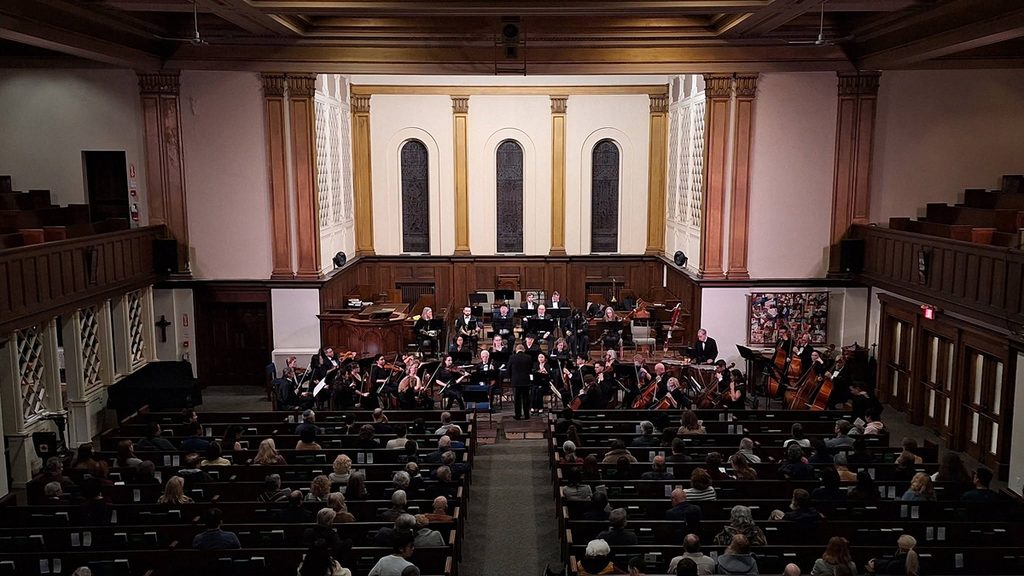
What to Expect From the Evening Once the Orchestra Takes the Stage
A Night at the Opera takes place on Saturday, November 21, 2026, at Calvin Presbyterian Church, 26 Delisle Avenue in Toronto, with doors at 7:00 p.m. and the concert at 8:00 p.m. It is a general admission concert for ages 10 and up, with tickets listed at $37.50 plus fees.
David Fallis conducts the Greater Toronto Philharmonic Orchestra, with Benjamin Done and Mary Jane Egan as the vocal soloists.
The evening moves between music for orchestra alone and music for voices with orchestra. The Debussy and Carmen suites and the La forza del destino overture stand on their own, while the Mozart, Verdi, and Puccini selections bring in the singers.
Because everything on the program is an overture, excerpt, aria, or suite, the concert passes through eight dramatic worlds rather than following a single story.
A Veteran Conductor, Two Soloists, and Eight Operas Meet on One Toronto Stage
The evening brings several threads together: an orchestra built on community musicians, a conductor with more than four decades in Toronto’s early music and opera worlds, and two singers whose training runs through McGill, the University of Toronto, and a long list of summer academies.
Fallis has spent his career moving between centuries, from Monteverdi and Mozart to Schafer and Derksen, and here he moves between operas instead. Done and Egan, who have already sung together, supply the voices.
The path runs through Vienna, Prague, Venice, Turin, St. Petersburg, and Paris, the cities where all eight operas first reached the stage.