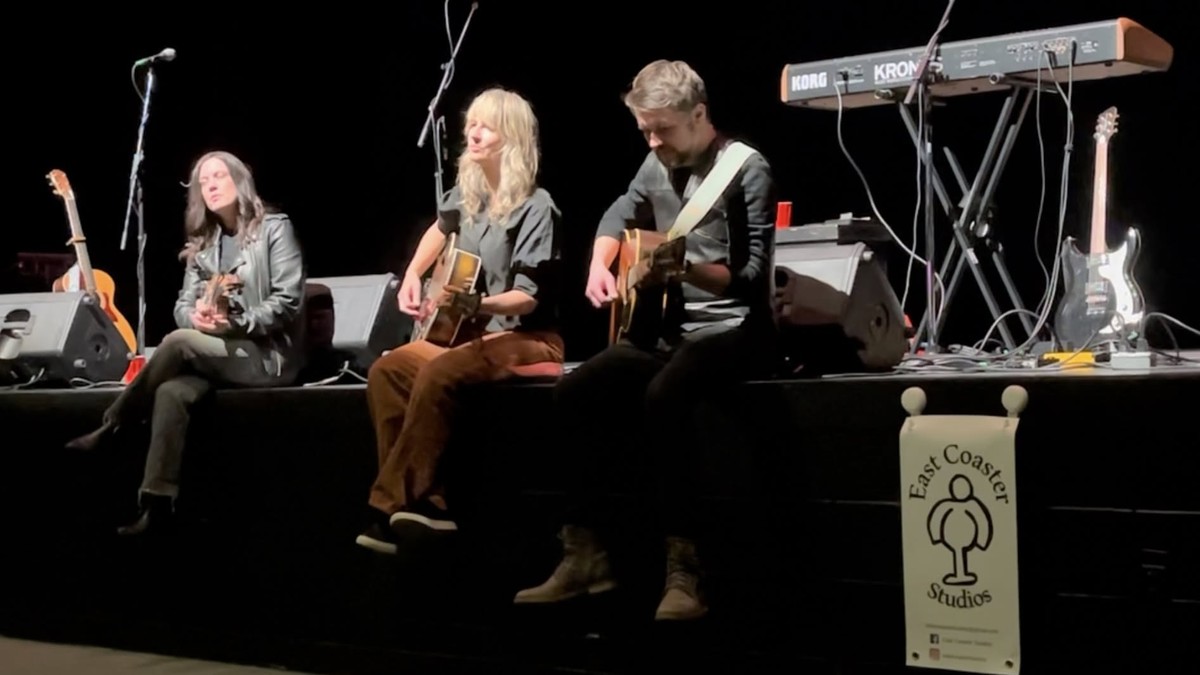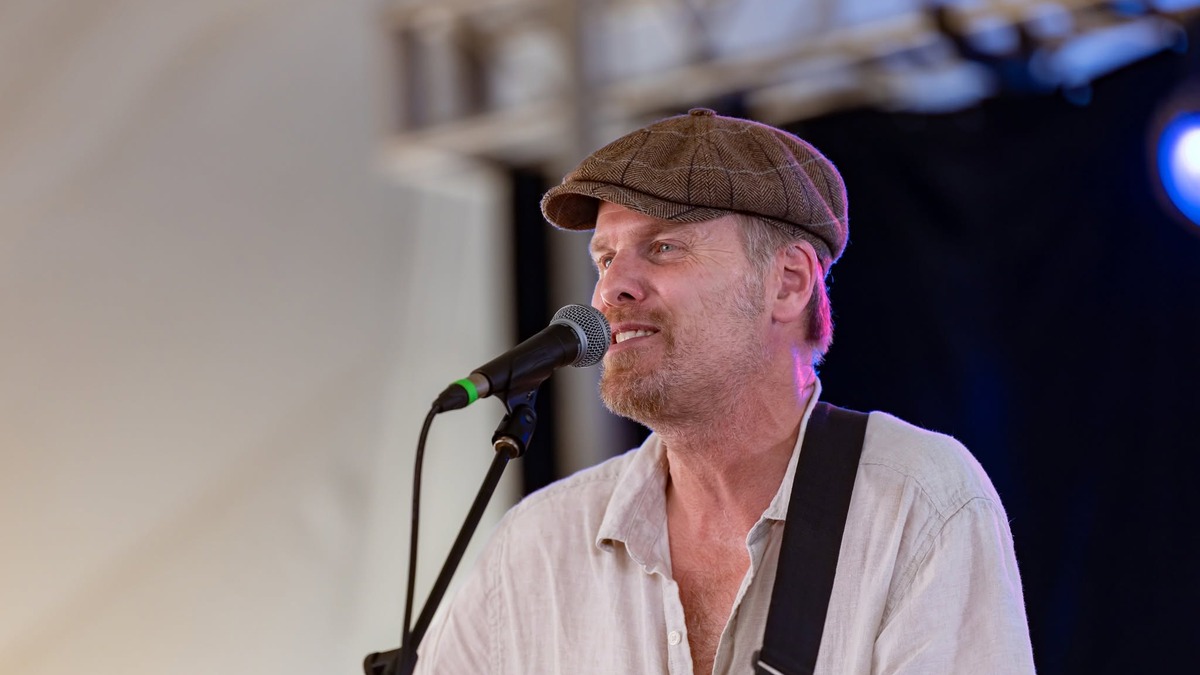
Dave Gunning might have spent his teenage winters in a hockey rink if his parents hadn’t conveniently “forgotten” to sign him up one year.
Instead, a growth spurt, a flea-market guitar, and a deal about two songs sent a boy from Pictou, Nova Scotia, down a road that now runs through a Juno nomination and a record made beneath an Australian gumtree.
Dave Gunning is a Canadian folk singer-songwriter from Pictou County, Nova Scotia, recognized with ten East Coast Music Awards, two Canadian Folk Music Awards, four Music Nova Scotia Awards, and a Juno Award nomination.
His story runs from a small harbour town to Stompin’ Tom Connors’ touring band, through a penny drive, a pulp mill fight, and a school lunch campaign, and out to the far side of the world.
From a Pictou Flea Market Guitar to a Lifelong Folk Calling
Gunning grew up in Pictou, a harbour town in Pictou County, Nova Scotia. In his early teens a growth spurt left him needing new hockey gear, and his parents quietly skipped the registration that year.
With time on his hands, he picked up a guitar his father had brought home from a local flea market and learned a few chords from a neighbour. His parents then made him an offer: learn two songs and perform them, and they would pay for lessons.
He never imagined it would turn into a living. Gunning describes himself as introverted and has said he is “not really built to do this,” yet his childhood friend JD Fortune, who later fronted INXS, was the one who coaxed him onto a stage.
The music that shaped him was close to home. A 1981 double bill of John Allan Cameron and Stan Rogers was the first live concert he ever saw, and he has said simply, “That show changed my life.” He credits that night, and every Cameron performance he caught around Pictou County afterward, for the direction his writing took.
At twelve or thirteen, a cousin who adored Stompin’ Tom Connors took him to see Connors play at Old Home Week in Charlottetown. Gunning has said he will never forget it.
In his teens, Gordon Lightfoot and Stan Rogers became touchstones as well. Both wrote about places and people with a storyteller’s patience, and Gunning has said he still loves songs that are about something and tell a real story, the way Rogers’ songs do.
That preference explains most of what came later. Nearly every song in his catalogue starts with a person, a place, or a problem he knows firsthand.
Years on the Maritime Pub Circuit and the First Award-Winning Albums
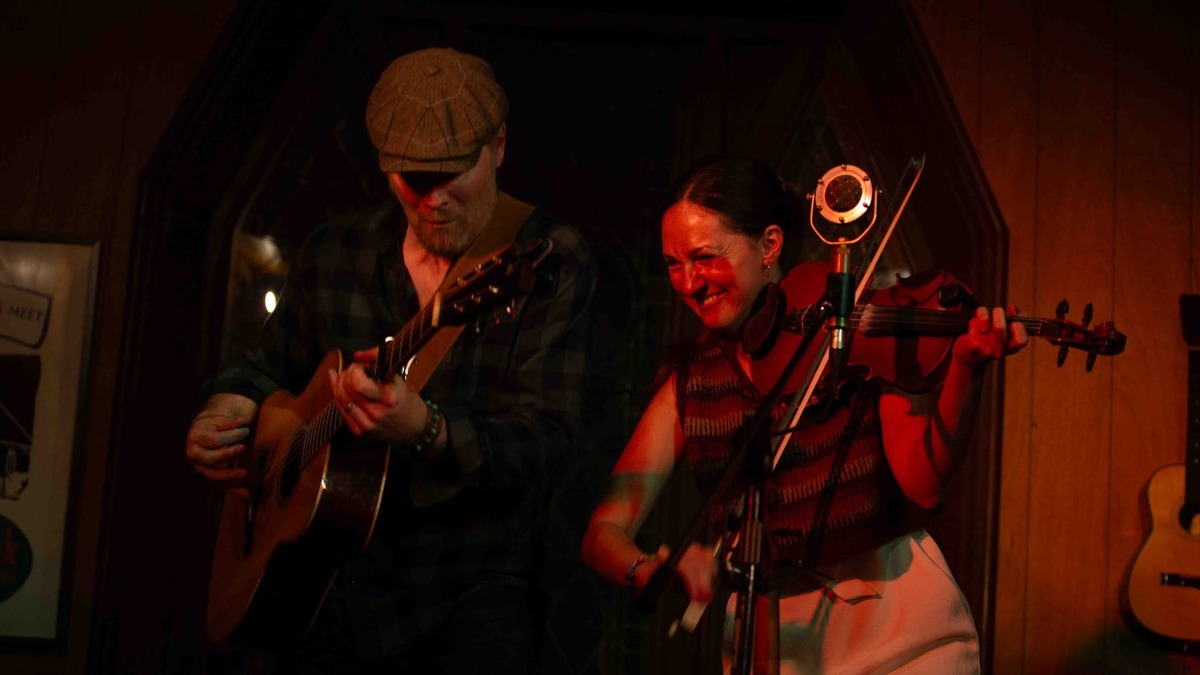
Before Gunning took his own songs on the road, he logged hundreds of hours playing covers in Maritime pubs. Those nights built the easy stage manner that now defines his shows.
His debut, Lost Tracks, arrived in 1996, followed by Caught Between Shadows in 2000 and the live album Live in 2002. He built his own studio, Wee House of Music, which also serves as the label on his releases.
Music Nova Scotia named him Musician of the Year in 2003, and Two-Bit World in 2004 brought the first serious album honours. It won Folk Recording of the Year at the 2005 East Coast Music Awards and the same category at the Music Nova Scotia Awards.
A co-write from that period, Prince of Pictou, written with his longtime collaborator Jamie Robinson, won the folk category at the International Acoustic Music Awards in 2005. It also earned an honourable mention in the USA Songwriting Competition.
The holiday record Christmas in 2006 produced an unlikely favourite in Daddy’s Beer, another Robinson co-write. The song caught on after Gunning played it on George Canyon’s 2005 Christmas tour and 2006 fall tour, and country radio programmers have returned to it every December since.
House for Sale followed in 2007 and won both Male Solo Recording of the Year and Folk Recording of the Year at the 2008 East Coast Music Awards. We’re All Leaving came in 2009 and drew nominations for Male Solo Recording of the Year and, for the song Made on a Monday, Songwriter of the Year.
By the end of the decade the pattern was set: plainspoken songs about working people and local characters, delivered without fuss.
Playing Upright Bass for Stompin’ Tom Connors on a Cross-Canada Tour
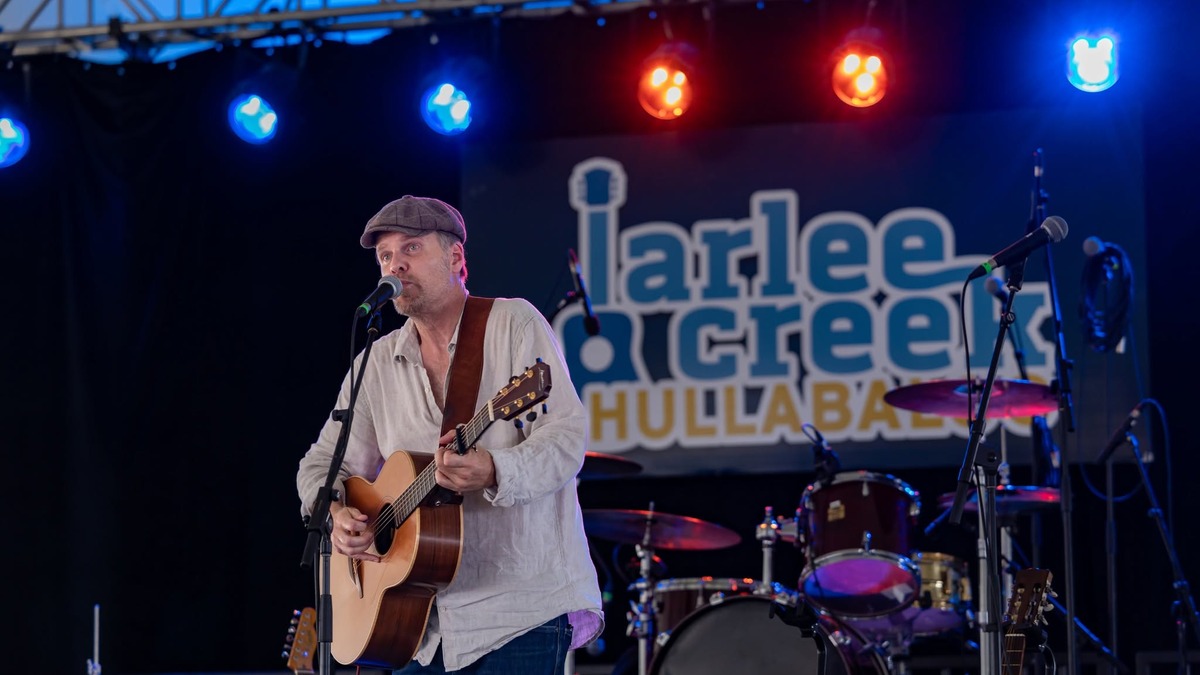
Gunning’s connection to Stompin’ Tom Connors began in the audience and ended up on the bandstand. In 2002, the songwriter he had watched as a boy in Charlottetown hired him to play upright bass on tour.
That tour ran 22 dates and sold out. Fellow Nova Scotian J.P. Cormier was part of the same cross-Canada summer, a detail that matters later in this story.
Gunning has told the story of his audition in interviews and on video, and it has become part of his Connors lore. He has described Connors as truly Canada’s own, a songwriter who rarely left the country and loved it.
When Connors died in 2013, Gunning performed at the public tribute held in Peterborough, Ontario. The bass he plays on his album Lift is the same upright he used in Connors’ band.
In 2021 the East Coast Music Association gave Gunning its Stompin’ Tom Award for mainland Nova Scotia. The honour was created at Connors’ request to recognize long-term contributions to East Coast music, and it reads as a lifetime-style tribute.
Gunning has said the news caught him by surprise, and he joked that it made him want to book a doctor’s appointment. He has also said Connors was a good friend whose legacy means a great deal to him.
The road work did not slow down afterward. Gunning has since toured Canada, the United States, the United Kingdom, Ireland, Australia, and Denmark.
A Tribute to John Allan Cameron and the Awards That Followed
By 2010, Gunning was ready to repay another debt. …a tribute to John Allan Cameron honoured the singer whose Pictou County concerts had set his course, and it became the most decorated album of his early career.
At the 2011 East Coast Music Awards it won Roots Traditional Solo Recording of the Year, and Gunning also took Producer of the Year. Music Nova Scotia gave the record its own Roots Traditional Solo Recording award the same year.
Then came the Canadian Folk Music Awards on December 4, 2011, at Toronto’s Isabel Bader Theatre. Gunning arrived with four nominations, tied with Bruce Cockburn for the most, and left with Traditional Singer of the Year and New/Emerging Artist of the Year.
He joked from the stage that he had been emerging for a long time. By then he had been recording for fifteen years.
In 2012 the album earned a Juno Award nomination for Roots and Traditional Album of the Year: Solo. The category also included Bruce Cockburn, Craig Cardiff, David Francey, and Lindi Ortega, and Cockburn took the prize.
The Juno nod remains the national headline on Gunning’s résumé. It came from an album devoted to another musician’s legacy rather than a showcase for his own songs.
No More Pennies, These Hands, and the Song That Won Hockey Night
No More Pennies arrived in 2012 and made news before most listeners had heard a note. The cover showed recently discontinued pennies, and the Canadian Mint wanted royalties for the image.
The Mint relented, but not before Gunning ran a penny drive that raised $6,200, which he donated to a Halifax children’s hospital. The story travelled well beyond the Maritimes.
The album’s signature track was These Hands, a song about everyday heroes that Gunning co-wrote with George Canyon. It won Song of the Year at the 2013 East Coast Music Awards, and Gunning performed it at the Cunard Centre in Halifax moments after accepting the trophy.
“I didn’t know the song would take on a life of its own,” he said afterward.
The 2014 East Coast Music Awards gave No More Pennies Solo Recording of the Year and gave These Hands Songwriter of the Year. The song’s video, directed by Scott Simpson, was nominated for Video of the Year, and Music Nova Scotia had already named the album Folk Recording of the Year in 2013.
These Hands later became a children’s picture book with 17 original illustrations by Meaghan Smith, plus the lyrics and sheet music. Gunning and Smith teamed up again on To Be With You, a picture book about dogs and the families they love.
Hockey found Gunning again in 2013. A fervent fan, he submitted A Game Goin’ On, a song he co-wrote with David Francey, to the CBC’s Hockey Night in Canada Song Quest, and it made the top ten.
On January 1, 2014, during the NHL Winter Classic, it was announced as the winner. The boy whose parents skipped the hockey sign-up had written the song that won the country’s hockey songwriting contest.
The Collaborators Who Helped Shape Dave Gunning’s Songs and Records
Gunning has never worked in isolation. His catalogue is stitched together with co-writers, producers, bandmates, and one family member.
J.P. Cormier
The partnership with J.P. Cormier started with a lost fiddle player. When a fiddler dropped out of one of Gunning’s shows at the last minute, he hired Cormier, who had just come back from Nashville and was unknown at home.
Cormier had met Connors in 1990 as a teenager and became a Connors sideman in the early nineties. He also became a staple of recording sessions at Studio H in Halifax, with production and arranging work for the CBC there.
The two men toured behind Connors in 2002 and kept crossing paths for years. Cormier played on Lift, and in 2018 they made Two as a duo, stripped down to two guitars and two voices.
Gunning & Cormier – Two won Folk Recording of the Year at the 2019 East Coast Music Awards.
George Canyon and David Francey
George Canyon, a fellow Pictou County native, is the co-writer behind These Hands and the headliner who first put Daddy’s Beer in front of crowds. The two have worked together across the years, on the road and on the page.
David Francey co-wrote A Game Goin’ On with Gunning and belongs to the circle of songwriters Gunning admires most. Ron Hynes, Francey, and James Keelaghan all count among his peers, and Gunning has said it feels strange to go from fan to peer.
Jamie Robinson, Matt Andersen, and Bruce Guthro
Jamie Robinson is the collaborator who appears most often. His name sits on Prince of Pictou, Daddy’s Beer, Angels’ Share, and For All the Gold, and he worked with Gunning on The Same Storm.
Matt Andersen co-wrote Alberta Gold with Gunning, and Gunning has shared stages with him over the years. Bruce Guthro co-wrote Vincent Coleman, and Gunning also worked on records by Bruce and Dylan Guthro as a co-producer, engineer, and mixer.
Guthro died in 2023, and Gunning’s tribute to him appears on his newest album.
Jud Gunning
The family connection is Gunning’s son, Jud, a guitarist who has his own musical heroes. Chet Atkins, Doc Watson, Buddy Holly, Roger Miller, Hank Snow, Stompin’ Tom Connors, and John Allan Cameron all appear on his list, which overlaps with his father’s.
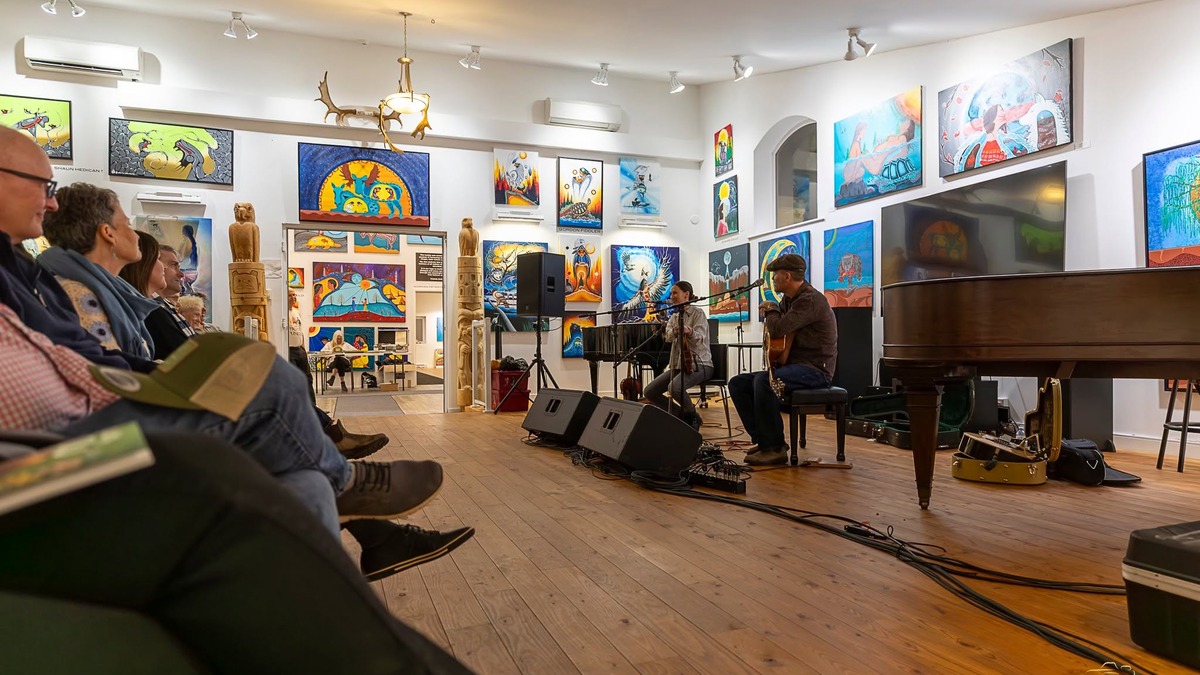
On Gunning’s Field Notes tour, Jud has joined him onstage. At the April 2026 stop in Canmore, Alberta, father and son traded songs back and forth through the second set.
Songs for Pulp Mill Harbours, Rivers, and School Lunch Programs
Gunning’s songs have always carried opinions, and several of them became campaigns. The longest-running one concerns the Northern Pulp mill at Abercrombie Point in Pictou County.
For decades the mill piped effluent into Boat Harbour, a tidal estuary so important to the Pictou Landing First Nation that its people call it A’se’K. The 2015 Boat Harbour Act set a January 30, 2020 deadline for the mill to stop using it.
Gunning joined a citizens’ group called Clean the Pictou County Pulp Mill. He wrote They Don’t Do That No More about the fight, and Sing It Louder as a tribute to Pete Seeger and a song meant to be sung by crowds.
He played both at the launch of Joan Baxter’s book The Mill: Fifty Years of Pulp and Protest at the Nova Scotia Museum of Industry in Stellarton. In 2019 he recorded Boat Harbour with Terra Spencer in his family’s home in Pictou County, part of a collection for Friends of Northumberland Strait that also features David Francey, Catherine MacLellan, Matt Andersen, and Emma Stevens.
The campaign had an unexpected international echo. Australian songwriter Mark Lang spent time with Gunning during a North American tour, learned about Boat Harbour, and wrote Pictou Landing with a video shot on site.
Gunning later lent his voice to another environmental fight. He wrote For All the Gold with Jamie Robinson for the St. Mary’s River Association, opposing proposed gold mining in the river valley, and he has said that reading the documents one evening made the parallels to the pulp mill fight obvious.
His most practical project is the Zero Hunger Campaign, a grassroots effort to fund school breakfast and lunch programs in rural Atlantic Canada. He runs it with the Rural Communities Foundation of Nova Scotia and builds it into his concerts.
The campaign has distributed more than $200,000 to dozens of schools. Gunning’s approach treats audiences as participants rather than spectators.
Lift, Up Against the Sky, and The Same Storm Deepen the Craft
By 2015, Gunning was ready to make a record entirely on his own terms. Lift was written and recorded in his home studio during a brutally cold Nova Scotia winter, with the snow outside keeping him inside.
It was his first self-produced album, though he had long worked as a co-producer, engineer, and mixer for Bruce and Dylan Guthro, J.P. Cormier, Steven Bowers, Buddy MacDonald, and Còig. Còig’s Five, which he co-produced, won both an East Coast Music Award and a Canadian Folk Music Award.
Lift has no drums. Gunning plays acoustic guitar, upright bass, highstring guitar, and banjo himself, with guest appearances from J.P. Cormier, Thom Swift, Jamie Robinson, Darren McMullen, and Asa Brosius.
Co-writers on the album include Matt Andersen, Thom Swift, Catherine MacLellan, Jamie Robinson, American songwriter Sally Spring, and his Pictou friends Jim Dorie, John Meir, and Ray Stewart. The record earned three nominations at the 2017 East Coast Music Awards, for Songwriter of the Year, Folk Recording of the Year, and Entertainer of the Year.
Up Against the Sky followed in 2019, and it drew four Canadian Folk Music Award nominations in 2020 covering contemporary album, contemporary singer, solo artist, and songwriter. Music Nova Scotia nominated it for Folk Recording of the Year.
The Same Storm arrived on October 28, 2022, a collection of twelve songs written and recorded during the pandemic with Jamie Robinson as a key collaborator. Its themes lean toward social justice and environmental concerns, which is typical for Gunning.
Fisher of These Waters was the first single, and the video for Dr. Lonecloud’s Medicine Show was made in collaboration with artist Alan Syliboy. The album earned two Canadian Folk Music Award nominations, including Solo Artist of the Year.
The title track is about riding out a hard stretch with someone you love. It set up the more personal turn that his next record would take.
Recording Field Notes Outdoors Under an Australian Gumtree With No Headphones
Gunning’s fifteenth studio album, Field Notes, began as a stack of songs collected over about four years. They celebrate the great love of his life, the frailty of the human heart, and the state of the world.
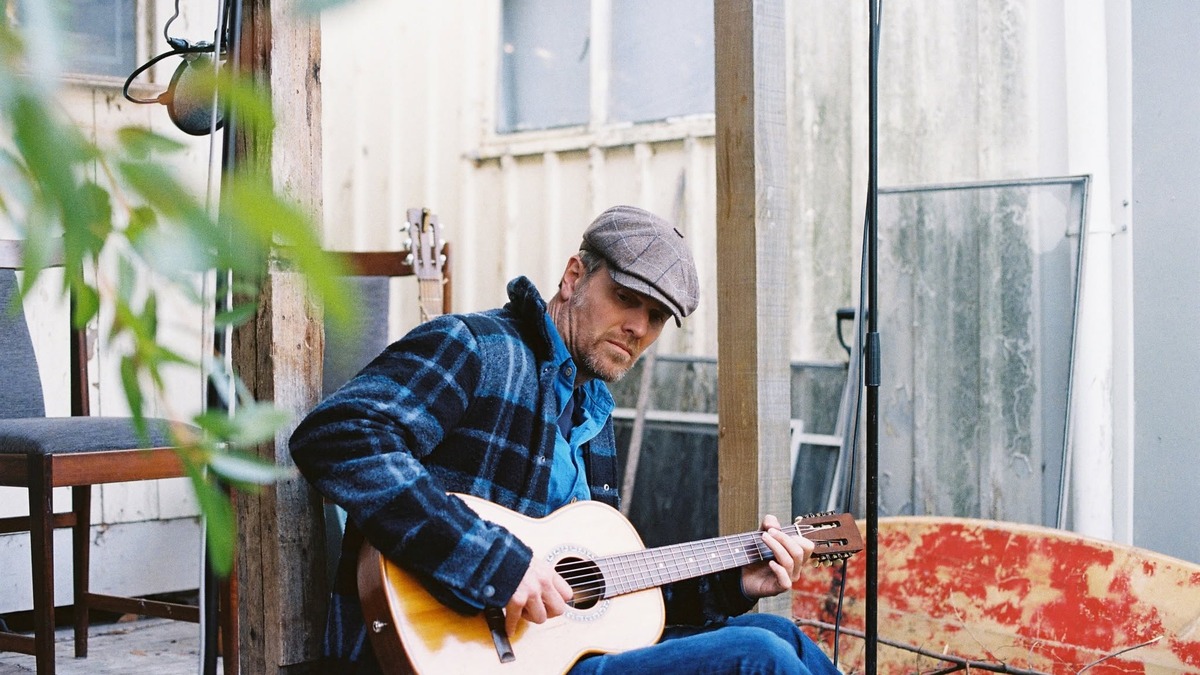
He did not record them in a studio. In June 2025 he flew to Australia and made the album outdoors at Resting Bell Studio in Point Lonsdale, a small coastal village, during a stretch of sunlit winter days.
Mark Lang and Nick Huggins
The invitation came from Australian songwriters and producers Mark Lang and Nick Huggins. Lang is a singer-songwriter, filmmaker, and lyricist whom Gunning calls a friend and one of his favourite artists.
Lang flew Gunning to Point Lonsdale without revealing the plan. There would be no studio and no headphones, just a chair beneath a gumtree and a guitar.
One microphone captured Gunning and his guitar, and two more were hung in the tree above to catch the birds and the wind. The gear was antique, the tape allowed no do-overs, and Gunning sang without lyrics in front of him.
Lang wanted the recording to be spontaneous and raw, “the opposite of AI.” Gunning says it was unlike anything he or the producers had done before, and he doubts it could work a second time, though he is grateful it worked once.
He has also said the trip to the far side of the world helped him feel steady again during an upside-down stretch. Casey Hartnett and Huggins handled mastering, and Huggins mixed.
The Songs on the Record
Some of the songs are personal, shaped by a difficult stretch a couple of years earlier that Gunning describes as a kind of detox. Others process the news of the world, including reflections after the 2025 federal election.
And some are history lessons. Vincent Coleman, co-written with Bruce Guthro, tells the story of the train dispatcher who gave his life in the 1917 Halifax Explosion to stop a passenger train from entering the harbour.
Angels’ Share, written with Jamie Robinson, honours Guthro after his death. The title comes from the whisky that disappears during aging, and Gunning figures wherever the angels’ share goes is where Bruce went.
The first single, Going Nowhere Tonight, arrived on November 7, 2025, followed by Blue Heart. Field Notes was released on February 20, 2026, and the release tour opened in Halifax and has since crossed the country.
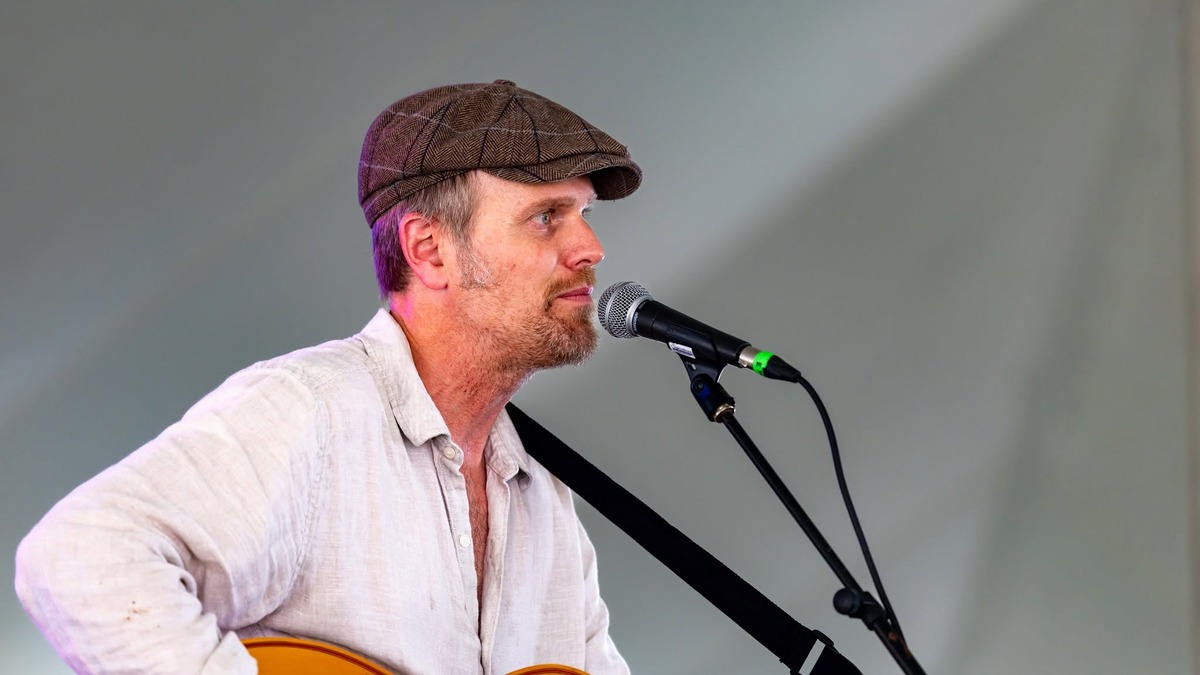
What to Expect from Dave Gunning Live in London, Ontario
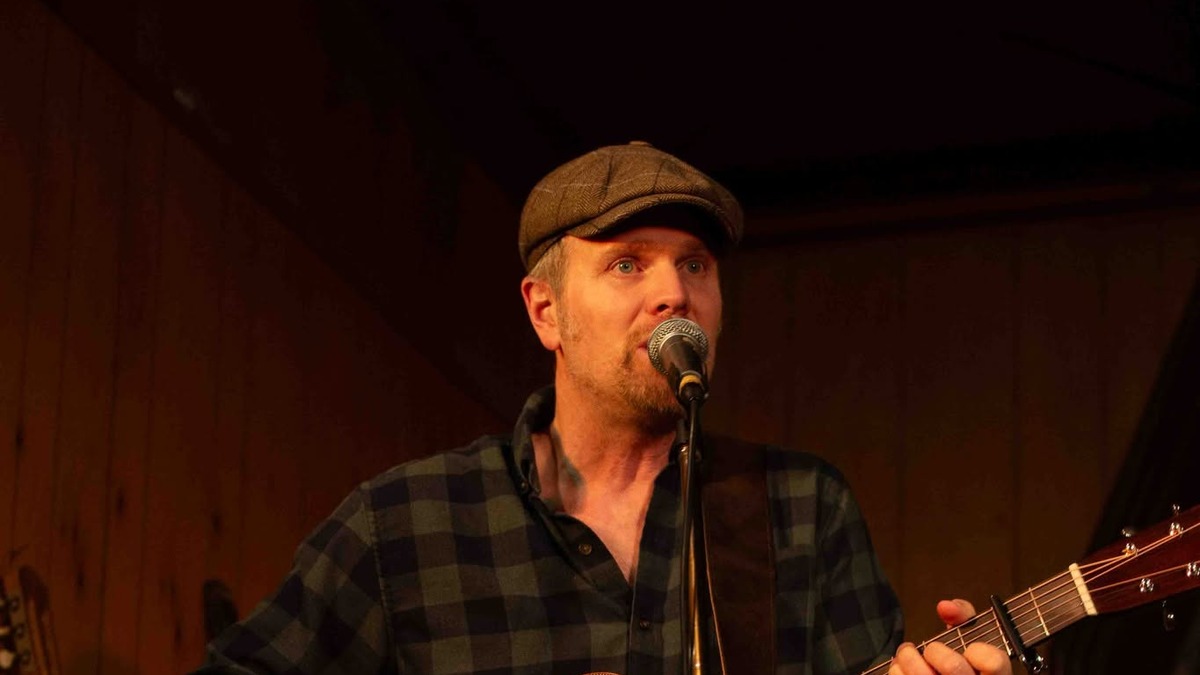
A Dave Gunning show is as much storytelling as music. He tells anecdotes about notable characters from Pictou County and does impressions of musicians he has worked with over the years, and the comic timing is as sharp as the songs.
On the Field Notes tour, the newest songs have shared the set with the stories behind them, including the history behind Vincent Coleman and the whisky lore behind Angels’ Share. The laughter and the lump in the throat tend to arrive in the same evening.
Dave Gunning plays the Cuckoo’s Nest Folk Club, presented with Forest City Comhaltas, on Monday, February 1, 2027, at the German Canadian Club, 1 Cove Road, in London, Ontario. Doors open at 6:00 PM and the show starts at 7:30 PM, in an all-ages, licensed, general admission format.

From Flea Market Guitar to Gumtree: A Life Spent Telling True Stories
After a 2005 show outside Edmonton, a rancher took Gunning out behind a hotel, recited some poems of his own, and told him the story songs matched his family’s story.
His father had raised cattle on a small herd, his own herd was far larger, and his sons had become electricians in Fort McMurray.
Gunning has called it one of the first times he realized songs about his own corner of Nova Scotia belonged to people across the country. Three decades into his career, that idea still drives him.
The flea-market guitar, the Stompin’ Tom Connors years, the penny drive, the pulp mill, and the recording under a gumtree all trace back to the same belief: a song should tell the truth about a place and the people who live there. On February 1, he brings that belief to London.