A goblin merchant is bartering for stories instead of coin. A woman on a small stage is asking the crowd whether she should fight back or submit. An artist is spending ten hours face-down in a domestic lawn, unpacking what that patch of grass actually represents.
This is not a fringe festival in Toronto or a black-box experiment in Montreal. It is happening in the attic, kitchen, and backyard of a 210-year-old farmhouse in downtown Kitchener, Ontario, and it is called the Treading Theatre Festival.
Now heading into its second year, Treading has quickly become one of the more closely watched independent theatre events in the Waterloo Region, largely because of how deliberately it breaks from festival convention. There is no proscenium stage, no rows of folding chairs facing a fixed set, and no single genre holding the lineup together.
Instead, the 2026 edition folds an audience-driven drama, a fantasy choose-your-own-adventure experience, a durational outdoor performance-installation, and two visual art exhibitions into four days at the Schneider Haus National Historic Site, timed to overlap with the region’s biggest heritage open house of the year.
Newcomer? Let’s Talk… What the Treading Theatre Festival Is
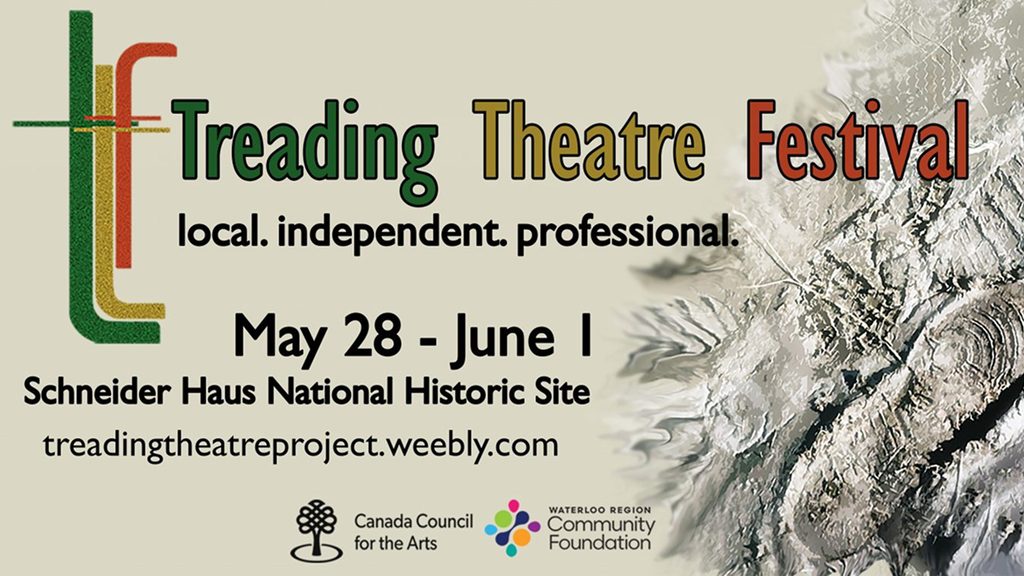
The Treading Theatre Festival is an annual, site-responsive performance festival staged at the Schneider Haus National Historic Site in Kitchener, Ontario, and produced by the Treading Theatre Project.
Rather than renting a conventional theatre, the festival uses the rooms, grounds, and outbuildings of a preserved 19th-century farmstead as its performance spaces, pairing new and touring independent work with a stated mandate of giving contemporary performance-based artists an accessible platform to experiment across disciplines.
The 2026 edition runs from Thursday, September 17 through Sunday, September 20, and for the first time it has been deliberately scheduled to coincide with Doors Open Kitchener, folding a full day of free public programming into what was previously a ticketed-only affair.
Most small theatre festivals default to a single venue with a rotating slate of shows performed back to back on the same stage. Treading instead treats the entire museum property as a kind of anthology: an interactive audience-decision play in one room, a fantasy market experience in another, a slow, durational outdoor piece on the front lawn, and two photography and mixed-media exhibitions installed wherever wall space allows.
It is a model borrowed loosely from site-specific and immersive theatre traditions that have gained traction across Canada over the last decade, applied here to a museum that had never previously hosted anything like it.
A Brief History: How a 30-Application Pilot Became a Regional Fixture
Treading Theatre Festival did not exist before 2025.
It was founded by Kitchener-based theatre-maker Maria Colonescu and writer-organizer Ciarán Myers, who set out to address what they identified as a structural gap in the region’s arts ecosystem: a lack of sustained, professional theatre criticism for local work.
In building the inaugural festival, Colonescu and Myers reviewed more than 30 submitted proposals before narrowing the program to five productions, all staged in and around the Schneider Haus over a five-day run from May 28 to June 1, 2025.
The founders made an unusual choice early on that drew outside attention to the festival before a single ticket was sold: they offered honoraria and complimentary accommodations to out-of-town theatre critics in exchange for published reviews of every production in the lineup, a practice that runs counter to how most publications compensate their writers.
Toronto-based Intermission Magazine took the festival up on the offer, sending critic Charlotte Lilley to cover all five shows.
In her published review, Lilley described the arrangement candidly, noting that Myers and Colonescu were explicit that payment was compensation for the critic’s time and travel rather than an expectation of favorable coverage, comparing it to the way the festival pays its own artists above the local going rate.
That inaugural slate included Nassim Soleimanpour‘s audience-improvised White Rabbit Red Rabbit, Nathaniel Voll and Ciarán Myers’ immersive Trading Post, Timothy Johns’ translation of Bernard-Marie Koltès’ Night Just Before the Forest, Braeden Etienne‘s Believe In It Alive, and Samuel Beckett‘s Krapp’s Last Tape, directed by Colonescu herself and performed by Gary Kirkham.
That first year set the template the 2026 festival.
Schneider Haus: Why a National Historic Site Doubles as a Theatre
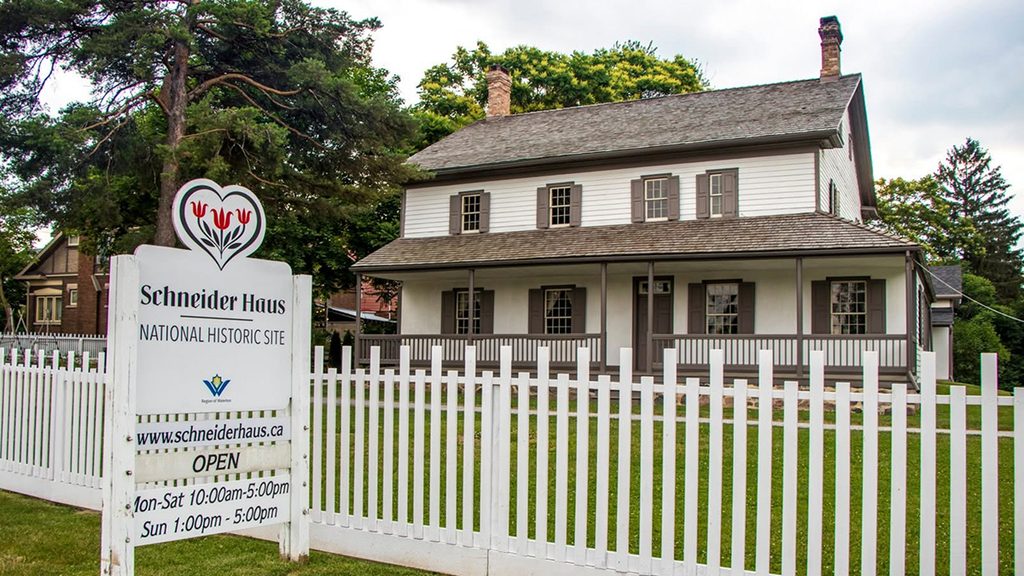
Every Treading production takes place inside or around the Schneider Haus National Historic Site at 466 Queen Street South in downtown Kitchener, and understanding the building explains a lot about how the festival’s programming gets shaped.
The farmstead was originally built around 1816 by Joseph and Barbara Schneider, part of a wave of Pennsylvania German Mennonite families who migrated from Lancaster County, Pennsylvania, to what was then called Berlin, Ontario, in the early 19th century. Joseph Schneider cleared what became Schneider Road, now Queen Street, to connect his farm to the regional trade route, and the small settlement that grew up around that intersection eventually became the city of Kitchener.
The house passed through the Schneider family for two generations, was later converted into a duplex rental property, and by 1979 had fallen into significant disrepair before the Region of Waterloo began a multi-year restoration. It reopened as a living-history museum in 1981 and was formally designated a National Historic Site of Canada in 1999, recognized specifically for preserving the vernacular Mennonite house plan carried north from pre-Revolutionary Pennsylvania.
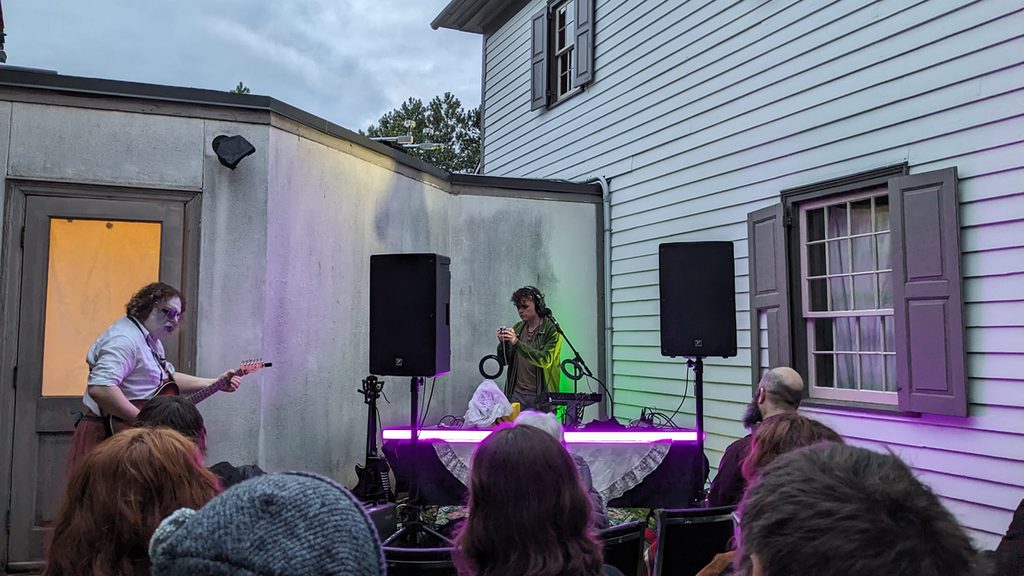
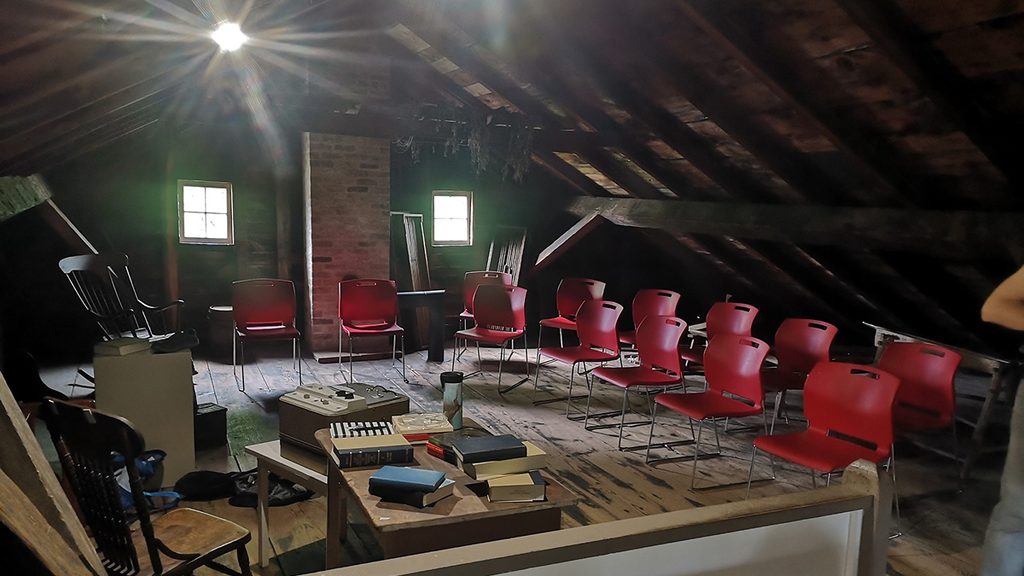
Practically speaking, that history is what gives Treading its unconventional performance spaces. The attic, kept dim and a little chilly under the eaves, has already hosted a Beckett monologue and a French-to-English translated stream-of-consciousness play in year one. The kitchen has doubled as an immersive trading post. The backyard and front lawn, still landscaped in a way that evokes the property’s agricultural past, serve as the setting for this year’s durational outdoor installation.
The museum’s willingness to hand over these spaces to working theatre artists, rather than restricting programming to a fixed amphitheatre, is one of the more unusual arrangements in the region’s cultural sector, and it is why the festival’s website is careful to note that not all of the performance spaces are mobility accessible.
Treading Theatre Festival 2026: Dates, Schedule, and Tickets at a Glance
As mentioned, the 2026 festival runs Thursday, September 17 through Sunday, September 20, entirely at the Schneider Haus National Historic Site.
On the two opening evenings, the two ticketed productions alternate time slots: on Thursday the 17th, Tadrak’s Tales runs from 6:30 to 7:30 p.m. followed by Indecisive from 7:45 to 8:45 p.m., and on Friday the 18th, the order flips, with Indecisive opening at 6:30 p.m. and Tadrak’s Tales following at 7:45 p.m.
Saturday, September 20, is the festival’s biggest day by far, combining Doors Open Kitchener programming with a full slate of ticketed and free performances: grounds of dispossession/ungrounding dispossession runs continuously from 10 a.m. to 1 p.m. and again from 2 to 4 p.m., live music from Mike Elliott fills the 1 to 2 p.m. window, Indecisive has an afternoon performance from 2:30 to 3:30 p.m., and Tadrak’s Tales closes the day from 5 to 6 p.m.
On the festival’s final day, Sunday, September 20, both Indecisive and Tadrak’s Tales run simultaneously from 1 to 2 p.m. in their respective spaces.
The two visual art exhibitions, Through a Historical Lens and Echoes of Lost Souls, remain open throughout all four days of the festival.
Treading Theatre Festival tickets for Indecisive and Tadrak’s Tales are sold on a sliding scale ranging from $10 to $25 per performance, with availability varying by showtime and capacity described as limited, a pricing structure that reflects the festival’s stated commitment to accessibility over profit maximization.
The grounds of dispossession installation and both exhibitions are free to attend.
Please note that latecomers are not admitted once a performance begins.
“Indecisive”: An Audience Forced to Make the Call
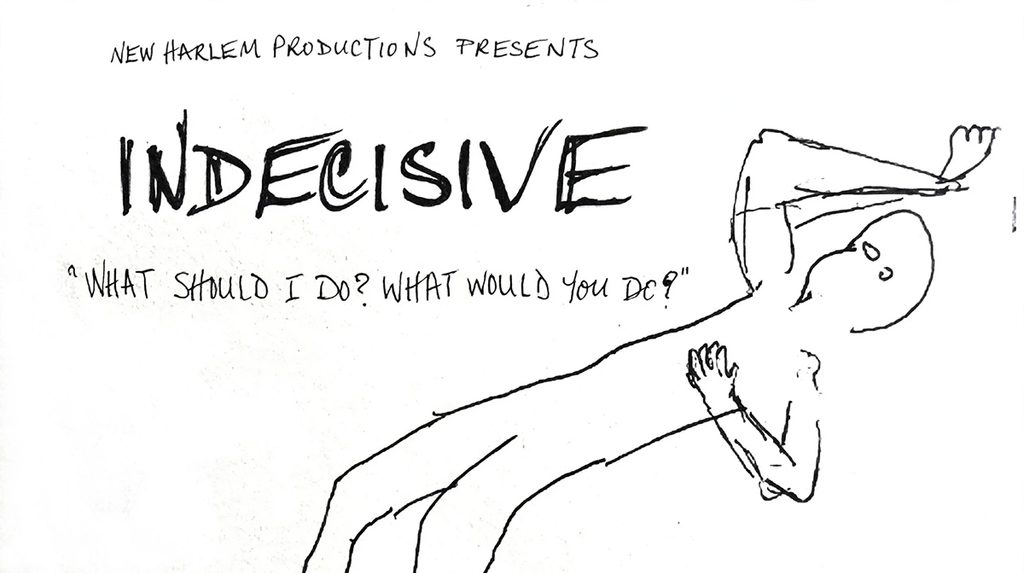
Indecisive is a new interactive work by playwright Donna-Michelle St. Bernard, performed by Nawa Nicole Simon with Yvette Nolan credited as collaborator.
The premise is deceptively simple and built entirely around audience participation: the performer presents the crowd with a running series of judgment calls, some trivial and some weightier, framed around the plea “I’ve got a decision to make and I need your help.” Apple pie or cherry. Fight back or submit.
The piece uses the mechanics of public voting and snap judgment to interrogate how people actually make decisions when the stakes, and the audience, are watching.
At the 2026 festival, Indecisive runs four times: Thursday, September 17 at 7:45 p.m., Friday, September 18 at 6:30 p.m., Saturday, September 19 at 2:30 p.m., and Sunday, September 20 at 1 p.m.
Donna-Michelle St. Bernard
Donna-Michelle St. Bernard, who also performs under the name Belladonna the Blest, is a Toronto-based emcee, playwright, and dramaturg whose scripts have been nominated three times for the Governor General’s Literary Award. Her playwriting is organized around an ongoing, multi-work project called the 54ology, which includes titles such as The First Stone, Diggers, Give It Up, The Smell of Horses, Just Now, Click Click, Cake, Sound of the Beast, A Man A Fish, Salome’s Clothes, Dark Love, and Gas Girls. As a dramaturg, she has worked with Charlie Petch, Keith Barker, and Makambe K Simamba, and she co-edited the Playwrights Canada Press anthologies Refractions: Solo and Refractions: Scenes alongside Yvette Nolan, in addition to editing the anthology Indian Act: Residential School Plays. She currently serves as an associate artist at lemonTree creations and as artistic director of New Harlem Productions.
Yvette Nolan
Yvette Nolan, an Algonquin playwright, director, and dramaturg credited as collaborator on Indecisive, has a body of work that includes The Unplugging, Annie Mae’s Movement, The Birds, and The Diviners (co-written with Vern Thiessen). She also works regularly in opera, having served as librettist and co-director of Shanawdithit and librettist of Sophia, and she directed the opera adaptations of Indians on Vacation and Empire of Wild. With Joel Bernbaum and Lancelot Knight, she co-created the verbatim play Reasonable Doubt, which examines relations between Indigenous and non-Indigenous communities in Saskatchewan, and she recently directed world premieres of Matt MacKenzie’s Strife in Toronto, St. Bernard’s own The First Stone in both Toronto and Ottawa, Leah Simone Bowen’s The Flood in Montreal, and the Stratford and Shaw Festival productions of Frances Koncan’s Women of the Fur Trade. From 2003 to 2011, Nolan served as Artistic Director of Native Earth Performing Arts, the oldest professional Indigenous theatre company in Canada, and she is the author of Medicine Shows, a study of Indigenous performance in Canada published by Playwrights Canada Press in 2015, and co-editor of Performing Indigeneity.
Nawa Nicole Simon
Performer Nawa Nicole Simon is a Toronto-born actor, writer, and wellness advocate who trained through the Fresh Arts program before completing Humber College’s Theatre Performance Program. Her stage credits include a Dora Award-nominated turn in Gas Girls and lead roles in The First Stone, and her screen work spans Ruby Skye P.I., for which she earned recognition for Outstanding Supporting Actress in Interactive Narrative Comedy, Forensic Factor, and Steadfast: The Messenger and the Message, which screened at the 2023 Cannes Film Festival. Outside of performance, Simon is also a certified personal trainer and runs Moving People Fitness, a business she describes as bridging creative practice and holistic wellness.
“Tadrak’s Tales”: A Fantasy Goblin Market Built on Improvisation
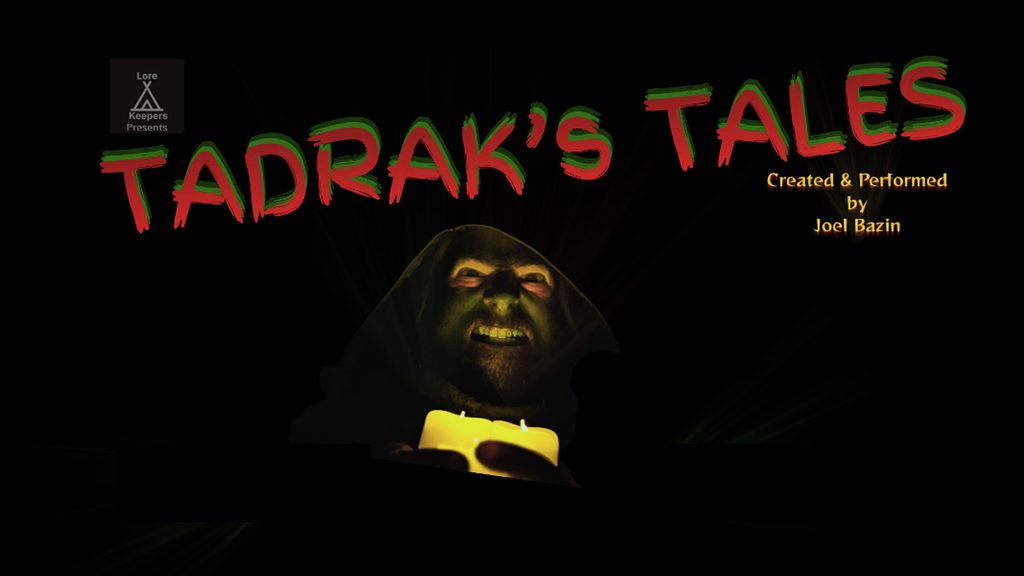
Tadrak’s Tales, created and performed by Joel Bazin with Scott Garland serving as MC, is a choose-your-own-adventure performance staged as a goblin’s traveling market.
Framed as a one-weekend-only stop for a fantastical merchant who trades in stories rather than coin, the piece invites each audience member to browse Tadrak’s wares and negotiate their own path through a fantasy narrative involving treason, murder, monsters, and fate, with the promise that no two tellings will play out the same way.
It follows a successful earlier run at Toronto’s Red Sandcastle Theatre before making its way to the Schneider Haus for the 2026 festival.
Performance times run Thursday, September 17 at 6:30 p.m., Friday, September 18 at 7:45 p.m., Saturday, September 19 at 5 p.m., and Sunday, September 20 at 1 p.m., with additional roaming mini-performances woven into Saturday’s Doors Open programming.
Joel Bazin
Joel Bazin is a multidisciplinary performer, creator, and designer trained at the University of Alberta and MacEwan University, with additional background in Pachinko clown work, stage combat, theatre production, and voice-over performance. His recent performing credits include the role of Mort in Mercy of a Vampire at Toronto’s Dead of Winter Festival and a turn in Captain Kidd’s: How to be a Pirate on the Ontario Pirate Festival‘s children’s stage. Beyond performing, Bazin designs and builds sets and props for stage, screen, and escape-room experiences around Toronto, with recent production design credit on Defiance Theatre‘s Gemini and Jon Blair’s A Comedy Show at the End of the World, along with art department work on the CBC Kids series Go Togo. He also trains as a martial artist and throat singer and is preparing to shoot his first horror short film later in 2026.
Scott Garland
Scott Garland, credited as MC for Tadrak’s Tales, is a German-born, Alberta-raised, Toronto-based performer, writer, and maker. He is a repeat collaborator with White Mills Theatre‘s interactive productions, including Tales of the Damned, Tales of the Grotesque, and Peter Pan and the Wendy Lady, and with the Bruce County Playhouse on Kitchen Witches and The Complete Works of William Shakespeare (Abridged). His additional stage credits include Midnight Madness at Port Stanley Festival Theatre, Three Men in a Boat with Pea Green Theatre, and Threepenny Opera with Soup Can Theatre, and he produced Gemini at the Next Stage Festival as well as the award-winning Frankenstein(esque) with puppet company Silent Protagonist. On screen, Garland has appeared in episodes of Let’s Go Luna, Workin’ Moms, Mayor of Kingstown, Murdoch Mysteries, and Titans, and he voices a role in the third season of Winston Rowntree’s animated series People Watching.
“grounds of dispossession / ungrounding dispossession”
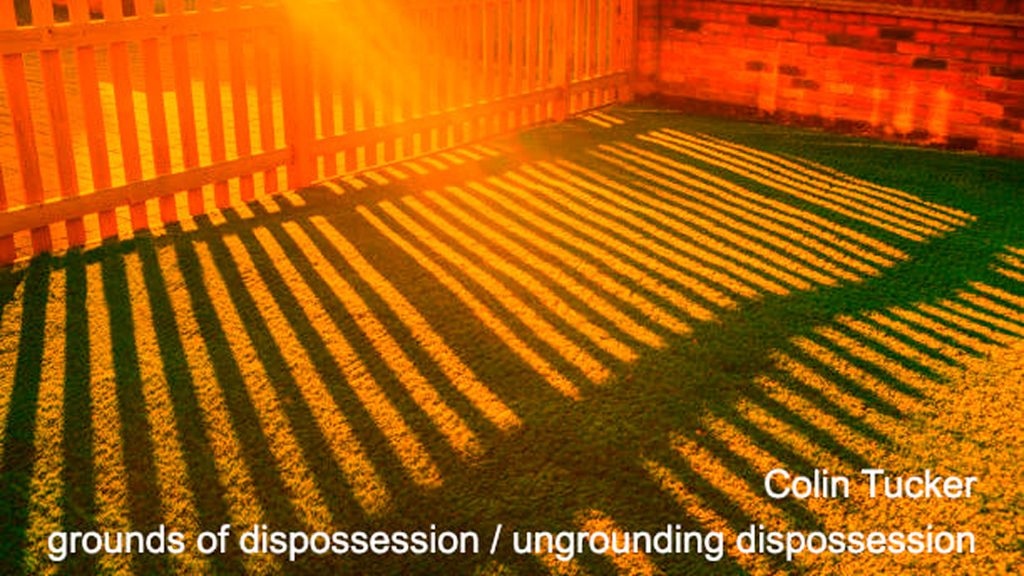
The festival’s third performance work is grounds of dispossession / ungrounding dispossession, created and performed by Colin Tucker, running as a free, day-long, site-responsive performance-installation on Saturday, September 19 from 10 a.m. to 4 p.m., with a scheduled break for live music between 1 and 2 p.m.
Described by the festival as a piece staged for and against a domestic lawn, the work responds to the historical and ongoing role of monoculture and cultivation as instruments of dispossession under the British empire and its commonwealth, using action, spoken word, recorded audio, and temporary installation elements to trace how those histories persist inside the ordinary space of a residential lawn.
Colin Tucker
Colin Tucker is an artist, writer, and curator whose practice focuses on dismantling whiteness from a decolonial standpoint. Their performances and installations are organized as textual scores or instructions that intervene in what they describe as the politics of sensation and property, drawing on sustained study of Black and Indigenous critiques of whiteness to disrupt the routines of everyday infrastructure in metropolitan and settler spaces. Current projects include a book collecting textual scores and essays on the politics of sensation within the concert hall, alongside site-specific interventions addressing property infrastructure on occupied Turtle Island. As a curator, Tucker is also currently developing exhibitions and performances responding to Cageian and Fluxus performance traditions. They live as a settler in Tsí Tkaròn:to, the Kanien’kehá:ka name for Toronto, on land covered by the Dish With One Spoon Treaty. Further information about Tucker’s practice is available through their site, colintucker.studio.
“Through a Historical Lens” by Tristin Deveau: One Subject, a Century of Cameras
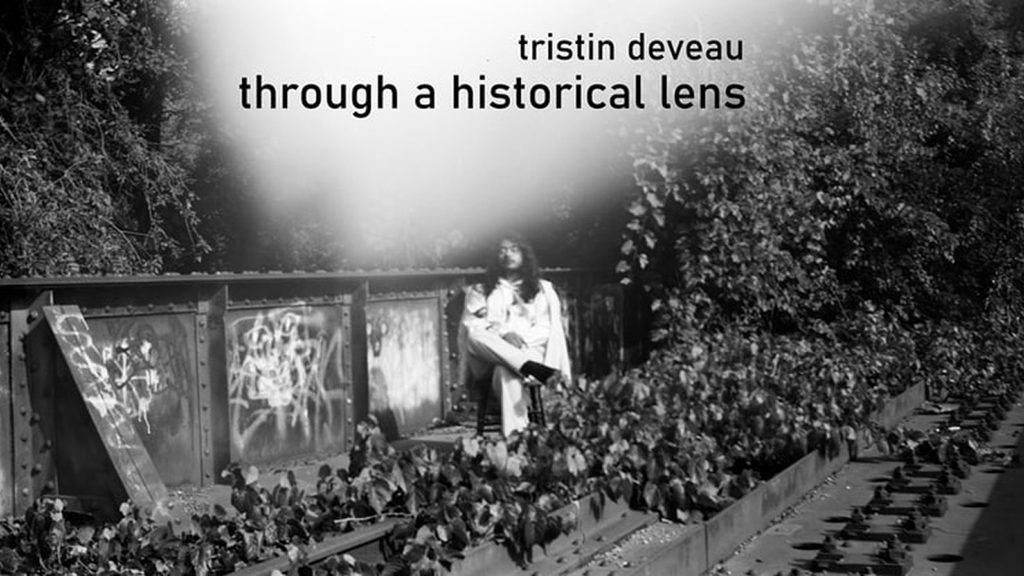
The first of the festival’s two visual art exhibitions is Through a Historical Lens, a photography exhibit by Tristin Deveau that documents the same subjects shot repeatedly across a full century of camera technology, ranging from a 100-year-old box camera through the mechanical single-lens reflex cameras of the 1970s.
Each photograph is displayed alongside the physical camera used to capture it, allowing visitors to compare how format, optics, and film chemistry change the character of an identical scene. The exhibition runs throughout the full four days of the festival at no charge.
Tristin Deveau is a writer and filmmaker based in Kitchener with a long-standing interest in film, vintage cameras, and obsolete photographic formats.
Through a Historical Lens marks his first photography exhibition.
“Echoes of Lost Souls” by Jenn Weatherall: Local Violence, Documented and Confronted
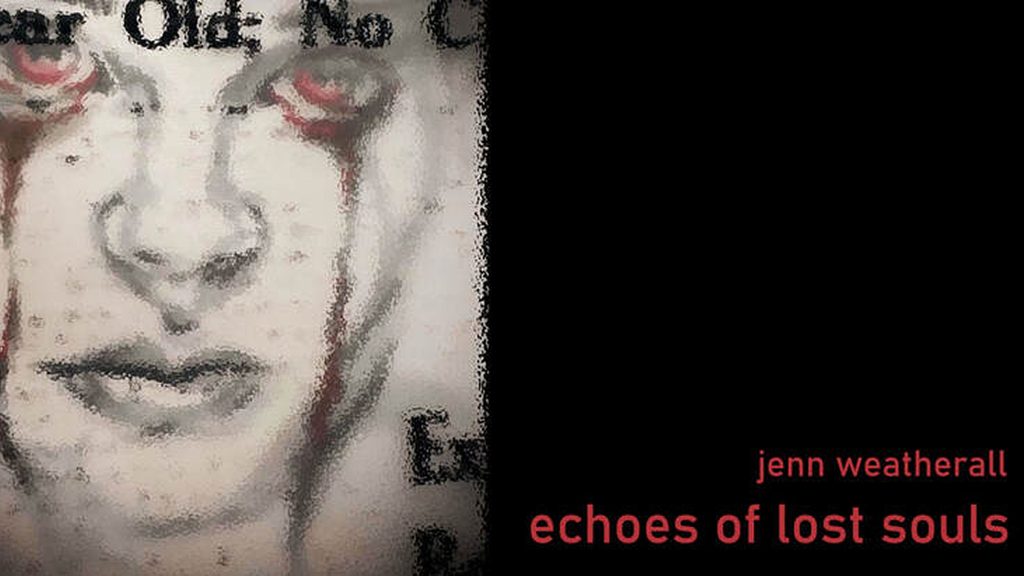
The second exhibition, Echoes of Lost Souls by Jenn Weatherall, draws on archived Waterloo Region Record articles to examine the history of violence within the local community.
The festival’s own description leans into the discomfort of the subject matter directly, framing the work around the instinct to look at things we are told to look away from, and it carries an explicit content note: the exhibition includes depictions of wounds and blood and is marked not suitable for children under 16.
Like Through a Historical Lens, it is free and open throughout the full run of the festival.
Jenn Weatherall is an actor, playwright, muralist, and mother who trained at George Brown Theatre School before spending time working in New York City.
She has described her return to consistent art-making as something that took shape later in life, after raising two children, framing the current phase of her career as a return to a creative identity she considers core to who she is.
Doors Open Kitchener and the Festival’s Free Programming
For 2026, the Treading Theatre Festival’s Saturday, September 19 programming has been deliberately aligned with Doors Open Waterloo Region, the region’s long-running annual heritage open house.
Doors Open has run in Waterloo Region since 2003, always on a Saturday in September, and the 2026 edition opens roughly 27 sites across Kitchener, Waterloo, Cambridge, and surrounding townships to free public access from 10 a.m. to 4 p.m., with the Schneider Haus National Historic Site listed as one of the participating locations.
Provincially, Doors Open Ontario is coordinated by the Ontario Heritage Trust and marked its 25th anniversary in 2026, a program that has drawn a cumulative 9.5 million visitors since it began.
Treading’s contribution to that day folds several free elements into the festival’s own schedule: the full run of grounds of dispossession / ungrounding dispossession, a live music set from Mike Elliott between 1 and 2 p.m., and roaming mini-performances from Tadrak’s Tales that move through the grounds rather than confining the piece to its scheduled evening slot. Both visual art exhibitions remain open throughout the day as well.
The result is a Saturday that functions almost as two festivals layered on top of each other: casual heritage-day visitors who wander onto the property for the museum tour, and festival ticket-holders arriving specifically for the afternoon performance of Indecisive.

Treading Theatre Festival Sponsors and Community Partners
Treading Theatre Festival’s 2026 programming is supported by a mix of provincial arts funding, regional philanthropy, and local business investment.
The Ontario Arts Council, the province’s primary public arts funding body since its founding by Premier John Robarts in 1963, is listed as a lead supporter; the Council currently runs more than fifty distinct grant programs and, in a recent funding year, distributed a $56.4 million grant budget across 237 Ontario communities through more than 2,600 grants to individual artists and over 1,000 grants to arts organizations.
The Waterloo Region Community Foundation, formed in 2022 through the merger of the Cambridge & North Dumfries Community Foundation and the Kitchener Waterloo Community Foundation, is also a named sponsor; the foundation approved $8.2 million in community grants in 2023 alone and has distributed more than $81 million cumulatively since its predecessor organizations began operating.
The Schneider Haus National Historic Site itself, operated by Region of Waterloo Museums, functions as both venue and supporting partner, having opened its grounds and interior rooms to a theatre festival for the first time in the site’s history.
Inter Arts Matrix, a Kitchener-based interdisciplinary arts organization founded in 2007 by theatre and opera director Anne-Marie Donovan and now led by artistic director and curator Sheila McMath, is listed among the festival’s supporters as well; IAM describes itself as the only interdisciplinary arts organization in the Region of Waterloo dedicated specifically to incubating experimental, cross-disciplinary artistic work.
Rounding out the sponsor list is Libro Credit Union, the largest credit union headquartered in southwestern Ontario and a certified B Corporation, which reinvests the entirety of its annual profits into the communities it serves through programs like its Annual Grants initiative, which distributed $310,000 across roughly 20 to 23 regional projects in each of the past several years.

Who’s Running the Show: Meet the Organizers of the Treading Theatre Festival
The Treading Theatre Project is led by Maria Colonescu, its founding Artistic Director, in partnership with co-founder Ciarán Myers. Colonescu is an internationally produced, award-winning playwright, director, and actor who holds an MFA in Advanced Theatre Practice from the Royal Central School of Speech and Drama at the University of London.
She previously served as vice-president of the Alberta Playwrights’ Network, is an alumna of Directors Lab North, and founded Aequilux Productions.
Romanian by background, she has lived and worked across multiple countries and provinces, and her practice draws on training in Butoh and somatic performance alongside a stated preference for immersive, non-traditional, site-responsive work that places audiences in a position to shape what they are watching.
Since relocating to the Region of Waterloo in 2022, Colonescu has produced and directed two seasons of radio drama for Kitchener’s Midtown Radio, co-written and directed an immersive art-heist experience for the Kitchener-Waterloo Art Gallery‘s annual fundraiser, created the Don’t Jump to Recipe theatrical cooking class series presented at the Kitchener Market, and directed or performed in more than a dozen original productions with local artists, including her direction of Krapp’s Last Tape at the inaugural 2025 Treading festival.
Ciarán Myers, credited as festival co-founder and as a writer on the 2025 production Trading Post, has spoken publicly about the mobility gap facing theatre artists working outside Canada’s largest cities, a concern that shaped both the festival’s mandate and its decision to pay critics and artists above the local norm.
Treading Theatre Festival: A Deliberate Bet on Place
What distinguishes Treading from most emerging theatre festivals is not its size, which is still modest by design, but the specificity of its bet: that a 210-year-old farmhouse, a handful of paid critics, a sliding-scale ticket price, and a willingness to hand creative control over to the audience can do more for a regional theatre scene than another black-box venue ever could.
The 2026 lineup, spanning an interactive judgment-call drama, a fantasy trading experience, a durational meditation on land and dispossession, and two exhibitions built around memory and material history, reads less like a conventional festival program and more like a curated argument about what site-specific Canadian theatre can look like outside Toronto and Stratford.
Whether that argument scales past a second year remains an open question, but the infrastructure now backing it, from provincial arts funding to a regional community foundation to a national historic site willing to keep lending out its attic, suggests Kitchener’s newest theatrical tradition has already outgrown its pilot-season framing.
Join the Treading Theatre Festival in Kitchener September 17-20, 2026 and get your tickets today to reserve your attendance!