Before Pittsburgh had a National Hockey League team, it already had an igloo. That was what people called the Civic Arena, whose great silver dome gave Carol McGregor an idea when her husband’s new hockey club needed a name. A penguin could live under that roof, and Pittsburgh Penguins had a ring to it.
NHL team names come from sources as varied as fan contests, local folklore, military insignia, a Disney film and a song by W.C. Handy.
Several clubs inherited their names from teams that came before them, while others had to find a new word when they moved. Here are the origins of all 32 current NHL team names, arranged by division, with the people who chose them and the reasons their choices stuck.
Boston Bruins: A Grocer and a Hockey Man Chose the Bear in 1924
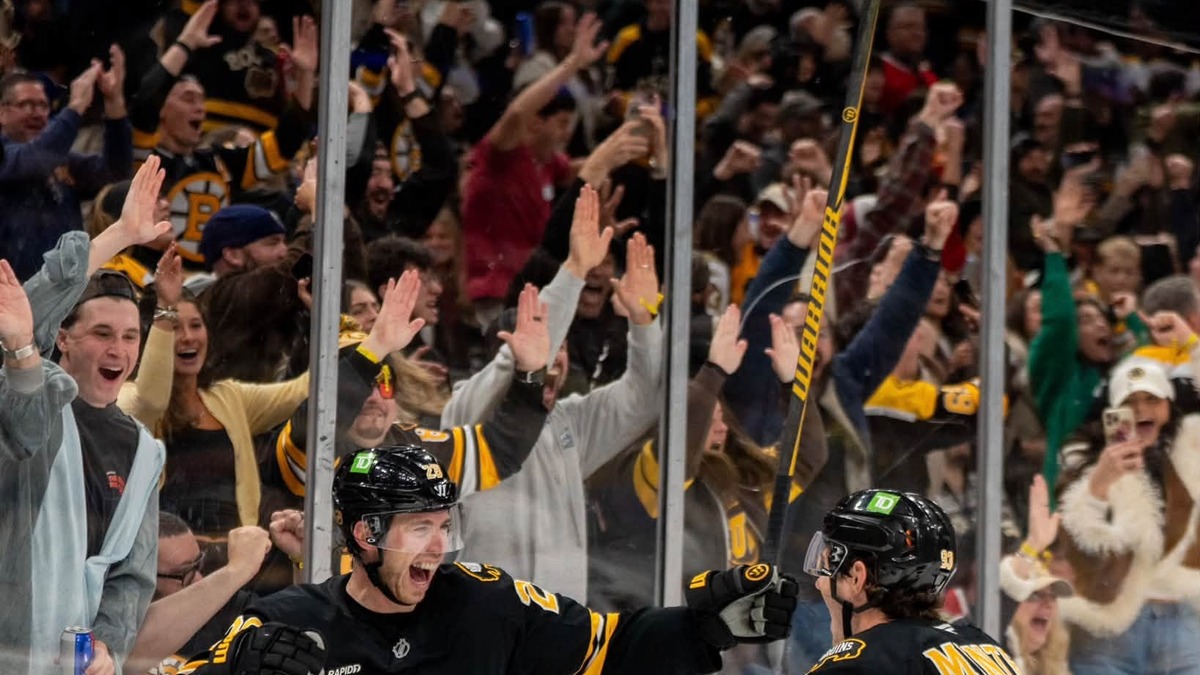
Charles Adams had a hockey team in 1924 and a fairly specific assignment for Art Ross. The Boston grocery magnate wanted his first general manager to find a name that called to mind an untamed animal with speed, strength and cunning. Ross settled on Bruins, drawing on a word for a bear that had long appeared in European folk tales.
The word sounded good alongside Boston, and it made sense in the colours Adams already knew from his grocery business. The first uniforms were brown and yellow, close to a bear’s colouring and to the palette associated with his stores. Long before the modern black and gold became a familiar sight, the name and the team’s appearance had come out of the same conversation between a grocer and a hockey man.
Ross was unusually well placed to make that sort of decision. He had played at the highest levels of the sport before taking the Boston job and went on to shape much of the team’s early identity as both coach and executive. A bruin gave the first American club in the NHL a readily understood animal even if the word itself was a little old-fashioned.
The bear remained available to the club as the uniforms changed. Boston eventually put the spoked B at the centre of its visual identity, a different way of expressing where the team came from.
Ross’s choice survived comfortably beside it. The Bruins’ own history begins with the two men who had to give professional hockey in Boston something people could call it.
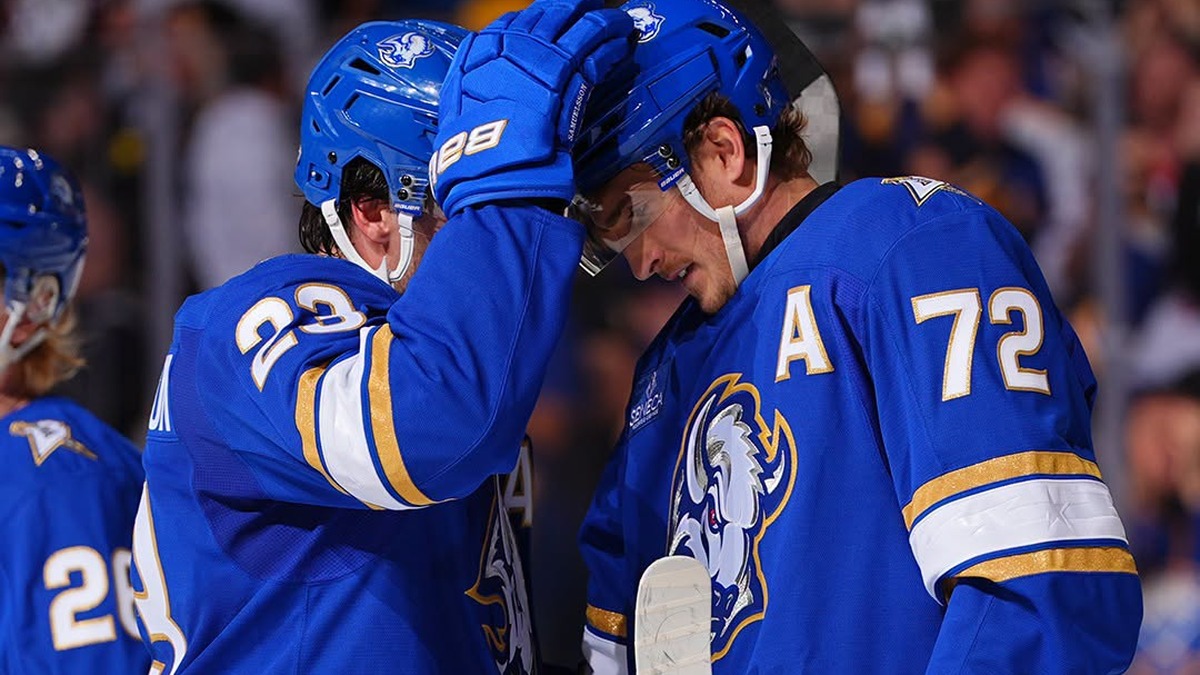
Buffalo Sabres: Two Brothers, 13,000 Contest Entries and a Swordsman’s Double Edge
Seymour Knox III and Northrup Knox were looking for a word Buffalo sports hadn’t already worn out. When they invited suggestions for their new NHL team, the obvious choices were some variation on Buffalo’s own name or the bison that usually accompanied it. The brothers wanted something distinctive, and their naming contest delivered more than 13,000 entries.
Sabres turned up four times. The Knox brothers liked what a sabre suggested in both directions of play.
It could strike cleanly and quickly, and a swordsman could use it to turn an attack aside. That gave the brothers an image of a team with something to do with the puck and something to do when the other side had it.
The Sabres’ franchise history records some of the more inventive possibilities, among them Flying Zeppelins and Mugwumps. Buffalo’s eventual crest did something more economical. Two swords crossed beneath a charging bison, giving the new word its own place on the sweater while retaining the familiar animal as a sign of the city.
The team began play in 1970 alongside Vancouver, whose new franchise carried a longstanding local hockey name into the NHL. Buffalo’s owners had deliberately gone in search of a fresh one.
Look at the original crest and you can see where they ended up. The bison tells you who the team represents, and the swords tell you what the Knox brothers wanted to call it.
Even the spelling became distinctive. The Buffalo club kept the form Sabres, with the r before the e, in an American city.
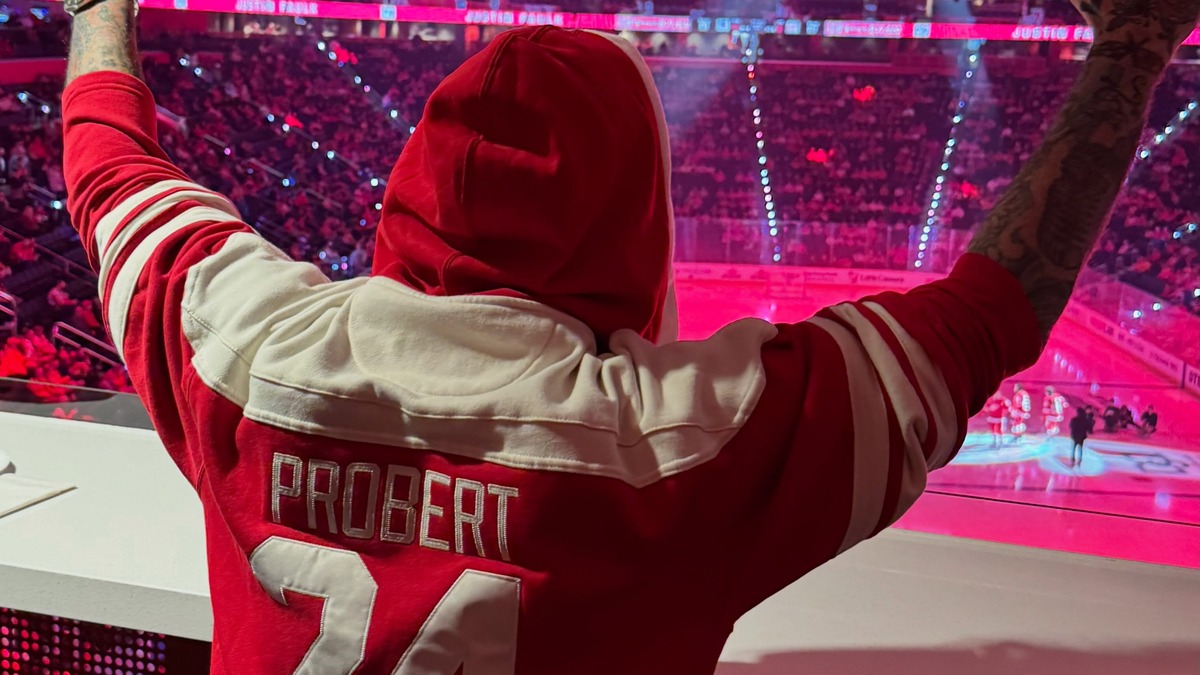
Detroit Red Wings: A Montreal Winged Wheel Gets a Red Wing for Motor City
When James Norris took over Detroit’s hockey club in 1932, it had already played as the Cougars and Falcons. The first name carried a memory of the Victoria Cougars, whose players helped stock the Detroit team.
The second had been adopted during a difficult stretch for the franchise. Norris brought a hockey association of his own, from his time in Montreal.
The Montreal Amateur Athletic Association used a winged wheel as its emblem, and its hockey players were known as the Winged Wheelers. Norris had belonged to that sporting world.
In Detroit, he and hockey executive Jack Adams saw how easily the old picture could be adapted. Give the wheel a red wing and it could speak to a club in an automobile city.
The Detroit Historical Society traces the emblem through that Montreal connection. The thing that makes the story work is that a personal memory arrived with a second local meaning already built in. The wheel could look back toward a hockey club Norris knew and forward toward an identity tied to the streets and factories of Detroit.
The name and picture also divide the work neatly. Red Wings is the part you can say without having to explain what sort of wheel you mean.
The crest supplies the wheel and makes the connection to motion and machinery visible. Detroit had gone through two animal names in six years before settling on an image with a past in one city and an immediate use in another.
The old nickname is still legible in the new mark. It just takes the two cities to explain it.
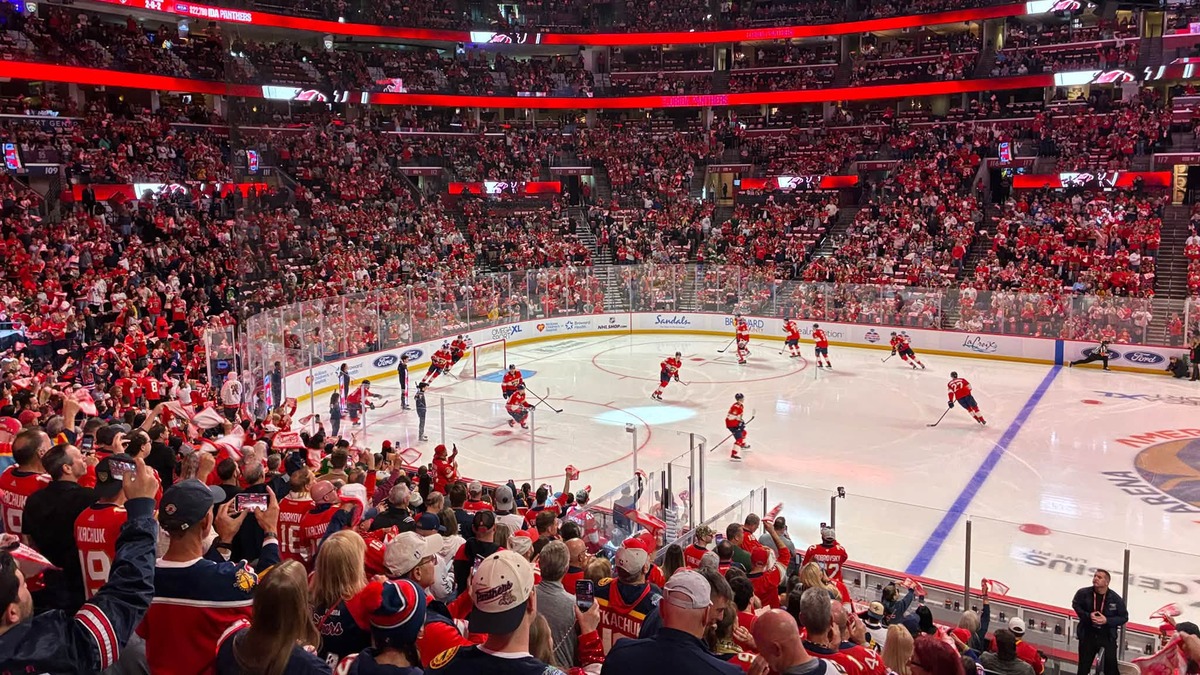
Florida Panthers: The Endangered State Animal Becomes South Florida’s Hockey Mascot
Wayne Huizenga had a local animal in mind when he chose Panthers for his South Florida expansion club.
The Florida panther is the state animal, and its survival was already a conservation issue when the team took the ice in 1993. Putting it on an NHL jersey gave Huizenga a way to draw attention to a creature that most Floridians might never see in the wild.
A Florida panther is a population of cougar. Its name has a more specific geographical meaning than the word panther on its own, which is used in different places for several big cats. That local specificity is what gave Huizenga’s choice some substance beyond the easy appeal of a fast animal for a hockey team.
The leaping cat on the first uniforms made the connection explicit. There was nothing abstract about which part of Florida the name was supposed to evoke. A team in the southern part of the state had put an animal from the same landscape across the front of the jersey, claws out and head up.
The cat also distinguishes the hockey club from the many teams that use Panthers without putting Florida in front of it.
The NHL’s franchise history places the Panthers’ debut in the 1993–94 season. The club has since changed buildings and redesigned the crest, and the panther has remained the part that ties those versions together. The name has a double life now, as the identity of a hockey team and the common name of the endangered animal that gave the team its start.
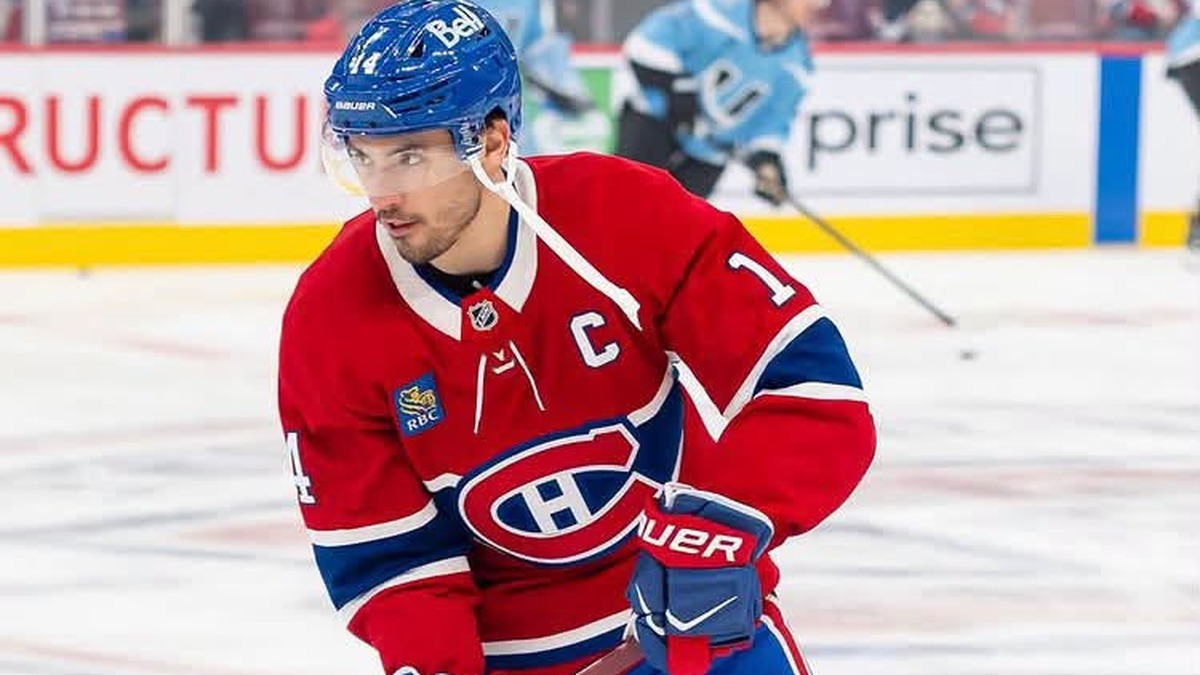
Montreal Canadiens: French-Speaking Montreal’s Club Gives the League Its Oldest Name
In 1909, the men organizing the National Hockey Association were putting together a league in which Montreal could support teams with distinct identities. John Ambrose O’Brien helped establish a club intended to represent the city’s French-speaking hockey community. Its name, Club de hockey Canadien, gave that purpose a public form from the beginning.
The spelling matters. Canadiens carries the French word for Canadians and reflects the constituency the new team was created to represent.
The club survived the NHA, became a founding member of the NHL in 1917 and carried the name with it. A word that once distinguished the team within Montreal became familiar to hockey followers far beyond the city.
Habs came to the club through a separate route. It is short for habitants, a historical term for French settlers and their descendants, particularly those associated with the rural settlements of the St. Lawrence.
The H in the familiar sweater crest stands for hockey, as the league’s explanation of the name makes clear. The letters read together as a piece of the club’s formal title.
The formal and informal names have had more than a century to accumulate associations of their own. Canadiens tells you something about the group the founders wanted on the ice in 1909.
Habs is the name a fan can use in a sentence without mentioning Montreal or hockey at all. The small H on the sweater is where those two stories tend to cross, which helps explain why the misconception about the letter is so persistent.
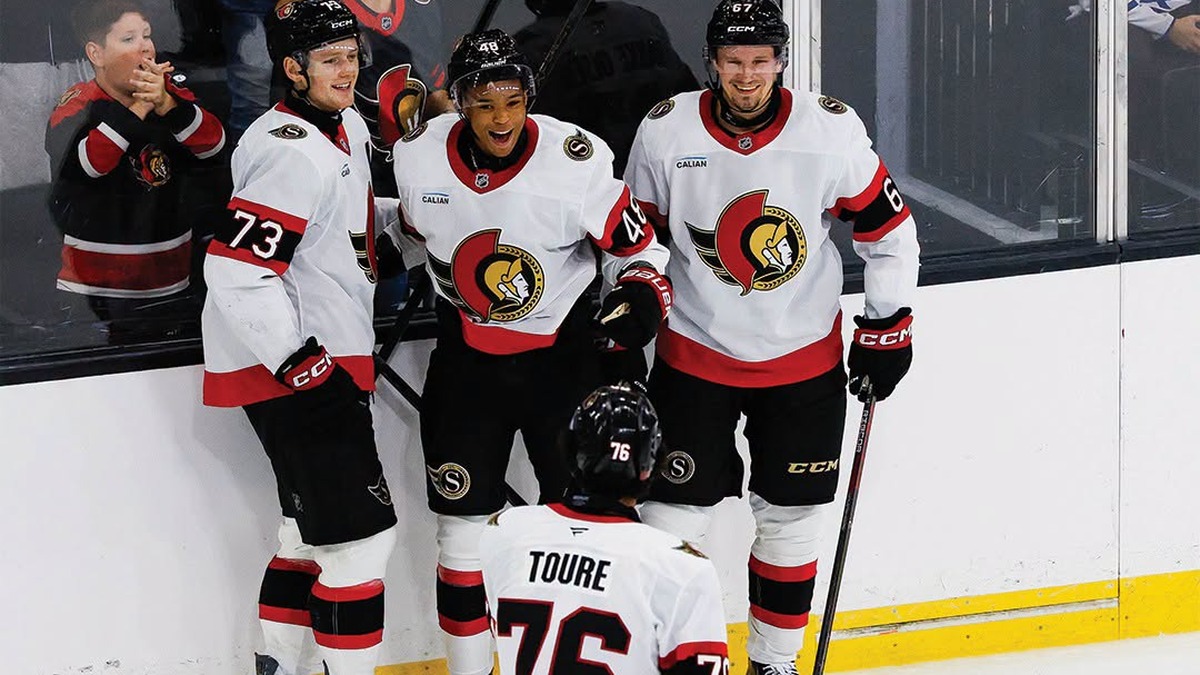
Ottawa Senators: A Capital City Revives Its Early Hockey Name After Decades Away
When Ottawa got an NHL franchise again, the city already had a hockey name with a great deal of history attached to it. The old Ottawa club dated to 1883 and went by several names, including Silver Seven and Senators.
It became an NHL founding team in 1917 and played in Ottawa until 1934. Senators made obvious sense in the city where members of Canada’s Senate sat.
Decades later, the expansion campaign led by Bruce Firestone drew on that association between hockey and the capital. Restoring the Senators name let the new franchise use something Ottawa hockey fans already recognised. The NHL awarded the expansion club in 1990, and the modern Senators played their first season in 1992–93.
The distinction between a revived name and a continuous team matters here. The original Senators’ time in Ottawa ended in the 1930s, and the club played one further NHL season as the St. Louis Eagles.
The current team was created through expansion. Its name reaches across that gap as a choice to recover a piece of local hockey history, and its early visual identity found a new interpretation in the figure of a Roman soldier.
The City of Ottawa Archives preserves that longer local story. Ottawa’s team could draw from the geography of national government and the memory of one of the strongest clubs in early Canadian hockey with a single word. For a city welcoming an NHL team after several generations away, Senators carried both meanings before the players had to add any of their own.
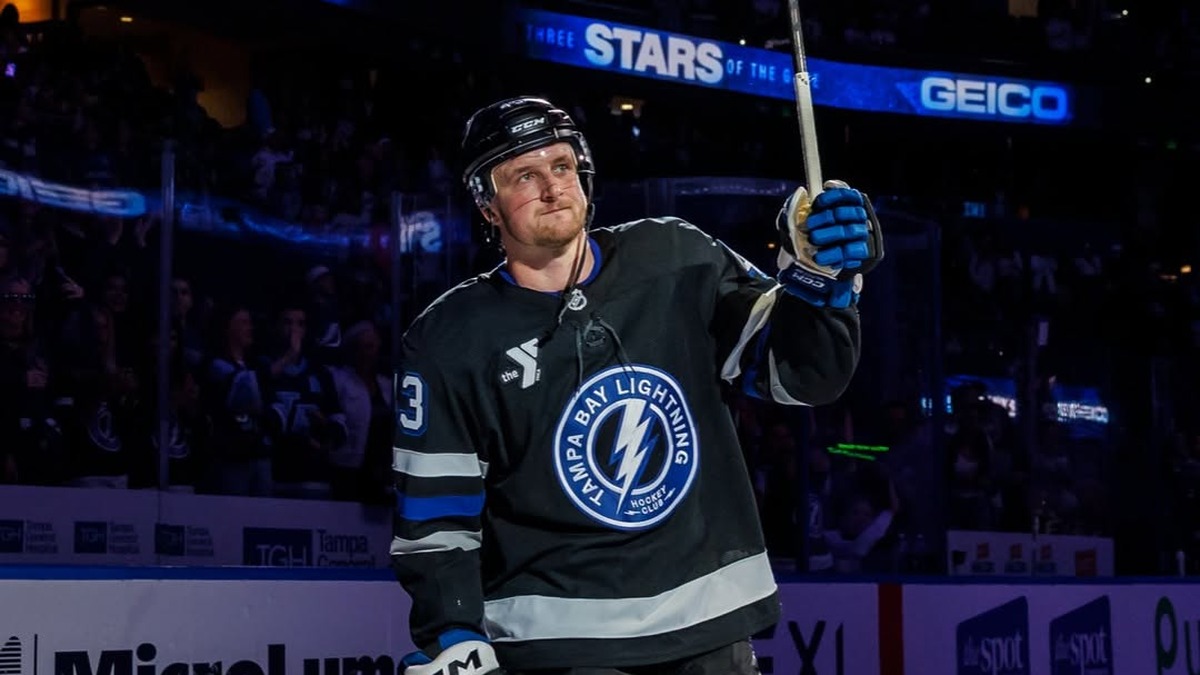
Tampa Bay Lightning: Phil Esposito Found the Name in a Florida Thunderstorm
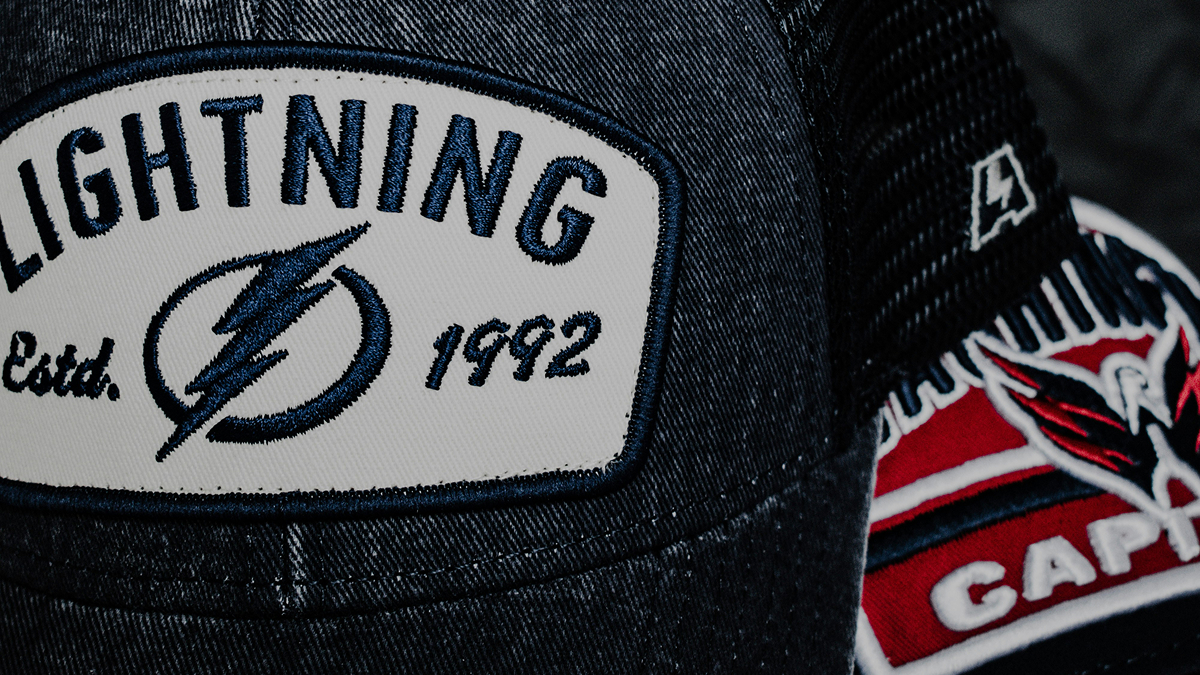
Phil Esposito had played enough hockey to know what a sharp name could do. While putting together the Tampa Bay expansion franchise, he found one in a thunderstorm. In the story the NHL preserves, the weather in 1990 supplied the word Lightning, a phenomenon the region is well known for and an image Esposito could immediately imagine on a hockey jersey.
There’s a useful detail in the place name too. Tampa Bay identifies a region across several cities rather than Tampa alone.
The Lightning played their first regular-season home games in Tampa in 1992, then spent several years in St. Petersburg before returning across the bay. The wider geographical label let the team’s name travel around the same water without changing.
Lightning gave the club a visual idea that could be drawn with a few strokes. A bolt could go across the chest and still read from the far side of the rink. It also gave hockey announcers a singular team name with its own shorthand, the Bolts, which follows directly from the picture.
The word works on two time scales. The weather is a regular occurrence in the region, while a strike is over almost as soon as you see it.
The franchise’s media guide places Esposito at the head of the early hockey operation. He could have gone looking for an animal, as so many clubs did, but he had a piece of the place that already conveyed the quickness he wanted. In Tampa Bay the storm came first, and the mark on the sweater is still the cleanest part of the explanation.
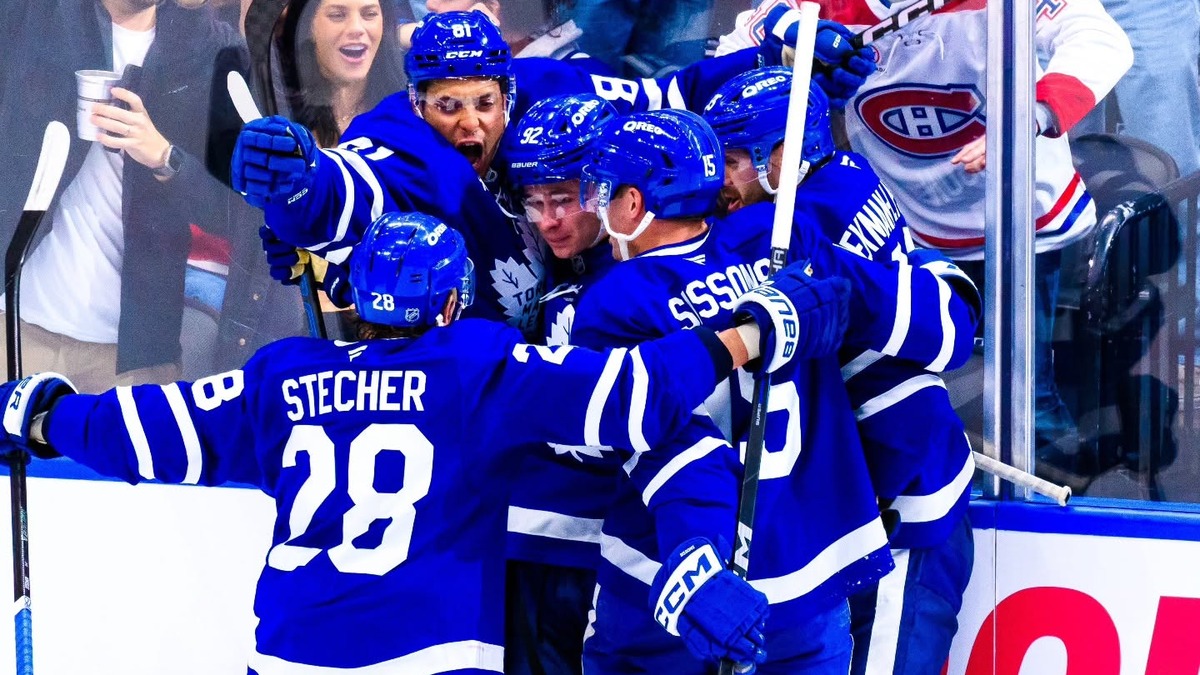
Toronto Maple Leafs: Conn Smythe Brings His Wartime Military Emblem to Hockey
Toronto’s NHL team was the St. Patricks when Conn Smythe and his partners bought it in 1927. Smythe changed the name to Maple Leafs, taking a symbol he knew from the Canadian military and applying it to a hockey club. He had served in the First World War and later explained his choice in terms of the way Canadian soldiers had worn the maple leaf.
There were other maple leaves in Toronto sport, notably the baseball club that had carried the name for years. The leaf was already available to Canadians as an emblem long before the red-and-white national flag came into use in 1965. Smythe’s account helps identify the specific association he wanted for the team, and it puts that choice in the language of a man remembering what the badge had meant during his own service.
The purchase came with a change of identity that people could see immediately. Toronto went from a name with a distinct Irish association to one with national reach. The shape on the sweater could do the work without spelling out the city or even the sport.
The Parks Canada history of the club dates the change to Smythe’s takeover. The odd-looking plural has stayed with it.
Maple Leaves is what you could rake off the lawn, but Maple Leafs is the proper name Toronto adopted for a group of players wearing the emblem. A century after the sale, the spelling is as much a part of the team’s identity as the outline of the leaf itself.
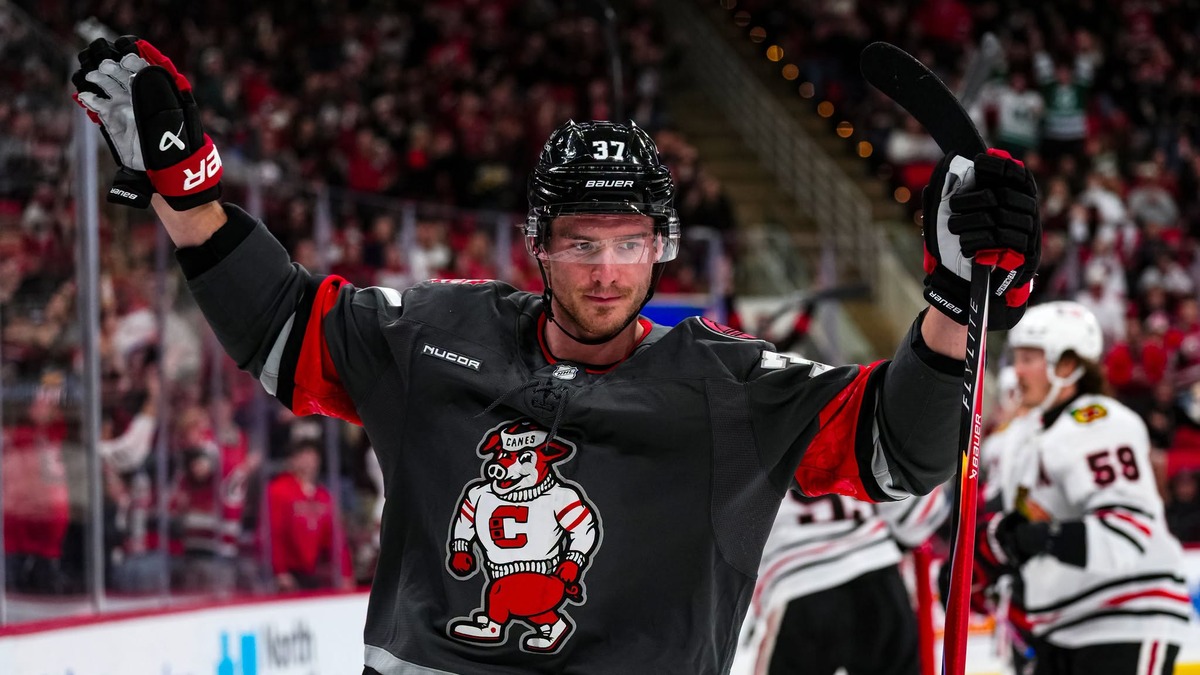
Carolina Hurricanes: Two Recent Storms Replace the Whalers After the Move South
The name Hurricanes arrived in North Carolina with a team whose previous identity belonged to New England. The Whalers began in the World Hockey Association in 1972, entered the NHL as the Hartford Whalers in 1979 and moved south in 1997. Owner Peter Karmanos Jr. chose a new name before the team played its first season in the state.
North Carolina had been hit by hurricanes Bertha and Fran in 1996. Both storms were recent enough for the name to have a particular resonance when Karmanos announced it the following year. The NHL’s account of the decision connects the choice to that recent experience and to the powerful storms associated with the region.
The change also gave the club a geographical label wide enough for its new circumstances. It began playing in Greensboro while its eventual home in Raleigh was being prepared.
Carolina covered both places and made more sense for a team arriving in a state than the name of one of those cities would have. The old whale tail and its Hartford associations stayed behind.
The Hurricanes’ original crest turned the weather into a pattern of movement around a puck, and the club has also made use of the flags used to signal dangerous weather. Those images extend the name’s original logic.
The Whalers had a maritime reference drawn from a different stretch of the coast. In Carolina the Atlantic connection remained, this time through a force that regularly travels inland and is immediately understood far beyond the city printed on the ticket.
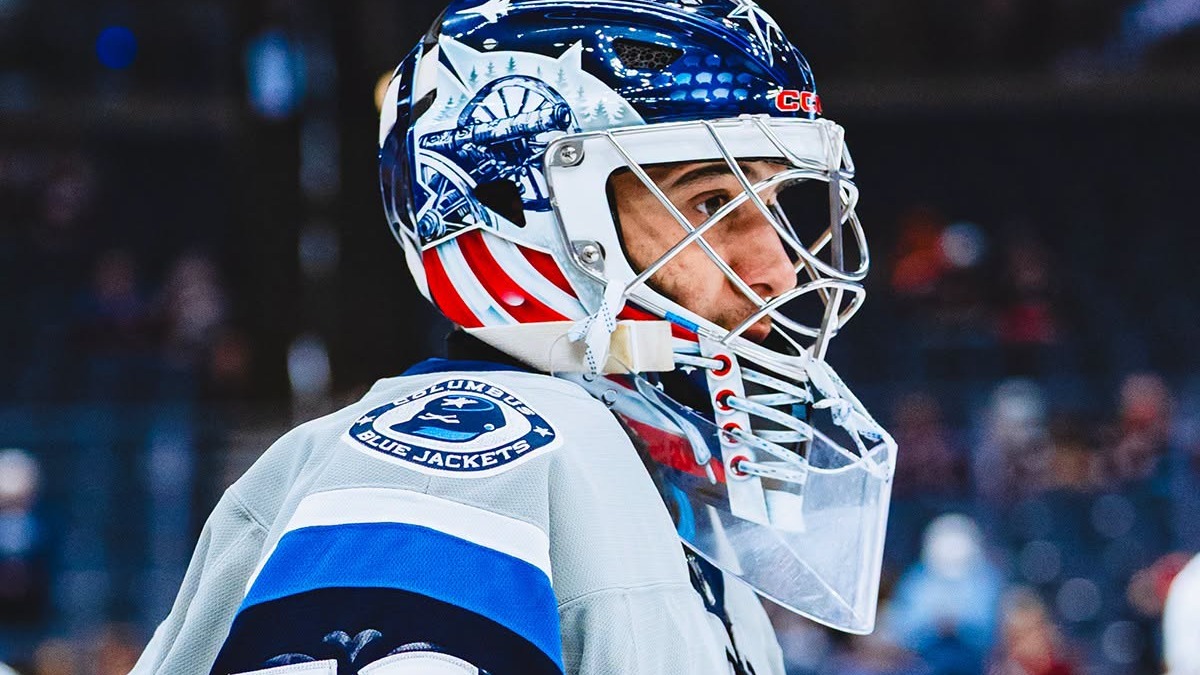
Columbus Blue Jackets: Union Army Coats Give Ohio’s Capital an Expansion Name
Columbus put more than one kind of civic identity on the table when it asked for names for its expansion team. Blue Jackets emerged from thousands of suggestions, and Justice was among the final possibilities. The organization announced the choice in November 1997, nearly three years before the team played its first NHL game.
The blue jackets were the coats worn by Union soldiers during the American Civil War. Ohio supplied a large number of Union troops, and Columbus had a connection to their uniforms and mobilization.
The club’s franchise timeline describes the name as a way to acknowledge that history in both the city and the state. A piece of clothing became shorthand for the people who wore it.
This was a case in which the naming committee had a more concrete local story than the short version of the name might suggest. There is a Shawnee leader known as Blue Jacket, but the team’s founding account points to the Civil War coats.
The plural matters. These were the jackets of a body of soldiers, and a hockey team could use that collective image directly.
The uniforms and branding found other ways to tie the idea back to Ohio. The club’s early marks made prominent use of stars, and the later crest wrapped the Ohio flag around a star.
The cannon used in the arena made the military reference audible. All of it began with a choice made in 1997 to reach into a part of Columbus history that could be represented with an ordinary garment and a colour.
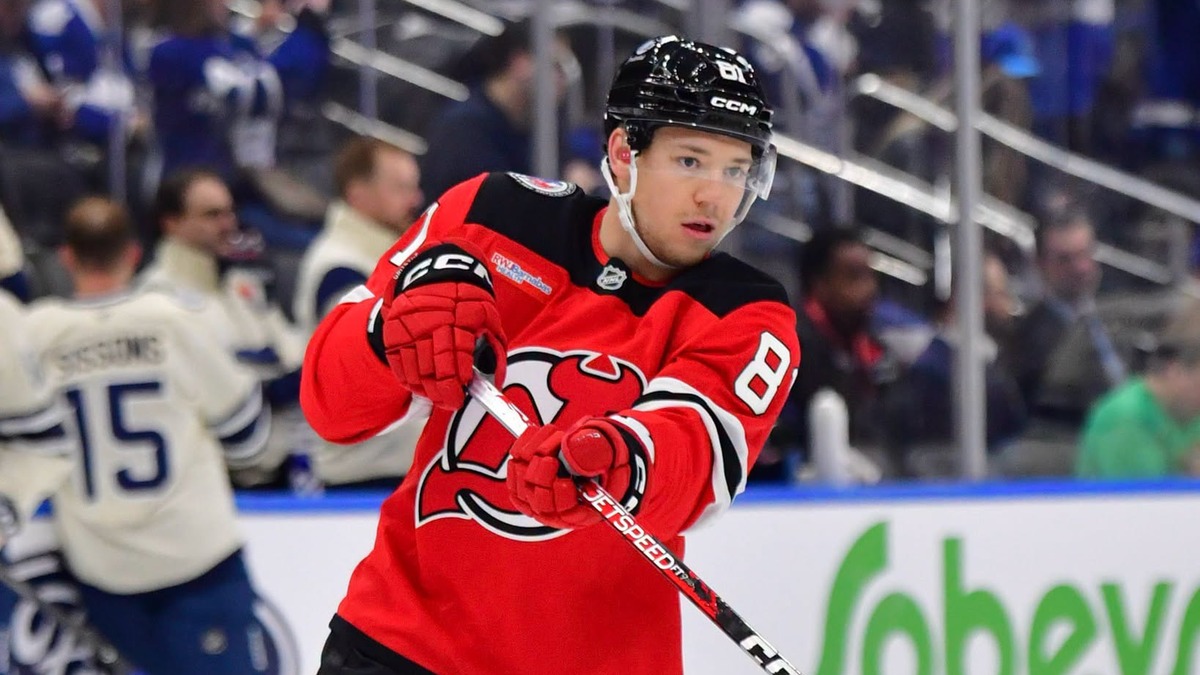
New Jersey Devils: A Pine Barrens Legend Wins the Naming Contest in 1982
A hockey team arrived from Colorado in 1982 and needed a name for a third home. The franchise had started as the Kansas City Scouts and then become the Colorado Rockies. When the group that moved it to New Jersey sought suggestions, the creature that emerged from the contest belonged to the new state.
The Jersey Devil is a figure from the Pine Barrens, where stories about an improbable winged creature have circulated in different forms for generations. The folklore had enough of a life of its own for people to recognise Devils without an explanation of which devil the club meant. A team anniversary account records the June 30 announcement and the alternative suggestions, which included names such as Meadowlanders and Blades.
The choice provoked some objection because of the religious associations of the word. The local creature was the basis for the team name, and the logo gave that distinction a small visual push. The joined N and J kept New Jersey readable, while horns and a pointed tail gave the otherwise simple letters a connection to the legend.
The team played its early seasons in East Rutherford, well north of the Pine Barrens. Choosing a story from a different part of the state made sense for a club representing New Jersey as a whole.
The Rockies name had come from the mountains around the team’s previous home. Devils came from an equally recognisable part of the new home’s geography, with a story people could repeat about what might live there.
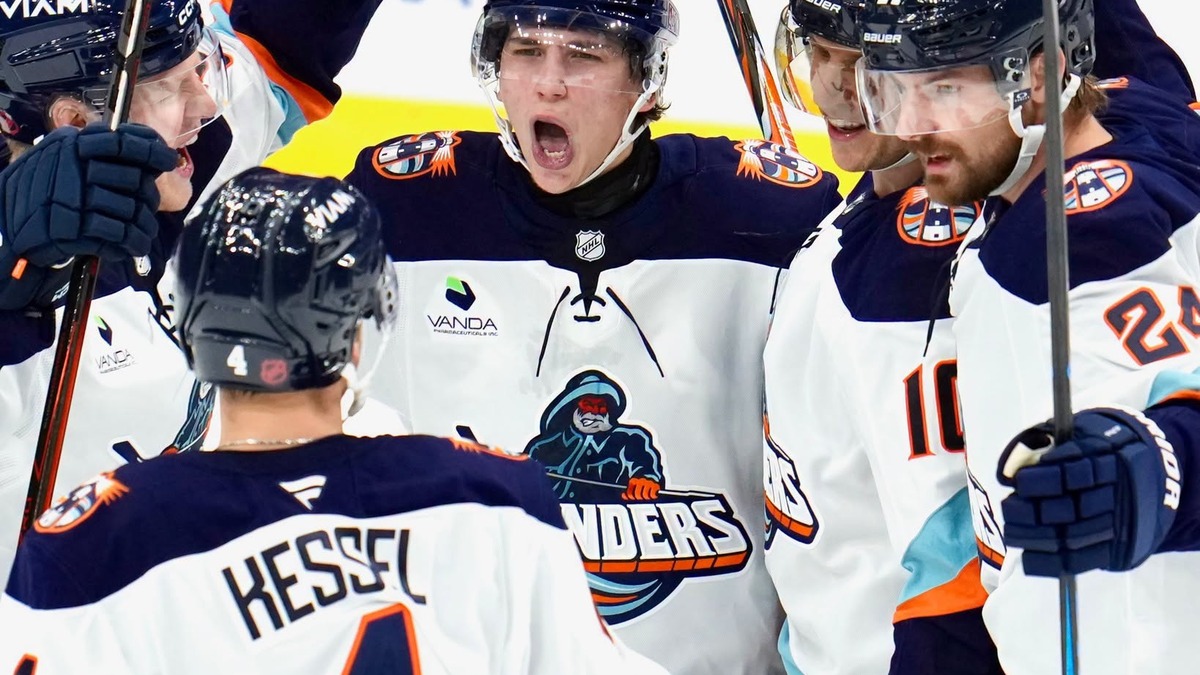
New York Islanders: Long Island Picks Its Own Name Over the Local Ducks
When the NHL put a team on Long Island in 1972, there was already a local hockey nickname people knew. The Long Island Ducks of the Eastern Hockey League had been playing since 1959, and some expected the NHL club to borrow their name. The new owners chose Islanders instead, a word that put the emphasis on whom the team represented.
Roy Boe led the group behind the franchise, which had its first home in the Nassau Coliseum in Uniondale. The club’s chronology traces the speed with which it went from being awarded in late 1971 to taking the ice the following autumn.
The record credits the choice to the franchise, and the reason is right there in the geography. New York was on the schedule, and Long Island was on the sweater.
The original mark spells out that relationship. A map of Long Island sits under the lettering, with a hockey stick worked into the Y of NY.
The full name leaves room for both identities at once. New York tells people across the league where to look, while Islanders draws a boundary around a much more specific part of it.
The team carried the word through changes in how it presented itself and through a period playing home games in Brooklyn. It eventually returned to a full-time home on Long Island. The name had always provided a more precise answer to the question of where the club belonged than New York could give on its own, and the map was there to make the answer visible from the beginning.
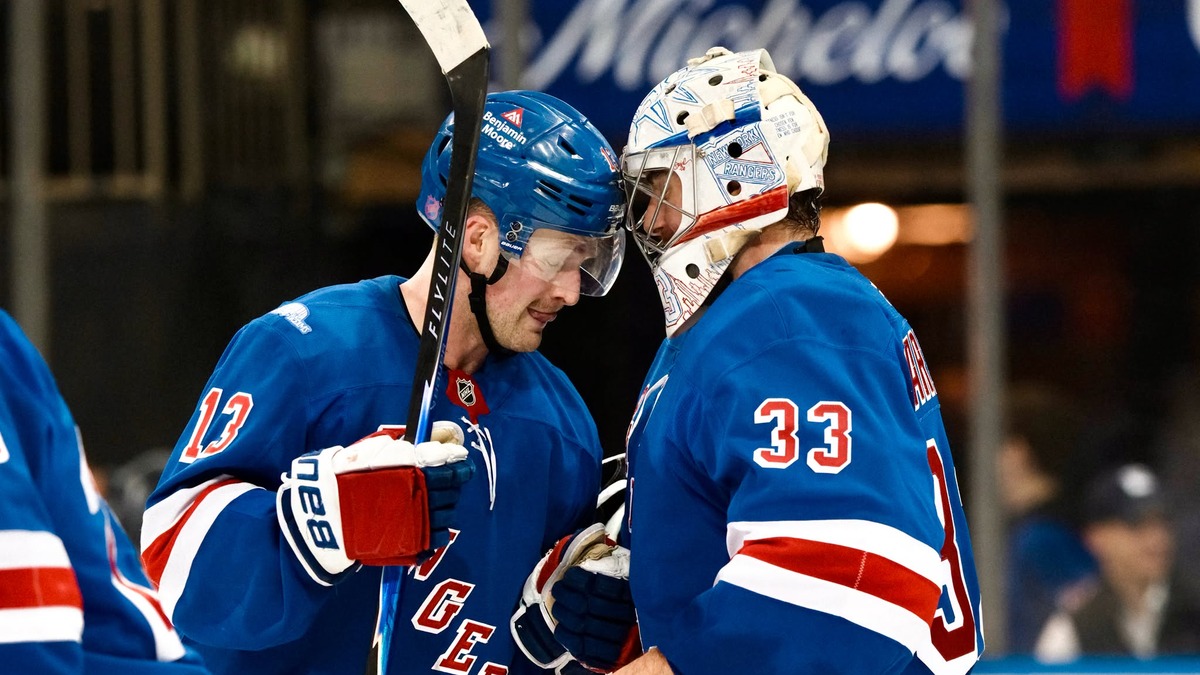
New York Rangers: A Newspaper Pun on Tex Rickard Becomes the Name
Before the Rangers took the ice in 1926, New York already had an NHL team at Madison Square Garden. The Americans had started there a year earlier.
Garden president George Lewis Rickard, a boxing promoter better known as Tex, then got a franchise of his own. The reporters covering the new club had the first go at giving it an identity.
Tex’s Rangers was a play on the Texas Rangers, the law-enforcement organization whose name was already widely known. The pun was effective enough that the Garden’s new hockey team became the Rangers. Rickard took a phrase that came from the way people referred to him and made its second half official.
The club’s account of its beginnings places that decision in the competition between two tenants of the same building. A reader of the sports pages needed a quick way to tell which New York club was which. The words Rangers and Americans could do that, and each club’s sweaters gave the distinction a visual form.
The diagonal lettering on the Rangers’ blue jersey did much of the early work of making the nickname recognisable. It is still possible to see the word there without knowing anything about Rickard’s life or the reporters who made the joke. The Tex in the original phrase explains why the name came into being.
The fact that the team kept only Rangers explains why it could eventually sound so thoroughly New York. A newspaper pun outlived both of the immediate circumstances that made it worth printing.
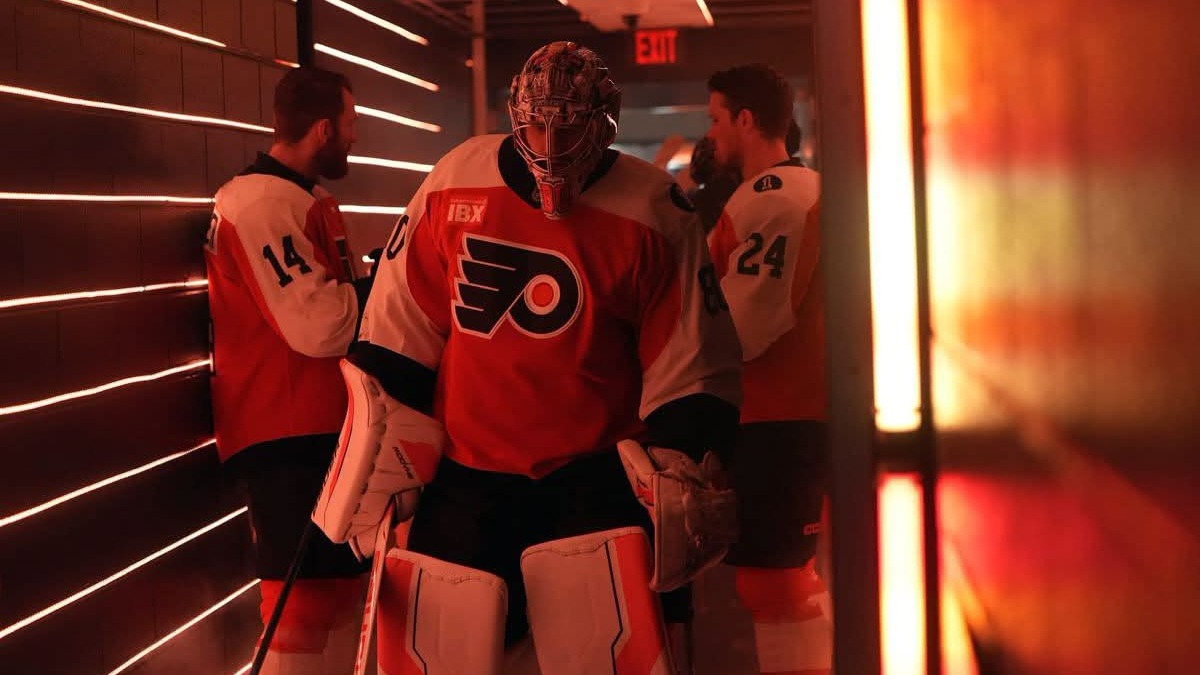
Philadelphia Flyers: The Owner’s Sister Suggested Speed After a Broadway Show
Philadelphia’s ownership group held a public contest in 1966, but one of the most consequential suggestions came from inside the family. Phyllis Snider, the sister of owner Ed Snider, proposed Flyers after a trip to see a Broadway show. It was a short word that caught the speed she associated with hockey and paired easily with Philadelphia.
The public had been given a separate chance to suggest names. The organizers offered a colour television and ticket prizes, and nine-year-old Alec Stockard of Narberth, Pennsylvania, won the drawing among submissions that matched the choice. The NHL’s account of the contest distinguishes the child who won from the person who first persuaded the ownership group that Flyers would work.
That distinction is easy to lose once a contest becomes part of a franchise’s origin story. An entrant could independently see what Phyllis had seen.
Flyers worked as an image of skaters moving fast and gave the city’s name an easy rhythm. It could also suggest flight without tying Philadelphia to a particular bird, pilot or aircraft.
The crest picked up that freedom. A P with a wing and an orange centre could be read as a letter, a piece of motion and a puck all at once.
When the Flyers started play in 1967, their name sounded like something they were supposed to do. The team would later acquire a reputation for a different set of qualities, but the word it put on its first sweaters still carried Phyllis Snider’s original association with speed.
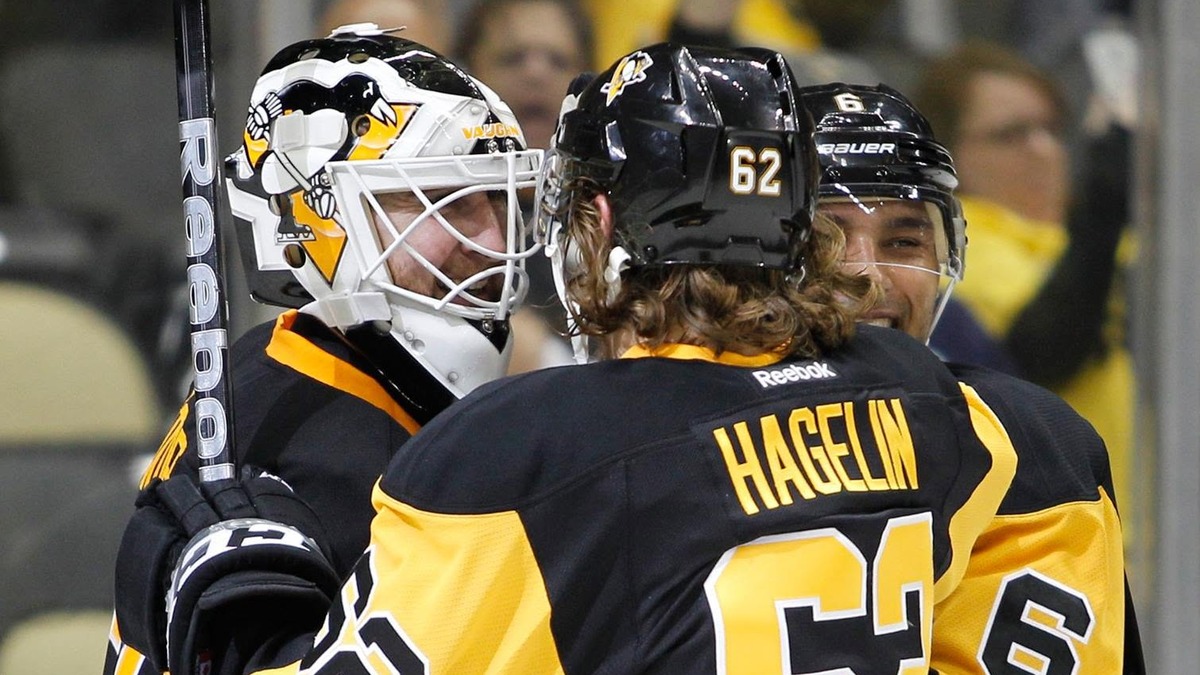
Pittsburgh Penguins: The Igloo-Shaped Arena Inspires a Penguin on Skates
The dome came before the bird. Pittsburgh’s Civic Arena was already nicknamed the Igloo when the NHL granted the city an expansion franchise in 1966.
Carol McGregor, whose then husband Jack helped bring the team to town, saw that a penguin belonged in the same picture. She also had a name that sounded good with Pittsburgh.
The team ran a contest, and hundreds of entrants suggested Penguins. Emily Roberts of Belle Vernon, Pennsylvania, was recognised as the winner.
The account of Jack McGregor’s role connects Carol to the idea, while the contest explains why Roberts appears in the club’s naming history. People came to the same word through two different routes.
The first crest gave the bird skates and a hockey stick. The triangle behind it supplied another piece of Pittsburgh geography, recalling the Golden Triangle downtown.
The team had an unusual advantage in finding a mascot that could be drawn playing the sport without losing the thing that made the joke work. A penguin on skates looked like it belonged on the ice.
It was an especially literal piece of visual shorthand for a team whose name began with its rink.
The Igloo has since gone, and the Penguins play in another arena. That makes the name an example of what can survive after the object that inspired it disappears.
You can know the team for years before anyone tells you about the dome. Once you hear the story, the two parts fit again, and a building that no longer hosts hockey still gives the team a reason to be called what it is.
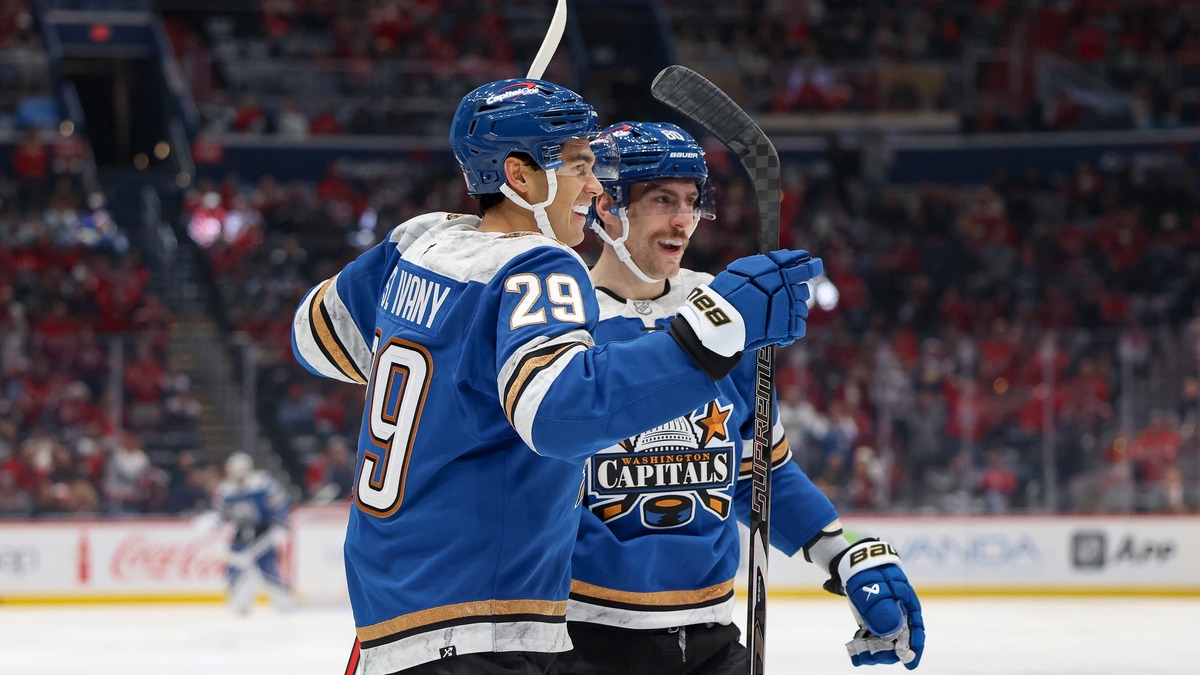
Washington Capitals: Abe Pollin Picks Capitals Over the More Popular Comets
Abe Pollin’s hockey team had a home before it had a name. The building was already called the Capital Centre when the owner invited suggestions for his NHL expansion team in January 1974.
More than 12,000 submissions came in. Fans proposed everything from Comets and Pandas to a handful of choices that would have looked wonderfully strange on a hockey jersey.
Pollin and his wife Irene went over the names. Capitals ultimately won their approval, although Comets had drawn more submissions.
At the unveiling Pollin pulled the selected name from an envelope, and a drawing determined the winner from the entries that suggested it. The Capitals’ reconstruction of the contest gives Irene a place in the decision that can disappear when it is reduced to one owner and one fan poll.
Capitals referred to the seat of the United States government. There was some precedent in local sports, including earlier basketball teams using Capitals or the shortened Capitols, and the name suited the arena already in place. The new hockey club could use the geographical reference even though the Capital Centre was in suburban Maryland.
Washington began play in the 1974–75 season with a name that would remain easy to explain when the club later moved into the District itself. The poll revealed that fans were willing to imagine all sorts of teams. Pollin chose one they could place immediately, and the detail that he discussed the final possibilities with Irene makes the decision feel less inevitable than it looks from the far side of fifty years.
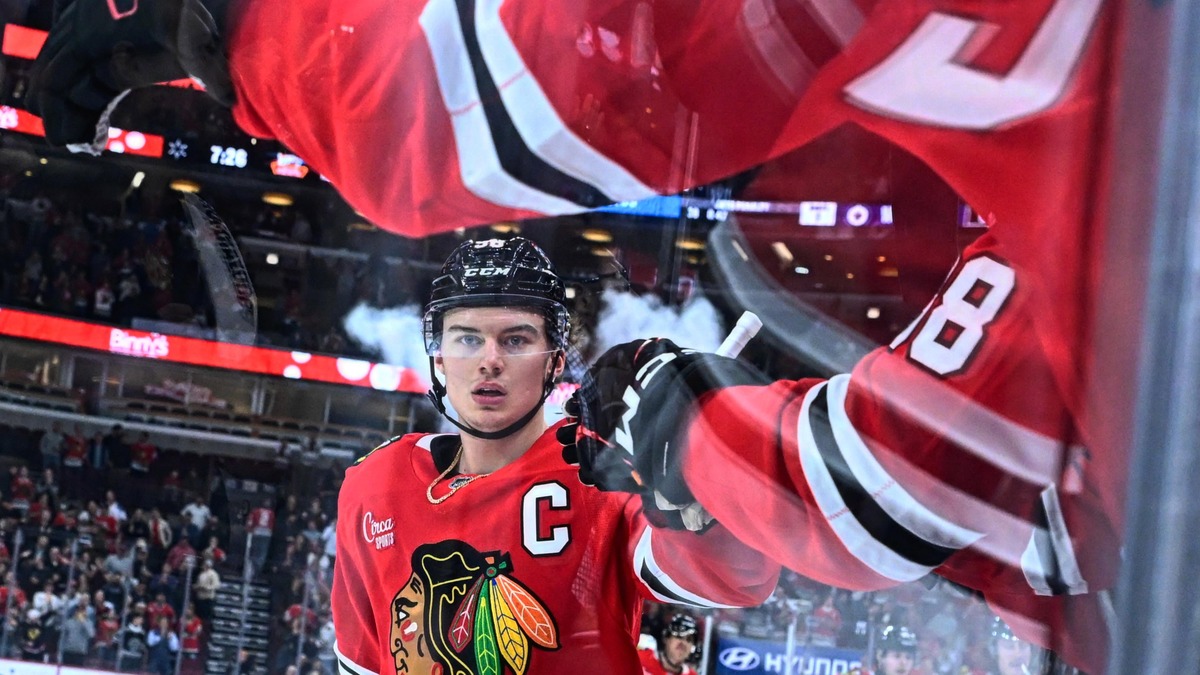
Chicago Blackhawks: A World War I Division Named for a Sauk Leader
Frederic McLaughlin had a name to bring home from the First World War. The Chicago businessman served in the 86th Infantry Division, known as the Blackhawk Division, and chose Black Hawks for the NHL club he founded in 1926. His wartime experience provided the immediate reference for the team name.
The division’s name, in turn, drew on Black Hawk, the Sauk leader who resisted the removal of his people from their homelands. The history therefore has two levels. McLaughlin’s choice honoured the military formation he had served with, and the formation had borrowed its identity from an Indigenous leader whose life belonged to a different century and a very different conflict.
The United States Hockey Hall of Fame’s McLaughlin profile connects him to the division’s 333rd Machine Gun Battalion. Chicago used the two-word Black Hawks for decades.
In 1986 the team began using Blackhawks as one word, following the form recorded in its founding documents. That change can make old photographs and newspaper clippings look as though they refer to a slightly different team.
The name is one of the ways the early American NHL clubs carried private associations into public life. McLaughlin’s former division supplied a word that already meant something to him before there was a Chicago franchise to put it on.
It also supplied a history beyond him. To understand the choice, you have to follow the name back through the veteran who brought it to hockey and then through the division to the person whose name it had taken.
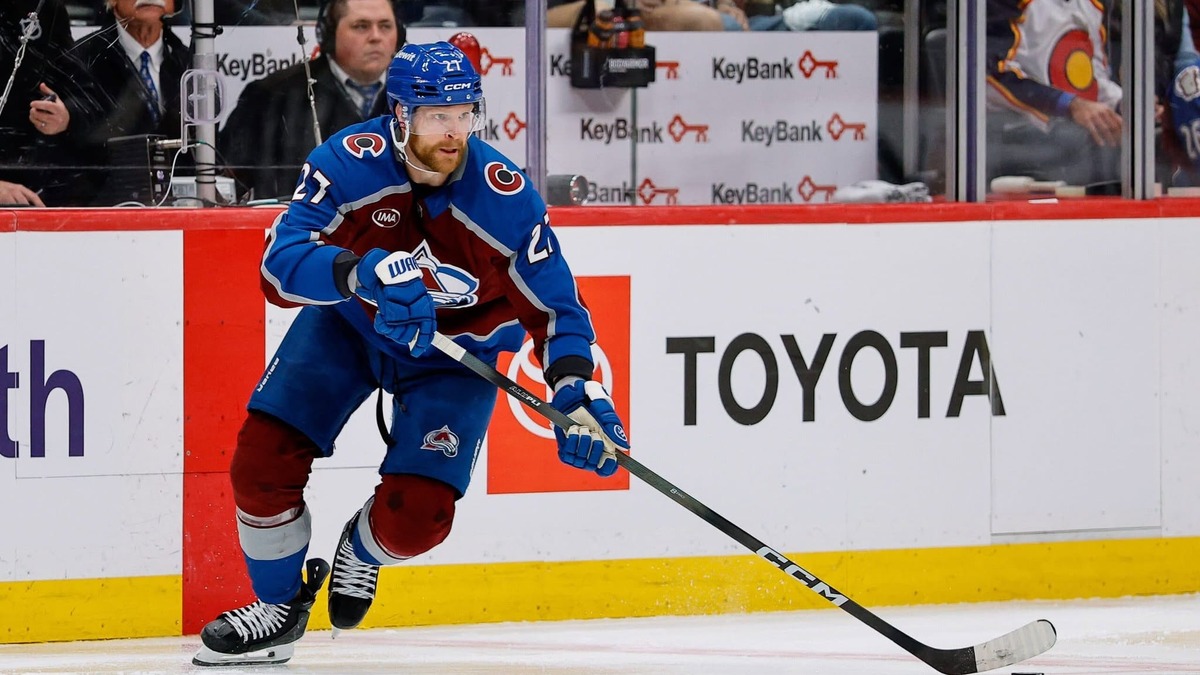
Colorado Avalanche: Ex-Nordiques Trade Rocky Mountain Extreme for a Mountain Event
When the Quebec Nordiques moved to Denver in 1995, the obvious old hockey name was already in use. The previous Denver franchise had been called the Colorado Rockies before it moved east and became the New Jersey Devils. By the time the Nordiques arrived, the Rockies were a Major League Baseball team.
The new ownership group considered Rocky Mountain Extreme, which was reported before it was formally adopted and drew an unfavourable reaction. The next round offered a field of possibilities, including Storm, Rapids and Wranglers. Avalanche emerged from the process with a direct link to the mountains that had made Rockies such an obvious fit in the first place.
The NHL’s naming history records the public response and the fan input that helped point ownership toward Avalanche. The exact wording mattered.
Colorado Avalanche gave the club a state name and an image of movement from the same terrain. It did so in fewer syllables than the proposed Rocky Mountain Extreme and sounded at home beside the other names in the standings.
The first crest drew a snowy path down a capital A, making the picture legible even to someone who had never been to Colorado. It also gave the team a way to be recognisable on sight without a mascot character.
The Nordiques name had told you where a team in Quebec sat on a map. Its replacement did a related thing, using a mountain event to give the relocated club a new home in a word and a picture.
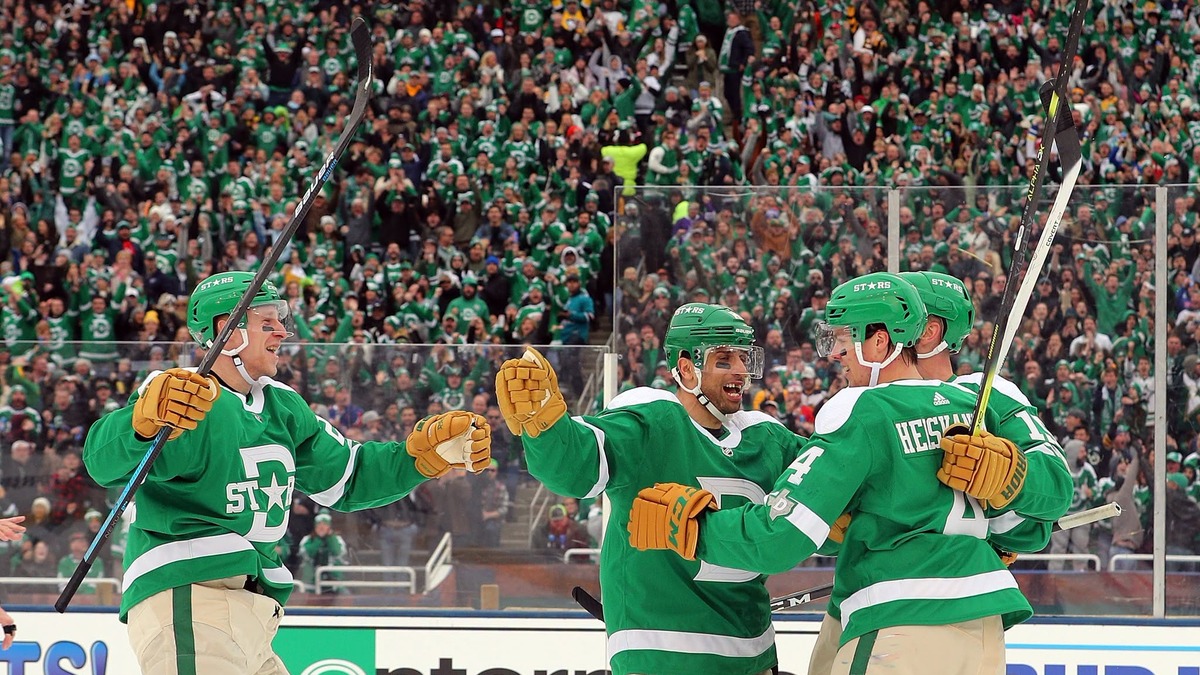
Dallas Stars: North Comes Off and the Minnesota Star Stays in Texas
The Dallas name makes most sense if you read its first two words backwards in time. In 1967, Minnesota got an expansion team and chose North Stars through a naming contest.
The state motto, L’Étoile du Nord, means the star of the north. A club in the Upper Midwest could put that geographical idea into two words and one easily drawn shape.
When owner Norm Green moved the franchise to Dallas in 1993, North came off the front and Stars stayed. The club had already been putting increasing emphasis on the word Stars visually in its final Minnesota years. In Texas, the shorter name acquired another ready-made association, with the Lone Star State.
The NHL’s Dallas franchise history follows the team through the relocation. The decision kept enough of the Minnesota identity for the hockey club to be recognisable while allowing the name to make independent sense in the new city. An old north-facing compass point became a star the new home could read as its own.
There is a subtle difference between a relocated name that loses its local meaning and one that finds another. Stars had a second civic reference waiting for it in Dallas.
The green that carried over and the star that remained in the mark did some of the work of continuity, while Dallas completed the new name. Minnesota eventually received a new NHL team, and by then the old word had already travelled too far to be reclaimed with the simple addition of North.
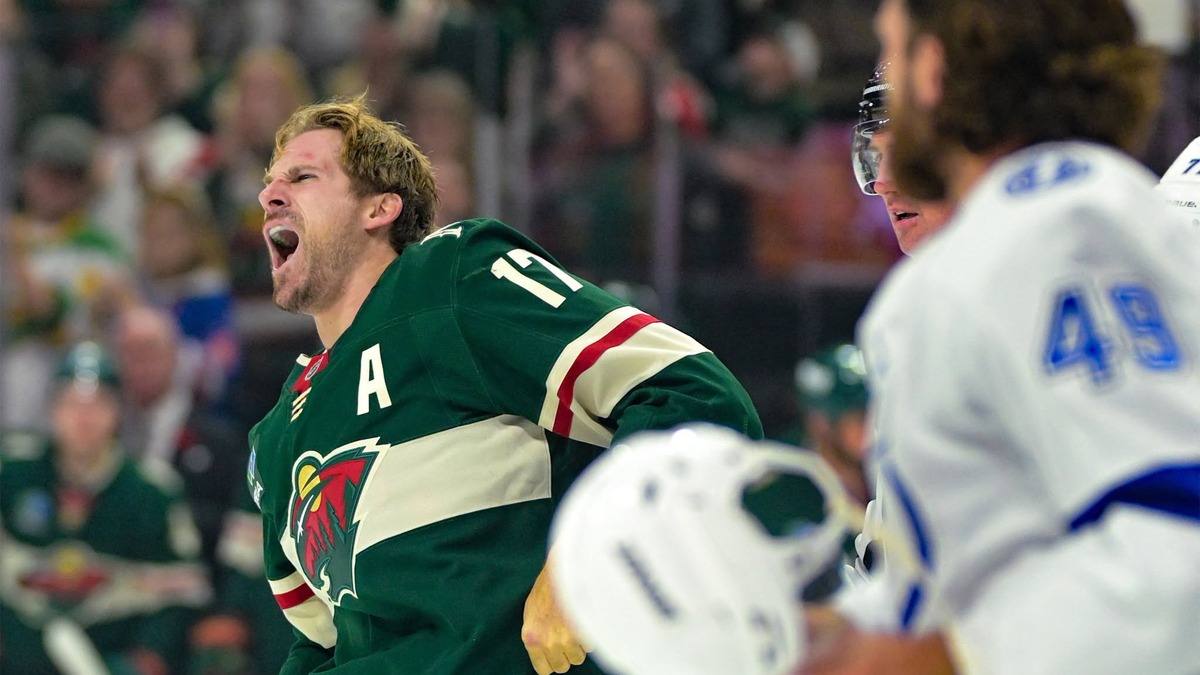
Minnesota Wild: Wilderness Replaces North Stars in a Fresh Start for Minnesota
Minnesota had spent four years without an NHL team when it was awarded an expansion franchise in 1997. A great many people knew exactly what they would have called it. North Stars was still associated with the team that had moved to Dallas, and the new organization had to choose a name of its own.
Fans supplied more than 13,000 entries. The field included Blue Ox, Freeze, Northern Lights, Voyageurs and White Bears.
Management chose Wild, drawing on the importance of outdoor life and the landscape in Minnesota. The new word gave the club room to represent a whole region of woods and water without having to put a single named animal on the roster.
That breadth became a practical question when the design went onto a jersey. Graphic artist Stephen O’Laughlin’s account of the crest describes how the outline of an animal frames a wilderness scene.
A river, trees and a star can all be found within it. The star that serves as the animal’s eye gives the departed North Stars a discreet place in the new identity.
The team unveiled the name well ahead of its first season in 2000. By then it had a name with a flexible meaning and a crest that gave that meaning an unmistakably local shape.
The naming process gave Minnesota a way to start again while the design remembered what had been there before. You can see the old team in a small detail without mistaking the word Wild for a restoration of the old name.
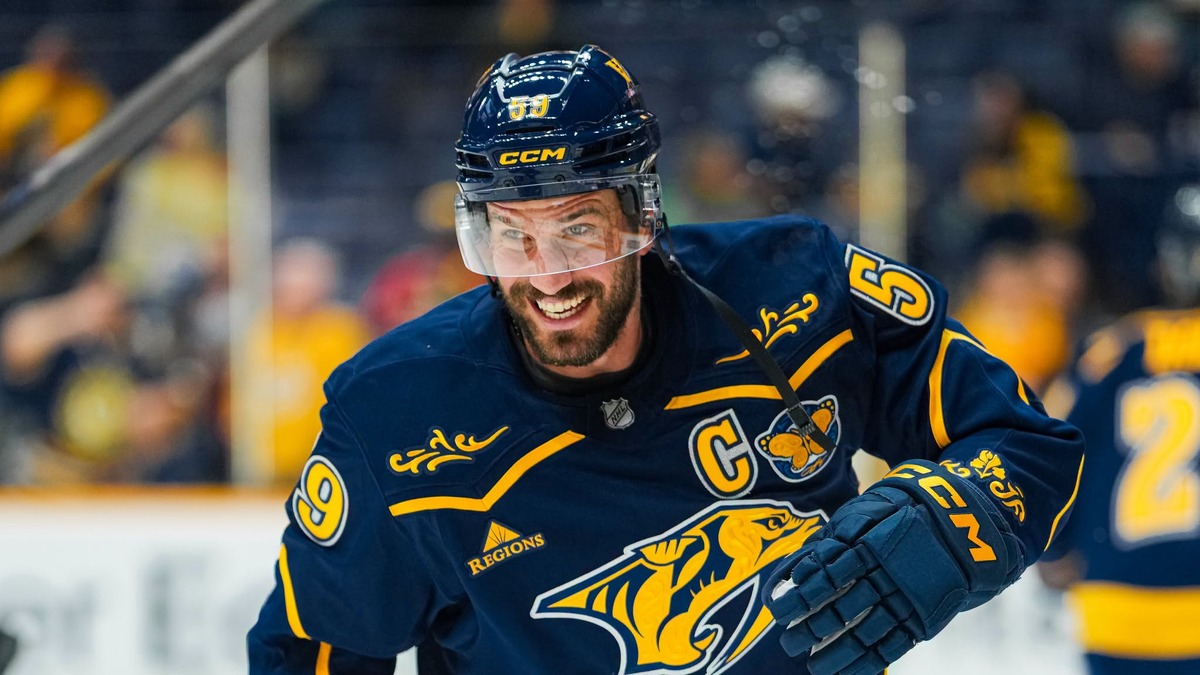
Nashville Predators: A Sabre-Toothed Cat Fossil Came Before the Team Name
In Nashville, the picture came before the name. Construction workers digging at the site of the First American National Bank building in 1971 uncovered the remains of a sabre-toothed cat. More than two decades later, the people bringing NHL hockey to the city found an animal for their new club in that discovery.
Craig Leipold and Jack Diller unveiled the sabre-toothed cat logo in 1997 at the building associated with the find. The team then asked the public what word should go with it. Predators won the fan vote and became official in November, with Leipold and Diller announcing the decision at the Wildhorse Saloon.
The Predators’ franchise timeline preserves the order of events. There was a local fossil, then a team mark, then a name for the animal people had already seen.
The order matters because Predators on its own could refer to any number of hunters. Nashville’s club could be broad in the word it used and unusually exact about the face it put on its sweaters.
The club eventually shortened the name in everyday use to Preds, while the long tooth on the crest continued to tell the story in a different medium. The original bones were found beneath a downtown construction site, long before anyone had to decide what a Nashville hockey team ought to look like.
A name chosen by fans finished an idea the city had dug up by accident. That is also why the saber-toothed face belongs to this particular Predators club in a way a generic fierce animal would have struggled to achieve.
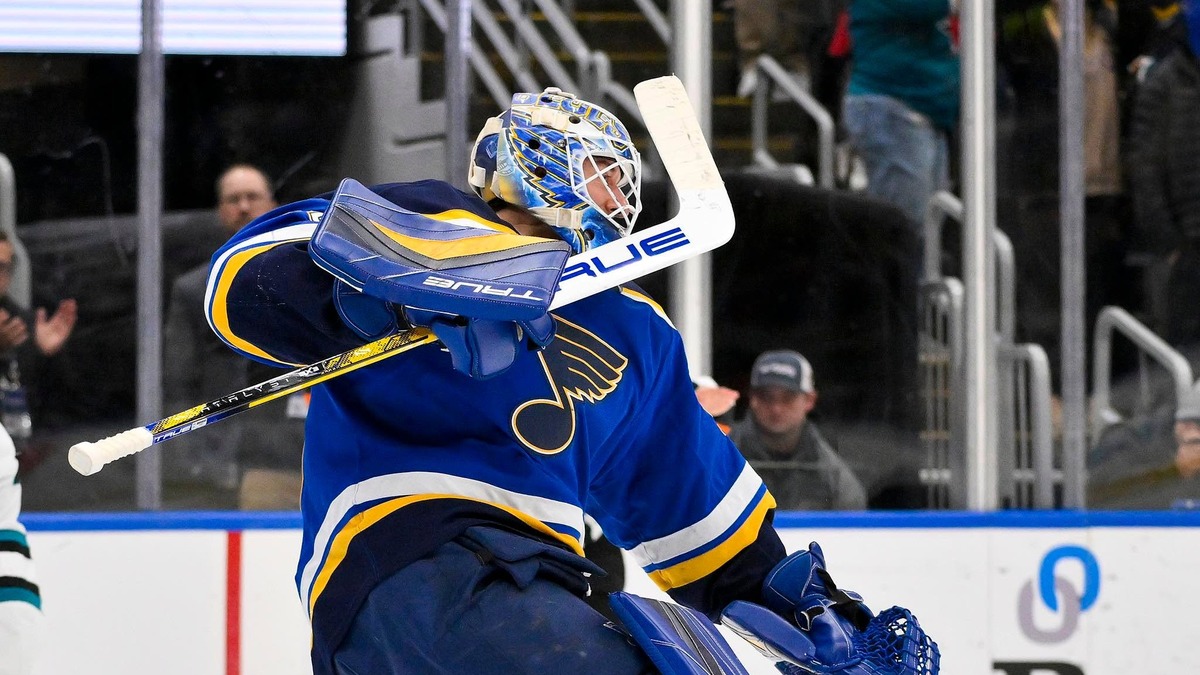
St. Louis Blues: Owner Sid Salomon Takes the Name From W.C. Handy’s Song
Sid Salomon Jr. already had a piece of music in mind when St. Louis got its expansion team. W.C. Handy’s St. Louis Blues, published in 1914, gave the owner a phrase that already joined the city to a musical tradition. When the team began play in 1967, the phrase went straight from the title of the song to the name in the standings.
Salomon liked the sense that music was part of everyday St. Louis life. The Blues’ franchise guide preserves his explanation for choosing the title.
Handy had made the city part of a song people could perform far away from it. Salomon took those words back to the city and used them for a group of people playing a different kind of engagement.
The winged musical note on the jersey follows directly from that choice. It gives St. Louis a symbol any musician can recognise and a shape that can move convincingly across ice. Blue also happens to work as a colour, so the team could take a name from a song and make it visible without having to show a portrait of Handy or quote the music.
Several of the NHL’s 1967 expansion teams used a public contest to get to an animal or an action. St. Louis had a source that had already made its way into the world.
The public could know the song before there was a hockey team, and a fan could learn the team name first and discover the music later. The words work in both directions.
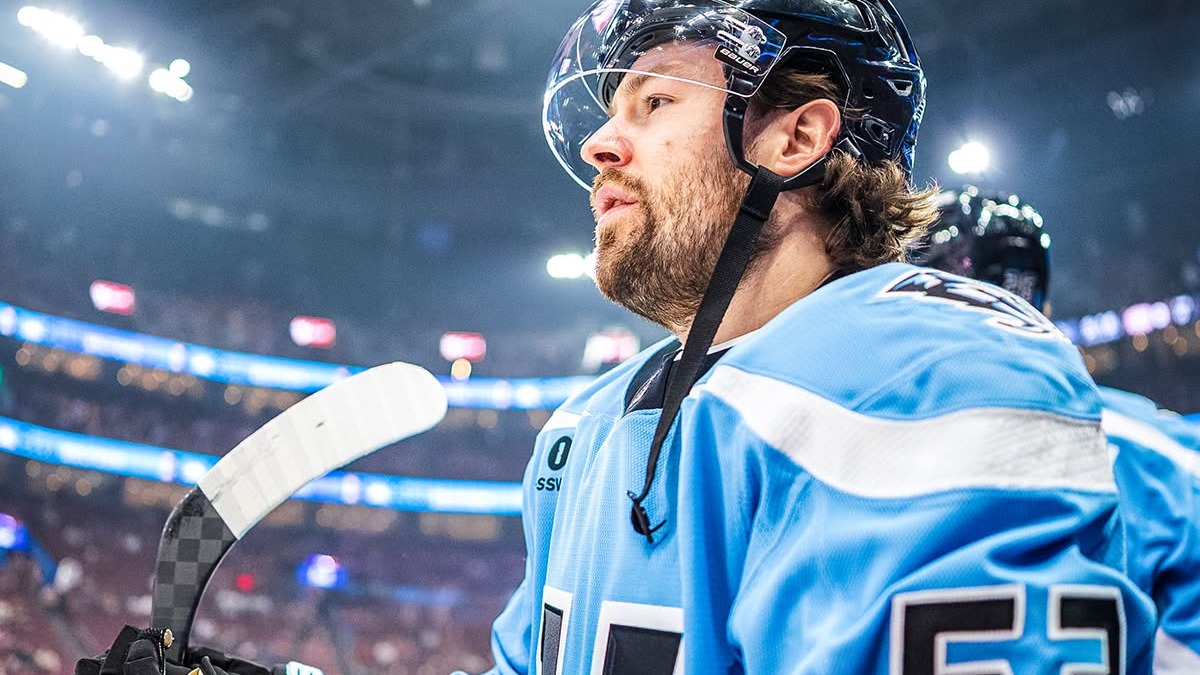
Utah Mammoth: Fans Cast 850,000 Votes to Replace Utah Hockey Club
Utah spent its first NHL season introducing itself with a temporary name. Utah Hockey Club worked on a scoreboard and a sweater while the ownership group led by Ryan and Ashley Smith gave fans time to choose an identity. The process took four rounds of surveys and generated more than 850,000 votes across the rounds.
Mammoth beat Utah Hockey Club and Utah Outlaws in the final round. The team announced the result on May 7, 2025, explaining that mammoths had lived in what is now Utah during the last Ice Age. That made the creature both a strong visual subject and a part of the state’s natural history.
The team chose the singular Mammoth. It also found a way to include several pieces of modern Utah in the head of the animal.
The league’s announcement identifies the Wasatch Mountains, a contour of the state and the U suggested by the tusks in the primary mark. The pale blue and other elements of the inaugural identity helped the new jerseys look related to the ones that came before.
An earlier round had included Yeti, and trademark complications helped take it out of contention. Mammoth stayed in the process and eventually made it possible to use a creature with a real connection to the landscape.
The team had begun as a club named for the place and the sport while the public considered its options. The decision added a single word with a more particular story, one that put a much older Utah on the front of a very new hockey jersey.

Winnipeg Jets: Ben Hatskin’s WHA Name Returns Home After Fifteen Years Away
Winnipeg’s original major-league Jets were Ben Hatskin’s team in the World Hockey Association. The usual account ties Hatskin’s choice to his admiration for the NFL’s New York Jets. Winnipeg also has a long aviation and military connection, so the name could acquire a local reading even if its immediate inspiration came from another league.
The WHA team first played in 1972. Hatskin signed Bobby Hull, the Golden Jet, and the nickname made his new sweater feel almost prearranged.
The Winnipeg civic profile of Hatskin recalls the oversized cheque presented to Hull in the city. By the time the club joined the NHL in 1979, Winnipeg had years of its own associations with the word.
The original Jets moved to Arizona in 1996. When True North Sports + Entertainment brought the Atlanta Thrashers to Winnipeg in 2011, it brought the Jets name back. The newer crest made a more explicit connection to Canadian military aviation by placing a jet against a maple leaf in a roundel.
That image gave the revived word something distinctly Canadian to mean alongside its reported American inspiration.
For years the two NHL eras shared the name while keeping separate franchise statistics. In September 2026, the NHL and the club announced that the original Winnipeg years would be included in the Jets’ statistical history alongside the Atlanta and modern Winnipeg years.
The name had already made the trip home a decade and a half earlier. The new recordkeeping followed a connection that people in Winnipeg had been making every time they used the word Jets.
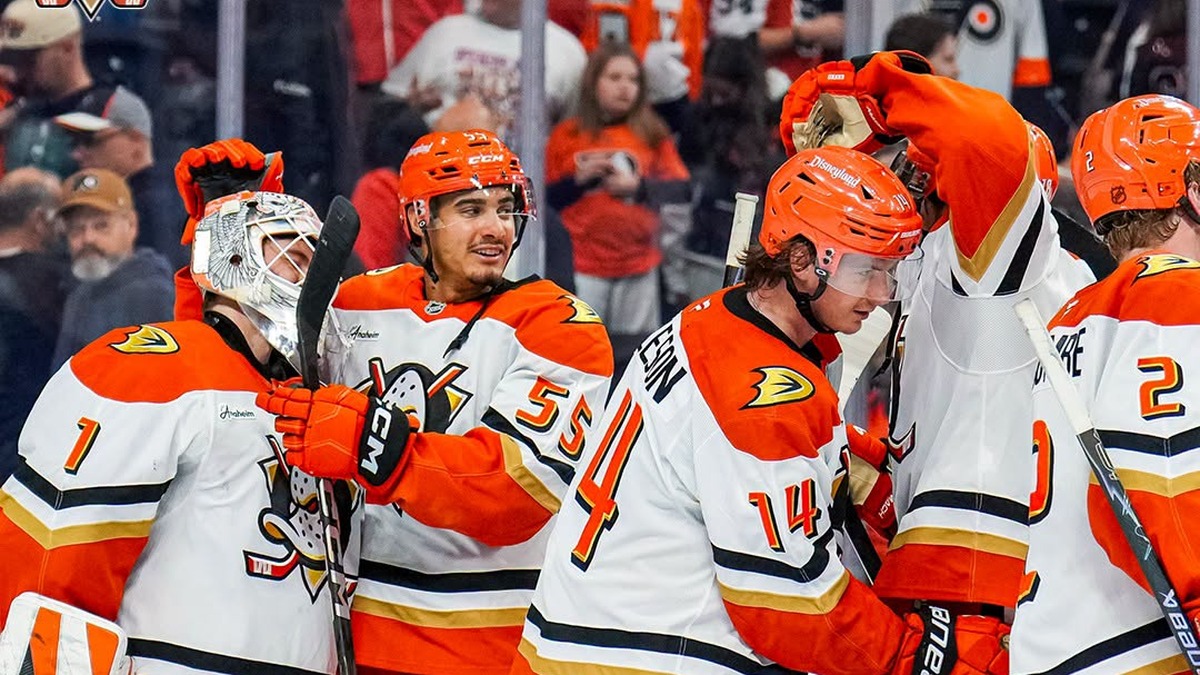
Anaheim Ducks: Disney’s Mighty Ducks Movie Became an NHL Team in 1993
The first Mighty Ducks played in a film. Disney released The Mighty Ducks in 1992, with Emilio Estevez playing a lawyer assigned to coach a youth hockey team.
Later that year Disney was awarded an NHL expansion franchise in Southern California. It brought the film’s name with it and sent the Mighty Ducks of Anaheim onto the ice in 1993.
The full name carried the sound of a film title even when it appeared in the standings. The duck-shaped goalie mask on the jerseys made the connection even clearer. The people naming Anaheim had something NHL expansion clubs rarely had access to, a hockey identity that the public had already watched being introduced in a different medium.
The Walt Disney Company sold the club to Henry and Susan Samueli in 2005. The new owners shortened the name to Anaheim Ducks for 2006, moving the city to the front and leaving Mighty behind. That gave the club the more usual structure of city followed by team name, with the duck carrying enough of the old connection for people to recognise where the word had come from.
The club’s later account of its logo follows the mask as it returns to prominence in a brighter orange associated with Orange County. The film supplied a word and an outline the club could use from the first season.
Anaheim then had enough hockey history of its own to keep the word while changing what it looked like. The Ducks name has spent longer in the NHL than it did waiting for a team in the movies.
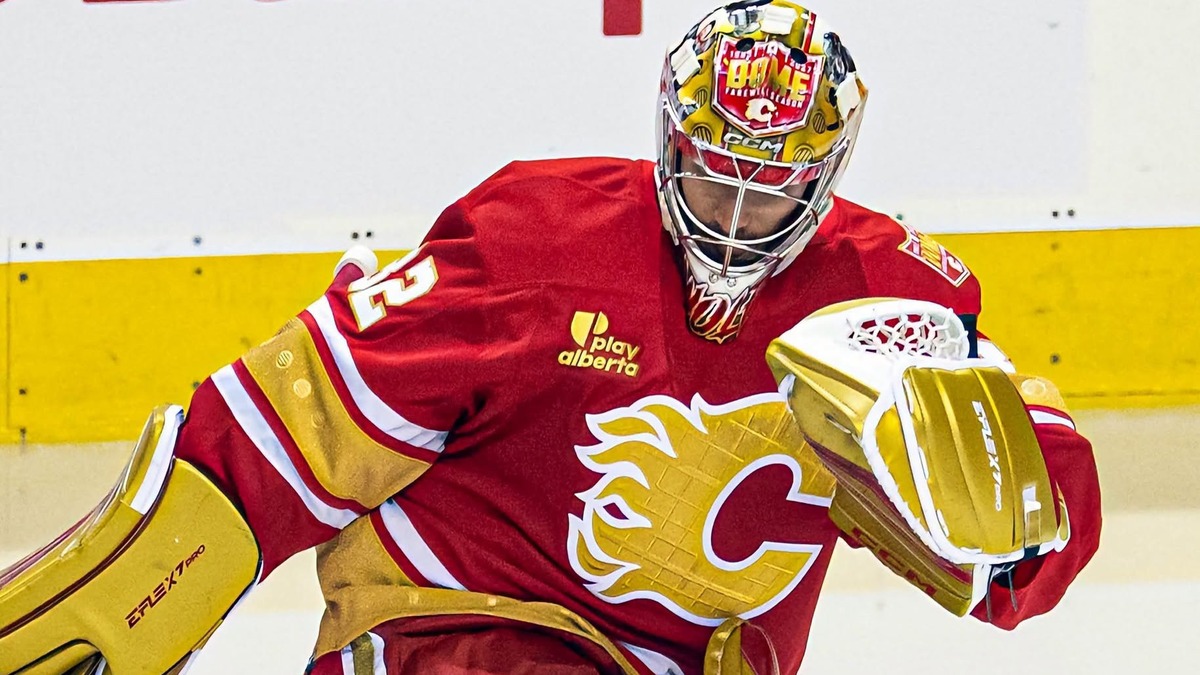
Calgary Flames: Atlanta’s Civil War Fire Name Survives the Move to Alberta
Calgary inherited the Flames from Atlanta, where owner Tom Cousins chose the word for a new team that began play in 1972. The name recalled the burning of Atlanta during the American Civil War.
The club solicited public suggestions, and Flames was among the entries. The NHL’s naming history credits Cousins with making the decision.
The first logo was a flaming A. The A located the club in Atlanta, and the flames gave the letter a connection to a specific event in the city’s past.
It was the sort of name that might have seemed tied to its first home for good. Then a group headed by Nelson Skalbania bought the team and moved it to Alberta in 1980.
The new owners considered suggestions in Calgary before deciding to keep Flames. The letter changed from A to C, and the shape of the old mark survived in a new form.
The image could find a different association in a province known for oil and gas, even though its documented origin remained in Georgia. Keeping it also meant the people who already followed the franchise could recognise it immediately.
Calgary thus has two naming decisions to account for. The first was an Atlanta owner’s choice to refer to a moment in that city’s history.
The second was a Calgary ownership group’s choice to carry the name across a border and give it a new place to belong. One word did both jobs with a change to a single letter on the jersey.
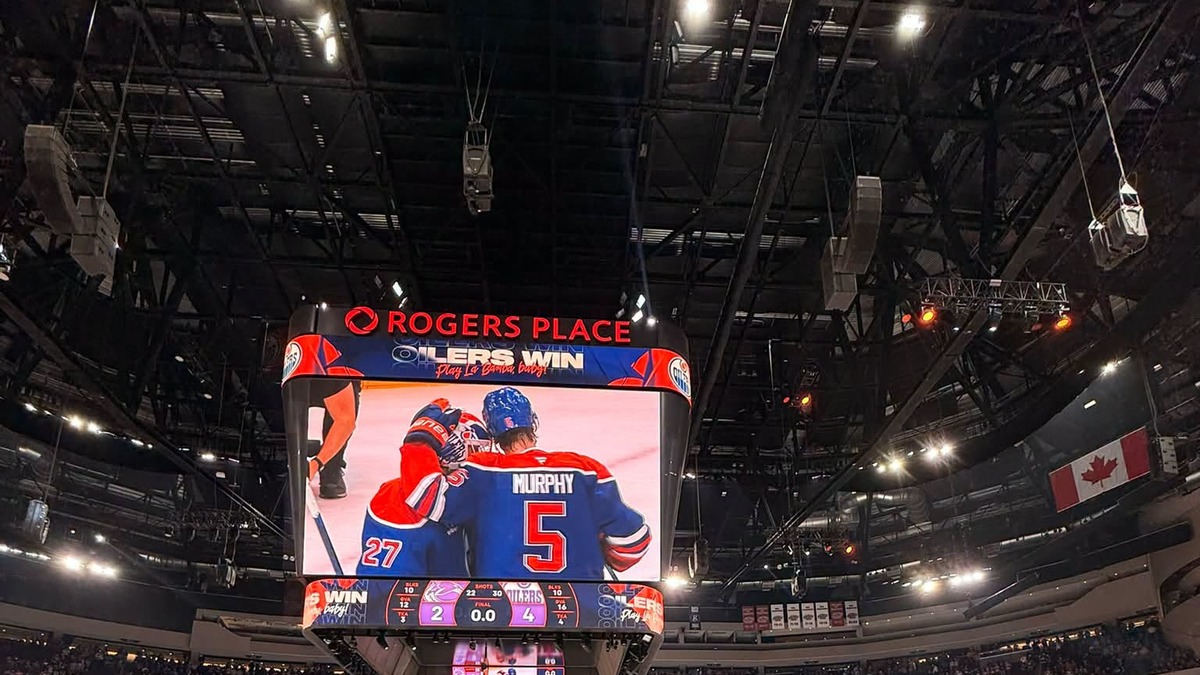
Edmonton Oilers: Bill Hunter Borrows His Junior Team’s Nickname for the WHA
Bill Hunter started with the province. His new World Hockey Association team took the ice in 1972 as the Alberta Oilers. Calgary had been part of the early plan for WHA hockey in the province, but the Oilers played their home schedule in Edmonton and took the city’s name for their second season.
The important word in both versions was Oilers. Hunter had been associated with Edmonton’s junior Oil Kings, for whom Oilers was already used as a nickname.
It was also an immediately recognisable reference to Alberta’s oil industry. The Oilers’ brand history records Hunter’s own recollection that the area was behind his choice.
That gave the club something unusually practical for a new league. The name sounded like a team people in Edmonton might already have heard of, and the oil drop in the crest let the idea travel even where the junior club was unfamiliar.
The word also had a more human sound than the name of the product alone. Oilers could mean people doing something, which made it easy to use for a group of players.
Edmonton kept the identity when it moved from the WHA to the NHL in 1979. By then both words had found their permanent places.
Edmonton identified the city that had actually supplied the team’s home, and Oilers reached out to a wider regional economy without losing the connection to Hunter’s earlier hockey work. The name had acquired two histories in seven years, and neither required another change when the Oilers entered the NHL.
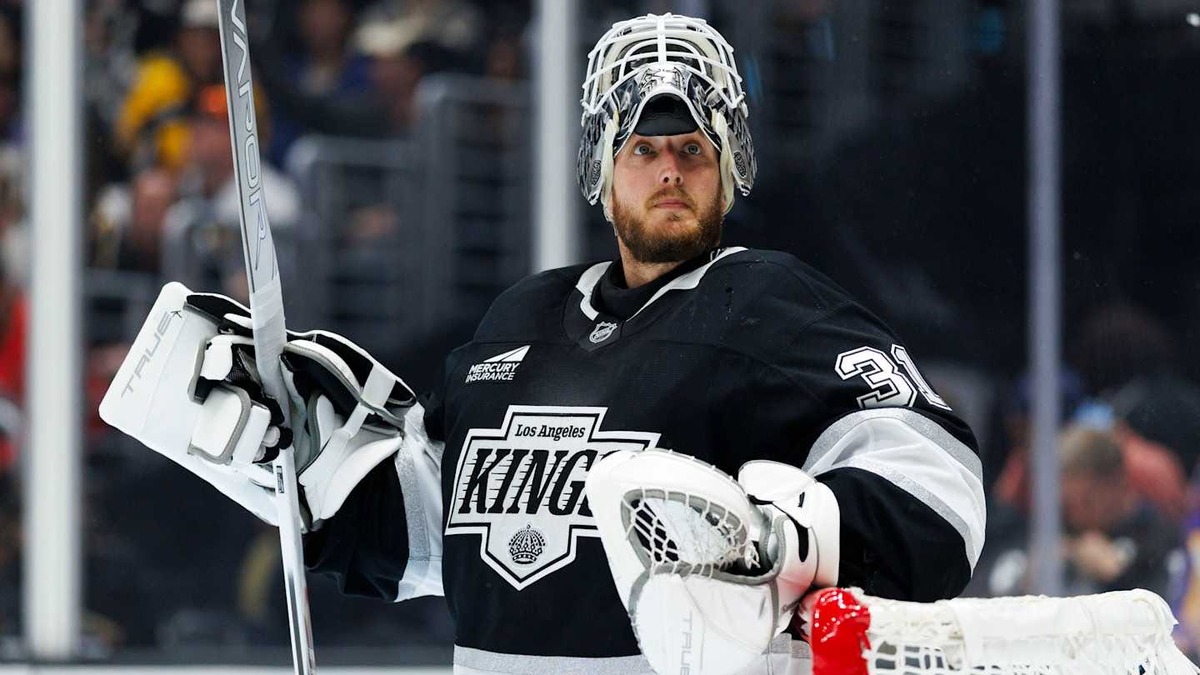
Los Angeles Kings: Jack Kent Cooke Wanted a Name That Signalled Leadership and Status
Jack Kent Cooke had thousands of suggestions for his new Los Angeles hockey franchise in 1966. The Canadian-born owner had invited Southern California residents to propose a name, and the team eventually received more than 7,000 possibilities. Cooke chose Kings because he wanted a name that suggested leadership and standing in hockey.
There was a small delay between choosing the word and being able to tell everybody. The Kings’ account of the contest recalls Cooke citing possible copyright issues when an announcement failed to arrive on schedule. The eventual announcement, on May 27, put a crown at the centre of the team’s identity more than a year before its first NHL season.
Cooke already owned the Los Angeles Lakers. Purple and gold suited the royal theme he wanted for his hockey club and also gave the two teams a family resemblance. The hockey name would later survive a move to a black-and-silver palette, with the crown available whenever the club wanted to give the word a literal form again.
The original decision makes more sense alongside the range of choices Cooke had in front of him. Los Angeles could have had a name drawn from its coast, its film business or some image already attached to Southern California.
Cooke chose a claim about how he wanted a new team to carry itself. The full Los Angeles Kings name put the city beside that ambition, leaving later players and designers to find ways to make an old image of rank belong on a hockey sweater.
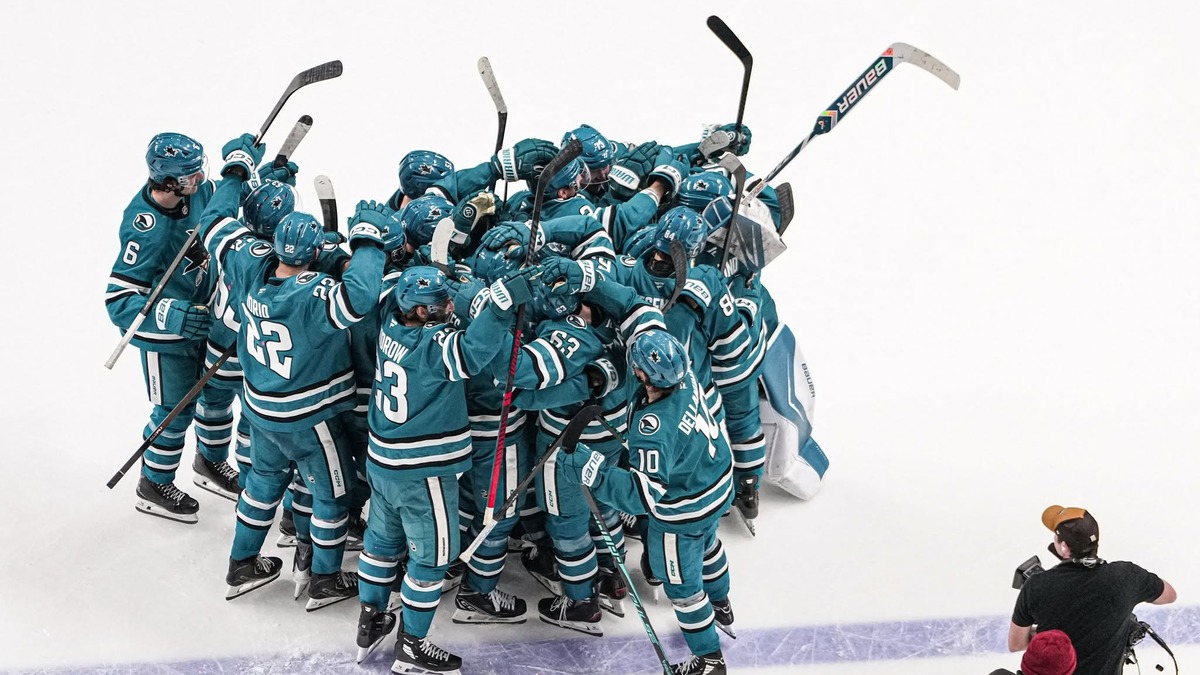
San Jose Sharks: Management Picks Sharks From the Contest Shortlist, Not the Winner
The sweepstakes for San Jose’s hockey team drew suggestions as different as Fog, Redwoods and Icebreakers. The new club could have gone with an image of the Bay Area’s weather or turned the surface of the sport into a name. Its management chose Sharks, using an animal associated with the waters off Northern California.
The Sharks’ own history of the decision distinguishes two outcomes of the sweepstakes. Attorney Allen Speare won the grand prize in a random draw, while the team selected Sharks from a field of submitted names. Blades was among the leading possibilities.
Some retellings give it the status of a first choice that was discarded. The club’s account presents an unranked shortlist and identifies the final selection as management’s.
George and Gordon Gund had been awarded the expansion franchise in 1990. Executive Matt Levine explained the new name in terms of the qualities the club could take from the animal, including speed and determination. The ocean supplied a local basis for a word that could also be used to describe how the players might move on the ice.
The original crest put a shark through a hockey stick inside a triangle. The bite gave the club a picture of the animal doing something to the sport’s own equipment. Its association with the coast remained easy to read even far from the Pacific.
San Jose’s contest had produced names for land, water and weather. The decision finally came down to a creature that could connect the Bay Area to the game in one rather sharp image.
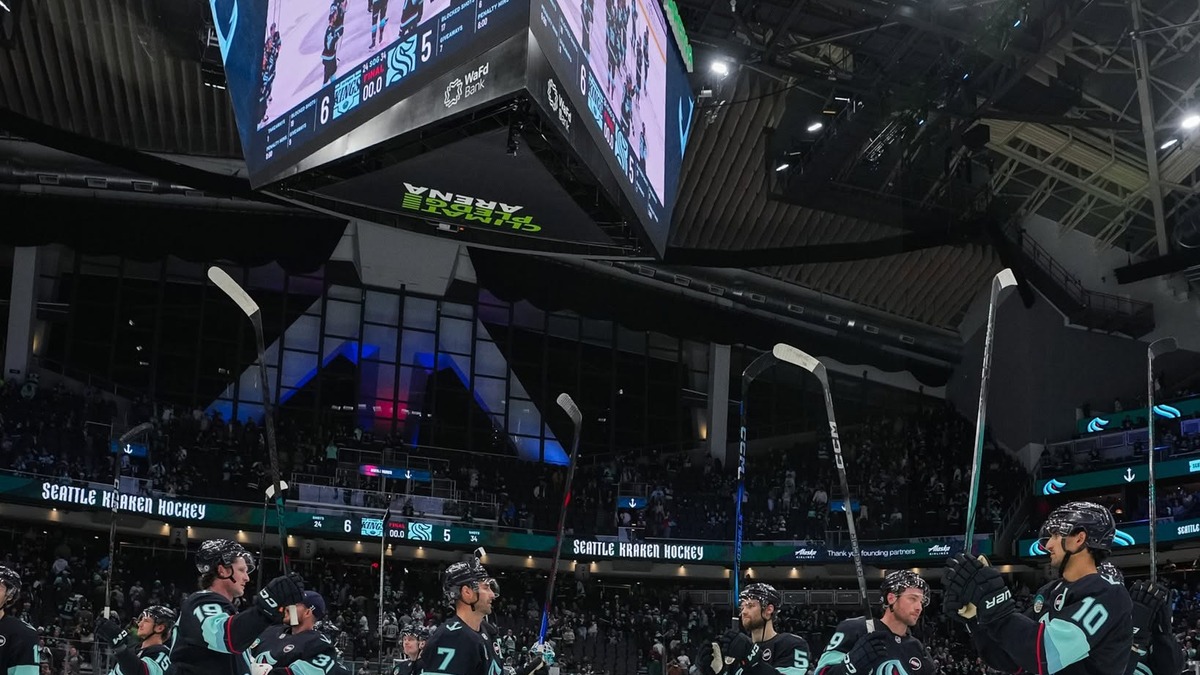
Seattle Kraken: A Sea Monster Wins After 215,000 Votes and Eighteen Months
Seattle spent about 18 months listening to possible names for its new NHL team. The process took in more than a thousand suggestions and 215,000 fan votes. When chief executive Tod Leiweke announced the result in July 2020, the ownership and design group had chosen Kraken, the name of a sea monster that fit a city shaped by the water.
The kraken belongs to seafaring legend, with roots in Northern European accounts of something enormous under the surface. Seattle could also connect the story to a real local animal, the giant Pacific octopus. The team’s unveiling leaned on that relationship between myth and the sea life found in Pacific Northwest waters.
The designers put the city and the creature into the same mark. The large S also reaches back to Seattle’s earlier hockey history, while a tentacle and a red eye suggest that more of the animal is out of sight.
A secondary anchor works the Space Needle into its silhouette. Those decisions gave a borrowed legend a set of features that belonged specifically to Seattle.
The team began play in 2021. The word stayed singular, which means the entire team could be imagined as one thing rising from below the water. The people choosing it had a long list of names that could have made sense on land.
Kraken made the sea part of the team’s identity without requiring the creature to appear in full. On the jersey, that small amount left to the imagination does much of the work.
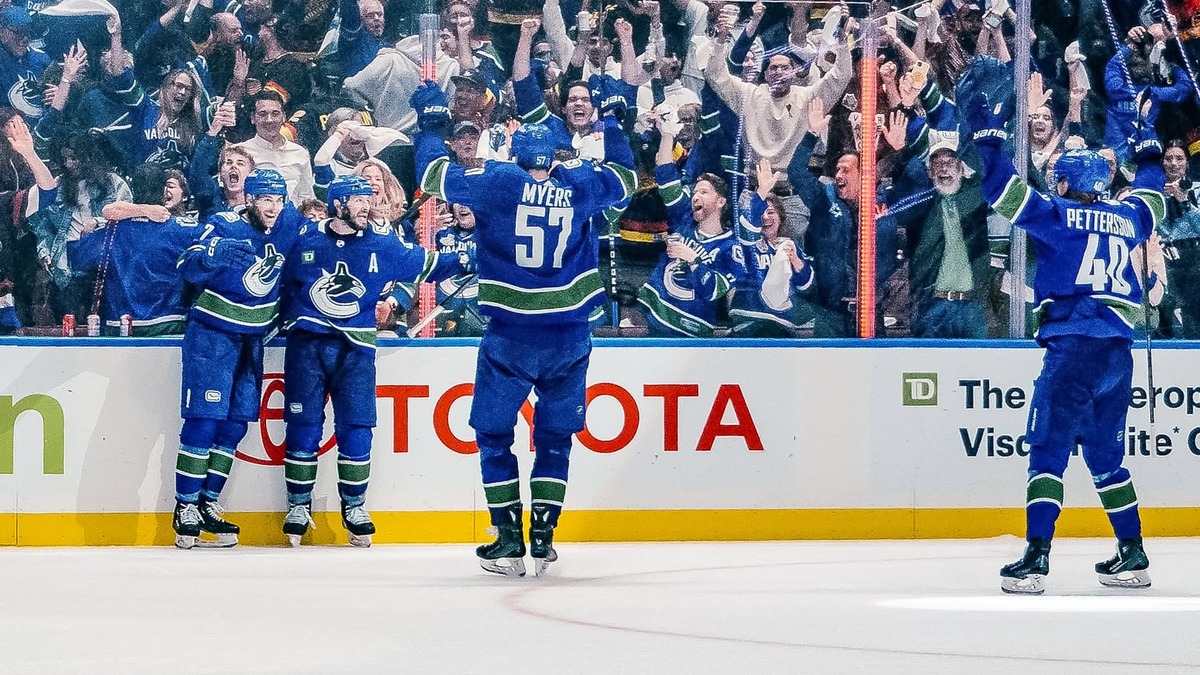
Vancouver Canucks: The City’s 1945 Hockey Name Carries Into the NHL
Vancouver had been calling a hockey team the Canucks for a quarter century before it joined the NHL. The earlier club began in the Pacific Coast Hockey League in 1945 and went on to play in the Western Hockey League. The NHL team that took the ice in 1970 carried on with the name the city already used.
A Canuck is a Canadian. The name also calls to mind Johnny Canuck, a figure from Canadian political cartooning who acquired a life of his own in popular culture.
Vancouver’s old club put a skating version of Johnny on its sweater. The modern Canucks have revived that image in uniforms that draw directly on the pre-NHL team.
That history gives the Vancouver name a local meaning narrower than the word itself. Anyone in Canada can be called a Canuck, but a hockey fan in Vancouver had been able to go see the Canucks well before the NHL came to town. By 1970 the owners could connect a new franchise to a familiar experience with a choice that barely needed an explanation.
The team has used a number of primary crests since then, ranging from a stick on a rink to an orca. Johnny has remained available as a way back to the old name and the old league. The NHL club kept the word that crossed the gap between the two teams, which is why the history of Vancouver’s nickname starts with a team playing in 1945 rather than with the formal expansion award.
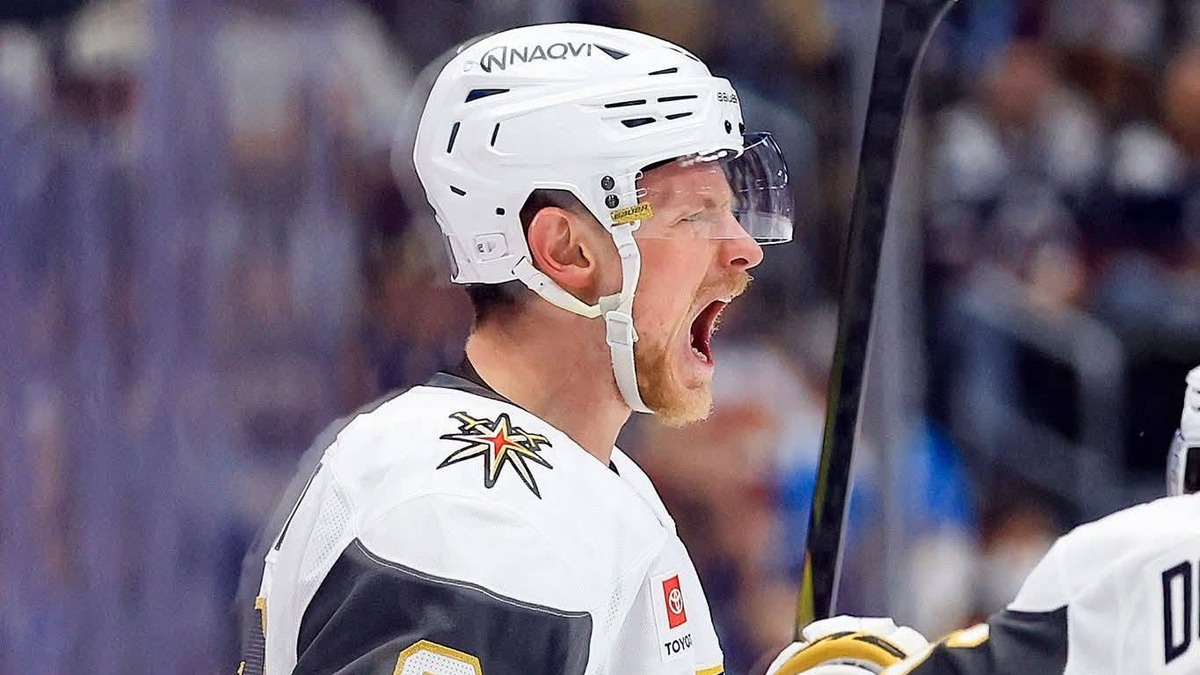
Vegas Golden Knights: Bill Foley Turns West Point’s Black Knights Into Gold
Bill Foley arrived in the NHL with an attachment to a particular military image. He had graduated from the U.S. Military Academy at West Point, whose teams are known as the Black Knights. When it came time to name his expansion franchise in Nevada, he kept the knight and gave it a different colour.
The club’s November 2016 unveiling connected the name to what Foley admired about knights and to the place where the team would play. Gold fit a state with a long mining history and gave the new club a way to distinguish itself from the West Point teams. The U.S. Army’s Golden Knights parachute team was another association Foley knew.
The shortened Vegas was part of the decision too. The complete name had room for both a familiar version of the city and the two words Foley wanted for the team. The crest made a letter V out of the opening in a knight’s helmet, giving the city a visible place in the design even where its name wasn’t printed.
The Golden Knights started play in 2017. Many owners had invited a contest to find a civic animal or a word local fans already used. Foley’s choice began with a personal association, and the final form gave it a second connection through the colour and the city’s name.
A knight meant something to him before there was a Nevada hockey club. A gold one could take on a life of its own once it had a Vegas sweater.
What the Names Keep After the First Jersey Is Gone
Some of these names are easier to explain when you can see what was there first. Pittsburgh’s dome supplied the reason for the penguin.
In Nashville, a construction site supplied the cat before the team knew what to call it. In St. Louis, a song was already doing the work an owner needed a name to do.
Others have had to fit somewhere new. Winnipeg’s name went away and came home, while the Flames and Stars found a second meaning in another city. The word in the standings is often the shortest way into a much longer story about the people and places a hockey team took with it.