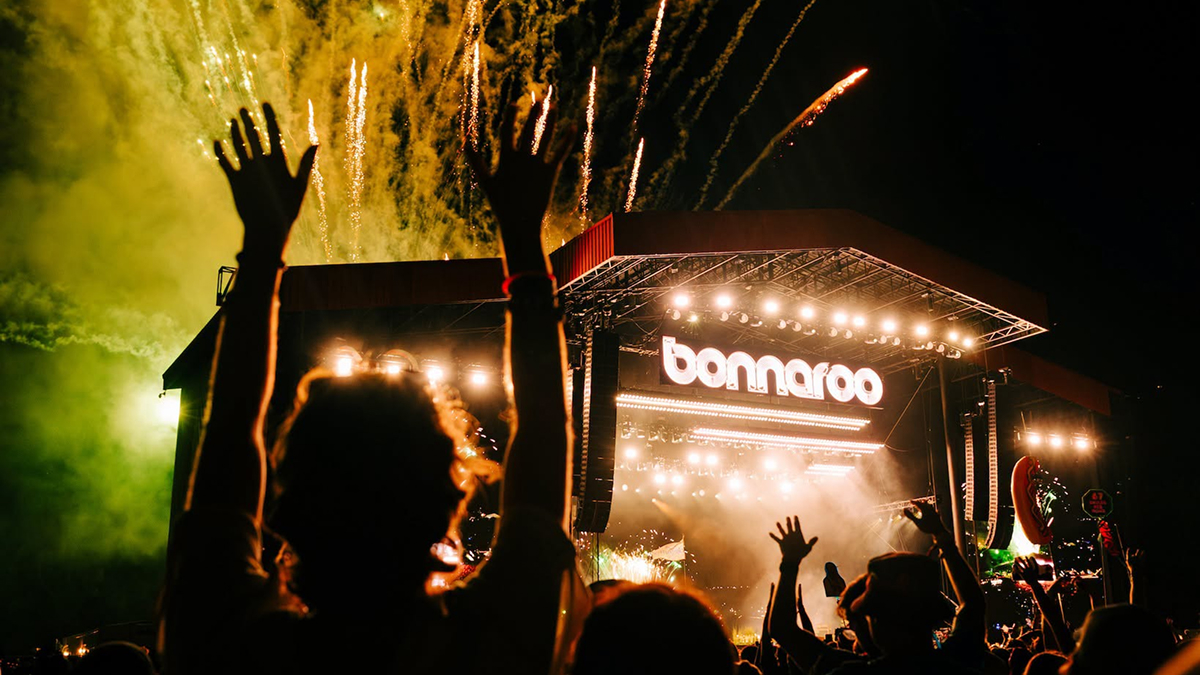
Twenty-three years, one farm, and a masterclass in how festivals scale, stumble, and get sold.
Bonnaroo is a four-day music and arts festival founded in 2002 on a 700-acre farm in Manchester, Tennessee, and it remains one of the clearest case studies in how an independent event can scale into a mainstream industry asset, or falter under the weight of its own growth.
What began as a gamble by two small promotion outfits drew roughly 70,000 fans in its first year and backed up traffic on Interstate 24 for twelve hours, a logistical failure that became a founding myth rather than a fatal flaw.
That tension between ambition and execution has defined the festival for more than two decades.
In this article, we dig deep into the story of Bonnaroo and trace how far the music festival has come through each evolution.
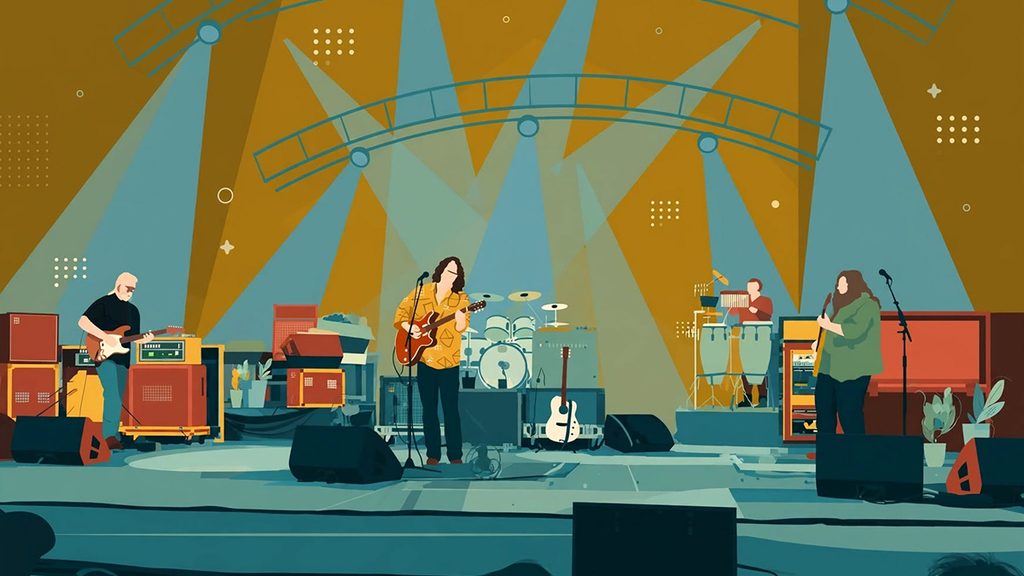
Bonnaroo 2002: A Zero-Advertising Bet That Redefined Festival Marketing
- Headliners: Widespread Panic, Trey Anastasio, Ben Harper, The String Cheese Incident, Phil Lesh and Friends
On June 21–23, 2002, Superfly Presents and Ashley Capps’ AC Entertainment staged their first Bonnaroo on a roughly 600-acre farm outside Manchester, Tennessee, betting that Phish’s recently sidelined touring fanbase and a handful of jam-band-adjacent acts could anchor a brand-new multi-day festival. Ticket pricing opened at an introductory $100 three-day pass — inclusive of camping and parking — before stepping up to $125, sold exclusively online rather than through Ticketmaster’s retail network. The gamble was compounded by timing: the event launched barely three years after Woodstock ’99 collapsed into arson and violence, making large-scale American camping festivals look like a discredited format to outside observers. Bonnaroo’s organizers spent nothing on traditional advertising, instead routing all promotion through artist mailing lists and the jam-band touring community; the strategy sold out more than 70,000 three-day passes in under three weeks and generated an estimated $9 million in gross ticket revenue. Demand overwhelmed the region’s two-lane approach roads, backing up traffic on Interstate 24 for roughly twelve hours and turning a logistics failure into festival lore rather than a public-relations disaster. Beyond the music — Widespread Panic’s closing set, Trey Anastasio’s solo debut away from Phish, and Béla Fleck sitting in across multiple stages — organizers built out a Cinema Tent screening concert documentaries, signaling early that Bonnaroo intended to sell an immersive weekend rather than a single headlining act. The event’s word-of-mouth sellout became the template referenced by nearly every U.S. festival launched over the following decade.
Business lesson takeaway: Bonnaroo’s launch shows that a niche, tightly networked fan community can substitute entirely for a paid marketing budget when a product is built around that community’s existing habits and loyalties. Selling directly through Bonnaroo’s own website rather than a third-party retail storefront also let organizers capture first-party purchaser data from day one, anticipating the direct-to-consumer ticketing model by more than a decade. The trade-off is that audience-first, word-of-mouth demand can outpace physical infrastructure faster than a paid campaign would, so the same success that validates the concept can expose its weakest operational links.
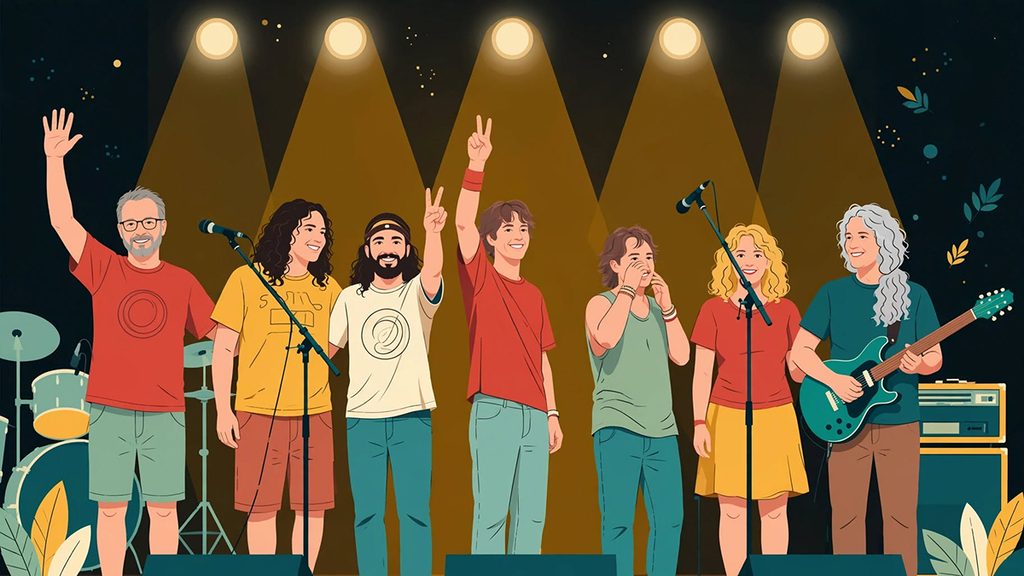
Bonnaroo 2003: Scaling a Sellout While a Spinoff Collapses
- Headliners: The Dead, Widespread Panic, Neil Young & Crazy Horse, The Allman Brothers Band, James Brown
Bonnaroo’s second edition, held June 13–15, 2003, tested whether the previous year’s word-of-mouth sellout was repeatable rather than a one-time novelty. Organizers raised the ticket allotment from roughly 70,000 to 80,000 and expanded pricing into three tiers — $119.50, $134.50, and $149.50 — while again bypassing traditional advertising entirely. The bet paid off: the festival drew 80,567 attendees and sold out in sixteen days, generating an estimated $11.5 million in gross revenue, a figure Billboard ranked second nationally that year behind only Bruce Springsteen’s ten-night Giants Stadium run. Just as important as the growth in ticket sales was the fix to the previous year’s biggest failure. Coffee County officials and local businesses had a full year to prepare for the crowd, and the Manchester Times reported that 2003’s traffic tie-ups were effectively nonexistent, a direct reversal of the twelve-hour Interstate 24 backup that marked the inaugural event. The lineup leaned further into rock and soul legacy acts alongside the jam-band core, pairing The Dead, Widespread Panic, Neil Young and Crazy Horse, and James Brown with newer names like My Morning Jacket and Sonic Youth, broadening the festival’s genre identity beyond its jam-band origins. Rolling Stone’s year-end issue called Bonnaroo “the American rock festival to end all festivals,” also crediting it as the summer’s breakout success. The one blemish was Bonnaroo Northeast, a planned sister festival in Riverhead, New York, that organizers canceled in the weeks before it was scheduled to run, an early signal that replicating Bonnaroo’s formula outside Manchester would prove far harder than scaling it in place.
Business lesson takeaway: Bonnaroo’s 2003 turnaround shows that solving last year’s biggest operational failure is often a prerequisite for scaling capacity, not an afterthought — Manchester’s infrastructure and traffic fixes came before the ticket allotment increased, not after. The canceled Bonnaroo Northeast spinoff is a cautionary counterpoint: replicating a festival’s brand and format in a new market carries a different risk profile than growing the original, and treating the two as the same playbook can undercut a strong year with an embarrassing public reversal.
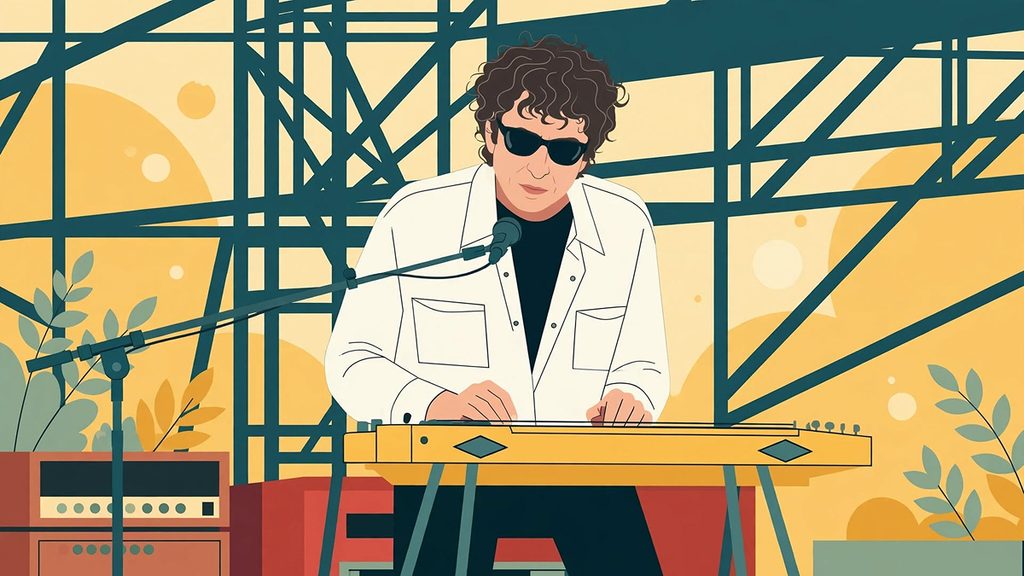
Bonnaroo 2004: Record Gross Meets Its First Real Crisis
- Headliners: Bob Dylan, The Dead, Dave Matthews & Friends, Trey Anastasio, David Byrne
Bonnaroo’s fourth-consecutive sellout, held June 11–13, 2004, was also its first real test of crisis management at scale. Organizers expanded capacity to 90,000 tickets — priced at $139.50 and $164.50 — after securing additional acreage, and with roughly 5,000 additional staff, guests, and media on-site, total attendance approached 95,000. Gross revenue reached an estimated $14.5 million, making Bonnaroo the second-highest-grossing concert engagement in the country for 2004, according to Billboard Boxscore. That commercial peak came alongside the festival’s first fatalities: two attendees died of suspected drug-related causes amid brutal alternating heat and torrential rain that turned the farm into a mud pit and forced hundreds into medical tents. Coffee County’s sheriff called the deaths almost inevitable given the conditions and drug use, but organizers and local press pushed back hard on the framing — the Nashville Scene noted that despite the scale of the event, food, water, and facilities held up, and only 27 arrests were logged across three law enforcement agencies. Bob Dylan headlined with a rarities-heavy set built around Hank Williams and Merle Haggard covers rather than his own hits, while Trey Anastasio closed the festival backed by a 40-piece orchestra and fireworks. The bill also weathered a late scratch when Willie Nelson withdrew due to carpal tunnel problems, with Steve Winwood stepping in on short notice. Beyond the stage, Bonnaroo extended its brand into recorded media that year, releasing “Live From Bonnaroo” CD compilations and DVD documentaries, an early bet on owned content as a second revenue stream beyond the ticket window.
Business lesson takeaway: Bonnaroo’s record-setting gross in 2004 came with a stark reminder that operational risk scales right alongside revenue and attendance — extreme weather, drug-related fatalities, and medical strain all become live possibilities once a festival crosses into six-figure crowds. How organizers and local press handled the narrative afterward, emphasizing low arrest counts and functioning infrastructure rather than letting the sheriff’s comments define the story, shows the value of a crisis-communications plan as developed as the security plan. The same-year launch of Live From Bonnaroo recordings is a separate lesson: even in year three, organizers were already building revenue streams that didn’t depend on selling another ticket.
Bonnaroo 2005: Ticket Sales Dip, Economic Case Solidifies
Headliners: Dave Matthews Band, Widespread Panic, The Allman Brothers Band, Modest Mouse, Jack Johnson
Bonnaroo’s fourth edition, held June 10–12, 2005, was the festival’s first commercial plateau after three years of uninterrupted growth. Attendance fell to roughly 76,000–80,000 from 2004’s approximately 90,000, and organizers trimmed the tent stage count from four to three, producing a lineup critics considered less eclectic than prior years despite what was, by most accounts, the strongest hip-hop bill to date. To protect ticket sales against the dip, promoters leaned on proven headliners rather than new discoveries, giving Widespread Panic two main-stage slots and closing Friday with a crowd-pleasing Dave Matthews Band set; reviewers called the booking safe and the overall weekend “something of a disappointment” even as most fans left satisfied. That caution paid off financially: Pollstar ranked the festival’s June 12 show as the single biggest-grossing concert engagement in the United States for all of 2005, generating an estimated $13.3 million from fans who paid at least $146 a ticket. Traffic and logistics, a persistent early sore point, were by now essentially solved, with attendees and press describing one of the smoothest-run large festivals in the country. The year’s most consequential move happened off-stage: Middle Tennessee State University’s Business and Economic Research Center conducted the festival’s first independent economic impact study, documenting $14.1 million in local business revenue, 191 new Coffee County jobs, and nearly $22 million in total attendee spending. That data gave Bonnaroo a quantified civic case to bring to local officials just as the festival was becoming a fixture rather than a novelty.
Business lesson takeaway: When ticket demand softens even slightly, leaning on proven headliners over adventurous discovery bookings can protect revenue in the short term, but it risks the exact curatorial reputation that built the audience in the first place — a trade-off every maturing festival eventually faces. Commissioning an independent economic impact study, as Bonnaroo did in 2005, is a separate and underused move: translating attendee spending into local jobs and tax revenue turns a disruptive annual traffic event into a documented economic asset that host communities have a financial incentive to keep welcoming back.
Bonnaroo 2006: Ditching the Jam-Band Label for Radiohead
- Headliners: Radiohead, Tom Petty and the Heartbreakers, Beck, Elvis Costello & the Imposters
Bonnaroo’s fifth edition, held June 16–18, 2006, marked a deliberate repositioning away from the jam-band identity that had defined its first four years. Organizers booked Radiohead as their only U.S. festival date of the summer, an exclusivity play that instantly separated Bonnaroo from Coachella, Lollapalooza, and the rest of the growing festival field, and paired the band with Tom Petty and the Heartbreakers, Beck, Elvis Costello and the Imposters, Death Cab for Cutie, and Bright Eyes — acts with almost no history in the jam scene that had built the festival’s reputation. The strategy split longtime fans online, some celebrating the expansion and others questioning why a self-described hippie festival was chasing an indie-rock crowd, but the market answered decisively: 80,681 fans attended, and Billboard’s boxscore ranked Bonnaroo the top-grossing concert engagement in the country for the May-to-June period at $14.7 million, ahead of that stretch’s Madonna dates. Tickets, priced at $169.50 before rising to $184.50, sold out again without traditional advertising. Radiohead’s Ed O’Brien later called the band’s headlining set one of its best performances anywhere, and Tom Petty brought out Stevie Nicks for a run of Fleetwood Mac-era hits that became one of the weekend’s most bootlegged moments. Organizers also gave the Preservation Hall Jazz Band a dedicated tent for all three nights, an early example of building recurring, genre-specific residencies into the schedule rather than one-off sets.
Business lesson takeaway: Bonnaroo’s 2006 pivot shows that a festival can outgrow its founding subculture without losing its core audience, provided the expansion is additive rather than a replacement — jam bands stayed on the bill even as indie and alt-rock headliners took the marquee slots. Securing Radiohead’s only U.S. festival date of the summer also demonstrates the leverage of genuine exclusivity: one act unavailable anywhere else that year did more to differentiate Bonnaroo from its rivals than any amount of incremental lineup expansion could have.
Bonnaroo 2007: Owning the Farm, Landing The Police
- Headliners: The Police, Tool, The White Stripes, Widespread Panic
Bonnaroo’s sixth edition, held June 14–17, 2007, was defined less by a single stage moment than by a real estate transaction happening off to the side. Superfly Presents and AC Entertainment finalized the purchase of roughly 530 acres of the festival grounds along Interstate 24 from longtime landowner Sam McAlister, adding long-term leases on another 300 acres and converting Bonnaroo from a rented annual event into an owned, year-round venue asset. Superfly’s Jonathan Mayers framed the deal explicitly as a platform play, telling Billboard the company wanted the property to host country events, Christian festivals, or standalone concerts beyond Bonnaroo itself. On stage, organizers landed The Police as headliners the same year the reunited trio became the highest-grossing touring act in North America, a booking coup that paired festival-scale economics with an act more commonly found headlining arenas and stadiums on its own. Higher ticket prices pushed the festival’s gross to an estimated $17 million on another sellout of 80,000, up from $14.7 million in 2006, and Bonnaroo collected Billboard’s Top Festival award for a third consecutive year. The weather flipped the previous extremes: instead of 2004’s mud, 2007 brought dust and heat so severe that attendees tied scarves over their faces, though Flaming Lips frontman Wayne Coyne called it the smoothest-run Bonnaroo yet. A surprise Tom Morello guitar solo during Tool’s “Lateralus” became the weekend’s most replayed moment, while additions like an air-conditioned jazz club and a burlesque tent signaled a festival increasingly built as an all-day entertainment complex rather than a concert with camping attached.
Business lesson takeaway: Buying the underlying land converted Bonnaroo from a single annual transaction into a real estate asset that could generate revenue beyond one weekend a year, and it gave organizers permanent control over a site that had already proven it could support 80,000 people — a hedge against ever losing the venue to a landlord’s changing plans. Booking a headliner at the peak of its own market value, as Bonnaroo did with The Police, shows that festivals compete with arena tours for the same acts and sometimes win by offering prestige and cultural cachet that a single-city stadium date cannot.
Bonnaroo 2008: A Genre Pivot Meets a Recession
- Headliners: Pearl Jam, Metallica, Kanye West, Robert Plant & Alison Krauss
Bonnaroo’s seventh edition, held June 12–15, 2008, pushed the festival’s genre diversification further than ever by handing headlining slots to Metallica and Kanye West, acts with essentially no connection to the jam-band scene that had built the event. Metallica’s own announcement captured the novelty, calling it their first “full-on Metalli-experience” at a U.S. stop in years, while Kanye West arrived fresh off being named Spin’s Entertainer of the Year. The gamble on genre-crossing headliners collided with a rougher year operationally and economically. The Allman Brothers Band withdrew two months before the festival due to health issues, forcing Widespread Panic into the closing slot as a late replacement, and Black Kids also dropped off the bill. Attendance settled at roughly 70,000, the festival’s smallest crowd since its 2002 debut and the first time in years Bonnaroo failed to sell out its full 80,000-ticket capacity, a dip that landed as the U.S. economy tipped into recession. The weekend’s most damaging moment was self-inflicted: West’s elaborate “Glow in the Dark” production pushed his scheduled 2:45 a.m. set back nearly two hours, and thousands of fans who waited it out went public with their frustration; West later posted a profanity-laced rant on his blog dismissing Bonnaroo’s organizers. On the monetization side, Bonnaroo quietly added its first bundled media product, letting ticket buyers pre-order a commemorative festival DVD at the moment of purchase rather than after the event — an early attempt to extend revenue past the ticket window itself.
Business lesson takeaway: Bonnaroo’s 2008 dip shows that genre diversification has a limit: stretching the bill from jam bands to metal and mainstream hip-hop widened the festival’s reach, but it happened in the same year attendance fell to its lowest since the festival’s debut, a reminder that broadening a brand too quickly can dilute the audience it’s chasing before it fully wins a new one. The Kanye West scheduling blowup is a separate lesson in operational discipline: a production overrun that pushes a marquee set nearly two hours late doesn’t stay a backstage problem, it becomes the story fans and press remember, which means run-of-show timing is a brand-protection function as much as a logistics one.
Bonnaroo 2009: Recession-Proofing the Lineup With Phish and Springsteen
- Headliners: Bruce Springsteen and the E Street Band, Phish, Nine Inch Nails, Beastie Boys
Bonnaroo’s eighth edition, held June 11–14, 2009, was built explicitly around economic anxiety. With the country deep in the 2008–09 financial crisis, organizers introduced the festival’s first ticket payment plan, letting fans reserve a pass with five installments of $50 rather than a single upfront charge, an early version of the buy-now-pay-later financing that would later become standard across e-commerce. The booking strategy hedged the same risk from a different angle: Bruce Springsteen and the E Street Band, fresh off a Super Bowl halftime show and President Obama’s inauguration, played their only North American festival date of the year, while Phish, reunited after a five-year breakup, made Bonnaroo its only festival appearance in 2009 across two full sets. Co-founder Ashley Capps summed up the logic to the Associated Press before the gates opened, calling it “a recession-proof lineup” built to draw two largely non-overlapping fan bases at once. The wager worked: early reporting put attendance close to 75,000, up from roughly 70,000 in 2008 and just shy of the festival’s 80,000-ticket sellout capacity. Nine Inch Nails’ set doubled as a farewell, with Trent Reznor signaling the band’s touring hiatus, while Beastie Boys, Wilco, and Al Green rounded out a bill deep enough that no single headliner carried the weekend alone. Weekend passes generally ran $250 to $300 before fees, a price the payment plan was designed specifically to make less painful to absorb in one sitting.
Business lesson takeaway: Bonnaroo’s 2009 lineup shows that hedging exists in talent booking the same way it does in a portfolio: pairing Bruce Springsteen’s mainstream rock audience with Phish’s independently loyal jam-band following meant the festival wasn’t dependent on any single fan base showing up during a recession. The five-payment ticket plan is the more durable lesson — breaking a large purchase into smaller installments to protect conversion during an economic downturn anticipated a financing model that e-commerce and other live-event businesses would formalize a decade later.
Bonnaroo 2010: Turning a Lineup Reveal Into a Media Event
- Headliners: Jay-Z, Dave Matthews Band, Stevie Wonder, Kings of Leon
Bonnaroo’s ninth edition, held June 10–13, 2010, turned what is normally a single press release into a full day of media coverage. Rather than announce the lineup all at once, organizers revealed each artist individually through Twitter and MySpace over roughly fourteen hours, a rollout framed as an “internet-wide global virtual event” that kept the festival trending in real time rather than for a single news cycle. The lineup it revealed — Jay-Z, Dave Matthews Band, Stevie Wonder, and Kings of Leon — showed how much of festival booking happens years before a lineup poster exists; co-founder Ashley Capps told Jambands.com that Stevie Wonder had been a target for years and Jay-Z “a long, long time,” since headliner conversations can take three or four years to close. Kings of Leon’s ascent doubled as proof the festival can grow its own future headliners: the band first played a small tent stage in 2004 and returned repeatedly in the years that followed, arriving at the top of the bill in 2010 as one of only a handful of shows the band played that year. Jay-Z headlined both Bonnaroo and Coachella that same cycle, evidence that a top-tier act can anchor multiple major festivals in one summer without either promoter losing exclusivity where it matters. More than 70,000 fans attended through oppressive heat and mud, and organizers layered in a premium “Total Access” package with concierge service and dedicated onstage viewing, extending the four-day, $234.50 general-admission pass into a tiered revenue product for fans willing to pay well beyond face value.
Business lesson takeaway: Bonnaroo’s 2010 lineup rollout shows that an announcement can be treated as its own piece of programming — stretching a reveal across a full day of individual artist drops generated more sustained attention than a single press release ever could, at zero incremental media-buying cost. Landing Jay-Z and Stevie Wonder after years of relationship-building is a reminder that headliner booking is a pipeline business, not a spot market, while Kings of Leon’s rise from a 2004 tent stage to the top of the 2010 bill shows the same pipeline can run in reverse: developing an act’s audience alongside the festival’s own growth builds loyalty an imported headliner never will.
Bonnaroo 2011: Turning Its Own History Into the Show
- Headliners: Eminem, Arcade Fire, Buffalo Springfield, Widespread Panic
Bonnaroo’s tenth edition, held June 9–12, 2011, turned the festival’s own back catalog into programming no rival could copy. Organizers brought back Widespread Panic, the first band to ever say yes to Bonnaroo in 2002, and staged a full live performance of Dr. John and The Original Meters’ 1974 album “Desitively Bonnaroo,” the record that gave the festival its name, alongside a Buffalo Springfield reunion featuring Neil Young, Stephen Stills, and Richie Furay that stood as the group’s only festival date of the year. Current-moment bookings carried equal weight: Eminem, riding the comeback album “Recovery,” made a rare festival appearance, and Arcade Fire played its first Bonnaroo the same year “The Suburbs” won Album of the Year at the Grammys. General-admission tickets sold out weeks before the gates opened, with only VIP pairs remaining at $1,349.50, roughly five times the standard weekend pass price of a few years earlier. Behind the scenes, organizers made two operational upgrades aimed at protecting the anniversary crowd and the box office alike: paper tickets gave way to RFID wristbands to cut down on counterfeiting and resale fraud, and gates opened a full evening early to spread out the arrival traffic that had caused problems in years past. Co-founder Ashley Capps used the anniversary press cycle to talk openly about his still-unbooked dream headliner, Led Zeppelin, treating the wishlist itself as part of the festival’s ongoing story rather than a secret.
Business lesson takeaway: Bonnaroo’s tenth-anniversary programming shows that a brand’s own archive can be treated as a content asset: no competitor could stage the actual 1974 album that gave the festival its name, or reunite the band that said yes to the very first Bonnaroo, which made the milestone year feel earned rather than manufactured. The shift to RFID wristbands is a separate, less glamorous lesson about maturity — once counterfeiting and resale fraud reach a scale that threatens both revenue and the trust of paying fans, upgrading the ticketing infrastructure itself becomes as important as anything on the bill.
Bonnaroo 2012: Turning Range Into a Hedge
- Headliners: Radiohead, Red Hot Chili Peppers, Phish, The Beach Boys
Bonnaroo’s 11th edition, held June 7–10, 2012, in Manchester, Tennessee, was announced with Radiohead, Red Hot Chili Peppers and Phish topping the bill, joined by The Beach Boys, featuring Brian Wilson, Mike Love, Al Jardine, Bruce Johnston and David Marks, on the group’s 50th-anniversary reunion tour. Rather than lean on one sound, organizers spread the bill across genres: more than 150 bands and nearly two dozen comedians performed across 13 stages, with the festival’s jam-band roots represented by Umphrey’s McGee, ALO and Dispatch even as EDM acts fresh off Grammy attention, including Skrillex, Flying Lotus, Major Lazer and Big Gigantic, signaled a bid for the genre’s fast-growing young audience. Ashley Capps told Relix/Jambands.com that booking begins six months before the festival announces its initial lineup, and always tries to balance acts from Bonnaroo’s legacy with new names for its future; he noted organizers had wanted Radiohead the previous year but the schedule never lined up, and that the band’s 2006 headlining set was widely seen as the moment Bonnaroo broke fully into indie and alternative territory. Their 2012 return, remembered for a debut of new material on the What Stage, became one of the most talked-about sets in the festival’s history. GA tickets sold at $259.50 with VIP entirely sold out, and total on-site population surpassed 100,000 for the first time, a festival record. Rare mild weather — highs that never broke 90 degrees, even dipping into the 70s — spared the crowd its usual heat, before Sunday rain arrived early in the morning. Organizers had also planted Bermuda grass and over a hundred trees, expanded Centeroo, and added shaded restrooms and water stations, while opening gates a full day early to ease the traffic that caused 20 crashes the year before.
Business lesson takeaway: Bonnaroo’s 2012 booking shows genre diversification working as portfolio insurance rather than mere eclecticism — pairing legacy rock (Beach Boys, Chili Peppers), indie prestige (Radiohead), jam-band loyalty (Phish, Umphrey’s McGee) and rising EDM (Skrillex, Major Lazer) meant no single genre’s rise or fall could sink attendance, at a moment when electronic music was pulling young festivalgoers toward rivals. Capps’ description of a six-month booking cycle built around balancing “legacy” and “future” acts is the same pipeline discipline seen in 2010 and 2011, applied deliberately to hedge against fashion rather than just fill a bill. And the unglamorous investment in turf, shade and tree cover paid off exactly when luck (mild weather) could have masked its absence — proof that infrastructure spending is validated in the years it isn’t needed, not just the years it is.
Bonnaroo 2013: Turning a Crisis Into a Test of Relationship Capital
- Headliners: Paul McCartney, Tom Petty and the Heartbreakers, Mumford & Sons
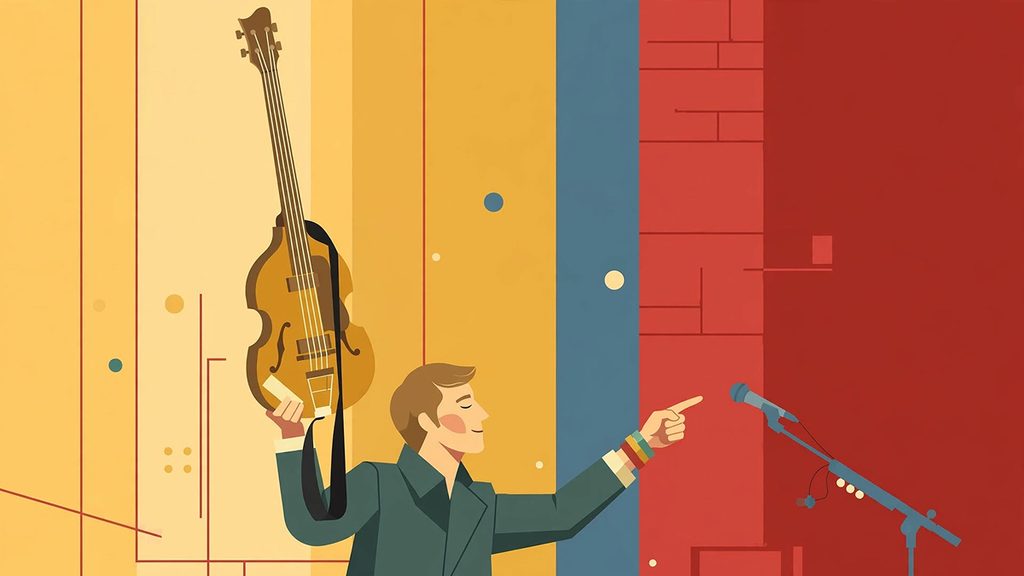
Bonnaroo’s 12th edition, held June 13–16, 2013, in Manchester, Tennessee, was headlined by Paul McCartney, Mumford & Sons, and Tom Petty & the Heartbreakers, with McCartney making a rare U.S. festival appearance for a nearly two-and-a-half-hour set of Beatles, Wings and solo hits that anchored the weekend alongside Björk, Wilco, R. Kelly and Wu-Tang Clan. The festival’s most consequential story, though, broke two days before Mumford & Sons was due to close the main stage: bassist Ted Dwane had emergency surgery to remove a blood clot from his brain, and the band canceled its headlining performance, leaving 80,000 fans without a Saturday-night closer and no announced replacement. Jack Johnson, who had played the very first Bonnaroo in 2002 and headlined in 2008, was already on-site planning only to sit in with his labelmates ALO when organizers called; he and a band that hadn’t performed a proper show in over a year pulled together a two-hour set in under 48 hours, becoming Bonnaroo’s first-ever headlining replacement, and he even wrote a new song called “Bonnaroo” recounting the last-minute recruitment. General admission ran in tiers of $234.50, $254.50 and $269.50 plus fees, with VIP pairs at $1,449.50, and the festival drew more than 80,000 fans — a number that, in hindsight, marked Bonnaroo’s last outright sellout until 2019.
Business lesson takeaway: when Bonnaroo’s marquee headliner dropped out with essentially no notice, the festival’s insurance policy wasn’t a contract clause — it was years of relationship-building with an artist who already felt enough ownership of the event to show up unbilled. That kind of goodwill can’t be purchased on 48 hours’ notice; it has to be banked over a decade, the same pipeline logic that landed Jay-Z and Stevie Wonder in 2010. The other lesson only became visible later: 2013 turned out to be the high-water mark before ticket sales cooled for several years amid a more crowded festival market, a reminder that even a well-run, well-loved festival isn’t immune to the broader economics of its industry — surviving a lineup crisis gracefully is not the same as being insulated from market saturation.
Bonnaroo 2014: A Second Chance as a Calculated Bet
- Headliners: Elton John, Kanye West, Jack White
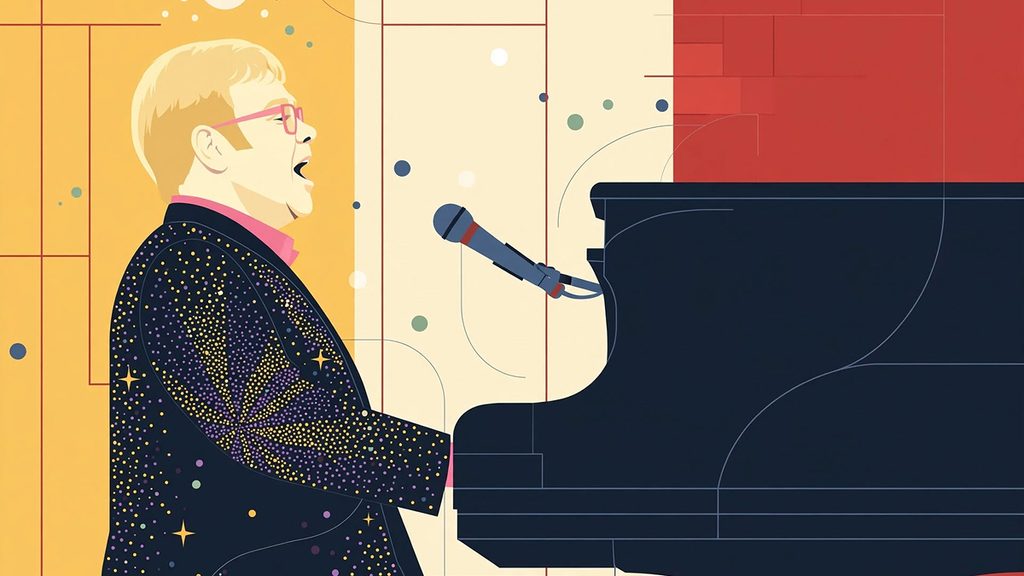
Bonnaroo’s 13th edition, held June 12–15, 2014, in Manchester, Tennessee, paired two Bonnaroo veterans with one loaded gamble. Elton John made his first-ever Bonnaroo appearance touring behind “The Diving Board,” and Jack White returned as a headlining act for the first time since the White Stripes played the festival in 2007, but the real story was Kanye West’s return, six years after his infamous 2008 Bonnaroo slot, when he’d shown up nearly two hours late for a set that didn’t start until roughly 4:30 a.m. after a delayed Pearl Jam performance and was booed mercilessly. More than 100 acts filled out the bill, including Frank Ocean, Lionel Richie, Arctic Monkeys and Lauryn Hill, alongside experimental Superjams built around Skrillex’s electronic-music hybrid and Ed Helms’s bluegrass showcase. Early-week storms forced crews to shore up roads and campsites with wood, sawdust and sand before gates opened Thursday to mostly dry conditions. Roughly 80,000 fans turned out, matching recent years even though the clean, months-ahead sellout Bonnaroo had achieved in 2013 wouldn’t happen again until 2019. Reviewers split sharply on the three headliners: Jack White’s Saturday set and Elton John’s Sunday closer of career-spanning hits were praised as passionate, substantive performances, while West’s Friday slot was widely panned as self-indulgent and disappointing, an echo of the very reputation the booking had been meant to repair.
Business lesson takeaway: putting Kanye West at the top of the 2014 bill was itself a bet that a new album cycle and top billing would rewrite the story left by 2008 — a redemption booking as much as a music booking. The reviews suggest that wager didn’t pay off: an audience’s goodwill toward a comeback slot doesn’t transfer automatically into a good show, because what actually earns redemption is the performance, not the invitation. Elton John and Jack White represent the lower-risk alternative sitting right next to that bet on the same bill — proven legacy artists whose live shows are a dependable draw carry far less reputational downside than a gamble on personal transformation, even if the gamble is the one that generates the pre-festival headlines either way.
Bonnaroo 2015: Selling Control to Keep the Farm Growing
- Headliners: Billy Joel, Mumford & Sons, Kendrick Lamar
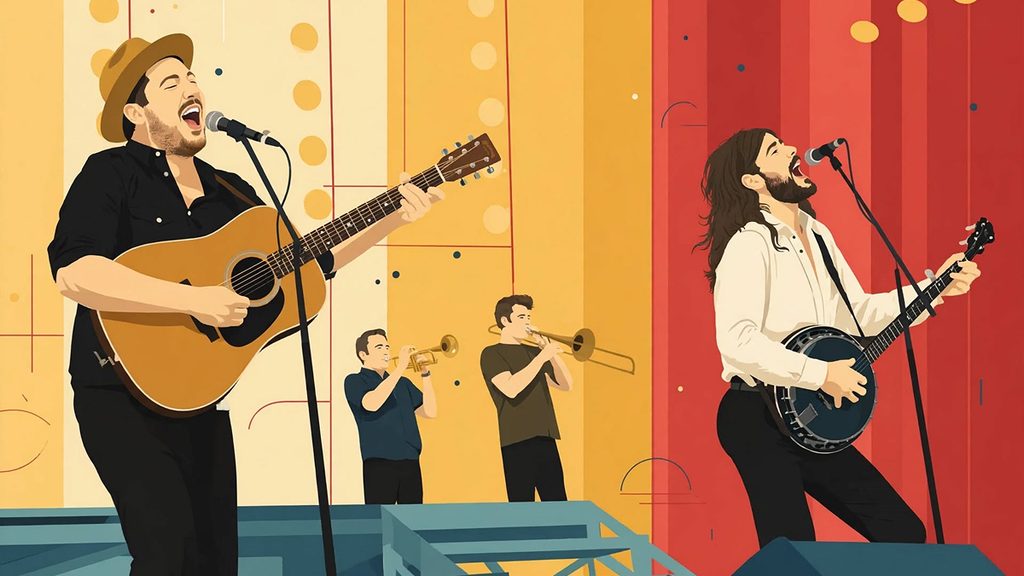
Bonnaroo’s 14th edition, held June 11–14, 2015, in Manchester, Tennessee, closed two loops the festival had left open for years. Mumford & Sons returned to headline after being forced to cancel their 2013 slot when bassist Ted Dwane had emergency brain surgery; Ashley Capps told Relix the festival had hoped to bring them back the year before, but it made more sense to wait for the band’s third album and call the delayed booking their “extraordinary” comeback moment. Kendrick Lamar, who had made his Bonnaroo debut on a tent stage just three years earlier in 2012, returned as a main-stage headliner, one of the fastest tent-to-headliner turnarounds in the festival’s history. Billy Joel made his first-ever Bonnaroo appearance, joining Paul McCartney and Elton John on the festival’s growing list of classic-rock legends willing to trade a stadium tour date for a farm in Tennessee. More than 125 acts and 20 comedians filled 12 stages, with Deadmau5, Florence + the Machine, Robert Plant and Slayer rounding out the bill, and roughly 80,000 fans attended at a four-day ticket price around $360. The festival’s real news, though, broke that April: Live Nation announced it had purchased a controlling interest in Bonnaroo, ending 13 years of ownership by founders Superfly and AC Entertainment, who stayed on as operators while Live Nation promised “significant investment” in the festival grounds.
Business lesson takeaway: the Live Nation deal shows what independent event owners eventually trade for scale — Bonnaroo’s founders gave up majority control in exchange for a corporate parent’s deeper pockets, national ticketing infrastructure through Ticketmaster, and capital for site improvements they couldn’t otherwise afford, at the exact moment a more crowded festival market was starting to squeeze margins. Selling control while retaining day-to-day creative operation is itself a hedge: it protects the thing that makes the product work (Capps and Superfly running the show) while transferring the balance-sheet risk to a company built to absorb it. Whether that trade preserves a festival’s identity or slowly erodes it isn’t visible in the year it happens — it only shows up years later, in the lineups and attendance the new owner chooses to fund.

Bonnaroo 2016: A Record Low Despite a Record Investment
- Headliners: Pearl Jam, Dead & Company, LCD Soundsystem
Bonnaroo’s 15th edition, held June 9–12, 2016, in Manchester, Tennessee, leaned heavily on legacy names: Pearl Jam returned to headline for the first time since 2008, Dead & Company debuted John Mayer alongside surviving members of the Grateful Dead, and LCD Soundsystem jumped to the main stage after playing a late-night tent set back in 2010, then breaking up in 2011 and reuniting for this run — another act the festival had effectively developed years before it was headliner-caliber. J. Cole, Ellie Goulding, Macklemore & Ryan Lewis, HAIM and Tame Impala rounded out a bill of more than 150 acts across 12 stages. This was also the first full festival under Live Nation, which had taken a controlling stake the previous year and funded the promised grounds upgrade: a new permanent water line, 400 flushable toilets and hundreds of showers replacing the porta-potties fans had complained about for years. Tickets started at $324.50 plus fees, up again from 2015. None of it stopped the worst attendance in Bonnaroo’s history: the festival sold just 45,537 tickets, a 38 percent drop from the year before and 46 percent below its 2011 peak, undercutting even the prior low of 65,164 in 2008 and costing an estimated $9.07 million in ticket revenue. Fans and local coverage described the marquee as a “retro Roo,” heavy on legacy rock and short on the kind of must-see urgency that had defined the McCartney or Radiohead years, even as prices kept climbing.
Business lesson takeaway: infrastructure spending and demand generation are different levers, and fixing one doesn’t fix the other. Permanent plumbing solves a decade of camper complaints and protects the experience for people who already bought tickets, but it doesn’t sell new ones — excitement does that, and 2016’s lineup didn’t create much of it while asking fans to pay more for it. Developing future headliners internally, the same instinct that made LCD Soundsystem and Kendrick Lamar into main-stage draws years after their tent-stage debuts, still needs enough genuine unpredictability each year to convert loyalty into ticket sales; a festival can get the physical product right and still lose the box office if the lineup reads as safe at the exact moment ticket prices and festival competition are both rising.
Bonnaroo 2017: The Payoff on a Corporate Bet
- Headliners: U2, Red Hot Chili Peppers, The Weeknd, Chance the Rapper
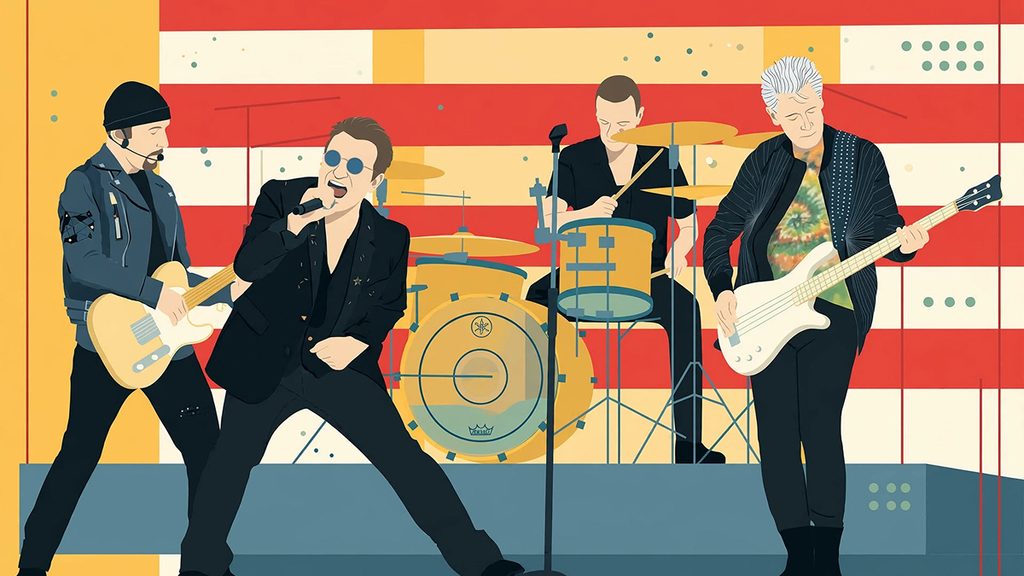
Bonnaroo’s 16th edition, held June 8–11, 2017, in Manchester, Tennessee, was built around one booking meant to erase the previous year’s damage: U2’s first-ever U.S. festival headlining slot, playing The Joshua Tree in full on the album’s 30th-anniversary tour, and only the band’s second American festival appearance since 1983. Bonnaroo co-founder Rick Farman told Billboard that AC Entertainment and Superfly had been in direct talks with U2’s touring overseer, Arthur Fogel, for three or four years with no traction, and that the booking only came together after Live Nation, which had taken majority control of the festival in 2015, opened its own relationships with the band’s camp. Red Hot Chili Peppers returned for the first time since headlining in 2012, and The Weeknd made his festival debut; organizers also added a new open-air stage, The Other, dedicated to EDM and hip-hop to reach a younger crowd than the classic-rock-heavy 2016 bill. Ticket prices climbed again, to $349.50 at the top tier. U2 opened its set with a tribute to Chris Cornell, who had died weeks earlier, before running through Joshua Tree start to finish, with Bono closing the night by joking, “What an extraordinary thing Bonnaroo is. Thank you for naming it after me.” Attendance jumped to more than 65,000 fans a day, a roughly 43 percent rebound from 2016’s record-low 45,537, though still short of the nearly 73,000 who’d come in 2015.
Business lesson takeaway: this is the direct payoff of the 2015 ownership sale. Bonnaroo’s founders had spent years failing to book U2 on the strength of their own relationships alone; the deal closed only once a corporate parent with existing ties in stadium touring got involved, converting the very trade-off the 2015 sale represented (control for access) into a specific, bankable outcome. It also completes the story the 2016 low attendance opened: infrastructure investment hadn’t restored ticket sales, but genuine marquee unpredictability did, almost as fast as its absence had cost the festival the year before — even though solving one competitive problem (a stale-feeling lineup) still left another one standing, since 2017’s turnout hadn’t yet matched the festival’s own 2015 peak.
Bonnaroo 2018: A Comeback That Didn’t Need a Legacy Act
- Headliners: Eminem, The Killers, Muse
Bonnaroo’s 17th edition, held June 7–10, 2018, in Manchester, Tennessee, headlined Eminem alongside first-time top-billers The Killers and Muse. Ashley Capps told Jambands.com that Eminem’s celebrated 2011 headlining set had been “one of the biggest Bonnaroos ever” and that when he wanted to return, the festival wasn’t going to say no, while The Killers and Muse had “been discussed many times in the past” before the timing finally worked. Notably, this marked a break from the pattern the festival had leaned on since its post-2015 attendance crisis: no single heritage or reunion-tour trophy act like Paul McCartney, Elton John or U2 topped the bill, and even Eminem was a repeat booking rather than a one-off get. More than 150 acts filled out the weekend, including Future, Sturgill Simpson, Bon Iver playing two distinct sets, Khalid, Paramore, Alt-J and a Tom Petty tribute SuperJam. Four-day general admission tickets were priced at $324.50, actually down from the $349.50 top tier charged in 2017. Attendance kept climbing, with roughly 76,000 people projected across the weekend, up from 65,000 the year before and closing in on the pre-decline peak from 2015.
Business lesson takeaway: 2018 tested whether 2017’s rebound was a repeatable pattern or a one-time effect of landing an unrepeatable booking like U2. Building the comeback instead around a proven returning draw and two long-discussed first-timers, without another singular trophy act, suggests organizers were trying to prove the recovery could run on ordinary booking discipline rather than needing a cannon shot every year. Pairing that with a price pullback — the first in years — reads as a direct correction to 2016’s mistake, when prices rose while the lineup’s perceived value fell. Together the two moves mark the difference between a rescue and an operating model: the point of a save like U2 isn’t to need another one next year, it’s to buy enough goodwill to succeed without it.
Bonnaroo 2019: The Sellout That Took Six Years to Rebuild
- Headliners: Phish, Childish Gambino, Post Malone, Odesza, The Lumineers
Bonnaroo’s 18th edition, held June 13–16, 2019, in Manchester, Tennessee, split its top billing across the weekend: Childish Gambino headlined Friday with Phish following in a late-evening slot, Post Malone and Odesza closed out Saturday, and Phish returned Sunday for two full headlining sets alongside The Lumineers. It was Phish’s first Bonnaroo booking since 2012, and Ashley Capps traced the relationship back to 1991, when he booked the then-unknown band for their first-ever Tennessee gig at a Knoxville club. The rest of the bill leaned back toward the festival’s original rock and folk identity — The Avett Brothers, John Prine, Brandi Carlile, Trampled by Turtles, Joe Russo’s Almost Dead — alongside pop and hip-hop crossover draws like Post Malone and Solange. Four-day GA tickets ran $319, a second straight year of modest price pullbacks. The headline result: Bonnaroo sold out completely at 80,000 passes for the first time since 2013, when Paul McCartney topped the bill, ending a six-year drought that spanned the festival’s entire post-2015 Live Nation ownership to date. Capps credited a record-breaking six-week presale that started before any artist had even been announced, telling The Tennessean the festival had put deliberate focus on “the 24-7 Bonnaroo experience” rather than counting on lineup strength alone to move tickets.
Business lesson takeaway: the 2019 sellout is the payoff for treating Bonnaroo as a brand people trust rather than a proxy for whichever act tops that year’s poster — when a presale surges before the lineup is even public, loyalty has shifted from “who’s playing” to “what the weekend is,” which makes the festival far less fragile to any single year’s booking miss. It also validates the genre-hedging logic Bonnaroo had used as far back as 2012: pairing a devotional niche act whose fans buy regardless of anything else on the bill (Phish, given three full sets) with broad pop-crossover reach (Post Malone, Gambino) converts two different kinds of demand into one clean sellout, rather than betting the whole gate on either audience alone.
Bonnaroo 2020: The Year There Was Nothing to Deliver
- Headliners: Tool, Lizzo, Tame Impala
Bonnaroo’s planned 19th edition was set for June 11–14, 2020, in Manchester, Tennessee, with a January-announced lineup topped by Tool, Lizzo and Tame Impala, alongside major sets from Miley Cyrus, Vampire Weekend, Lana Del Rey, The 1975, Run the Jewels, Brittany Howard, DaBaby and Flume, plus a reunion set from Oysterhead (Les Claypool, Trey Anastasio and Stewart Copeland) and Nelly performing Country Grammar in full. None of it happened. On March 18, as the pandemic began shutting down live events nationwide, organizers postponed the festival to September 24–27, moving early enough that Bonnaroo became one of the first major U.S. summer festivals to shift its dates rather than react to a wave other festivals had already started. By late June, with conditions unchanged, the festival canceled the September dates outright, becoming the first year in its 19-year history with no festival at all. Ticket holders were defaulted into a rollover onto Bonnaroo’s 20th-anniversary edition, set for June 17–20, 2021, with a separate window (July 1–31) for anyone who wanted a refund instead. Organizers also announced a free virtual event for the same September weekend, built from past-festival footage and new content, offered only to ticket holders who kept their passes rather than cashing out.
Business lesson takeaway: when the product itself is a communal, in-person event that simply cannot be delivered remotely, a crisis playbook stops being about producing a show and becomes entirely about managing cash and trust. Defaulting to rollover rather than refund preserved revenue already collected while still giving people an exit if they needed one, and moving early — ahead of the rest of the festival industry — gave Bonnaroo more control over its own terms than waiting would have. The costless virtual event wasn’t really programming; it was a low-cost way to keep the loyalty built up since the 2019 sellout from going dormant during a year the festival had nothing to sell.
Bonnaroo 2021: A Second Cancellation, and a Different Refund Playbook
- Headliners: Foo Fighters, Megan Thee Stallion, Lizzo, Tame Impala, Tyler, the Creator, Lana Del Rey
Bonnaroo’s planned 20th-anniversary edition was rescheduled for September 2–5, 2021, over Labor Day weekend, after the pandemic wiped out the 2020 festival entirely. The lineup carried over several acts from that scrapped 2020 bill — Lizzo, Tame Impala, Lana Del Rey — while dropping others, including Tool, Vampire Weekend and Oysterhead, and added Foo Fighters, Megan Thee Stallion and Tyler, the Creator as new top-line headliners, alongside Run the Jewels, Janelle Monáe, Young Thug and Jason Isbell further down the bill. To mark the anniversary, organizers partnered with digital artist Archan Nair and the NFT marketplace MakersPlace to auction a one-of-a-kind NFT edition of the year’s lineup poster, which Bonnaroo billed as the first NFT collection produced by a music festival. Days before gates were set to open, the remnants of Hurricane Ida dumped heavy rain across Middle Tennessee, waterlogging Centeroo, the tollbooth paths and the campgrounds until organizers judged it unsafe to drive in or park. On August 31, they canceled the entire festival — the second consecutive year with no Bonnaroo at all, this time for a reason that had nothing to do with COVID. Unlike 2020, when ticket holders were defaulted into a rollover onto the following year’s festival, 2021’s policy went straight to refunds, processed within about 30 days, with no rollover option offered.
Business lesson takeaway: a threat with months of warning, like a pandemic, allows for postponement and rollover; a threat that arrives with days of warning, like storm runoff, leaves little beyond refunds as a workable option, because there’s no time left to build an alternative plan around it. The shift from rollover-by-default in 2020 to refund-only in 2021 also reads as a deliberate read of how much patience an audience has left: asking fans to defer their money once, through an unprecedented global event, is different from asking them to do it again the very next year after the first deferral already fell through. And the NFT poster auction is a reminder that any promotional or revenue idea built to ride alongside a live date inherits that date’s risk entirely — when the show doesn’t happen, everything scheduled to happen around it doesn’t either, no matter how separate it seemed at the time.
Bonnaroo 2022: Coming Back to a Smaller Crowd Than It Left
- Headliners: J. Cole, Tool, Stevie Nicks, The Chicks
Bonnaroo returned to Manchester, Tennessee on June 16–19, 2022, its first festival in three years after the pandemic wiped out 2020 and Hurricane Ida’s flooding scrapped 2021 days before gates opened. J. Cole and The Chicks headlined Friday, Tool and Flume closed Saturday, and Stevie Nicks and Machine Gun Kelly took Sunday, on a bill that also included Robert Plant & Alison Krauss, Herbie Hancock, King Gizzard and Billy Strings. Organizers debuted JamTrak, a free on-site transit system, along with revamped campground “Plazas,” a production overhaul of the Which Stage, and air-conditioned tents, continuing the pattern of physical reinvestment the festival had leaned on since 2016. Four-day general admission ran $299, down from $319 in 2019 and the lowest headline price in years — a clear attempt to lower the barrier to buying back in after two lost summers. It wasn’t enough to fully restore demand: turnout landed around 40,000, roughly half of 2019’s sellout capacity of 80,000, with passes still available the morning the festival opened. Axios had flagged the uncertainty beforehand, noting the two cancellations “didn’t help” and that the festival business had grown far more competitive in the interim. Locally, the comeback still mattered on its own terms: Manchester and Coffee County, which normally see an estimated $52 million in annual economic impact from the festival and had improvised a 24-hour replacement gathering for stranded fans after 2021’s cancellation, welcomed Bonnaroo’s return regardless of headcount.
Business lesson takeaway: two consecutive lost years don’t just cost the ticket revenue from those years — they reset the trust curve for every year after, forcing a well-established event to essentially relaunch itself against competitors who never stopped running. Cutting price was the correct lever, since it’s the one variable a producer can move directly to offset the added risk buyers now attached to committing money and travel to an event with a recent history of not happening. But price alone couldn’t recreate demand that had drifted to other festivals during the gap, echoing the 2016–2017 pattern: physical upgrades protect the experience of people who already showed up, while rebuilding the size of the crowd itself takes more than a single strong comeback lineup.
Bonnaroo 2023: Proof the Trust Gap Was Fixable in One Lineup
- Headliners: Kendrick Lamar, Foo Fighters, Odesza
Bonnaroo’s 2023 edition ran June 15–18 in Manchester, Tennessee, with Kendrick Lamar headlining Friday, Odesza closing Saturday, and Foo Fighters shutting down the farm on Sunday. Two threads of unfinished business ran through the booking. Foo Fighters had originally been slated to headline the canceled 2021 festival; their 2023 set was only the band’s second live performance since the sudden death of longtime drummer Taylor Hawkins in March 2022, following two tribute concerts in London and Los Angeles. Kendrick Lamar returned for his first Bonnaroo headlining set since 2015, now touring behind his Pulitzer Prize-winning Mr. Morale & the Big Steppers, while Odesza closed out Saturday coming off a four-year hiatus. Organizers also extended a content partnership with Hulu for a second consecutive year, streaming select sets and behind-the-scenes footage to subscribers regardless of whether they’d bought a ticket. Four-day general admission started at $329, up from 2022’s discounted $299. Despite that price increase, the early-access presale sold out completely within roughly two weeks of going on sale in January, months ahead of the festival — a sharp reversal from the year before, when passes had still been available the morning gates opened.
Business lesson takeaway: 2022’s soft turnout had raised the question of whether two lost years — one to the pandemic, one to a hurricane — had done lasting damage to demand that would take years to rebuild. 2023 answered that quickly: a genuinely strong lineup sold out even at a higher price, echoing the 2017–2019 pattern where real headliner draw moved tickets faster than any price adjustment could. The specific bookings did real work here, too — closing the loop on Foo Fighters’ interrupted 2021 date and on Kendrick’s long arc from festival regular to Pulitzer-winning headliner turned two ordinary slots into stories fans had been waiting years to see resolved, generating urgency that a discount alone couldn’t manufacture. Layering a streaming deal on top of the ticketed event was a smaller but related bet: building an audience relationship that doesn’t depend on someone buying a ticket is insurance against the kind of bad year that isn’t a hurricane or a pandemic, just a lineup that doesn’t land.
Bonnaroo 2024: Raising Prices Right as the Show Got Leaner
- Headliners: Red Hot Chili Peppers, Post Malone, Fred Again..
Bonnaroo returned to Manchester, Tennessee, June 13–16, 2024, with a schedule built around three headliners drawing from different fan bases: Post Malone on Friday, Red Hot Chili Peppers (making their third Bonnaroo headlining run, after 2012 and 2017) on Saturday, and Fred again.. closing Sunday in his only confirmed U.S. festival date that year. Pretty Lights also made history by headlining a special Thursday-night set on the main What Stage, the first time the festival had powered up its biggest stage on opening night. That November, organizers announced what they called their first “notable base price increase” in more than a decade, paired with a shift to permanent all-in pricing that folded service fees into the sticker price for transparency; four-day general admission rose to roughly $355 in presale and $420 at general on-sale, and single-day tickets were eliminated entirely, requiring a full weekend pass. Despite the higher cost, the festival sold out completely, drawing more than 70,000 people. It also drew brutal heat, with highs near 94–100 degrees; multiple attendees fainted during sets including Post Malone’s, and artists like Ethel Cain and Chappell Roan paused their own shows to point security toward fans signaling for medics. Several outlets also noted a visibly scaled-back physical production, with one calling it “an all-time low” and pointing to missing fireworks and pyro during the closing set.
Business lesson takeaway: raising ticket prices for the first time in a decade while the visible production spend seemed to shrink was a real test of the trust rebuilt since 2022’s soft return, and the sellout suggests that test was passed — but on the strength of the lineup, not because of anything the price or the show itself was doing. That’s the 2018 and 2023 lesson restated more sharply: audiences will absorb a price increase and even a leaner physical show if the bill still feels essential, but that tolerance isn’t unlimited, and stacking a price hike on top of reduced production is a bet on lineup strength that gets harder to win the more often it’s made. Cutting single-day tickets was a cleaner, lower-risk move by comparison — plain yield management that removes the cheapest way in and converts marginal buyers into full four-day customers or no sale at all, trading a bit of volume for a higher average ticket price.
Bonnaroo 2025: A Third Weather Cancellation and an Unanswered Question About What’s Next
- Headliners: Luke Combs, Tyler, the Creator, Olivia Rodrigo, Hozier
Bonnaroo 2025 was scheduled for June 12–15 in Manchester, Tennessee, and got only one day in. Luke Combs — Bonnaroo’s first country headliner — opened the festival Thursday night, bringing out Miranda Lambert for a duet, but Tyler, the Creator, Olivia Rodrigo and Hozier never took the stage: on June 13, organizers canceled the remaining three days after steady rain left camping and site egress unsafe, echoing 2021’s Hurricane Ida cancellation almost exactly. It was Bonnaroo’s second full weather cancellation in four years and third disrupted festival overall since 2020. The news landed days after Superfly co-founder Jonathan Mayers, one of the four people who launched Bonnaroo in 2002, died suddenly of a heart attack at 51 — despite having left the company acrimoniously in 2021 and later suing his former partners in a case dismissed in 2023, organizers said they’d plant a tree in his honor on the farm. Bonnaroo’s initial refund offer gave four-day ticket holders back only 75 percent of their money, which drew an online petition with thousands of signatures accusing Live Nation, which had completed its full buyout of the festival from founders Superfly after the sold-out 2019 edition, of shifting the cost of the cancellation onto fans. Within about a week, organizers reversed course to full 100 percent refunds across every ticket type, while also announcing, unusually, that they would not be setting dates for a future festival.
Business lesson takeaway: declining to announce a next-year date is itself a meaningful signal after three disrupted festivals in six years — one or two weather cancellations can be treated as bad luck, but a third starts to look like a pattern tied to the site itself, and pairing that silence with talk of “plans to improve The Farm” suggests organizers know it. The refund reversal shows how thin the patience gets after repeated disappointments: a 75 percent refund might have been defensible in isolation, but stacked on 2020’s deferred rollover and 2021’s cancellation, it read as asking fans to absorb the risk a third time, and the backlash forced a fast, costly correction. That correction also shows what full corporate ownership buys under pressure — a parent company the size of Live Nation can absorb a complete refund and reverse a bad policy within days, something a founder-run festival operating on tighter margins in 2010 would have had a much harder time affording.
Bonnaroo 2026: When Surviving the Storm Still Wasn’t Enough
- Headliners: Skrillex, The Strokes, RÜFÜS DU SOL, Noah Kahan
After 2025’s rained-out cancellation and the refund backlash that followed, organizers didn’t rush to lock in a next date the way they had after previous disruptions. Instead, Live Nation’s C3 Presents spent the summer surveying fans directly about whether Bonnaroo should move to a later summer slot or even shift to “late September/early October,” alongside questions on lineup, pricing and add-on experiences. They ultimately kept the traditional June window, confirming June 11–14, 2026 dates that July before dropping a full lineup in a surprise announcement on December 2, with tickets on sale three days later. The bill leaned electronic and indie: Skrillex opened Thursday night, The Strokes headlined Friday, RÜFÜS DU SOL took Saturday, and Noah Kahan closed Sunday on the main stage — a significant step up from his 2023 slot in the smaller That Tent. Kesha led a Superjam called “Esoterica: The Alchemy of Pop,” and “Weird Al” Yankovic played a late-night set. Ahead of the festival, organizers poured money into the exact vulnerability that had caused the 2021 and 2025 cancellations, adding improved drainage, 4.5 miles of new roadways and 135 acres of new turf, while reviving nostalgic touches like Bonnaroo bandanas and Bonnaroo Radio and continuing a Hulu/Disney+ livestream partnership. It mostly worked: the festival ran its full four days for the first time since 2023, even as heavy rain on the final Sunday forced a temporary evacuation and closure of Centeroo and left parts of the grounds muddy once fans returned.
Business lesson takeaway: two months later, organizers announced Bonnaroo would skip 2027 entirely, calling it a “much-needed year off” for The Farm to recover from “back-to-back years of storms” — the first time in the festival’s history a year was called off pre-emptively, from a mostly successful festival, rather than reactively after an actual failure. That distinction matters: canceling in 2020, 2021 and 2025 was crisis response after the fact; skipping 2027 is closer to scheduled maintenance, a bet that 700 acres of farmland that had now absorbed several seasons of extreme rainfall needed genuine rest, not just a bigger drainage budget. Rolling Stone likened it to Glastonbury’s five-year “fallow year” tradition, an established practice elsewhere in the festival business for treating the physical site itself as a finite resource rather than an inexhaustible backdrop. For a festival that had spent since 2016 treating infrastructure spending as the fix for nearly every problem — bathrooms, roads, turf, drainage — 2026 is the year that logic met its limit: some capital problems can be solved by writing a bigger check, and some can only be solved by not using the asset for a while.
Bonnaroo Endures As the Organizers and Audience Keep Choosing the Long Game
Across more than two decades, Bonnaroo’s real achievement isn’t any single lineup or crisis, it’s a set of instincts that keep paying off long after the immediate spend is forgotten. A festival built from the start on patient, years-long relationships with artists learned to grow its own future headliners rather than simply rent them, turning tent-stage discoveries into main-stage draws and treating its own history as something worth restaging rather than just remembering. That same patience carried it through the hardest stretch any festival could face: a pandemic, a hurricane, a change in ownership, and a run of storms that would have given any promoter reason to fold, and the response was never to abandon the identity that built the festival’s loyalty in the first place. Instead, each setback got answered with reinvestment: in the artist relationships that make a comeback booking feel inevitable, in the physical grounds that host hundreds of thousands of people a year, and in the trust of a fanbase that organizers have had to win back more than once. What’s notable isn’t that Bonnaroo always got it right immediately, it’s that the festival kept treating every fix as a long-term one rather than a quick patch, even when that meant a painful year of lower turnout or, eventually, the harder choice to simply pause and let the land recover. A festival that can absorb that much disruption and still be planning its next chapter has built something sturdier than any one summer’s headliners: a genuine institution, still willing to bet on its own future.