Andrew Collins bought his mandolin while living in British Columbia. He’d started and stopped on guitar more than once, buying one, practising for a while and eventually selling it.
At 23, with friends who were getting into bluegrass and somewhere to use what he was learning, he found a reason to keep picking up the instrument.
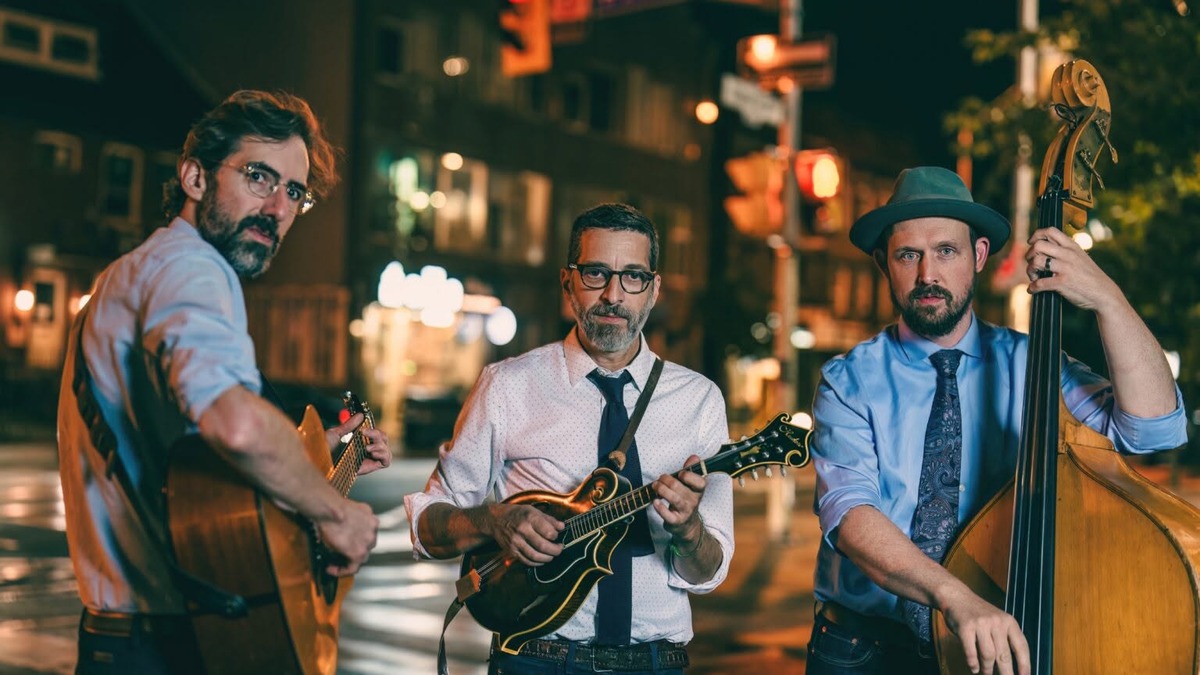
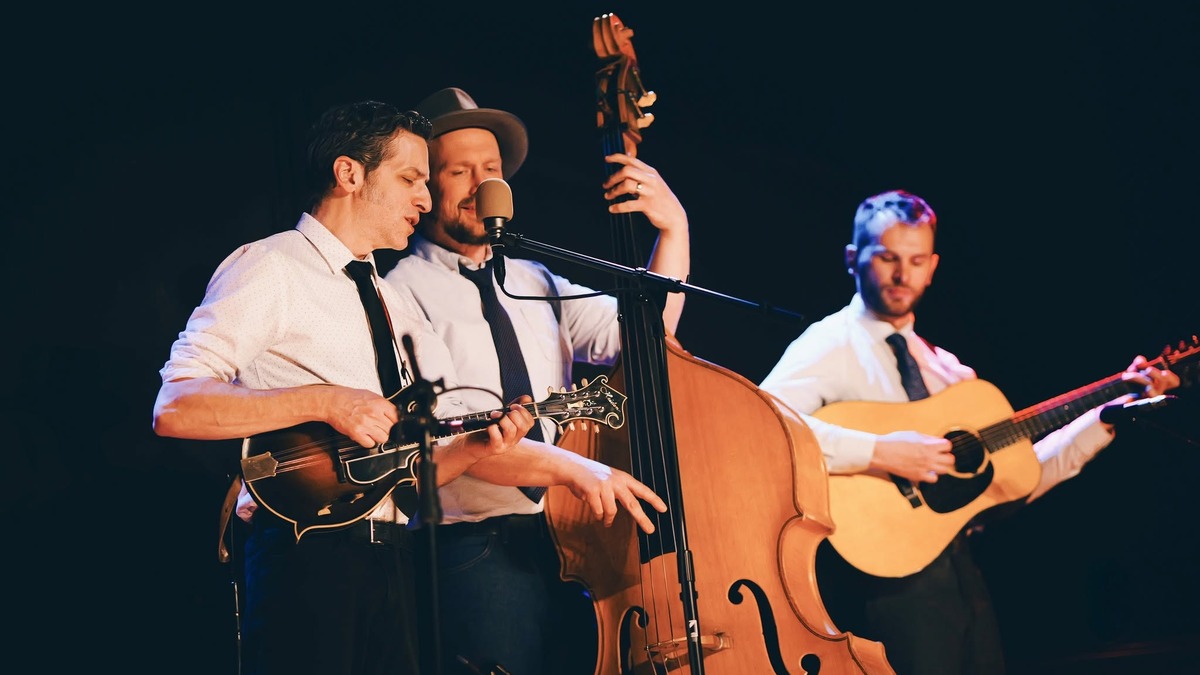
The Andrew Collins Trio is a Toronto acoustic roots group featuring mandolinist and multi-instrumentalist Andrew Collins, guitarist and mandolinist Adam Shier, and bassist and mandocellist James McEleney.
A lot of the trio’s story comes down to what those three people do when one of them puts an instrument down. The sound can pass from bluegrass to something closer to chamber music while the musicians are still sitting in the same places.

A Mandolin Gave Andrew Collins a Reason to Come Home
Collins grew up in Toronto and had tried guitar and trumpet before he found an instrument he wanted to stick with. A recording by David Grisman’s quintet made him pay attention to the mandolin. The moment that turned that interest into a daily habit came later, when he was living in British Columbia and playing with friends who were finding their way into bluegrass.
In a conversation about his early career, Collins described what had been missing in those earlier rounds with the guitar. He had something to practise but nowhere to take it. In British Columbia there were people to play with, and the mandolin had a job the next time they got together.
He went back to Toronto knowing there were people there who played the kind of music he wanted to make. Among them were Chris Coole, Dan Whiteley, Joey Wright and Chris Quinn. Toronto became a place where he could work in the bluegrass tradition and try arrangements that used the same instruments to reach somewhere else.
The two bands Collins co-founded show how far apart those destinations could be. The Foggy Hogtown Boys gave him a band working in bluegrass and old-time music.
The Creaking Tree String Quartet brought an ear for composition and a willingness to give a string part more room to wander. Guitar, mandolin and bass could be heard in both kinds of work, but the place those sounds occupied in a tune changed.
Collins was also producing and engineering music in Toronto, including records for both groups. That gave him a different way to think about what he wanted to hear. The sound of the room, the balance between the bass and the instruments higher up, and the amount of space a part needs all become explicit decisions when you have to make a record of them.
His own Cats & Dogs earned a Juno nomination for instrumental album of the year. Members of his other groups helped make the record, and the first lineup of the Andrew Collins Trio gave him a group of his own to carry that work into a more regular arrangement.
He had spent years learning what he liked about two bands with different priorities. The trio let him find out what happened when he started with fewer people and gave each of them more to do.
There was a solo record before that. Little Widgets gave Collins’s own pieces an identity outside the groups in which he was playing, and the title of Cats & Dogs grew out of one of its tunes, Reigning Cats and Dogs.
Those names are a small but consistent part of his work. He gives a piece a title with its own sense of humour, even when what the players have to do with the notes is quite intricate.
At the time of Cats & Dogs, Collins talked about the practical difficulty of getting his own music out while the other bands were recording and he was engineering. He could let a solo project develop at a pace that made sense alongside that work.
Three Musicians Make More Than One Kind of String Band
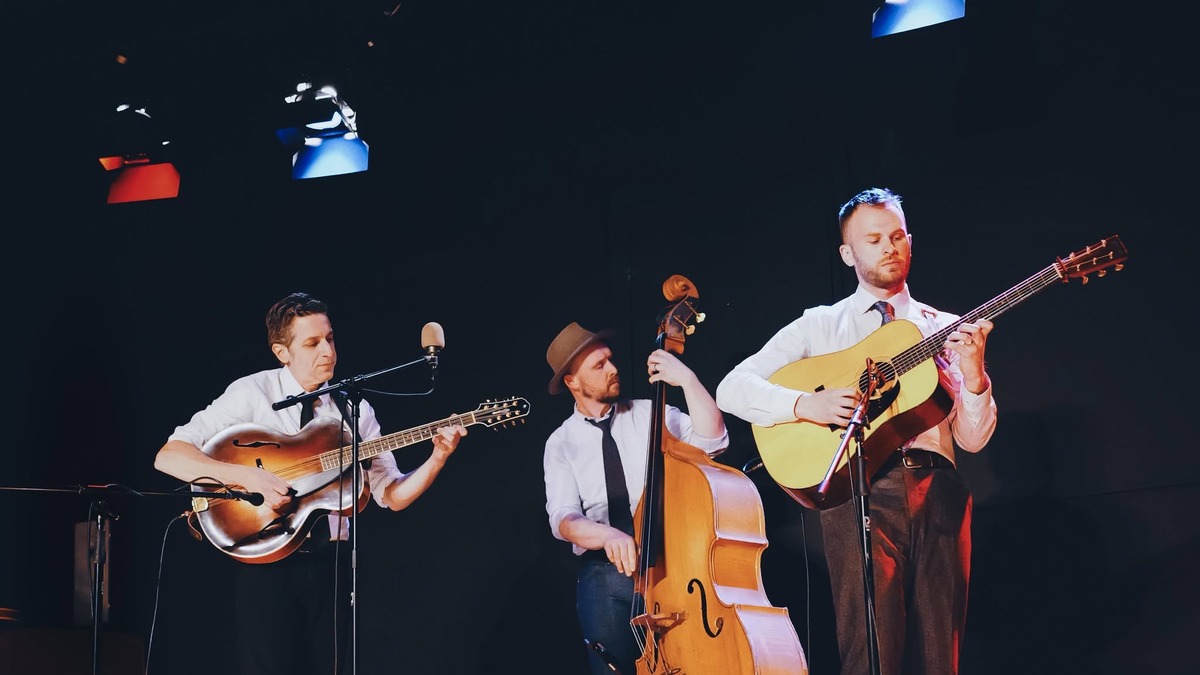
The trio’s current lineup has Collins, Shier and McEleney. In its earlier years, Mike Mezzatesta held the other multi-instrumental chair beside Collins, and McEleney was on upright bass. The difference between the original group and the current one is easiest to hear in the particular instruments the two lineups could bring together.

Andrew Collins
Mandolin is the sound most readily attached to Collins, and he has developed a range of ways to use it.
A short note can belong to the rhythm of a tune, while a sustained tremolo, made by repeating the stroke quickly, can give a melody the impression of carrying on beyond the life of an individual plucked note. The choice of which one to use is part of what keeps the mandolin from having a single personality in this group.
He also plays fiddle, guitar and instruments farther down the mandolin family. The mandola occupies a lower register than the mandolin, and the mandocello reaches farther down again.
A low plucked part from Collins leaves the guitar free to climb above it, while a move to the fiddle introduces a sustained voice even if the rest of the instrumentation stays put.
Collins made an instructional project called The Isolationist’s Guide to Mandolin, bringing some of the habits behind his playing into a teaching format. The work extends the story of a player who needed music to give his practice a purpose.
A fast passage can be entertaining on its own, but Collins’s groups have given him reasons to leave notes out as well as put them in. The beginnings and endings of those lines are a good place to hear how the music fits around Shier and McEleney.
Adam Shier
Shier’s guitar and vocals had a place in Toronto bluegrass before he joined the Andrew Collins Trio.
The Unseen Strangers’ had him on lead acoustic guitar in a lineup that also included McEleney on double bass. That’s a connection worth knowing when the current trio turns on a quick exchange between those two instruments. They’d already had a band in which to learn how the other person heard a tune.
Shier plays guitar and mandolin in the trio and contributes vocals. Those jobs call for different ways of occupying the same space.
An acoustic guitar can give a tune a broad stretch of harmony, then narrow to one moving line while someone else keeps the pulse. A second mandolin opens up the possibility of two parts that share an attack and differ in where they go.
Shier, Collins and McEleney also appear together in the Tone Rangers Stringband, a traditional bluegrass project that gives the same players a different setting.
Here, Shier has a place to work in a more traditional band as well as one where a Debussy tune can sit on the same album as a piece named for Jethro Burns.
By the time Shier appeared in the trio, he had already spent years in the same Toronto community that had brought Collins home from British Columbia.
In the lineup with Shier, guitar is one of the places to listen when a composition begins to spread out. A chord can be audible in the shape of the individual notes without being struck as a block. That gives another player room to make a phrase audible without the whole sound losing its footing.
James McEleney
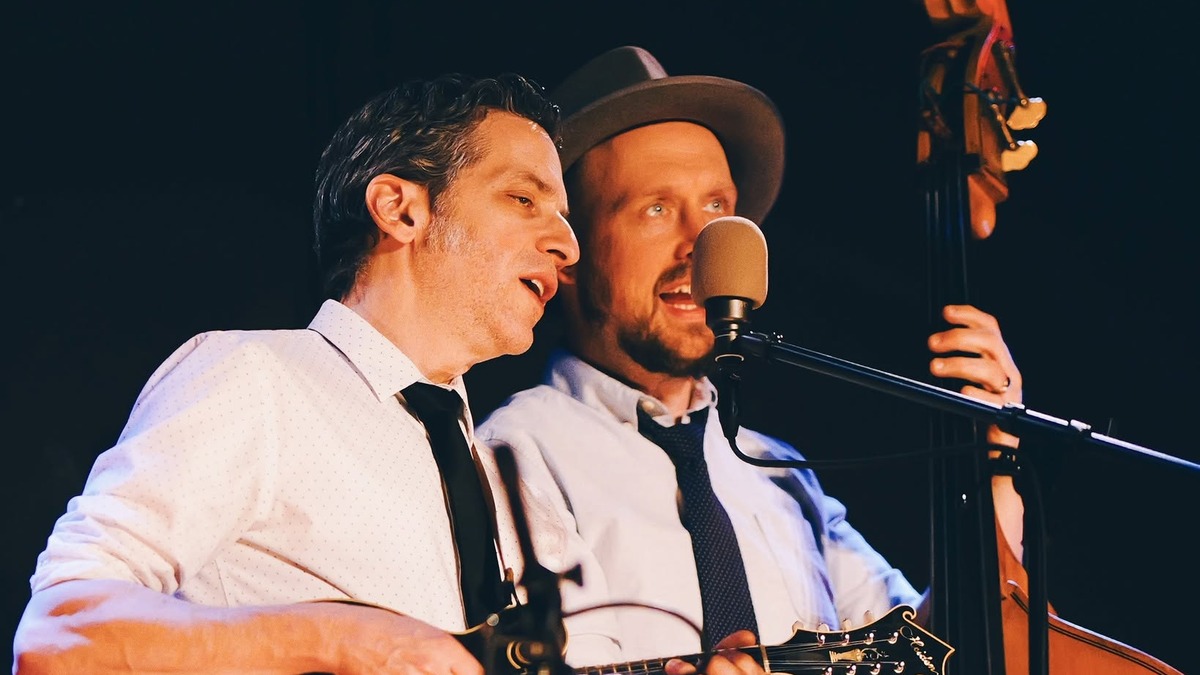
McEleney was born in Scarborough and studied at York University, where he earned a music degree in 2008.
He worked on classical bass with Toronto Symphony bassist Timothy Dawson and studied jazz with musicians including Mike Murley, Barry Elmes and Al Henderson. His Niagara Jazz Festival biography describes the next step as a move into Toronto’s folk and roots community.
The Unseen Strangers were part of that move. McEleney started playing with the progressive bluegrass group in 2010.
It won the DelFest band competition in 2013, and its lineup and collaborations gave him a foothold in the scene in which he has also worked as a sideman. He was in Collins’s trio by the time Collins discussed the new project in 2012.
McEleney’s bass can do the clear work of marking where the chord changes. It can also answer a line, make room for silence or take a bowed part that belongs as much to the texture of a piece as its pulse. Those uses are easy to hear on the early trio records, where the other two players might switch from plucked strings to bowed ones without changing the number of people involved.
His mandocello brings another sort of low voice to the current group. Its attack can fit beside Collins’s mandolin or Shier’s guitar without duplicating the feeling of an upright bass.
McEleney also sings, which makes him part of the group’s arrangement even when a tune stops being primarily instrumental. For a bassist who came to bluegrass through classical and jazz study, the trio has made room for more than one of the things he learned to do.

The Trio Built a Catalogue by Rearranging Its Own Boundaries
A name with three people in it sounds like a limit. The Andrew Collins Trio’s records use that limit in different ways.
A Play on Words and And It Was Good
The first trio records made the group’s name familiar in Canadian acoustic music. A Play on Words appeared in 2013, and And It Was Good followed in 2016.
The band’s record of its awards includes Canadian Folk Music Awards for instrumental group in 2014 and 2016.
And It Was Good uses the biblical creation story as an organizing idea for a sequence of instrumental pieces. That gave the trio something unusual to do with bluegrass instrumentation.
The album credits give some idea of the means the players had available. Collins uses mandolin, mandocello, mandola and violin across the record.
Tongue and Groove
In 2018 the trio released Tongue & Groove, with a set of vocal songs on Tongue and instrumental pieces on Groove. McEleney and Mezzatesta were both part of the recording. The distinction between the discs was simple enough to explain, and it let listeners compare two things the trio could do with substantially the same set of instruments.
Nick Drake’s Cello Song is an especially good place to hear the vocal side. Collins starts from the sound of a mandocello, joined by McEleney’s bass and Mezzatesta’s octave violin.
The instrumental disc gives the players other combinations. David Grisman’s Dawg Grass lets two mandolins share the foreground, and Collins’s Kentakaya Waltz brings in twin fiddles.
Grisman had helped set off Collins’s interest in the mandolin years earlier. Hearing the trio play one of his pieces gives that early encounter a place in the band’s recorded history.
Roger Miller’s Leaving’s Not the Only Way to Go and the Hollies’ King Midas in Reverse, written by Graham Nash, give the vocal disc two more points of departure.
The Rule of Three
On The Rule of Three, released in 2024, the players put Clair de Lune beside pieces with names like Contranym and That Jethro Really Burns!. T
he last title points to the mandolin player Jethro Burns, whose background in country entertainment and jazz supplies one useful route into the kind of repertoire the trio likes to work with.
Debussy’s Clair de Lune was written for piano. An arrangement for acoustic strings has to make sense of the original line and the harmony even though the notes come out of the instruments differently. The tune remains available to someone who already knows it, and you can also listen for what the trio has to distribute between the players because a single pianist no longer has both hands on the keyboard.
The record also includes She’s Like the Swallow, the traditional song associated with Newfoundland.
The album received three Canadian Folk Music Award nominations in 2025.
Retro
The trio released Retro in 2026. Collins went back to a body of music accumulated over more than 25 years of composition and performance, including pieces that predated the trio, and brought some of it into the current group. The project is a retrospective built around playing the pieces again.
A listener can approach it as a new release with titles such as The Road to Bacchus and The Dynamic Duo.
The Road to Bacchus has a particularly clear trail. Collins recorded it with guitarist Marc Roy on Likewise, a project that grew from the pair getting together to pick and play each other’s tunes.
In a profile of those sessions, Roy recalled playing an original piece for Collins in his living room. They decided to keep doing it, and the recordings came out of that informal exchange.
The older Road to Bacchus gives the mandolin only a guitar to deal with.
The early Creaking Tree discography supplies another example. S.Y.T.E. was on the quartet’s 2003 recording and turns up again on Retro.
The catalogue also gives a listener the option of moving from the trio back to its other bands. The Foggy Hogtown Boys offer the direct pleasure of a group with a deeper bench of bluegrass instruments. The Creaking Tree String Quartet gives the ear a different sense of how the parts can be made to fit.
The music on Retro comes from a writer who had been able to work in both worlds and can still draw on them when he brings a tune to two collaborators.
What Three Players Can Change Before the Next Chorus
One of the pleasures of the Andrew Collins Trio is how quickly the weight of the group can move.
Follow McEleney’s bass for a few bars and it can become clear that the part keeping the music moving is also the one giving Collins and Shier permission to pause. When either of those players changes instruments, the next tune can begin with a different range of sounds available to everyone.
Collins’s music can be described as bluegrass, folk, jazz or chambergrass depending on where you start.
The most useful version of the description might be the one you can hear inside a single tune. There’s the physical snap of a plucked string and the give of three people deciding how long to stay together before one of them steps away.
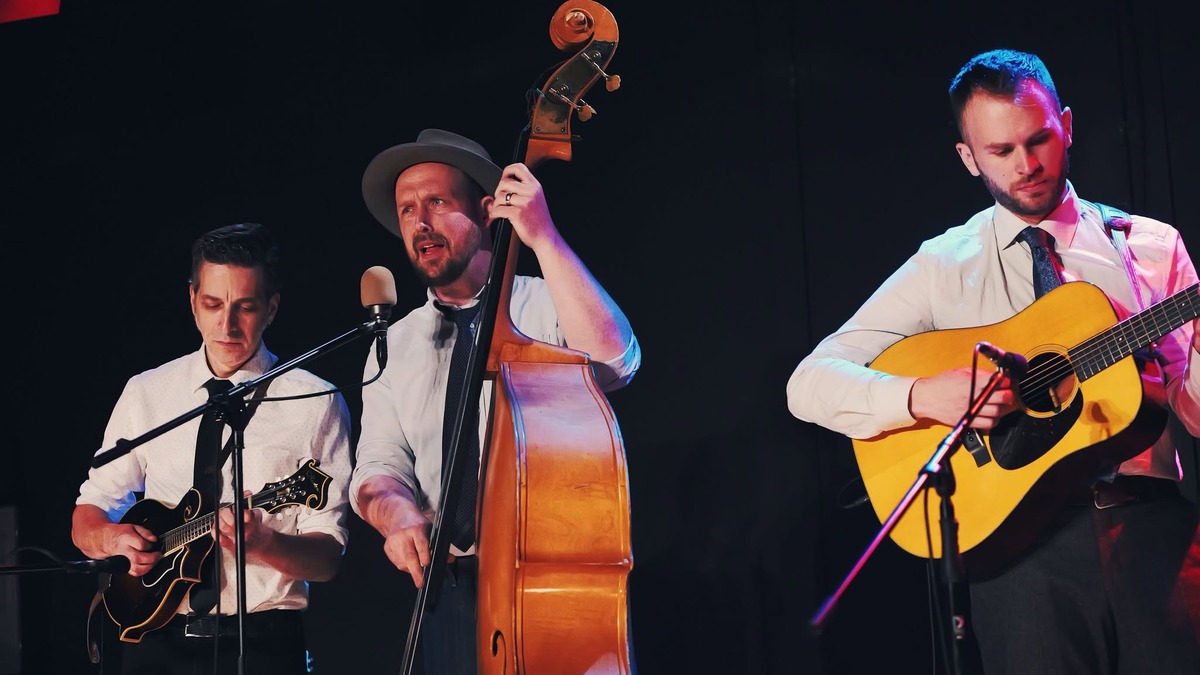
Where the Andrew Collins Trio Puts Those Choices in Motion
The recent records give the trio two ways to look back.
The Rule of Three takes material from outside the group’s usual repertoire and finds a place for it, while Retro takes pieces from Collins’s own past and lets his current partners have a say in what they become. In either case, the moment to listen for is when a familiar line passes to somebody new.
The Cuckoo’s Nest Folk Club, in cooperation with Forest City Comhaltas, presents the Andrew Collins Trio at the German Canadian Club, 1 Cove Road in London, Ontario, on Sunday, November 29, 2026.
Doors open at 6 p.m. EST and the all-ages acoustic concert starts at 7:30 p.m.