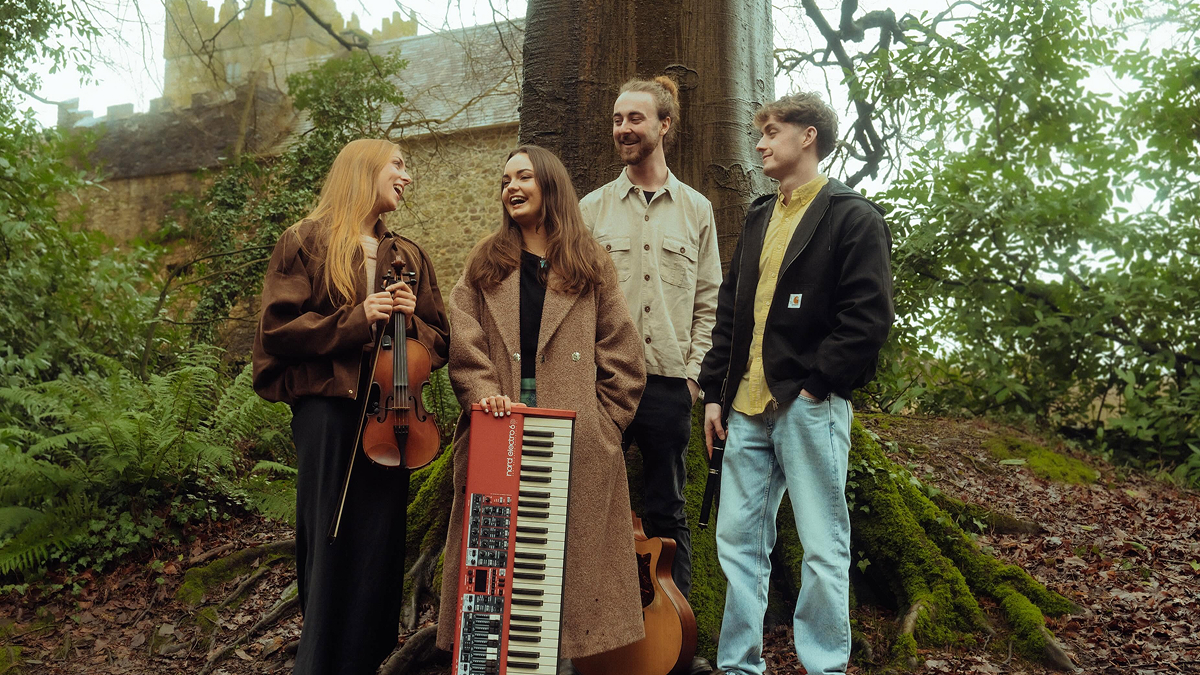
From tin whistles in south Wexford to a cow-shed studio and a cross-Canada tour: how Tulua became one of Irish traditional music’s busiest young bands.
The last tune in the opening set of Tulua’s second album reached the band at six o’clock in the morning, in a kitchen, on the far side of the world. “Cap and Bells,” a reel by Josephine Keegan, was passed along during a 6 a.m. kitchen session with fellow traditional musicians while the band was touring Australia.
Months later, the four members of Tulua were gathered under one roof in a studio carved out of an old cow shed in the Comeragh Mountains of County Waterford, playing it live as the closing tune of the three-reel set that opens In The Snug.
It is a tidy illustration of how this band works.
Tulua draws on songs and tunes from its own corner of south-east Ireland, on material gathered from elsewhere in the country, and on whatever turns up along the way, whether that is a reel handed over in an Australian kitchen or a tune by a Finnish accordion player that the band learned on the day it recorded it.
Formed in 2019 by musicians who grew up together in Wexford, the group has since played in seven countries on three continents, been chosen as an official showcase act at the 2025 Folk Alliance International Conference in Montreal, and supplied the score for a community production at Ireland’s national traditional music festival.
This autumn it is in the middle of what it describes as its biggest tour yet: 24 Canadian dates between Courtenay, British Columbia, on October 17 and Halifax on November 17, with a stop at the German Canadian Club in London, Ontario, on November 5.
Here is how a group of childhood tin whistle players ended up there.
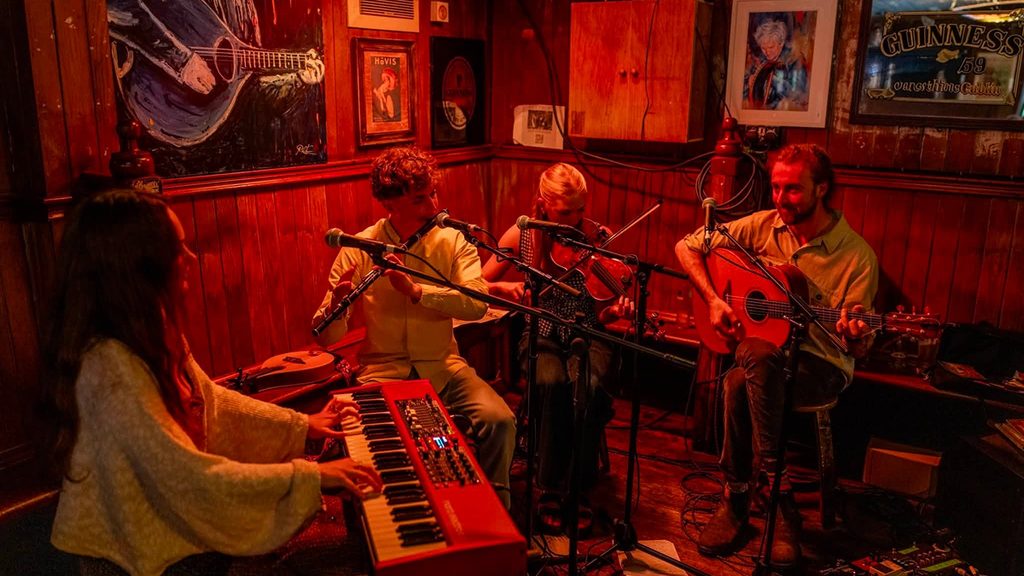
Starting Out At Six With A Tin Whistle In Hand
Like most Irish traditional musicians of their generation, the members of Tulua began on the tin whistle.
By their own account they have been playing traditional music since they were about six years old, learning old tunes and songs and then moving into the competition circuit that shapes so much of the tradition: the Fleadh Cheoil, run by Comhaltas Ceoltóirí Éireann, in which players qualify through regional rounds for the All-Ireland finals, along with the Scór and Siansa competitions.
Three of the future band were already competing together. In 2019, Kayleigh Moran, her sister Caoimhe and flute player Diarmaid Murphy represented the Bannow branch of Comhaltas in County Wexford in the 15–18 trios competition at the All-Ireland Fleadh in Drogheda, County Louth. Their performance of a reel called “M and M” was filmed for Comhaltas’s ComhaltasLive archive.
The band’s own account of its beginnings, given in an early profile for South East Radio, is less formal than the competition record. Each player had been developing separately in other small bands, at weddings and at informal gigs. The Moran sisters were playing weddings together and building their own sets; they brought in Murphy, and Cian O’Grady was asked to join them for bigger engagements.
What followed, the band said, was a discovery: together they were making something different from what they usually played, and it felt natural. They agreed to keep it going, took a few gigs and festival slots, and slowly began to operate as a band.
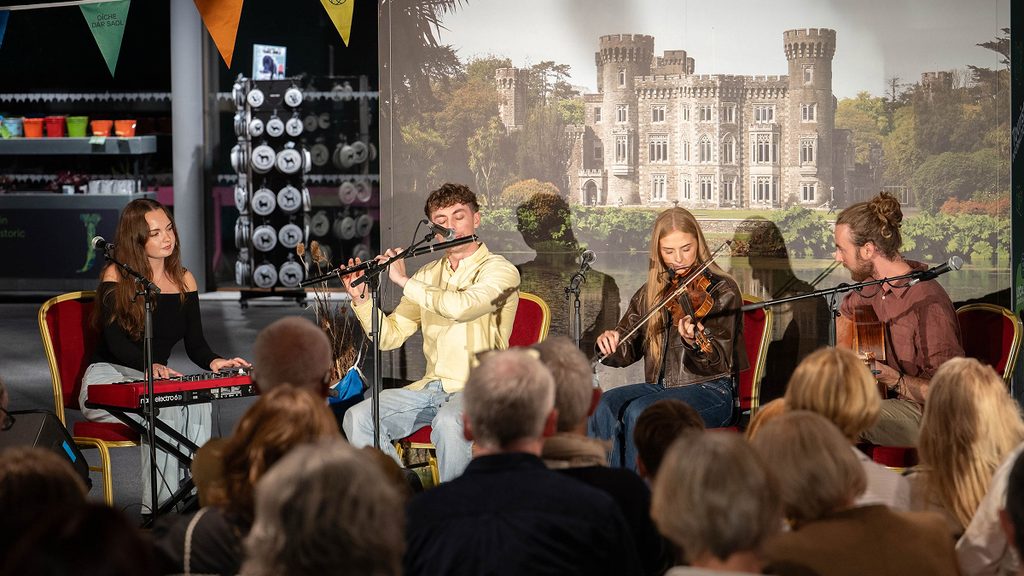
Becoming A Band Just Before The Pandemic Hit
Tulua dates its official formation to 2019. By the following summer the group had real momentum, with plans to play in the Netherlands and the United States, and then the Covid-19 pandemic stopped everything. So the band recorded instead.
That summer it made its first EP, Rising, and released a single, “Liberty Sweet Shore,” on August 21, 2020. Both tracks eventually found a place on the Irish & Celtic Music Podcast, which played “Liberty Sweet Shore” and another track from the EP, “Who’s at the Gate.”
The band’s home base is Carrig-on-Bannow, a village in south Wexford, and the local connection has never loosened. Its recordings and its repertoire keep returning to the county, and Wexford’s National Opera House, where the band has performed extensively, serves as something close to a home venue.
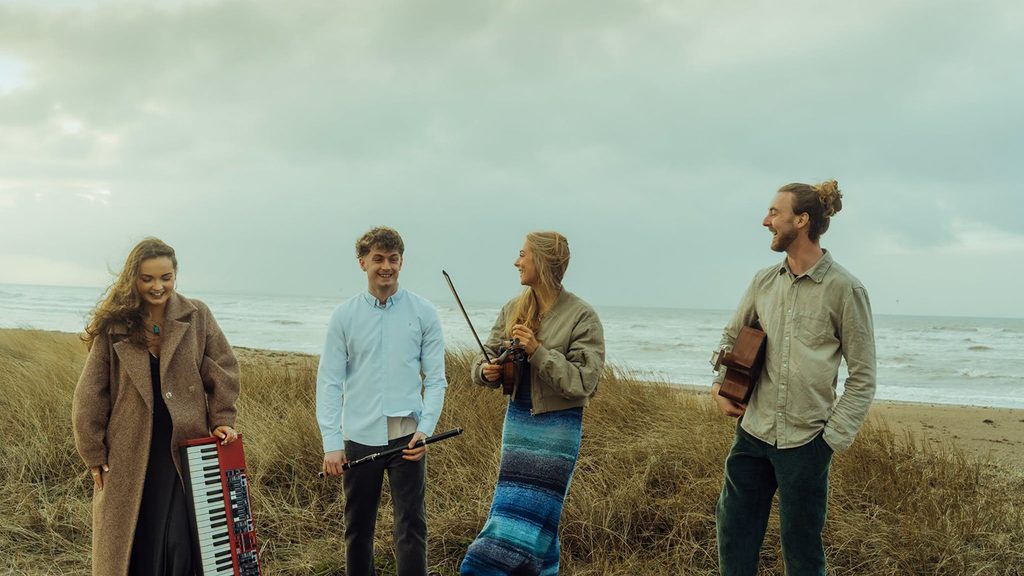
The Four
Kayleigh Moran: Fiddle And Voice
Moran came up through the Bannow branch of Comhaltas and, according to the band’s biography, has been prominent on the Irish traditional scene since an early age. The band describes her fiddle playing as intricate and driven and her singing voice as unique and unforgettable, and says the two have brought her several awards over the years, including at the All-Ireland Fleadh.
Diarmaid Murphy: Flute, Low Whistle And Mandolin
Murphy is described in the band’s biography as a name known to many in the world of Irish flute playing, praised for his expressive slow airs and engaging session playing. His style, the band says, is instantly recognizable, marked by distinctive flourishes and polished ornamentation: the rolls, cuts and other decorations that flute players use to make a melody their own.
He has won multiple All-Ireland titles at the Fleadh and, by the band’s account, is central to its identity. On the new album he adds low whistle and mandolin to the flute.
Cian O’Grady: Guitar, Bouzouki And The Composer
Wexford-born O’Grady is the band’s multi-instrumentalist, a player who developed through years of local sessions on Irish bouzouki, guitar and banjo before finding a passion for music technology and recording. His honours range from All-Ireland Fleadh wins to scholarship awards for his music technology studies. He is also the band’s most visible composer.
“No Coming No Going,” the slow title track of the debut album, was written during his travels in the Netherlands; the band says it was inspired by a way of living that values the present moment over the past or the future.
He wrote “The Bellman,” one of the tunes in the debut’s opening set, and contributed three original compositions to In The Snug, among them “Ebb and Flow,” inspired by his childhood on the coast.
Ella McGrory: Piano, Keyboards And Fiddle
McGrory, from Culdaff in Inishowen, County Donegal, is the group’s newest member. Caoimhe Moran, a founding member who played harp, piano and concertina and sang, no longer appears in the lineup.
She arrives from a deeply musical family. Her mother, Róisín McGrory, is a respected Donegal fiddler, and has noted that Ella plays both fiddle and piano, as her grandfather and great-grandfather did. A first-class honours graduate of the Irish World Academy at the University of Limerick, McGrory is an All-Ireland Fleadh-winning musician who has performed and taught internationally, including at the Festival Interceltique de Lorient in France.
With her sister Deirdre she released the EP Loinnir in 2021, and she is a member of 3 on the Bund, a band formed at the University of Limerick in 2019 that tours extensively in Europe. On In The Snug she plays piano, keyboards and synth bass.
The McGrory connection runs through the album’s credits. Neil McGrory contributed additional recording at Macruari Audio in Culdaff, the studio that recorded her family’s earlier releases.
And when the band played its album launch on July 4 at The Plaza in Buncrana, the opening act was Óige na hInse, a group of young Inishowen musicians directed by Róisín McGrory: a homecoming for the newest member.
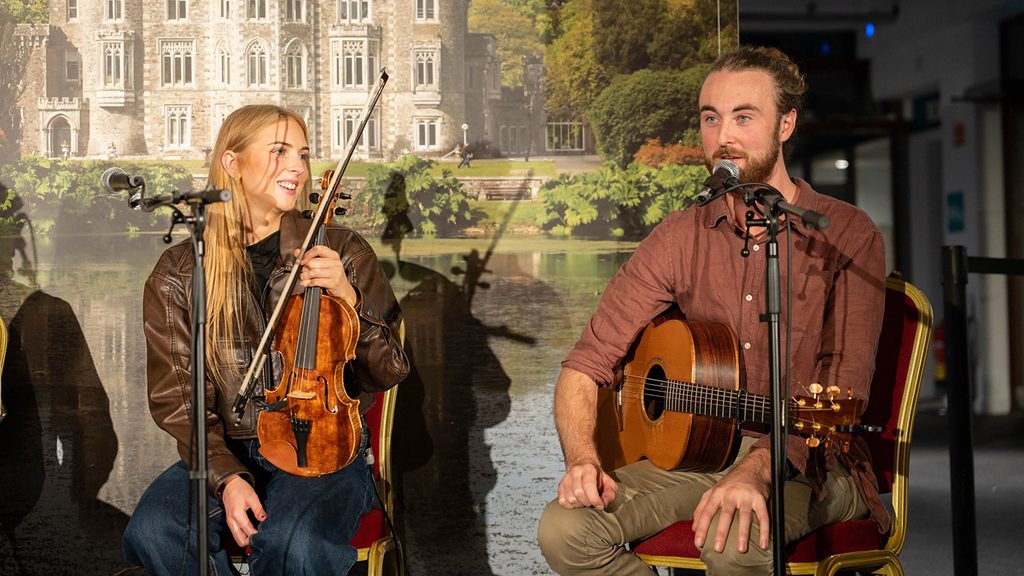
Self-Funding A Debut Album In Just Six Months
No Coming No Going, released on July 30, 2023, was a self-funded record and a fast one. According to the band, it was written, recorded, mixed, mastered and released in six months.
It runs to ten tracks and about 44 minutes, mixes original, traditional and newly composed material, and includes a set called “The Opening Set” that links O’Grady’s “The Bellman” with tunes by Johnny O’Leary and Paul Roche. The band’s own description of the record is “mysticism, drive and elegance.”
By the band’s own figures, the album has sold thousands of copies and been streamed tens of thousands of times, solid numbers for an independent traditional release. Since its release the band has taken the music to Ireland, Germany, the Netherlands, Australia, France, the United States and Canada.
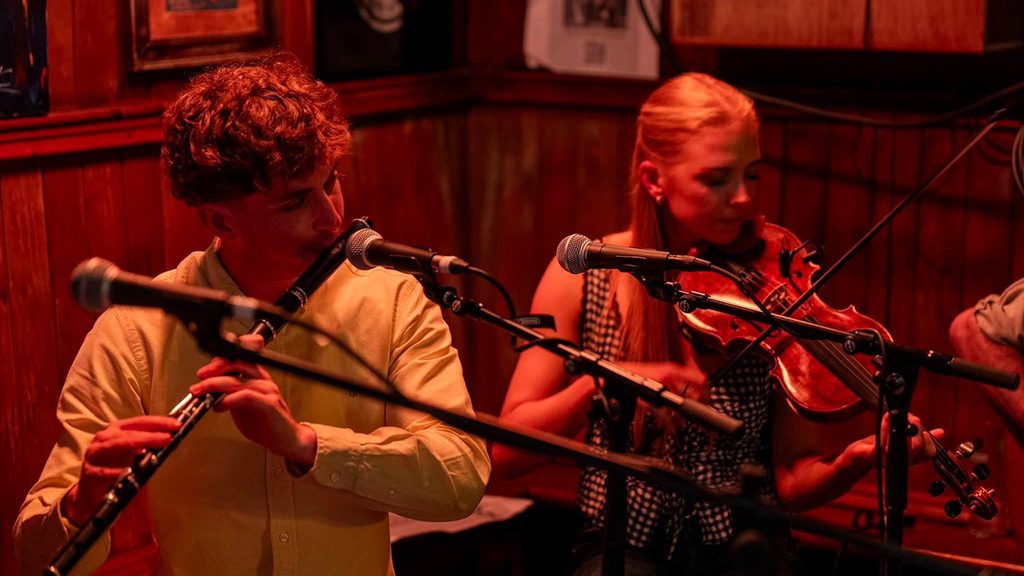
Staying Traditional While Testing The Edges Of Possibility
Tulua’s stated vision is to explore the boundaries of Irish traditional music and to search for what is possible within its roots. Earlier descriptions of the band went further, calling it a fusion act; recent biographies have settled on plainly “traditional.”
The evidence of the albums is of a group that stays inside the tradition’s repertoire of reels, slow airs and historical ballads while arranging it for a lineup that puts piano, keyboards and synth bass alongside fiddle, flute and bouzouki.
The band describes its live show as a journey through songs about love, tunes about life and everything in between, an approach built on bringing the audience along rather than simply playing at it. The Irish press has responded in kind. The Irish Independent called Tulua “one of the hottest young prospects in traditional Irish music.”
Irish Music Magazine praised its “true bond and empathy,” and its critic Mark Lysaght reviewed In The Snug warmly in a recent issue. Australia’s National Celtic Festival audience heard something grander: “music that transcends the mind.”

Mapping Tulua’s Rise Through Festivals And International Stages
Tulua’s itinerary since the debut reads like a map of the Celtic world. In June 2025 the band performed and led workshops at the National Celtic Festival in Portarlington, Australia. It has played the Festival Interceltique de Lorient in Brittany, Milwaukee Irish Fest in the United States, and, in Canada, the Stan Rogers Folk Festival in Nova Scotia and the Goderich Celtic Roots Festival in Ontario.
At home, its festival credits include Electric Picnic, the Phil Murphy Weekend in County Wexford and Éalú le Grá in County Galway, and in 2026 it has also played in Scotland. The band lists Beoga, Dervish, De Dannan, Atlantic Arc, Fergal Scahill and Cormac Begley among the acts it has shared bills with, and it appears on the lineup for the 2027 Auckland Folk Festival in New Zealand.
The official showcase at the 2025 Folk Alliance International Conference in Montreal put the band in front of North American folk presenters, which is how conferences like that work, and the Canadian tour is the plain consequence. Its music is also reaching listeners through channels other than the stage: playlists on Spotify and podcasts, CKUA Radio in Alberta, RTÉ Raidió na Gaeltachta, and the television programmes Fleadh TV and Ireland with Michael.
In March 2026 the world-music label Putumayo profiled the band and featured its version of “Passage West,” John Spillane’s song that weaves a love story together with the history of Irish emigration. Passage West is the town on the River Lee in County Cork from which many emigrants left during the Famine years, bound for America.
Tulua’s recording had already been remixed and released as a single in 2024, and Putumayo’s profile links the band to its Celtic Voices collection.
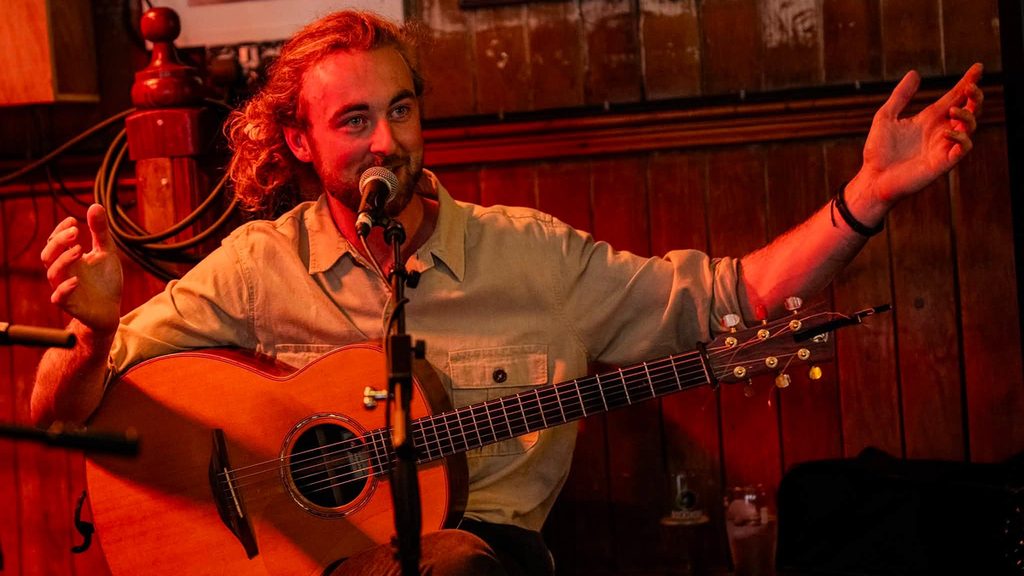
Home Ground In Wexford And A Commission About Migration
Ireland’s national traditional music festival, Fleadh Cheoil na hÉireann, was held in Wexford town for the first time in August 2024, and Tulua was part of it in a way that went beyond the competition circuit on which its members had grown up.
Creative Ireland and Wexford County Council, working with the National Opera House’s education and outreach team, commissioned a production called Who Am I Now, developed with residents of Direct Provision centres in south Wexford who were seeking international protection.
Based on an original story by Elizabeth Drwal about a group of fugitives fleeing the chaos of their past to search for a new life, it was performed through dance, drama and music on August 7, 2024, as part of the festival. O’Grady composed the score and Tulua performed it.
The band’s promotional material describes the work as an original, multicultural and multidisciplinary piece telling the story of migrants seeking safety in other countries. Wexford County Council said the project explored the value that diversity brings to Ireland’s changing culture. For an Irish band, the subject is a natural fit.
Emigration is among the oldest subjects in the country’s songs, and Tulua’s repertoire keeps returning to it, from “Passage West” to the historical ballads on its new record.
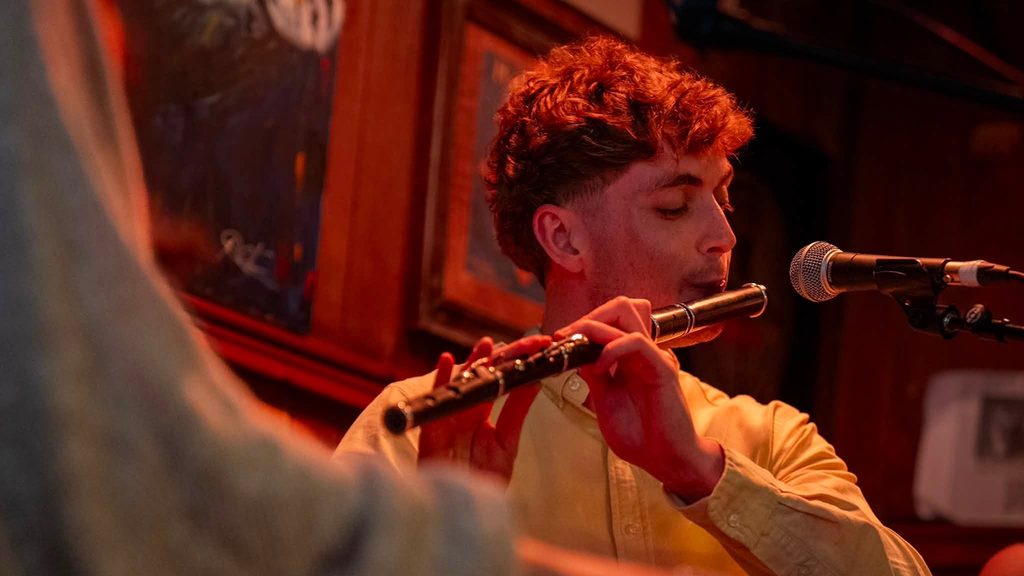
Inside In The Snug, Recorded Live In A Converted Cow Shed
The second album, In The Snug, was released on June 24, 2026, and launched at home in Wexford before moving on to dates such as Buncrana. It holds twelve tracks. The band describes it as a collection of tunes and songs it has been playing over the past couple of years, which found their way onto the record gradually, along with memories gathered in places from cottage retreats to big stages to small pub snugs.
A snug is the little private room in a traditional Irish pub, and the title places the album where the band says the music lives: songs from its own area shared in “kitchens and snugs.” The band’s message to listeners on its website is a short one: “Here’s to a new chapter!”
The recording method matches the title’s intimacy. Early in 2026 the band spent nearly two weeks in the Comeragh Mountains in County Waterford, working in a small studio converted from an old cow shed overlooking a valley, and recorded all twelve tracks live and together.
Benny McCarthy recorded the album at Doon Studios in County Waterford, with additional recording by Neil McGrory at Macruari Audio in Donegal. The mix was done by Billy Sutton in St. John’s, Newfoundland, who also plays shaker on the record, a Canadian thread running through an Irish album, and the mastering was by Aidan Foley at Masterlabs in Roscommon. Evan O’Grady and Donnchadh Gough add bodhrán.
The repertoire moves from history to invention. The opening set pairs two traditional reels, “Michael Relihan’s” and “Rigney’s,” the latter associated with the playing of Paddy O’Brien, with Keegan’s “Cap and Bells,” the tune from the Australian kitchen. “Dunlavin Green” addresses the 1798 killing of 36 Irishmen in County Wicklow, in a rebellion year whose centre of gravity was County Wexford.
“The Cliffs of Cullenstown” sets a century-old local poem to music; Cullenstown is a village on the Wexford coast about 25 kilometres by road from Wexford town. “Valo,” by a Finnish accordion player, was learned from scratch and recorded on the same day. And O’Grady’s three originals include “Ebb and Flow.” The first single from the album was the opening reel set, released in September.
The band says that what makes the album special is its traditional roots, which are part of everyday life in Ireland. That pairing of the historical with the personal, a massacre ballad beside a tune from a kitchen in Australia, is the spine of the record.
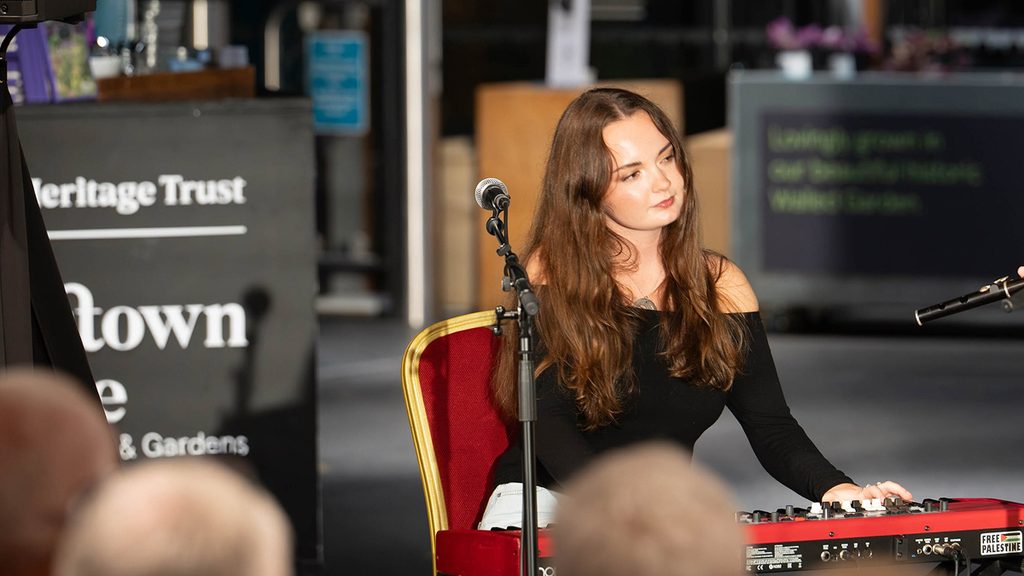
Crossing Canada On Their Biggest And Longest Tour Yet
Canada is not new to Tulua. Between the Folk Alliance showcase in Montreal, the Stan Rogers festival and the Goderich Celtic Roots Festival, the band has already played in Quebec, Nova Scotia and Ontario.
But a Saskatoon listing for the current tour describes it as the band’s first visit to Western Canada, and the itinerary is long: Vancouver Island and the Shuswap in British Columbia, Saskatoon, four Alberta dates, Vancouver and Salt Spring Island, then Ontario, Quebec and the Maritimes, including Prince Edward Island and a closing show at The Carleton in Halifax on November 17.
The rooms are as varied as the map: folk clubs, municipal theatres, community halls, a winery in Clarendon, Quebec, a schoolhouse in McDonalds Corners, Ontario, and a hotel venue in Chelsea, Quebec.
London’s date, on Thursday, November 5, is at the German Canadian Club on Cove Road, presented by Sunfest in cooperation with the Cuckoo’s Nest Folk Club, between stops in Ingersoll and Aurora.
Tulua’s Many Paths Keep Leading To New Music
Every band says it plays the music of its own place. What sets Tulua apart is how widely it lets that place extend: from a south Wexford village to a Donegal peninsula to a Finnish accordion player’s tune and an Australian kitchen. A name that means “tribe of many paths,” or “becoming more,” has proved accurate both ways. If the pattern holds, somewhere on the road across Canada there is another kitchen, and another tune, waiting.
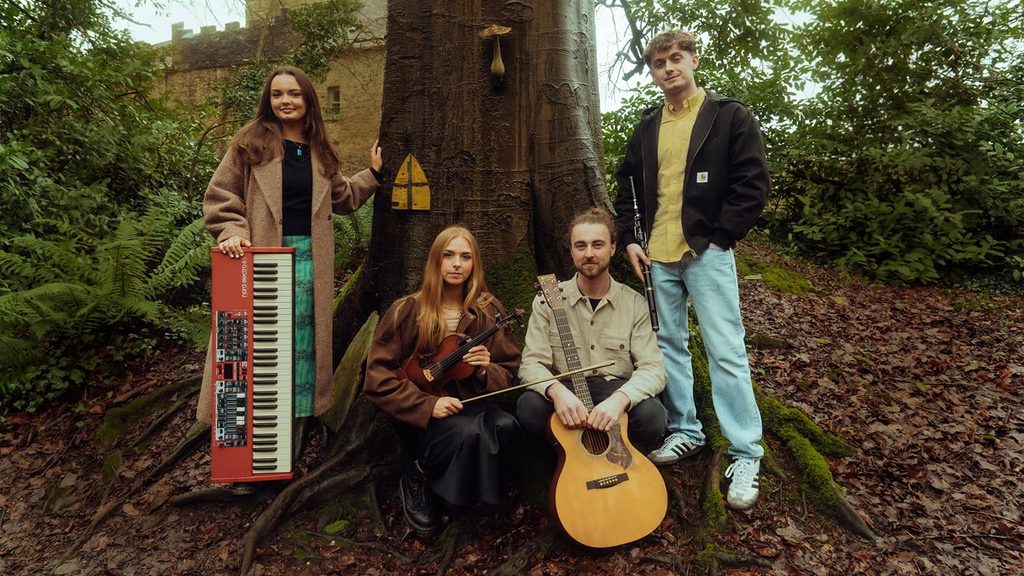
Get Your Tickets to Tulua in London, Ontario at the German Canadian Club on Nov. 5
When Tulua arrives at the German Canadian Club on Cove Road on Thursday, November 5, it will be the band’s second night in Ontario. It plays Ingersoll the evening before and Aurora the evening after.
Doors open at 6:30 p.m. and the music starts at 8:00. The show is all ages and licensed, with general admission tickets at $25 plus fees through Ticketscene. The ticketing page lists a maximum capacity of 80, which makes it one of the smaller rooms on a tour that also takes in winery and schoolhouse stages.