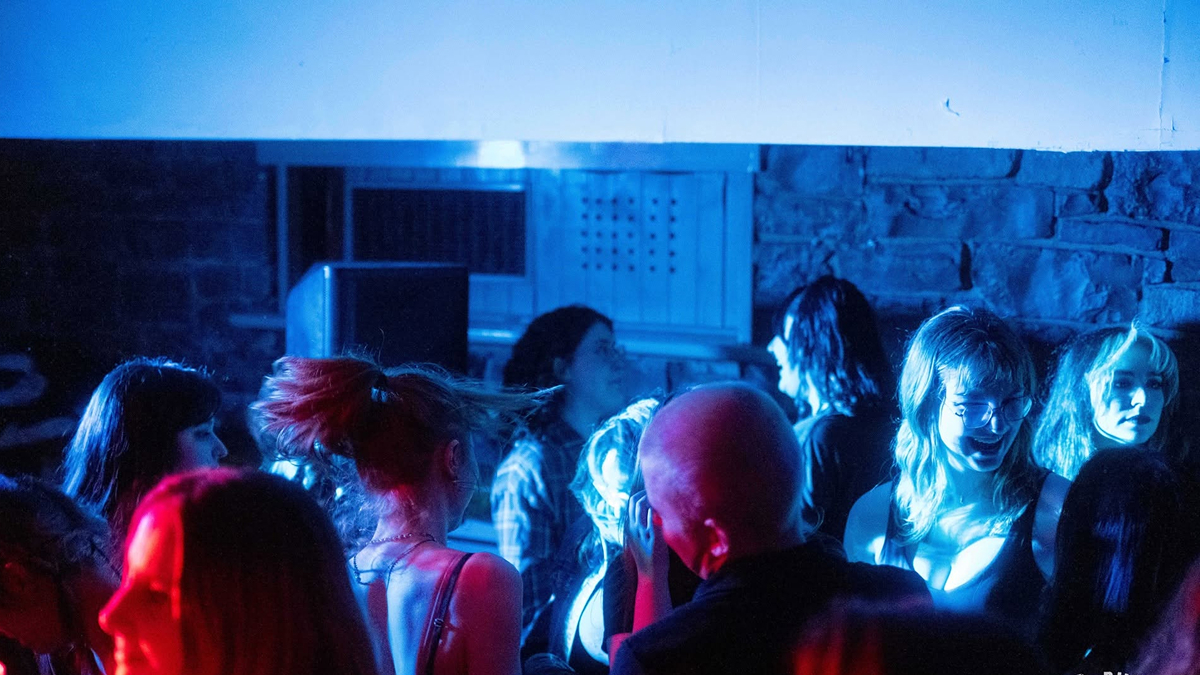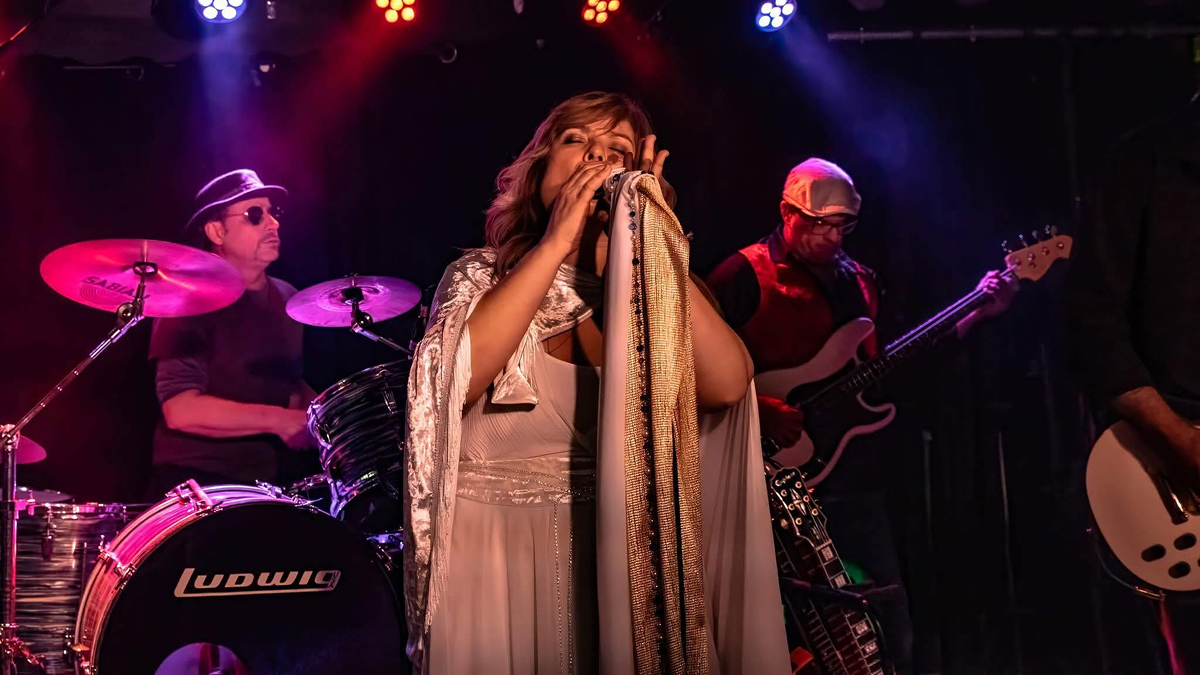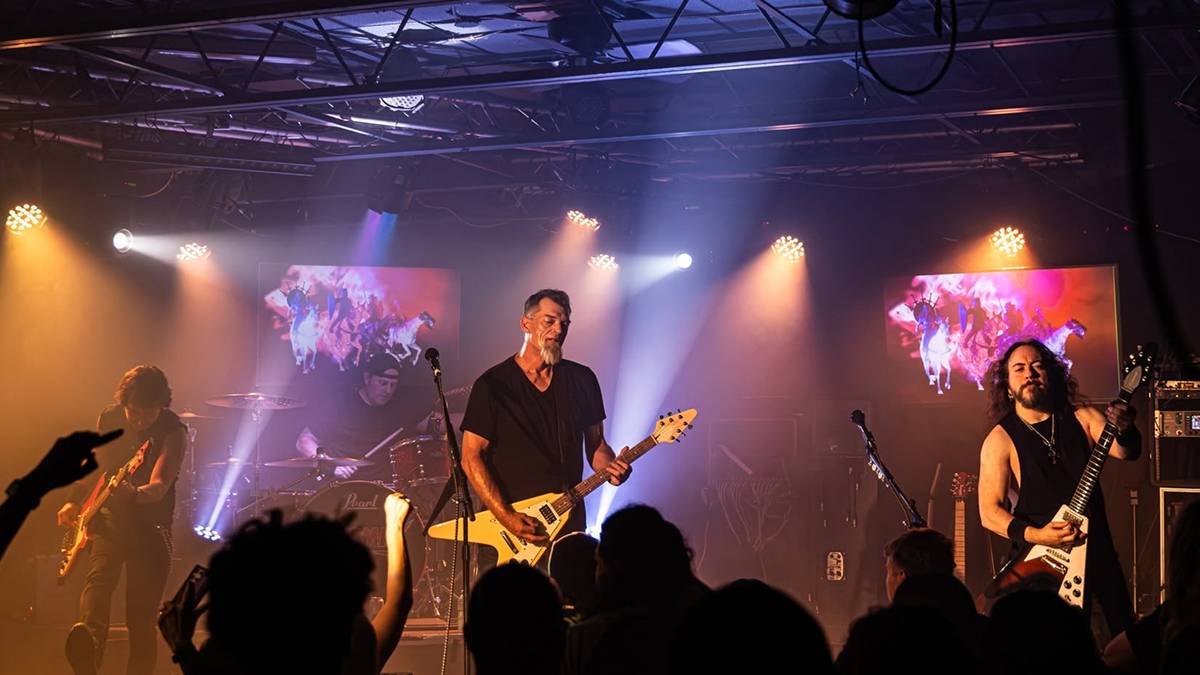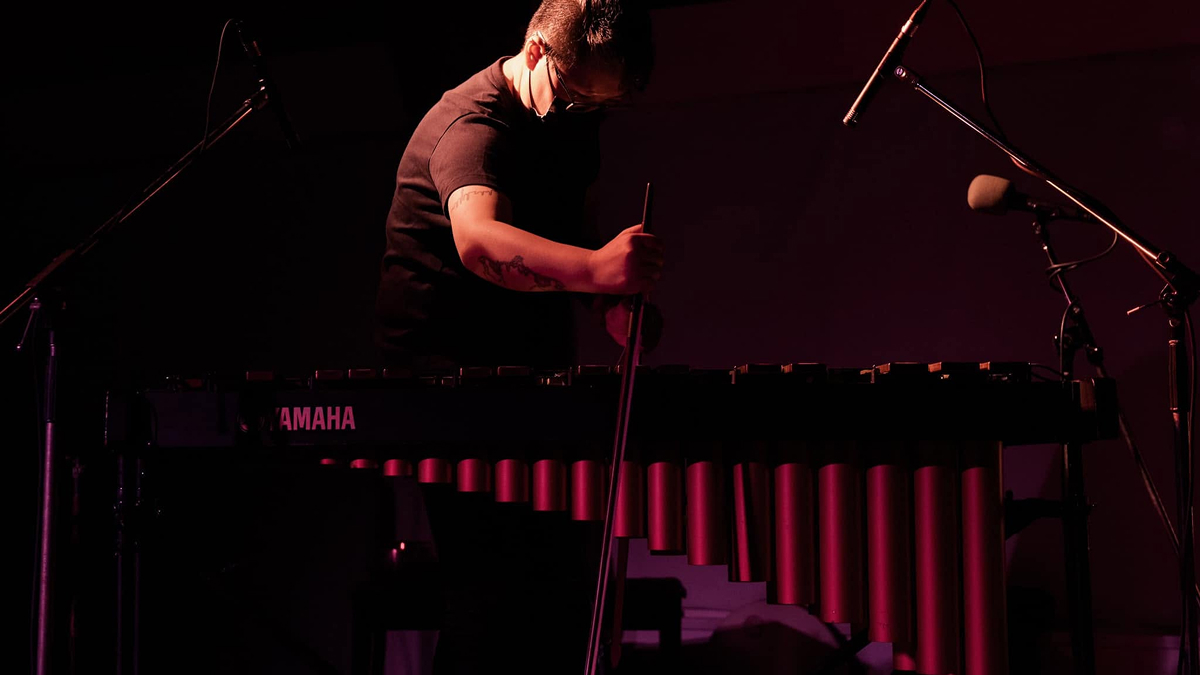
Picture a room where ten musicians who have mostly never played together are about to make music that will exist exactly once. There’s no setlist, no chord chart, and no safety net — just two quintets, a shared understanding of a few ground rules, and an audience that has been quietly coached on how to listen.
This is a typical night at Exit Points, a Toronto-based free improvisation concert series and record label that has spent years turning spontaneous, unrehearsed music into one of the city’s most quietly influential recurring events. What started as a single experimental evening at a neighborhood Ethiopian restaurant has grown into a monthly institution with its own record label, a formal partnership with one of Canada’s oldest new-music organizations, and a reputation for pulling together some of the most unpredictable lineups in Canadian experimental music.
To understand why Exit Points matters, it helps to understand exactly where it came from.
I’m Totally New Here. What Exactly Is Exit Points?
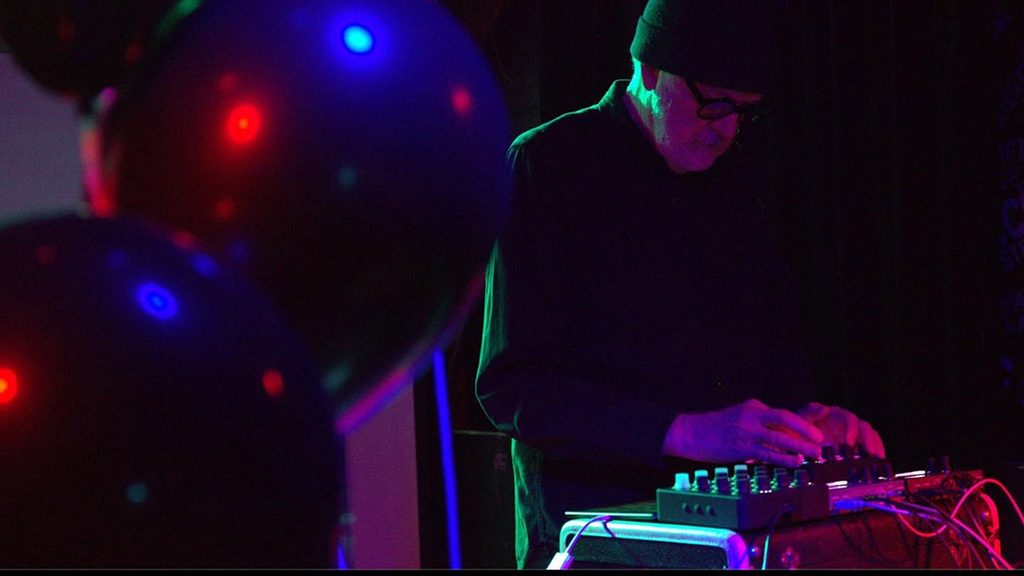
At its core, Exit Points is a monthly electroacoustic and free-improvisation concert series founded and led by Toronto musician, researcher, and producer Michael Palumbo.
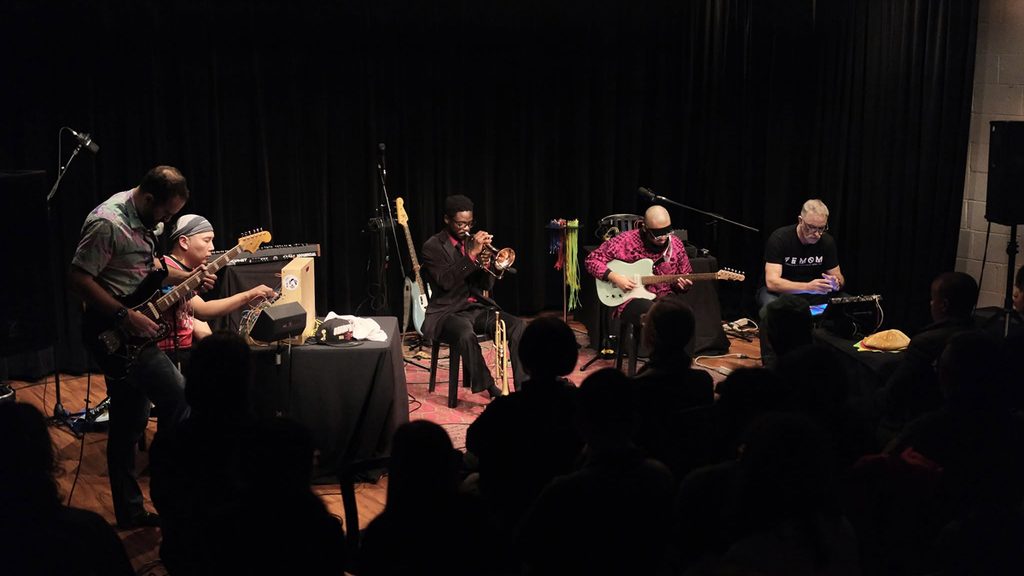
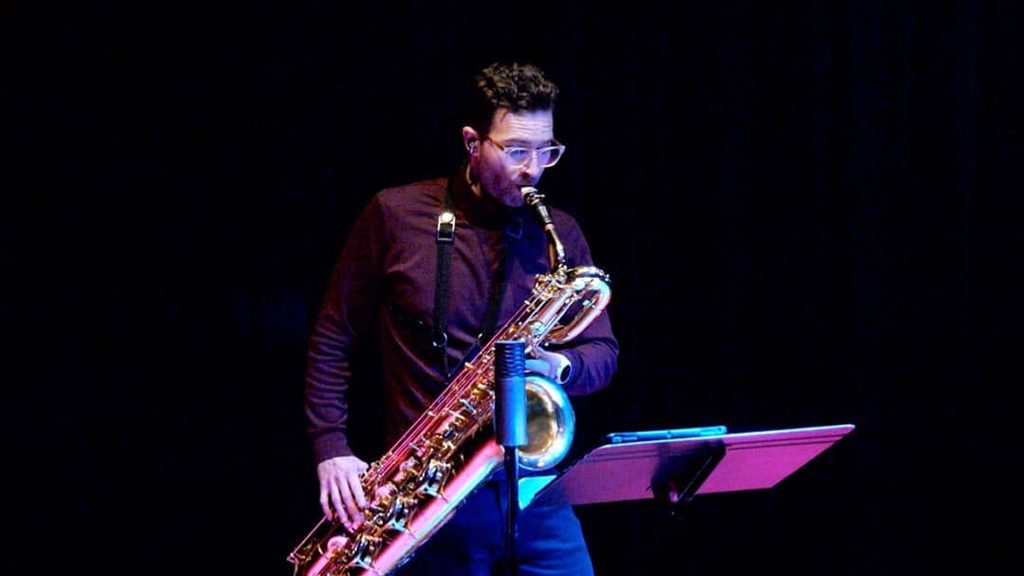
Each evening typically brings together roughly ten performers — often strangers to one another — who are split into two ensembles and given a stage to improvise a set with no predetermined structure. Performers arrive from wildly different musical backgrounds, so a single night might combine a classically trained pianist, a modular synthesist, a jazz saxophonist, a contemporary dancer, and a TTC busker who has never touched a piece of music technology before.
That kind of deliberate mismatch is the entire point of the series, designed to force genuinely new combinations of sound rather than familiar collaborations repeating themselves. Because no two lineups are ever the same, no two Exit Points concerts sound remotely alike, which is part of why the series has built such a loyal following among both musicians and listeners.
The series also functions as a record label, with performances captured on multi-track recordings, mixed into spatialized audio, and released later on Bandcamp under the Exit Points name.
Beyond the concerts and the label, Exit Points has increasingly framed itself around community and education, with its own website describing its mission simply as live improvised music in Toronto encompassing concerts, albums, education, and community.
Toronto’s Free Improvisation Lineage: The Scene Exit Points Was Born Into
Exit Points did not emerge in a vacuum. Toronto has a free improvisation lineage stretching back to the 1970s, when groups like CCMC — founded in 1974 by artists including Michael Snow, Casey Sokol, and Nobuo Kubota — began fusing free jazz, avant-garde composition, and electroacoustic experimentation into a distinctly Canadian sound.
That era also produced cross-disciplinary collectives such as the Artists’ Jazz Band and the sound-poetry group the Four Horsemen, whose members blurred the lines between music, visual art, dance, and literature in ways that later scholars would describe as the city’s own “golden age” of experimental performance. The Music Gallery, which still operates today under the motto “Toronto’s Centre for Creative Music,” grew directly out of that period and remains one of the anchor venues for the city’s improvised and experimental music communities.
The next major building block arrived in 2004 with the founding of the Association of Improvising Musicians Toronto (AIMToronto), a musicians’ collective whose quarterly Interface Series has paired more than one hundred Toronto-based improvisers with internationally renowned guests such as William Parker, Eddie Prévost, and Joe McPhee.
Alongside AIMToronto, venues like Somewhere There and the Toronto Improvisers Orchestra (TIO) — modeled on the London Improvisers Orchestra‘s use of conductor-directed hand signals to shape group improvisation — gave the city’s growing pool of experimental musicians a structured place to develop their craft. It was precisely this ecosystem, and the Toronto Improvisers Orchestra in particular, that would eventually set the stage for Exit Points’ own creation story a decade and a half later.
From Personal Crisis to Musical Calling: Michael Palumbo’s Origin Story
The story of Exit Points begins not with a business plan but with a personal turning point.
In 2019, Michael Palumbo — an electroacoustic musician, teacher, and researcher — was navigating what he later described as multiple overlapping crises in his life. Around that time, he began performing improvised music on his modular synthesizer through his participation in the Toronto Improvisors Orchestra, and the experience changed the trajectory of his creative life. Palumbo has said that this kind of music-making relies heavily on empathy between performers, and that being able to “play his heart out” alongside other improvisers became a genuine emotional lifeline during a difficult year. In his own words, reflecting on that period, he simply said: “It saved my life that year.”
Not long afterward, Palumbo had a chance encounter that would directly shape what Exit Points became.
Walking past the Hirut Cafe and Restaurant, an Ethiopian eatery on Danforth Avenue in Toronto’s east end, he spotted acclaimed jazz saxophonist Kirk MacDonald playing through the window and couldn’t resist stepping inside.
What he found was a packed room of some of the city’s most respected jazz musicians performing together in shifting combinations, and the atmosphere stuck with him. He came away determined to build something similar for the free improvisation community specifically — a recurring, welcoming space where experimental musicians who might never otherwise share a stage could be thrown together and see what happened.
That determination, combined with the emotional lifeline improvised music had already given him, became the founding impulse behind Exit Points.
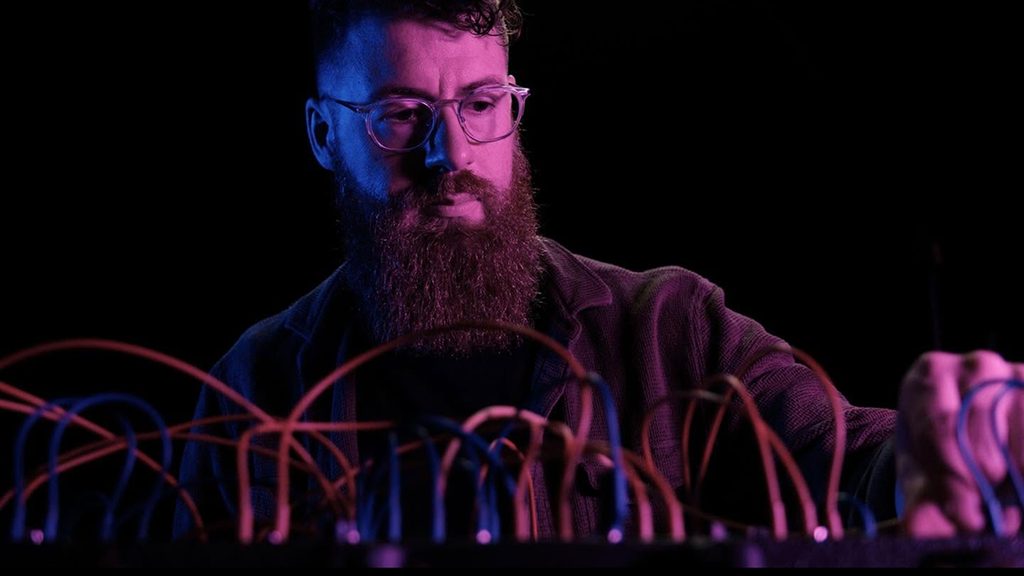
The Man Behind the Modular Synth: Who Is Michael Palumbo?
Understanding Exit Points also means understanding the somewhat unusual résumé of the person who built it.
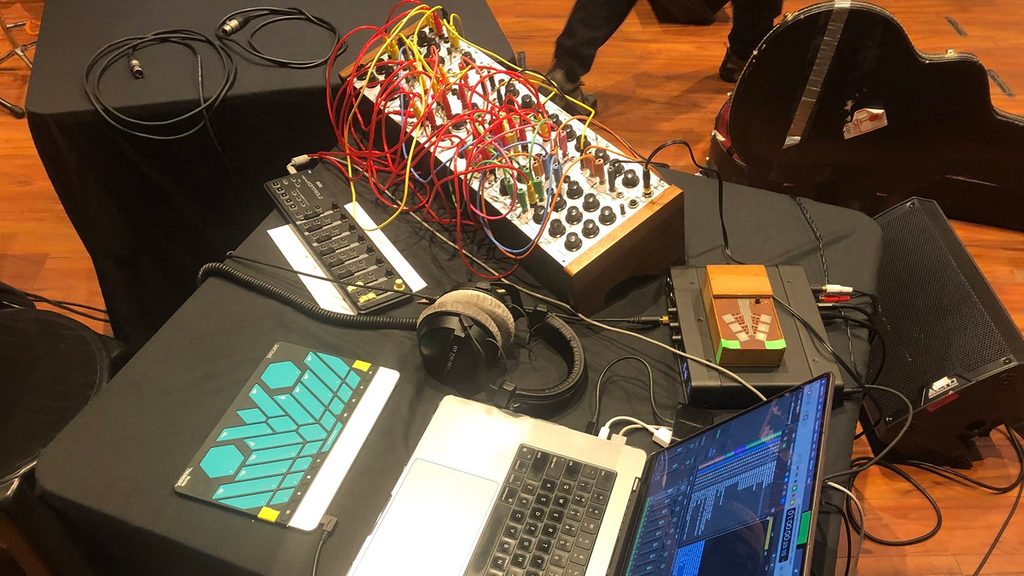
Palumbo grew up singing and playing saxophone, guitar, and drums in bands from high school onward, but by his own account he always felt like something of a musical misfit who didn’t fit neatly into the roles of songwriter or soloist. He was instead drawn to musicians who pushed their instruments into unexpected territory — guitarists exploring feedback, prepared instruments, pedal effects, and circuit bending — which eventually pulled him toward composing with computers and modular synthesizers.
That restless, technically curious streak carried directly into his academic path: he holds a BFA in Electroacoustic Studies from Concordia University and an MA in Theatre and Performance Studies from York University, where he went on to pursue doctoral research.
Dr. graham Wakefield and the Alice Lab for Computational Worldmaking
As a researcher, Palumbo has worked predominantly with Dr. Graham Wakefield and the Alice Lab for Computational Worldmaking as well as for a time in York University’s Distributed Performance and Sensorial Immersion Lab (DisPerSion Lab) under artist-researcher Doug Van Nort, focusing on distributed creativity, collaborative software design, and the culture surrounding modular synthesis. His doctoral work has included building experimental tools like Forking Paths, a modular synthesizer application that borrows software version-control concepts to let musicians revisit and remix the history of their own synth patches.
Outside the lab, his electroacoustic compositions and performances have been presented at venues ranging from Toronto’s Music Gallery to the Jay Pritzker Pavilion at Chicago’s Millennium Park and SUNY Buffalo, and he has taught advanced sound design at Brock University.
Michael Palumbo also curates Cool New Instruments Night, a quarterly salon dedicated to showcasing new tools for artmaking — a project that, much like Exit Points, reflects his ongoing interest in building community spaces around experimental practice rather than simply performing in isolation.
Exit Points #1: A Social Experiment at an Ethiopian Café
The very first Exit Points concert took place on February 26, 2020, at Hirut Cafe and Restaurant on Danforth Avenue, just weeks before the world would change dramatically.
Billed at the time as a “free-improvisation concert held the last Wednesday of every month,” the debut show followed the basic template that would define the series for years to come: two small ensembles each performed a set, and then rearranged themselves alongside willing guests for a series of much shorter pieces.
The lineup for that first evening included saxophonist Glen Hall, percussionist Curtis Whitaker, and Palumbo himself on modular synth in one ensemble, alongside electronics artist Rob Cruickshank, drummer Raph Roter, and live coder Hryso Maheras performing in SuperCollider in the other.
Contemporary coverage of that debut described it as something of a social experiment for both Palumbo and for Hirut itself, since it was the restaurant’s own step outside its usual programming to host an evening of experimental electronic improvisation.
By most accounts it succeeded, drawing a solid crowd on a Wednesday night and setting a promising tone for what was meant to become a regular fixture. The restaurant’s owners, Tibebe and Hirut, were credited early on as enthusiastic and supportive hosts, and their café would remain closely associated with the series’ identity even after Exit Points eventually moved elsewhere.
Unfortunately, that early momentum was almost immediately interrupted by forces entirely outside anyone’s control.
Exit Points Was Silenced by the Pandemic, Reborn on a Livestream
Just weeks after that debut show, the COVID-19 pandemic brought in-person concerts across Toronto to a halt, and Exit Points was no exception.
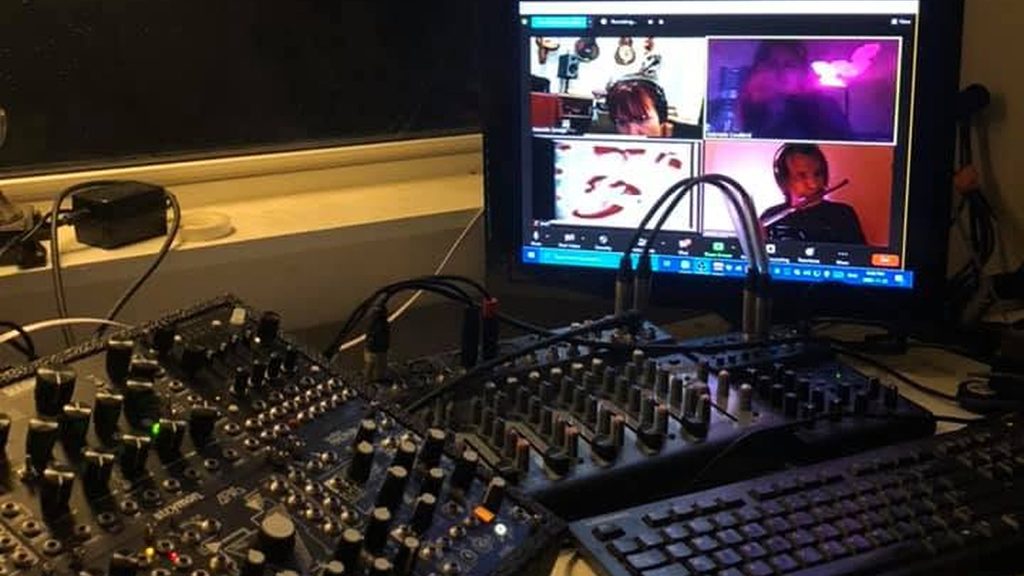
Rather than folding the project, Palumbo pivoted Exit Points into a livestreamed format, broadcasting concerts to platforms including Twitch, YouTube, and Facebook Live under branding like exitpoints.stream and exitpoints.live. The format retained its core structure of two ensembles each performing roughly 35-minute sets followed by shorter rearranged pieces, but funding shifted to a virtual donation-jar model powered by Streamlabs, with proceeds split evenly among the performing musicians, the production team, and an honorary share set aside for Hirut’s owners in recognition of hosting the series before the pandemic forced it online.
This period, running roughly through 2020 and into 2021, effectively became the series’ second founding moment.
It was during this stretch that Exit Points established the numbered episode format still used today, and that the show’s now-signature closing segment earned its permanent name.
Even while confined to livestreams, the series kept expanding its pool of collaborators, featuring artists such as tonal-zither player Gayle Young, Buchla Music Easel performer Patrick O’Reilly, and bassist Michael Lynn alongside a rotating cast of Toronto-based synthesists and sound artists.
When Exit Points marked its second anniversary in February 2023 and third anniversary in February 2024, the series was effectively counting from this pandemic-era relaunch as its true, continuous beginning, since it was this period that turned a single experimental café night into an unbroken monthly tradition.
Finding a Permanent Home For Exit Points: The Move to Array Space
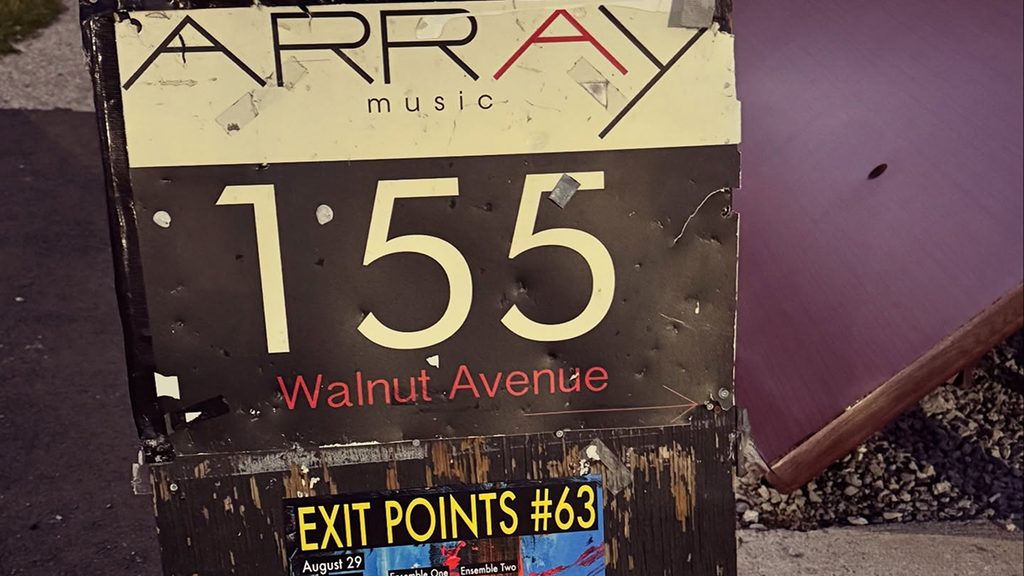
As pandemic restrictions eased, Exit Points transitioned back to in-person performance and found a new home at Array Space, the studio venue operated by Arraymusic at 155 Walnut Avenue, in Toronto’s Adelaide/Strachan neighborhood near Trinity Bellwoods Park.
Arraymusic itself carries serious historical weight in Toronto’s new-music world: founded in 1972 by six University of Toronto composition students, it is one of the founding institutions of Canada’s contemporary classical and experimental music scene, and it celebrated its own 50th anniversary in 2022. Its second-floor studio space has long served as an informal hub for the city’s free-jazz and improvising community, making it a natural fit for a series built entirely around improvised collaboration.

The relationship eventually formalized into an official “Array Co-Presents” partnership, with full concert seasons.
The schedule also shifted from its original last-Wednesday-of-the-month slot to the last Friday of every month, with doors opening at 7:30 p.m. and shows starting sharply at 8:00 p.m.
This period also brought crucial institutional funding, with Exit Points crediting generous support from the Toronto Arts Council and the Ted Fund as key to sustaining its monthly operations. The combination of a stable venue, a formal presenting partner, and public arts funding marked a clear maturation point, transforming Exit Points from a scrappy independent project into a recognized fixture of Toronto’s presented concert calendar.
Inside the Format: Quintets, Sets, and the Switchemups Finale
By the time Exit Points settled into its Array Space era, its format had solidified into something distinctive within Toronto’s live music landscape.
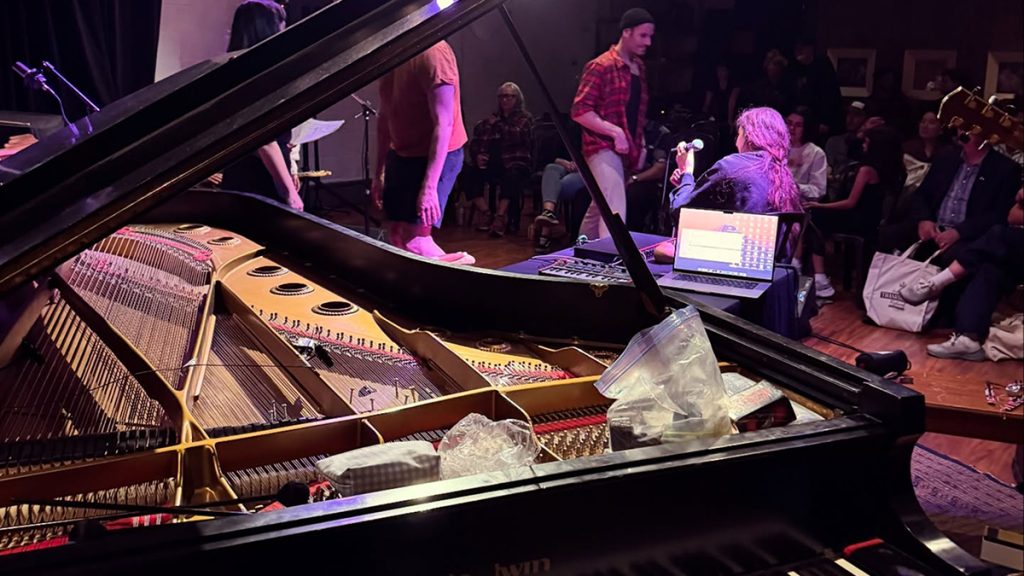
A typical evening brings together nine guest musicians plus Palumbo, divided into two quintets that each perform a full set, usually running around 35 minutes. Performers are frequently strangers before showtime, either personally invited by Palumbo for their specific sonic sensibilities or reaching out themselves to request inclusion, which keeps the pairings fresh rather than relying on the same familiar collaborators night after night.
As an example, one lineup mixed musicians from new music, ambient, and jazz backgrounds with a subway busker and an inventor working in music technology, illustrating just how deliberately eclectic the bookings tend to be.
The evening’s signature moment, however, comes in its third set, known as “Switchemups.”
During this segment, performers regroup into new configurations for a series of four or five short pieces, typically running about five minutes each, and — crucially — audience members are invited to sign up and sit in alongside the musicians.
This structural choice does double duty: it keeps the performers themselves constantly recombining in ways that prevent any single set from feeling predictable, and it actively dissolves the usual wall between performer and audience by inviting listeners to become participants.
Many observers pointed to Switchemups as one of the key reasons the concert has built such a devoted and engaged community over time.
Exit Points Records: Documenting Free Improvisation One Bandcamp Friday at a Time
Alongside the live concert series, Exit Points operates as a genuine record label, and this dimension of the project has grown into something distinct in its own right.
Early on, Michael Palumbo brought in a dedicated sound engineer to capture each concert across multiple tracks, which are later mixed down into a spatialized format before being released commercially on Bandcamp under the Exit Points name.
The label’s own tagline promises fans a new release with every Bandcamp Friday, the recurring promotional day when Bandcamp waives its revenue share to support artists directly, and its catalog has since expanded well beyond simply archiving the monthly Toronto concerts.

Releases under the Exit Points banner have included Palumbo’s Bounce, a 2023 recording featuring trumpeter Rudy Ray, vocalist Sina “Xina” Gilani, guitarist Nilan Perera, and bassist Adrian Russouw alongside Palumbo himself, drawn from the label’s Resonance series.
Other Bandcamp-featured releases have showcased Brooklyn-based modular synthesist Matthew Ryals, a Pennsylvania-based improvising trio working across drone, electroacoustics, and free jazz, and collaborations pairing New York and Milan-based artists.
An Ongoing Musical Experiment: Exit Points’ Place in Toronto’s Music Scene
Every improvised performance at Exit Points disappears the moment it ends. There’s no repeat show, no encore of the same lineup, no way to hear that exact combination of musicians again. That impermanence is precisely what has kept people coming back to a converted café room and later a second-floor studio on Walnut Avenue for years.
Michael Palumbo built a series that treats a room full of strangers as raw material rather than a risk to be managed, and in doing so, he gave Toronto’s free improvisation community something it didn’t quite have before: a place where the unpredictability is the draw, not a bug to be smoothed over. The Switchemups format, the multi-track recordings preserved on Bandcamp, the move into Arraymusic’s orbit — none of it changes that basic wager at the center of the project, that something worth hearing happens when you stop controlling for outcomes.
This is a small, monthly act of faith in spontaneity, and it’s why Exit Points still feels less like a concert series and more like an ongoing question about what music can do when nobody knows what happens next.
Exit Points #75 is just around the corner. Get your tickets to the next edition of Exit Points on Friday, August 28th held at Array Space, featuring the talents of Julie Lassonde, Lisa Santoprete, Yvan Sheremetieff, Andrew Chiappetta, Woolworm Ontario, Kavi, Roa Lee, Sahil Gopal, Michael Palumbo, Afraaz Adam Mulji. Buy your tickets here.