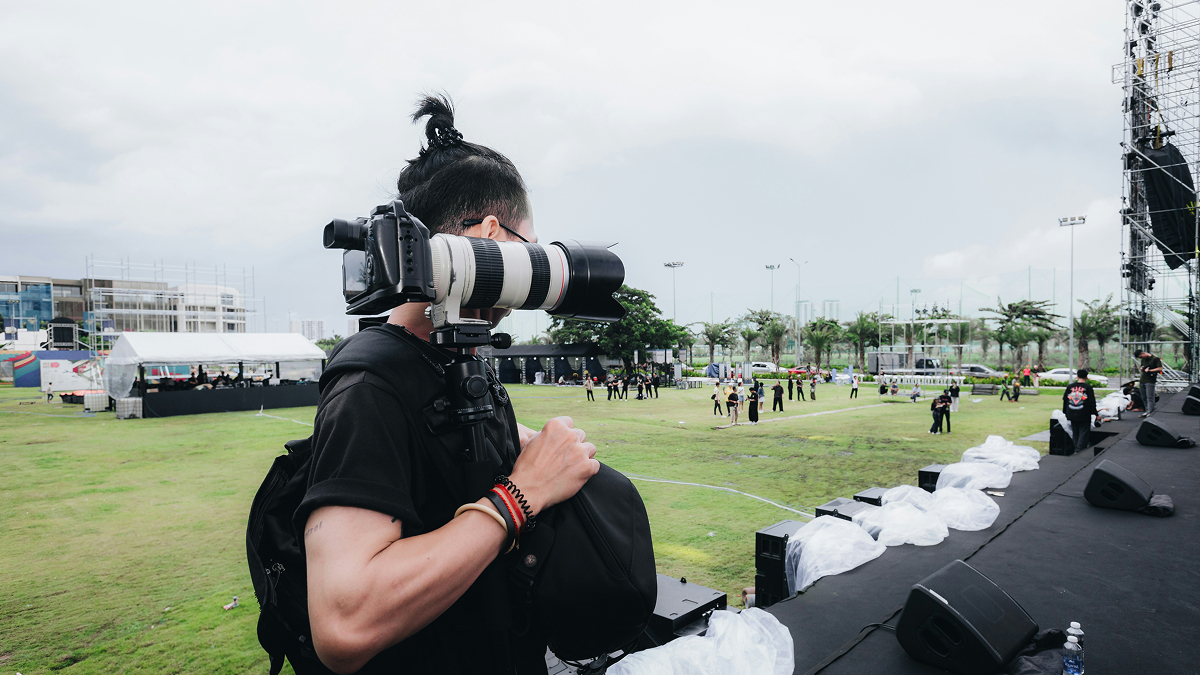
Hiring a photographer for your event is one of the highest-leverage decisions an event organizer can make, because a professional photographer converts a few hours of live activity into a year’s worth of marketing assets, sponsor proof, and social credibility, all for a line item that typically runs a few hundred dollars. Event photography is not a vanity expense reserved for weddings and galas. It is a working part of the marketing, sales, and sponsorship engine for concerts, festivals, conferences, trade shows, fundraisers, and corporate gatherings of every size.
Event Photography Turns One Day Into a Year of Marketing Content
Most event promoters still budget for photography as a “nice to have” documentation cost, filed somewhere near flowers and name badges. That framing misses what actually happens after the event ends.
A single day of professional coverage routinely produces hundreds of usable, edited images and short clips that get repurposed across email newsletters, landing pages, recap articles, and every social channel you run for months afterward.
One well-documented corporate shoot generated more than 400 usable files and fueled over 40 social posts spread across four months of content calendars.
That kind of output matters because content production is expensive and slow when you’re starting from zero every week. A photographer effectively pre-loads your content calendar with authentic, on-brand imagery instead of forcing your marketing team to rely on stock photography or recycled graphics. The event you already paid to produce becomes the raw material for the marketing you’d otherwise have to create separately. That’s a two-for-one most organizers never account for when they’re staring at a photography quote.
This compounds particularly well for recurring events. A festival, conference, or race series that books a photographer every year builds a growing visual library it can pull from for save-the-date campaigns, anniversary retrospectives, and “this is what you’re signing up for” landing pages.
Instead of starting from scratch each cycle, you’re layering new content on top of an existing archive that reinforces your event’s history and scale. That library becomes a genuine competitive asset against newer events in your category that don’t have one.
There’s also a licensing and control angle that’s easy to overlook. Attendee phone photos are unpredictable in quality, inconsistent in composition, and legally murky to reuse in paid advertising without permission.
Photos from a hired photographer typically come with usage rights built into the booking, which means your team can drop them into paid social campaigns, printed programs, or press kits without chasing down a stranger for consent. That clean rights picture alone justifies the invoice for many marketing and legal teams.

Professional Photos Are What Sponsors Actually Renew On
If your event carries sponsorships, photography stops being optional and starts being contractual infrastructure.
Sponsors are no longer satisfied with a verbal assurance that their banner was visible; they expect documented proof that their branding, activation, or stage placement actually happened and reached people. Industry reporting on sponsorship renewals notes that securing proof of exposure — branded photo impressions, gallery views, and visual confirmation that a deliverable was fulfilled — has become the standard sponsors evaluate before signing again.
The stakes here are measurable. Research on post-event sponsor reporting has found that events with documented, visual post-event reports see 40 to 60 percent higher sponsor renewal rates than events that send a thank-you email and hope for the best. That’s not a marginal bump; it’s the difference between rebuilding your sponsor roster from scratch every year and compounding relationships that fund your event’s growth. Photography is the evidence layer that makes that entire report credible.
Consider the scale of what’s at stake for sponsors themselves. Sponsorship spend on live events and exhibitions is significant enough that finance teams scrutinize it the same way they scrutinize any other line item, and a vague claim that “the logo was visible to a few thousand people” doesn’t survive that kind of review.
A clear photo of the branded step-and-repeat, the activation booth mid-conversation, or the signage on the main stage gives a sponsor’s internal team something concrete to point to when a budget owner asks whether the spend was worth it. Without that image, the sponsor is left defending a purchase they can’t actually show anyone.
This is precisely why savvy promoters build photography into the sponsorship package itself rather than treating it as a separate production cost. Naming specific, photographed deliverables in the sponsor agreement — stage-branded shots, product placement, logo visibility on tickets and signage — gives you a built-in shot list and gives the sponsor a built-in reason to trust your next pitch.
When the recap report lands in a sponsor’s inbox within a week or two of the event, backed by real photos instead of a paragraph of gratitude, renewal conversations shift from a negotiation to a formality.
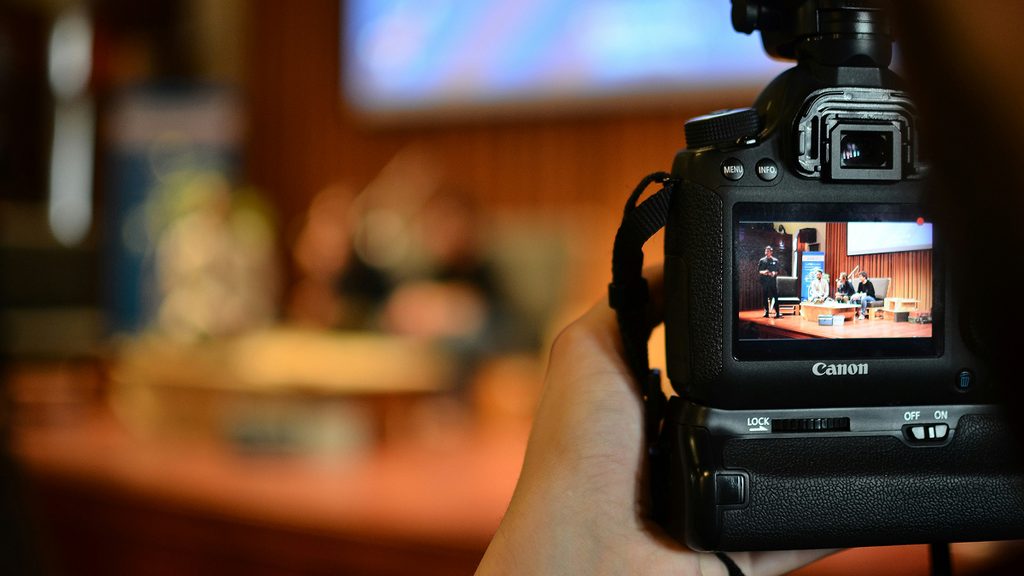
Great Event Photos Sell Next Year’s Tickets Before You Even Announce the Lineup
Ticket sales psychology runs heavily on FOMO, and nothing manufactures fear of missing out more efficiently than a photo of a packed, ecstatic crowd.
Promoters who release a strong recap gallery or after-movie shortly after their event routinely see a spike in social media followers and inquiries about the next edition, because those images show people exactly what they missed. This is a documented pattern across festivals ranging from boutique club nights to major touring productions, all of which lean on recap visuals to drive next-cycle demand.
The mechanism is straightforward once you look at how people actually decide to buy tickets. A prospective attendee weighing whether an event is worth their money and time responds far more strongly to a photo of real people mid-celebration than to a lineup poster or a generic promotional graphic.
Photos function as social proof, and social proof is one of the most reliable levers in ticket marketing because it answers the unspoken question every buyer has: will this actually be as good as you’re telling me it is?
Photography also extends the commercial life of an event well past its actual date. A recap gallery published within days of the event captures residual excitement while it’s still fresh, and that timing window is when engagement and shares peak. Wait too long, and the same photos generate a fraction of the reach because the moment has passed and attention has moved to the next thing on people’s feeds. Promoters who treat the recap as an afterthought are leaving a genuinely time-sensitive marketing window unused.
There’s a distribution layer worth understanding too. Guests who actually receive their own photos from an event — through a shared gallery link, a tagged post, or a direct send — are roughly four times more likely to share those images on their personal social accounts, with each share reaching an average network of several hundred connections.
That means a photographer isn’t just producing content for your channels; they’re seeding a much larger, organic word-of-mouth distribution network made up of your own attendees, at essentially no additional media cost to you.
High-Quality Images Signal Professionalism and Build Attendee Trust
People make snap judgments about credibility based on visuals long before they read a single word of your copy.
Studies on visual processing consistently show that the brain processes images tens of thousands of times faster than text, which means your event photos are doing persuasive work before a prospective attendee has consciously decided anything. A blurry, poorly lit, phone-shot gallery quietly tells people your event is amateur, even if the production itself was flawless.
This isn’t abstract psychology; it shows up directly in consumer behavior research. Surveys on purchase decisions have found that a large majority of consumers consider image quality one of the most important factors in deciding whether to buy, with some research putting the figure as high as 90 percent of buyers citing photo quality as the most crucial factor in an online purchase decision.
Ticket buying is, functionally, an online purchase decision made almost entirely on the strength of your event page, your social feed, and the images sitting on both. If your visuals look cheap, your ticket price starts to feel like a mismatch.
Consistency matters as much as quality here. Research on catalog and brand imagery has found that inconsistent lighting, framing, and visual style across a set of photos measurably lowers perceived trustworthiness, even when each individual photo looks fine in isolation. A professional photographer delivers a coherent visual style across the whole gallery, which is exactly the kind of consistency that makes a returning attendee feel like they’re dealing with a mature, dependable organization rather than a one-off pop-up.
This trust dividend extends beyond ticket buyers to everyone else evaluating your event from the outside: potential sponsors doing due diligence, talent agents deciding whether to book their artist with you again, venues weighing whether to renew a contract, and press outlets deciding whether your event is worth covering.
A polished, professional photo gallery functions as a credibility signal to every one of those audiences simultaneously, which is a remarkable amount of leverage from a single line-item expense.
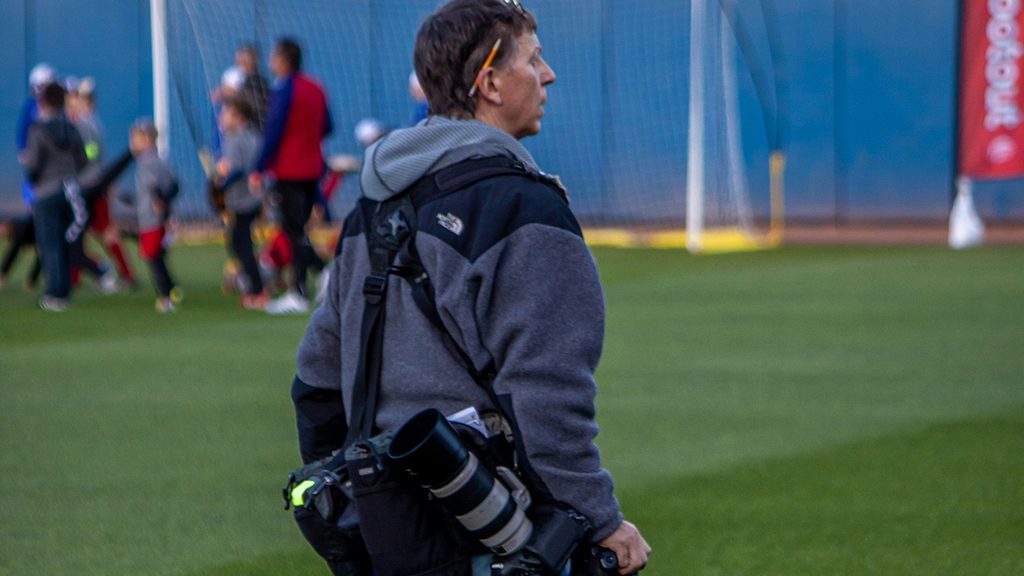
A Photographer’s Images Can Actually Protect You If Something Goes Wrong
Nobody plans for an incident, but every experienced promoter has been in a room where one happened — a dispute over a fall, a disagreement about crowd size, a claim about what was or wasn’t provided at a sponsor booth, a question about whether safety protocols were actually followed. In every one of those situations, a neutral, time-stamped photographic record is worth more than any number of conflicting verbal accounts.
A professional photographer, moving through the event with a clear brief, ends up capturing far more of the operational reality of your event than anyone realizes in the moment.
This documentation has real practical value for insurance and liability conversations. Photos showing that barriers were in place, that signage was posted, that capacity looked reasonable, or that a contracted deliverable was physically installed can be the difference between a quick resolution and a drawn-out dispute. This is evidence you cannot manufacture after the fact. Once the event is over, you either have the photographic record or you don’t, and there is no substitute for having captured it in real time by someone who wasn’t scrambling to also manage the event itself.
There’s a subtler version of this benefit that applies even without an incident: internal accountability.
When your team, vendors, and contractors know that a photographer is documenting the buildout, the load-in, and the show itself, execution tends to tighten up. Nobody wants to be the vendor whose sloppy signage or missed deliverable shows up clearly in a photo that gets circulated to leadership or the sponsor who paid for it.
Relying on staff phones for this kind of documentation is a false economy. Your team is busy running the event, which means their photos are reactive, incomplete, and taken by people who are, understandably, focused on their actual jobs rather than composition, angle, or coverage.
A dedicated photographer’s entire job during the event is to be in the right place with the right framing, which is precisely what you need if that image ever has to hold up as a record of what actually happened.
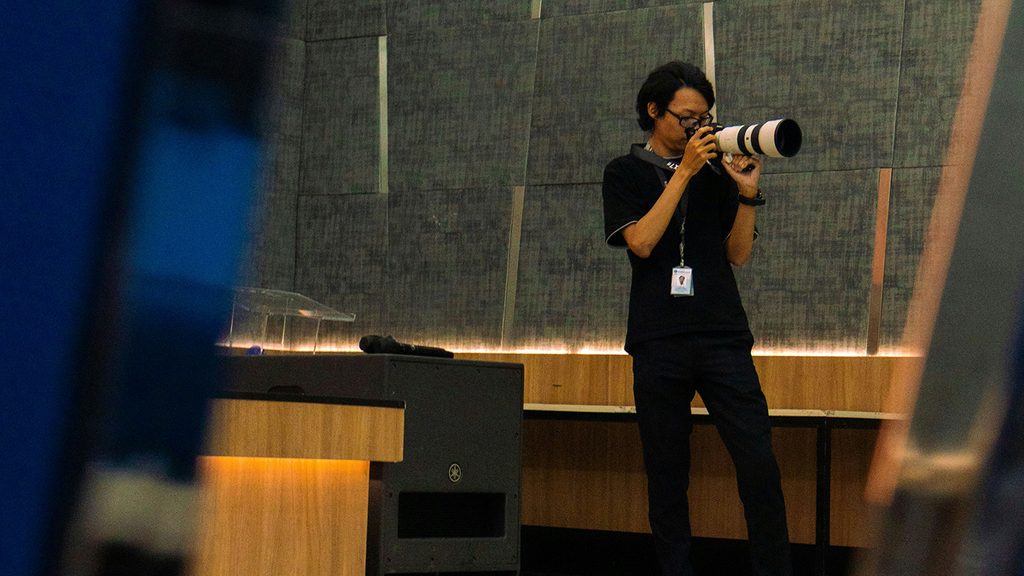
Professional Photography Beats Phone Snapshots and User-Generated Content on Every Platform
It’s tempting to assume that in an era of high-quality smartphone cameras and abundant attendee selfies, a hired photographer has become redundant. The data says the opposite.
Analysis of tens of millions of social posts continues to show that visual content dramatically outperforms text, and that professionally composed, well-lit images consistently outperform casual, inconsistent snapshots across nearly every platform’s engagement metrics.
The gap between visual and text-only content is not small. Recent analysis of brand posting patterns found that posts containing at least one strong image or short clip generate roughly 6.5 times the engagement of text-only posts on the same account, and that carousel-style photo sets outperform single images by another wide margin.
Other long-running platform data shows that articles paired with relevant images draw significantly more total views than text alone, and that people retain the vast majority of what they see compared to what they simply read. None of that changes because the photo came from a $400 hired photographer instead of a $1,200 phone — but the quality of the image absolutely determines whether that engagement advantage gets fully realized or squandered on a shaky, poorly exposed shot.
User-generated content still has a role, particularly for authenticity and volume, and no promoter should discourage attendees from sharing their own photos and tagging the event. But UGC is inconsistent by nature: exposure varies wildly, framing is unpredictable, and there’s no guarantee any of it flatters your brand, your sponsors, or your venue.
A professional photographer gives you a reliable floor of quality that UGC simply cannot promise, which matters enormously when that content is going to represent your event on your own channels, in your press kit, or in front of a sponsor’s marketing director.
The two aren’t actually competing strategies; they’re complementary. The smartest promoters use professionally shot images as the backbone of their official content calendar — the hero shots for ads, the sponsor recap, the ticket page — while letting attendee-generated content add texture and social proof around the edges.
Treating a hired photographer as a replacement for organic sharing misses the point; they serve entirely different functions in your content strategy.
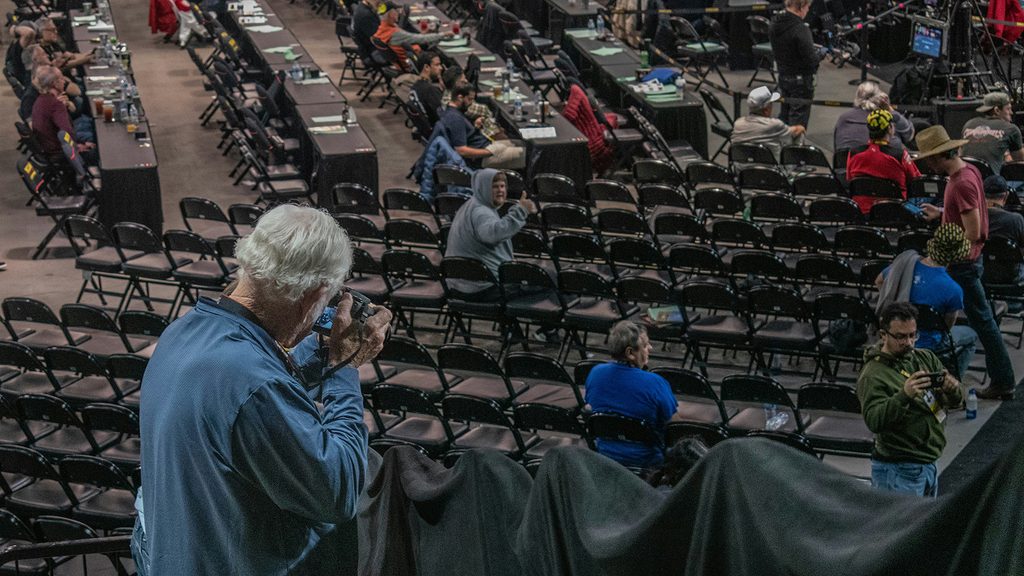
Professional Images Strengthen Relationships With Talent, Vendors, and Venues
Event photography is often framed purely as an attendee-facing or sponsor-facing tool, but some of its highest value shows up in relationships that have nothing to do with ticket sales at all.
Performers, speakers, and headline talent almost universally want strong stage photography of their own performance, both for their own promotional use and, frankly, as a professional courtesy that reflects on how seriously you run your event. A promoter who reliably delivers high-quality performance shots to artists after every show builds a reputation in that talent community that makes future bookings easier and, in some cases, cheaper.
The same logic applies to venues. A venue that sees itself photographed beautifully — well-lit, full, and looking its best — is far more likely to want to continue the relationship, feature your event in its own marketing, or offer more favorable terms on a repeat booking.
Venues are, in effect, another stakeholder whose ongoing goodwill your photography budget is quietly buying, even though nobody frames it that way when the invoice gets approved.
Vendors and contractors benefit from this too, in a way that pays off for you directly. A caterer, decor company, or production vendor who receives a polished shot of their work in action gains marketing material they’ll happily use, and in return, they tend to prioritize and go the extra mile for organizers who make that possible.
Over a few event cycles, this becomes a genuine competitive advantage in vendor relationships, because you become the promoter everyone wants to work with, not just the one who pays on time.
Internally, this extends to staff and volunteers as well. Photos that capture your event team executing well — coordinating logistics, solving problems, working together under pressure — become valuable for recruiting future staff, for internal recognition, and for building the kind of team culture that keeps good people coming back to work your events year after year.
None of that shows up in a spreadsheet, but any promoter who has struggled to staff a large event knows exactly how much that goodwill is worth.
The Math: What a Photographer Costs vs. What They’re Worth
Here’s where the abstraction ends and the actual budgeting begins.
Professional event photography typically runs $150 to $500 per hour, with most experienced corporate and party photographers clustering around $200 to $350 per hour and a common midpoint near $250. Corporate-specific coverage — conferences, product launches, executive events — tends to sit a bit higher, generally in the $250 to $500 per hour range, while smaller private functions can come in lower.
Most photographers also offer half-day and full-day flat rates once an event runs past roughly four to six hours, which is almost always more cost-efficient than paying hourly for longer coverage.
Run the numbers against what that buys you. A four-hour booking at a typical mid-market rate lands somewhere around $900 to $1,800 total, and in return you get a gallery of hundreds of edited, usage-ready images that can be repurposed across marketing, sponsorship, recruiting, and next year’s ticket campaign for the following twelve months.
Compare that single line item to the cost of commissioning a separate product photoshoot, hiring a stock content subscription, or running a paid social campaign with no authentic imagery to support it, and the photographer’s invoice starts to look less like an expense and more like the cheapest content acquisition channel available to you.
The events industry itself treats a 25 to 34 percent ROI as a solid benchmark for overall event performance, and photography is one of the few line items that contributes to that return across nearly every category at once — marketing reach, sponsor retention, ticket sales, and brand trust simultaneously. Few other individual expenses in an event budget touch that many outcome categories at the same time. A photographer isn’t competing with your headliner budget or your venue cost for importance; it’s closer to insurance against wasting the value of everything else you already spent money on.
It’s also worth remembering that the confidence business leaders place in live events generally is well established: a large majority of senior marketers and business leaders continue to affirm that in-person events meaningfully move the needle on real business goals.
If that’s true of the event itself, it’s true by extension of the photography that captures, proves, and extends that event’s impact long after the doors close. Cutting the photography budget doesn’t save you from a cost; it just quietly caps the return you get on everything else you already paid for.
The Real Question Isn’t Whether You Can Afford a Photographer — It’s Whether You Can Afford Not To
Strip away the marketing language, and the case for hiring an event photographer comes down to a simple asymmetry: the cost is small, fixed, and known in advance, while the value it unlocks touches sponsorship renewals, next year’s ticket sales, brand trust, vendor relationships, and legal protection all at once. Few other decisions on an event budget offer that kind of leverage for a few hundred dollars.
Skipping photography doesn’t just mean you’ll have fewer nice pictures to look at; it means every other dollar you spent on the event — the talent, the venue, the production, the marketing runway building up to it — stops working for you the moment the last guest walks out the door.
The promoters who consistently grow their events year over year tend to treat photography the same way they treat ticketing platforms or insurance: not as optional polish, but as core infrastructure that the rest of the operation depends on
They build it into sponsor agreements as a deliverable, they schedule the recap gallery release for maximum FOMO impact, and they use the resulting library to make every future pitch — to sponsors, to talent, to attendees — stronger than the last one. That compounding effect is exactly what separates a one-off event from a growing property.
So the next time a photography quote lands on your desk and the instinct is to trim it from the budget, it’s worth reframing the question entirely. You’re not deciding whether to spend money on pictures. You’re deciding whether the event you just worked so hard to produce gets to keep generating value for the next twelve months, or whether it quietly disappears the moment the lights come up.