Thirteen instruments were enough for Aaron Copland to write a ballet score that won the 1945 Pulitzer Prize for Music.
Spring in Motion is a concert by the Kitchener-Waterloo Chamber Orchestra and Carousel Dance Centre that sets Copland’s Appalachian Spring beside works by Arcangelo Corelli and Gerald Finzi.
Here is who is playing, who is dancing, what is on the program, and how the afternoon works.
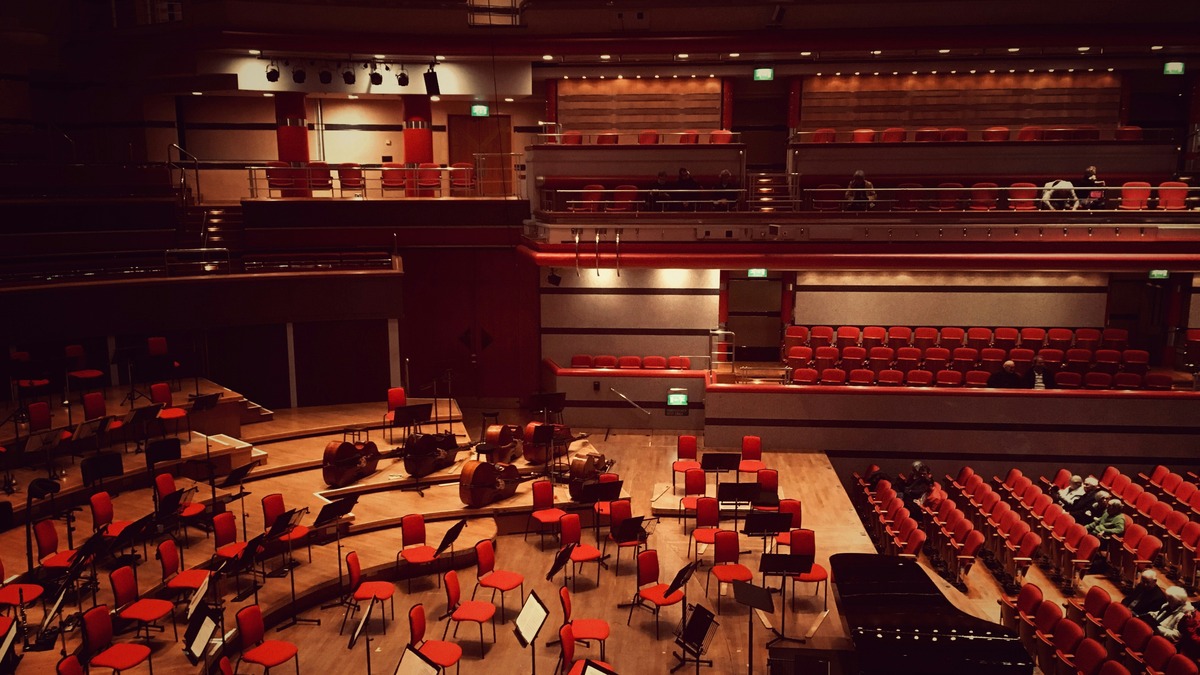
A Community Chamber Orchestra With Professional Principals and a Church Sanctuary Home
The Kitchener-Waterloo Chamber Orchestra is built around professional principal players, semi-professional musicians from the community, and highly skilled music students. It is a registered charity based in Waterloo, Ontario, and its concerts take place in a church sanctuary in the uptown.
Its stated mission is to present chamber orchestra music from a variety of periods, to give highly trained musicians a place to perform, to raise awareness of social causes, and to showcase local artists and composers.
The orchestra marked its 39th season in 2023–24, which makes 2026–27 its 42nd. This season opened on November 8, 2026, with Serenade & Song, a program with the Waterloo Regional Police Chorus that featured Telemann’s Concerto for Recorder and Bassoon and Tchaikovsky’s Serenade for Strings.
The season closes on April 18, 2027, with Beethoven’s Symphony No. 6, a world premiere by one of the orchestra’s own musicians, and winners of its student concerto competition. Spring in Motion is the middle concert of the three.
Matthew Jones, the Recorder Player Who Became the Orchestra’s Music Director
Matthew Jones leads the orchestra as music director, and his path to the podium started with a recorder. He began playing the instrument around age seven, and he has said he discovered his aptitude for music in about grade two while playing it.
The recorder led him to cello performance at Wilfrid Laurier University and then to conducting. His conducting studies include the Conductor’s Institute at the Hartt School at the University of Connecticut and the Oregon Bach Festival, where he worked under Helmuth Rilling.
For fifteen years Jones was conductor of the Timmins Symphony Orchestra in northeastern Ontario, where he also founded the Timmins Symphony Chorus. He has called a performance of Beethoven’s Ninth Symphony for the orchestra’s 25th anniversary a watershed moment, because the demanding score raised the level of the players and introduced the new chorus to the orchestra.
Under his leadership the Timmins Symphony Orchestra received the Betty Webster Award for its contribution to orchestral music in Canada, and he remains its conductor laureate.
The Kitchener-Waterloo Chamber Orchestra lists 2014 as the year he joined, and a July 2015 news report in Timmins described his family’s move to Waterloo that fall.
He is also artistic director of the Kitchener-Waterloo Symphony Youth Orchestra and music director of the Etobicoke Philharmonic Orchestra in Toronto, where he completed his first season in May 2019. He has guest conducted the Kitchener-Waterloo Symphony, the Mississauga Symphony, the Georgian Bay Symphony, and the Sault Ste. Marie Symphony, and he took part in a conductor exchange with the North Bay Symphony.
Jones served on the board of Orchestras Canada, the national association for the country’s orchestras, and chaired the national jury for its 2018 Betty Webster Award, which went to Bramwell Tovey.
He still performs as a recorder soloist and has been heard on CBC Radio. His recording Just Pipes pairs the recorder with the organ playing of the late Jan Overduin.
The orchestra’s November 8 program featured Jones on recorder in Telemann’s Concerto for Recorder and Bassoon, alongside bassoonist Oskar Martinez.
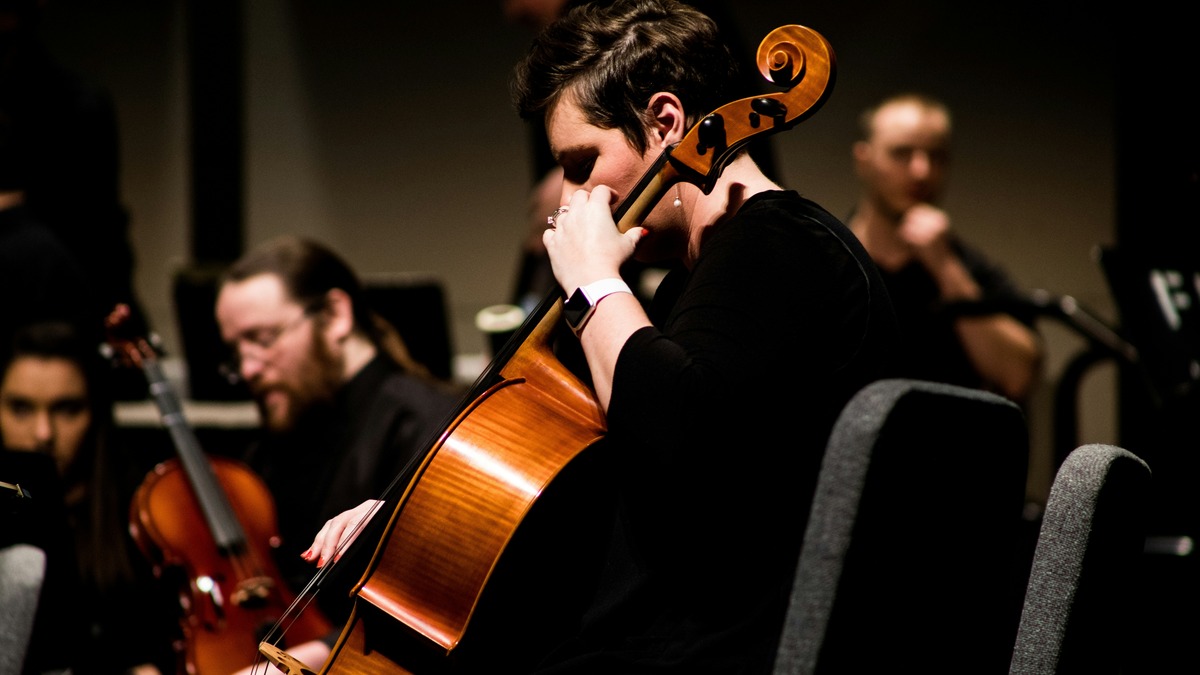
Orchestra Members Who Hold the Flute, Clarinet, Horn, Bass, and Violin Chairs
Rosemary Kropf, Violin
Rosemary Kropf has played violin with the orchestra since its first season. She served as board chair for several years and is a retired business executive.
She also performs with the Waterloo Chamber Players and the Stratford Symphony. Earlier in her career she played with the Kitchener-Waterloo Symphony, the Windsor Symphony, and Woodstock Strings.
Wendy Wagler, Principal Flute
Wendy Wagler holds the principal flute chair and works as both a soloist and an orchestral player. She freelances with ensembles that include the Kitchener-Waterloo Symphony, and she has been a soloist with the Kitchener-Waterloo Symphony Youth Orchestra, the Kitchener-Waterloo Chamber Orchestra, and the Renaissance Singers.
She holds a master’s degree in performance and literature from Western University and an honours bachelor’s degree in flute performance from Wilfrid Laurier University. Her teachers have included Bonita Boyd, Amy Hamilton, Thomas Kay, and Fiona Wilkinson.
She is a founding member of the Springdale Trio and plays flute in the KW Woodwind Quintet. She also leads flute masterclasses across southwestern Ontario and teaches at Premier School of the Arts and Heritage College.
Trevor Wagler, Principal Horn
Trevor Wagler plays principal horn, owns and directs Premier School of the Arts in Waterloo, and has conducted the Waterloo Concert Band since 2006. He founded the Kitchener-Waterloo Youth Concert Band in 2017 and spent nearly two decades conducting ensembles in the Kitchener-Waterloo Symphony’s youth orchestra program.
His degrees include a bachelor’s in music composition from Wilfrid Laurier University and a master of music in horn performance from Western University. He has played with the Kitchener-Waterloo Symphony, the Canadian Chamber Ensemble, Orchestra London, the Hamilton Philharmonic, the Windsor Symphony, Tafelmusik, the Stratford Festival, and Drayton Entertainment.
He also plays organ, composes, and arranges, and his arrangements have been commissioned by orchestras and soloists and broadcast on CBC radio. He lives in Waterloo with Wendy Wagler and three children, and the two share the KW Woodwind Quintet with oboist Sarah Cardwell, clarinetist Barbara Hankins, and bassoonist Oskar Martinez.
Larry Moser, Principal Clarinet
Larry Moser holds bachelor’s degrees in music and education from Western University and a master of music from Michigan State University. He taught high school music for twenty-five years and still teaches saxophone and clarinet privately.
Beyond this orchestra he is principal clarinet of the Guelph Symphony Orchestra, concertmaster of the Wellington Wind Symphony, and a member of the Royal City Saxophone Quartet. He also teaches recorder to young students in the Beckett School RSVP course, where he demonstrates each of the woodwinds.
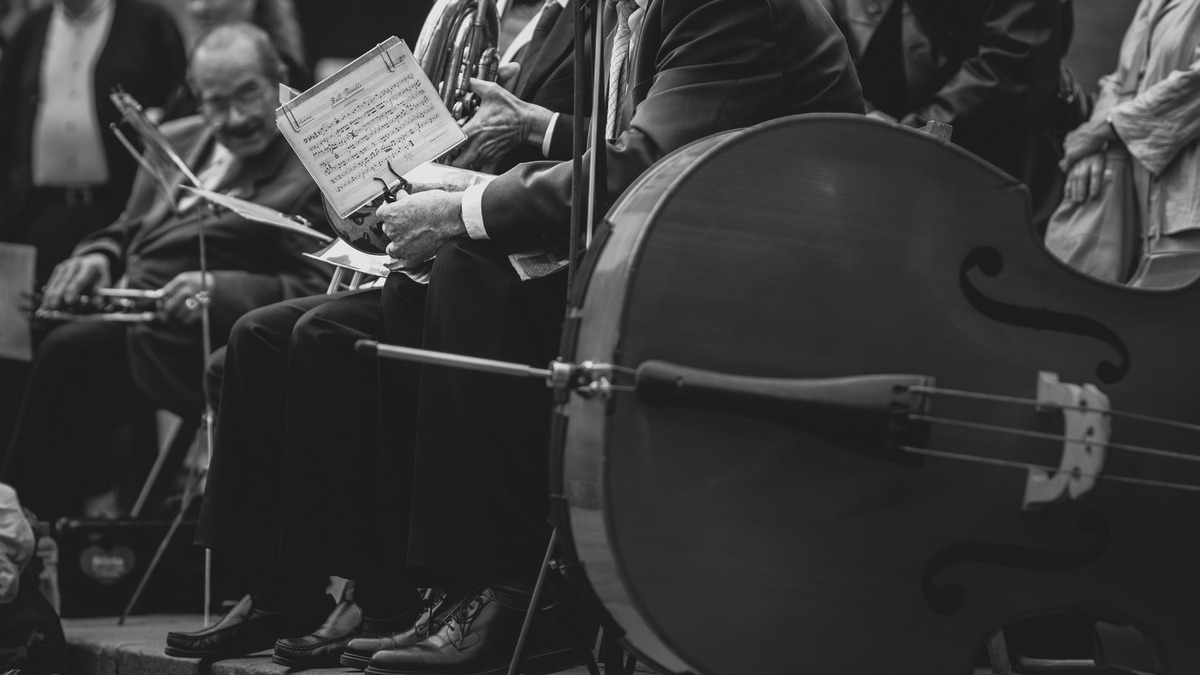
Matthew Donnelly, Principal Double Bass and Composer
Matthew Donnelly was born in Sudbury in 1986 and grew up in North Bay. He found music through a saxophone that no one else in his elementary school class wanted to play, and he stayed with it for seven years before choosing a musical career.
At Wilfrid Laurier University he studied composition with Glenn Buhr and Linda Catlin Smith and double bass with George Greer of the Kitchener-Waterloo Symphony. He served as principal bass of the Laurier symphony for several years.
The Canadian Band Association gave him its annual composition prize in 2013 for River Valley Sketches, and he earned an honourable mention in 2016 for The Solitary Life. In 2017 he received an Ontario Arts Council grant for his chamber orchestra work The Grave-digger’s Waltz.
He has served as composer-in-residence with the Kitchener Musical Society Band and plays with the Community Players of New Hamburg. He is the orchestra member whose new work receives its world premiere in April.
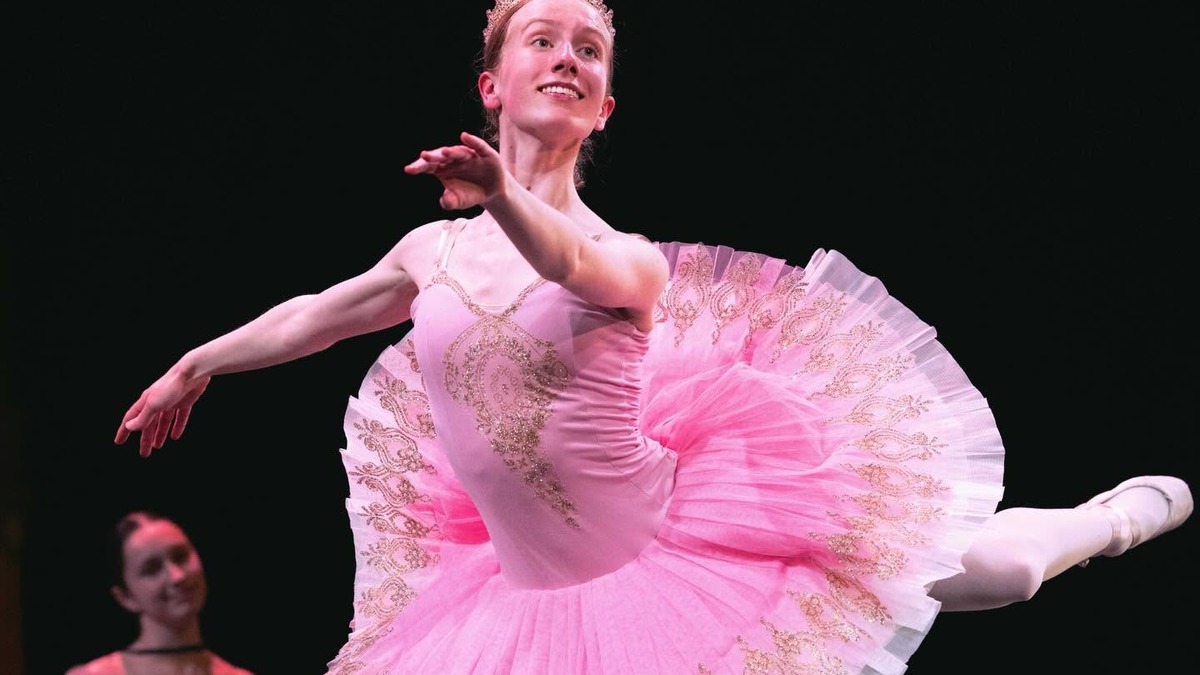
Carousel Dance Centre: A Children’s Dance School Founded Inside the University of Waterloo
Carousel Dance Centre is a dance school in Waterloo that teaches children from eighteen months old, along with adults and seniors, in ballet, modern dance, jazz, and composition. The school describes its environment as non-competitive and inclusive.
Dr. Ruth Priddle, Founder
Ruth Priddle grew up in Toronto and trained at Canada’s National Ballet School. In her teens she danced professionally as a Canadette and appeared on CBC programs including The Wayne & Shuster Show and While We Were Young.
After a physical education degree from the University of Toronto and a bachelor of education, she taught high school for two years. She joined the University of Waterloo in August 1964 as a lecturer in the historical foundations of dance, and in 1965 she became the university’s first female athletics director.
She completed the dance program at Springfield College, including two semesters at Jacob’s Pillow, where she saw the work of Martha Graham. Graham is the choreographer for whom Copland wrote Appalachian Spring.
Priddle also earned a master’s degree and a PhD in psychomotor behaviour through the university’s psychology department, and all of her research was done on dancers.
She started the children’s dance school at the university in 1970, both to train children from the community and to give students in the dance program a place to practise teaching and observe how children learn. The dance program became its own department in 1974 and closed in 1996 with a farewell performance called Swan Song.
The university kept Carousel open for another decade. In 2007 the school announced that it would leave the university and operate as a private business.
Priddle kept working with the children’s school and helped develop a program for children and adults with physical and cognitive disabilities, in cooperation with the Rotary Children’s Centres in Waterloo and Cambridge. She died on June 8, 2016.
Heidi Churchill, Director
Heidi Churchill was director of Carousel when it was based at the university, and in 2007 she worked with the university to plan its move to private ownership. She and two colleagues told parents they would operate the school independently.
In 2012 the Arts Awards Waterloo Region nominated her in its Mentor category, citing her leadership of Carousel and the Arts Express Day Camp. The nomination also noted Dance for EveryBODY, a project she developed to promote accessible performing arts opportunities.
In a 2025 Toronto Star story, Churchill said Carousel students who took part in Ballet Jörgen’s youth participant program have gone on to post-secondary study and professional dance careers. She added that those students return to class more focused and engaged.
The Carousel Dance Company
Carousel’s performance troupe, the Carousel Dance Company, is described as an inclusive group that performs several times a year.
Its youth members have travelled to the Dance and the Child International conference in Utah in 1994, Finland in 1997, Regina in 2000, and The Hague in 2006. The 2006 trip involved 23 students aged 12 to 18, who performed a piece created by assistant director Richelle Brown-Hirlehey.
The company has shared the orchestra’s stage before. In February 2024 the orchestra’s concert The Dance of Music featured dancers from Carousel and works by Gluck, Respighi, Beethoven, and Haydn.
How Copland and Graham Made Appalachian Spring for Thirteen Instruments in 1944
Appalachian Spring began with a commission. In 1942 the dancer Erick Hawkins persuaded the patron Elizabeth Sprague Coolidge to commission a ballet from Copland for Martha Graham’s company, and Copland accepted.
Graham sent him a scenario about a newlywed couple in a small nineteenth-century Pennsylvania settlement. Copland wrote the music largely on the West Coast, where he was also scoring Hollywood films, and he worked from her scripts rather than in the studio with her. His working title was Ballet for Martha.
Graham chose the final title shortly before the premiere, taking it from Hart Crane’s poem sequence The Bridge.
The ballet premiered on October 30, 1944, in the Coolidge Auditorium at the Library of Congress in Washington, D.C., with Louis Horst conducting. Graham danced the Bride, Erick Hawkins the Husbandman, May O’Donnell the Pioneer Woman, and Merce Cunningham the Revivalist.
Isamu Noguchi designed the set, an outline of a house with a porch, a rocking chair, a fence, and a tree stump that served as the Revivalist’s pulpit. Edythe Gilfond designed the costumes.
The premiere closed a four-day chamber music festival honouring Coolidge’s 80th birthday. Copland won the Pulitzer Prize for Music during the ballet’s 1945 American tour.
The story follows a Bride and a Husbandman as they marry and celebrate with their community. A Pioneer Woman and a Revivalist with four Followers complete the cast, and themes of war run beneath the wedding.
The score opens with a soft A major triad in the clarinet. The cello then holds an A while the flute, violin, and viola stack the chord again with an E major chord above it.
In the Interlude, Copland presents the Shaker tune Simple Gifts in full and follows it with variations. The tune returns near the end of the score in a grand final statement.
Copland described the music in a 1980 interview as “plain, singing, comparatively uncomplicated and slightly folksy.”
He made five versions of the work: the original ballet for thirteen instruments, an orchestral suite from 1945, a revised ballet for thirteen instruments, a revised ballet for full orchestra, and a suite for thirteen instruments. The suites leave out the three episodes that carry the story’s conflict, Fear in the Night, Day of Wrath, and Moment of Crisis.
Arcangelo Corelli and the Dance Forms Built Into Baroque String Music
Arcangelo Corelli was born on February 17, 1653, in Fusignano, a town in Romagna. At thirteen he went to Bologna, studied there until 1670, and then entered the Accademia Filarmonica.
By about 1675 he was in Rome, where his patrons included Queen Christina of Sweden, Cardinal Benedetto Pamphili, and later Cardinal Pietro Ottoboni. Ottoboni gave him rooms in his palace, the Cancelleria, where Corelli oversaw the cardinal’s Monday concerts.
His first published collection, twelve trio sonatas, appeared in Rome in 1681 and was dedicated to Queen Christina. Four more sets of sonatas followed by 1700.
His twelve concerti grossi, Opus 6, were published in Amsterdam in 1714, a year after he died in Rome on January 8, 1713. They include revised versions of works first performed in Rome in the early 1680s.
The set holds eight church concertos and four chamber concertos. The chamber concertos are built from a prelude and dance movements such as the allemanda, gavotta, sarabanda, and giga.
The best known of the church concertos is No. 8, the Christmas Concerto, which ends with a pastoral movement. Handel took Corelli’s Opus 6 as the model for his own set of twelve concerti grossi.
Corelli died a wealthy man at the age of 59. He left his collection of paintings to Cardinal Ottoboni, who had a funerary monument raised for him in the Pantheon near the tomb of Raphael.
Gerald Finzi, the English Composer Who Founded an Amateur String Orchestra
Gerald Finzi was born in London on July 14, 1901, into a Sephardic Jewish family that had come to England from Italy in the early eighteenth century. His father, a shipbroker, died shortly before Finzi’s eighth birthday, and he was educated privately.
During the First World War the family settled in Harrogate, where he began studying composition with Ernest Farrar. When Farrar left to join the army, Finzi continued with Edward Bairstow at York Minster.
His first published work, By Footpath and Stile, set poems by Thomas Hardy for baritone and string quartet in 1921–22. Finzi is best known as a song writer.
He was never a fast composer, and many pieces took years to finish. A piano concerto he left unfinished supplied his publisher with two works, Eclogue and Grand Fantasia and Toccata, and Eclogue for piano and strings was intended as the concerto’s slow movement.
In 1939 Finzi and his wife, the artist Joy Finzi, moved to a house at Ashmansworth near Newbury. He founded the Newbury String Players there in 1940.
The orchestra mixed amateurs and professionals, revived neglected eighteenth-century English string music by composers such as Boyce and Mudge, and premiered works by younger composers including Kenneth Leighton.
From 1941 to 1945 he worked at the Ministry of War Transport, and he opened his home to German and Czech refugees. He and Joy also catalogued and edited the works of the poet-composer Ivor Gurney for publication.
His best-known works include the cantata Dies Natalis for tenor and strings, the Clarinet Concerto, and the Cello Concerto. He died in Oxford on September 27, 1956.
What to Expect From an Afternoon of Live Music, Dance, and a Silent Auction
Spring in Motion takes place on Sunday, February 7, 2027, at Knox Presbyterian Church, 50 Erb Street West in Waterloo, with doors at 2:30 p.m. and the concert at 3:00 p.m. as an all-ages program of live orchestra and dance.
Tickets cost $30 for adults, $25 for seniors 65 and over, and $10 for students and children five and up, and children under five attend free.
The program lists Copland’s Appalachian Spring and works by Corelli and Finzi. The orchestra’s listing does not name the specific Corelli and Finzi pieces or say which version of Copland’s score it will play.
The annual silent auction takes place alongside the concert, as it did in February 2024. The sanctuary is wheelchair accessible with free parking, and tickets are also available at the door.
From Graham’s 1944 Stage to a Waterloo Sanctuary: Copland’s Score Meets Local Players and Dancers
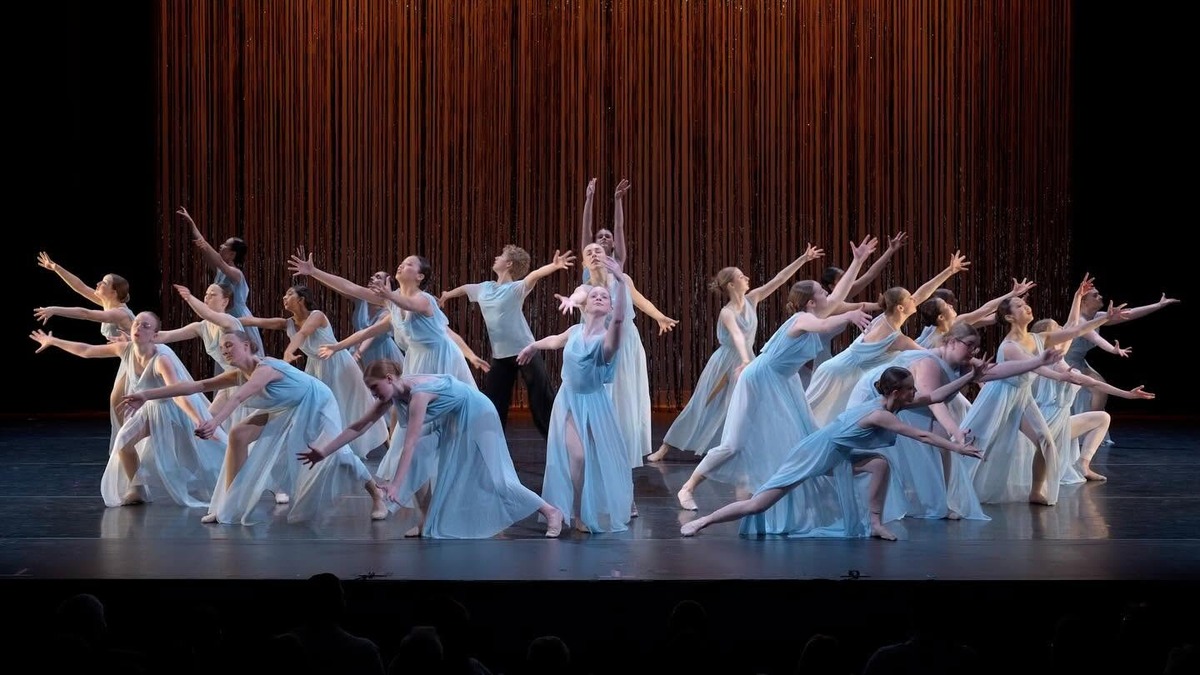
Spring in Motion brings together an orchestra that blends professionals, community players, and students with a dance school that grew out of a university program. The music they share was written in 1944 for Martha Graham’s company by a composer working from scripts sent across the country.
Corelli and Finzi widen the program, one with the dance movements of the Baroque chamber concerto and the other with an amateur orchestra that revived forgotten music.