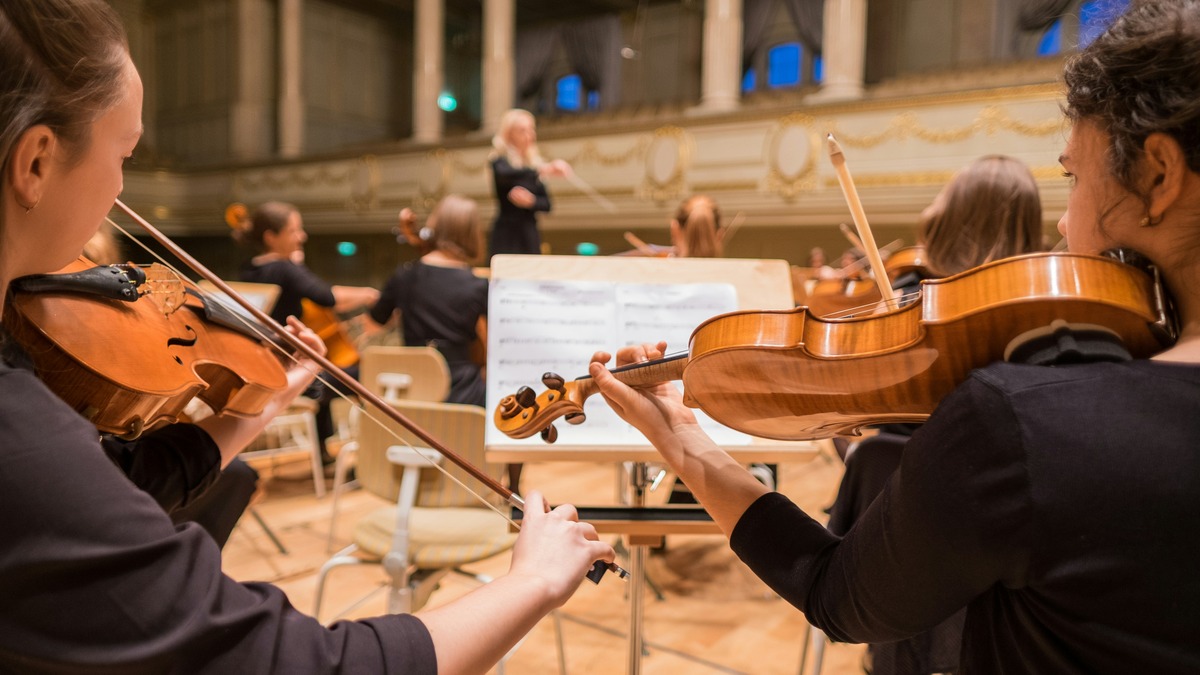
In Paris, in the summer of 1778, a young Mozart pulled a trick that no modern concert hall would let him repeat. In a letter home to his father dated July 3 of that year, he described the premiere of his Paris Symphony, and the description reads like a dispatch from a party.
In the middle of the first movement came a passage he knew in advance would please, and when it arrived the whole audience was carried away into tremendous applause, so he brought the passage back at the end of the movement, where it was encored amid shouts demanding it again.
In the finale, the audience shushed each other to catch an unexpectedly quiet opening, then erupted when a loud forte crashed in over the hush, and the Scottish Chamber Orchestra‘s official history confirms that Mozart had deliberately worked two applause moments into the first movement, engineering the response the way he engineered the notes.
Those concerts were parties rather than chapels, since eighteenth-century premieres happened at dinner parties and balls where guests ate, drank, talked, and arrived halfway through, and Italian opera houses were places to be seen and even to play cards until a favourite soprano’s aria earned its shower of cheers.
So when did the hall fall silent, who invented the rules that nobody hands a beginner at the door, and how is a first-timer supposed to know them before the lights go down?
This guide to classical music concerts answers the three questions every beginner actually brings, which are what the movements are, when to clap and when not to, and how a programme is put together, and it answers them across symphony nights, chamber rooms, solo recitals, choirs, and the new gateway formats that are refilling the halls.
How Applause Died at Classical Music Concerts
Beethoven expected the noise.
At the Vienna premiere of his Seventh Symphony on December 8, 1813, a charity concert for wounded soldiers, the second movement was encored, and the concert was repeated four days later.
Beethoven, as pianist Emanuel Ax notes, expected audiences to leap to their feet whenever a movement ended with a flourish, and for most of the nineteenth century audiences obliged, applauding after movements. The flip began with the composers, as Mendelssohn asked that his Scottish Symphony be played without a break to avoid the lengthy interruptions.
The doctrine hardened around a misunderstanding. At the Bayreuth premiere of Parsifal in 1882, Wagner asked for no curtain calls after the second act, and the audience took him to mean that they should not applaud at all, greeting the final curtain with silence that left Wagner asking whether they had liked it or not.
Two weeks later he slipped into his box for the flower-maidens scene and cried out his own approval at its end, and the faithful hissed him. By 1910 the Encyclopaedia Britannica was tracing the reverential spirit from church to concert room under Bayreuth’s influence, in the posture scholars call Werktreue, faithfulness to the work as a sacred object, and Mahler supplied documented house rules rather than a founding myth, specifying in the score of the Kindertotenlieder that its songs should not be punctuated by applause, and at the Vienna Court Opera from 1897 darkening the house, ending the paid claque, and banning latecomers until the next intermission.
Alex Ross gives the dating that holds up: in the eighteenth century listeners applauded during the music itself, movement applause stayed normal through the nineteenth century, and only in the early twentieth century did resolute silence throughout a multi-movement piece take root, which makes the rule roughly a century old, not fifty.
Ross also names its cruelest side effect. The people who applaud in the wrong place are usually first-timers, and a hissed-at beginner may never attend again.
The silence fought back most famously in New York on January 10, 2012, when a front-row iPhone’s marimba alarm kept ringing through the hushed closing pages of Mahler’s Ninth, and Alan Gilbert stopped the New York Philharmonic, asked the patron if he was finished, and, hearing no answer, told the hall they would wait, before resuming the symphony from an earlier point.
The offender turned out to be a twenty-year subscriber whose employer had swapped his BlackBerry for an iPhone the day before, who believed the phone was off, and who apologized to Gilbert personally.
The counter-current runs through the hall today. In Boussac, France, in 2015, after a woman loudly shushed an applauder between movements, the cellist held up his hand and announced that applauding is a sign of approval, to be shown freely even between movements, and the applause burst out with renewed vigour.
In Boston in April 2016 a Boston Symphony audience under Andris Nelsons applauded between every movement, and the conductor simply waited it out, while at Gustavo Dudamel‘s welcome concert at the Hollywood Bowl in 2009, young first-timers clapped after each movement of Beethoven’s Ninth, and the KUSC critic joined in, arguing that new audiences’ passion should be encouraged.
The conductors keep voting with the beginners: Gianandrea Noseda of the National Symphony Orchestra says that exploding in applause after a movement does not bother him, and Orchestra Iowa‘s Tim Hankewich, scarred by his own night as a lone clapper, tells his audiences to react however they want.
And it is not settled even now. At Nashville Symphony concerts in October 2026, joyful audiences applauded between movements, and the argument about whether it should stop played out in public again.
That is the history, then, and the whole of the modern rule fits inside one glance at the podium.
When to Clap, When to Hold Your Hands
The modern rule can be carried into any hall in the country: the movements of each piece are printed in the programme, usually by their tempo markings, and the beginner who counts them and applauds after the last one will be right nearly every time.
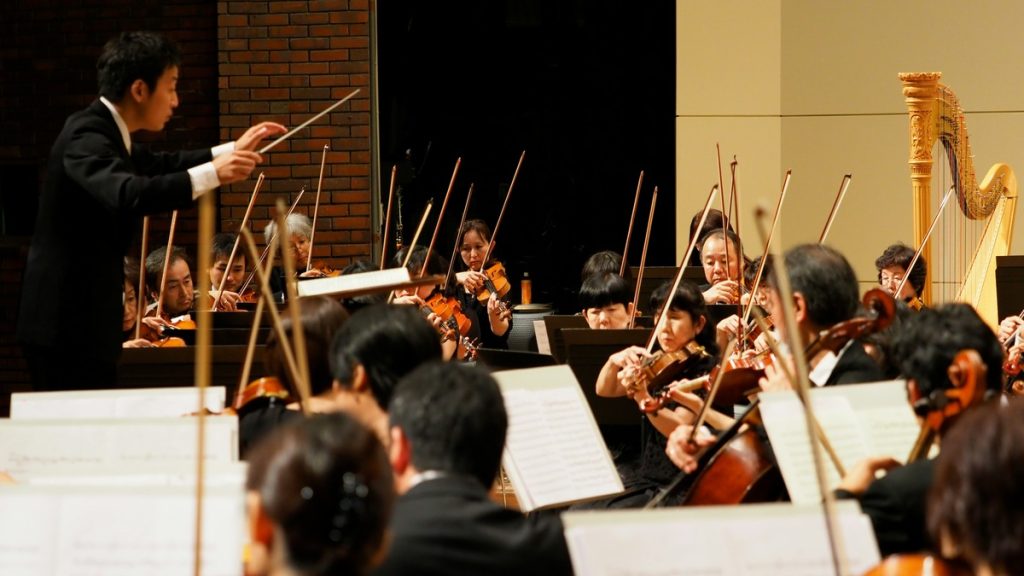
The conductor supplies the punctuation. Arms raised and a back still turned to the audience mean the sentence is unfinished, while lowered arms and a turn to face the hall mean the piece is over, usually sealed by a handshake with the concertmaster and any soloist.
At a quiet ending the conductor holds both arms raised for a few seconds to protect the mood before letting them fall, and between movements the musicians’ attention stays on the podium while the hall exhales its shifting, its released coughs, and its murmurs, so the safest beginner’s instrument is simply the room itself, because the first confident clap nearby is the cue.
One trap is famous. The third movement of Tchaikovsky’s Sixth Symphony, the Pathétique, builds to a march that seems to demand applause, and most audiences applaud there while conductors appear resigned to the fact, whereas the symphony’s actual ending dies away into silence, where eager applause is genuinely resented.
The orchestras’ own beginner pages agree. Ontario’s Georgian Bay Symphony tells first-timers that most musicians will not object to any applause and that anyone who claps before the piece is over should not worry.
The London Philharmonic advises anyone unsure to take a cue from those around them and adds that the orchestra is simply happy the beginner is there, and the Richmond Symphony states the custom of holding applause until all movements are complete, then invites anyone who feels the urge to applaud to please do so.
The anxiety even has a name in beginner guidance, the fear of clapping in the wrong place, named as one of the chief obstacles keeping newcomers out of halls, although it has never been quantified by any dedicated survey.
The only remaining craft is small: cough drops get unwrapped before the music starts, and a cough that cannot be suppressed is a reason to step out quietly, after which the programme itself becomes the next mystery, starting with the word printed all over it.
Movements Are Chapters in One Long Story
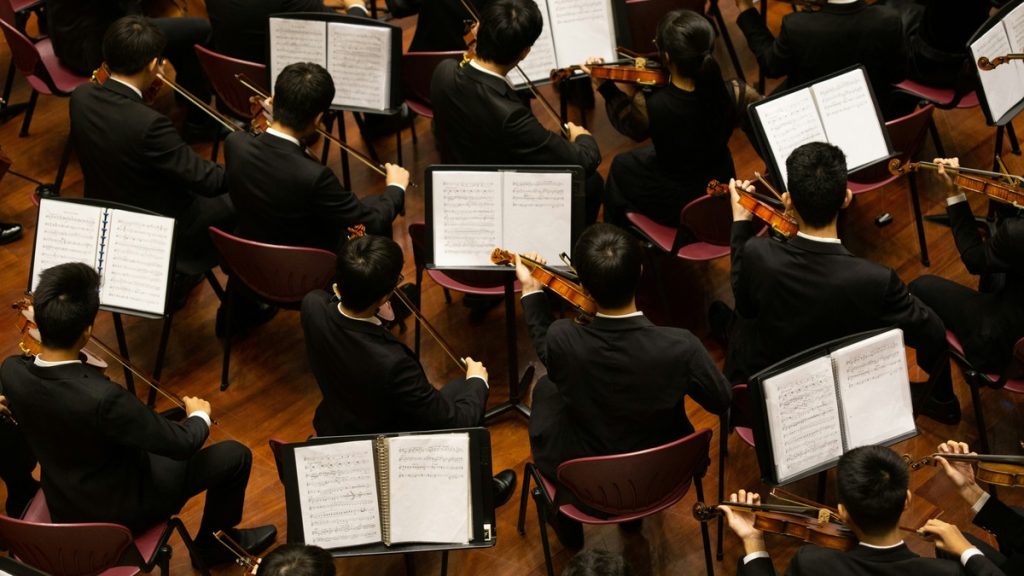
A movement is a self-contained section of a larger work, with its own key, rhythmic structure, and themes, and Symphony Nova Scotia gives beginners the friendliest framing of it, since movements are like chapters in a book, the units a composer uses to organize themes and pace the expressive arc.
The classic symphony shape runs fast, then slow, then dance-like, then fast again, with the first movement carrying the main ideas, the slow movement turning reflective, the third moving like a dance, and the finale bringing closure.
That shape matured in the hands of Haydn and Mozart by the mid-1770s, and the classical symphony is shorter than its reputation, since most of Haydn’s run 25 minutes or less and Mozart’s 30 or less, so the beginner fearing a three-hour monolith is usually facing a half-hour of chapters.
The dance chapter deserves its own sentence, because the third movement is traditionally a minuet, or, in Beethoven’s faster hands, a scherzo, a word that literally means joke, while finales often take the rondo‘s shape, a main tune returning between contrasting episodes.
The concerto rearranges the same furniture into three movements instead of four, fast, slow, and fast, a standard settled since 1750, setting one soloist against the whole orchestra and omitting the dance movement. Near the end comes the cadenza, when the orchestra stops entirely and the soloist plays alone in an extended flourish on the movement’s themes, originally improvised and often written out by later composers, typically ending with a trill that cues the orchestra back in.
Theme and variations and the fugue fill out the programme’s vocabulary, the first altering its theme on every return, the second introducing one subject and imitating it as it recurs throughout.
The first movement’s inner architecture has a name and a plot: sonata form works by introduction, complication, and resolution, beginning with an exposition that presents two contrasting themes in different keys, often played twice, and continuing through a development that breaks the themes into fragments and wanders unsettled, with no home key to rest in.
The recapitulation then brings both themes back in the home key, the movement’s sense of arrival, and a coda often follows, and in Mozart’s Eine kleine Nachtmusik the shape can be timed, with the exposition running to about the 1:55 mark, the development to about 2:38, and the recapitulation to the end.
One confusion is worth pre-empting: sonata form is a structure inside a movement, while a sonata is a type of piece, and the Italian words printed beside each movement are tempo markings that carry speed and character together, from Grave, very slow and solemn, and Adagio, slow and literally at ease, through Andante, a walking pace, to Allegro, fast and bright, Vivace, lively, and Presto, very fast. The metronome ranges attached to them are guides, not rules.
The pauses between chapters obey small print: if a composer wants no pause at all, the printed instruction is attacca, while orchestras take a minute or two to retune between movements, especially in Mahler or Shostakovich, where a single movement can run about 25 minutes.
The extreme case calibrates everything: Mahler’s Third Symphony runs 95 to 110 minutes across six movements, the longest work in the standard repertoire, and its first movement alone, at about 35 minutes, is longer than an entire Mozart or Haydn symphony. Chapters, then, are how the music is organized, and the programme is the book’s table of contents, assembled with a logic of its own that turns out to resemble dinner.
A Program Is Built Like a Good Meal
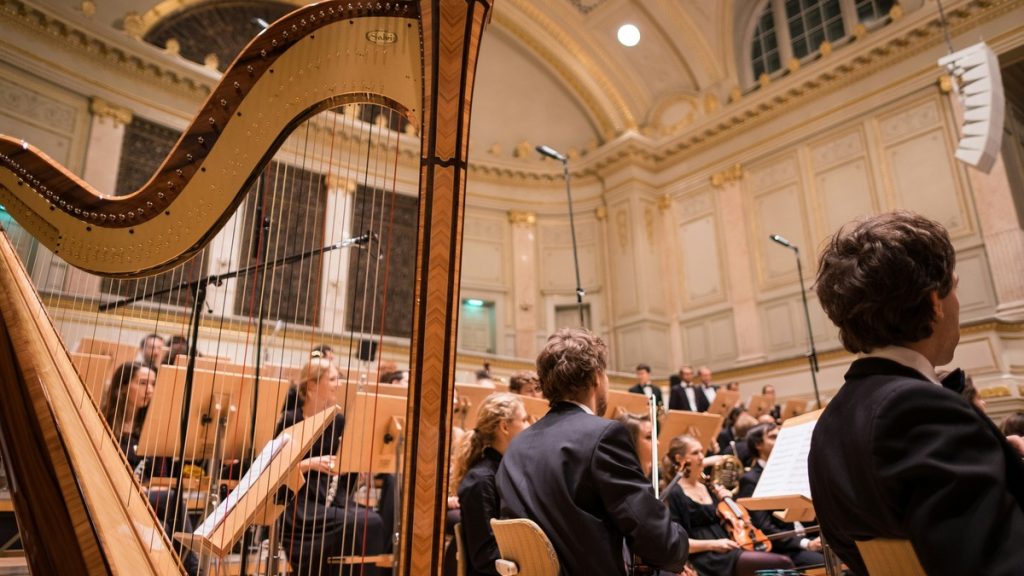
The classic orchestral programme follows a shape so familiar that the standard beginner reference describes it as the format the vast majority of orchestras use for most concerts, and it runs in three courses: a short overture or opener, then a concerto with a soloist, then the intermission, then a symphony after the break.
The overture whets the appetite and quietly lets latecomers slip into their seats, the concerto is the flashiest course, built around one player’s virtuosity, and the symphony, typically 35 to 45 minutes, is the main course, sized to fill the second half on its own.
A practising music director gives the working math behind the menu, which is roughly 40 minutes of music, a 20-minute intermission, and roughly 40 more minutes, landing the standard concert at about two hours in total, while one major orchestra’s own guidance puts most concerts between 90 minutes and two hours including a 15-to-20-minute intermission.
At season level the same balancing act stretches across years: that music director plans his repertoire in proportions, with Austro-German work at 35 to 40 percent balanced against Russian, French, modern, and American music, and two or three piano concertos plus violin and cello concertos spread across the masterworks series.
When a guaranteed draw like Carmina Burana or Beethoven’s Ninth anchors a programme, he figures he has carte blanche for the first half, which is how unfamiliar music reliably reaches first-time ears on the arm of a favourite.
The honest counterexample keeps the template in its place, because Mahler’s Third in Philadelphia in 2017 was performed with no intermission at all, one hour and 44 minutes straight, the whole concert a single work, so the three-course shape is the template a beginner will meet most often rather than a law of the concert hall. A meal has courses, then, and the rooms it is served in range from a hundred players to one singer and a piano.
From a Hundred Players to Four Friends Playing
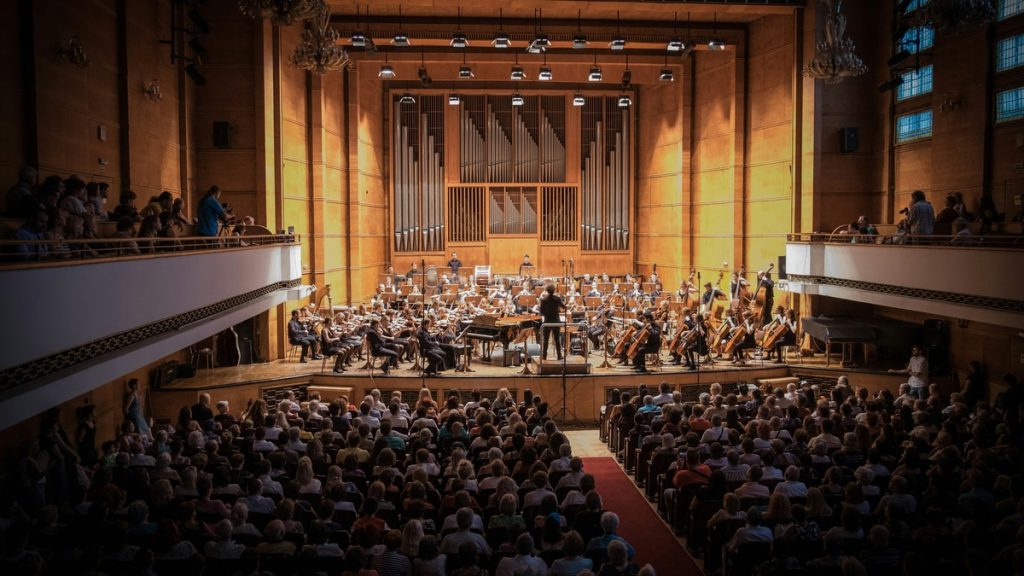
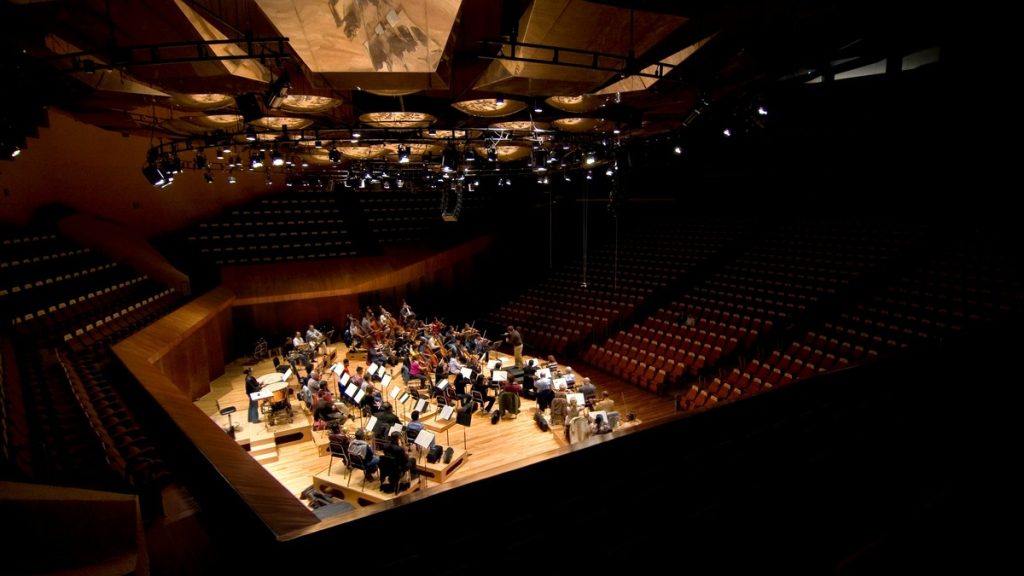
The full symphony night is the format at maximum scale: a complete symphony orchestra runs roughly 80 to 100 musicians, with strings alone accounting for 60 to 70 of them, and Mahler-scale works push the stage past 100 players, while a chamber orchestra fields 50 or fewer.
One building can hold the whole range, since Carnegie Hall‘s Stern Auditorium seats 2,804, its Zankel Hall 599, and its salon-like Weill Recital Hall just 268, and the ritual that opens the night is identical at every scale.
The concertmaster enters last, to a round of applause of his own, and signals the tuning, with the oboe giving the A, and then the conductor enters to applause, and the room settles into the listening posture.
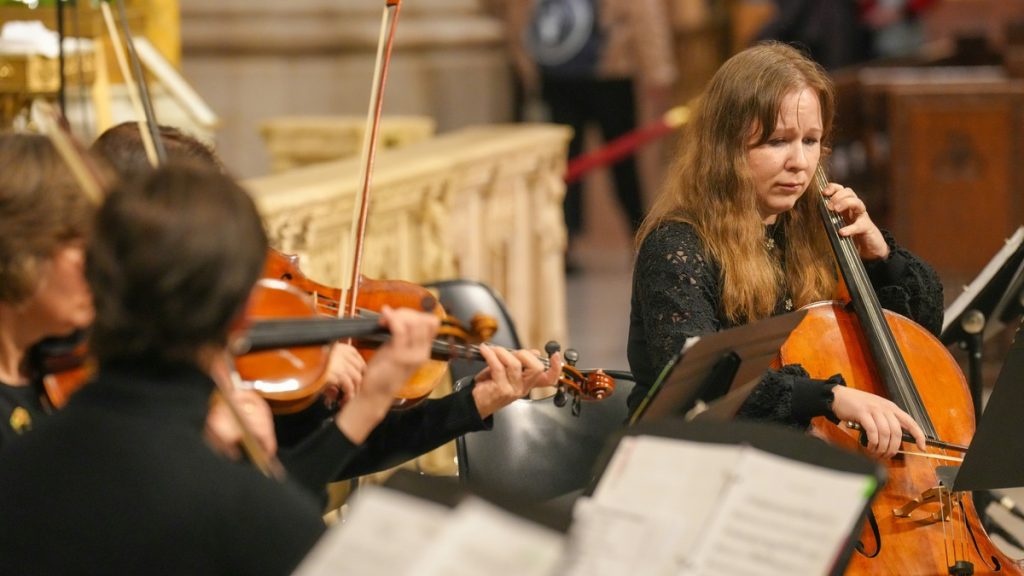
Chamber music is the same art at conversation distance, a small ensemble with one player per part and no conductor, named for the residences and salons where it began, and the Hamilton Philharmonic calls it the music of friends, typically three or four players with all parts equally important and the cues given by the first violin.
Audiences sit close enough to watch the communication itself, the eye contact and the shared breathing, through concerts of about an hour and a half to two hours with an intermission. The living-room extreme is literal: Groupmuse house concerts set string ensembles in the centre of the room with the audience surrounding them, drinks in hand.
The archetypal chamber room is London’s Wigmore Hall, with 552 seats, about 500 concerts a year, and £5 GBP tickets for listeners under 35, proof that intimacy at this level is a feature rather than a compromise.
The recital strips the format to one person with no net, or, in a song recital, to one voice plus piano, where the piano is an equal duet partner that sets each scene and sums up each poem in its postludes, and the singer Anna Lucia Richter describes art song, in substance, as telling big stories in the smallest temporal and physical space.
Soloists generally perform from memory, while orchestral and chamber players read from music, and the format’s closing ritual is the encore, a short and thoroughly practised piece offered as though it were spontaneous. Between the hundred players and the single singer, the whole family shares one invitation, and then there are the nights where the audience itself becomes part of the show, in choirs, at film scores, and around café tables.
Choirs, Movie Screens, Candlelight, and Café Tables
The choral night’s type specimen is Messiah, an oratorio between symphony and opera whose story is told by a choir of 55 singers in the Winnipeg Symphony‘s account, plus four soloists, with no costumes and no staging, the soloists seated in front, standing to sing. The audience stands for the Hallelujah Chorus and may be invited to sing along, and at a New York sing-along Messiah, audience members brought their own scores and sang from their seats while 17 conductors took turns leading.
Opera without the opera house follows the same logic, since in a concert performance the orchestra plays on stage instead of in the pit, the choir sits behind, and the soloists stand in front, with no sets and no costumes, a format OPERA America‘s magazine reports rising since lockdown.
Pops began with café tables: the Boston Pops‘ first Promenade Concert on July 11, 1885 replaced rows with table-and-chair seating and served food and drink, and Arthur Fiedler’s formula across 50 years ran light orchestral works first, a concerto in the middle, and letting loose at the end. The applause norm differs by design in this wing of the family, since the Milwaukee Symphony states that at Pops concerts, applause after every piece is encouraged.
The film concert turns the symphony hall into something closer to a rock show, because at The Lord of the Rings in Concert at Lincoln Center the audience broke into spontaneous applause for the concertmaster’s fiddle tune and whooped at a bassoon solo, while costumed fans at the New York Philharmonic’s Return of the Jedi cheered loudly enough to nearly drown out the opening fanfare, and the hall’s own accounting holds that its film series drew almost 50 percent first-time attendees, an orchestra-reported figure rather than a current measurement.
The casual formats give the same welcome a schedule, since Melbourne Symphony‘s Quick Fix at Half Six offers one-hour concerts at 6:30 p.m. with friendly narration, Lucerne Festival‘s 40min runs free 40-minute moderated concerts, Seattle Symphony‘s [untitled] plays chamber works at 10 p.m. on Fridays in the lobby, and Ottawa’s WolfGANG Sessions put NAC Orchestra musicians in late-night clubs for under an hour, drinks in hand.
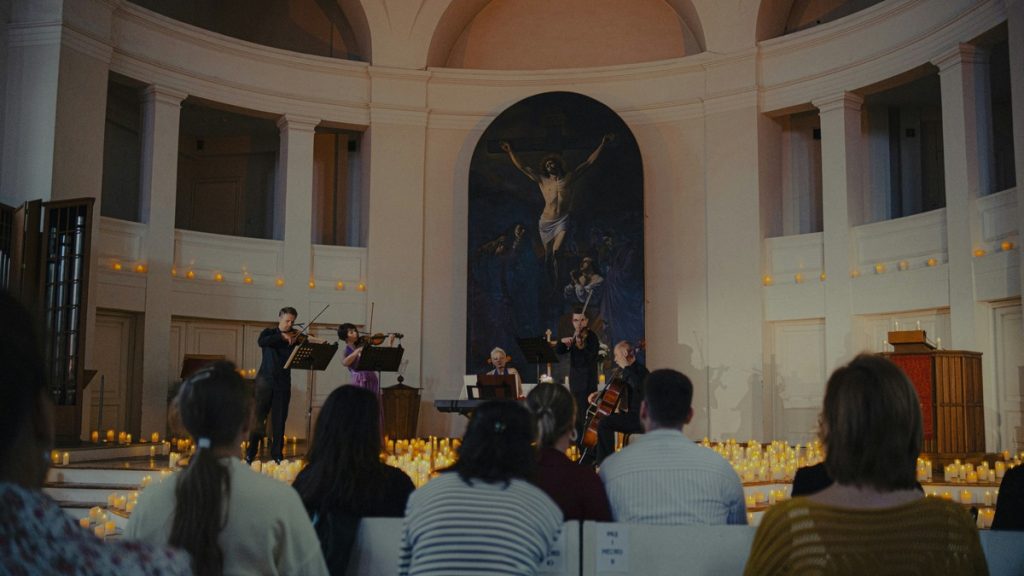
Candlelight needs handling honestly, since Fever‘s concerts, launched in Madrid in 2019, run about 60 to 65 minutes of familiar programmes amid LED candles across more than 150 cities, and the Canadian musicians’ union critique, a position rather than a verdict, charges carbon-copy programmes, the Four Seasons arranged down for a quartet, non-union contracts, and an hour of music priced like a two-hour masterworks ticket, asking whether the format onboards new subscribers or seduces them with fool’s gold.
Whether gateways convert is unproven. A New World Symphony and WolfBrown study found first-timer shares of 60 percent at short narrated mini-concerts against 12 percent at traditional concerts, with 42 percent of alternate-format first-timers buying another ticket, yet no longitudinal study tracks gateway audiences into core repertoire.
Fever’s 2026 study found only 24 percent of Canadian Candlelight attendees had never attended a classical concert before.
The gateways are genuine first experiences whose conversion remains unproven, and underneath every format sits a Canadian story better than any pitch.
The Orchestra That Died and Came Back
The Kitchener-Waterloo story is the spine of the Canadian one. The Kitchener-Waterloo Symphony, founded in 1945, grew to play about 222 concerts a year for more than 90,000 people.
Then, on September 19, 2023, it abruptly cancelled all performances less than 48 hours before its 2023/24 season was to begin, with the musicians not informed in advance.
Two days later it declared bankruptcy and ceased all operations, the entire board resigned, and 52 full-time musicians lost their jobs with no severance, against subscription sales that had fallen from 8,000 in 2019 to 2,000 in 2023 and debts of $916,183 CAD against assets of $273,620, including $706,987 owed to ticket and subscription holders.
The resurrection was built by the players and the public together, because the musicians’ GoFundMe raised about $495,000, a new 93-member board was elected in June 2024, creditors accepted a proposal, the independent K-W Symphony Foundation paid the sole secured creditor, and on October 9, 2024 the Ontario Superior Court annulled the bankruptcy outright.
The players had kept performing in the interim under a temporary name at St. Matthews Lutheran Church, and the 2025/26 Resurrection season opened on September 13, 2025 with Sibelius’s Second Symphony, at 19 performances against about 90 a season before, with all 52 musicians now freelancers and a budget just over $1 million, roughly 20 percent of the former size.
Most concerts now happen in churches, with only three performances at Centre In The Square, the 2,047-seat hall that had opened in 1980 with Mahler’s Second, and in November 2025 the revived orchestra played that same Resurrection symphony in that same hall, while a five-concert 2026/27 series runs from September 2026 to May 2027, led by Andrei Feher with James Sommerville as Artistic Adviser.
Through all of it, the living room never stopped, because the Kitchener-Waterloo Chamber Music Society, which began as an informal auxiliary to the symphony but is now entirely separate and was untouched by the bankruptcy, mounts more than 40 concerts a year across Kitchener-Waterloo and sells through ticketscene.ca/kwcms and at the door.
Its home base is The Music Room at 57 Young Street West in Waterloo, a large living room in a private home seating about 85 around a noted Steinway, where closeness to the artists is the explicit selling point, at $40 general admission and $10 for students, CAD, under Jan Narveson, an Officer of the Order of Canada, and in January 2026 it completed a full Beethoven violin-and-piano sonata cycle at First United Church.
Toronto’s flagship, meanwhile, is having a record moment, because the Toronto Symphony Orchestra closed its 2025/26 season with a surplus, subscription sales at 105 percent of goal, the highest single-ticket sales in its history, and average attendance of 90 percent of capacity at Roy Thomson Hall, breaking the record set the year before.
The texture around the country runs just as strong, since Montreal’s Maison symphonique seats 2,100 plus 200 choir seats behind the stage, is panelled entirely in Quebec beech, and meets the N-1 noise criterion, outside noise imperceptible inside, under the Orchestre symphonique de Montréal‘s Rafael Payare, its first South American music director, while in Ottawa Alexander Shelley concluded an 11-season tenure with the NAC Orchestra in July 2026 and John Storgårds takes over as music director for 2026–27.
Tickets, Timing, Dress Codes That Do Not Exist
The dress code does not exist, because the National Arts Centre’s guidance states there is no dress code at the NAC, while asking patrons to go easy on perfume, and the TSO’s newcomer toolkit asks for no special clothes and no level of music education, only open ears, a curious mind, and a sense of fun.
Arrival runs on a simple clock, since Roy Thomson Hall’s doors generally open an hour before showtime and its box office three hours before, will-call patrons are advised to arrive at least 30 minutes early, and late seating everywhere follows one rule, because latecomers are re-seated only during a suitable break, at the performer’s discretion at Roy Thomson Hall and not guaranteed at the Canadian Opera Company.
Phones are the one hard line, because Koerner Hall asks that devices be switched off before the concert, social media saved for the intermission, and recording left off entirely, with the 2012 marimba alarm as the standing warning.
Relaxed formats extend the same welcome to anyone who needs the rules softened, because TSO Relaxed Performances, created for neurodiverse and disabled audiences and anyone preferring a casual setting, let attendees move around and vocalize, with noise-dampening earmuffs, a Quiet Room, and a Venue Guide provided.
The OSM’s OSMose concerts use a relaxed setting designed for children with special needs, with noise-cancelling headphones, hall doors that stay open, and warning chimes eight and two minutes before the start.
Price has named doors in every major city, each with its own orchestra and terms:
- Toronto’s TSOundcheck, for ages 15 to 35, sells tickets starting at $22 CAD with free sign-up
- Montreal’s OSM offers its 34-and-under listeners tickets at $34 CAD in most seating categories and 17-and-under at $25
- Ottawa’s NAC Under30 sells $15 tickets to anybody under 30 at any time on marked events
- Waterloo’s chamber society charges its $40 general and $10 student prices
Families get their own on-ramp at the flagship, because the TSO’s Young People’s Concerts run free lobby activities from an hour before the performance, and the principles behind taking kids to their first concert or festival apply in the concert hall as they do on festival grass.
Orchestras Canada’s 2023–24 report counted a live audience of 2,285,320 across 71 orchestras, still below the pre-pandemic level, and the industry’s problem is the second visit, with new-buyer return rates falling and attendance frequency stuck at about 1.3 visits a season in American data.
The oldest research finding is the warmest, because who invites a first-timer matters as much as the programme, and Orchestras Canada’s Katherine Carleton describes Canadian audiences as buying later, less, and more spontaneously, which makes any invitation worth accepting on the spot. Everything is answered, then, except the only step that matters.
Your First of Many Classical Music Concerts Starts Small
If you came in afraid of clapping at the wrong time, you came in with the right history.
The hall Mozart played in Paris in the summer of 1778 was a dinner party that shouted, shushed itself, and demanded encores mid-movement, and the reverent silence that replaced it, misread from Wagner’s no-curtain-call at Bayreuth in 1882, enforced by Mahler dimming the house and codified by 1910 as Werktreue, is only about a hundred years old.
That makes the modern etiquette mercifully simple: movements are chapters you can count by tempo in your program, a program is a three-course menu of opener, concerto, intermission, symphony, and the conductor’s back is the only punctuation you need — arms raised, sentence unfinished; arms lowered and a turn toward you, story over — with no dress code and only one hard rule, phones truly off.
Whether your first night is eighty-five chairs around a Steinway in a living room on Young Street in Waterloo, a Pops table with drinks, or 2,800 seats for Star Wars at Roy Thomson Hall, you are not auditioning for expertise, you are being invited back into that original party, and the only habit worth keeping from 1778 is to book the second concert while the first is still ringing in your ears.