At the Monterey International Pop Festival in June of 1967, Big Brother and the Holding Company performed twice, on June 17 and again on June 18. The second performance existed because D.A. Pennebaker‘s film crew had missed the first set, and the organizers arranged a return appearance so that the defining voice of the weekend could be captured on film.
During the filmed performance of Ball and Chain, the cameras caught Cass Elliot in the audience mouthing the word wow in disbelief, and that single reaction shot has followed Janis Joplin‘s reputation ever since.
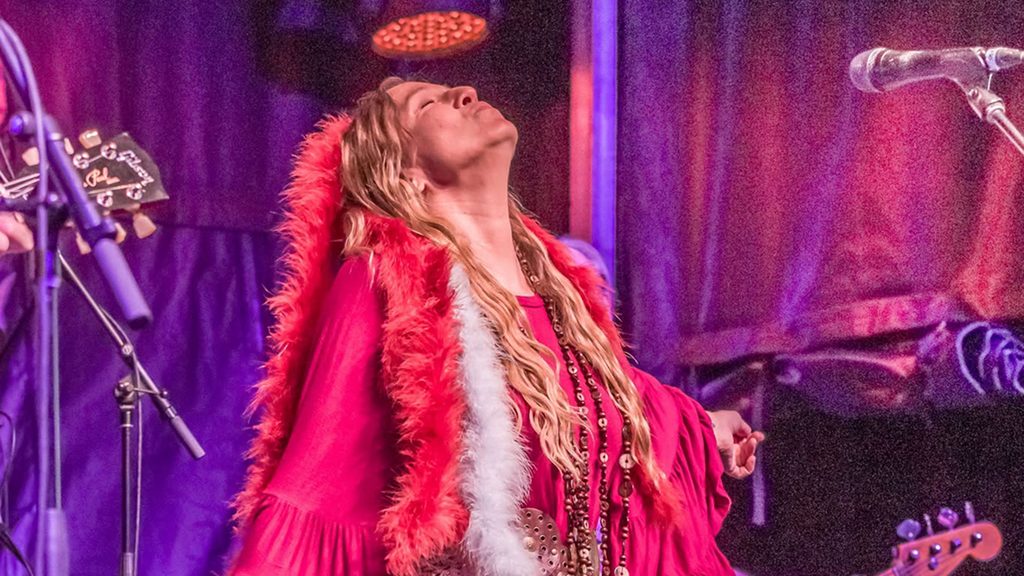
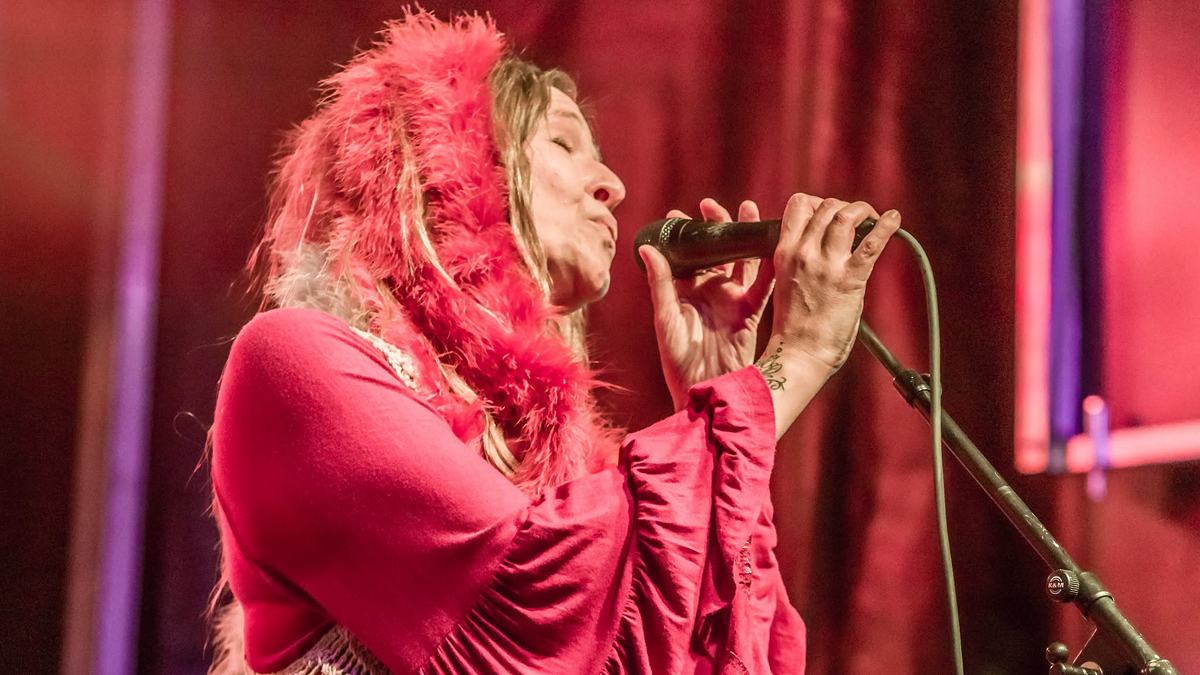
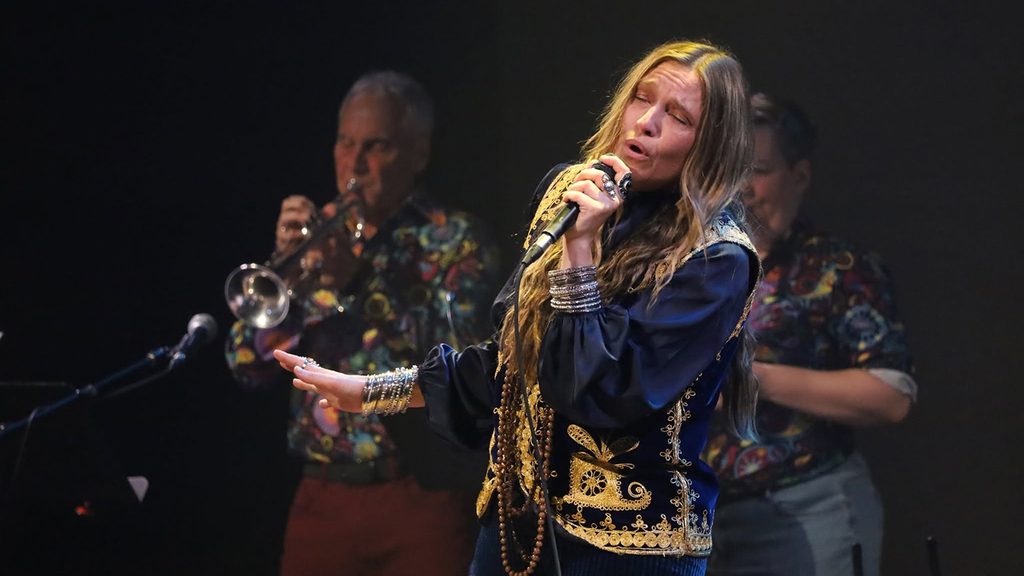
It is that voice, the one that stopped Monterey in its tracks, that Christina Leroux has been singing for five years as the frontwoman of Pearl: A Janis Joplin Experience, a production now deep into a touring life spent almost entirely in Ontario’s theatres.
For all of that touring, however, the show has never played Toronto, and the omission ends on Friday, October 23, 2026, when Pearl makes its Toronto debut at Hugh’s Room Live, a room of roughly 200 capacity at 296 Broadview Avenue, with doors at 6:30 PM and the show at 7:30 PM.
The debut matters beyond the booking itself, because the story Pearl tells onstage ends with a band that was built in Ontario. Before that gig though, if you’re a newcomer to the band, you might think that the show has to solve a problem that defines any similar act from the first rehearsal: how any singer survives ninety minutes of Janis Joplin at all.
Ninety Minutes of Janis Joplin is A Tough Act For Any Singer
The honest answer is that almost nobody tries.
Chris Keeble, who created the Australian stage show Pearl: The Janis Joplin Story, deliberately steered his production away from full-throttle impersonation, on the grounds that ninety minutes of Janis, lyrically and vocally, is extremely difficult to sustain and that almost nobody attempts it.
The sharpest evidence for his caution is Joplin herself, who could not sustain ninety minutes of Janis either, because the voice that made her famous was built for detonation rather than endurance.
Broadway reached the same conclusion by arithmetic. When A Night with Janis Joplin opened in 2013, Mary Bridget Davies sang the title role eight shows a week, but the production was engineered around her survival, with spoken interludes breaking up the set and four supporting singers performing the music of Joplin’s influences as built-in vocal breaks.
Even with that protection in place, the schedule required an alternate, Kacee Clanton, who covered two performances every week, because not even Broadway could ask one singer to carry the role unprotected.
Joplin’s recorded range ran from D3 to A5, roughly 2.6 to 3 octaves, and she sang as a mezzo-soprano with a fast vibrato that could turn a sustained note into a tremor of feeling. Her biographer Myra Friedman wrote that in live performance Joplin pulled audiences into a maelstrom of feeling, shredding her vocal cords on the psychedelic rockers and then turning delicate on Summertime, sometimes within the same set.
This is why Pearl’s schedule is shaped the way it is. The production tours in one-nighters, moving from theatre to theatre rather than settling into a run, and that shape is precisely what allows a singer to do what Broadway could not sustain eight times a week: give the full ninety minutes at full throttle and then take the recovery the role demands before the next town.
A Year in the Rehearsal Room Formed the Beginning of Pearl: A Janis Joplin Experience
Pearl was painstakingly built and rehearsed over a year-long period before it played for the public, with its songs carefully curated to pay respect to Joplin’s entire body of work rather than only the songs a casual audience could hum its way through.
That patience has been repaid in kind, because the production has become one of the most in-demand tribute shows working in the country, and it is now in its fifth year of touring.
A year is a long time to spend on a show that has not yet sold a ticket, and the decision says something deliberate about how the production was meant to work. A tribute to Joplin can coast on a wig and a pair of round glasses, but a production that intends to sing the complete Woodstock set in Stratford, in the hometown of the guitarist who played the original, has to arrive with the catalogue under its fingers, and that standard is set in the rehearsal room rather than at the box office.
The production comes from A Royal Tribute Productions, a company whose catalogue is built on exactly this model of the carefully constructed tribute.
The company’s recurring star is Roy LeBlanc, a multiple-time champion of the Collingwood Elvis Festival and the first Canadian ever named World’s Finest Elvis in Las Vegas, and his presence in the catalogue underlines the house philosophy, which is that a tribute show stands or falls on the credibility of the performer at its centre.
A year of rehearsal can build a show, but a show is only ever as strong as the eight people who have to play it, night after night, in rooms of two hundred seats.
Meet The Woman at the Microphone and Ontario’s Best Janis
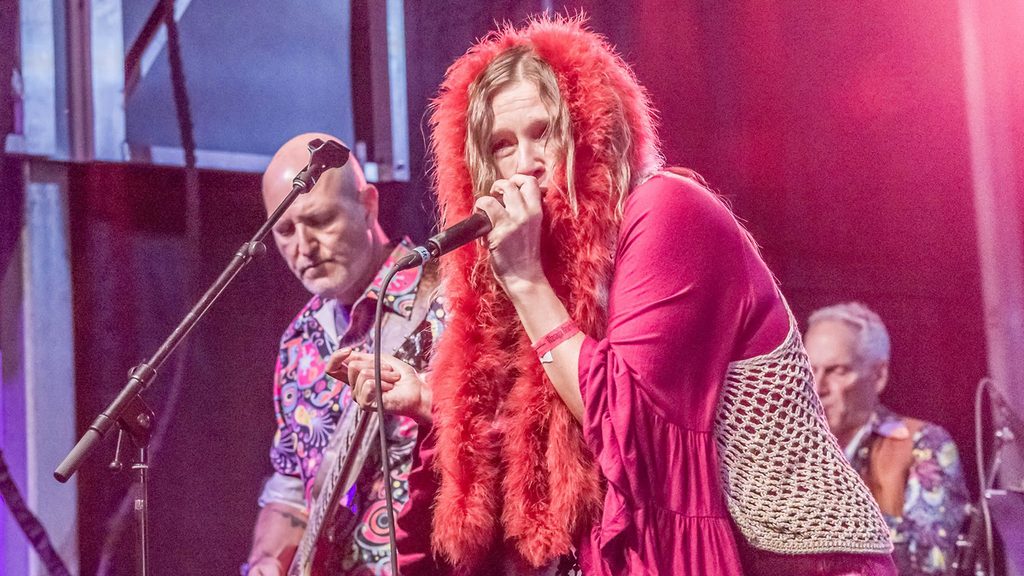
At the centre of the production stands Christina Leroux, the show’s sole featured vocalist, who has fronted Pearl for the whole of its five-year run.
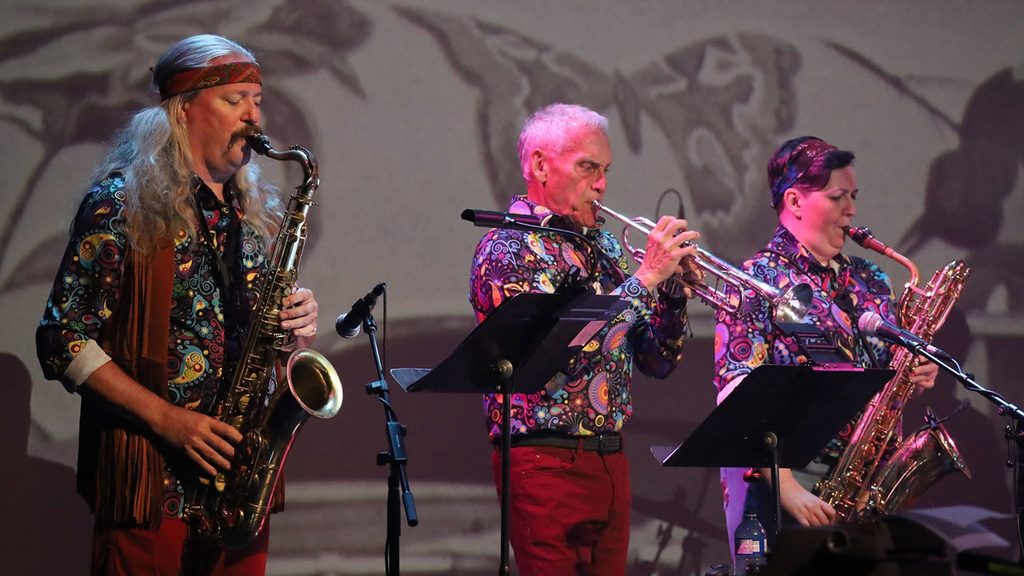
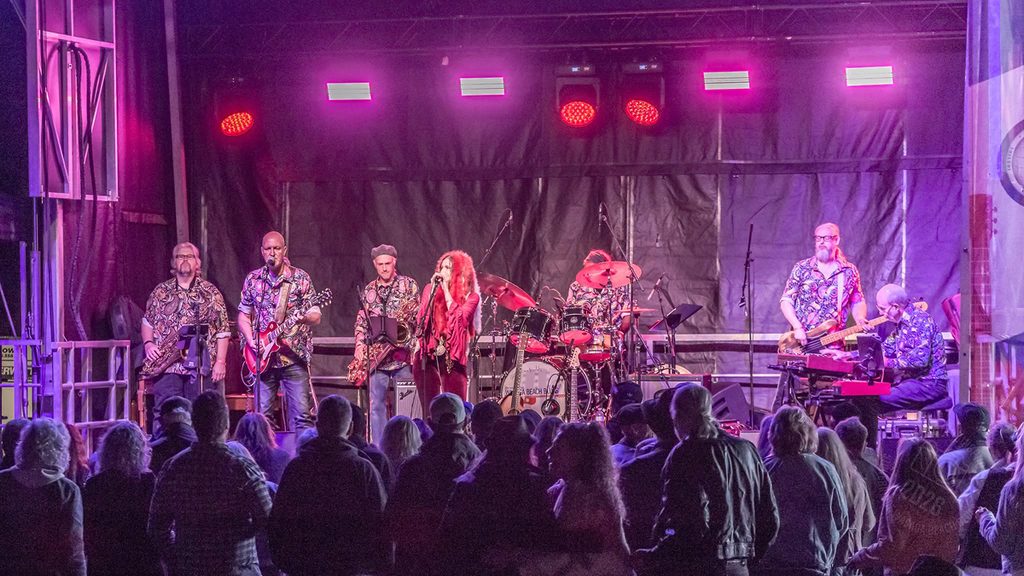
Behind her, the band brings the stage count to eight performers in total, and every chair matters to the repertoire the show attempts.
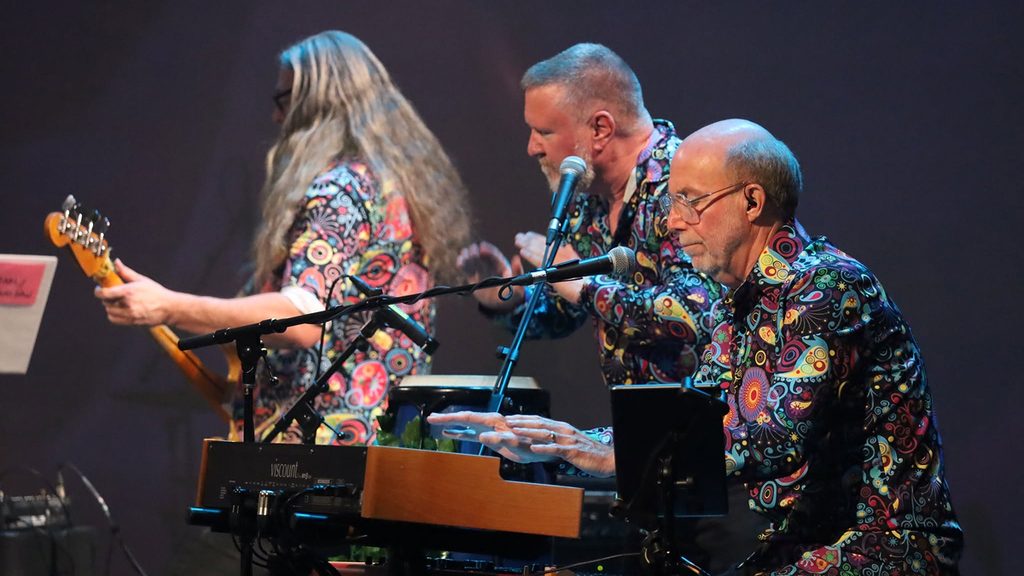
Dylan Wickens handles the guitars, Ryan Allen plays bass, Cassius Pereira plays drums, and Peter Beacock plays keyboards, while a three-horn section of Dan Jancar on tenor saxophone, Greg Dozois on trumpet, and Brent Rowan on baritone saxophone gives the production its second engine.
Wickens arrives with his own standing in Canadian roots music, as a guitarist from Kitchener, Ontario, who leads the Dylan Wickens Band and divides his stage time between his own material and tribute shows devoted to Eric Clapton and Janis Joplin. A guitarist who works both sides of that line, leading his own band in one room and serving somebody else’s catalogue in the next, is precisely the kind of musician a production like Pearl is built upon.
The lineup itself is a piece of stagecraft, because a voice, a guitar, a bass, a drum kit, keyboards, and three horns are what allow one band to cover the full three-album sweep of Joplin’s career, from the psychedelic blues of the Big Brother years to the horn-driven Kozmic Blues sessions and the polish of the sessions that produced Pearl.
Eight musicians and one catalogue raise the obvious question, which is what a night with this band actually looks like and what a ticket-buyer can expect.
Pearl: A Janis Joplin Experience, Album by Album
The night is structured as a journey through the three albums in sequence, Cheap Thrills, I Got Dem Ol’ Kozmic Blues Again Mama!, and Pearl, in a multi-media musical production that sets out to recreate Joplin’s sound and style in the order she made them.
The structure does quiet dramaturgical work, because the audience hears the voice evolve from the raw San Francisco ballrooms to the biggest-selling album of her career, all within a single evening.
The journey opens with Cheap Thrills, the album Joplin made with Big Brother and the Holding Company and released on August 12, 1968, into the centre of the American summer. The album spent eight nonconsecutive weeks at No. 1, its single Piece of My Heart climbed to No. 12 on the Hot 100.
The second album, I Got Dem Ol’ Kozmic Blues Again Mama!, was recorded between June 16 and 26, 1969, and released that September, reaching No. 5 on the Billboard albums chart on its way to Platinum certification. The horns that drive the record are the practical reason Pearl travels with a saxophone, a trumpet, and a baritone saxophone of its own, since the Kozmic Blues sound cannot be honestly approximated by a guitar band alone.
The final album gives the production its name. Pearl was released on January 11, 1971, on Columbia Records, produced by Paul A. Rothchild and recorded at Sunset Sound, and it began a nine-week run at No. 1 on the Billboard 200 on February 27, 1971, that carried it to a 4× Platinum certification.
Its signature single, Me and Bobby McGee, reached No. 1 on the Hot 100 on March 20, 1971, and held the top spot for two weeks, becoming Joplin’s only No. 1 single and only the second posthumous No. 1 in American chart history.
Woven through the album journey is the set that anchors the whole set where the band performs Joplin’s Woodstock set in its entirety, alongside the album material.
The Band That Played With Janis in the End Was Canadian
That ending of Janis Joplin’s musical story is the part of the story Canadian audiences are rarely told.
Full Tilt Boogie, the band that backed Joplin through the final months of her career and played on Pearl, was built around guitarist John Till of Stratford, Ontario, and filled out by Richard Bell on piano, Ken Pearson on organ, Brad Campbell on bass, and Clark Pierson on drums. Most of the band came from Stratford and Woodstock, Ontario, and several of its members had arrived through Ronnie Hawkins‘s Hawks, the great finishing school of Canadian rock and roll.
The following summer, the band became part of Canadian rock mythology outright.
In the summer of 1970, the Festival Express tour put Joplin and Full Tilt Boogie, the Grateful Dead, the Band, and a travelling company of musicians aboard a chartered fourteen-car train that left Toronto on June 28 and rolled through Winnipeg on its way to Calgary by July 4.
The trip produced the era’s finest tour stories as a matter of routine, including the night the bar car ran dry and the musicians passed a hat, restocked at an unscheduled liquor-store stop, and kept the party moving west, while back in Toronto a small protest riot had erupted over the CAD $14 ticket price before the train even left.
Weeks after the train stopped rolling, Joplin was at Sunset Sound with producer Paul A. Rothchild, recording the album that would carry her nickname.
On October 1, 1970, she recorded Mercedes Benz a cappella in a single take, and it became the last song she ever recorded, three days before her death. Buried Alive in the Blues remained an instrumental on the finished album because she died before she could sing it, and its songwriter, Nick Gravenites, declined the offer to sing it himself rather than take her place on her own record.
The album’s biggest song carried its own quiet heartbreak, because Kris Kristofferson, who was romantically involved with Joplin in 1970, reportedly did not know she had recorded Me and Bobby McGee until after her death, when Clive Davis played him her master.
On October 4, 1970, her road manager, John Byrne Cooke, found her painted Porsche 356 in the lot of the Landmark Motor Hotel and found Joplin dead in Room 105. She was 27 years old.
The Rooms Keep Asking Back
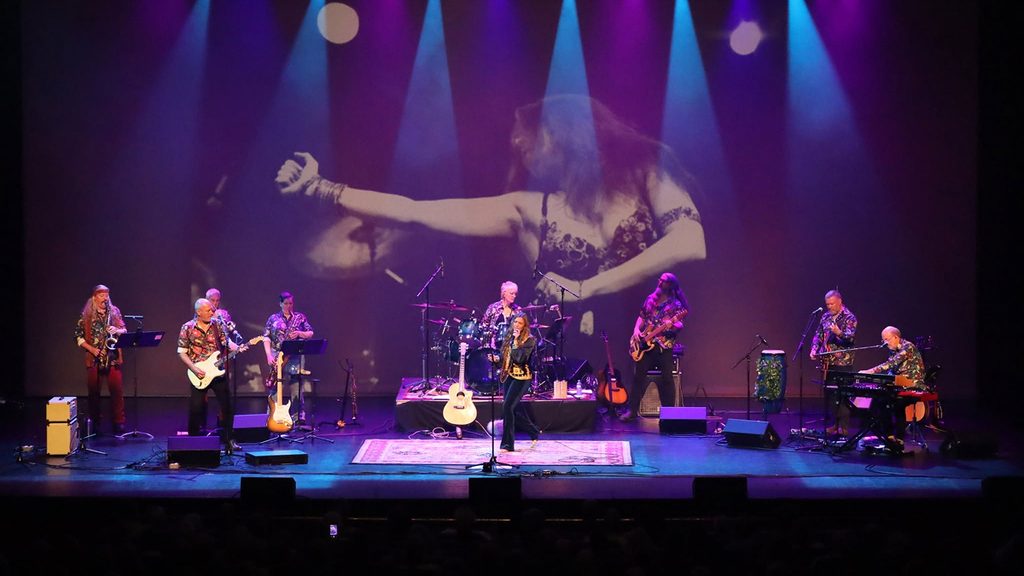
Five years of touring, a run of return engagements, some festival appearances, and a long-awaited Toronto debut add up to the fact that these rooms keep asking the show back.
The circuit Pearl works is small-town Ontario at its most durable, taking in the Westdale in Hamilton, Meridian Theatres @ Centrepointe in Ottawa, the Sarnia Library Theatre, and stops in Goderich, Port Dover, Stratford, Cobourg, Aylmer, and Wasaga Beach, which is the kind of map a production draws once it has learned exactly where its audience lives.
The Wasaga Beach Blues festival booked the production into its Friday-night slot on September 18, 2026, at 8:30 PM, which moved Pearl off the theatre circuit and in front of a different audience.
The demand has a measurable shape in Hamilton, where the Ancaster Tribute Series grew from four shows to six in 2025 and to twelve in 2026 on rapidly climbing demand and sold-out houses, becoming a fixture of the city’s performing-arts calendar, and Pearl’s November 6, 2026, date sits inside that series.
Port Dover, meanwhile, carries a December 5 date for the production, another small room adding its name to a map that has filled in town by town.
Five years of asking back have drawn that map.
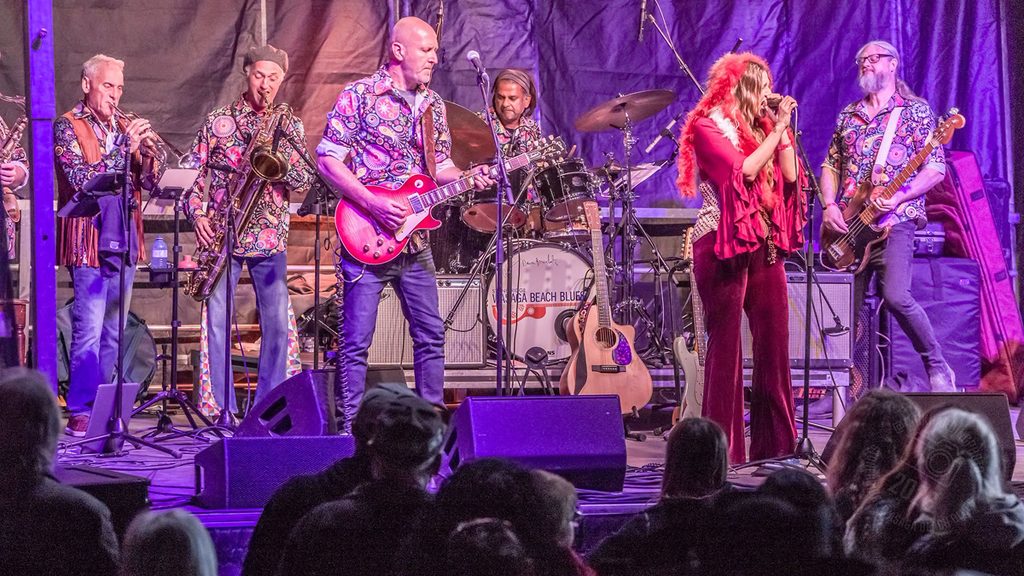
Pearl: A Janis Joplin Experience Comes to Toronto on Oct. 23
The missing city is Toronto, and the debut has been a long time coming for a production that has spent five years playing everywhere around it.
On Friday, October 23, 2026, Pearl plays Hugh’s Room Live, the roughly 200-capacity room at 296 Broadview Avenue, with doors at 6:30 PM, the show at 7:30 PM, and tickets at CAD $55 through Ticketscene, in a room small enough that the voice Christina Leroux has spent five years building will land the way it was meant to land.
The Toronto date opens a run that carries the production across the province and into the spring.
On Saturday, October 31, 2026, which is Halloween night, the show plays the Upper Canada Opera House in Deseronto at 7:30 PM, with tickets at CAD $54.24 through Ticketscene, before crossing to the Ancaster Memorial Arts Centre on Friday, November 6, 2026, at 7:30 PM, where tickets are sold through the venue’s own box office.
The run continues on Friday, November 27, 2026, at the Roselawn Theatre in Port Colborne, a room of 270 capacity, at 7:30 PM, with tickets handled through the Lighthouse Festival box office.
Into the new year, the production plays Paris, Ontario, where the #ForParisCentre at Paris Community Church hosts the show on Friday, February 19, 2027, at 7:30 PM, with tickets at CAD $59 through Ticketscene.
The spring leg closes on Thursday, March 25, 2027, at the Gibson Centre in Alliston, at 7:30 PM, with tickets at CAD $57 through Ticketscene.
Fifty-nine years after Monterey and fifty-six after a band from Stratford and Woodstock, Ontario, carried Janis Joplin through her final summer, in a room of two hundred seats on Broadview Avenue, a Canadian singer at the microphone, seven musicians behind her, and the complete catalogue in front of her says it all.