Most recording studios are built to shut the world out, with sealed doors, treated walls, and no audience beyond the engineer behind the glass.
Sessions on the River in Fort Erie was built to do the opposite, opening its doors to concert crowds, livestream viewers, and anyone in Niagara who wants to hear what a record sounds like before it becomes one.
Sessions on the River operates at 133 Niagara Boulevard in Fort Erie, Ontario, where it combines a professional recording studio, a record label, a live music venue, and a broadcast studio under one roof. The whole operation sits inside the former Parkway Movie Theatre, a historic cinema building along the Niagara River.
Depending on the night, the address is a workplace for engineers, a first stage for new singers, a Saturday night out for Fort Erie, and a broadcast studio sending local music out live. Few buildings in Niagara hold that many jobs at once, and fewer still were designed, from opening day, to hold them all.
The studio was founded in 2008 by Chris Curry, and the live events were part of the plan from the very beginning rather than an afterthought added years later. The founding vision paired high-quality audio recording with a stage where musicians could be discovered, plus professional streaming to carry every performance far beyond the room.
This is the story of that studio: who owns it, why a recording facility hosts concerts every week, who performs there, and who keeps showing up to listen.
A Former Movie Theatre on the Niagara River
The building gives Sessions on the River its character before a single note is played.
The former Parkway Movie Theatre had already spent one life gathering Fort Erie audiences in the dark, and the studio simply changed what those audiences gather for.
The Town of Fort Erie’s official visitor guide describes Sessions on the River as a recording studio and record label housed in the former Parkway Movie Theater, presenting new and inspiring musicians in a live music venue on Fridays and Saturdays. A working studio earning a spot in the town’s visitor guide says plenty about how far the operation reaches beyond the music industry.
The setting does some of the work. Niagara Boulevard runs along the upper Niagara River in Fort Erie’s old Bridgeburg district, minutes from the Peace Bridge crossing into Buffalo, and the studio’s name points straight at the water flowing past the door.
People connected to the studio describe the idea behind the room as erasing the line between artist, audience, and studio. In a converted theatre, that line was never very thick to begin with, because the building was designed for performers and listeners to share the same air.
From the street at night, the studio announces itself plainly, with a glass storefront, a bright red neon open sign, and the circular Sessions on the River decal on the window. It reads less like a fortress of audio gear and more like a neighbourhood shop, which is roughly the relationship the business has built with its town.
Opened May 1, 2008: The Founding
Sessions on the River was founded by Christopher Curry in 2008, with Curry serving as president and major shareholder. The doors opened on May 1, 2008, and the studio has now been running for more than eighteen years.
The founding vision, in the company’s own telling, was to provide the best quality audio recordings, with the right production to compete with today’s audio standards. Bolted directly onto that ambition was the second half of the idea: a platform for musicians to be discovered, built by adding a live music venue with professional high-definition streaming services capturing the moment for thousands of viewers online.
Curry’s own stated passion is helping musicians with their audio needs, backed by a habit of continually upgrading equipment to keep pace with the music industry.
The company’s description of itself stresses that the industry landscape is always changing, and that Sessions intends to lead the way with creative ideas and solutions.
Sessions on the River is a recording studio that behaves like a venue, a venue that behaves like a broadcast studio, and a record label wrapped around both.
Who Owns Sessions on the River
Sessions on the River is owned and governed locally, through a small corporation.
Chris Curry is listed as president and founder, Kevin Kreze serves as vice president, and Peter Rigby chairs the board.
The board of directors includes Curry, Jim Winney, Bobbi Niles, Paul Brady, Kevin Kreze, Chuck May, and Gordon Ignatowitz. The shareholder list overlaps heavily with the board, adding Dave Course, known as Sasquatch, and Cordar Inc. alongside the directors who hold stakes.
Sessions on the River is not a franchise outpost or a hobby room, but a locally owned company whose founder remains its president and public face nearly two decades after opening day.
The governance is also unusually public for a small music business. The full list of officers, directors, and shareholders sits on the studio’s own website for any artist or audience member to read, which suits an operation that has always presented itself as a community project as much as a company.
Curry is also the person outsiders deal with day to day. When a community memorial concert was organized at the studio in 2026, the event details named Chris Curry as the Sessions on the River operator, the same title role he fills when the studio’s own shows are recorded and streamed.
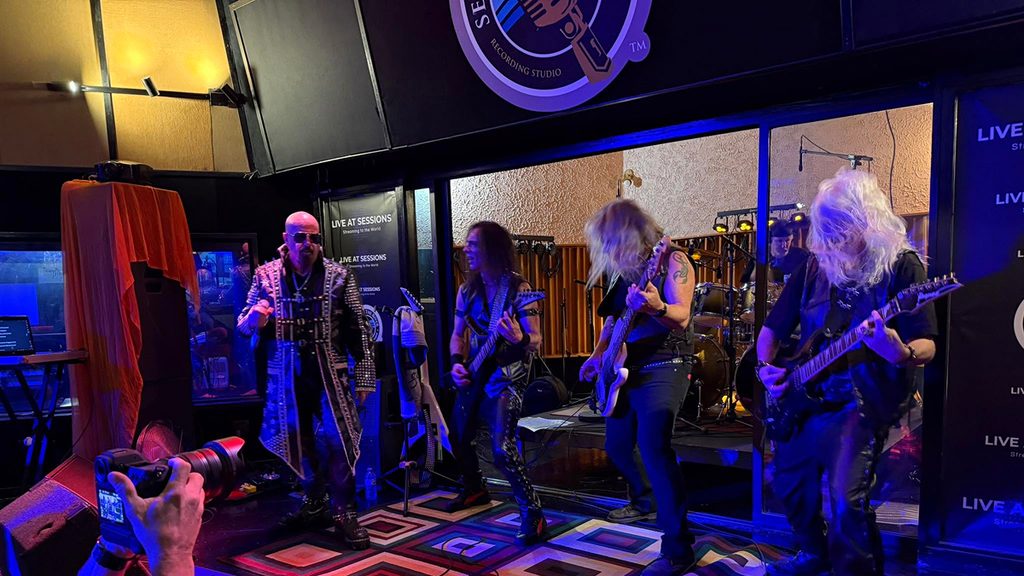
Inside the Studio: Big Rooms, a Drum Room, and a Vocal Booth
The recording side of Sessions on the River is built for full bands rather than bedroom producers. The studio features expansive tracking rooms, a dedicated drum room, and a large vocal booth, with premium gear throughout.
Those rooms serve musicians of all genres, according to the studio’s venue biography, which pairs the recording facilities with a reputation as a world-class facility. The old theatre’s generous footprint is what makes that layout possible, since a cinema auditorium converts naturally into the kind of large live room most studios can only wish for.
The operation also runs as a record label, a side of the business the Fort Erie visitor guide notes alongside the studio and venue. Recording, releasing, and performing all happen at the same address, which shortens the distance between a song’s first take and its first audience.
For artists, the practical appeal is easy to understand.
A band can track an album in the big room, test the same songs in front of a Friday night crowd down the hall, and have the whole performance streamed and recorded while it happens.
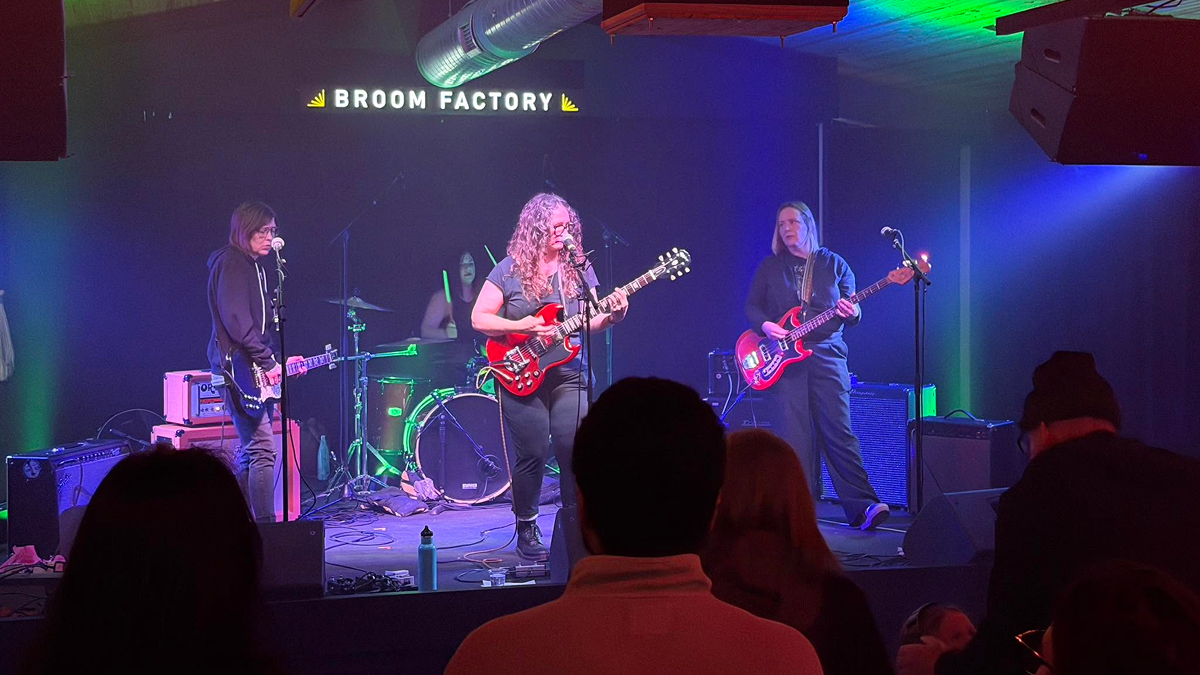
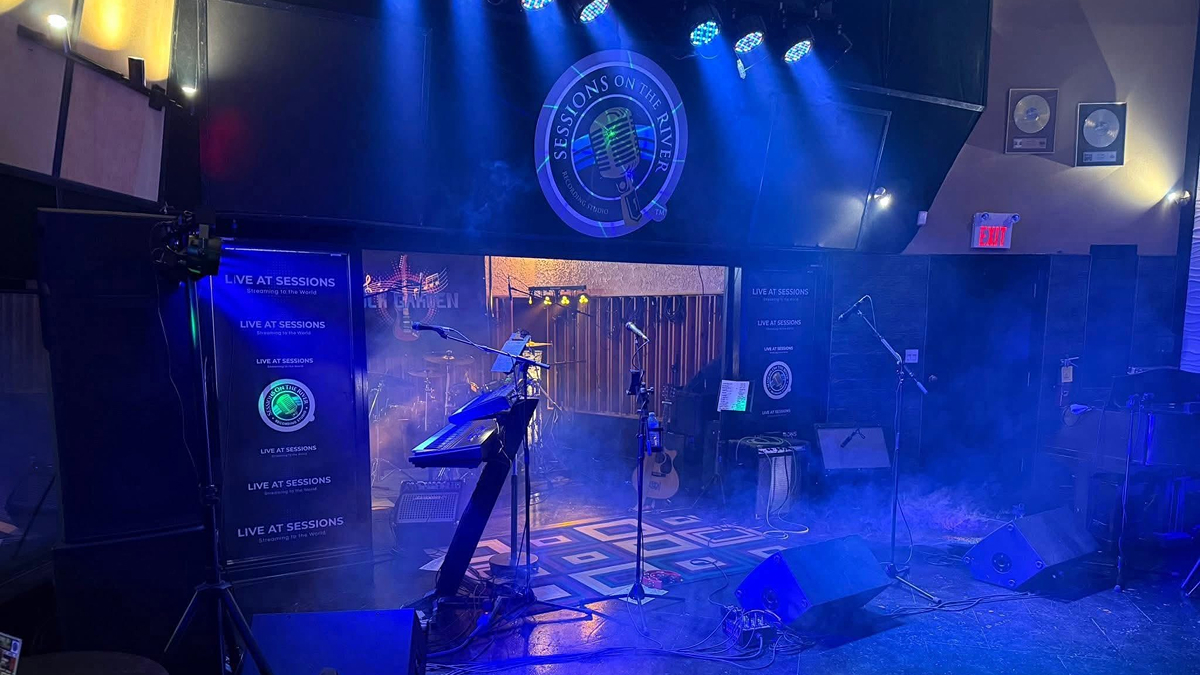
The building’s second life is visible in the details the studio shows off in its own photo tours. The control room centres on a large analog mixing console with a view into the live room, the performance stage sits under blue spotlights, and the venue side includes a licensed lounge under Ontario’s AGCO rules.
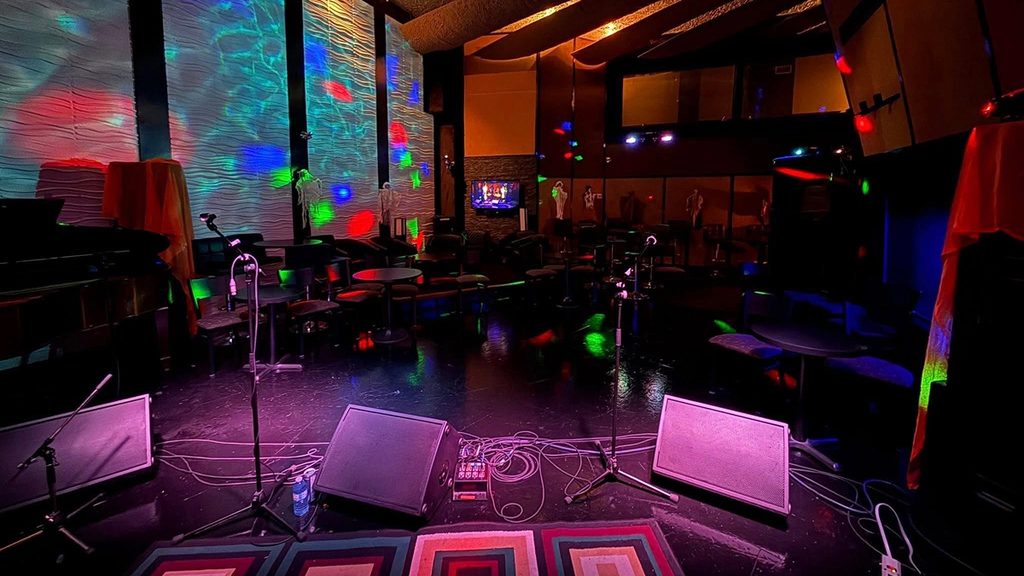
Capacity is part of the concept rather than a limitation. The room holds 140 people, small enough that every listener is close to the stage and large enough to give a band a genuine concert test.
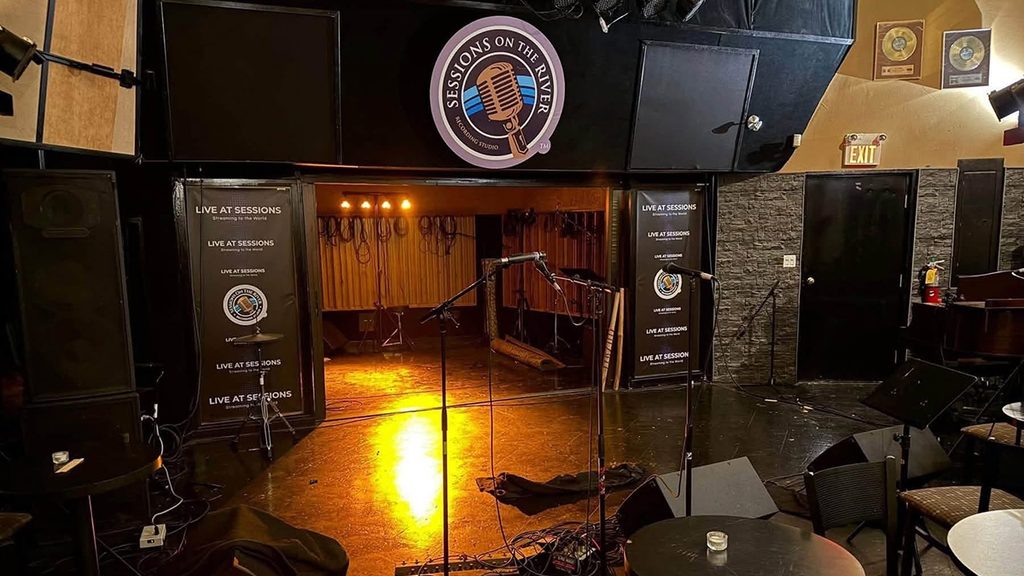
Why a Recording Studio Hosts Concerts
The short answer is that the concerts were never a side hustle. The live venue was written into the founding vision as the discovery platform, the mechanism that would turn a good recording studio into a place where musicians get found.
A stage inside the studio solves a problem every recording facility faces. Artists need audiences before they need albums, and a room where they can perform under professional sound, in front of real listeners, gives the studio a first look at developing acts while giving those acts a first serious stage.
Streaming multiplies the effect, and Sessions on the River maintains a dedicated streaming page for its live streaming concerts. A Fort Erie audience of regulars is only the first ring of listeners, because the founding plan always assumed the performance would travel.
The concerts also feed the studio’s core craft, because performances at Sessions are recorded rather than simply presented. A New Year’s concert at the studio was released as a video billed as recorded live off the floor at Sessions on the River.
Weekly showcases and open mics round out the model. An open mic singer gets a low-pressure first set, a showcase act gets a properly engineered bill, and the studio gets a steady pipeline of artists who already know the room when they are ready to record.
Rehearsals fill the quieter hours between shows. Bands prepare at Sessions on the River for its competitions and concert bills, and the studio’s own video updates direct bands looking for rehearsal or recording space to Barking Dog Entertainment, keeping the calendar and the studio book connected.
The result is a building that rarely sits idle.
A single week at 133 Niagara Boulevard can hold band rehearsals, recording sessions, an open mic, a streamed showcase, and a Saturday headline concert, each activity feeding artists toward the next one.
The broadcasts carry their own branding: Live at Sessions, billed as broadcasting to the world.
Many of the studio’s events are streamed in high definition across its social platforms, offering fans the chance to experience the music from anywhere, which turns a 140-capacity room in Fort Erie into a stage with no fixed ceiling on its audience.
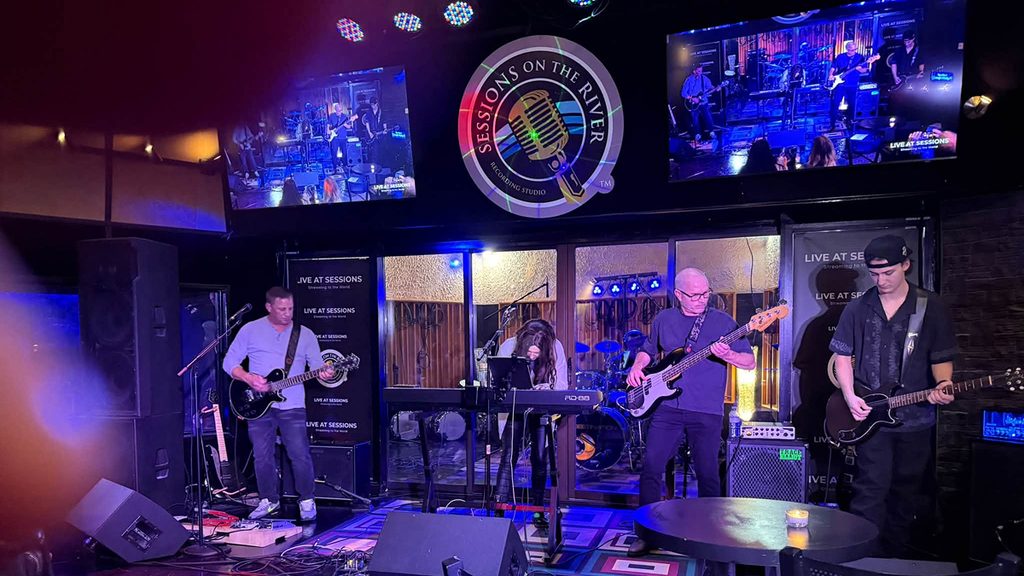
The Ultimate Band Series: A Draft for Musicians
The clearest expression of the discovery idea is a competition the studio built for itself, called the Ultimate Band Series.
Rather than waiting for bands to form on their own, Sessions on the River set out to manufacture them, using a draft format borrowed from professional sports.
Solo artists auditioned at the studio in categories covering singers, guitarists, bassists, drummers, and keyboardists, with a fringe category for any other instrument. Each contestant played one song of their choice, and panel-selected winners received a silver ticket advancing them into a musicians draft.
Eight producers then selected silver ticket musicians from the draft pool to form eight bands. A second draft followed for the material itself, with producers choosing from songs submitted by songwriters and from songs submitted as lyrics alone, so writers who never performed could still hear their work played.
Songwriters and composers entered the series by submitting their music or lyrics to the studio directly, and the draft pool carried the rest. Musicians who missed the auditions were not shut out entirely, since each manager could also draft one wildcard musician from a list of players the panel had not advanced.
The drafted bands rehearsed, at Sessions on the River or a location chosen by their team captain, and learned five songs each. At least three of the five had to be originals drawn from the song and lyric drafts, with no more than three covers allowed in a set.
From there the series ran as a battle of the bands, with two divisions of four bands performing at the studio in front of a panel of judges through quarter finals and semi finals. Four bands reached the finals at Sessions on the River, where one was crowned the Ultimate Band Series champion.
The winning band received a full album produced at Sessions on the River, worth $10,000 in recording time and distributed worldwide through the studio’s online partners, while every band in the competition received one produced song, valued at $1,000, placed on a compilation album and distributed the same way. Standard music industry contracts were given to all musicians, producers, and songwriters involved.
The series even adapted to the pandemic years, with rules adjusted when some categories ran short of musicians and managers permitted to bring in one free agent each.
A recording studio running a musician draft, a song draft, and a battle of the bands under one roof is the founding vision of Sessions on the River in its purest form.
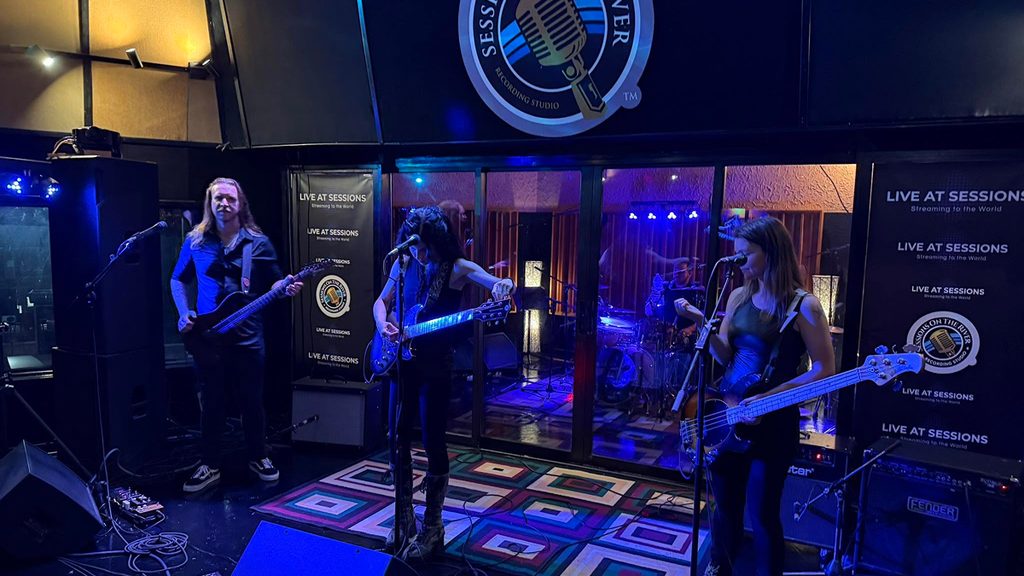
Who Plays Sessions on the River
The stage calendar mixes three kinds of acts: Niagara’s own bands, tribute productions, and touring artists passing through the region.
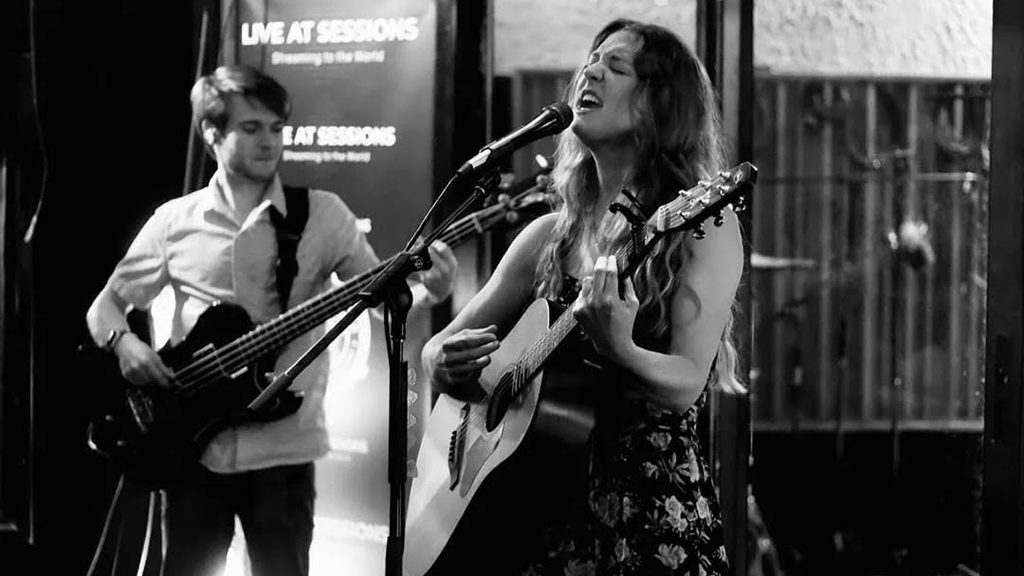
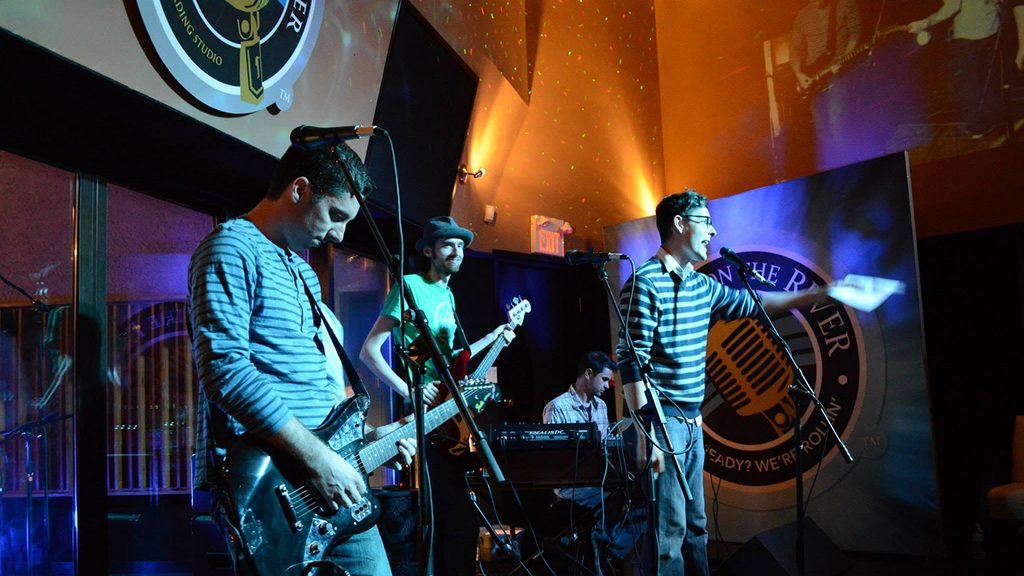
Local Niagara acts form the backbone, with names like Route 6 and Sky Loco appearing on the studio’s presented bills. Tribute nights are a reliable draw, and the room programs them heavily.
In the warm months, the operation also spills outside. Some of the studio’s 2026 bills were promoted as outdoor shows at the same Niagara Boulevard address, giving the room a summer mode to go with its theatre nights.
The tribute calendar is part of a wider Ontario circuit that keeps productions devoted to classic catalogues on the road all year. Ontario audiences have made room for everything from Classic Purple and its Deep Purple Songbook to Sandman, and Sessions on the River gives that circuit a Niagara home with proper studio sound behind it.
Touring artists have found the room for years.
Indiana-based Americana singer-songwriter David Corley played Sessions on the River in June 2015, sharing the bill with Monkey Fightin’ Snakes in the middle of a run of Canadian dates behind his album Available Light, before continuing on to a European tour that summer.
Progressive and metal acts fit the room too, helped by a stage where the sound is engineered by people who record for a living.
Toronto progressive metal band Pyramid Theorem joins the calendar in November 2026, opening the Rush tribute night described below.
Want to Hear the Room for Yourself?
The next chance to hear the studio doing double duty arrives on Saturday, November 21, 2026.
CRUSH: The Ultimate Rush Experience headlines Sessions on the River with special guests Pyramid Theorem, in a night built for listeners who like their concerts engineered properly.
Pyramid Theorem bring serious credentials to the opening slot. The Toronto progressive metal band, built around bassist and vocalist Christian Di Mambro, drummer Vito De Francesco, and guitarist and vocalist Sam Ermellini, with Stephan Di Mambro on keyboards and guitar, has been refining its sound across a 2012 debut and 2017’s Element of Surprise.
Their latest album, Beyond The Exosphere, was produced and engineered by Rich Chycki, whose credits include work with Rush themselves.
Doors open at 7:00 p.m. and the show starts at 7:30 p.m. at Sessions on the River, 133 Niagara Boulevard in Fort Erie, with tickets priced at $12.50 and sales cutting off at 5:59 p.m. on show day unless the night sells out first.
The full run of shows at the studio, along with its recording and streaming work, is gathered on the Sessions on the River venue page. Pick a Friday or Saturday night, take a seat in the old Parkway, and hear what a recording studio sounds like with the doors open.