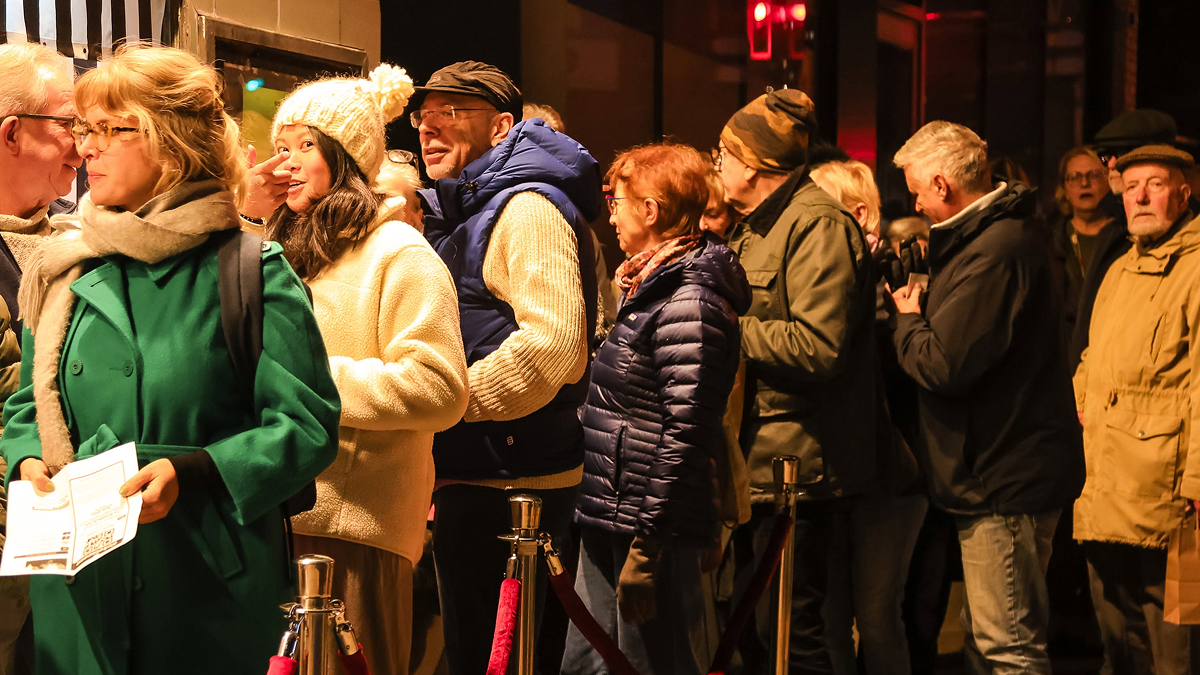
Late November, and the Revue Cinema marquee is burning its little rectangle of light into the Roncesvalles dark.
Inside the old room — 236 seats, a century of Saturday nights in the walls — the lights go down on the Canadian premiere of Michal Kwiecinski’s Chopin, Chopin!, and for the next two hours the only language that matters is music.
Up front, working the crowd like he was born to it, is Dobromir Dymecki — a Polish actor flown in from Warsaw for the occasion, master of ceremonies for the night, moving between the screen and the stage with the ease of a man who always knows where the camera is.
When the credits roll, nobody goes home. The film they have just watched — Kwiecinski’s sweeping take on the composer — will go on to sweep Ekran’s own 2025 awards: Best Film, Best Actor for Eryk Kulm, Best Cinematography for Michał Sobociński. But nobody in the room knows that yet.
The crowd spills out into the cold and walks east along Roncesvalles, to number 406, where EKRAN HQ has thrown open its doors for the nine o’clock opening gala. Red carpet, media wall, fine wine, artisanal cheese, and a DJ called Quatre Coeurs has driven up from Montreal for the night. In the corner, the festival’s artist-in-residence, Daniel Sidorowicz, is painting live — the evening’s soundtrack in oils.
Forty-five dollars a head, advance only. No door sales, and none needed: the room fills anyway.
EKRAN HQ is part of the story. Opened for the 2025 edition, it was the festival’s first-ever headquarters — part gallery, part lounge, part community hub, steps from the Revue, its walls hung with that year’s artist exhibitions.
This is Ekran, Toronto’s Polish Film Festival. Roughly forty films and three thousand attendees every edition. Every film in Polish, every one with English subtitles.
Here’s a little bit about the story of the Toronto Polish Film Festival.
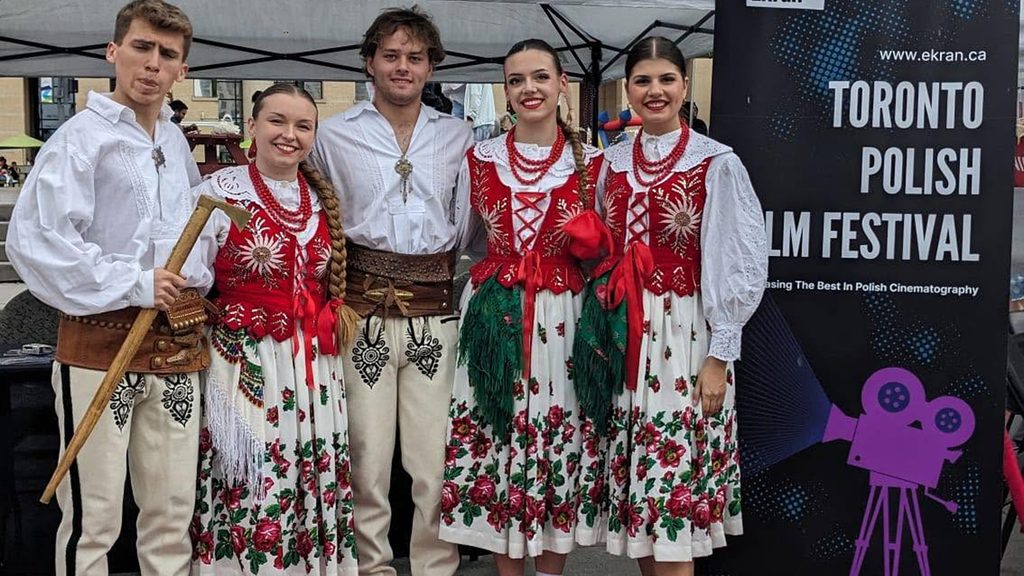
The Gap Nobody Filled
The gap was strange enough to notice. Toronto in 2009 had a film festival for everything — the city practically invented the form — yet Polish cinema, one of Europe’s great film traditions, had no showcase of its own.
This in a city with a thriving Polish community, thick enough to fill a main street with delis, churches, and credit unions.
The Ekran Polish Film Association, a non-profit, decided to take up the challenge.
Established in 2009 by a group of people passionate about showcasing new media arts and films, it set out to do the thing nobody else had done: give Polish cinema its own annual room in Toronto. The association’s stated mission is to be Canada’s leading voice for Polish cinema and cultural storytelling, bridging communities and generations through film, dialogue, and shared experience.
The first edition ran November 19 to 21, 2009 — three days at the Revue. The room itself was barely two years into its second life, rescued by a community campaign in 2006 and reopened in 2007: a saved cinema for a festival that didn’t exist yet. Sixteen years later, the festival runs eleven days.
At its head then and now: Marta Pozniakowski, founder and executive director, who built Ekran as a cultural bridge between Poland and Canada — a space for dialogue, discovery, and shared inspiration, gathering the Polish community and friends of Poland from across the country around the richness of contemporary Polish filmmaking.
The 2025 program booklet describes the festival as her tribute to creativity, heritage, and the enduring power of film to connect people.
Pozniakowski is not the kind of founder who waits for permission. She runs the Ekran PR agency. And during the COVID lockdown — while the rest of the city was baking sourdough — she opened a real-estate brokerage in Etobicoke plus an espresso bar, Espresso Bar Namaste. The festival’s origin story makes considerably more sense once you know that about her.
The idea was the easy part.

Borscht and Black Tie
Year two is where you see what Ekran actually is.
The 2010 edition — the festival’s second — put more than twenty films on the Revue’s screen. Tickets were ten dollars. Saturday at one o’clock, the animation and shorts program was free. And the lobby smelled like lunch: croquets, sausages, hot borscht, served on site between screenings.
Up at the University of Toronto, a professor from the Polish Film School in Lodz was lecturing on Polish cinematography. If you wanted advance tickets, you didn’t go to a box office. You went to Polimex — the neighborhood’s Polish delis. A film festival sold through the cold cuts.
By 2012, the fourth edition, Ekran was stretching. Opening night moved to Innis Town Hall: Barbara Bialowas’s Big Love, with the ZimZum Jazz Band playing live, twenty dollars in advance and twenty-five at the door. Thirteen features played in competition back at the Revue, twelve to fifteen dollars a seat. Four of the films were by women directors — Anca Damian, Maria Sadowska, Anna Plutecka-Mesjasz among them.
The program wrapped around the films like a good festival should. A Roman Polanski exhibition. A lecture by Professor Marek Haltof on Polish film and the Holocaust. A three-day intensive filmmaking workshop. And free screenings at Runnymede Library, where Katarzyna Figura showed up in person to talk about The White Soup, and Andrzej Maleszka’s The Magic Tree played for whoever wandered in.
The filmmakers came too. Mitja Okorn answered questions after Letters to Santa. Producer Arkadiusz Wojnarowski talked through Crulic. The lineup ran from Jan Komasa‘s Suicide Room to Wojciech Smarzowski‘s Rose, by way of Bartosz Konopka’s Fear of Falling and Leszek Dawid’s My Name Is Ki — the new Polish cinema in full, four years into the festival’s life.
The edition closed with its own awards night: the shorts prize named for Michal Maryniarczyk, and the Ekran Film Awards handed out at the closing ceremony.
Then 2013: the black-tie year.
The fifth edition moved its gala to TIFF Bell Lightbox — red carpet, black tie, Polish and American filmmakers walking it together. The opening film was Janusz Zaorski‘s Siberian Exile, with Zaorski himself in the room. Screenings ran at the Revue and at Cine-Starz in Mississauga — Closed Circuit, Papusza, Floating Skyscrapers, Viva Belarus, Andrzej Jakimowski‘s Imagine — and the after-party was at Fregata in Mississauga.
The juries were Toronto people: critics and programmers like Larry Anklewicz, Shane Harvey, and Chris Alexander picking the feature winners.
2014 kept the momentum: the sixth edition ran the Revue and Cine-Starz again, this time around Ryszard Bugajski‘s The Interrogation, starring Krystyna Janda.
Year after year, the pattern held — bigger rooms, bigger guests, same engine.
The DNA was set early: serious films, serious guests, zero pretension. Ten-dollar tickets and hot borscht in the lobby; a Lodz professor lecturing at U of T in the afternoon; a black-tie gala at the Lightbox by year five. High and low, side by side — the festival never saw a contradiction there. A neighborhood party that was quietly becoming a serious cinema event, without ever deciding it had to choose between the two.
Through all of it — the delis, the galas, the Lightbox year — one address never changed.
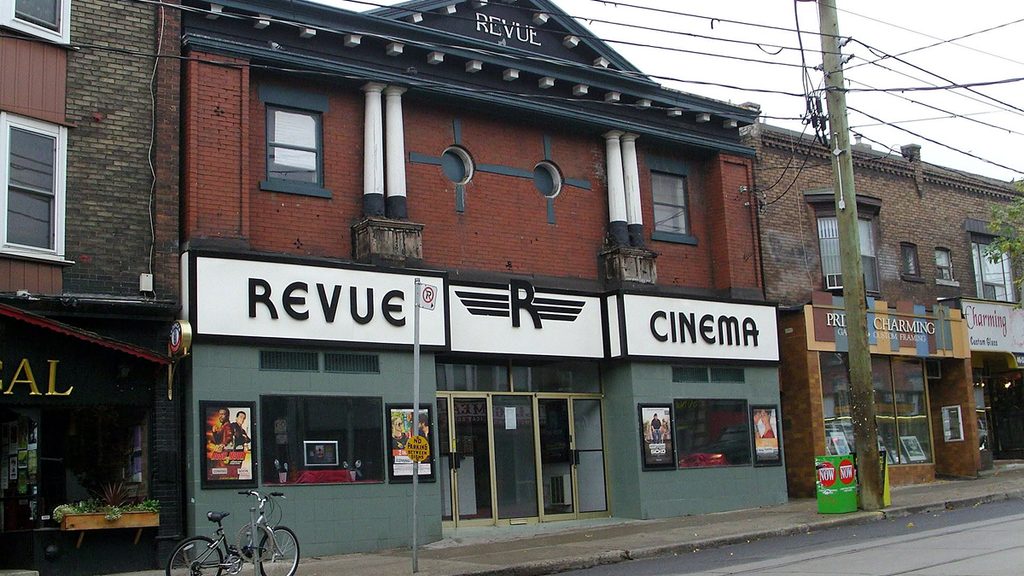
The Room That Never Changed
The Revue Cinema has been Ekran’s home for all 17 editions — the one constant in a festival that has tried galas at the Lightbox, opening nights at Innis Town Hall, and screenings across Mississauga.
Built in 1911-12, the Revue is Canada’s oldest standing cinema still in use — 236 seats, non-profit, rescued by a community campaign in 2006 and reopened in 2007. It was once voted the city’s best repertory cinema, and Ekran’s own site calls it the oldest cinema in Toronto, in the heart of Roncesvalles Village.
Over the years the festival has screened films at Innis Town Hall, at Cine-Starz and the Living Arts Centre in Mississauga, at the Maja Prentice Theatre — but every November, the marquee on Roncesvalles lights up again, and everybody knows where home is.
The neighborhood is the other half of the equation. Roncesvalles Village is the historic heart of Toronto’s Polish community, and its Polish Festival bills itself as North America’s largest celebration of Polish culture — more than 400,000 visitors every year. A Polish film festival on this street isn’t an import. It’s a home game. Ekran has never needed to explain itself on Roncesvalles.
The room and the festival grew up together. Seventeen Novembers, one address — and a marquee that might as well read Ekran all November long. The Revue is a co-star.
A room is only as good as what plays in it. And over seventeen years, the programming built the reputation.

Toronto Saw Them First
In 2019, Jan Komasa’s Corpus Christi swept the festival’s top prizes — Best Film, Best Actor, People’s Choice. Months later it became Poland’s Oscar nominee. Toronto saw it first.
In 2023, Kinga Debska’s Feast of Fire took Best Film, Best Director, and Best Actress. The pattern was becoming a habit: Ekran’s juries kept finding the films the rest of the world was about to discover.
That same year the festival screened Jakub Piatek’s Pianoforte — a documentary about young pianists chasing Chopin — and the Canadian Chopin Society took notice. Two years later, Ekran would open with Chopin, Chopin!. The festival has a way of circling back to the things it loves.
The fifteenth edition, in November 2024, opened with Xawery Zulawski’s Kulej — the bio-pic of legendary boxer Jerzy Kulej — and ran more than twenty films across three venues: the Revue, Innis Town Hall, and the Maja Prentice Theatre in Mississauga. White Courage, Simona Kossak, Minghun, The Girl with the Needle, All That Glitters Isn’t Gold.
The documentaries — The Last Expedition, The Deluge, Postscriptum, Mensch — filled out a program with real range.
Then 2025: the sixteenth edition, thirty-seven films, record audiences across Toronto, Mississauga, and Hamilton.
The twelve-feature Festival Pass read like a survey of where Polish cinema is right now — Lampo, the Travelling Dog; LARP; Chopin, Chopin!; Vinci 2; The In-Laws 3; Wladyslaw Pasikowski‘s Operation Pope; Sex For Dummies; Home Sweet Home; Photosensitive; North/South; Two Sisters; This is Not Happening — all twelve features across two Toronto theatres plus every special event, the whole eleven days in one purchase.
The programmers think in strands. Weeks before the festival, the Studio Munk shorts — co-presented with U of T Cinema Studies — brought four young directors into the room: Elzbieta Benkowska, Bartosz Brzezinski, Anna Fam-Rieskaniemi, Maria Magriel. The academic partners stretched from UCLA to UT Austin to Chicago, and the directors stayed to talk.
The Rafal Sokolowski retrospective ran five films, from 2007’s Lightchasers to 2025’s Chelo, with the director in attendance for a Q&A and a lecture. Dobromir Dymecki flew in from Poland to MC the opening night. After Agnieszka Holland‘s Franz screened at the Living Arts Centre, the Mississauga reception — co-produced with the Canadian Business Polish Association — carried the night on.
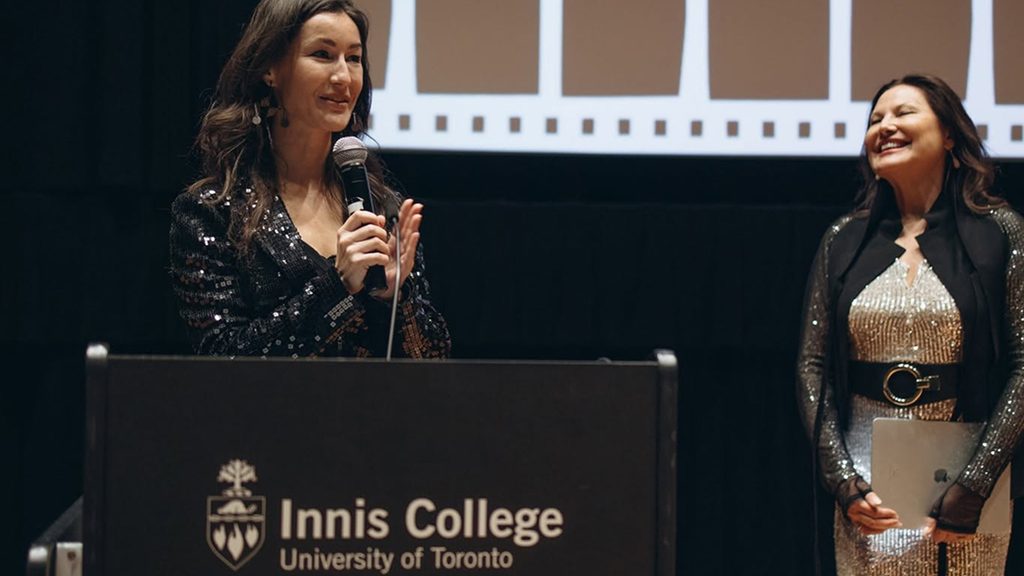
The closing gala filled EKRAN HQ on November 29. Closing night packed Innis Town Hall: Mother, then Tomasz Wolski’s A Year in the Life of a Country introduced by historian Piotr Wrobel, then Chopin: A Sonata in Paris.
The awards told their own story, decided by three juries with Toronto chairs — Anne Marie Perrault on shorts, Margaret Bonikowska on documentaries, Butch Kaplan on features. Best Feature: Chopin, Chopin!, with Eryk Kulm winning Best Actor, Agata Turkot Best Actress, and Michal Sobocinski Best Cinematography. Best Documentary: Maciej Drygas‘s Trains, with an honorable mention for Kinga Michalska’s Bedrock. Best Short: Elzbieta Benkowska’s The Power of Resistance.
The engine behind all of it: every year, Ekran’s programmers walk the red carpet at Gdynia — Poland’s national film festival — attending screenings, talking to filmmakers, and listening to how Polish audiences react.
The team was on the ground there in September 2025, months before the Toronto edition. They scout not just the award winners but the hidden gems, figuring out which films will land with viewers in Canada. Toronto sees them before the rest of the world catches on.
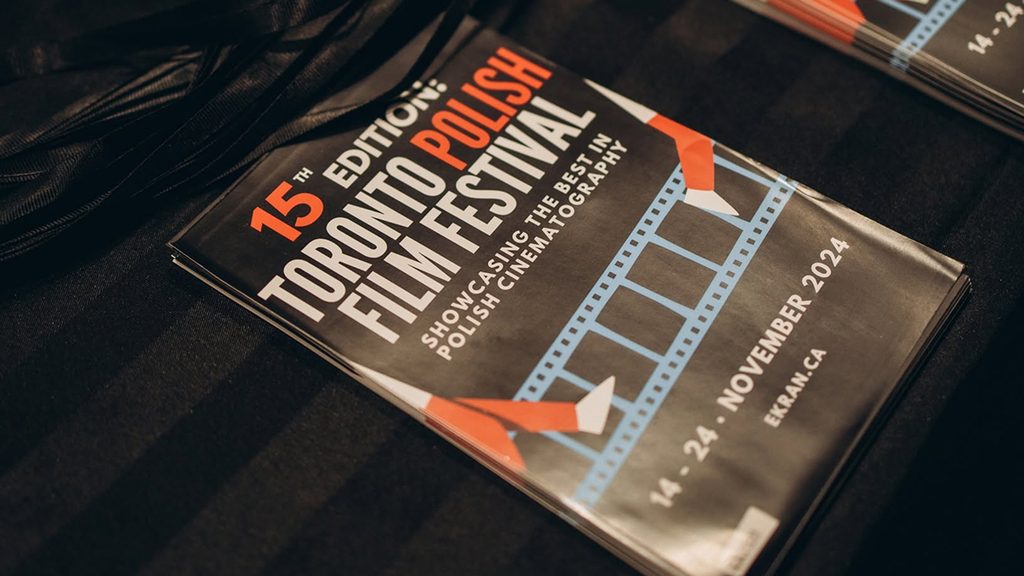
While Chicago Exits
Reputations are fragile things in the festival world. Ask Chicago.
Chicago’s Polish film festival was founded in 1989 by Christopher Kamyszew — twenty years before Ekran — and at its peak it ran fifty to seventy titles a year, once ranked among America’s top European-cinema programs, the most extensive annual showcase of Polish cinema outside Poland. For three and a half decades it was the flagship: the place the diaspora went to see itself on screen.
In November 2025, it held its farewell screenings. Thirty-five years, done. The founder blamed streaming, funding, and the simplest problem of all: no younger staff coming up to take over.
The American scene is restructuring around new ventures, but the old flagship is gone.
Ekran, at seventeen editions, is now Canada’s only comparable annual Polish film festival — backed by the same institutions, the Polish Filmmakers Association and the Polish Film Institute, that backed Chicago. The continuity is the achievement.
It survived its own near-death. The 2020 edition went virtual in the COVID year — the one November the Revue’s marquee stayed dark, the one year the festival doesn’t number. The festival came back the next year, and the next, and the next. Galas, retrospectives, a headquarters on Roncesvalles. Seventeen Novembers and counting.
Chicago had the bigger stage. Ekran had the deeper roots — a street, a cinema, a community that shows up in the snow.
There’s a lesson in the contrast. Chicago was the flagship — the big American showcase, the industry player. Ekran was the neighborhood festival that sold tickets through delis and never left its street. The flagship needed an industry to survive. Ekran needed Roncesvalles. When the industry shifted, the flagship fell. The neighborhood is still there, and so is the festival.
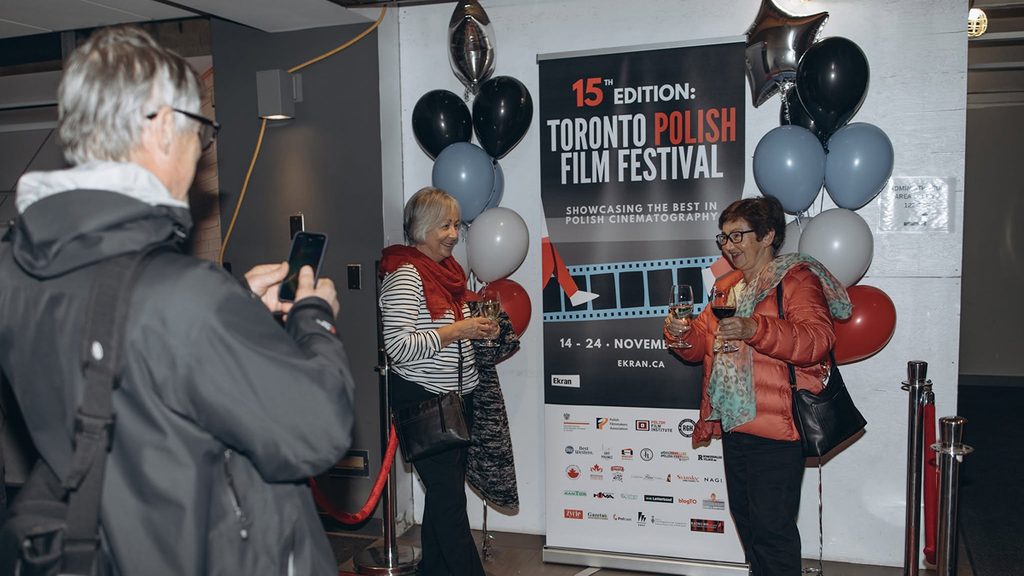
The People It’s For
What keeps Ekran alive isn’t just programming. It’s the people the programming is for.
The numbers tell you why this festival exists. 982,815 Polish Canadians nationally; 461,090 in Ontario alone. That’s the 2021 Census, and it’s the reason a Polish film festival in Toronto was never a niche idea. It was an overdue one.
About three thousand of them show up every edition — from Toronto, Mississauga, and the surrounding towns — and 2025 drew record audiences. They come for the films and stay for everything around them. Ask the attendees and you hear the same things: a remarkable cinematic experience, a warm room, evenings that feel well planned down to the last detail, a lineup that reflects the full richness of Polish cinema heritage.
The catchment is wider than the neighborhood. The festival draws from across the GTA and beyond, and its mission has always been national: a gathering point for the Polish community and friends of Poland from across Canada. Every November, Roncesvalles becomes the capital.
The institutions have noticed. The Consulate General of Poland in Toronto backs the festival, along with the Polish Filmmakers Association and the Polish Film Institute. The 2025 program booklet carried letters of support from Mayor Olivia Chow and Premier Doug Ford. A neighborhood festival with the mayor’s letterhead in its catalog.
The backing isn’t ceremonial, either: the Polish Filmmakers Association and the Polish Film Institute — the same institutions that stood behind Chicago’s festival for decades — stand behind Ekran. When Warsaw funds Polish cinema abroad, Toronto is on the list.
EKRAN.HUB is where the community part becomes physical. Opened for the 2025 edition at 406 Roncesvalles — the festival’s first-ever headquarters — it ran all eleven days as part gallery, part lounge, part community hub, part creative salon. The walls carried exhibitions by artists like Daniel Sidorowicz, Kamila Zielinska, Monika Onoszko, Eliza Kozurno, Ania Biczysko, and Jacek Margys.
And the circuit runs both ways. Months after winning Ekran’s Best Actress award, Agata Turkot turned up as a guest at the Kosciuszko Foundation‘s Polish film festival in Washington — alongside Chopin, Chopin! cinematographer Michal Sobocinski, with Succession‘s Dagmara Dominczyk as guest of honor. Ekran’s winners travel.
Best of all, the door is wide open. The festival’s pitch to the curious is disarming: no Polish, no problem. Every film subtitled in English, every gala open to anyone with a ticket.
This November: The Seventeenth Edition
Which is why this November matters more than most.
November 18 to 29, 2026. Twelve days, three cities — Toronto, Mississauga, Hamilton. The seventeenth edition of Ekran.
Submissions opened in May and closed September 30, with around two hundred films in the mix — features, shorts, documentaries, anything rooted in Polish culture, language, or heritage, or made by members of the Polish diaspora. Sixty will make the cut. Right now, the programmers are watching screeners the way the rest of us watch the leaves turn: watching, arguing, and calling their Gdynia contacts about the ones that got away.
New this year: Poland has declared 2026 the Year of Andrzej Wajda, and Ekran is marking it properly. On November 21 at 2 PM, Associate Professor Ilona Copik of the University of Silesia leads a lecture and poster exhibition on Wajda’s cinema — history, memory, and resistance — at AM Cafe Studio, 2233 Dundas Street West, in the heart of the neighborhood the festival calls home.
On November 28 at 4 PM, the Living Arts Centre in Mississauga screens Wajda’s The Promised Land, with a ten-dollar donation at the door.
The edition has backing to match its ambition: a 42,000 zloty grant from the Chancellery of the Senate of the Republic of Poland, part of its Polish Diaspora 2026 program, supporting a festival project called Lights. Camera. Poland. and valued at over 200,000 zloty. The agreement was signed in June. Warsaw is invested in what happens on Roncesvalles.
The program itself is still under wraps. That’s the hook, really — the anticipation. Every November, the festival announces a lineup built from Gdynia scouting, hidden gems, retrospectives, and galas, and every November the Polish community of the GTA clears its calendar. Seventeen editions in, Ekran doesn’t need to prove the concept anymore. The proof is the marquee on Roncesvalles, the record crowds, the winners who go on to Washington and beyond.
The only question is what’s on this year — and the answer arrives when the program drops.
Watch for the program and get tickets for the 17th edition at ekran.ca