Every touring musician has heard some version of the same story: a band loads into a van, plays a string of packed rooms across the country, and comes home with a devoted new fanbase and a little cash left over.
What rarely gets told is the version where the same band loses $4,000 on a three-week run because nobody thought about drive times, merch cuts, or what an 80/20 door split actually means in dollars.
Booking a tour is not an act of faith. It is a logistics and financial planning exercise that happens to end in a rock club instead of a boardroom, and the artists who treat it that way are the ones who keep touring year after year instead of quitting after one brutal loop through the Midwest in February.
This guide walks through the actual mechanics of booking a tour: how to know you’re ready, how to build the right team, how to pick markets using real data instead of guesswork, how routing and venue selection work together, how the money actually flows from a ticket sale into your pocket, and what a tour genuinely costs to run.
None of it is complicated once you see the numbers laid out. Most of it is just information that never gets taught anywhere formal, which is why so many first tours lose money for reasons that were entirely avoidable.
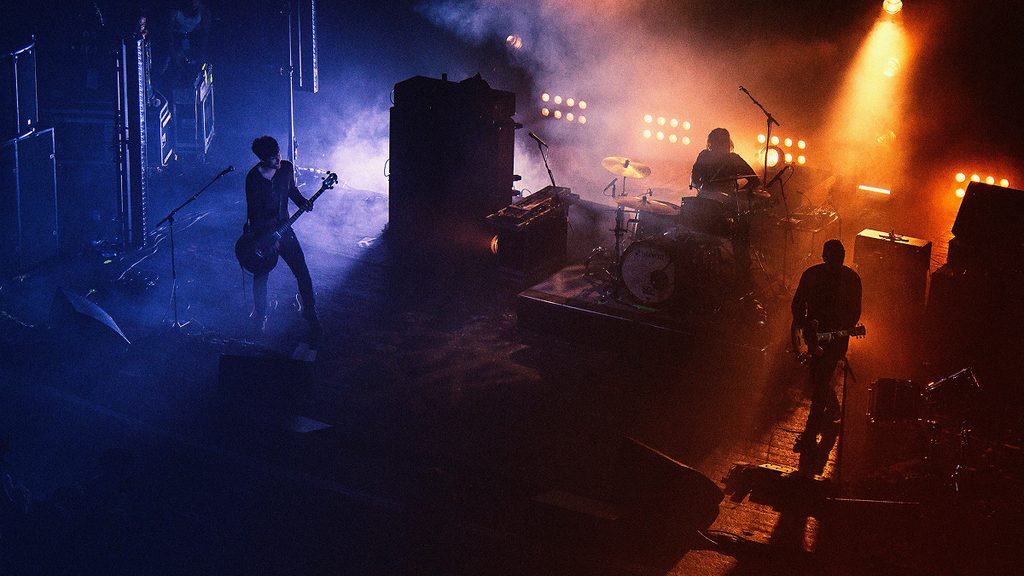
Deciding Whether You’re Actually Ready to Book a Tour
The first mistake most artists make is booking a tour before there’s any evidence that people outside their hometown want to see them play.
A tour is not a marketing strategy for an audience that doesn’t exist yet; it’s a way to capitalize on an audience that already does, even in a small way. Before booking anything, an artist should be able to point to some kind of traction in the cities being considered — streaming numbers concentrated in specific places, email list sign-ups from outside the home market, merch orders shipped to unfamiliar zip codes, or a track record of decent turnout when playing nearby.
Readiness also has a practical side that has nothing to do with popularity.
A touring act needs a reliable vehicle, at least 45 minutes of performable material, physical merchandise to sell, and enough capital set aside to cover the trip even if every show underperforms. Booking a five-city weekend run is a reasonable way to test all of this before committing to a 20-date loop.
A short regional tour reveals whether the band can survive four people in a van for ten hours, whether the gear holds up, and whether the promoter relationships are worth deepening, all without the exposure of a monthlong commitment.

Building the Team That Gets You on the Road
At a certain point, an artist outgrows self-booking and needs a booking agent, and the shift usually happens once shows are consistently drawing enough people to make an agent’s time worthwhile.
Most agents will not sign artists playing venues under 200 capacity or earning under $1,000 per show, which is a useful benchmark for knowing when to start reaching out.
Booking agents work on commission rather than salary, and standard rates run between 10 and 20 percent of the artist’s performance fee, with newer or developing artists often paying the higher end of that range because they require more legwork per booking.
Major agencies such as CAA, WME, and UTA typically charge around 10 percent, while boutique and regional agents charge 10 to 20 percent, sometimes calculated on net revenue rather than gross. If an agent opens negotiations at 15 percent, there’s usually room to counter down toward 10 to 12 percent depending on leverage and competing interest.
An agent’s real value isn’t just making calls — it’s routing. A good agent holds relationships with talent buyers across dozens of markets simultaneously, which means they can build a financially coherent route instead of a scattered list of one-off shows.
Until an artist reaches that level, though, self-booking through direct outreach to venue talent buyers, local promoters, and DIY show organizers is not just viable but standard practice, and many acts run their entire regional circuit this way indefinitely.

Reading Your Own Data Before You Read a Map
Before opening a map to plan a route, the smarter move is opening a streaming dashboard.
Spotify for Artists shows exactly which cities and countries streamed an artist’s music, and that geographic data doubles as free market research for touring decisions.
A practical starting formula treats 2,000 or more monthly listeners in a city as a signal that the market could support 50 to 100 ticket sales at a small venue, based on a conversion estimate of roughly 2.5 to 5 percent from listener to ticket buyer.
That conversion range is rough, but it’s far more reliable than picking cities because they sound like good tour stops.
The data has a counterintuitive wrinkle worth acting on: cities ranked sixth through twentieth in an artist’s listener data are frequently overlooked, even though they can be easier markets to break into simply because fewer touring artists are competing for attention there.
A city with 800 engaged listeners and zero comparable acts playing it can outperform a city with 3,000 listeners where every artist at a similar level is already fighting for the same room. The mistake to avoid is treating any single data point as gospel.
Spotify’s own guidance is not to route an entire tour because one city suddenly spikes in the platform’s numbers, but instead to look for supporting signals — social engagement, email subscribers, merch orders, or past ticket history — pointing in the same direction before committing real money to a market.

Routing the Tour So the Tour Doesn’t Route You
Routing is where good financial planning either pays off or collapses. The goal is a path between cities that makes geographic sense, keeps drive times reasonable, and avoids the kind of backtracking that burns gas money and morale for no reason.
A regional circuit of 8 to 12 cities with drives kept under 300 miles between stops, with anchor dates booked first and gaps filled in afterward, is a workable starting template, and artists who route this way spend an estimated 30 to 40 percent less on gas and lodging than those who book shows randomly.
Consecutive shows should generally stay within roughly 300 to 500 miles of each other for overnight travel, with days off built in at regular intervals so the crew actually gets rest.
There are two dominant routing shapes worth knowing.
- Hub-and-spoke routing keeps a band based out of one central city, radiating out to nearby markets and returning to the hub between runs — useful for artists without a full van setup or for shorter regional tests.
- Linear routing moves in one direction across a longer stretch of geography, which is more efficient for longer tours but demands stricter discipline about mileage between stops.
The golden rule for linear routing is to keep every drive under 300 miles, or roughly four to five hours, which still leaves time to load in, sound check, eat, and actually experience the city before the show.
Radius clauses complicate routing further and need to be checked before a date is confirmed, not after. A radius clause is a contractual restriction, common in the live music industry, that prevents a performer from playing another show within a certain distance of a venue for a set period of time before or after a booked date.
The standard version runs 60 days and 60 miles, and it’s typically written directly into the performance contract. Breaking one isn’t a minor foul — it gives the promoter legal grounds to pull an artist from a show entirely, and it damages a reputation with that venue and its regional network for future bookings.
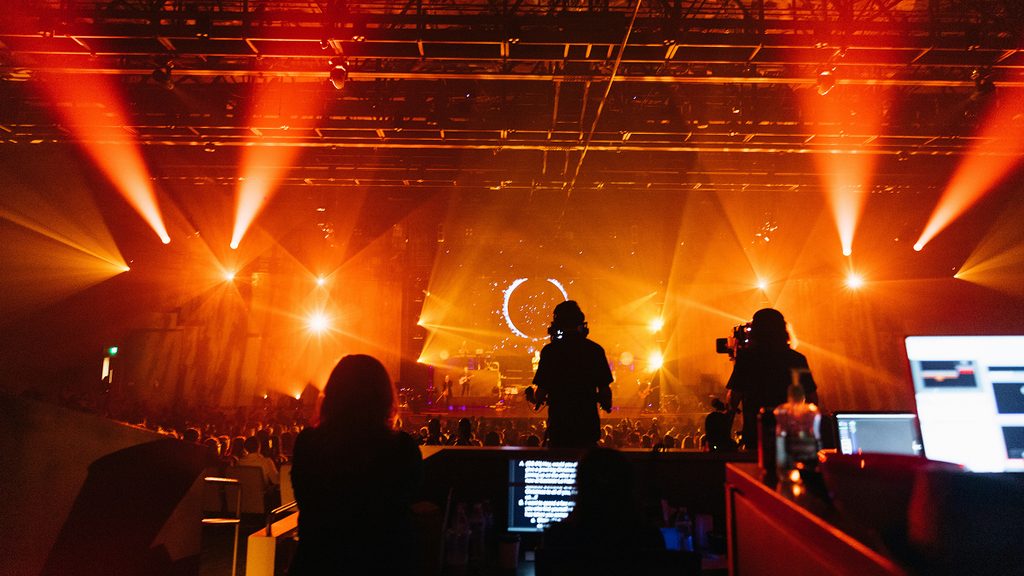
Matching Venues to Where You Actually Are Right Now
Venue selection should track directly with an artist’s actual draw, not their ambitions.
A band pulling 40 people at home has no business targeting a 500-capacity room two states away; a 100 to 150-capacity club or a well-run house show is the right size, because a half-empty room reads badly to a promoter and kills any chance of a rebooking.
Touring circuits generally break into a few recognizable tiers: house shows and DIY spaces for developing acts building a first audience outside their home city, small clubs in the 100 to 300-capacity range where most touring careers are actually built and rebuilt night after night, mid-size clubs and small theaters in the 500 to 1,500-capacity range reserved for acts with a proven regional draw, and theaters or amphitheaters above that reserved for artists with agents, tour support, and a real ticket-selling history.
Picking a venue also means researching who plays there.
A room that regularly books acts in a completely different genre or that skews toward cover bands and karaoke nights is unlikely to have a crowd that will show up for an original touring act, regardless of capacity.
Checking a venue’s calendar for the prior six months tells an artist more about fit than capacity numbers ever will.

Understanding How You Actually Get Paid
This is the part most first-time touring artists get catastrophically wrong, because deal terminology sounds simple until money is actually on the line.
A guarantee is exactly what it sounds like: the venue or promoter pays a fixed fee regardless of how many tickets sell — if the offer is a $1,000 guarantee, that’s the payment whether 20 people or 200 people show up.
A door split, by contrast, ties payment directly to attendance. Door splits favor the performer more often than not, with an 80/20 split fairly common, though a promoter uncertain about an act’s draw may push for 50/50 instead.
Typical door split percentages run 70/30, 60/40, or 50/50, with the more established or better-drawing artist commanding the larger share, and well-known acts can secure as much as 80 percent of the door, while lesser-known artists may only get 50 percent.
A third structure, the versus deal, combines both: the artist receives whichever is greater, a guaranteed floor or a percentage of net ticket revenue, meaning the guarantee is still owed in full if the show underperforms but the artist’s earnings scale up automatically once attendance crosses a certain threshold.
Door deals are most common for artists without an established draw, since venues offer them specifically to shift the financial risk of an empty room away from themselves and onto the artist.
As an act builds a track record of reliable turnout, that leverage shifts, and demanding at least a guarantee floor on future bookings becomes reasonable and expected.

The Real Cost of a Night on the Road
Nobody plans a tour budget with enough specificity, and vague budgeting is how bands end up stranded 900 miles from home with an empty gas tank.
Transportation is the largest variable cost for most acts. Cargo van rentals run $80 to $150 a day, sprinter vans with more room for gear and crew run $150 to $250 a day, and a 2,000-mile tour averaging 15 miles per gallon at $3.50 per gallon burns through roughly $470 in fuel alone.
On a longer 30-day, 10,000-mile national run, the all-in transportation cost for a five-person band traveling by van averages around $98 per musician per day once fuel, insurance, and parking are factored in — dramatically cheaper than an RV or tour bus, which run closer to $130 and $545 per musician per day respectively.
Lodging and food follow similar patterns of underestimation. Budget motels and shared short-term rentals run $30 to $60 a night, while standard hotels run $80 to $150, and a reasonable per diem for food lands around $20 to $40 per person per day.
Put together, a realistic baseline for a first tour is somewhere around $300 to $500 per day of touring, meaning a ten-day run needs $3,000 to $5,000 in available funds before a single ticket sells.
A useful reference point for break-even math: a $5,500 total tour cost spread across ten shows requires averaging $550 per date in combined guarantee and merch revenue just to come out even, which for an emerging artist might look like a $300 guarantee plus $600 in merch sales from around 50 attendees spending $12 each.
None of these numbers include a booking agent’s commission, so any act working with an agent needs to build that percentage into the break-even math from the start rather than discovering it at settlement.
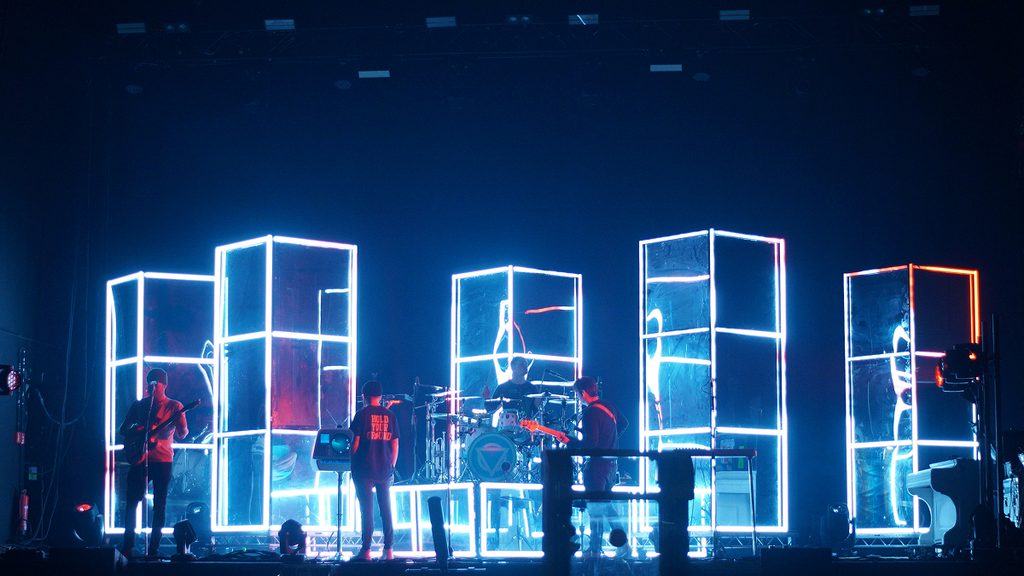
Merchandise Is Where Most Tours Actually Turn a Profit
Ticket revenue rarely covers the full cost of a tour at the club level, which is exactly why merchandise deserves as much strategic attention as the route itself.
At the 200 to 1,500-capacity level, merch routinely outearns ticket revenue entirely, largely because hard goods like vinyl and CDs carry roughly 65 percent gross margin after production costs, and apparel carries 50 to 60 percent, with no agent commission and no door split cutting into either. The one cost that does eat into that margin is the venue’s own cut.
Most venues take 10 to 40 percent of an artist’s merch sales, and at that rate, a band bringing in $10,000 a night in merch loses $2,000 of it to the venue — which over a 50-date tour adds up to roughly $100,000 in lost revenue.
Standard club-level merch cuts run 10 to 25 percent on apparel specifically, with hard goods often exempted or taxed at a lower rate.
There has been real movement to change this. Live Nation removed merch fees at roughly 77 of its U.S. club-size venues in 2023 through its “On the Road Again” program, letting artists keep 100 percent of merch revenue and adding a $1,500 travel stipend, against a prior standard cut that generally ran 15 to 30 percent.
Not every room has followed suit, so it’s worth asking about the merch cut before confirming a booking rather than discovering it at settlement, since merch is typically handled as its own separate cash transaction at the merch table rather than passing through the same settlement as ticket revenue.
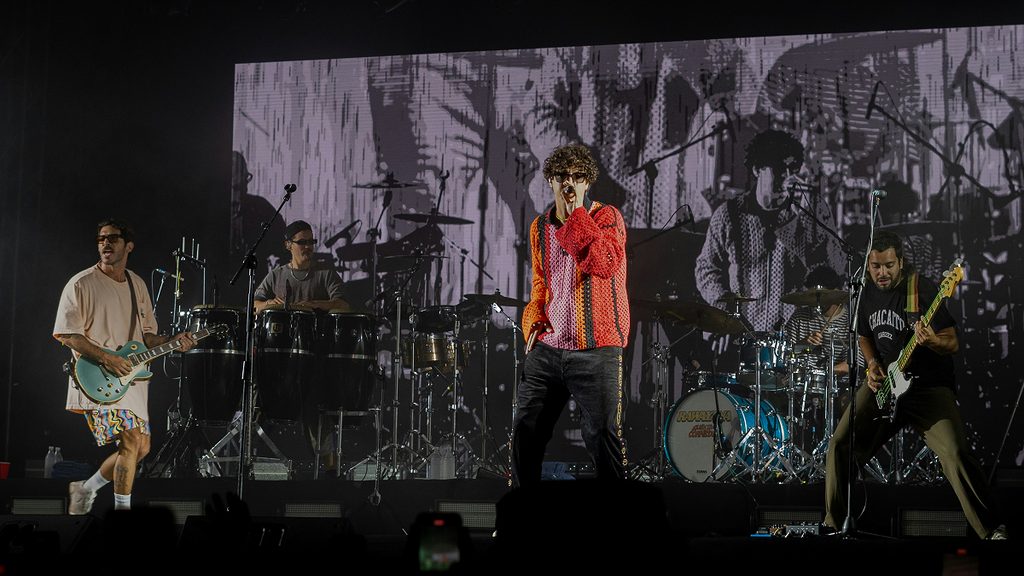
Timeline: When to Start and What Happens When
Booking a tour takes longer than most artists expect, largely because venue calendars fill up faster than personal calendars do.
Most venues start booking roughly four months out from a show date, which means tentative routing and target dates should be locked in around six months before departure.
For a tour built mostly around cities an artist has never played before, the entire booking process should start at least five months in advance, with nearly all dates confirmed two months before the first show to leave enough runway for promotion.
Larger rooms move on a different clock entirely: theaters and community venues often book their full season 12 or more months ahead, while house concerts and small to mid-sized clubs typically confirm 3 to 4 months out.
The sequence generally runs like this: routing and venue research happen first, followed by outreach to talent buyers, followed by confirming support acts once headline dates are locked, followed by advancing each show — meaning finalizing load-in times, sound check windows, and technical needs — roughly a month before departure.
Tour announcements typically go out one to three months ahead of the first date, giving fans enough lead time to actually plan around a ticket purchase instead of finding out the day before a show sells out or gets canceled for lack of interest.

Contracts, Holds, and the Etiquette That Keeps You Getting Rebooked
Before a date is locked, it usually exists as a hold — a tentative reservation on a calendar slot while an artist or agent decides whether the routing around it makes sense.
Holds are not commitments, but they function as informal agreements not to book a competing act into that slot until the hold is either confirmed or released, and venues expect a timely answer rather than an indefinite maybe.
Once a hold turns into a signed contract, every deal point needs to be in writing: the payment structure, the door split percentage if applicable, the load-in and set times, and any backline or hospitality being provided.
Verbal agreements evaporate the moment there’s a dispute over who owes what after a slow night.
Professionalism compounds over a touring career in ways that are easy to underestimate early on. Promoters and venue talent buyers talk to each other constantly, especially within the same regional circuit, and a band that shows up late, blows past its set time, or disappears without settling up becomes a band that stops getting return offers from that entire network.
The opposite is equally true — an act that loads in on time, plays a tight set regardless of turnout, and treats a 20-person Tuesday night with the same professionalism as a sold-out weekend show earns the kind of reputation that gets passed along to the next promoter down the route.

The Tour Is the Business Plan, Not the Reward for Having One
Booking a tour well means treating the whole thing as a financial model with a stage attached to it, not a romantic rite of passage that music discourse likes to pretend it is.
The bands that keep touring for years are rarely the most talented acts in any given city — they’re the ones who understood their draw honestly, routed their shows without wasting gas on backtracking, negotiated deal terms they actually understood, and built a merch table that could cover the nights ticket sales couldn’t.
Every piece of this guide exists to hopefully remove guesswork from a process that has historically run on gut instinct and bad advice passed between bands in green rooms.
Get the math right before the first show, and the tour has a real chance of paying for the next one.