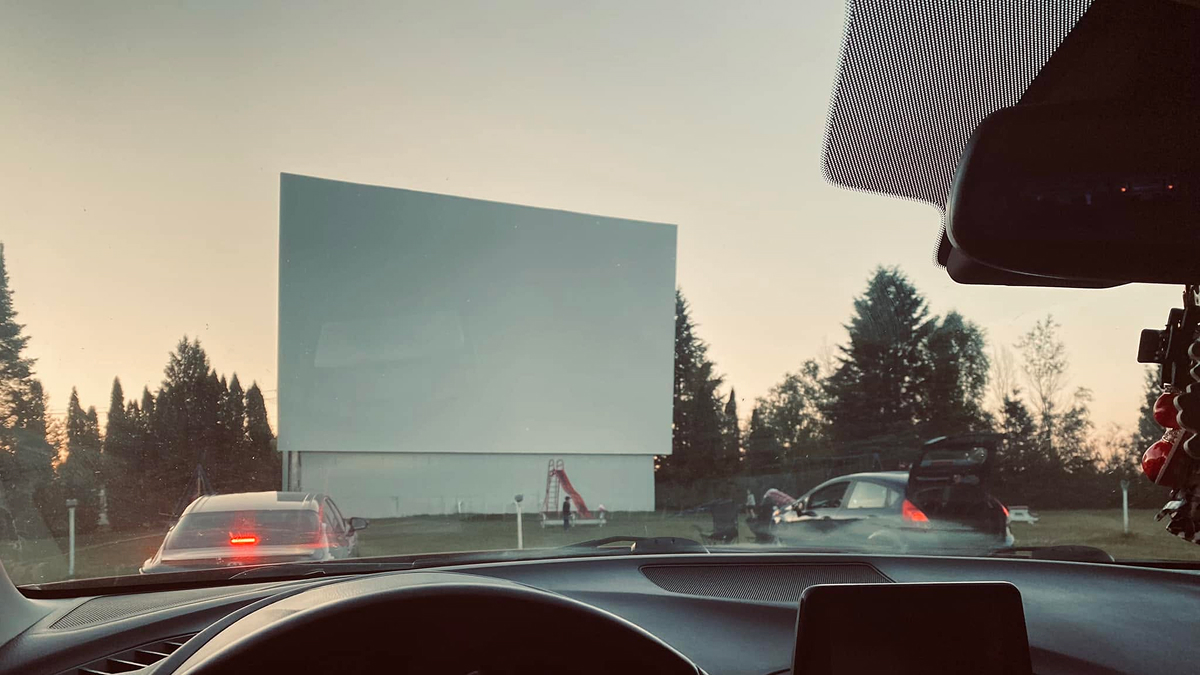
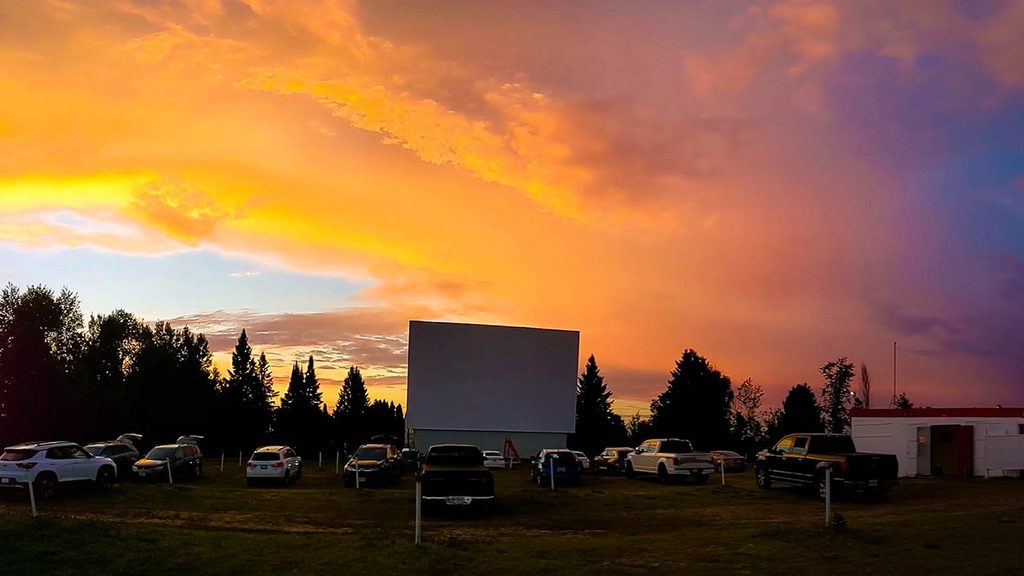
Dusk settles over the lot outside Pembroke, and row by row the headlights wink out. The playground empties as kids sprint back to their cars, and the smell of popcorn drifts across from the snack bar. For a few seconds the big screen is just a pale rectangle against the darkening sky. Then the first trailer flickers to life, and radios across the lot crackle into clarity on 106.7 FM.
This is the Skylight Drive-In on a summer night, one of roughly 15 or 16 drive-in theatres still operating in Ontario.
Every night is carload night: $25 a car, up to six people, for a double feature of current releases. At a full carload, that’s a little over four dollars a head — for two movies.
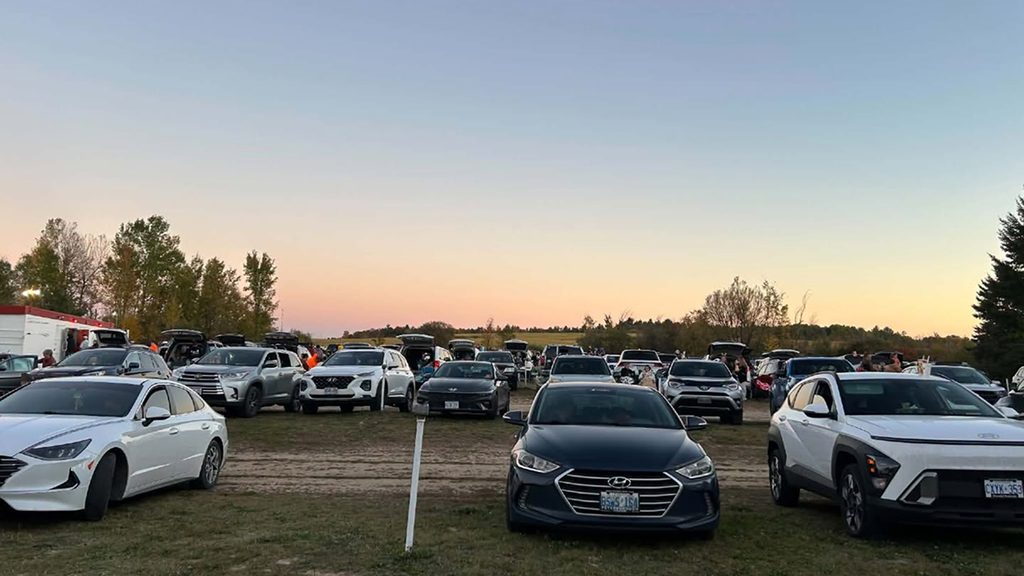
It nearly didn’t survive. Kevin Marshall and Kathy Lepine bought the theatre over the phone and reopened it on July 1, 2014. More than a decade later it is thriving, part movie venue and part civic gathering place — the 7th annual Spooky Movie Night on October 3, 2026 drew more than 200 vehicles on free admission.
This guide is for first-timers, Ottawa Valley day-trippers, and families who want a night out that doesn’t empty the wallet.
What the Skylight Drive-In Actually Is
The basics: one screen, one lot, one season
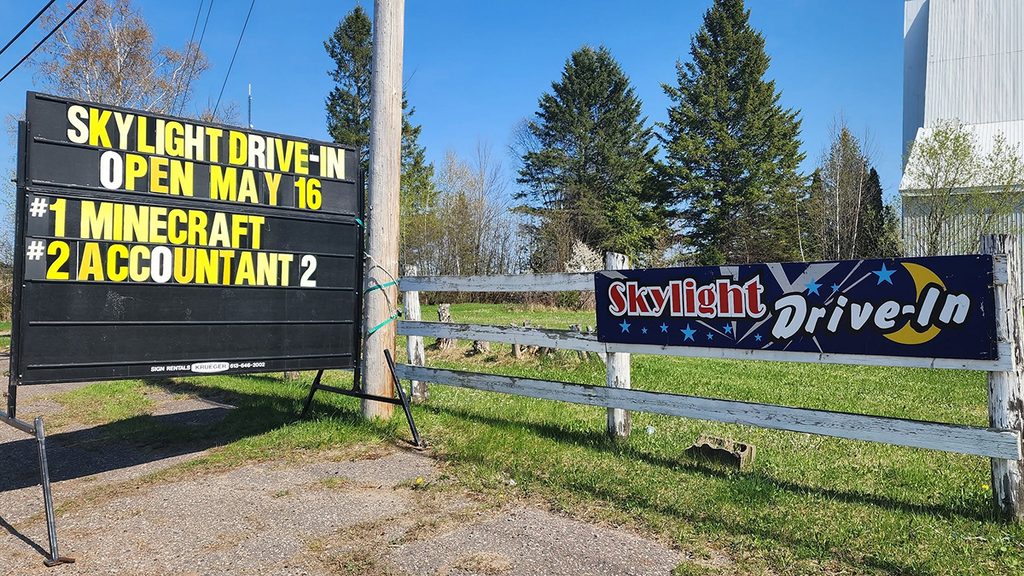
The Skylight is a single-screen drive-in just outside Pembroke, Ontario, running Victoria Day to Thanksgiving — seven nights a week through July and August, with special event nights into October and November.
Summer means double features of current releases every night; this October, for example, the lot ran “The King of Kings” at 6:30pm followed by “David” at 8:30pm on October 16–17. One screen means one choice per night — no multiplex scrolling.
Gates open about an hour before dusk. Sound comes through the car stereo on 106.7 FM.
What a night at the Skylight feels like
Show up about an hour before dusk and the lot is already filling — cars angling toward the screen, trunks popping, kids making a last run at the playground before showtime. It’s a ritual more than a queue.
Reviewers rate it highly: 4.9 out of 5 from 181 Google reviews, tagged “inexpensive” and “good for kids,” and 4.6 out of 5 on TripAdvisor, with 13 of 19 reviews rating it Excellent. One screen means the entire lot watches the same film at the same time — a whole field of strangers laughing at the same joke in the dark. It’s the rare venue where the audience is the atmosphere.
Arrive early — the pre-show hour is half the experience, and the best spots go first.
Who it’s for (and who it’s not)
Families are the obvious audience: a playground, carload pricing that rewards full cars, and small kids can fall asleep in the back seat without anyone shushing them. Couples get a retro date night with built-in privacy. Ottawa day-trippers make the pilgrimage — about an hour and a half each way.
“We do over an hour of road to get there but it’s definitely worth it,” wrote one Wanderlog reviewer. That’s the Skylight’s catchment in a sentence — people don’t stumble in, they plan for it.
Who it’s not for: anyone who needs subtitles on demand or premium recliner seating. This is a car, a radio, and the night sky.
Takeaway: if your crew is happy in a car with snacks and a radio, this is your venue; if you need a recliner and captions, stay indoors.
Bought Over the Phone: The 2014 Rescue
The Skylight wasn’t always a sure thing. A decade ago, it was the kind of place the industry had already written off.
The drive-in before Marshall and Lepine
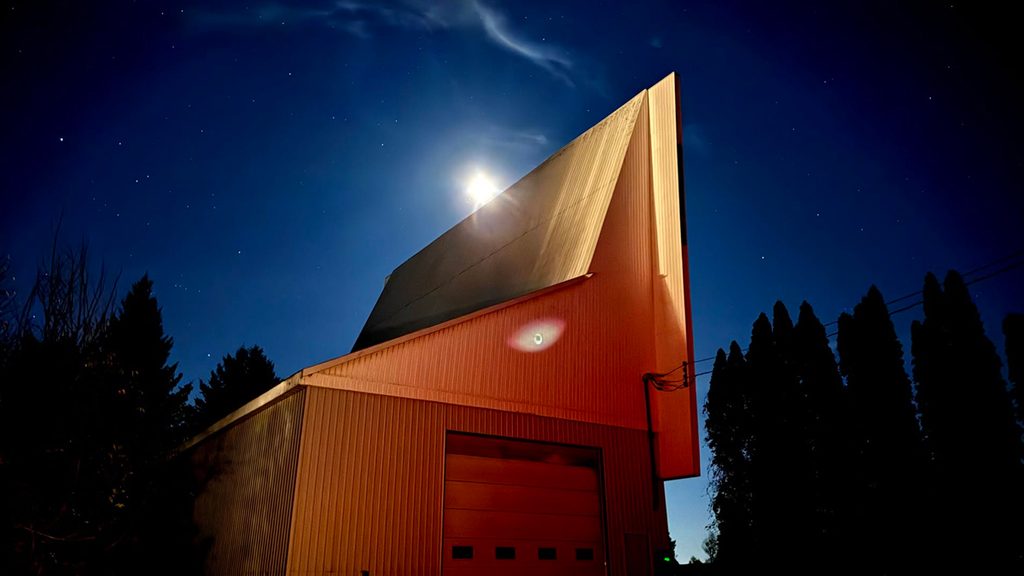
The “Skylight” name on the marquee dates to the 1999–2014 era, however, the site was known as the “Pembroke” in the mid-1960s. Needless to say, the lot outside Pembroke has shown movies under the stars for a very long time.
By 2014 it was on the ropes.
The industry-wide digital switchover was killing film-only operations — studios had stopped shipping 35mm prints. Owner Kevin Marshall put it plainly: “35mm film is almost completely finished, there are just not any prints available to us this year!”
The verbal-agreement reopening
In June 2014, Matt McLaughlin sold the drive-in to Kevin Marshall and Kathy Lepine over the phone. No drawn-out closing, no months of due diligence. They refitted the place and reopened on July 1, 2014, on a verbal agreement — handshake to opening night in about a month.
The refit moved fast: a Christie 2230 digital projector and a DoReMi server went in within weeks, making that summer the Skylight’s first digital season. Reviewers noticed the “crisp and clear” picture. Digital didn’t just sharpen the image — it opened the booking pipeline, letting the Skylight play the same first-run releases as the multiplexes instead of waiting on scarce film prints.
Marshall’s faith in digital wasn’t new. Two years earlier, converting his Arnprior theatre, he told OttawaValleyMoms: “Digital will make it easier for me to get the movies people want to see” — and “Everything is 100 per cent in focus, it’s good quality every time.” He was buying the Skylight’s future, not its past.
The Arnprior playbook
Marshall had done this before. In 1999, he and a partner bought the derelict O’Brien Theatre in Arnprior, restored it to its 1930s look, and reopened on June 2, 2000; Dolby and DTS sound followed in 2003, a Christie digital projector in 2012.
Same playbook at the Skylight: buy the distressed venue, invest in the projection, reopen fast.
“Drive-ins are a labor of love,” says John Vincent, president of the United Drive-In Theatre Owners Association. The Skylight survived because its owners treated it as a calling, not just a business.
Across North America, behind every surviving drive-in is an owner who decided the place was worth more than the math said — and spent accordingly.
The Drive-In’s Improbable Comeback
The Skylight’s rescue is one data point in a much stranger industry story — the drive-in’s near-death and improbable second act.
From 4,000 to 283: the long decline
At the 1958 peak, more than 4,000 drive-in theatres operated across the United States. By 2024, roughly 283 remained, according to mxdwn Movies — a decline of more than 93 percent. The US count stood at 305 as recently as 2019, per NBC Palm Springs; the arc bent one way for decades.
Canada holds roughly 36 drive-ins, the second most in the world after the US, per the RoadLessTraveledStore‘s tally. Ontario accounts for 15 or 16 of them.
Why the collapse?
The explanations are genuinely disputed: rising land costs (acres near a city eventually pay better as housing) versus demand (multiplexes, then cable, then streaming pulling audiences indoors).
2020: the year drive-ins saved cinema
Then came 2020, and the drive-in — written off as a relic — became the only cinema that worked.
From late March to mid-August 2020, drive-ins generated 85 percent of US box office, according to Comscore data reported by NBC Palm Springs. In the same window of 2019, the figure was 2.9 percent.
“The old-fashioned and often marginalized drive-in theater must now be recognized as one of the saviors of the (cinema) industry,” said Paul Dergarabedian, Comscore’s senior media analyst.
The Skylight lived its own chapter: it reopened June 5, 2020 under stay-in-vehicle rules with the snack bar closed. And the lift outlasted the lockdowns — drive-ins averaged 6.2 percent of weekend box office across the first 30 weeks of 2021 versus 1.9 percent in 2019, attendance rose 60 percent in 2021 compared with 2019, and NATO measured spikes above 300 percent during the peak pandemic months.
The next generation
The comeback didn’t just fill existing lots — it built new ones. Ten drive-ins opened in the US in 2020, and nine more followed in 2021.
The buyers are changing, too. “We have these younger couples purchasing drive-in theaters or reopening drive-ins to carry it on,” says Mike Kerz, co-owner of the Midway Drive-In in Illinois and a UDITOA board member.
The industry is institutionalizing the handoff: UDITOA teamed with Mobile Moviegoing to launch DriveInsNearMe.com, and the first Drive-In Con convened in November 2025 to recruit next-generation owners, per Boxoffice Pro. UDITOA now counts nearly 300 drive-in theatres worldwide in its orbit — a small number, but an organized one. An industry that once faded quietly now has an association, a directory, and a convention.
The Skylight isn’t a museum piece at the end of a dying industry. It’s an early mover in an industry learning how to hand itself to the next generation.
The $25 Carload: Doing the Math
Nostalgia doesn’t pay the bills, though — the math does. And the Skylight’s arithmetic is the whole pitch.
What $25 actually buys
Every night at the Skylight is Carload Night: $25 per car, up to six people — about $4.17 a head for two current releases. The carload model flips the usual cinema math: indoors, every extra person is another full-price ticket; at the Skylight, every extra person makes the night cheaper.
Debit, credit, and cash are all accepted at the gate.
Versus the indoor theatre
The average Canadian movie ticket cost $12.57 in 2024, up from $9.53 in 2020, according to Statistics Canada.
Against that, the Skylight’s full-carload price undercuts the average indoor ticket roughly three to one — $25 for the car costs less than two average indoor tickets, and the Skylight throws in a second film.
The American numbers tell the same story: the average US ticket ran $11.50 in 2023, with concession spending averaging another $8 in 2022, per WiFiTalents — a family of four pays about $46 before a single snack indoors.
Meanwhile indoor exhibition is still digging out: Canadian theatre attendance in 2024 sat at two-thirds of 2018 levels, with operating revenue at $1.6 billion versus $1.9 billion in 2018, Statistics Canada reports.
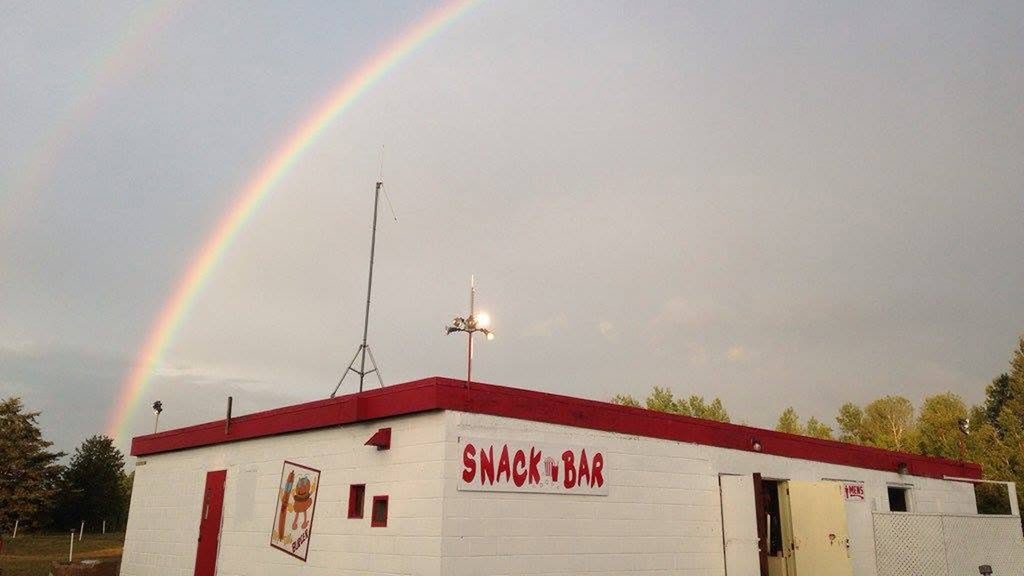
Why the snack bar matters
Here’s the number that explains the business: concessions account for 38.0 percent of Canadian cinema sales, against 53.8 percent for admissions, per Statistics Canada. The snack bar isn’t a side hustle — it is the business model.
Which is why outside food is not allowed. That rule isn’t stinginess; it’s the trade that keeps the $25 carload possible. The ticket gets you in the gate; the popcorn pays the light bill.
“We are very proud of our poutine!” co-owner Kevin Marshall told carload.com in 2017. The poutine isn’t an afterthought — it’s a destination item.
Tickets are available in advance through the Skylight’s Ticketscene page.
The First-Timer’s Field Guide
The price is right; here’s how to not fumble the night.
Before you go: radio, battery, timing
The single non-negotiable: the car needs a working FM radio. The Skylight’s audio runs on 106.7 FM and nothing else — no app stream, no Bluetooth channel. If the car stereo is flaky, a portable FM radio does the job.
Battery anxiety is the first-timer’s classic worry, and the math is reassuring: a car radio draws roughly half an amp per hour, so a healthy battery handles a double feature without breaking a sweat. If nerves win out, run the engine briefly at intermission.
Timing takes planning, because “dusk” moves. Movies start at sundown, which shifts through the season; the Skylight posts sunset times on its site, so check the day of. Gates open about an hour before showtime, and on big nights that hour matters.
At the lot: parking, headlights, mosquitoes
The arrival drill is simple: park, tune to 106.7, kill the headlights. Daytime running lights must go off or be covered — nobody wants dashboard glare washing out the screen. Tall vehicles take the back rows so they don’t block sightlines; the lot polices itself on this one.
Mosquitoes are part of summer nights in the Valley. Bring repellent; the lobby sells bug mesh cheap if you forget.
The rules that matter
The rules are few, and they’re common sense once you hear the reasons.
Rain doesn’t stop the show — movies run regardless, with no refunds, so check the sky and bring blankets. A rainy screening is part of the drive-in’s charm — the windshield becomes part of the frame. Leashed dogs are welcome.
Outside food is not allowed, full stop — that’s the concession trade: snacks fund the operation and keep the $25 carload possible. The move is the poutine.
Programming is two films back to back on the one screen. You’re welcome to leave after the first, though most stay; arriving late means catching the second feature. Leaving early is common enough that nobody judges the headlights — just ease out quietly.
More Than Movies: The Skylight Drive-In as Civic Venue
The Skylight is more than a movie venue. One night a year, it’s Pembroke’s town square.
Spooky Movie Night
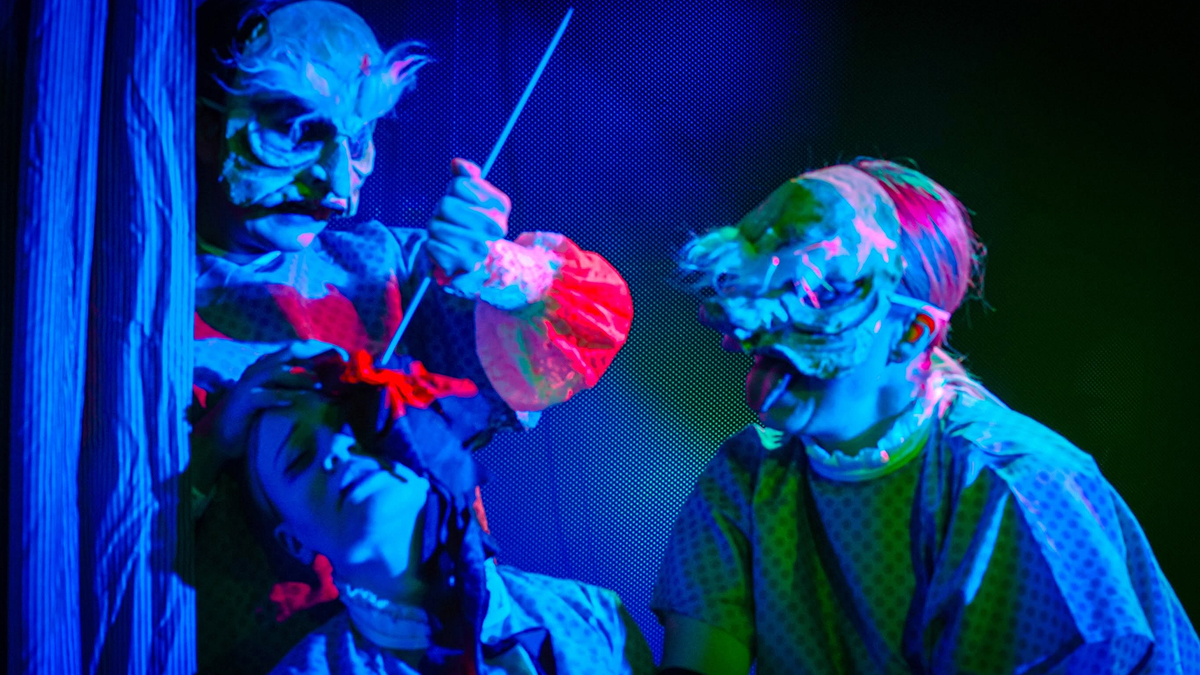
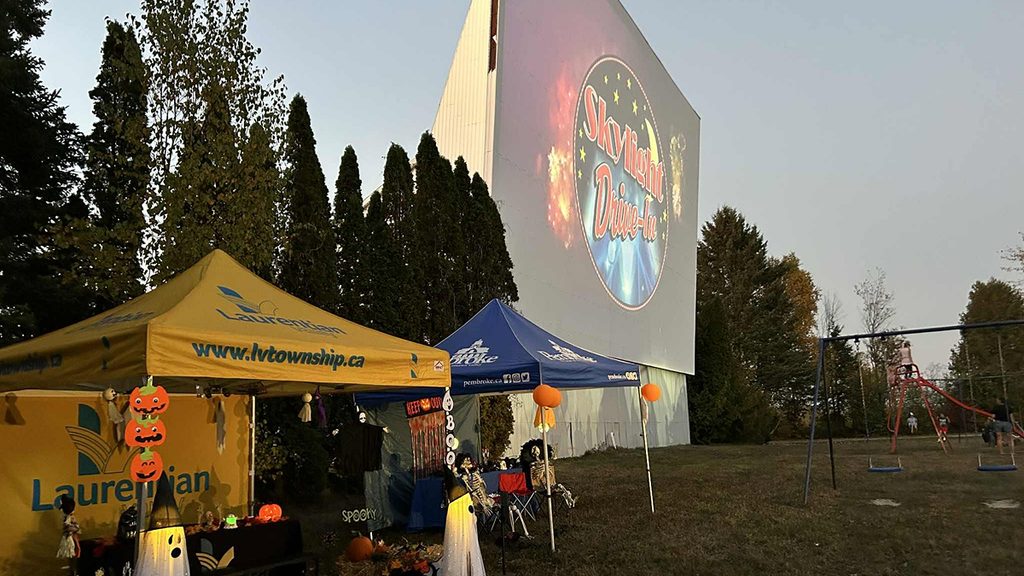
Once a year, the Skylight stops being a business and becomes a town square. The City of Pembroke co-hosts a free annual Spooky Movie Night: more than 200 vehicles, a dance and costume contest judged by mayors, free popcorn, candy bags for the kids, and food-bank donations at the gate. The 7th annual ran on October 3, 2026.
Tickets and planning
Tickets move through Ticketscene — check the Skylight’s venue page for showtimes and advance purchase.
The season runs Victoria Day to Thanksgiving, with seven-nights-a-week programming through July and August. The insider pick: shoulder-season weekends and October event nights, when the crowds thin and the lot feels like a secret.
Advance purchase matters most on the big summer weekends and event nights — the nights when the lot fills fastest.
Why the Skylight Drive-In in Pembroke, Ontario Is Still A Must-Attend Event
Why does this place endure while 93 percent of its American counterparts vanished? The Skylight endures because Pembroke decided it should — scarcity, stewardship, and a town that shows up.
Check showtimes and get tickets for the Skylight Drive-In.