Some singers chase hits, but Valdy chased highways, and the hits came along for the ride.
For more than five decades, Paul Valdemar Horsdal — known to everyone simply as Valdy — has been crisscrossing Canada with a guitar, a warm baritone and a storyteller’s gift for finding the telling detail in ordinary life. He has played legion halls and Massey Hall, festivals in Texas and rooms so small the audience could reach out and touch the strings.
Along the way he collected Juno Awards, gold records, an induction into the Canadian Songwriters Hall of Fame and the Order of Canada, and he did it without ever really stopping to catch his breath.
Ask him about the secret and he will probably deflect with a joke, because Valdy’s gift was never mystique. It was showing up: in every province, in every kind of room, for longer than almost anyone else in the business, and the songs did the rest.
This is the story of how an Ottawa boy with Danish roots became one of the most beloved voices in Canadian folk music.
He belongs in the conversation with the greats of his generation — the Lightfoots and Cockburns and Murrays — he outlasted almost everyone. While the industry chased trends, Valdy chased the next town, and the next, until the map of his career became the map of the country itself.
Who Is Valdy?
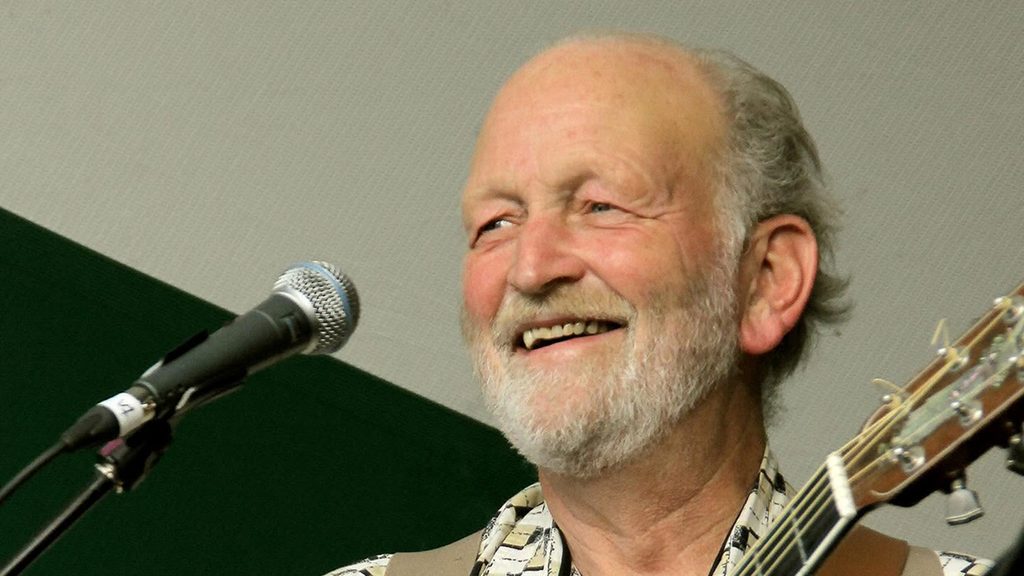
Valdy, born Paul Valdemar Horsdal in Ottawa in 1945, is a Canadian folk singer, guitarist and songwriter whose career has spanned more than five decades.
Remembered for the 1972 hit “Play Me a Rock and Roll Song,” he has released more than a dozen albums, won two Juno Awards, earned four gold records and toured relentlessly across Canada and a dozen other countries.
An Ottawa Childhood Steeped in Art
Paul Valdemar Horsdal arrived on September 1, 1945, the third child of a remarkable household. His father, Paul Horsdal, was a Danish portrait photographer of such distinction that he mentored a young Yousuf Karsh, the man who would become Canada’s most famous photographer and the creator of the iconic scowling portrait of Winston Churchill. His mother, Lillian Horsdal née West, was an English nurse and writer.
Art was not a hobby in that house. It was the family business, and young Valdy absorbed it the way other children absorb hockey scores. Dinner-table conversation in the Horsdal home would have touched on light, composition and the discipline of making something well — lessons that translate directly to songwriting, even if nobody called it that at the time.
He started composing his own music at the age of seven, and a teacher’s encouragement at that tender age — recalled fondly in interviews decades later — helped convince him that the songs in his head were worth writing down. Most seven-year-olds hum tunes and forget them by supper. Valdy wrote his down, and he never really stopped.
He attended Lisgar Collegiate in Ottawa, one of the city’s oldest and most storied schools, but the classroom was never going to hold him for long, because the guitar had already won. By his teens, the path was set: he would make his living with songs.
The Danish thread in his story is worth pausing on. Paul Horsdal had carried his craft across an ocean, from Denmark to Canada, and built a reputation distinguished enough to guide the young Karsh. That immigrant work ethic — master your craft, honour your subjects, never cut corners — runs through his son’s career like a bass line. Valdy’s songs are carefully made things, even when they sound effortless.
From Cover Bands to the West Coast
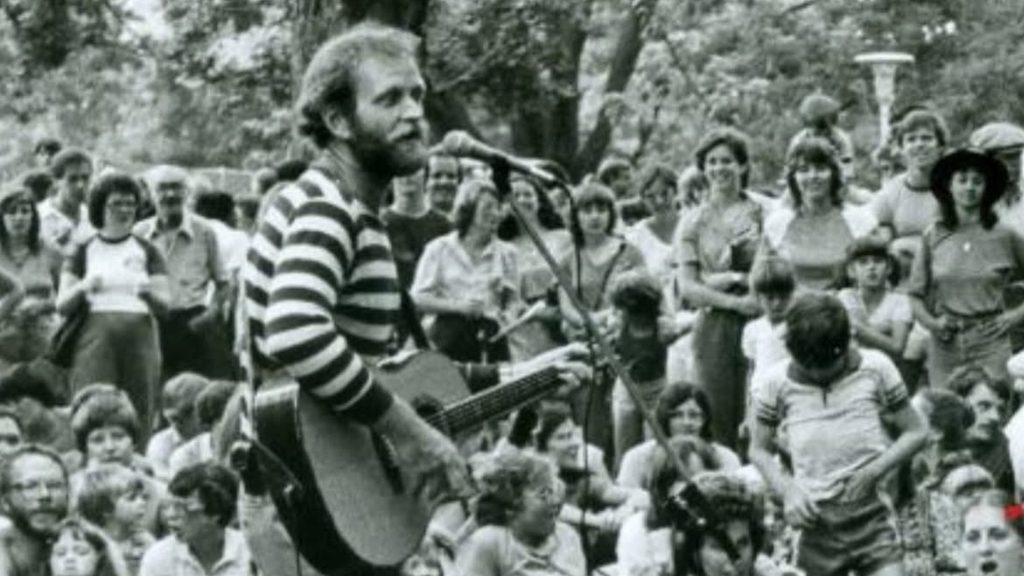
Like so many Canadian musicians of his generation, Valdy learned his trade the hard way: on stage, in front of people, night after night. The sixties folk revival was cresting, coffeehouses were opening in every university town, and a young man with a guitar and a good ear could work steadily if he was willing to travel.
He cut his teeth in the London Town Criers, then moved on to Montreal’s Prodigal Sons, working the club and coffeehouse circuits where folk singers were made in that era. Cover-band work is the great unglamorous school of popular music. It teaches a singer to read a room, to pace a set, to deliver someone else’s famous vocal night after night without sounding like karaoke — and those lessons would serve Valdy for the next fifty years.
The west called, as it did for so many restless young Canadians. Valdy headed to Victoria, British Columbia with fellow musician Blake Emmons, and the coast got under his skin immediately. At twenty-five, he bought acreage in Sooke, just outside Victoria, and tried his hand at farming before music pulled him back for good.
Those Sooke years matter, because they gave him the grounded, working-life perspective that would define his songwriting. Valdy never wrote about rock-star life because he never lived one. He wrote about the life he saw around him: songs about real people, real work and the small moments that reveal character. The farm did not last, but the viewpoint did.
Twenty-Five Thousand Jeering Rock Fans
Every great career has an origin story, and Valdy’s is one of the best in Canadian music. In 1968, he found himself on stage at the Aldergrove Beach Rock Festival in British Columbia, a relaxed and amiable folk storyteller facing down some 25,000 rambunctious rock fans who had not come to hear quiet songs.
Picture it: a solo folk singer with an acoustic guitar, walking out in front of a heaving rock-festival crowd at the height of the electric era. It should have been a disaster.
Instead, Valdy did what he has always done — he told the truth about it, with humour and without a trace of bitterness — and the afternoon became “Play Me a Rock and Roll Song,” his bittersweet, self-deprecating memory of finding himself in exactly the wrong place at exactly the right time.
The song became his breakthrough: released as a single from his 1972 album Country Man on the Haida and A&M labels, it climbed to number 17 on the RPM charts in December 1972 and spent twelve weeks in the Top 40. It earned him the Moffat Canadian Talent Award, and in 1999 SOCAN honoured it as a Canadian classic.
The ultimate recognition came in 2015, when “Play Me a Rock and Roll Song” was inducted into the Canadian Songwriters Hall of Fame.
At the ceremony, singer-songwriter Justin Rutledge performed it as part of a Covered Classics tribute — proof that the song had outgrown its author and entered the national songbook, carried there by a generation of writers who grew up on it.
What makes the song endure is its honesty. It never mocks the rock fans, and it never pretends the folk singer belonged on that stage. It simply tells the truth about a strange afternoon with warmth and wit, and audiences have been recognizing themselves in that truth for more than fifty years. Everyone has been the wrong act on the wrong stage at least once.
The Seventies Hit Parade
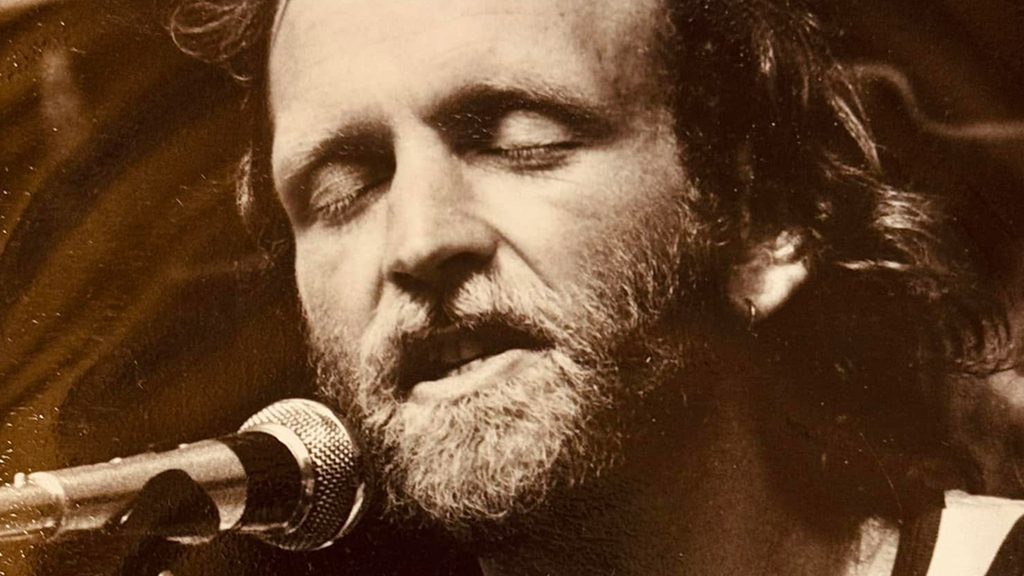
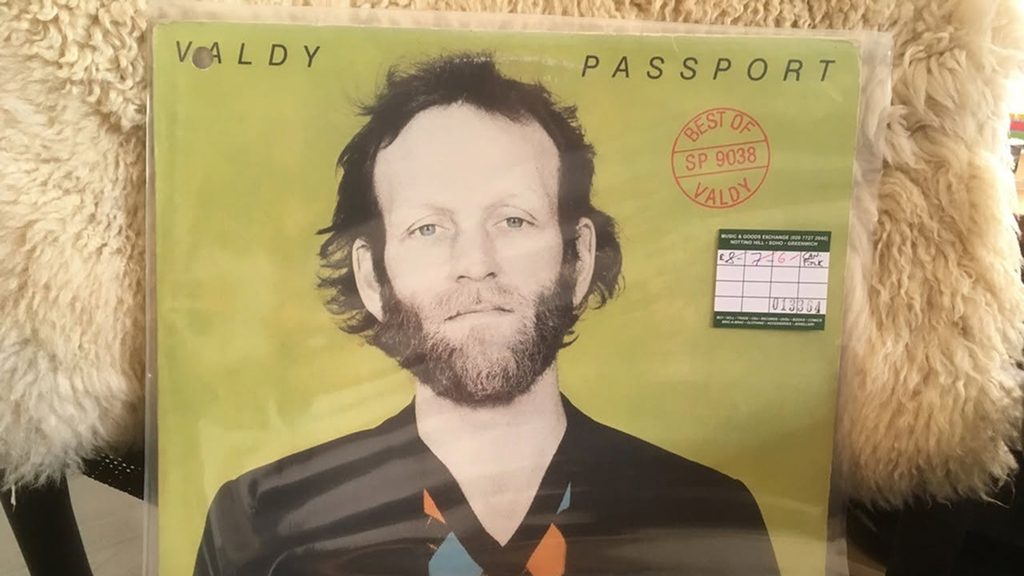
Through the seventies, Valdy released a string of albums that mapped the golden age of Canadian folk-pop: Landscapes in 1973, the live Family Gathering — recorded at Toronto’s Massey Hall, the country’s most storied concert room — in 1974, See How the Years Have Gone By in 1975, and Valdy and the Hometown Band in 1976.
The names behind the boards tell you how seriously the industry took him.
See How the Years Have Gone By was produced by Paul Rothchild, the man who had produced the Doors’ classic albums and helped define the sound of an era.
Valdy and the Hometown Band was produced by Claire Lawrence, the multi-instrumentalist founder of the Collectors who would go on to Chilliwack fame. These were not folk-scene favours but major-league collaborations, the kind that told the industry Valdy belonged in the top rank of the country’s songwriters.
The singles kept coming through the seventies: “A Good Song” reached number 9 in 1973, “Simple Life” climbed to number 16, and “Yes I Can,” “Peter and Lou” and “Renaissance” — the last reaching number 23 — all found their audiences. A decade later, “Sonny’s Dream” would reach number 17 on the country charts in 1985, proof that his appeal crossed genre lines without him ever chasing them.
Four of those seventies albums went gold in Canada: Country Man, Landscapes, Family Gathering and Valdy and the Hometown Band, all certified by early 1977. His official bio credits him with selling nearly half a million copies across his catalog, a staggering number for a folk singer who built his audience one room at a time.
The Hometown Band deserves a special mention.
Assembling a proper road band — rather than touring solo with an acoustic guitar — signalled that Valdy was thinking bigger than the coffeehouse circuit. The 1976 album captured a group hitting its stride, with Lawrence’s production giving the songs a fullness that radio loved and live audiences could feel in their chests.
When Quincy Jones Sings Your Song
Here is the detail that stops people cold: Quincy Jones recorded one of Valdy’s songs, and sang lead on it himself.
Jones cut “A Good Song” under the title “Just a Man” for his Body Heat album, taking the lead vocal personally — about as emphatic an endorsement as a songwriter can receive.
This was Quincy Jones, the most decorated producer in popular music, choosing to sing a song by a folk singer from Sooke, British Columbia. Jones also placed Valdy’s “A Good Song” and “Country Man” in the film The Getaway, the Sam Peckinpah thriller starring Steve McQueen and Ali MacGraw, carrying the Ottawa songwriter’s work onto movie screens around the world.
He was not the only one paying attention. John Kay of Steppenwolf — the voice of “Born to Be Wild,” one of the defining hard-rock anthems of the era — recorded his own version of “Play Me a Rock and Roll Song.”
When the hardest-rocking voices of the era are covering your folk songs, you have written something that transcends categories entirely.
There is a pleasing symmetry in the Kay cover. “Play Me a Rock and Roll Song” was born from Valdy’s discomfort in front of a rock audience, and here was a genuine rock icon returning the compliment — hearing the song as a damn good tune.
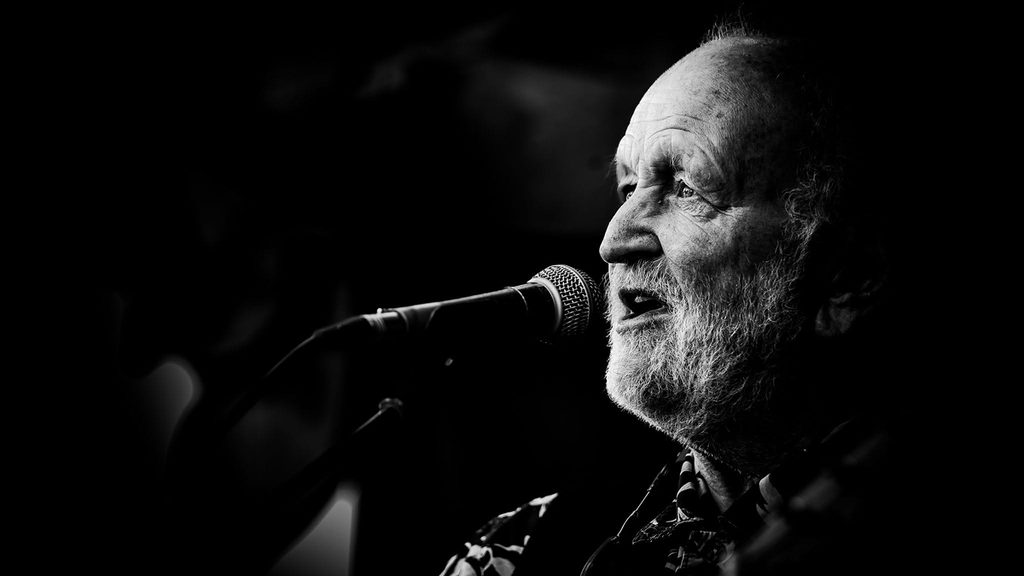
Junos, Gold and the Order of Canada
The awards began accumulating early: in 1971, Valdy took home the RPM Gold Leaf Award as Folk Singer of the Year, the prize that preceded the modern Juno folk categories before the Gold Leaf Awards evolved into the Junos themselves.
The Junos followed in their new form: Folk Entertainer of the Year in 1972 and Outstanding Performance of the Year in the folk category in 1973.
Seven more Juno nominations would follow across his career, along with those four gold albums. In 2005, SOCAN presented him with its National Achievement Award, recognizing a lifetime of songwriting rather than any single hit. His bio also notes the Queen’s Diamond Jubilee Medal in 2013.
The hall-of-fame inductions tell their own story about where he belongs in the country’s musical memory. Valdy is a member of the BC Entertainment Hall of Fame and the Victoria Rock and Roll Music Hall of Fame, honours that root him in the west coast scene he helped build from the Sooke years onward.
Then, in June 2011, came the one that outranks them all: appointment as a Member of the Order of Canada, the country’s highest civilian honour for lifetime achievement. For a farm boy from Sooke who wrote songs about ordinary life, it was the country’s way of saying those songs — and the half-century spent carrying them to every corner of the nation — mattered.
The Order of Canada citation would have noted the recordings and the awards, but the real case for Valdy was always the touring: the decades of showing up in places the music industry barely knew existed. Plenty of artists have sold more records. Very few have served their country’s audiences more faithfully.
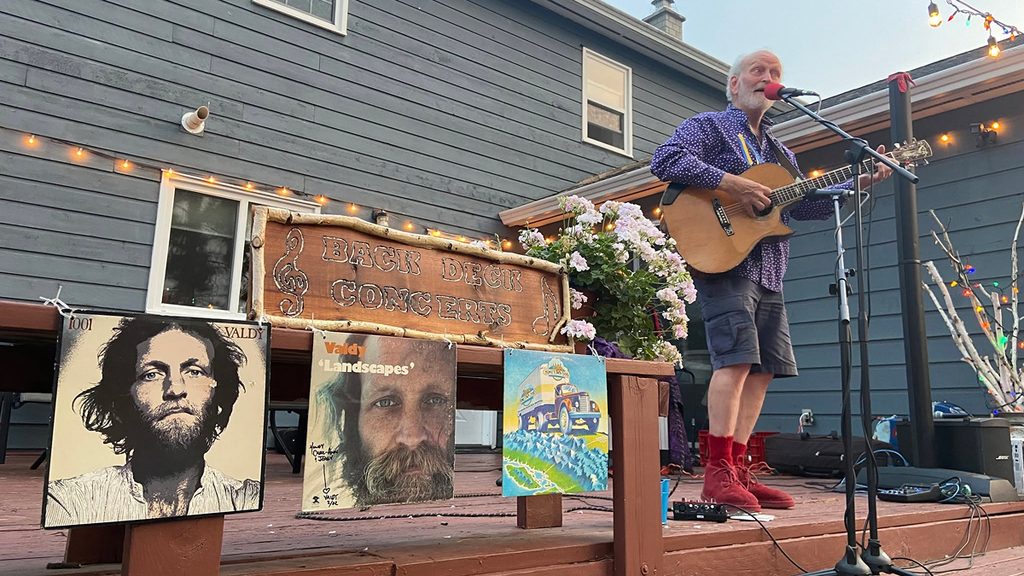
The Man with a Thousand Friends
Ask anyone in Canadian folk music about Valdy and the same phrase comes up: a man with a thousand friends, from Newfoundland to Vancouver Island to Texas to New Zealand.
It is not hype but a touring itinerary, earned one handshake and one encore at a time.
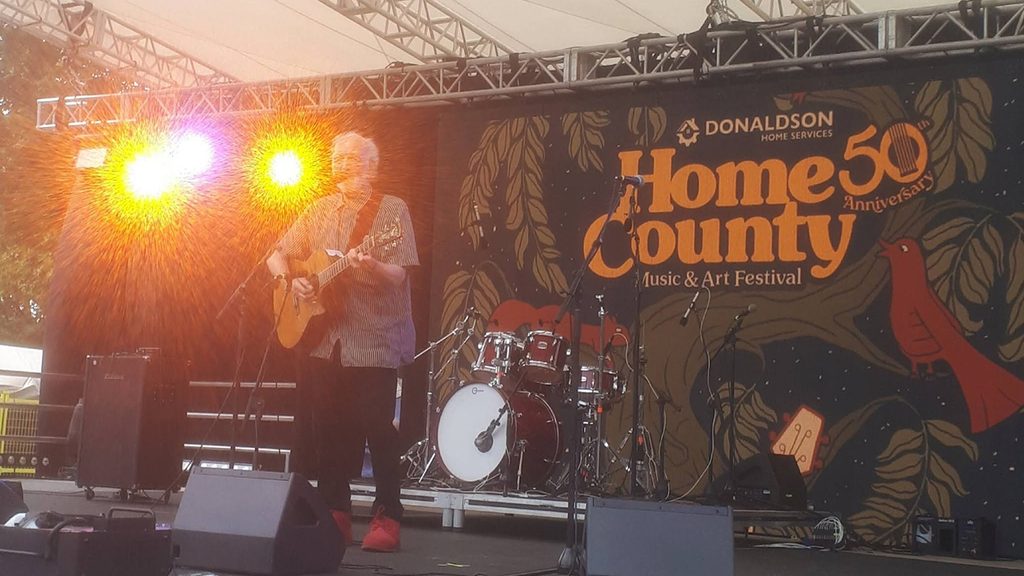
Valdy’s philosophy of the road is disarmingly simple. As he once put it: “If I played in one place, I’d get a diminishing number of people, so I travel.” He took that logic to its extreme, playing something like 200 shows a year even into his late seventies — a pace confirmed in a 2024 CBC interview conducted when he was 79. Do the arithmetic: that is a show every couple of days, year after year, for decades.
A dozen countries have hosted him, from Denmark to Australia to New Zealand. He became a regular and much-loved performer at the Kerrville Folk Festival in Texas, one of the most prestigious songwriting gatherings in North America, where the audiences are famously knowledgeable and famously hard to impress, and where he was embraced as one of their own.
At home, there is hardly a town in Canada he has not played, often more than once. This is the part of the Valdy story that statistics cannot capture. He did not build his audience through radio saturation or arena tours. He built it the old way, showing up, playing honestly and remembering people’s names. The thousand friends are real, and most of them have a story about the night Valdy played their town.
The economics of that life are worth understanding. Two hundred shows a year means living out of a suitcase, knowing every highway motel breakfast menu by heart and treating the tour van as a second home. Most artists burn out on that schedule in their thirties. Valdy was still doing it at seventy-nine, which tells you everything about both his stamina and his genuine love of the work.
A Valdy show is unlike most concerts. It feels less like a performance and more like an evening with a gifted friend who happens to have fifty years of stories. He talks between songs — at length, and wonderfully — because the stories are half the point. People leave humming, but they also leave feeling like they know him, which is exactly the effect that five decades of showing up is supposed to produce.
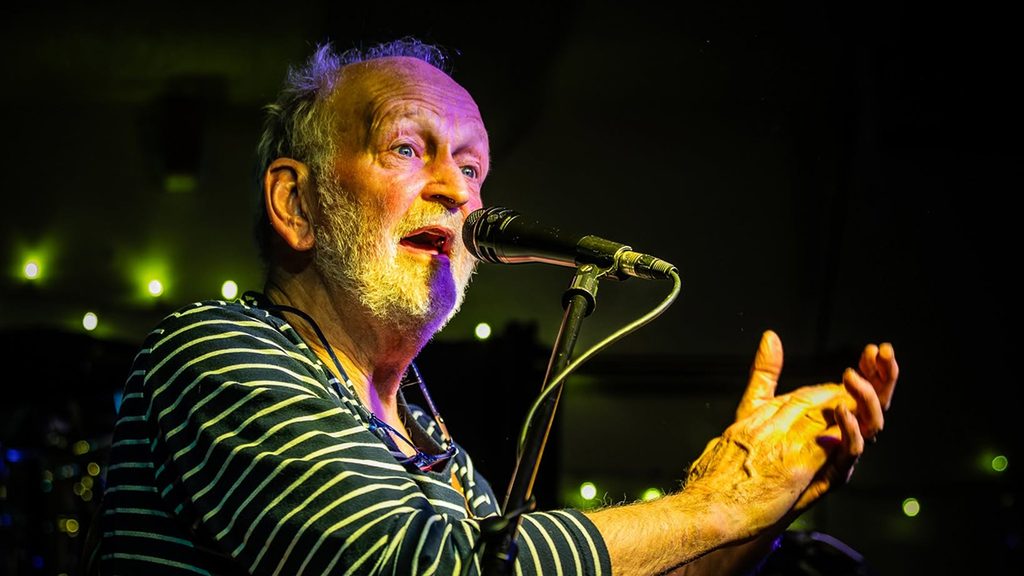
Halibut Stu and the Small Screen
Music was never Valdy’s only stage.
Canadian television audiences of a certain age remember him as “Halibut” Stu, a lead role he played in an episode of the original Beachcombers series — the long-running CBC drama set in Gibsons, British Columbia that ran for nearly two decades and became a national institution.
He later appeared in The New Beachcombers as part of a jug band performing “It’s The Water,” and turned up as himself on the children’s series Today’s Special in 1986 and on Sharon, Lois & Bram.
He was a natural on camera — warm, quick and funny — which made him a sought-after guest beyond scripted roles. His television appearances include Canada AM and Open Mike with Mike Bullard, and he even served as a panelist on Front Page Challenge, the long-running CBC quiz show that tested celebrity guests on their knowledge of the week’s news.
For a folk singer, it was an unusually full second career, and it introduced him to audiences who might never have set foot in a folk club.
The Beachcombers gig made particular sense. The show was steeped in the same coastal British Columbia culture Valdy had adopted as his own — the fishing villages, the eccentrics, the easy humour of people who work with their hands. “Halibut” Stu could have been someone Valdy actually knew.
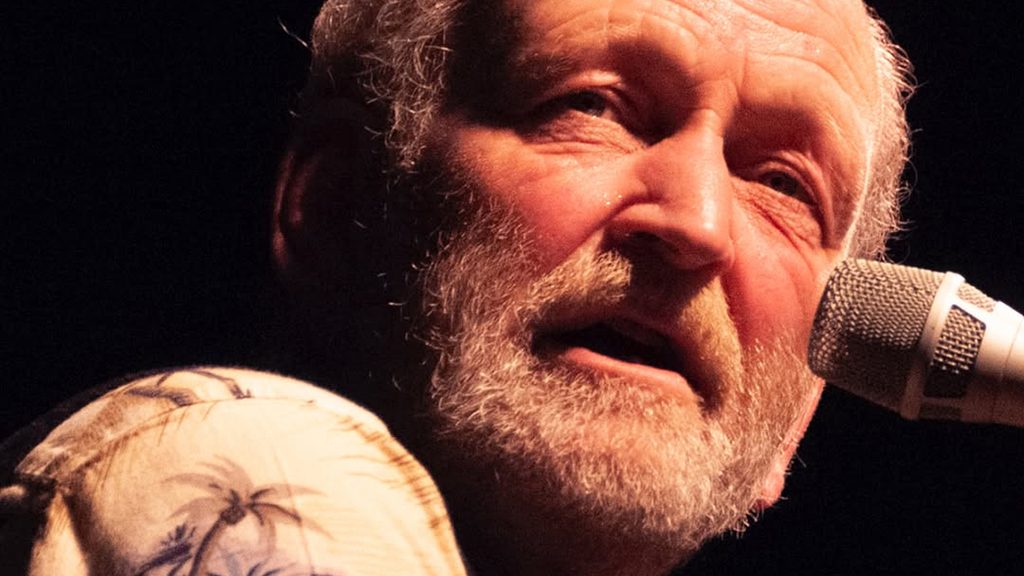
Home Is Salt Spring Island
For all his wandering, Valdy put down deep roots. In 1986 he married Kathleen Fraser, a teacher, hospice worker and song co-writer who became his partner in every sense — including the musical one, contributing to the songs themselves.
His daughter Chelah Horsdal, born in 1973, grew up to become an actress with a substantial screen career of her own.
Home is Salt Spring Island, British Columbia, where Valdy has lived on a six-hectare property for more than thirty years. It is the kind of place that suits him: rural, community-minded and beautiful, part of the Gulf Islands’ long tradition as a haven for artists and free spirits, and far from the industry machinery he never needed.
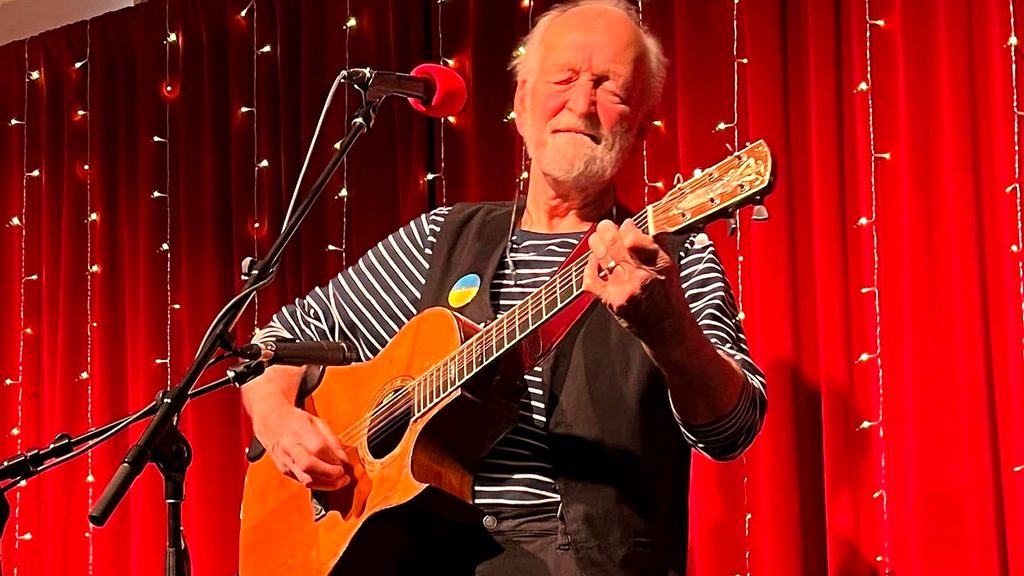
On September 1, 2025, he turned eighty, celebrating with a birthday show at Fulford Hall on the island. Eighty years old, still playing, still writing, still travelling. The highway never really let go of him, and he never really wanted it to.
Salt Spring’s artist community embraced him as one of its own, which is saying something on an island full of painters, potters and performers. But Valdy was never a celebrity resident in the standoffish sense.
He was the neighbour who showed up — to fundraisers, to community halls, to other musicians’ gigs — because showing up is what he does.
Still Singing at Eighty
Retirement is not a word in Valdy’s vocabulary.
His website lists tour dates deep into the rest of the year, booked through his longtime agent Charlie Jacklin of Lunar Productions, and he keeps a standing weekly date with fans through his “Live@Five” Facebook stream — a direct line from his living room to the thousand friends.
The recording career never stopped either.
The Contenders series with fellow singer-songwriter Gary Fjellgaard — Contenders in 2000, Contenders Two in 2007 and Contenders 3: Off the Floor in 2015 — captured the joy of two old friends touring together, trading songs and stories. Fjellgaard, a respected prairie songwriter in his own right, was the perfect foil: two lifers of the Canadian folk circuit, harmonizing through decades of shared highways.
Viva Valdy: Live at Last, a two-CD package with twenty-five tunes and a lyric booklet, gave fans the concert experience to take home.
His 2012 release asked listeners to Read Between the Lines, and he was still finding new things to say more than forty years after Country Man.
Why Valdy Endures As A Modern Canadian Folk Legend
What explains a fifty-year career with no real peak and no real valley? Partly it is the songs, which were built to last because they were built from truth — from Sooke farms and Aldergrove afternoons and a thousand small towns.
Partly it is the voice, warm and unforced, the sound of someone telling you something he means.
Mostly, though, it is the man. Valdy treated every room like it mattered, whether it held fifty people or twenty-five thousand jeering rock fans. He showed up in towns the industry forgot, played the songs people loved and made a thousand friends along the way. Then he did it again the next night, and the next, for half a century.
Canada has produced bigger stars, but it has not produced many better troubadours. The young songwriters who tip their hats to him — Justin Rutledge singing his song into the Hall of Fame, the Kerrville crowds who took him as one of their own — are the proof that the work outlives the charts.
Listen closely to the songs and you hear the craft that made it all possible. Valdy writes the way his father photographed: with attention, patience and respect for the subject. The melodies are sturdy enough to survive fifty years of singing, the words are plain enough to be understood on first hearing and rich enough to reward the fiftieth.
Want to Hear the Stories Behind the Songs?
There is a difference between hearing Valdy’s songs on a record and hearing them from the man himself, with the stories attached.
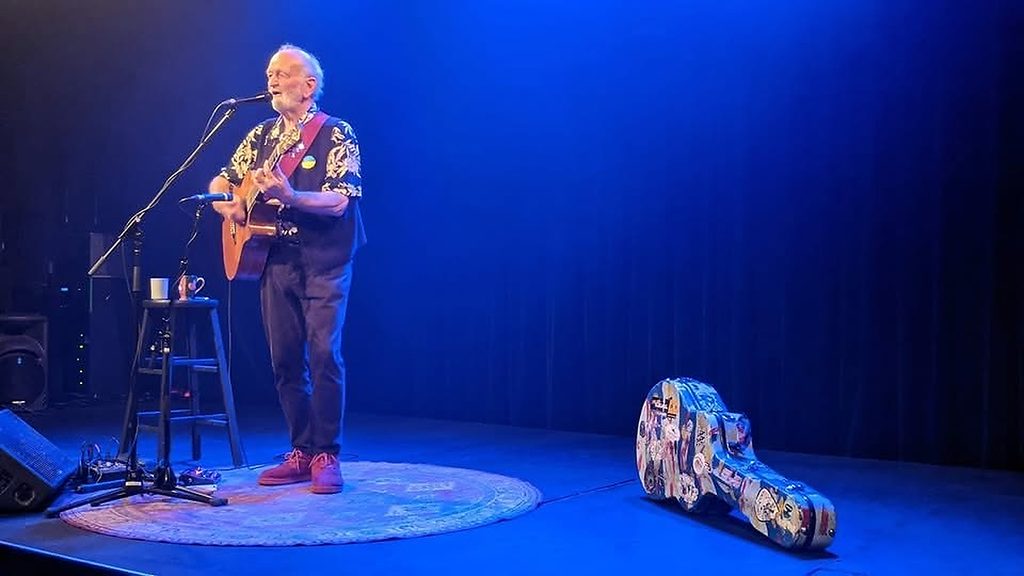
The Aldergrove afternoon, the Quincy Jones session, the thousand friends — they all sound better when he tells them, guitar in hand, in a room full of people who came to listen.
Valdy is back on the road through Ontario, including a stop in North Bay at Chippewa Secondary School on Sunday, November 15, 2026 at 7:00 PM. Tickets run from $25 to $40, the evening opens with Nova Scotia singer-songwriter Darrel Cameron, and proceeds support the East Coaster Studios Scholarship Fund.