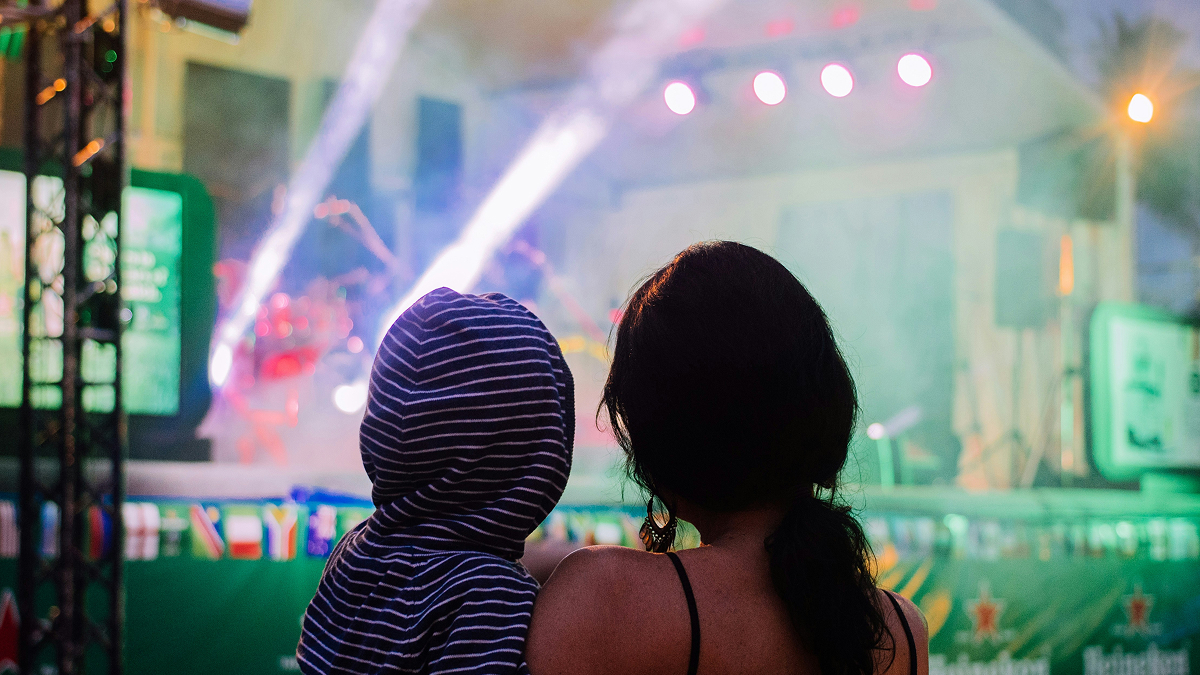
At Oasis’s reunion shows in Cardiff this year, one woman told a reporter she’d first seen the band in that same city thirty-one years earlier, pregnant with the son who was now standing beside her with a daughter of his own.
A few rows over, a ten-year-old celebrated his birthday at the same venue where his father had once stood next to his father.
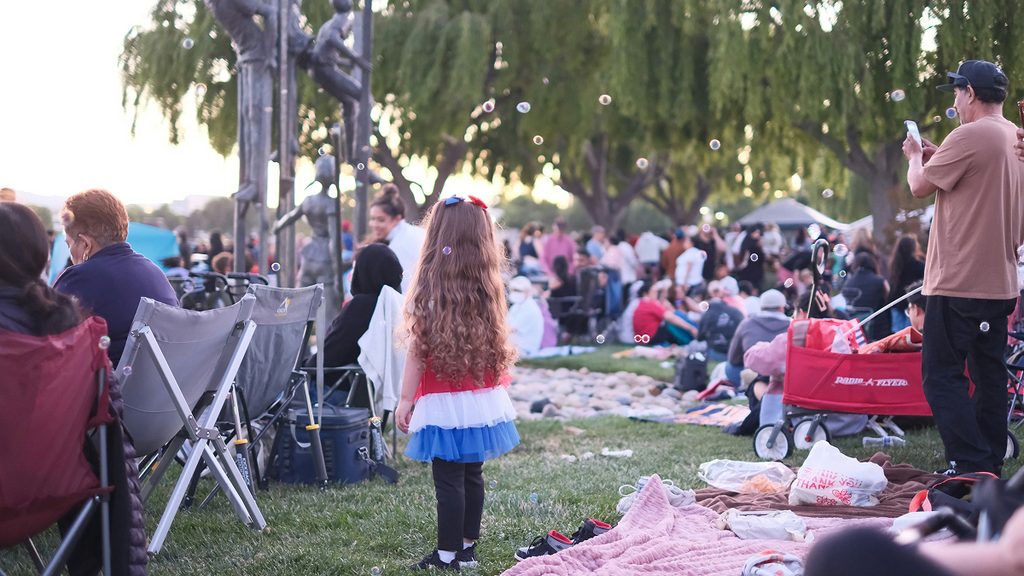
Multigenerational groups spanning excited kids seeing their first big gigs to aunts, uncles and grandparents who remembered the band from decades earlier filled the crowd. That scene is no longer an outlier. It’s becoming the norm at arenas, amphitheaters, and festival grounds across the country, and the data backs up what parents are noticing on the ground: live music has quietly become one of the most valuable things you can hand your kids, wrapped in confetti, feedback, and a T-shirt they’ll refuse to take off for a week.
The reasons go well beyond nostalgia or a fun weekend. Neuroscientists have spent two decades mapping what happens inside a young brain during musical engagement. Psychologists have measured what live experiences do to memory and happiness that material things simply can’t replicate.
And the live events industry itself has spent the last fifteen years quietly building the infrastructure — sensory-inclusive certifications, dedicated kids’ stages, family ticket policies — to make concerts more welcoming to young fans than they’ve ever been.
Here’s what the research, the venues, and the numbers actually say about taking your kids to a show.
1. Live Music Gives a Developing Brain a Genuine Workout
Sound processing is one of the more measurable things happening inside a child’s brain, and musical engagement changes it in ways researchers can now see on a scan.
At Northwestern University, neuroscientist Nina Kraus tracked low-income high schoolers over multiple years, comparing students enrolled in music classes against peers in other enrichment programs. The music students maintained their reading scores while students without music instruction saw their reading scores decline, and the music-making group showed faster brain development along with more precise processing of sound.
Kraus’s lab found something else worth noting: it wasn’t just whether a student showed up to class that mattered. Even small variations in engagement and participation predicted how much a student’s neural processing of sound improved.
Engagement, in other words, is the active ingredient — and there are few more engaging listening environments for a child than a live stage.
A parallel five-year study at USC’s Brain and Creativity Institute, run in partnership with the Los Angeles Philharmonic‘s youth orchestra program, reached a similar conclusion from a different angle. Music instruction accelerated brain development in young children specifically in the regions responsible for processing sound, language development, speech perception, and reading skills, speeding up the maturation of the auditory pathway and increasing its efficiency.
A concert asks a child’s brain to do something a recording never will: track a live rhythm section adjusting in real time, separate a vocal line from an unpredictable crowd, and follow dynamics that shift second to second rather than sitting fixed in a mastered track. That’s an auditory workout no algorithm can replicate.
2. It Teaches Emotional Range in a Way Screens Can’t
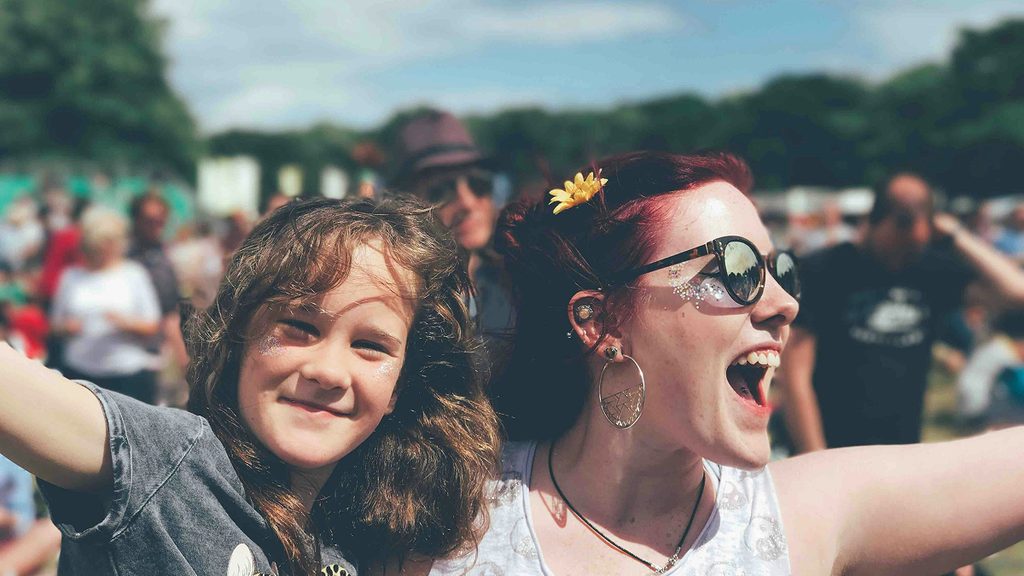
Watching a musician’s face shift from tension to release during a bridge, or feeling a room go quiet before a drop, gives kids a live tutorial in emotional nuance that flat, passive media doesn’t offer.
This isn’t a soft claim dressed up as science — researchers at USC have specifically studied how musical training and exposure shape emotion regulation, decision-making, and mental health in adolescents, with National Endowment for the Arts funding directed at exactly that question.
Music forces a kind of attention that emotional intelligence depends on: noticing shifts in tone, reading a room, sensing when something is about to build or break.
A recorded song can be paused, skipped, or half-listened-to while scrolling. A live set demands presence, and presence is the raw material emotional literacy is built from.
Kids who spend time in that kind of attentive, feeling-forward environment get practice at something increasingly rare in a distraction-saturated childhood: sitting with an emotion, in real time, without an exit button.
3. Concerts Create the Kind of Memory That Doesn’t Fade
If you want your money to buy something durable, the research is unambiguous that experiences beat objects.
Cornell psychologist Thomas Gilovich spent more than two decades studying this exact trade-off and found that people were consistently happier from money spent on experiences than on possessions.
People often assume an experience will come and go in a flash while a material item will stick around, but in reality people remember experiences long afterward while quickly growing used to their possessions, and the anticipation of an experience is even more enjoyable than the anticipation of owning something.
A follow-up study out of the University of Texas at Austin, co-authored by Gilovich, tracked thousands of adults in real time and found the effect held regardless of price tag. Happiness was higher for people who made experiential purchases than material ones across every category studied, no matter the cost of the purchase.
Music adds a second layer on top of that general finding.
Neuroscientist Petr Janata at UC Davis has spent years mapping why certain songs pull up entire scenes from a person’s past with startling clarity — first crushes, road trips, a specific summer. His imaging work identified the medial prefrontal cortex as a hub that links music, memory, and emotion together, and that same brain region happens to be one of the last areas to deteriorate in Alzheimer’s disease.
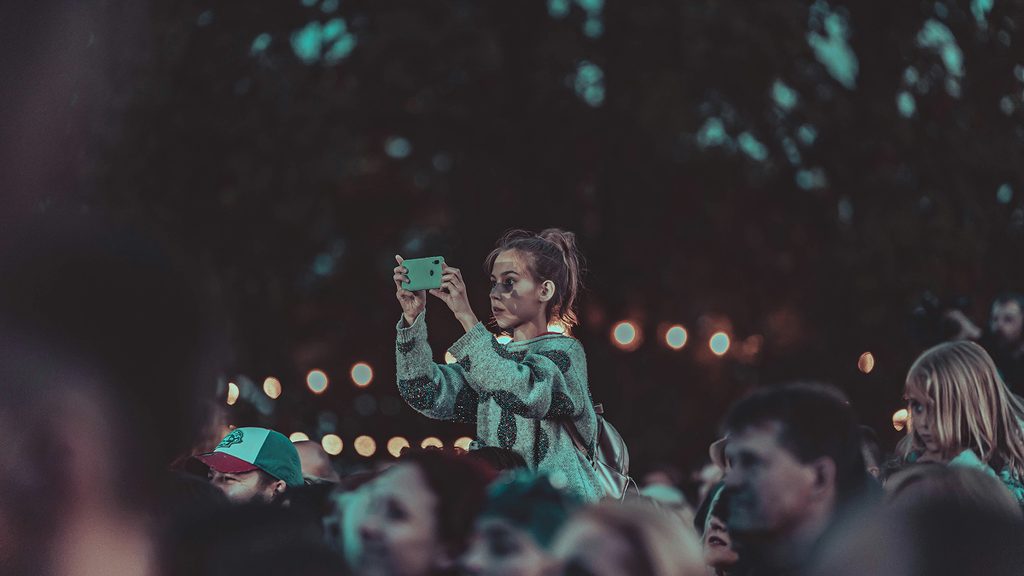
A concert a child attends at age nine doesn’t just entertain them for three hours. It gets encoded, tagged with sound, and is liable to resurface with startling clarity decades later — a kind of memory insurance that a toy or a screen session simply can’t offer.
4. It Wires Kids for Connection Instead of Isolation
Group music-making has a measurable effect on how children treat each other afterward, and the effect shows up fast.
In a widely cited 2010 study, researchers Sebastian Kirschner and Michael Tomasello had four-year-olds take part in music activities together and found the children behaved more cooperatively and helpfully afterward compared with children who did a non-musical group activity.
Four-year-olds behaved more pro-socially — more positive, more helpful, more inclined toward cooperation and friendship — after taking part in music activities together. Something physiological is likely driving that shift.
Oxytocin, the neuropeptide associated with empathy, trust, and generosity, is released during music-making due to sensory and emotional stimulation, and it’s tied to the kind of synchronized, rhythmic action that concerts are built around — clapping, swaying, singing along.
A concert crowd is, functionally, thousands of strangers synchronizing their bodies to the same beat at the same moment.
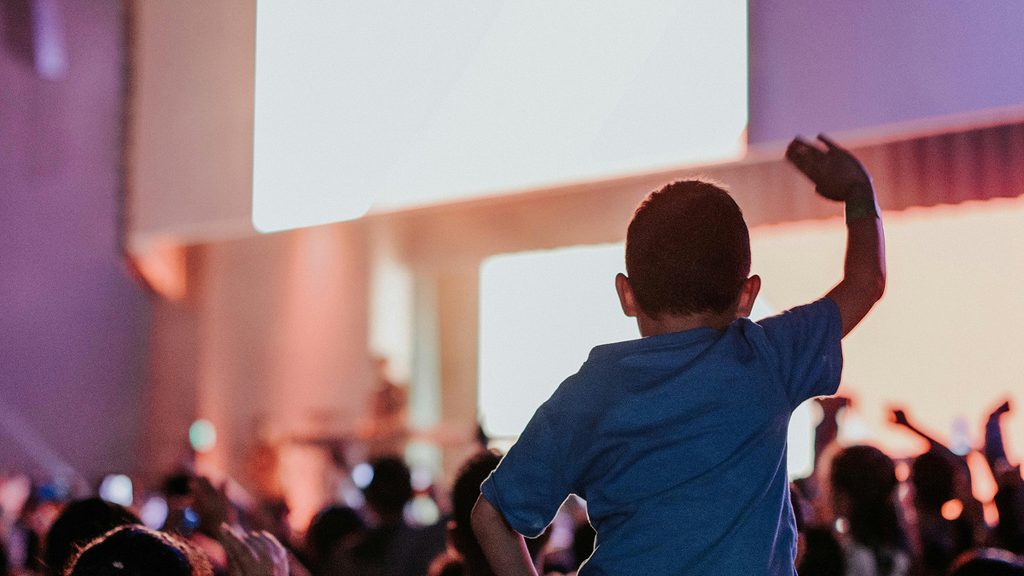
For a child, standing inside that kind of collective experience is a crash course in belonging to something larger than a screen, a bedroom, or a solo device.
5. It Widens a Child’s Sense of What Music Can Be
Access to music inside American classrooms is far less universal than most parents assume, which makes exposure outside the classroom more consequential than it used to be.
A comprehensive national study found that while 92 percent of students in U.S. public schools have access to music education, 3,609,698 students do not, and over 2 million lack access to any arts education at all.
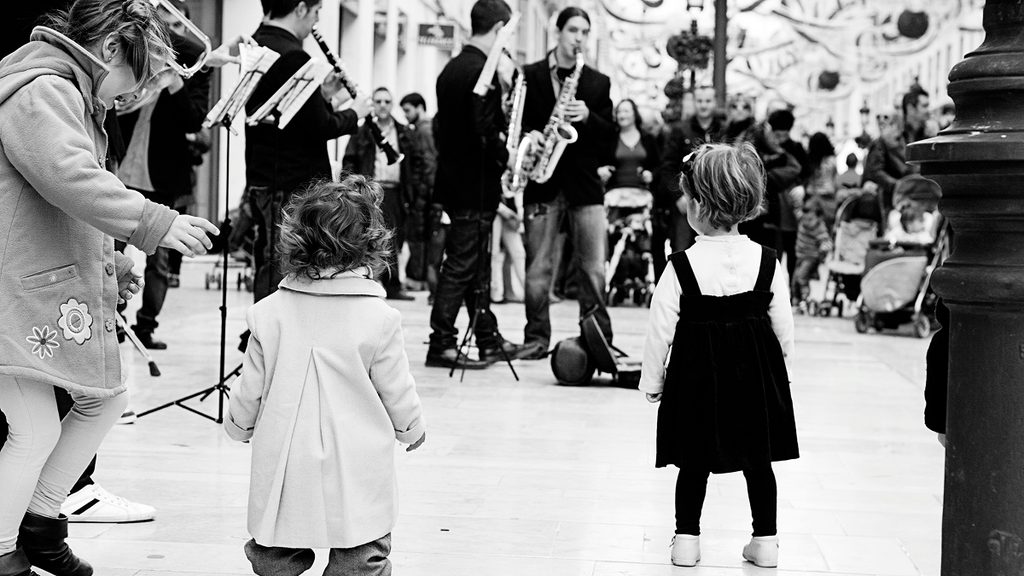
For families in that gap — and even for those who aren’t — a live show is often a child’s first unmediated encounter with a genre, an instrument, or a musical tradition they’d never otherwise sit through voluntarily.
Streaming algorithms tend to narrow a young listener’s taste by feeding them more of what they already click. A festival lineup or an opening act does the opposite: it puts an unfamiliar sound directly in front of a captive young audience with nowhere else to look.
Kids who might reflexively skip a horn section, a fiddle solo, or a language they don’t speak on their phone will often stand transfixed by the same thing live, three feet from the stage, because there’s no skip button and no algorithm mediating the encounter.
6. It Plants the Seed for a Lifelong Relationship with Music
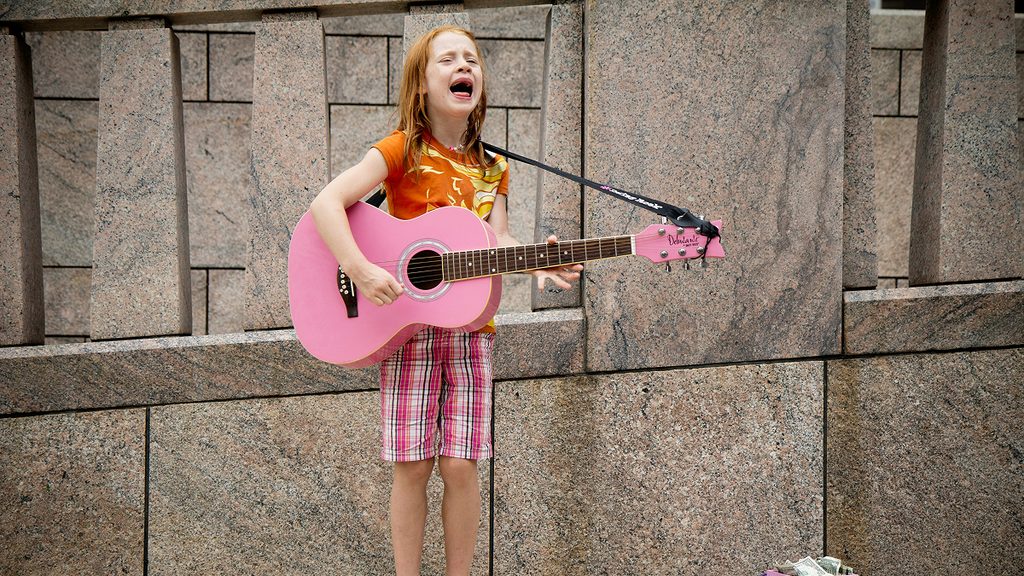
Watching a musician perform live is one of the most reliable sparks for a child deciding to pick up an instrument themselves, and the industry’s own data backs that connection up.
When Fender partnered with YouGov to study the pandemic-era surge in new guitarists, they found that roughly 16 million Americans between the ages of 13 and 64 took up guitar over a two-year span, with 72 percent of them between 13 and 34 years old.
Buried in that same research is a detail that speaks directly to the power of exposure: a third of current beginners and a third of aspiring players reported having a family member who had owned a guitar.
Proximity to an instrument, whether in a living room or on a stage forty feet away, moves the needle on whether a kid ever tries one themselves.
Given that millions of students still have no in-school pathway to music education, a concert ticket can function as the only formal introduction some kids get to the idea that making music is a thing regular people, not just famous ones, get to do.
7. Concerts Teach Patience, Anticipation, and Navigation
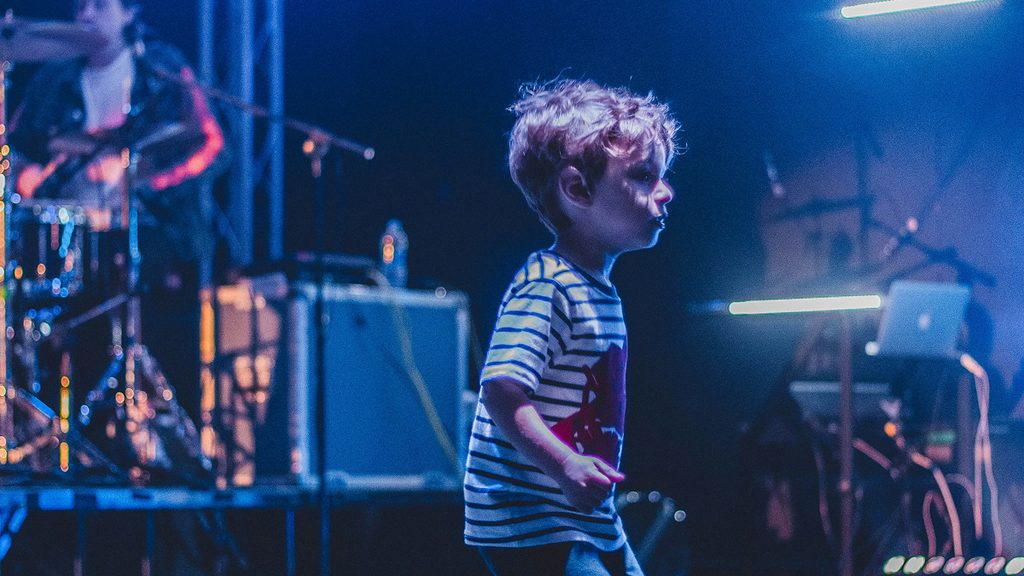
Waiting for an opener to finish, sitting through a rain delay, or standing through a set list before the one song you came for finally plays are all quietly valuable lessons in delayed gratification that don’t come up often in an on-demand childhood.
Gilovich’s research on experiential spending noted something counterintuitive about this waiting period: people actually enjoy the anticipation of an upcoming experience more than the anticipation of acquiring a new possession.
That means the two hours a child spends waiting for the headliner aren’t dead time — they’re part of the value, not an obstacle to it.
Beyond patience, a concert hands a child a compressed crash course in real-world logistics: reading a schedule, following signage through an unfamiliar venue, managing a bag check, finding a bathroom in a crowd, and reuniting with a parent at a designated meeting point if things go sideways.
These are small, low-stakes rehearsals for the kind of independent navigation kids will eventually need in airports, campuses, and cities — skills that are harder to practice authentically anywhere else.
8. It Gets Kids Moving in an Increasingly Sedentary Childhood
American children’s screen time has climbed sharply over the past several years, and the trajectory hasn’t reversed.
Between 2019 and 2021 alone, total daily screen media use among tweens rose from 4 hours and 44 minutes to 5 hours and 33 minutes, while teens climbed from 7 hours and 22 minutes to 8 hours and 39 minutes — not counting time spent on schoolwork.
That growth outpaced the previous four years combined.
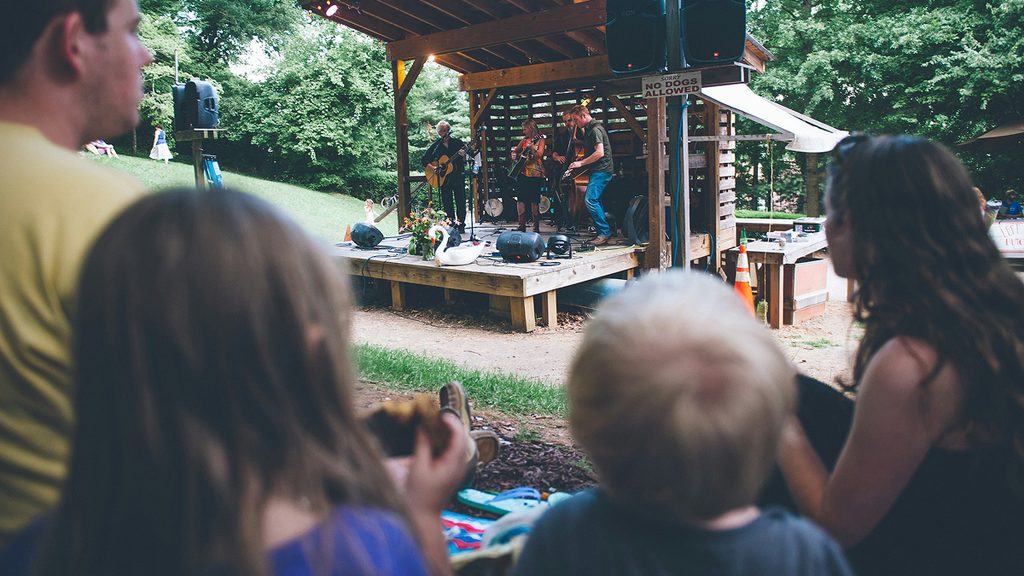
A concert is one of the few remaining childhood activities that requires a body to physically stand, clap, jump, dance, and sing for hours at a stretch, with no chair, no screen, and no pause button.
It’s not framed as exercise and doesn’t need to be — kids won’t experience three hours on their feet moving to a beat as a workout, but their bodies will.
In a childhood increasingly defined by scrolling thumbs and stationary torsos, a night at a show is one of the more painless ways to reintroduce sustained physical movement into a kid’s week.
9. It Offers Real, Undivided, Unplugged Family Time
The same screen-time data that shows kids drifting toward more hours on devices also points to something parents already sense: shared, distraction-free time with a child is getting harder to manufacture organically.
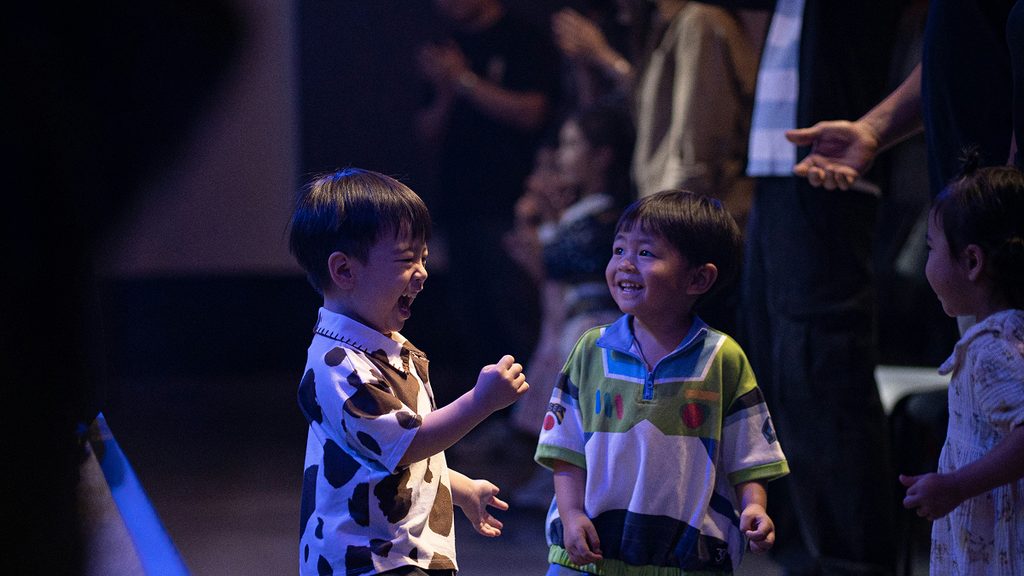
A concert solves that problem by design. Phones get put away for the headliner, conversation happens between songs instead of over a shared screen, and the shared focal point is a stage rather than two separate devices in the same room.
Unlike a car ride or a dinner table, where a phone can quietly slide back into a child’s hand, a live show physically removes the option — the music is louder than the phone, the view is better without one, and everyone in the crowd is looking the same direction.
Families who make concertgoing a habit are, often without naming it that way, building in a recurring appointment for the kind of undivided attention that’s become the exception rather than the rule.
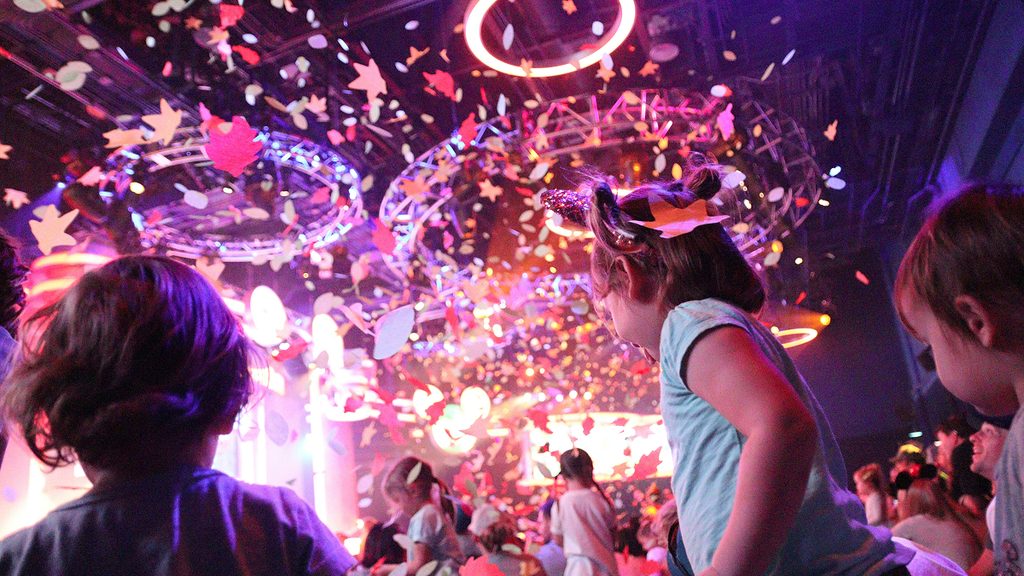
10. The Industry Has Never Made It Easier or Safer for Families
Two decades ago, taking a young child to a major show meant navigating a venue built entirely for adults.
That’s changed substantially. Lollapalooza‘s family zone, Kidzapalooza, has run since the festival’s Chicago return in 2005 and offers its own stage, music workshops, and craft activities, and children ten and under can enter Lollapalooza free of charge when accompanied by a ticketed adult.
On the accessibility side, the nonprofit KultureCity has spent a decade training venue staff to accommodate sensory needs — a population the organization estimates at one in four people — and has certified more than 1,800 venues as sensory inclusive, distributed nearly a million sensory bags containing noise-dampening headphones and fidget tools, and made over 150 live events sensory inclusive.
Hearing protection has become more standardized, too, and for good reason. Amplified concert sound typically falls between 90 and 110 decibels, with stadium crowd noise capable of reaching 130 decibels, and the World Health Organization recommends children not be exposed above 120 decibels at all.
The CDC estimates that 5.2 million children and teens are already affected by noise-induced hearing loss.
Foam plugs and kid-sized noise-reducing earmuffs are now sold at merchandise tables and drugstores alike, and pairing them with a quiet break every half hour or so has become standard advice from pediatric hearing specialists.
None of this existed in any organized way a generation ago. Taking a kid to a concert in 2026 is a fundamentally safer, more accommodated experience than it was for most parents’ own childhoods.
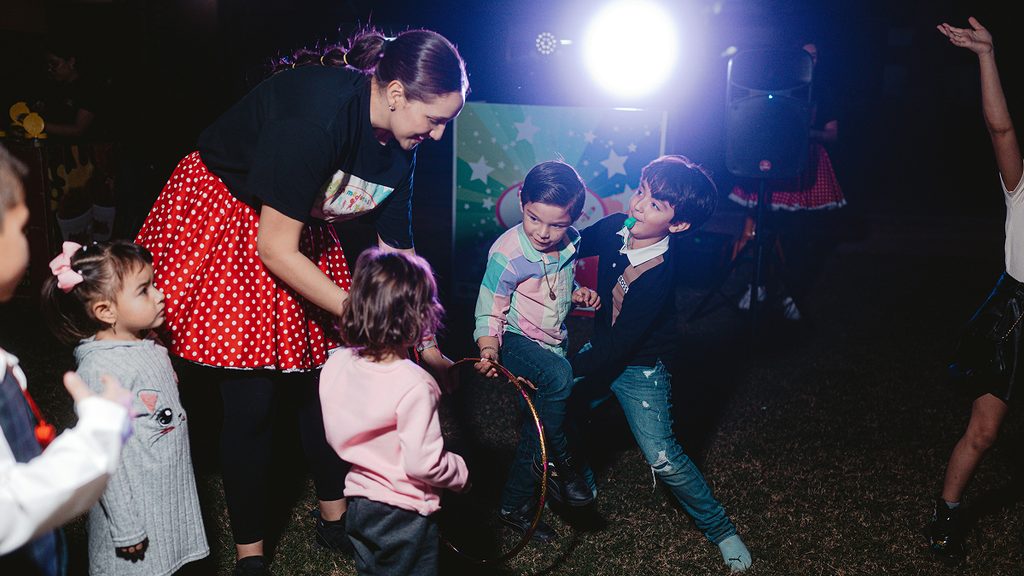
11. Kids Get a Front-Row Seat to Multigenerational Culture
Concertgoing with children isn’t a niche behavior anymore — it shows up clearly in the numbers.
Surveying attendees of Taylor Swift’s Eras Tour, nearly 20 percent had attended with a parent and 31 percent had attended with a child, making family attendance one of the most common configurations at a tour that ultimately generated an estimated $5 billion in economic impact.
The pattern isn’t confined to pop’s biggest tour.
Guardian reporters covering Oasis’s reunion shows this year found the crowd stitched together across generations, with grandparents who’d seen the band thirty years earlier now watching their grandchildren experience the same songs for the first time.
A child who grows up attending shows alongside parents, aunts, uncles, or grandparents inherits something a private listening session never provides: a shared cultural reference point, a family in-joke set to music, and a front-row seat to watching the adults in their life light up over something that predates them.
That kind of inherited enthusiasm is difficult to manufacture any other way, and it tends to outlast almost everything else a family spends money on.
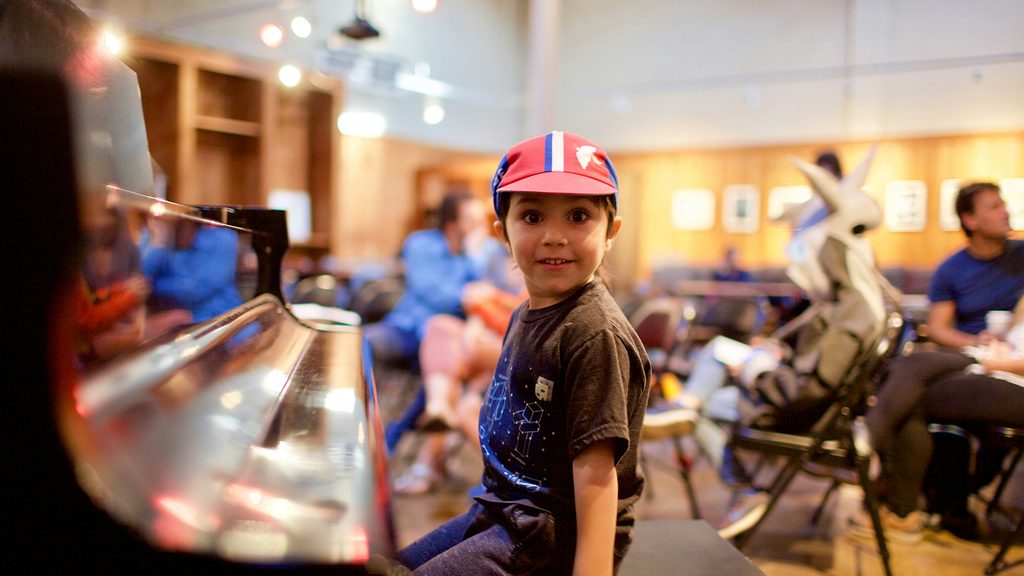
Considering Taking Your Kids to Live Music? The Encore Is Worth More Than It Looks
None of these reasons require a child to become a musician, a superfan, or even someone who remembers the setlist by name.
What they add up to is simpler: a night that stretches a kid’s ears, gets their body moving, hands them a memory that will likely outlast most of their toys, and puts them shoulder to shoulder with family members experiencing something together instead of apart.
The live events industry has spent the last two decades quietly building the ramps, the sensory rooms, the kids’ stages, and the family ticket policies that make this easier than it’s ever been to do well.
The neuroscience, the psychology, and the box office data all happen to be pointing in the same direction at once, which is rare enough to take seriously. The next time a tour comes through town and you’re debating whether your kid is “too young” for a real show, the research suggests the better question might be whether you can afford to wait.