Before sunrise on a summer weekday in 1913, four Barnum & Bailey trains — more than 100 cars — roll into LeBreton Flats in Ottawa.
Inside them: 1,200 people, 500 horses, and a menagerie of elephants, camels, giraffes, zebras, lions, a rhino and a hippo.
By the next morning, the field at Holland Avenue and Wellington Street where all of it happened is empty again: no poles, no stakes, no trace.
That was the traveling circus: the first mass-market touring event in North American life, and still one of the most logistically ambitious ever staged. Here’s our deep-dive into where it went.
The argument is simple: the traveling circus did not die because people stopped craving wonder. It died because the machinery behind it came apart piece by piece: railways, open lots, a public with few other windows on the world, and a shared comfort with live animal acts. What survives today is not a smaller version of the old show but a different business.
A City Built Overnight, Gone by Dawn
A railroad circus was less a show than a portable town. The Ottawa stop of 1913 shows how it worked.
- Overnight: Four trains and more than 100 cars unload at LeBreton Flats, and wagons haul everything to the lot.
- Morning: A canvas crew raises more than 20 tents. The cook tent goes up first and serves 5,000 meals before the day is out.
- Early afternoon: A three-mile parade winds down Wellington Street to Elgin and back. Streetcars simply follow along behind.
- 2 p.m. and 8 p.m.: Two performances under a main tent measuring 520 by 280 feet.
- Late night: Teardown begins. By daybreak, the circus is gone.
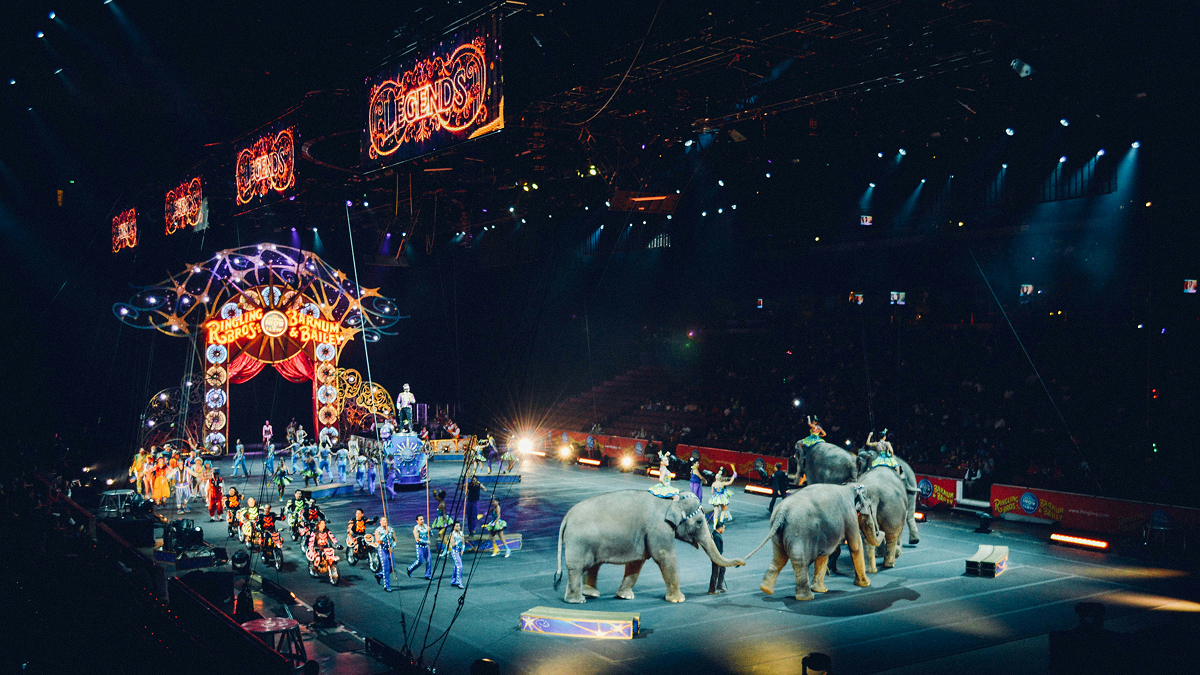
The main tent ran three rings at once. A ballet of 300 dancers, six bands, and a spectacle called Cleopatra competed for attention with jiu-jitsu demonstrations, trick riding by a 17-year-old Australian, and a baseball game played by elephants, seals, pigs, monkeys and a kangaroo. One newspaper noted that so much happened at once that a great deal was missed.
Around the big top sat the rest of the town: a menagerie of hundreds of exotic animals, sideshows, stables, a blacksmith, dressing rooms, a barber, even doctors and dentists. Local boys were hired on the spot to help raise canvas. Their pay was a free ticket.
The selling happened weeks earlier, when railroad shows sent advance cars, painted like parade floats, at least two weeks ahead of the main train. Crews of billposters papered every wall and fence with lithographs, from posters 15 feet tall to 18-inch window cards, and pasted them over a rival’s paper whenever they could. Contractors booked grounds and bought supplies before the first wagon rolled.
When the season ended, the show published a route book: a day-by-day record of towns, dates, ticket sales and personnel. It was the touring industry’s original tour sheet.
Every piece of this was an events problem: site selection, advertising, labour, catering, crowd control, load-out. The circus solved all of them nightly, in a different town, for decades.
Barnum, Coup and the Rail Revolution
The man who put the circus on rails was not P.T. Barnum but William Cameron Coup.
On April 10, 1871, in Brooklyn, P.T. Barnum’s Great Traveling Museum, Menagerie, Caravan and Hippodrome opened for business. Barnum supplied the name and the fame. William C. Coup and veteran showman Dan Castello supplied the show.
In 1872, Coup moved it by train. He designed a railcar and an end-loading system that let crews roll wagons straight from one flatcar to the next; that first train stretched 1,200 feet.
Barnum branded the whole enterprise “The Greatest Show on Earth.” By 1897, a Barnum & Bailey train ran 3,600 feet.
Coup also added a second ring in 1872 and a third in 1881. It was an early lesson in venue capacity: more rings meant more people could see something at once.
Meanwhile, in Baraboo, Wisconsin, five of the seven Ringling brothers opened a one-ring show on May 19, 1884. By 1895, they and Barnum & Bailey had agreed to divide the market geographically. When James Bailey died in 1906, the Ringlings bought his show in October 1907 for $400,000 and ran the two circuses separately for years.
Then the world intervened: World War I left labour short and rail travel snarled, and audiences had thinned. The Ringlings merged the shows, debuting Ringling Bros. and Barnum & Bailey Combined Shows at Madison Square Garden on March 29, 1919. The combined outfit ran 100 double-length rail cars and 1,200 employees, the largest traveling amusement enterprise the continent had seen.
In 1927, John Ringling moved the winter quarters from Baraboo to Sarasota. Today the story lives on at the Circus World Museum in Baraboo and at The Ringling in Sarasota.
When the Big Top Crossed the Border
Canada was circus country long before a railway crossed it. The first touring circus reached Bytown, now Ottawa, in August 1851. It came by road, on terrible highways, years before any train. Those early shows leaned on horsemanship and made no concession to children — there were no discounted tickets.
Rail changed both the economics and the audience.
No story ties the railway, the circus and Canada together more tightly than Jumbo. On the night of September 15, 1885, Barnum & Bailey were playing St. Thomas, Ontario. As handlers led Jumbo, the elephant billed as the largest in the world, toward the circus train, an unscheduled freight train came through and killed him within minutes. Barnum had the hide stuffed and kept the elephant on tour. A life-size statue marks the spot in St. Thomas today.
Towns became good circus stops by meeting a short checklist: open ground near the tracks, close to the population, ideally with water. Ottawa’s grounds moved from Lansdowne Park to the Glebe to Holland and Wellington, which hosted three circuses between 1912 and 1914. Ringling came in 1912 and 1914, Barnum & Bailey in 1913. Then Plouffe Park became the city’s official circus site, and it stayed that way until 1939, when the Second World War ended the classic era.
Geography made Canada expensive: when the Clyde Beatty circus entered the country at Vancouver in the mid-1940s as a 15-car railroad show, the long jumps across the western provinces forced it to lease Canadian National flatcars and a sleeper. The train grew to 20 cars. A tour of this country was a bet on distance.
The border barely mattered to the business: dozens of circuses crisscrossed Canada and the United States every year, following the same rails to the same kinds of lots.
Why Circus Day Felt Like a Holiday
The circus was the largest form of entertainment in the late nineteenth and early twentieth centuries. At the peak, as many as 200 circuses were on the road in the United States in a single season.
In many towns, Circus Day ranked just behind Christmas and the Fourth of July, and schools and businesses closed. One Canadian newspaper of the era called it “the red letter day of all days in the calendar of youth.”
Three things explain the grip it had.
The first was scarcity: a child in a small town could not otherwise see a giraffe. The circus delivered the wider world to the edge of town, and the world’s animals, performers and costumes came with it. Nobody had to travel to Africa or Asia.
The second was scale: a three-ring spectacle with hundreds of performers could not be copied by any local theatre or hall. It was a sensory overload that only a company with its own train could provide.
The third was ritual: the parade, the posters, the day off. The circus was less an outing than a civic event, and the whole town took part, even the people who stayed away from the tent.
The form was also shrewd about respectability. Clergy often condemned traveling shows as immoral, so circuses across North America staged historical and biblical spectacles to win over churchgoers. Barnum & Bailey’s Cleopatra in Ottawa in 1913 was the same strategy in costume.
The golden age ran deep into the twentieth century. President Franklin D. Roosevelt gave Ringling special permission to use the rails during the Second World War because the show mattered to home-front morale. Cecil B. DeMille filmed his Oscar-winning The Greatest Show on Earth with the circus in 1951. In 1953, Ernest Hemingway wrote the Ringling program essay and called the circus the closest thing to a happy dream a ticket could buy.
Stars made it personal: the clown Emmett Kelly, the Flying Wallendas, the big-cat trainer Gunther Gabel-Williams. They gave a mass spectacle faces that families remembered.
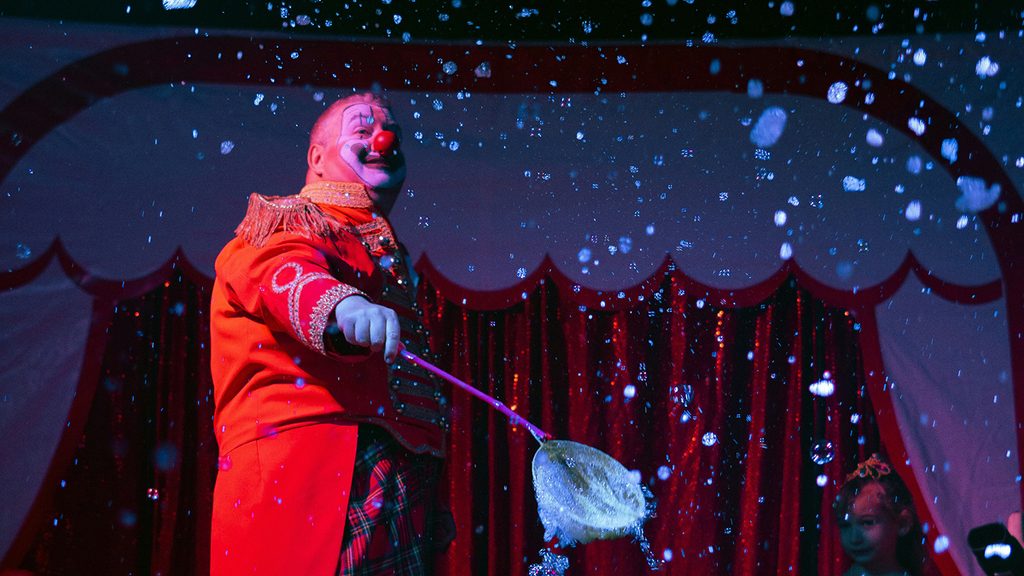
The Slow Collapse of the Canvas City
The decline did not arrive in one blow but in layers.
The first layer was war and disease. The 1919 merger was a response to labour shortages, rail restrictions and thinner crowds. In Ottawa, the Second World War ended the circus’s long run at Plouffe Park.
The second layer was risk: on July 6, 1944, a fire tore through the Ringling big top in Hartford, Connecticut. The canvas had been waterproofed with paraffin and gasoline. The tent was gone in under ten minutes.
The Hartford circus fire killed 168 people, many of them children, and it remains the worst disaster in the city’s history. It showed what a fabric roof full of families could cost.
The third layer was competition, as movies, television and sports took the evenings. Zoos took the animals’ monopoly on wonder.
Then came the break: on July 16, 1956, at Heidelberg Raceway in the Pittsburgh area, Ringling Bros. and Barnum & Bailey gave its last performance under canvas. President John Ringling North announced that the tented circus was a relic. Newspapers that week blamed labour trouble, bad weather, rising costs and television. From 1957, the show played permanent venues: stadiums and arenas with seating already installed.
That shift rewired the business: the circus no longer needed a lot, a tent crew, or a parade. Instead it needed local promoters to sell tickets ahead of its arrival, and buildings with air conditioning. The old pageant of arrival gave way to the ticket buy.
In 1967, Irvin Feld and his brother Israel, with Houston judge Roy Hofheinz, bought the circus from the Ringling family, ending 80 years of family control. Under Feld Entertainment, the circus found a second life in arenas for another half century. That was not a decline but a conversion.
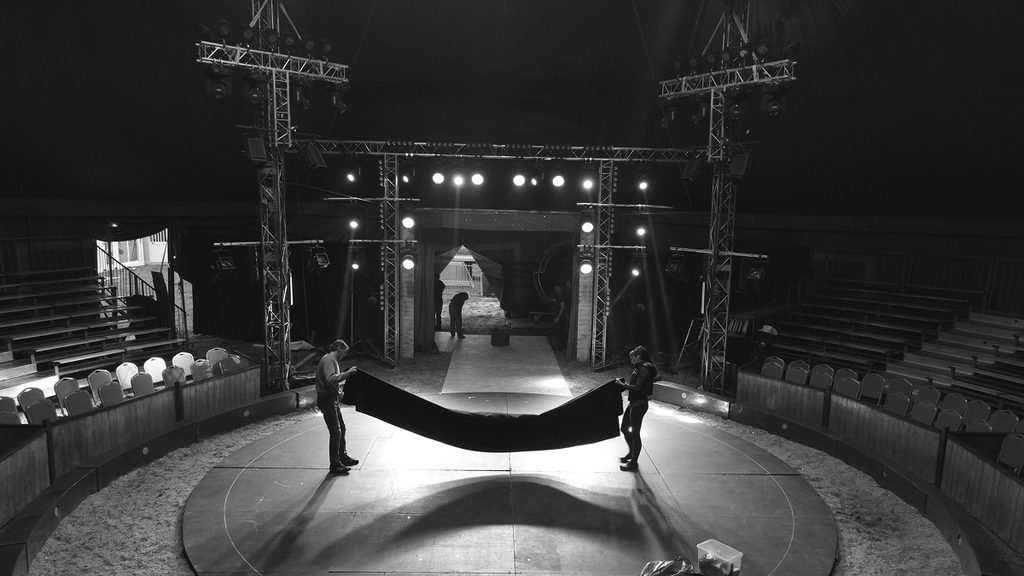
Elephants, Bullhooks and a Shifting Public
The animal-welfare question did not kill the traveling circus on its own; it did something more precise. It removed the show’s most recognizable symbol at the moment its finances were weakest.
The pressure built over decades: in 2011, Feld paid a $270,000 civil penalty to settle U.S. Department of Agriculture allegations of Animal Welfare Act violations, the largest such fine ever levied on an animal exhibitor. A federal judge rejected abuse claims in a 14-year lawsuit, and in 2014 Feld Entertainment won $25.2 million in settlements from the groups behind it, including the Humane Society of the United States. The company won in court and lost in the public mind.
On March 5, 2015, Feld announced it would phase out touring elephants by 2018. A year later it moved the deadline up. The elephants gave their final performance in Providence, Rhode Island, on May 1, 2016, and went to the company’s 200-acre Center for Elephant Conservation in Florida. Executive Alana Feld said consumers’ mood had shifted and that many people were uncomfortable with touring elephants.
Then the show lost the thing it had built its brand on, and ticket sales fell sharply. On January 14, 2017, Feld announced the circus would close. The last performance was May 21, 2017, at Nassau Veterans Memorial Coliseum in Uniondale, New York, 146 years after the first.
Kenneth Feld, the company’s chairman and CEO, said the world had changed more in a decade than in the previous 50 or 75 years, and that the circus was no longer relevant to people the way it once was.
The law moved too, as Los Angeles and Oakland banned elephant bullhooks. Asheville, North Carolina, banned wild animal acts from its city-owned stadium. Illinois and New York banned traveling elephant acts in 2017. New Jersey became the first state to bar wild and exotic animals from traveling shows in 2018, in what became known as Nosey’s Law, with Colorado following in 2021. Advocacy groups count well over 150 cities and counties across 37 states with restrictions of their own.
Canada took a different road: instead of national law, the country built a patchwork. Vancouver, Victoria, Surrey and other British Columbia municipalities banned wild animal performances, and in Ontario towns including Cobourg and Stratford did the same. Toronto’s attempt ran into the courts: the Ontario Court of Appeal struck down its ban on exotic animal shows in 1993 on freedom-of-expression grounds. In June 2019, Parliament ended the capture and captivity of whales and dolphins for entertainment. In December 2024, the Senate passed Bill S-15, which would have banned elephants and great apes in entertainment performances. It died when Parliament was prorogued in January 2025.
The lesson for organizers is uncomfortable, because the evidence points to a convergence, not a single cause. Attendance was already sliding, costs were already rising, and the public was already uneasy. The elephants were both the liability and the product, and when they left, the audience went with them.
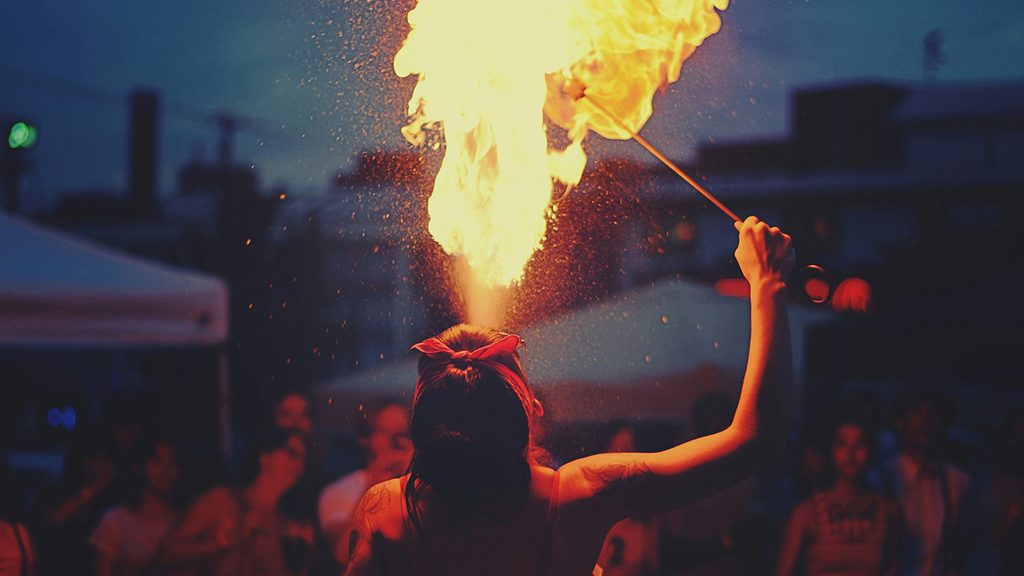
Running the Numbers on a Moving City
A tent show owns its venue, and with it, all of the overhead. That was the traveling circus’s genius and its trap.
Rail costs climbed while labour got harder to hire and harder to keep. After the 2008 financial crisis, family budgets tightened while operating costs kept rising. Ringling’s owners ran scenarios and tried an interactive phone app, ice skaters and motorcycle stunts, but nothing worked.
Smaller shows felt the squeeze even harder.
Big Apple Circus was founded in 1977 by jugglers Paul Binder and Michael Christensen as an intimate, one-ring nonprofit. In 2016 it raised only $900,000 against a $2 million goal and filed for Chapter 11 protection with $3.8 million in assets and $8.3 million in liabilities. A buyer purchased the name and equipment for $1.3 million in February 2017, and the show returned that fall.
The pattern matters to anyone who books or builds live events. A touring show can carry a vast fixed cost, and it depends on a price point families will keep paying. When either side moves, the model buckles. Ringling’s modern successor travels by truck, not train.
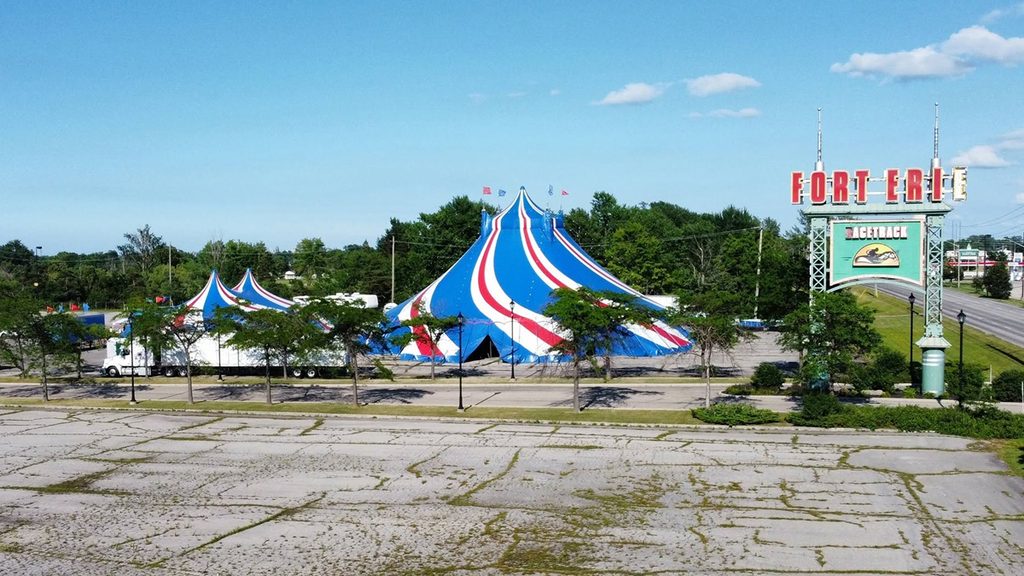
Who Still Raises a Tent Today?
The short answer is: more people than you might expect, though few of them look like Barnum.
Start with Ringling itself, where Feld announced a relaunch in May 2022. The new show opened September 29, 2023, in Bossier City, Louisiana, with an all-human cast and no animals. In 2026, its tour, billed as The Greatest Party on Earth, launched in Tampa in January with 65 performers from 17 countries and creative direction by London-based Dan Shipton and Ross Nicholson, playing arenas, not tents.
Under canvas, the survivors fall into types.
The traditionalists include Carson & Barnes Circus, based in Hugo, Oklahoma, which has toured since the 1930s and is regularly described as one of the last big-top, three-ring shows. Animal-rights groups say it still features elephants.
The family dynasties include Circus Vazquez, which has operated since 1969 and is billed as the largest family-owned big top circus in America. Its tent seats close to 2,000 and is climate-controlled. This year it has played mall parking lots, from Burlington Mall in Massachusetts through Tysons in Virginia. The family’s smaller Flip Circus runs a tent of about 750 seats.
The Zoppé Family Circus is a one-ring show where no seat sits more than 20 feet from the action, and the family says its tradition stretches back more than 180 years.
The reinventors include UniverSoul Circus, which opened in 1994 in the parking lot of Atlanta Fulton County Stadium. Cedric Walker built it as a one-ring show with hip-hop, R&B and global acts, and it has drawn more than 25 million people. It returned to Atlanta under its big top in May.
The fundraisers start with the Shrine Circus, whose first show ran on February 26, 1906, in Detroit: a one-ring show for about 3,000 people that raised money for the Moslem Shrine Temple. By 1925 it had grown to three rings. By the 1980s, Shrine circuses drew more attendance than any other circus in America. Units play arenas and civic centres in both countries.
And in Canada, the biggest tent of all is Cirque du Soleil‘s. This summer its touring creation ECHO played under the Grand Chapiteau at the Old Port of Montréal.
What Replaced the Big Top for Families
Three things took the circus’s place, and all three borrowed its DNA.
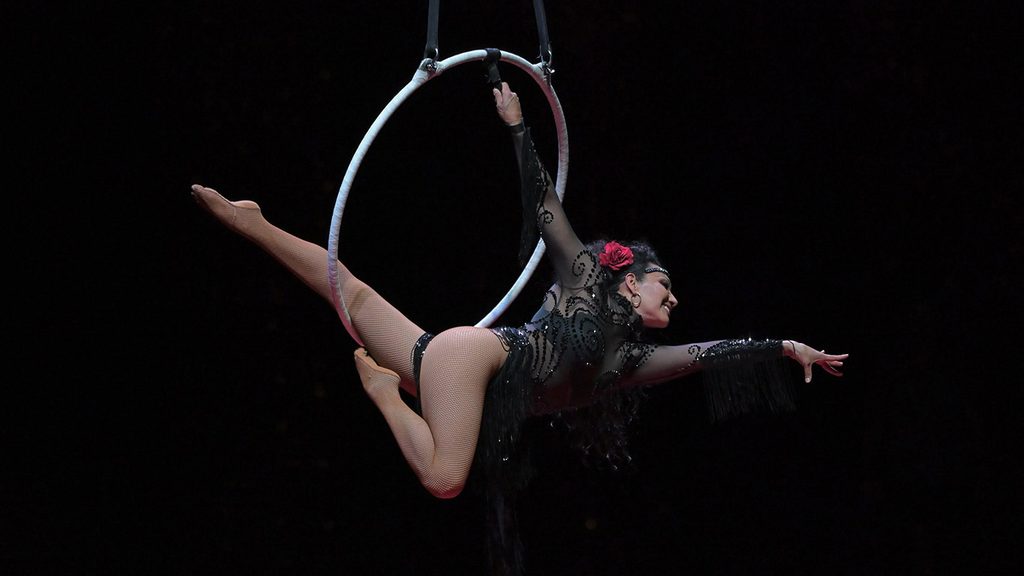
The first was the arena spectacle. Once the tent was gone, the circus’s owners turned to branded, character-driven touring. Feld Entertainment built a portfolio of shows including Disney On Ice, Monster Jam, Marvel Universe Live and Jurassic World Live Tour. Each was specialized with its own characters and stories, and each kept a little of the circus in it. The tour, the two-hour runtime, the reserved seat, the souvenir stand: the template survived even when the tent did not.
For venues and organizers, the swap rewrote the job. Where advance cars and billposters once built anticipation across a county, an on-sale date and a local promoter now do the work. The lot beside the rail yard became a loading dock behind an arena. The circus once arrived like weather and left by dawn. Now it arrives as a ticket and a start time, and the surprise lives in the performance.
The second was the reinvented circus, and it came from Quebec.
Cirque du Soleil was founded on June 16, 1984, in Baie-Saint-Paul by two former street performers, Guy Laliberté and Gilles Ste-Croix. To win provincial funding, Ste-Croix walked 90 kilometres to Quebec City on stilts. Its first production, Le Grand Tour du Cirque du Soleil, played Quebec for 13 weeks in the summer of 1984. A year later the tour stopped in Ottawa, Toronto and Niagara Falls. In 1987 it took Le Cirque Réinventé to the Los Angeles Arts Festival.
It had help: the National Circus School opened in Montreal in 1981, when contemporary circus companies were virtually unknown in Canada, and helped produce a generation of artists for Cirque du Soleil, Cirque Éloize and The 7 Fingers.
Director Franco Dragone’s Nouvelle Expérience made Cirque du Soleil profitable by 1990.
The formula was clear: Cirque du Soleil kept the tent and dropped the menagerie. It kept the awe and swapped the sideshow for a single theatrical storyline, assigned seats and a creative team that treated each production as a designed object. The old circus sold amazement by volume; the new one sells it by design.
It also shows how fragile touring is. In 2019, Cirque du Soleil earned about $1 billion in revenue and $157 million in profit, according to its CEO. On March 19, 2020, it shut down 44 productions and laid off 4,679 people, about 95 percent of its workforce. It filed for creditor protection in Canada on June 29, 2020, and emerged that fall under the control of its creditors, led by Catalyst Capital Group.
The third replacement is quieter: the parking-lot big top, the fairground tent, and the civic-centre fundraiser. They run on a smaller budget and a closer relationship with the audience, and they remain the circus’s closest living relatives.
Ready to Find the Circus Again?
The field at Holland and Wellington is long gone, and so are the four trains and the three-mile parade. What a family got from that Ottawa afternoon in 1913 was a single, unrepeatable thing: a world arriving at the edge of town and leaving by morning.
That feeling is still on the road. It lives in a one-ring tent under a mall’s lights, in a Cirque du Soleil big top on the Montréal waterfront, and in an arena where a Ringling acrobat leaves the ground in a building that holds thousands.
The circus did not die; it moved indoors, shrank its animals out of the ring, and learned to sell tickets in advance. The only thing left to supply is the family.
So pick a night: browse the nearest circus events near you, choose a seat close, and bring someone small.