A corporate conference is one of the few marketing and culture investments a company makes where the bill arrives before the payoff and the payoff is hard to measure even after it lands. That tension is exactly why so many event leads freeze the moment leadership says “let’s do a conference this year.”
The global events industry is on pace to reach roughly $1.46 trillion this year, and corporate conferences and trade shows now make up the single largest line item in business-to-business marketing budgets, accounting for close to a third of total spend at the average B2B organization.
That scale means the standards attendees carry into your event are shaped by the best conferences they’ve attended anywhere, not just in your industry.
This guide walks through the entire process of how to organize a corporate conference, from defining why the event should exist to proving it was worth the money afterward, with the budgeting math, timelines, and benchmarks that separate a conference people talk about from one they merely sat through.
Start With the Reason the Conference Should Exist at All
Before a single venue is contacted, the planning team needs a plain-language answer to one question: what is this conference supposed to change?
A training-focused internal summit, a client-facing thought-leadership event, a product launch, and an industry-wide gathering all demand different rooms, different speaker rosters, and different pricing, so conflating them is one of the most common early mistakes a first-time organizer makes.
Seasoned conference producers describe this as knowing what “type” of event you’re building before you build it, because a gathering meant to foster tight-knit community feels wrong when it’s run like a trade show floor, and a trade show feels thin when it’s programmed like an academic symposium.
Once the format is settled, the goals need to move from aspirational to measurable.
A goal like “improve engagement” gives a planning team nothing to aim at, while a goal like “achieve an 80 percent session-completion rate across three workshop tracks” gives every subsequent decision, from agenda design to venue layout, a benchmark to be judged against.
This is the same logic behind the SMART framework that shows up across nearly every professional event-planning methodology: specific, measurable, achievable, relevant, and time-bound targets that the whole team can be held to.
Write these goals down, share them with every stakeholder before logistics begin, and revisit them at the halfway point of planning, because a conference that drifts from its original purpose by month four is very hard to correct by month ten.
Build a Budget That Can Survive Contact With Reality
Budgeting is where good intentions meet bad surprises, and 2026 has made that collision more expensive than usual.
Industry cost trackers show the average cost per meeting attendee per day climbing roughly 4.3 percent to around $169, driven by simultaneous increases in food and beverage, venue rental, and skilled labor.
Food and beverage alone typically represents 40 to 50 percent of total event costs at most venues in the United States, which is why experienced corporate event planners now build proposals with 25 to 30 percent of headroom above their initial catering estimate rather than trusting the first quote a venue provides.
A realistic corporate conference budget accounts for venue rental, catering, audiovisual production, speaker fees and travel, attendee travel and lodging if the company is covering it, signage and printed materials, branded merchandise, and a contingency line, and that contingency line should sit at 10 to 15 percent of the total budget so an unexpected vendor invoice or last-minute AV upgrade doesn’t blow the entire plan.
The most useful number most planners never calculate is their break-even point, and the formula is simpler than it sounds:
Break-even equals fixed costs divided by the difference between ticket price and variable per-attendee costs.
Fixed costs are what it takes to seat the very first attendee, things like the venue deposit and headline speaker fee, while variable costs are what each additional attendee adds, like a catered meal or a badge.
Once that number is known, a planner can test different price points and marketing list sizes against it before committing to a date, rather than discovering the shortfall the week before doors open.
On the revenue side, sponsorships and exhibitor fees remain one of the most effective ways to offset rising costs without cutting the experience attendees actually notice, and nearly 65 percent of meeting professionals report their own meeting expenditures have risen year over year, which makes that offsetting revenue more valuable than ever.
Assemble the Team and Work Backward From the Date
No one runs a conference alone, and trying to is the fastest route to burnout and dropped details.
A functional structure starts with a single event lead who owns final decisions, then breaks the remaining work into owned lanes: budget and finance, venue and logistics, speaker relations, marketing and communications, registration and technology, and on-site operations.
Larger conferences benefit from subcommittees under each of those lanes, particularly for hospitality and attendee engagement, because those are the areas where understaffing shows up most visibly to the people in the room.
Once the team is assigned, the entire plan should be built backward from the event date rather than forward from today. Major conferences typically begin serious planning 10 to 12 months out, and that lead time isn’t padding, it’s leverage: venues booked a year ahead consistently secure better rates and more date flexibility than the same request made six months out, and the same logic applies to in-demand keynote speakers, whose calendars and fees both tighten as the date approaches.
A rough backward-built calendar looks like this in practice:
- Venue and date locked at 10 to 12 months
- Speaker outreach and sponsor conversations beginning at 6 to 9 months
- Branding, merchandise, and registration opening around the 3 to 6 month mark
- The final schedule, staffing assignments, and vendor confirmations locked in the month before doors open.
Treat this calendar as a living document that the whole team can see, not a file that sits in one person’s inbox, because the moment one workstream slips, every workstream downstream of it needs to know.
Choose a Venue That Serves the Program, Not the Other Way Around
Venue selection is where a conference’s tone gets set before a single attendee walks in, and it’s also where budgets get eaten alive by fees no one saw coming.
Hotel and conference-center pricing in 2026 typically runs from $500 to $6,000 per day for room rental alone depending on size, city, and season, with audiovisual packages adding another $150 to $3,000 and catering running $15 to $90 per person depending on the meal and service style.
The venues that protect a budget best are the ones that bundle meeting space, catering, and AV into a single package, because piecemeal sourcing from outside vendors often triggers additional fees the venue charges just for letting outside suppliers on-site.
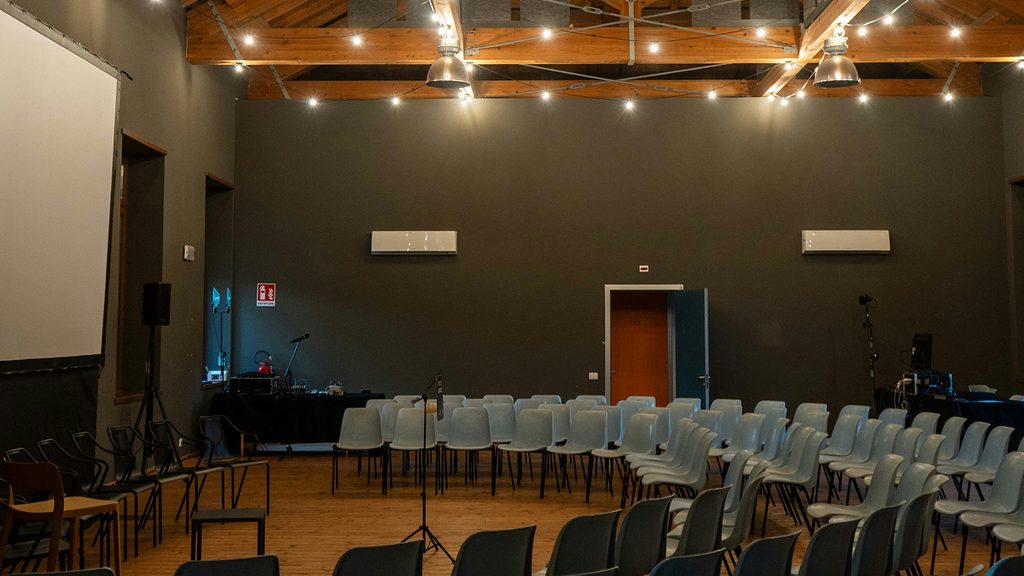
Beyond price, the venue needs to match the actual mechanics of the program: how many concurrent sessions will run, how many breakout rooms are needed, whether there’s a natural space for informal networking outside the main hall, and whether the technology infrastructure can support the Wi-Fi load of several hundred people streaming, uploading, and video-calling simultaneously.
Accessibility, on-site or nearby accommodation for multi-day events, and the venue’s track record hosting comparable-sized events all belong on the shortlist criteria, and it’s worth asking directly what happened the last time a similar group used the space, since experienced venue staff are one of the biggest hidden advantages a first-time organizer can access.
The format decision belongs here too.
Fully in-person formats now represent roughly 28 percent of business events, fully virtual around 26 percent, and hybrid formats have become the largest single category at 46 percent, largely because hybrid delivers meaningful cost savings, sometimes as much as 60 percent per attendee compared to a fully in-person build, while still preserving the in-room energy that drives most of a conference’s networking value.
That said, 97 percent of event professionals still rate in-person events as important or very important to their overall strategy, so hybrid should be treated as an extension of the room rather than a replacement for it, with a dedicated team handling the livestream and virtual engagement so the in-person program never has to compromise itself to accommodate the camera.
Book Speakers Early and Design an Agenda With a Narrative
Speaker booking has its own calendar, and it rarely aligns neatly with the rest of the planning timeline.
For a typical corporate keynote speaker, six to nine months of lead time is standard, but anyone hoping to land a celebrity, a bestselling author, or a former public official should expect to start that conversation nine to twelve months out or earlier, since those speakers’ calendars and fee schedules fill from the top down.
Compensation should be documented, applied consistently, and communicated transparently, because speakers talk to each other, and inconsistent terms damage a conference’s reputation in a professional community faster than almost anything else.
It’s also worth budgeting for the reality that chasing confirmations, slide decks, and technical requirements from booked speakers is often the single most time-consuming task on the entire planning calendar, so building in buffer time and a designated point of contact for speaker logistics pays for itself.
The agenda itself deserves as much design attention as the branding does. A strong program isn’t a random stack of good talks; it’s a sequence that builds momentum, groups related ideas so attendees can draw connections across sessions, and alternates between higher-intensity content and lower-intensity social time so people aren’t mentally exhausted by hour three.
Overprogramming is a remarkably common and easily avoidable failure: attendees need real breaks to process what they just heard, follow up on messages, and have the hallway conversations that often turn out to be the most valuable part of the entire event.
Balancing formal keynotes and workshops against unstructured networking time, and using pre-event surveys to shape session topics around what attendees actually want to learn, both consistently correlate with higher satisfaction scores in post-event feedback.
Market the Event and Bring Sponsors In Without Losing Control of the Room
A well-designed conference still fails if the seats stay empty, and promotion needs to start the moment registration opens, not a few weeks before the date.
Early-bird pricing, typically introduced about two months before the event, rewards the attendees who commit early and gives the planning team a meaningful read on final headcount well before the deadline crunch.
Email marketing to an existing customer or member base, targeted social promotion, and outreach to trade press all belong in the plan, and companies that already run experiential marketing report allocating a meaningful share of their overall marketing budget to it: nearly 80 percent of B2B marketers now say they fund experiential and event marketing directly, with many committing 11 to 30 percent of their total marketing budget to the category.
Sponsorship is where a lot of conference budgets find their margin, but it’s also where organizers most often erode attendee trust.
The healthiest sponsorship relationships give sponsors visible presence, branded touchpoints, and access to attendees without handing them a stage disguised as a sales pitch. Attendees who paid to be in the room can tell the difference between a session that happens to be sponsored and a session that is functionally an infomercial, and the latter shows up directly in post-event satisfaction scores.
Sponsors, for their part, are increasingly sophisticated about what they expect in return, and a growing share of event organizers report year-over-year growth in sponsorship revenue specifically because they’ve gotten better at packaging measurable exposure rather than vague “brand visibility” promises.

Choose Technology That Earns Its Place in the Stack
Modern conference planning runs on a handful of connected tools rather than one master platform: a registration and ticketing system, a customer relationship management tool to track attendee communications, a project management tool the whole planning team can see, and, for hybrid or virtual components, a dedicated event platform capable of handling livestreaming and audience interaction at scale.
The event technology landscape has consolidated quickly, and adoption numbers reflect how central these tools have become.
Hybrid event platforms now see adoption above 80 percent among organizations running mixed-format events, mobile event apps with wayfinding and interactive floor plans are used by more than three-quarters of mid-to-large conferences, and artificial intelligence tools for agenda personalization, attendee matchmaking, and post-event analytics are expected to see increased use by 95 percent of organizers in the coming year.
None of this technology should be adopted for its own sake. The test for any tool is whether it removes friction attendees actually feel, whether that’s a check-in line that used to take twenty minutes or a networking feature that actually connects people with shared interests instead of just listing names.
A registration and check-in flow that fails on-site is one of the fastest ways to sour a first impression, so every piece of software in the stack deserves a real stress test before the event, not just a vendor demo.
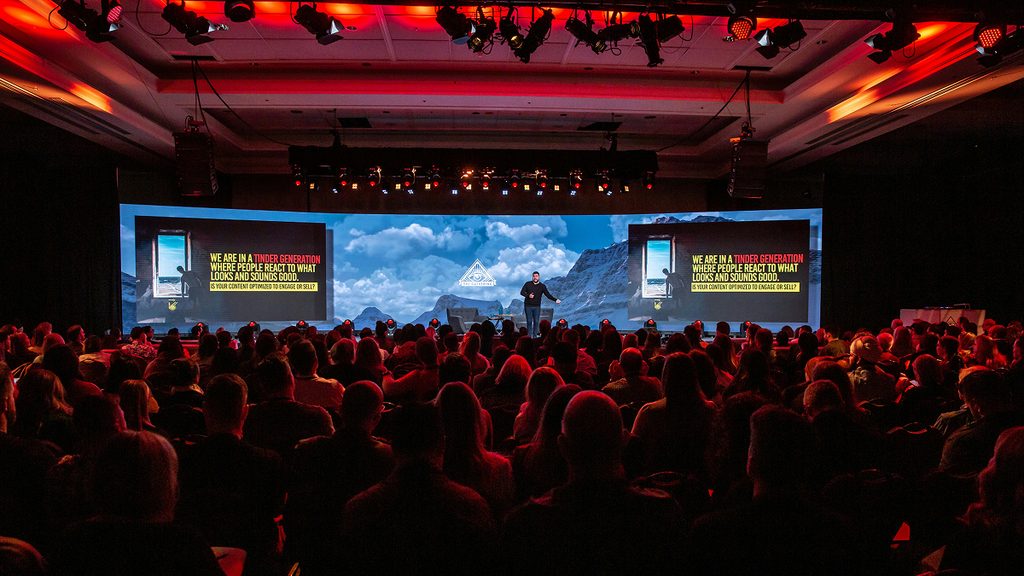
Lock Down the Final Details in the Last Month
The final thirty days are where planning converts into execution, and the work shifts from strategy to confirmation.
Vendors and speakers need a final agenda, technical specifications, and a single point of contact two to four weeks out, and dietary requirements and special requests should be reconfirmed directly with catering staff rather than assumed from an earlier form.
On-site materials, including registration desks, name badges, signage, and any branded merchandise, need to be organized and staged well before doors open, and a full walk-through of the venue in the days before the event, testing every piece of equipment and reviewing emergency procedures with the on-site team, catches the kind of problems that are cheap to fix in advance and expensive to fix live.
Recruiting more volunteers than the plan technically requires is standard practice among experienced organizers, since a predictable percentage of any volunteer group will drop out in the final days, and having a few trusted, experienced people on the floor who can make decisions without needing to be managed is often what keeps a conference running smoothly when something inevitably goes sideways.
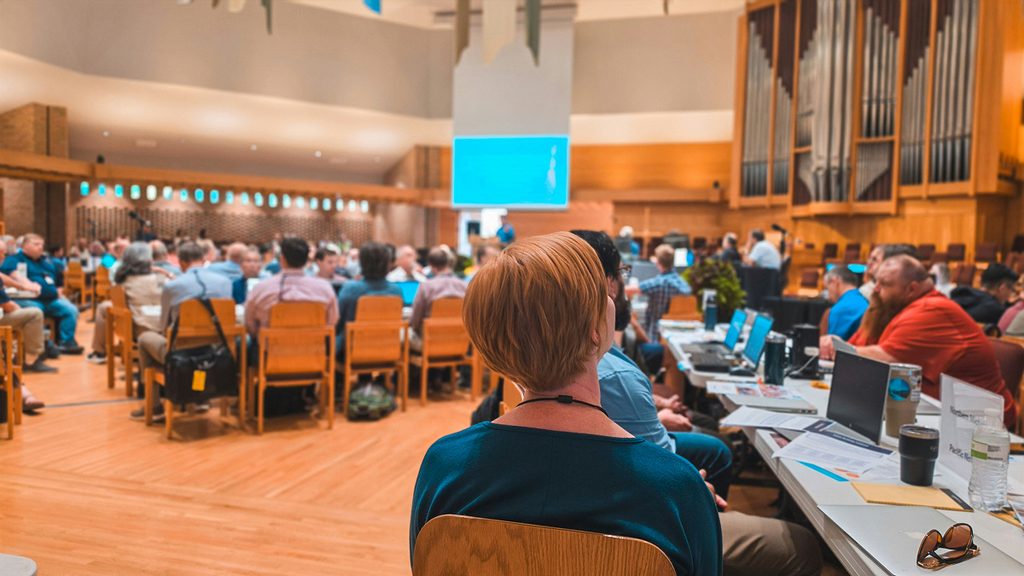
Measure What Actually Happened at Your Corporate Conference and Prove the Value
The event isn’t finished when the last attendee leaves the building; the measurement phase is what turns a one-time expense into a repeatable, defensible program.
Event return on investment is calculated by subtracting total event cost from total event value, dividing by total event cost, and multiplying by 100, and that value figure should include direct revenue from sponsorships or ticket sales alongside pipeline generated, new contacts captured, and content assets produced for later use.
The pressure to prove this number has intensified: 95 percent of event teams now say demonstrating ROI is a top priority, and while proving it convincingly remains genuinely difficult, the share of organizers who say they struggle with it has dropped from roughly 70 percent a few years ago to about 40 percent today as attribution tools and post-event analytics have matured.
Business leaders increasingly back events with real money because of the returns they see: more than half say trade shows and conferences deliver a higher return than any other marketing channel, and industry benchmarks put the average return at close to $21 for every dollar spent on trade show and conference activity, with a meaningful share of large enterprises reporting returns of five to one or better.
Getting a usable version of that number requires collecting feedback while it’s still fresh.
Brief post-event surveys sent within a day or two of the conference, or handed out physically before attendees leave, consistently produce more honest and specific responses than a survey sent a week later once the memory has faded.
Reviewing that feedback against the original goals set at the start of planning, rather than against a vague sense of “how it felt,” gives the debrief teeth, and sharing the resulting numbers with stakeholders and sponsors closes the loop that makes it easier to secure budget for the next event. A short internal post-mortem meeting, focused specifically on what should change next time rather than relitigating what already happened, is the single habit that separates organizations that improve their conference year over year from ones that essentially rebuild the wheel every time.
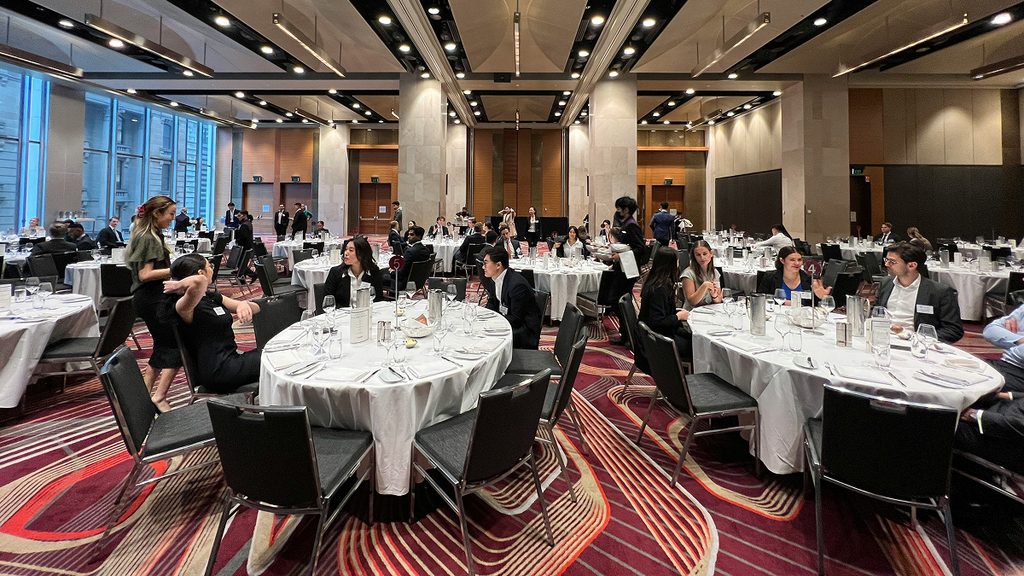
Corporate Conference Success: The Difference Between an Event That Happened and One That Worked
Every element covered here, the budget math, the speaker timeline, the venue contract, the sponsorship deck, exists to serve one outcome: attendees leaving with something they couldn’t have gotten by staying at their desk.
That’s the standard a conference is actually judged against, whether or not anyone says it out loud.
Companies that treat conference planning as a checklist to survive tend to produce events that are technically fine and instantly forgettable. Companies that treat it as a strategic investment, with clear goals set before a venue is ever contacted, a budget built with real contingency, and a measurement plan in place before the first ticket is sold, tend to produce events people request again the following year and defend when the budget conversation comes around.
The data backs this up plainly: organizations running events with genuine strategic backing are the ones seeing rising budgets, growing sponsorship revenue, and improving ROI confidence, while the ones treating conferences as an afterthought are the ones still struggling to explain what the money bought.
The mechanics in this guide are the same regardless of company size or industry.
What changes is the discipline with which they’re applied, and that discipline is almost always the actual difference between a conference and a great one.