Near the end of his life, Frédéric Chopin was still a student of other people’s music. He turned to Luigi Cherubini’s textbook on counterpoint and set three of its fugues down for piano.
Adam Piotr Żukiewicz found a reason to play those studies in their own right. He also wanted to hear what might happen to a familiar Chopin sonata if the listener met the exercises first.
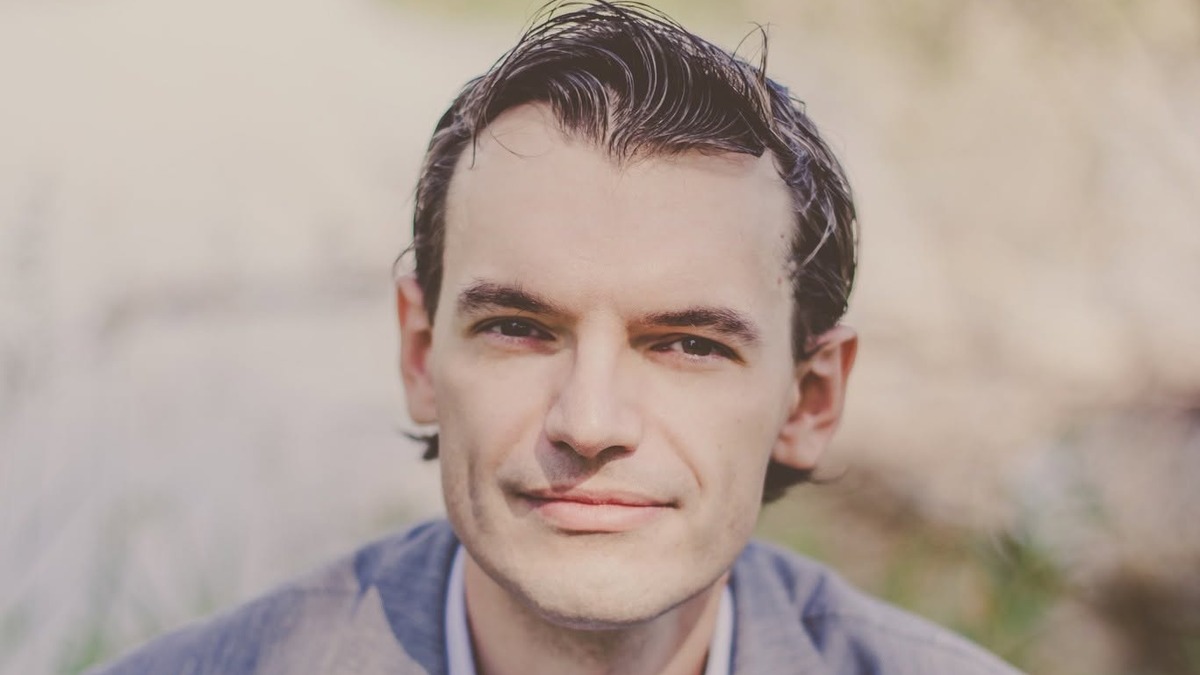
Adam Piotr Żukiewicz is a Polish concert pianist, chamber musician and piano professor whose work connects the familiar classical repertoire with lesser-known pieces and new music. His career has taken him from Jawor through studies in Italy, Britain, the United States and Canada.
A Pianist From Jawor Finds His Way to Canada
Żukiewicz came from Jawor, Poland.
By the time his name appeared in Canadian coverage of the 2012 Shean Piano Competition, he was studying in Toronto and had already lived and trained in several countries. He had been a music scholar at the United World College of the Adriatic in Duino, Italy, and studied at the Royal Academy of Music in London before moving to Indiana University.
In Duino, he studied solo and chamber music in a setting that gave collaboration a place alongside his own work at the keyboard. He completed a master’s at Indiana University before going to the University of Toronto for his doctorate.
In Toronto, he worked with Marietta Orlov and James Parker. The Shean Competition’s profile of Żukiewicz catches him in that period, when he was still pursuing the doctorate and had placed second at the Pacific Piano Competition in Richmond, British Columbia.
He also won the TD Canada Trust Music Competition in Elora in 2011.
The Shean first prize followed in Edmonton in 2012. Two years later, he was a medalist at the Maria Canals International Piano Competition in Barcelona. These were public measures of his progress as a player.
The work he chose for the doctorate shows something else he was trying to do with that playing. He wrote about the musical structure of Chopin’s Third Piano Sonata and the decisions it leaves open to a performer.
He would later teach at the University of Toronto and St. Michael’s Choir School before developing his career at the University of Northern Colorado.
In a 2026 interview with Polish Radio, Żukiewicz talked about bringing students into contact with the culture he had known while growing up. He saw a practical consequence for how they heard Chopin. There are things a student can work out in a score, and there are rhythmic and cultural associations that become easier to recognise after spending time in the place from which the music came.
The Chopin Project Begins With a Composer Doing His Homework
Żukiewicz’s doctoral study examines Chopin’s Third Piano Sonata in B minor, Op. 58. The subject is specific.
He looks at the way Chopin handles form in the first three movements and at what happens when a performer has to make ambiguous features of that form audible. That is the sort of research that can change how a pianist plays even when nobody in a recital hall has read it.
One of its consequences is a different attention to the lines inside the music. A long melody can be immediately available to the listener while another voice makes a small change underneath it. The pianist has to decide how clearly to expose that change.
Bring it too far forward and you can lose the line the ear was already following. Let it disappear and you may make the next arrival harder to understand.
In 2021, Żukiewicz received U.S. government grant support for his Chopin Unknown research and performance project. It brought the three studies after Cherubini into contact with better-known music by Chopin. The Canadian Chopin Society’s description makes that pairing central to the project, and Żukiewicz has explained what it has to do with his sense of Chopin’s later writing.
Żukiewicz came across the studies in 2019, two years after Jean-Jacques Eigeldinger’s edition made them available in print.
He had already written his dissertation on the Third Sonata by then, so the new material gave him a way back into a question he knew well. He later described his interest in how transparent Chopin could make several lines sound even in some of the densest parts of the late works.
In a sonata, that kind of writing can have an effect at a moment when the music needs to change direction. A theme may appear to have finished, and a small figure in a less prominent part can be the thing that makes the transition plausible. The interest in the fugues is partly in what happens if that small figure has the independence of a voice rather than the anonymity of background.
A fugue gives different voices a subject to take up in turn. The difficulty is hearing each voice as having a direction of its own and also hearing what happens when those directions cross.
Cherubini had set out such problems as part of a method of teaching composition. Chopin’s study of that method survives in the three transcriptions for piano.
Calling them studies puts the emphasis in the right place. A person encountering Chopin only through the famous concert works can hear him as a composer who arrived with an immediately recognisable manner.
The fugues make it possible to hear him looking at somebody else’s method. A pianist can give those lines the independence a singer would give a part in a vocal ensemble, even though they’re all coming from one keyboard.
In the Polish Radio interview, Żukiewicz connected that work to the late mazurkas and the Third Sonata. He spoke about the intensity Chopin could create while using fewer notes.
That’s an idea a listener can test. Follow an inner voice near the end of a phrase and there may be a great deal going on even if the visible effort at the piano seems to diminish.
He has also spoken about playing Chopin’s Op. 2 variations, based on a theme from Mozart’s Don Giovanni. They give him a different way to broaden an account of the composer. They are the work of a much younger musician, and in Żukiewicz’s description part of their interest is how far they sit from what listeners have learned to expect from mature Chopin.
The research project goes toward the late work through the exercises. The variations let him take a step back toward a composer still developing the language he would use later.
The performances of Chopin Unknown have put the research in front of listeners in Toronto and New York. Żukiewicz has also made his performances of the fugues available through his recordings online. That gives the project a second life beyond a recital, because somebody can listen to a study on its own and then return to a sonata they already know.
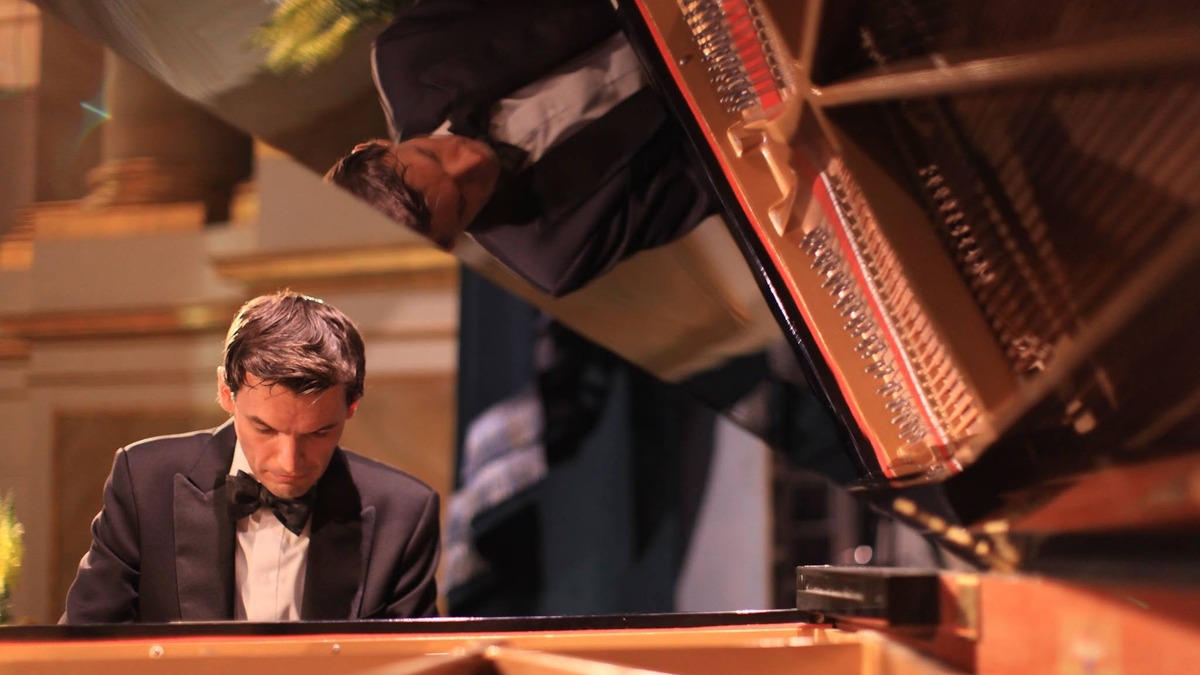
The Beginnings Brings Beethoven and Oscar Peterson Into One Room
Żukiewicz’s debut solo album, The Beginnings, came out on the Polish DUX label in 2018. Its five composers are Beethoven, Chopin, Jacobus Kloppers, Krystian Kiełb and Oscar Peterson. The sequence gives a listener a chance to hear what Żukiewicz means by connecting familiar and less familiar music.
Beethoven and Chopin Set the Terms of the Album
Beethoven’s Piano Sonata No. 27 in E minor, Op. 90, opens the record. It has only two movements and puts very different kinds of activity next to each other.
The first can turn quickly between agitation and more inward material, while the second gives the ear a melodic line that keeps finding its way back. A pianist can establish a great deal about how the rest of the album will move by the way he makes that contrast.
Chopin’s three Mazurkas, Op. 59, follow. They have a dance’s shape available to them, and their accents and timing can pull against a simple count. Żukiewicz’s later explanation of the works in connection with his research gives another reason to listen for how much is happening inside what sounds like a relatively spare texture.
The two composers also supply a comparison the ear can make without looking at the titles. Beethoven can turn a phrase by changing its weight or direction, while Chopin can make a small movement inside a line feel consequential. The order sets up a listener to hear changes in a theme or in the space around a sound, which matters when the album moves to the other composers.
Jacobus Kloppers and Krystian Kiełb Change the View
Kloppers’s Reflections takes up much of the centre of the album. It begins with a prologue, establishes a theme, proceeds through eleven variations and closes with an epilogue. The DUX track listing gives the individual variations names, among them De Zilveren Vloot, The Anglo-Boer War and The Cosmopolitan.
Kloppers was born in South Africa and made a career in Canada. The succession of names in Reflections brings traces of that history into a piano work, and the variations give Żukiewicz a way to change the surroundings of a tune repeatedly. A listener arriving from the Chopin can start by noticing what the theme keeps through those changes and how far the character of a few notes can travel.
Kiełb’s Obrazy, or Paintings, was written for the album. Its five pieces refer to images including The Starry Night, The Scream and The Persistence of Memory.
The titles give a listener something to picture, while the piano can proceed on its own terms. A painting is available all at once, and a short piano piece has to decide which part of an impression to give the ear first.
The two contemporary works therefore ask for different kinds of attention. In Kloppers, a listener can keep hold of the thematic reference while the variations proceed.
In Kiełb, the next title can supply a new starting point for what the instrument is about to suggest. The music has already moved a considerable distance from Beethoven, and there are still ways to follow the kinds of change the opening sonata introduced.
The choice of Kiełb also began a relationship that went beyond the solo album. When Żukiewicz and his Colorado Piano Trio colleagues wanted to commission music from the countries they came from, they turned to Kiełb for the work from Poland. It gives listeners a chance to hear what changes when a composer who had written five solo piano pieces for Żukiewicz has a violin and cello to work with as well.
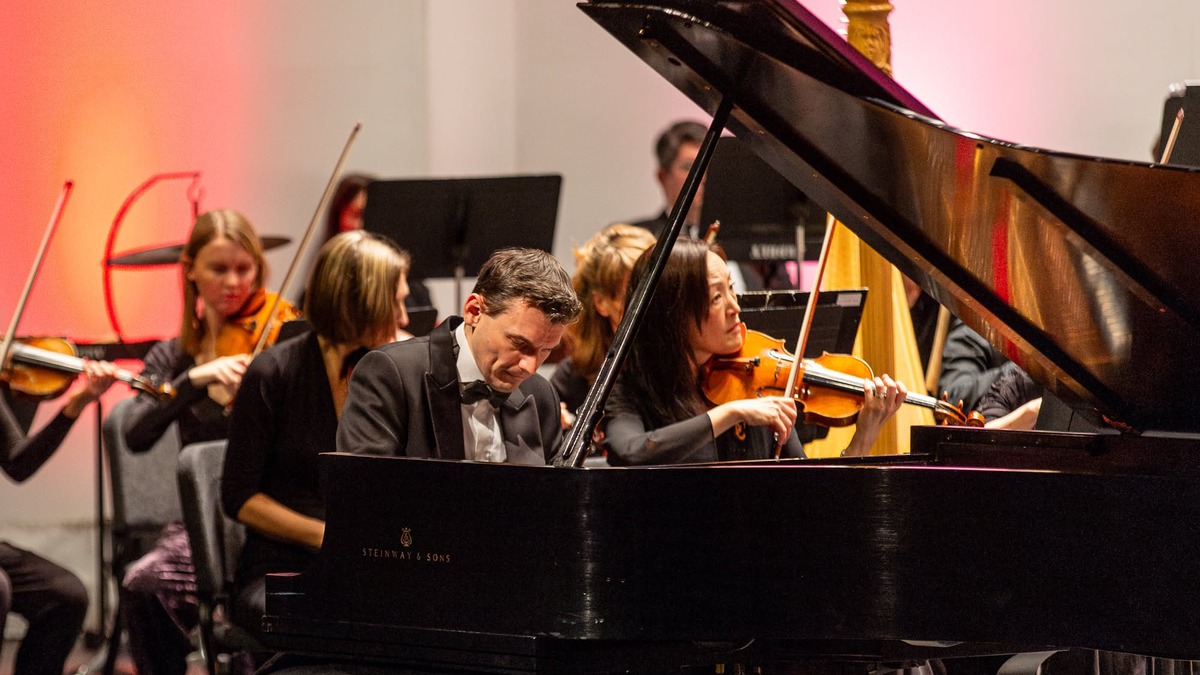
Oscar Peterson Supplies the Last Word
The last track is Peterson’s Goodbye Old Friend, in an arrangement by Don Thompson and Żukiewicz. Peterson’s music brings a particularly Canadian voice into a record made by a pianist whose formation had already carried him across several countries.
The change to jazz material at the end also brings the opening title, The Beginnings, into better focus. Several of the pieces are beginnings for things Żukiewicz would do elsewhere.
The arrangement is another form of collaboration. There is a tune and the work of the musician who wrote it, and then there is the decision about what another pianist can carry forward into a performance of his own. Thompson’s name in the credits makes the adaptation a shared task, one more connection to the country where Żukiewicz had studied and begun developing his career.
Listening from Beethoven through to Peterson makes it possible to hear a common problem beneath different musical languages. A single pianist has to make one line important and still give the other parts enough room to explain what that line is doing.
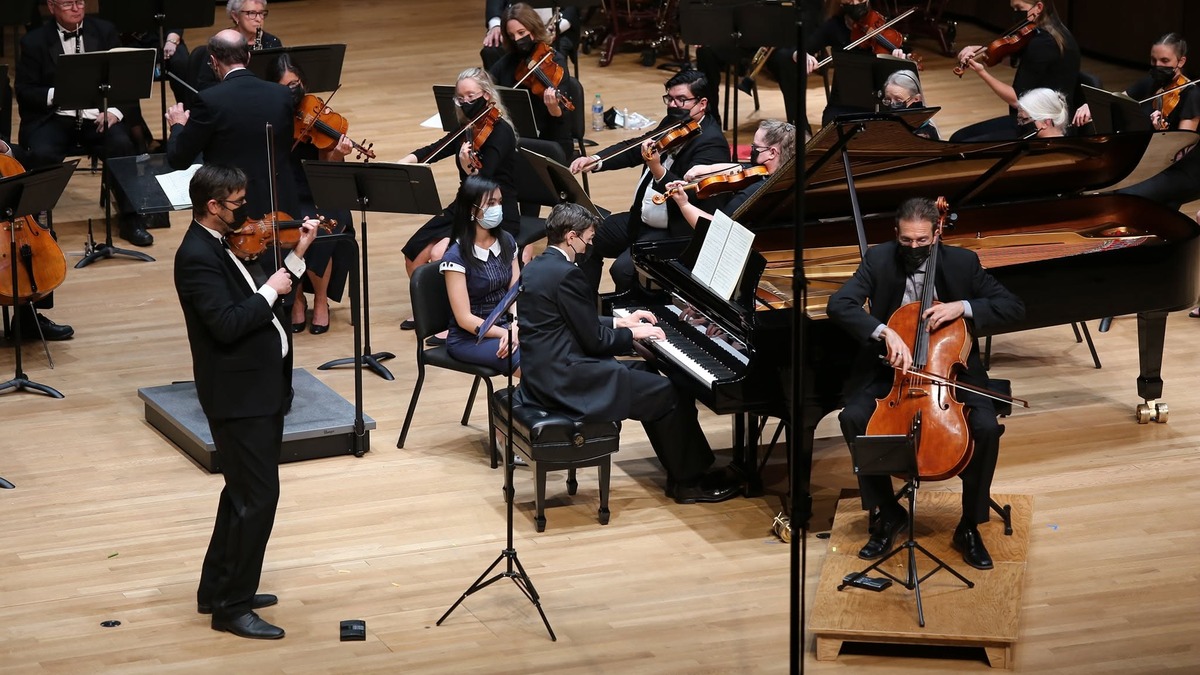
Chamber Music Gives the Pianist Other Voices to Follow
Żukiewicz co-founded the Max Joseph Piano Trio in Munich in 2009 with violinist Guido Gaertner and cellist Benedikt Strohmeier. Gaertner and Żukiewicz had met while studying in the United States and had already played together.
Their trio took that relationship into a setting where both musicians had to respond to a third voice.
He also co-founded the Colorado Piano Trio with violinist Jubal Fulks and cellist Gal Faganel. The group began collaborating in 2016 as colleagues at the University of Northern Colorado.
Its recordings for Colorado Public Radio included chamber music by Clara Schumann and Leonard Bernstein. Those two composers give the pianist and strings very different ways of working together, even though the instrumentation stays the same.
A piano has an immediate attack and enough range to cover much of the space the other two instruments occupy. That creates a practical question for a pianist playing chamber music.
Sometimes the instrument needs to make the beginning of a phrase clear so that a violin or cello can take it up. Sometimes the pianist has to wait for the sustained sound of a string line to find its direction before supplying anything underneath it.
There’s a Canadian example of that work on Calling, the Centrediscs recording of John Beckwith’s instrumental music. Żukiewicz and clarinetist Peter Stoll play Beckwith’s Follow Me.
The clarinet supplies yet another way for an instrumental line to begin and end, with a breath involved in the phrasing. The pianist’s sense of the span of that breath becomes part of what the listener hears.
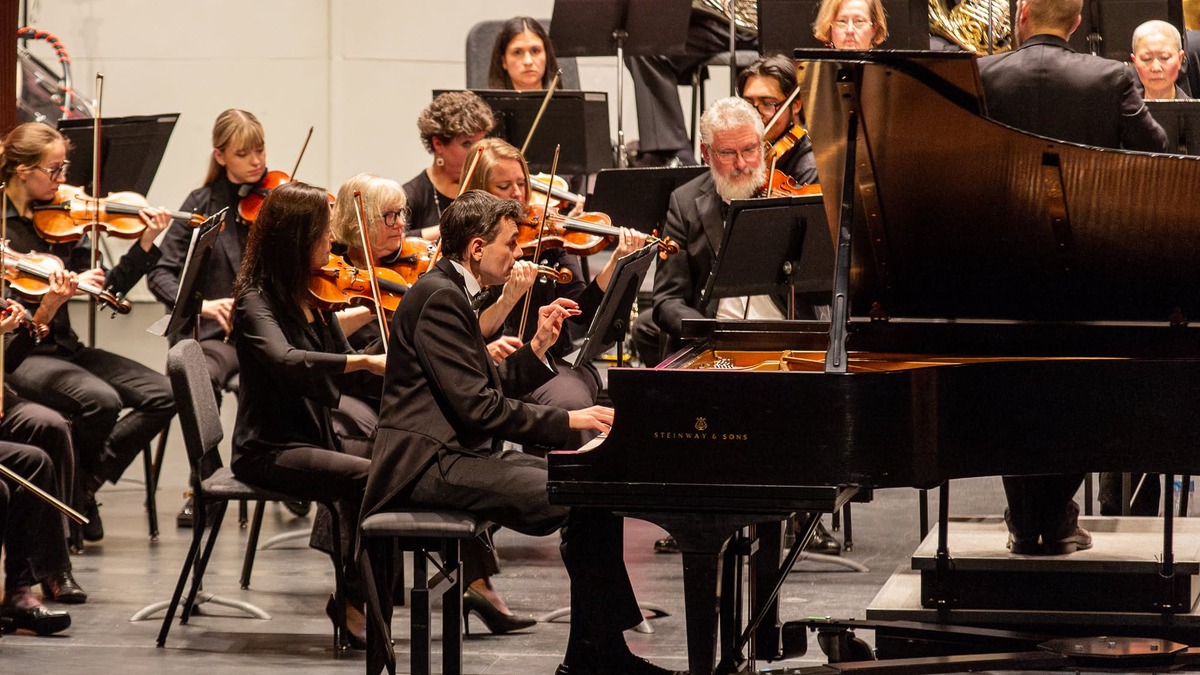
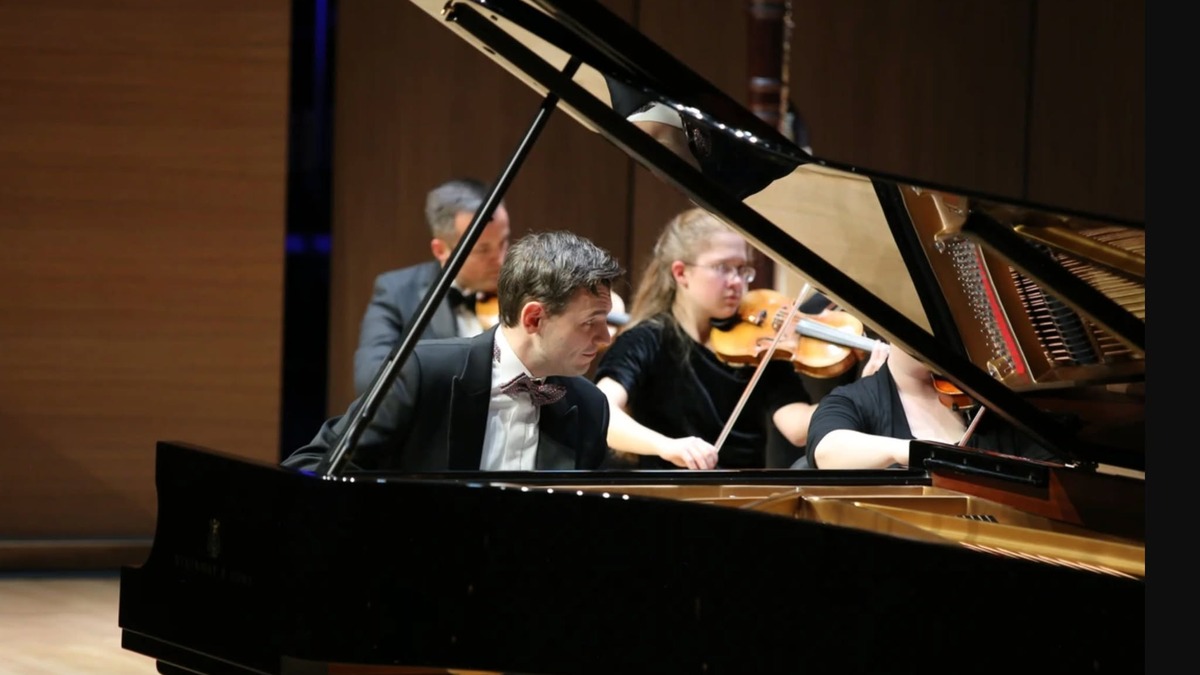
The concerto work offers a different scale of the same exchange. Żukiewicz has played Saint-Saëns’s Fifth Piano Concerto with the Boulder Chamber Orchestra, a piece in which the keyboard changes roles within a large sound.
The instrument may be the clearest thing in the room at one point and an answering voice soon afterwards. A player with years in a trio has already spent a great deal of time listening for those shifts on a smaller scale.
Transatlantic Makes the Trio’s Backgrounds Part of the Programme
The Colorado Piano Trio released Transatlantic on Centaur in March 2025. It puts Poulenc and Leonard Bernstein next to works by living composers.
The group wanted to represent Poland, Slovenia and the United States, the three countries its players come from. The idea gave the commissioning process a clear reason to go in several directions.
Kiełb supplied Alter Ego and Slovenian composer Blaž Pucihar wrote the Belmont Piano Trio. A call for scores gave the musicians a separate way to look for American pieces.
The album’s older works set a different kind of challenge. Bernstein’s student trio gives the players one version of an American composer at the beginning of his working life, and Poulenc gives the record another twentieth-century point of reference.
For Żukiewicz, it was also an opportunity to use the same kind of programming on a group record that he had used on The Beginnings.
The Boulder Collaboration Began With a Meeting
Żukiewicz met Boulder Chamber Orchestra conductor Bahman Saless in 2022. The two found enough subjects in common to keep talking, and a Colorado Piano Trio recital was the first result.
The pianist then worked with the orchestra on Mozart’s E-flat concerto, K. 449, before the partnership reached Saint-Saëns’s Fifth Concerto.
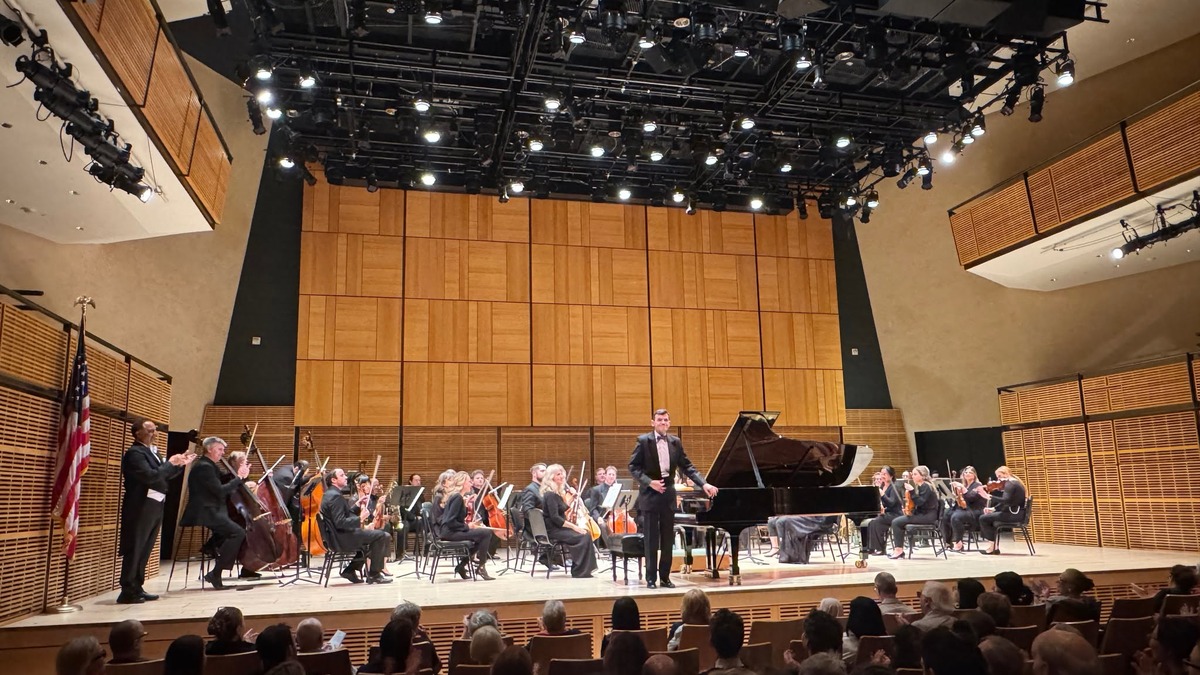
The last step led to a performance at Carnegie Hall’s Zankel Hall in May 2025. The piece, nicknamed the Egyptian, is a reminder that the music Żukiewicz uses to put places and traditions in conversation can be in the standard repertoire too. Saint-Saëns’s score already brings a wide range of colours into its exchange between orchestra and piano.
Żukiewicz spoke about the concerto’s melodic character and its unusual approach to the form before he played it.
The questions he had been addressing in Chopin could serve him here in different circumstances. When an orchestral instrument carries a response, the pianist’s decision about how firmly to end a phrase can make the transfer sound as though it belongs to the same thought.
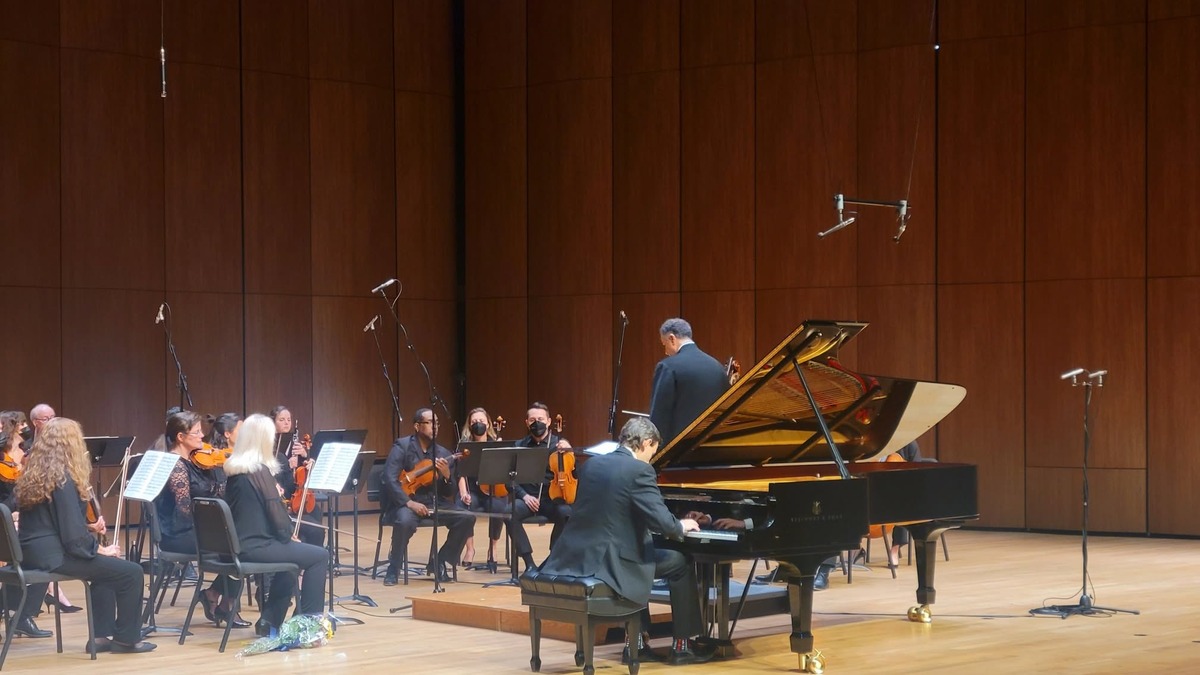
His Recital Programmes Let Familiar Pieces Change Their Company
A WFMT broadcast from Chicago offers an earlier example of the way Żukiewicz puts a programme together. It included Chopin’s B-flat minor Scherzo and A-flat major Polonaise, followed by music by Gershwin and Scriabin. The Chopin works are recognisable enough to give the programme a familiar beginning, and the change of composers opens up other ways for rhythm to organise a piece.
That sequencing can make a difference to how a listener remembers the first half. A Gershwin phrase may give the ear a reason to reconsider an accent in Chopin.
Scriabin can make the same instrument seem to reach for another kind of colour. The pianist doesn’t need to make all the music sound alike for those connections to be audible.
He has also talked about the importance of playing Ignacy Jan Paderewski outside Poland. For Żukiewicz that work has a personal basis, since it gives him a way to share the music he grew up with.
His 2020 Paderewski Festival programme put works by the composer beside Chopin, Beethoven and Gershwin. It’s another instance of giving the unfamiliar piece a place within a wider programme, where a listener has something concrete to compare it with.
The instrument itself can give him a different kind of comparison. In 2025 he spoke about an 1872 Érard concert grand he had been given by a friend and about music he wanted to record on it.
A piano built in a different period has its own way of balancing registers and releasing a sound. The question for a pianist who pays attention to the independence of the voices is what the instrument can make easier to hear.
The plans included music by Ravel and Liszt. Those two composers give a player reasons to listen to very different things in the same piano. A listener can pay attention to the edge of the sound at the beginning of a note, then to how much of it is still there when the next one arrives.
Teaching and Performance Lead Back to the Same Questions
Żukiewicz is an associate professor of piano at the University of Northern Colorado. His teaching and playing give him two ways to work on the same questions. A student can ask how much of an inner voice to bring out in a Chopin passage, and the performer can find that the answer depends on how the phrase that came before has already been heard.
In the Polish Radio interview, he described education and playing as activities that support each other. The thought makes sense of his work with familiar repertoire and unfamiliar pieces.
A score the student has heard many times can be opened up by a question about one measure. A score with few recordings asks the performer to make more of those questions explicit, because there are fewer received answers to lean on.
There’s also a place in his work for music that has never had an established answer. In addition to Kiełb’s Obrazy, he has worked on pieces by Brooke Joyce, Stefano Sacher and Tom Lopez.
His biography and repertoire record place recent scores alongside his research into old ones. That is a useful way to account for why a programme can begin with a sonata and end somewhere a listener had little reason to expect.
The unifying work is often quite small. It can be a choice about how much sound to give the left hand when the right hand already has something to say, or about whether a phrase needs to sound finished before another enters.
The interest in counterpoint puts a word to one part of that work. His collaborations and teaching give him several other settings in which to discover how much those decisions matter.
Where Adam Żukiewicz Puts the Piano’s Voices in Conversation: Live in Kitchener on Nov. 20
The Kitchener-Waterloo Chamber Music Society presents Adam Żukiewicz in an all-ages solo recital at St. Andrew’s Presbyterian Church, 54 Queen Street North in Kitchener, on Friday, November 20, 2026. Doors open at 6:30 p.m. EST and the recital begins at 7 p.m.
The programme pairs D-major sonatas by C.P.E. Bach and Haydn with Chopin’s Second Ballade, Second Scherzo, C-minor Nocturne Op. 48, No. 1 and Polonaise Op. 53. The first two pieces give the ear a chance to get used to the way Żukiewicz handles a line and its response before the Chopin works change the weight and duration of that exchange.