On the Verona Quartet’s recording of Mendelssohn’s A-minor quartet, the question comes before the argument. The music begins quietly, with a phrase borrowed from a song Mendelssohn had written as a young man.
The four players let the phrase take its time. There’s a whole quartet still to come, and the question it asks will be waiting for them at the other end.
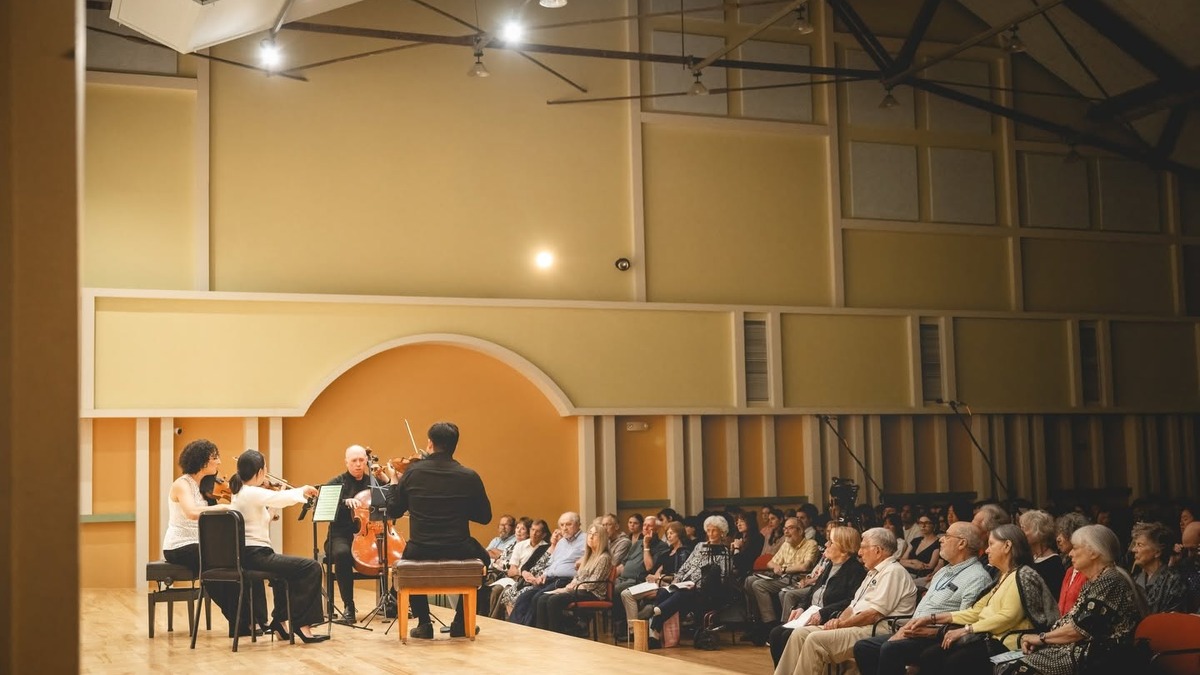
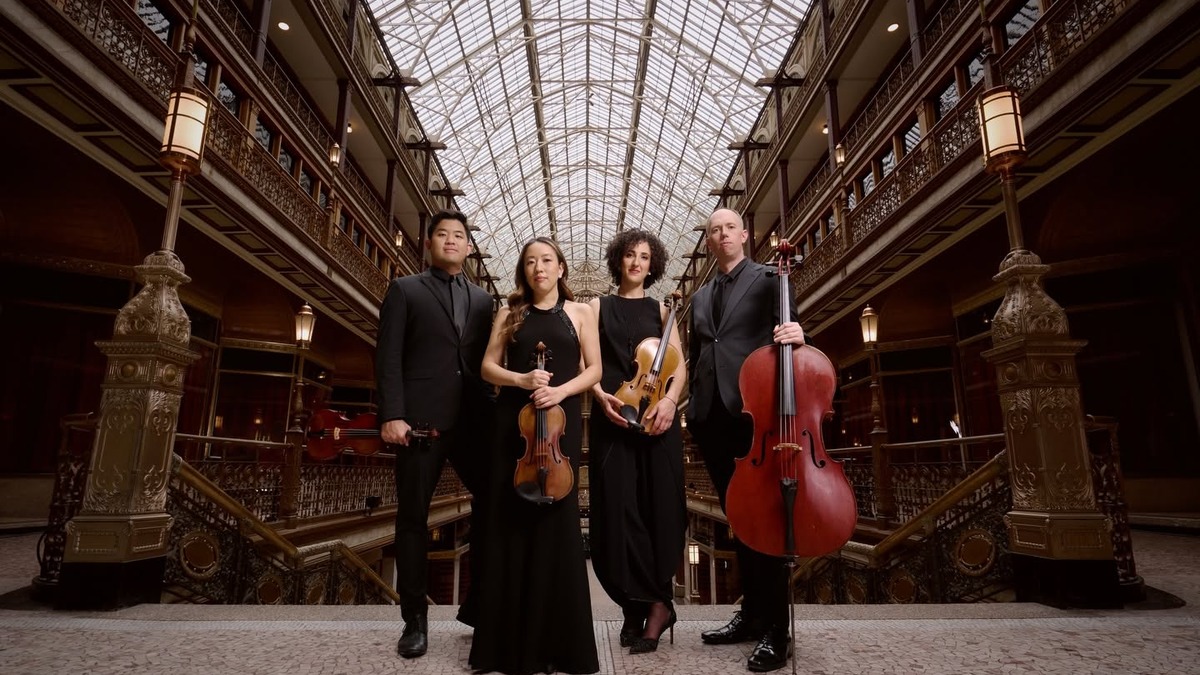
The Verona String Quartet is a chamber ensemble formed at Indiana University in 2013, with violinists Jonathan Ong and Dorothy Ro, violist Abigail Rojansky and cellist Jonathan Dormand.
The name comes from Shakespeare’s Verona, and the music the players have chosen gives you a good idea of what they found there. A melody can remember where it came from, two instruments can disagree about where a phrase is going, and the next thing you hear can change what you thought you knew about the beginning.
The Young Quartet That Found Its Name in Shakespeare
The four musicians who first played together at Indiana University were there to pursue individual degrees.
Jonathan Ong and Abigail Rojansky were joined by violinist Brendan Shea and cellist Warren Hagerty, and their shared interest in chamber music turned into a regular quartet. They began as the Wasmuth Quartet in 2013, before the current name and two of the current players came into the picture.
That origin left the group close to a school of quartet playing. Indiana’s Jacobs School of Music was home to the Pacifica Quartet, and the younger players had access to people who knew what it took to turn four promising instrumentalists into a working ensemble. In the quartet’s account of its beginnings, the members describe a project that came out of a shared love for the music rather than a prearranged career path.
By 2015 the ensemble had won the Concert Artists Guild competition and begun working at Juilliard, where it held a graduate residency and studied with members of the Juilliard String Quartet. A Juilliard profile from that period finds the players thinking through how Haydn could surprise a listener and how much emotional force there was in Bartók.
The personnel changed as the quartet developed. Ro was already playing with the group in its Juilliard years, and Dormand joined in 2017. The version of the quartet heard on its commercial recordings came together through that process, with two founders still playing and two musicians bringing experience from other ensembles.
It took less than three years for the young group to collect prizes on several continents.
Its Banff competition biography records a silver medal at Wigmore Hall, bronze medals in Melbourne and Osaka and both first prize and the audience prize at the Chesapeake competition. Those were distinct rounds of work, with different repertoires and different opportunities to discover which pieces would stay with the quartet after the adjudication was over.
One of the instructive things about the Banff record is how little it looks like a blueprint for a narrowly specialised group.
The Verona repertoire included Haydn’s Op. 50, No. 1 and Mendelssohn’s E-minor quartet, Op. 44, No. 2, alongside the demands of a commissioned work.
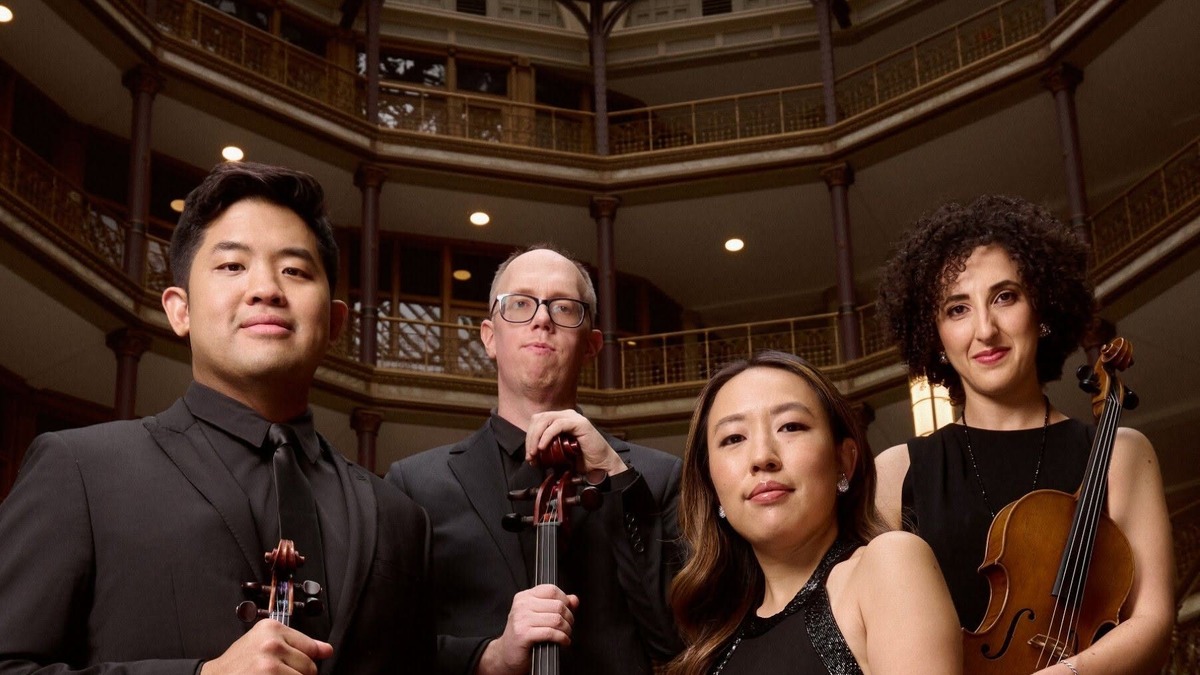
Four Musicians Bring Different Listening Habits to the Quartet
Ong, Ro, Rojansky and Dormand came to the group from Singapore, Nova Scotia, the San Francisco area and the United Kingdom.
Their individual paths help explain the ensemble’s reach. The job each player does in a piece can change within a few measures, and each has a history that gives them more than one way of hearing that change.
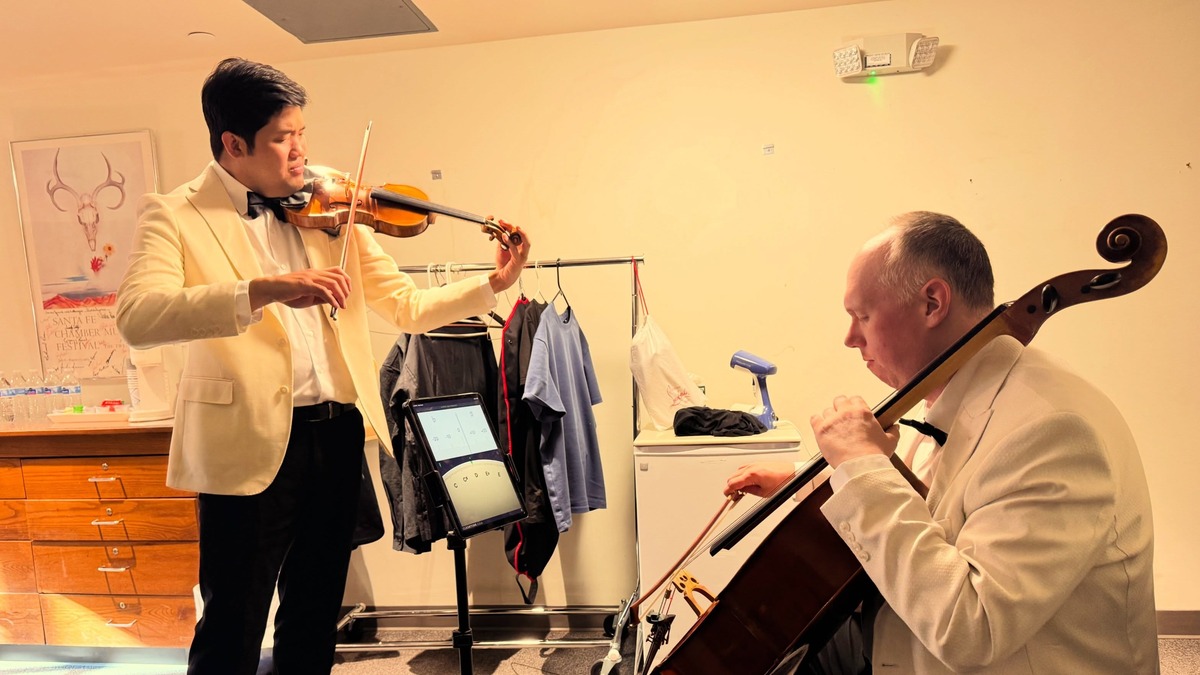
Jonathan Ong
Ong was one of the two current musicians in the room when the group began in Indiana.
He came from Singapore and trained with teachers including Lynn Blakeslee, Alexander Kerr and Donald Weilerstein, whose career with the Cleveland Quartet gave Ong one close example of how a first violinist can work inside a group. Ong’s own performing and teaching biography also lists the Singapore National Violin Competition among his early distinctions.
The first violin part often has the line most readily identifiable as the melody. Ong’s job is also to hand it away, or to play a figure lightly enough for a different voice to become the one the ear follows.
In Ravel, that might mean the first violin stepping back from a busy texture so that a theme in the middle of the quartet can make sense.
Ong has kept up a teaching connection to Singapore through its chamber music festival, where he directs the Advanced Quartet Program. He also teaches at Oberlin and has helped lead the Lunenburg Academy of Music Performance. In an interview about musical communication, he connected the quartet’s work with living composers to the idea that the traditional repertoire was new music to its own first performers.
That conviction puts a responsibility on a first violinist. A work for which nobody yet has a familiar recording requires decisions about weight, timing and emphasis that will become part of how others hear it.
Playing an older work also asks him to make those decisions, though there may already be generations of answers. Ong’s work with Verona keeps him moving between those two conditions.
Dorothy Ro
Ro started violin at five in Halifax, studying with Myung-Hae Yoon and Philippe Djokic. She went on to serve as concertmaster of the Nova Scotia Youth Orchestra. Her early biography captures her at a point when she was already moving between solo playing, orchestral work and a serious interest in chamber music.
She studied at the Cleveland Institute of Music and Rice University, where she worked with Paul Kantor, and took second prize at the 2012 Eckhardt-Gramatté competition. The competition emphasizes Canadian and contemporary music.
Ro also played in the Ariadne String Quartet, which earned a prize at the 2012 Coleman Chamber Ensemble Competition and a bronze medal at Fischoff. The work of learning to play inside a quartet was underway before Verona.
Ro brought that experience to an ensemble in which the two violins often exchange short phrases or sit on opposite sides of the same rhythm. The second violin can give a chord its edge, reveal the way an inner part is moving or become the person whose entrance turns an accompaniment into a response.
It’s one of the places in a quartet where you can hear how carefully the players are keeping track of one another.
Her current work as an educator brings her back to Nova Scotia as a co-artistic director of the Lunenburg Academy of Music Performance. The province where she began violin now gives her a place to pass on the habits she developed in chamber music.
Abigail Rojansky
Rojansky came from San Francisco and earned her undergraduate degree at Oberlin before studying at Indiana. She was there when the original quartet formed and is the other founder still in the group with Ong.
Her return to Oberlin in 2020 as a teacher in its chamber music programme closed a loop that began before there was a Verona Quartet.
The viola is particularly useful to hear in this group. It occupies the register where a composer can make a tune warm, put a rough edge on a chord or connect a cello phrase to something happening much higher up. In some passages, Rojansky is the person you can follow to understand why the two violins and the cello sound as though they are part of one idea.
She studied with violists including Karen Ritscher, Atar Arad and Martha Katz, and has worked across projects with classical players, the pipa virtuoso Wu Man and the folk trio I’m With Her.
Her recording and commissioning credits include music written for the Verona Quartet and an independent recording collaboration with composer Lisa Bloom Cohen.
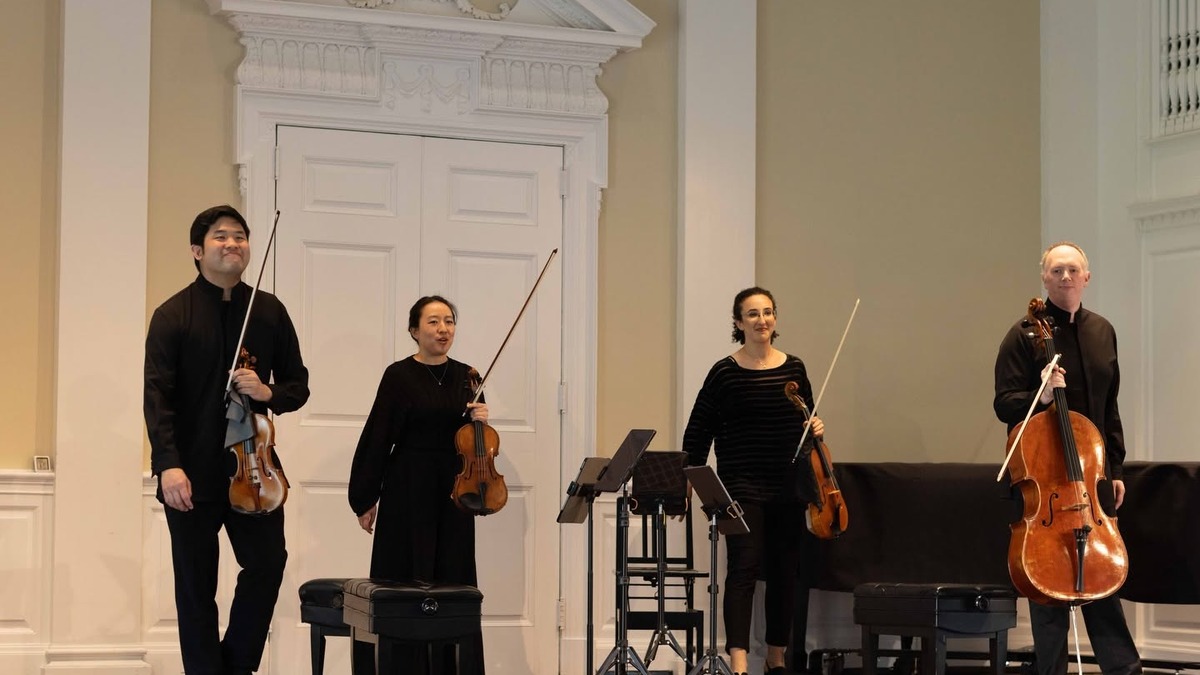
Jonathan Dormand
Dormand grew up in the United Kingdom and brought an established cello career to Verona in 2017.
He trained with teachers including Hannah Roberts, Laurence Lesser, Paul Katz and Ralph Kirshbaum, and was a laureate of the 2012 Isang Yun International Cello Competition. Three years later, he received a major incentive grant from the Pierre Fournier Award.
His performing background includes work as a guest principal with the Philharmonia Orchestra, BBC National Orchestra of Wales and Royal Northern Sinfonia. He earned a master’s degree at New England Conservatory, where the Verona Quartet was later in residence.
The change from a section job to a quartet can be quite stark. At the bottom of four voices, every decision about how firmly to begin a note or how much to let it ring will reach the listener directly.
In the early Mendelssohn quartets, the cello can supply a point of rest and then head off with a line of its own before the ear has settled. In Ligeti, the player has to handle a different problem. A note in the lowest register can arrive as a pulse, a scratch of colour or the first sign that a pattern has begun to unravel.
Dormand went on to share in the quartet’s Cleveland Quartet Award and teaches chamber music at Oberlin.
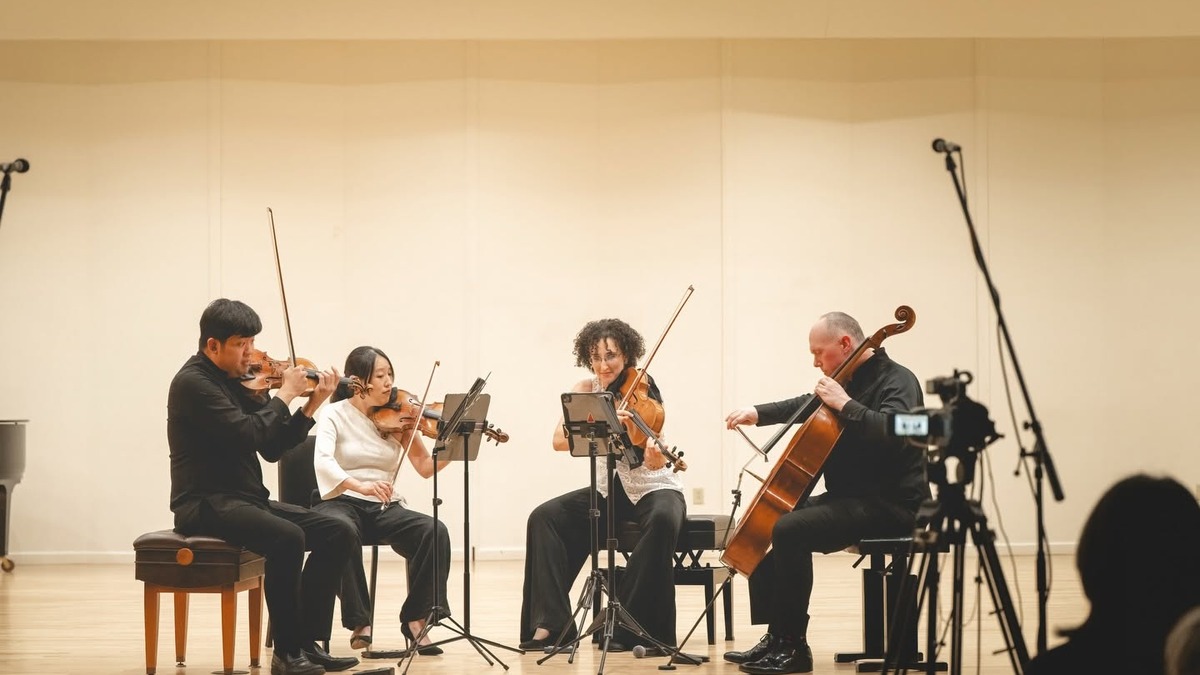
Four Records Show How Far the Quartet Can Travel
The Verona Quartet’s recordings give listeners four distinct ways into its work.
The first brought together three composers who treated regional music and the quartet form in their own ways. By the time the group recorded Mendelssohn in 2026, it had also made an album of new pieces and recorded every surviving Ligeti work for string quartet.
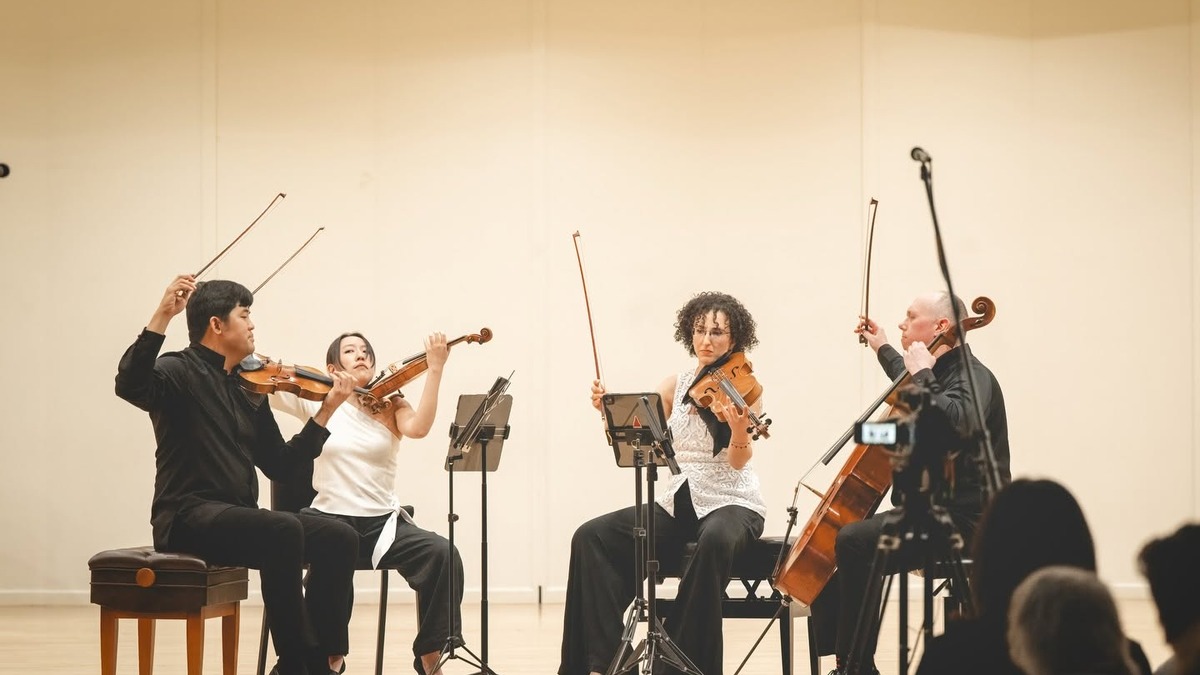
Diffusion
The 2021 debut, Diffusion, brings together Janáček’s second quartet, Szymanowski’s second quartet and Ravel’s quartet in F major. One connection is how differently the composers handle music that sounds rooted in a place. They can put a rhythmic pattern or an inflection into a quartet and change what it means by passing it through four voices.
Janáček’s quartet is known as Intimate Letters. It was inspired by his relationship with Kamila Stösslová, and its abrupt changes make it sound as though thoughts are breaking into one another.
Szymanowski’s second quartet brings in material associated with the Polish Tatra region. Ravel gives the album another kind of landscape, with plucked strings and a melody the players can turn over and hand around across the movements.
You can start with the plucked second movement of the Ravel and then hear how differently an interruption works in Janáček. The debut has a point of view even though the pieces are separated by place and personality. Verona lets a listener compare the way each composer makes four strings sound like they have something to say to one another.
The opening of the Ravel is an especially revealing place to listen for the individual players. The cello lays out a floor for the upper parts, and the melody can feel as if it floats free of that support until the bass shifts under it.
When the composer brings familiar material back later, the change of texture can be enough to make a known phrase sound new. That is a rather different way to build a narrative from Janáček’s close, sudden exchanges, and the quartet has to make both approaches convincing on the same record.
Shatter
Shatter reached No. 1 on Billboard’s Traditional Classical chart in 2023. It puts Julia Adolphe’s Star-Crossed Signals and Michael Gilbertson’s quartet alongside Reena Esmail’s Ragamala, with Hindustani vocalist Saili Oak. Two pieces written for the ensemble share the record with music whose sound depends on a fifth performer and another kind of training.
In Esmail’s account of the score, the relationship between the raga and the written string parts is essential to the work. Oak’s voice can introduce a kind of motion quite different from the one listeners know from Western string writing. The quartet has to be alert to where the two traditions meet and to how much room the singer’s line needs.
Gilbertson’s quartet was a 2018 Pulitzer finalist, before Verona’s commercial recording of it. Putting the piece beside Ragamala and Adolphe’s music gives the listener a sense of what it means for a quartet to maintain relationships with living composers. In one sitting you can hear the four players change how they listen for a cue and how much sound they put around it, depending on the work in front of them.
Oak’s presence changes what the listener hears first in Ragamala. The voice can establish a set of melodic possibilities before the strings answer, so the ear has already had time to recognise some of those tones when the texture gets busier.
The players can be completely at home with the techniques the score demands and still have to change their expectations about whose phrase leads them into the next part. That shift is part of the music, and the sequencing of the album lets it be heard alongside works in which the quartet is alone.
Ligeti’s Complete String Quartets
The quartet also released Ligeti: Complete String Quartets in 2023. It includes an early Andante and Allegretto and the two numbered quartets.
The first, Métamorphoses nocturnes, bears traces of Bartók and folk idioms. The second, from 1968, asks the four players for extremes of stillness, speed and attack.
Those pieces make a useful test of what an ensemble’s sound really is. In an ordinary description, a quartet’s sound might be about the warmth of four instruments blended together.
Ligeti can require a much thinner sound and can make the differences between the instruments part of the effect. Four sounds that seem about to fall out of alignment can be the result of four people listening very closely.
The early piece brings the other two into perspective. Instead of meeting Ligeti only at the point of his most unmistakable experimentation, you can hear him testing how much expression a relatively direct string line can carry.
The release offers a view of the composer changing his ideas over time. For Verona it also draws out details of ensemble playing that can be harder to notice when the four instruments move together in a more familiar piece.
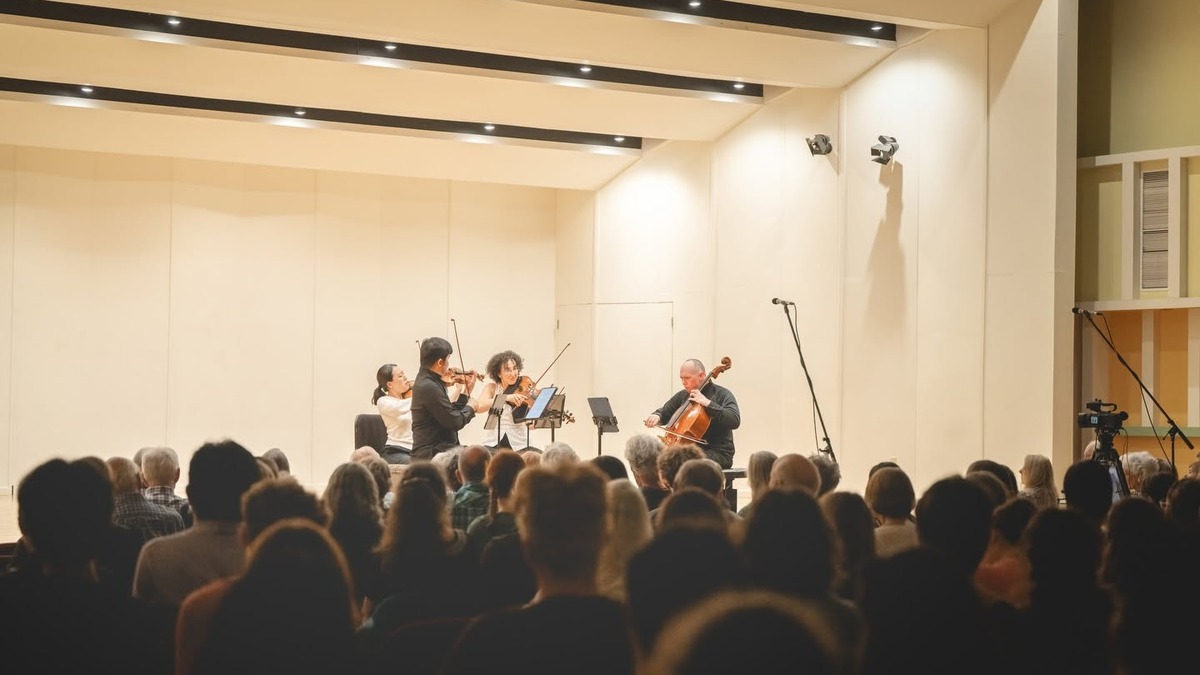
Mendelssohn’s Opus 12 and Opus 13
In August 2026, Oberlin Music released the Verona Quartet’s recording of Mendelssohn’s quartets Op. 12 and Op. 13. Both come from the composer’s youth. Op. 13 is the earlier composition despite its higher publication number, and its opening draws on Mendelssohn’s song Frage.
What makes the borrowing worth hearing is how much it changes between appearances. At the start, it can sound like a thought the players are still gathering.
When it returns, you hear it after the movement of everything that intervened. A quartet needs a memory for the weight it gave a phrase at the start, even when it wants that phrase to mean something else at the end.
Op. 12 has its own game with memory, bringing back earlier music near the close. The result is a record on which listeners can get their bearings by following sounds they have heard before.
It fits an ensemble named for Shakespeare even without an actor in the room. Mendelssohn has already put the device into the score, and the performers make the connection audible by deciding how much of the earlier sound to preserve when it comes back.
The Canzonetta in Op. 12 provides a small point of contrast. Its light movement is immediately legible even if you’re encountering the quartet for the first time.
Set it beside the questioning beginning of Op. 13 and it’s possible to hear two sorts of confidence in the young composer. One makes itself felt through the pace and detail of the parts, the other by making a listener wait for the meaning of a very simple phrase.
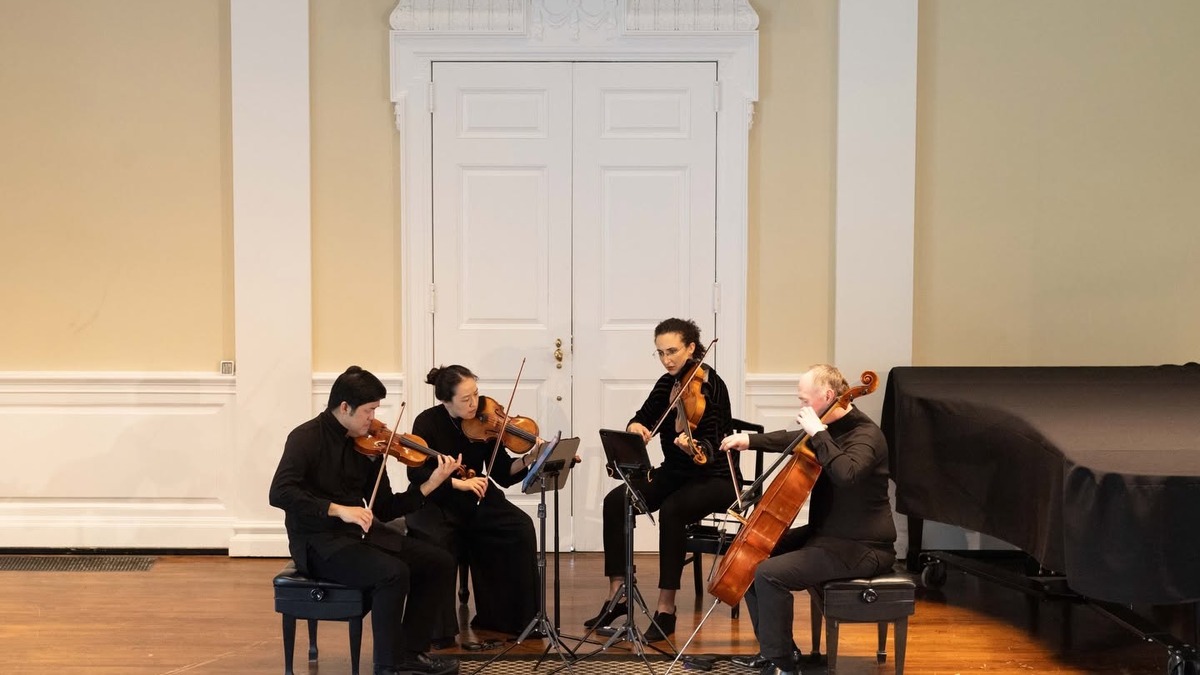
The Quartet Has Made Collaboration Part of Its Sound
The Verona musicians have worked on pieces that ask them to share time and space with instruments outside their usual arrangement.
Cheng Jin Koh’s Mountains of Echoing Halls, commissioned by the Smithsonian for the Freer Gallery of Art’s centennial, brings together string quartet, yangqin and Chinese ribbon dance. The yangqin is a hammered dulcimer, which means its notes begin with a different kind of attack from a bowed string.
The project fits what Verona calls its Global Storybook.
The group has also worked with pipa player Wu Man and built a programme around Shakespeare’s Hamlet with a speaking actor.
The ensemble won Chamber Music America’s Cleveland Quartet Award in 2020 and Fischoff’s educator award in 2025. The two distinctions recognise different parts of the same career, one as a performing group and the other for the work of helping other musicians learn to play together.
The Fischoff award specifically recognises educational work with children and young people. Its plans for the quartet included working with student chamber musicians and using a children’s book as the basis for a musical telling.
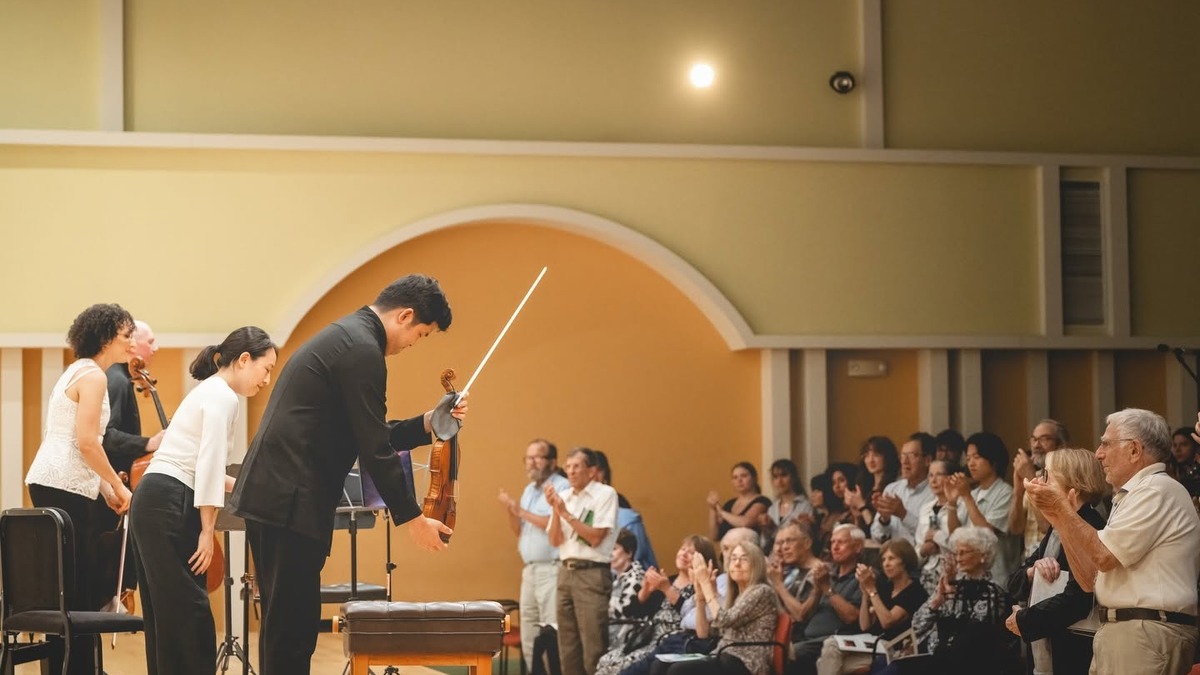
Verona Quartet Brings Three Generations of Quartet Writing Together on Nov. 29 in Hamilton
Chamber Music Hamilton presents the Verona String Quartet at the Art Gallery of Hamilton, 123 King Street West, on Sunday, November 29, 2026. Doors open at 1:30 p.m. EST, and the chamber concert begins at 2 p.m.
The programme brings together Beethoven’s String Quartet in G major, Op. 18, No. 2, Gabriela Lena Frank’s Leyendas: An Andean Walkabout and Dvořák’s String Quartet No. 14 in A-flat major, Op. 105. Beethoven gives the players an exchange that can turn on the timing of a reply. Frank asks them to suggest Andean instruments and song through strings, and Dvořák closes the programme with the quartet he started in New York and finished in Prague.