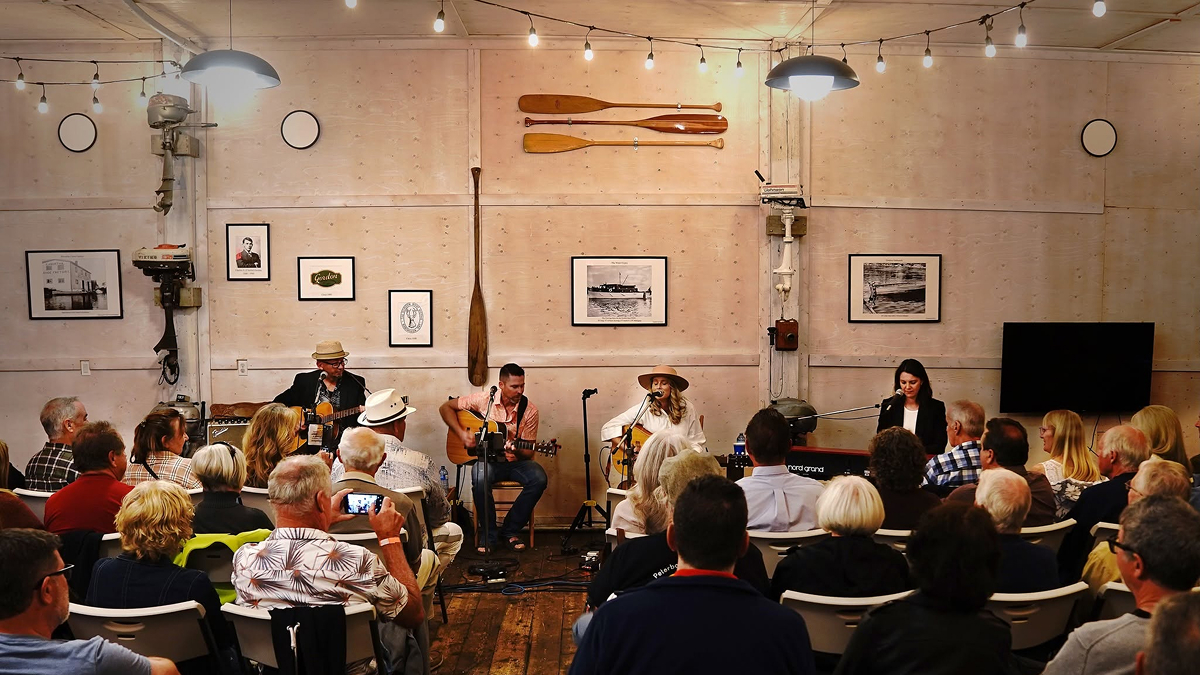
Sixty seats. Eight musicians who won’t tell you what they’re going to play, because they don’t know yet either.
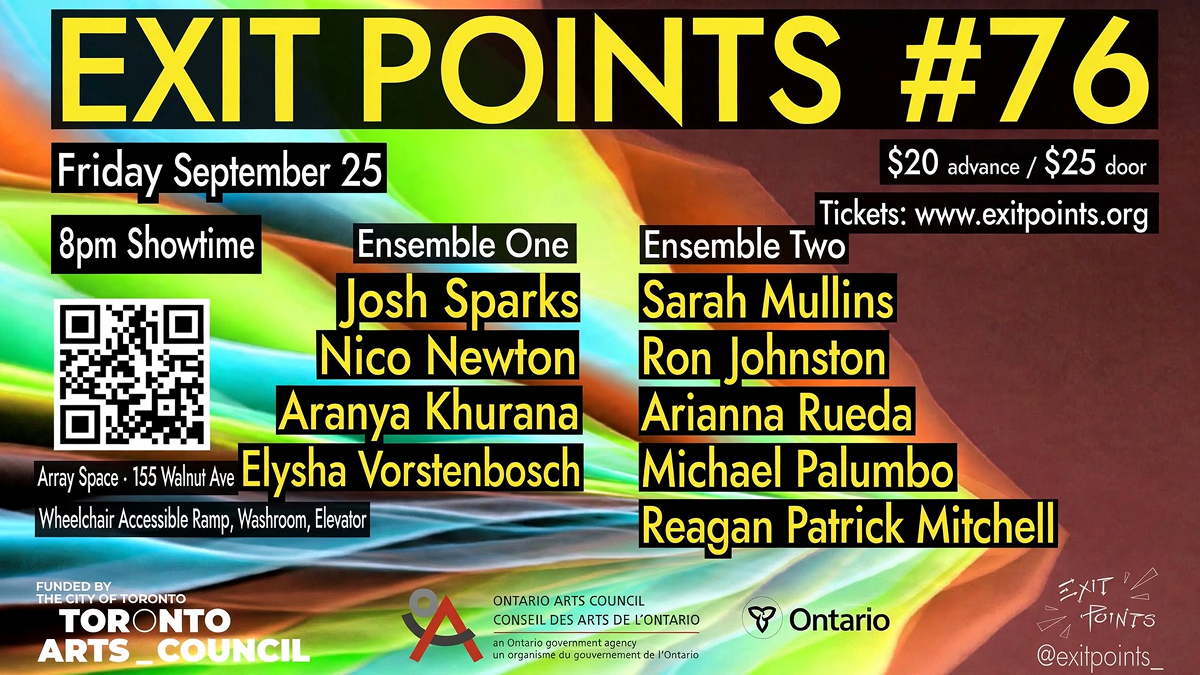
That’s the entire pitch behind Exit Points #76, landing at Array Space in Toronto this Friday, September 25.
If you’ve spent any time around the city’s experimental music circuit, the name Exit Points probably already rings a bell. If you haven’t, here’s everything worth knowing before you decide whether to show up.
Exit Points #76 Basics: Date, Time, and Price
- Exit Points #76 happens Friday, September 25, 2026, at Array Space, 151 Walnut Ave in Toronto.
- Doors are at 7:30 PM, the show runs from 8:00 PM to 10:20 PM, and it’s an all-ages event, so there’s no age cutoff keeping anyone out.
- Tickets move through Ticketscene, with advance pricing set at $20 CAD plus fees and door pricing at $25 CAD plus fees, a five-dollar gap that rewards anyone who buys ahead of time.
The room caps out at sixty people for this show, which is a hard ceiling rather than a soft estimate.
Small improvised-music nights in Toronto have a track record of filling up before doors even open, and a cap this low means it doesn’t take much of a crowd to close things out early. If a Friday night built around unpredictable, unrepeatable music sounds appealing, locking in a ticket now is the more reliable path than hoping seats remain later in the week.
As with every Exit Points show, don’t expect a pre-announced breakdown of who plays with whom; those groupings get revealed live, from the stage, on the night itself.
What Actually Happens Once You’re in the Room at an Exit Points Event
Here’s the mechanic that makes Exit Points different from a standard concert: nothing performed has been rehearsed as written. There’s no setlist, no chart, no prior arrangement locking the musicians into a plan. What you get instead is a evening built in three distinct movements, each with its own function.
It opens with a short, plain-language framing segment, a handful of simple pointers on how to listen to music that doesn’t resolve the way pop or jazz standards typically do. This isn’t filler; it’s there specifically because unrehearsed music can sound unmoored to ears that haven’t spent time with it, and a few minutes of orientation goes a long way toward making that first encounter feel less like a wall and more like an invitation.
From there, two small groups take turns performing full sets, each pulling together musicians whose usual lanes rarely intersect: someone might come from a jazz background, another from modular synthesis, another from singer-songwriter or classical training entirely.
Because the pairings are new, or at least rarely repeated, what happens on stage is closer to a live negotiation between different musical vocabularies than a polished performance of anything pre-planned.
The night closes with “Switchemups,” the segment most regulars point to as the series’ signature move. Performers regroup into smaller, shifting configurations for a run of short pieces, and audience members are invited, not required, to walk up and join them. Nobody’s pressured into it. But the option alone shifts the whole feel of the room, turning what could’ve stayed a strictly one-way performance into something the audience is quietly part of, whether they ever set foot on stage or not.
Every set gets professionally recorded on multiple tracks and later mixed for release, which means the specific, unrepeatable combination of musicians on stage this Friday could eventually surface as an actual record.
That’s a detail worth sitting with: what you hear in that room may exist nowhere else, ever, except on a future Bandcamp release months from now.
Exit Points #76 Lineup: Meet the Musicians
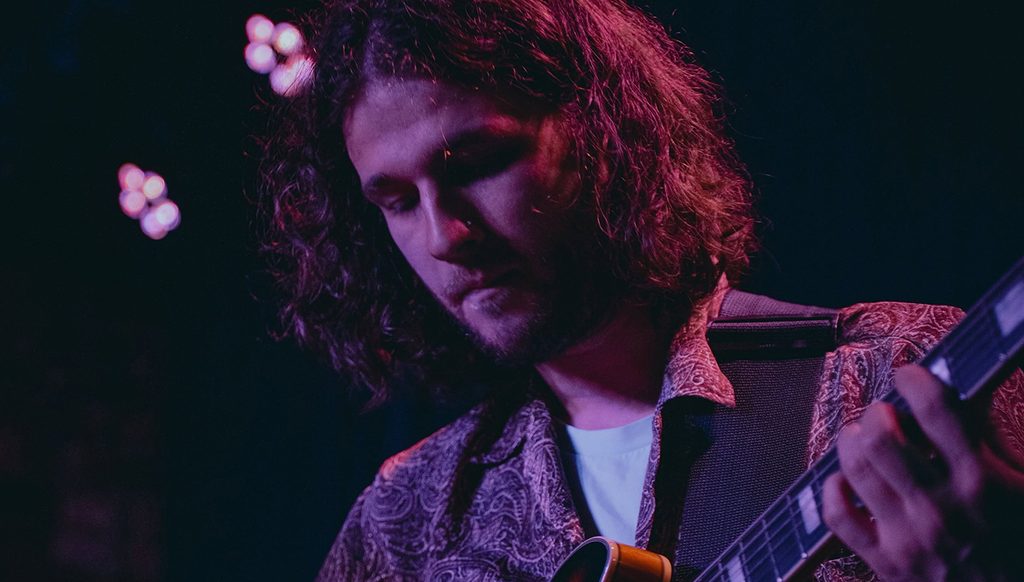
Josh Sparks: The Jazz-Trained Guitarist Anchoring Toronto’s DIY Music Scene
Josh Sparks is a Toronto-based guitarist, composer, and music educator who moves comfortably between folk, jazz, rock, and R&B, treating genre less as a fixed identity than as a toolkit to pull from depending on the room. He graduated from the University of Toronto with a degree in Jazz Performance, a foundation that shows up regularly in his session work, including backing student recitals for U of T’s Faculty of Music. Sparks teaches guitar and ukulele at On The Off Beat Music School, a Leslieville institution built around ensemble playing rather than solitary practice, a philosophy that mirrors how he approaches his own musical life. He’s also a member of Potions, a Toronto jazz, experimental, and songwriting outfit alongside Aidan McConnell, Steven Noronha, and Ben Rositsan, with music released through the local label idée fixe records. Beyond performing, Sparks curates and hosts Render File, a recurring live music series at Wenona, a jazz venue in Toronto’s Dovercourt Village, giving him firsthand experience building the kind of welcoming, genre-crossing room Exit Points is known for. At Exit Points #76, that mix of formal jazz training, teaching instinct, and community-building experience makes him a natural fit for a stage built entirely around unscripted collaboration.

Nico Newton: The Fiddle Player Where Folk Tradition Meets Visual Art
Nico Newton is a Toronto-based fiddle player whose performances sit at the collision point of folk tradition and experimental playing, pulling the instrument’s rooted, tune-based vocabulary into far less predictable territory. According to Exit Points’ own performer materials, Nico’s practice draws on visual art alongside music, suggesting an approach to improvisation shaped as much by image and gesture as by melody or rhythm. That combination, a folk instrument pushed into open-ended experimentation, places Nico squarely inside the series’ broader pattern of pairing traditional technique with unrehearsed risk. At Exit Points #76, that willingness to let the fiddle wander outside its usual folk framing makes Nico a fitting match for a stage where nothing is scripted in advance.
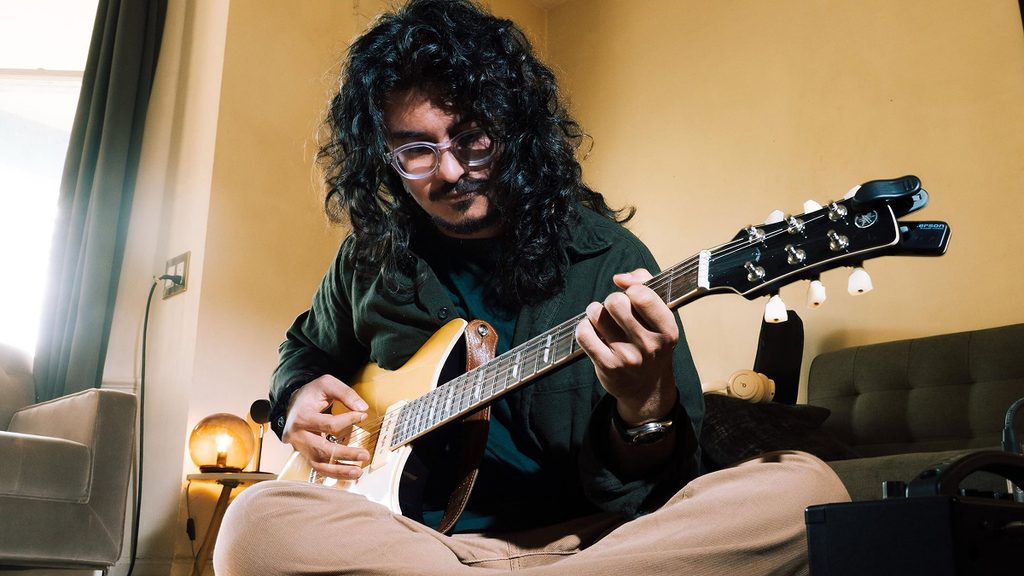
Aranya Khurana: The Architect-Trained Guitarist Who Builds His Own Instruments
Aranya Khurana is a Toronto-based interdisciplinary artist, designer, and creative technologist whose work sits at the crossing point of music, architecture, and interactive technology. He trained as an architect before shifting his focus toward music and design, a background that still shapes how he approaches sound, less as a single performance than as a structure to be built and refined. As a guitarist, Khurana performs and improvises live, but his more distinctive contribution to Toronto’s experimental scene is his instrument-building practice. His 2025 Master of Design thesis at OCAD University, completed through the school’s Digital Futures program, centers on TacTile, a touch-sensitive eTextile musical instrument he designed and built from scratch, drawing on elements of the electric guitar and piano and pairing custom sensor hardware with Max/MSP, Processing, and Python software. His broader research, profiled through the Leonardo network for art, science, and technology, explores multisensory interfaces, wearable electronics, and human-computer interaction as tools for musical expression. Outside academic settings, Khurana also hosts Liquid Architecture, a recurring guitar night at St. Matthew’s Clubhouse now in its fourth season. He previously performed at an earlier edition of Exit Points, bringing that same instinct for treating an instrument as something to be designed, not just played, into the series’ unscripted format.

Elysha Vorstenbosch: The Celtic Harpist Bringing Improvisation to an Ancient Instrument
Elysha Vorstenbosch is a Celtic harp player, composer, and improviser based in Perth County, Ontario, whose practice treats the harp less as a strictly traditional instrument and more as a flexible tool for spontaneous composition. She holds a Bachelor of Music degree from Wilfrid Laurier University, where she studied lever harp, composition, and improvisation, training that lets her move fluidly between rehearsed repertoire and music invented in the moment. Vorstenbosch performs frequently as a soloist across Southern Ontario, bringing Celtic tunes and original compositions to settings ranging from renaissance festivals to Sunday markets. She’s also an active teaching voice within the province’s harp community, affiliated with the Huron Harp School in Goderich and the AHS Young Composers Project, and she recently presented on community-building in harp education at One Harp World, the international harp conference. That mix of formal composition training, live improvisational instinct, and teaching work gives her an unusually well-rounded relationship to the instrument, one built as much around listening and responding as around technique. Vorstenbosch announced her Exit Points #76 appearance directly to her followers, calling it an exciting lineup to join, and at the show, her Celtic-rooted, improvisation-trained approach to the harp brings a genuinely distinct texture to a stage built around musicians finding their way together in real time.
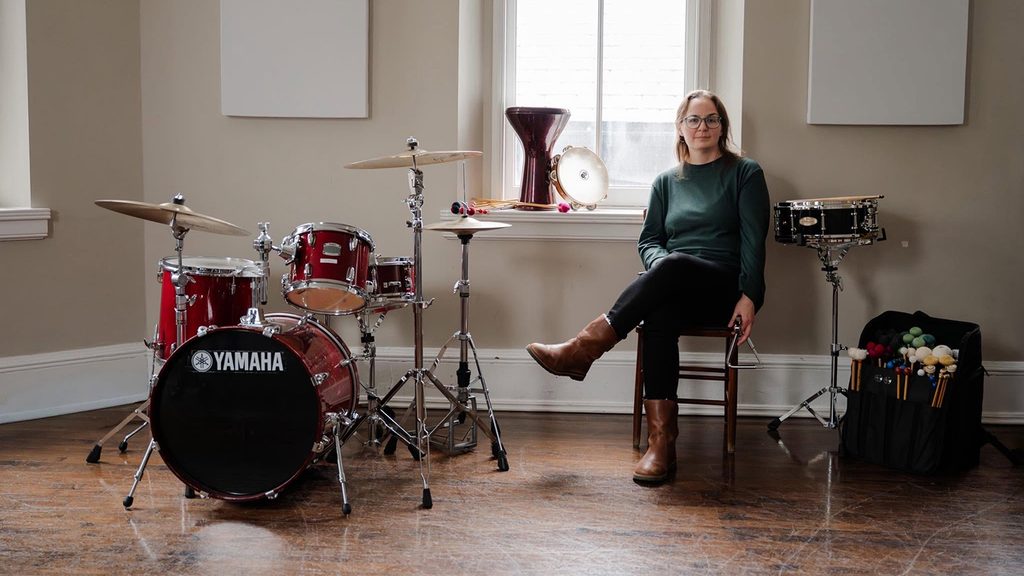
Sarah Mullins: The Classically Trained Percussionist Who Also Drums for Improv Comedy
Sarah Mullins is a Toronto-based percussionist, drummer, and educator whose career moves fluidly between the concert hall and the improv stage. She holds classical percussion degrees from CUNY Queens College and McGill University, plus an Artist Diploma from the Glenn Gould School at Toronto’s Royal Conservatory, training that’s taken her to venues including Carnegie Hall, Alice Tully Hall, and the Kennedy Center. After her Toronto studies, Mullins spent fifteen years building a performing and teaching career in New York City, working as an extra percussionist with the Toronto Symphony Orchestra and Calgary Philharmonic Orchestra, playing with the Glenn Branca Ensemble, and traveling to Bali to study gamelan with the New Atlantic Chamber Gamelan. Her other specialty, drumming live for entirely unscripted musical improv comedy, has put her behind the kit for shows including Shamilton at the Kennedy Center and Offbook: The Improvised Musical Podcast, a discipline that demands the same real-time listening and response that free improvisation asks of musicians. Now back in Toronto, she teaches percussion at the Royal Conservatory’s Oscar Peterson School of Music and drums at the Mill House School of Music. At Exit Points #76, that dual fluency, trained classical technique paired with years of inventing music on the spot in front of a live audience, makes her a natural fit for the night’s unscripted format.
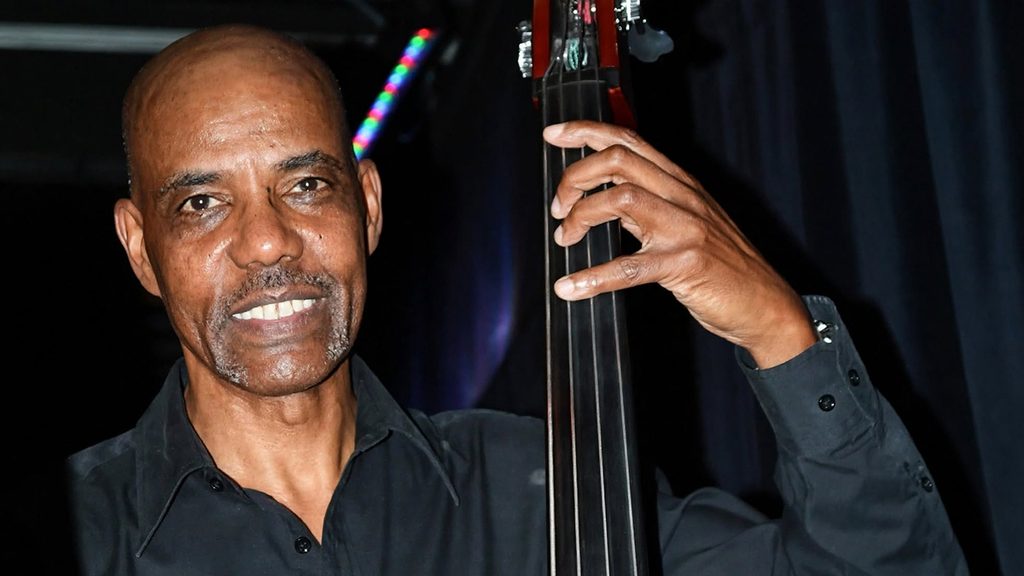
Ron Johnston: The Veteran Jazz Bassist Bridging Bebop Tradition and Free Improvisation
Ron Johnston is a Toronto-born bassist whose career spans more than five decades, making him one of the more experienced musicians in Exit Points’ rotating cast of improvisers. He began classical training on piano at the Royal Conservatory of Music at age five, switched to double bass at ten, and reached Grade 8 First Class Honours before performing at a World Youth Orchestra Festival in Switzerland at sixteen. Jazz became his lasting focus, and Johnston has performed and recorded professionally since 1971, touring with singers including Jodie Drake and Ada Lee and backing internationally recognized figures such as Maxine Sullivan, Doc Cheatham, and Marcus Belgrave. He was an original member of Toronto’s respected hard bop group Kollage for its first nine years, and has also worked steadily as a film and television musician, appearing on screen as a band member in the Academy Award-winning Chicago. Johnston leads his own quintet at The Pilot, one of Toronto’s longest-running jazz clubs, and teaches music with the York Region District School Board. He’s also a credited bassist on Exit Points’ recorded output, appearing on the label’s 2023 release A Right and then a Left. At Exit Points #76, that decades-deep bebop and hard bop foundation gives him a different entry point into free improvisation than most of the night’s other performers, veteran instinct meeting a format built on not knowing what comes next.

Arianna Rueda: The Ecuadorian Singer-Songwriter Blending Andean Roots and Toronto Indie
Arianna Rueda is an Ecuadorian singer-songwriter and guitar player who has become an active presence in Toronto’s music scene while keeping close ties to the sounds she grew up with. She was raised in Quito, nestled in the Andes Mountains, immersed in pasillo, the lyrical, waltz-time genre that has long defined Ecuadorian popular music, and that grounding still surfaces in her songwriting even as she works primarily in Latin American indie pop, rock, and folk. Her debut release, “Alma,” features Rueda on voice and guitar alongside guitarist Mike Murray, and the two have continued performing together, including a live recording of “Las Habladurías” from the floor of The Painted Lady in Toronto. Rueda has also become an educator in her adopted city, teaching voice, guitar, and songwriting at Mint Music, and by her own description she splits her time between two homes, moving between Ecuador and Toronto rather than settling into one scene. That bilingual, bicultural songwriting practice, rooted in Andean tradition but built for a Toronto indie stage, gives her a genuinely different musical vocabulary than most of Exit Points’ typically instrumental improvisers. At Exit Points #76, Rueda brings a singer-songwriter’s sense of melody and lyric into a night built around musicians discovering their sound together in real time.
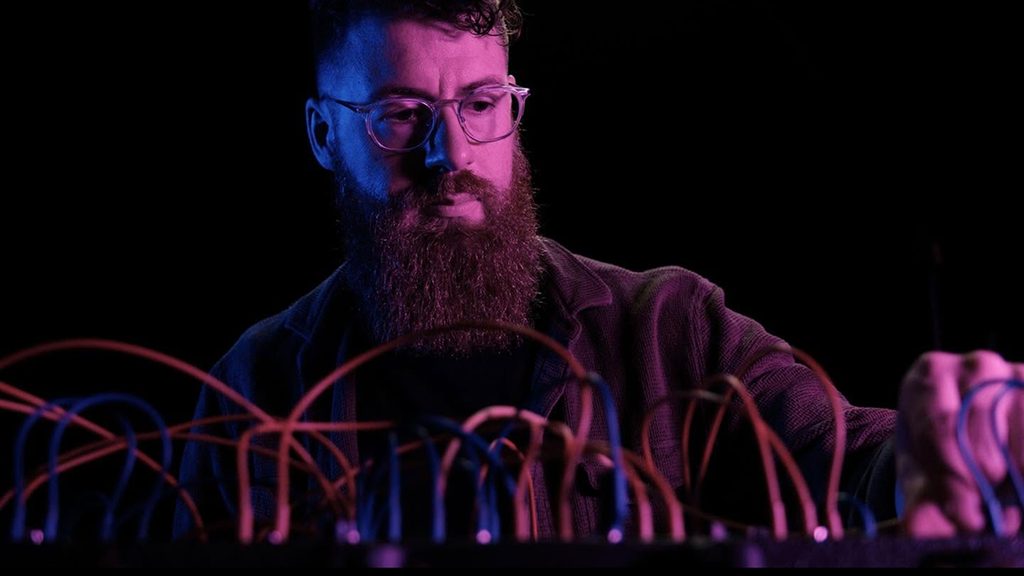
Michael Palumbo: The Modular Synthesist Who Built Toronto’s Free-Improv Home
Michael Palumbo is the Toronto-based musician, sound artist, and researcher behind Exit Points itself, founding the series in 2020 out of a desire to build a performance space rooted in the openness he found within Toronto’s improvising community. Born and raised in Toronto with an Italian background, he started piano lessons at age eight, and a teacher’s early recognition of his musical gift eventually pulled him toward composing with modular synthesizers and computers. He holds a BFA in Electroacoustic Studies from Concordia University and a PhD in Theatre and Performance Studies from York University, where his research through the DisPerSion Lab and the Alice Lab for Computational Worldmaking has focused on networked performance, systems thinking, and distributed creativity. As a performer, Palumbo works primarily on modular synthesizer, and his electroacoustic compositions have been presented at venues including Toronto’s Music Gallery, the Jay Pritzker Pavilion in Chicago’s Millennium Park, and SUNY Buffalo. He has also taught sound design at Brock University and curates Cool New Instruments Night, a recurring salon dedicated to new tools for artmaking, reflecting his broader interest in building community spaces around experimental practice. At Exit Points #76, Palumbo performs alongside the very community he built the series to support, both curating the night’s spontaneity from behind the scenes and stepping into it himself as a working improviser on modular synth.
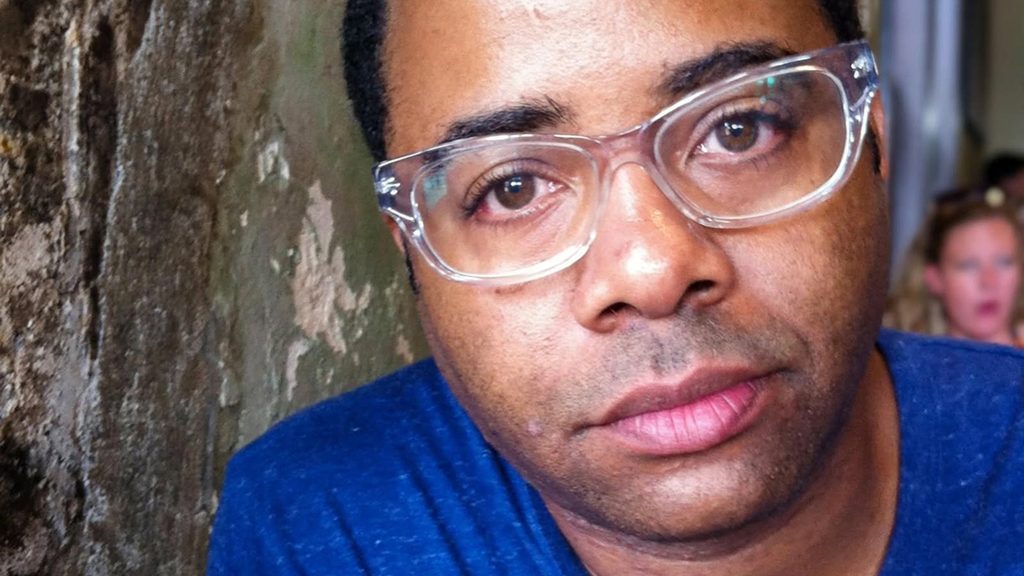
Reagan Patrick Mitchell: The Scholar-Saxophonist Studying Race, Space, and Sound
Reagan Patrick Mitchell is a saxophonist, flutist, composer, and independent scholar based in Toronto whose dual career treats jazz performance and academic research as two expressions of the same set of questions. A Nashville native, he earned Bachelor’s and Master’s degrees in Jazz Studies from Middle Tennessee State University and the University of Northern Colorado before completing a PhD in Curriculum and Instruction at Louisiana State University, with a dissertation examining Black educational space in New Orleans’ Faubourg Tremé neighborhood. That transdisciplinary training carried him into academia, where he spent 2019 to 2025 as an Associate Professor in the Division of Liberal Arts at the University of North Carolina School of the Arts, following an earlier appointment at Colgate University; his published research spans curriculum theory, critical race theory, Black diaspora studies, and sound studies. Mitchell comes from a family steeped in scholarship, his father was a Fisk University historian and the first Black chair of the Tennessee Historical Commission, and that same intellectual rigor shows up in how he approaches sound. Now performing regularly around Toronto, including sets at the storied Rex Hotel Jazz & Blues Bar and with the Afro-jazz ensemble Waleed Kush, Mitchell brings a scholar’s precision and a working improviser’s instinct to Exit Points #76.
Curious About Past Editions of Exit Points…
Check out our feature on Exit Points #75 here.
Exit Points #76 Venue: Array Space and Arraymusic
Array Space is the working studio of Arraymusic, a nonprofit dedicated to Canadian composers and contemporary sound art that’s been operating since 1972.
The room sits on the second floor of a converted building near Trinity Bellwoods, kitted out with hardwood floors, a lighting rig, a PA system, and pianos left behind from decades of use as a classical rehearsal space.
Close quarters and no amplification wall between you and the stage means this isn’t a show you watch from a distance. Expect to be near enough to see hands move across a keyboard or a modular patch bay, which is part of why a room this size suits improvised music better than a bigger venue ever could.
If You’ve Never Done This Before, Get Your Tickets to Exit Points #76 Here
You don’t need any background in experimental music, jazz theory, or synthesis to get something out of Exit Points #76.
The opening framing segment exists precisely so first-timers aren’t left guessing at how to listen. Show up closer to 7:30 than 8:00 if you want a decent seat in a room this small, and don’t feel obligated to join Switchemups if watching is more your speed; plenty of regulars never do, and that’s a completely normal way to spend the night.
Exit Points #76 asks for very little, twenty dollars in advance, a Friday evening, an open mind about what “unrehearsed” actually sounds like, and gives back something genuinely hard to find elsewhere in the city: a room where nobody, performers included, knows what’s about to happen.
Tickets to Exit Points #76 are available now through Ticketscene, and with a sixty-person cap on a small studio floor, this isn’t the kind of show where waiting until Friday afternoon is a safe bet. Get your ticket today.