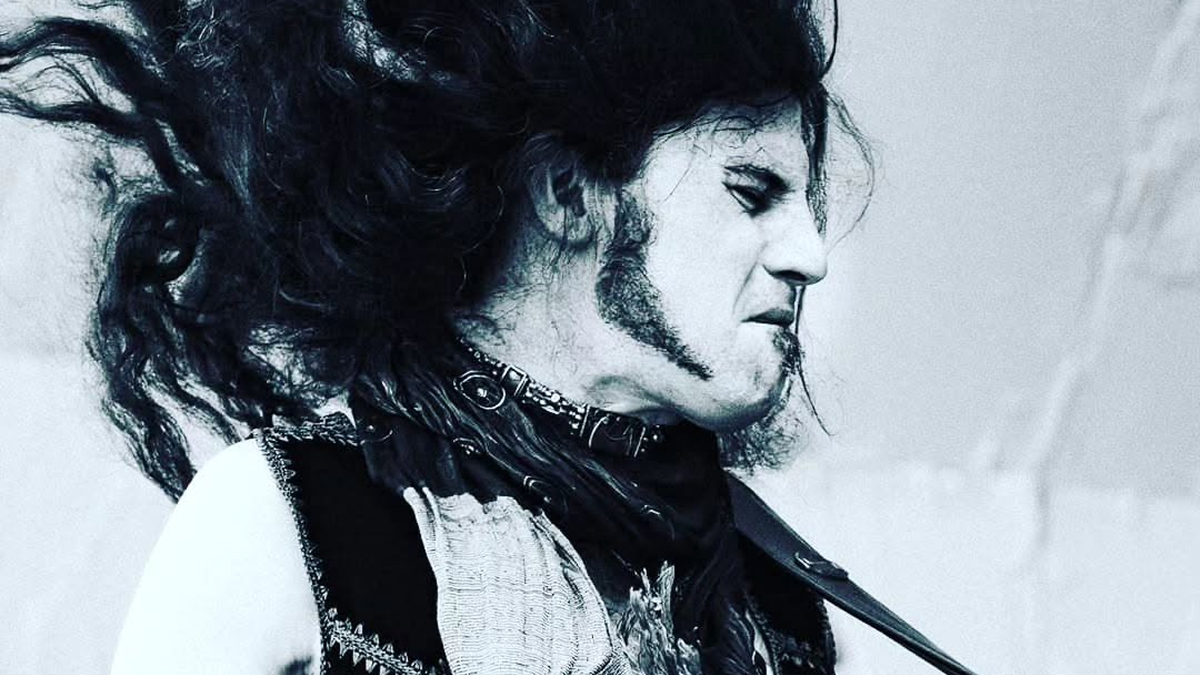
Since forming Ian Andrews & The Smokin’ Scoundrels in 2012 and then the Big Bad Blues Show in more recent years, Ian Andrews has built a reputation for violin-like phrasing, an unpredictable stage presence, and a slow-burning catalogue that blends blues with funk, soul, and rock and roll. In this exclusive interview with Ticketscene, Andrews talks through his earliest influences, a memorable session with legendary producer Eddie Kramer, and why he believes the future of the blues depends on reaching a younger audience.
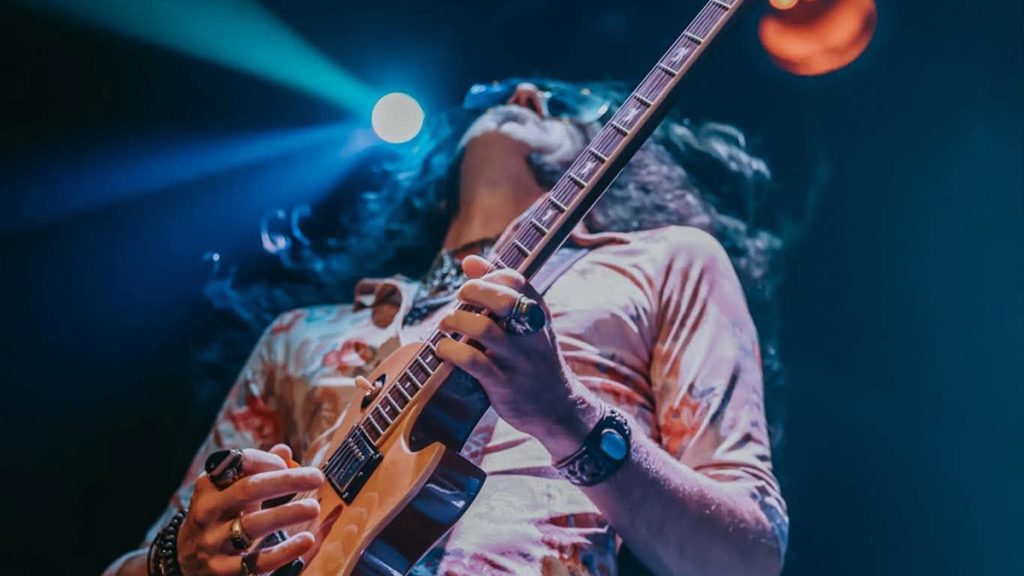
From Guelph to Hamilton and Across Ontario: The Making of a Bluesman
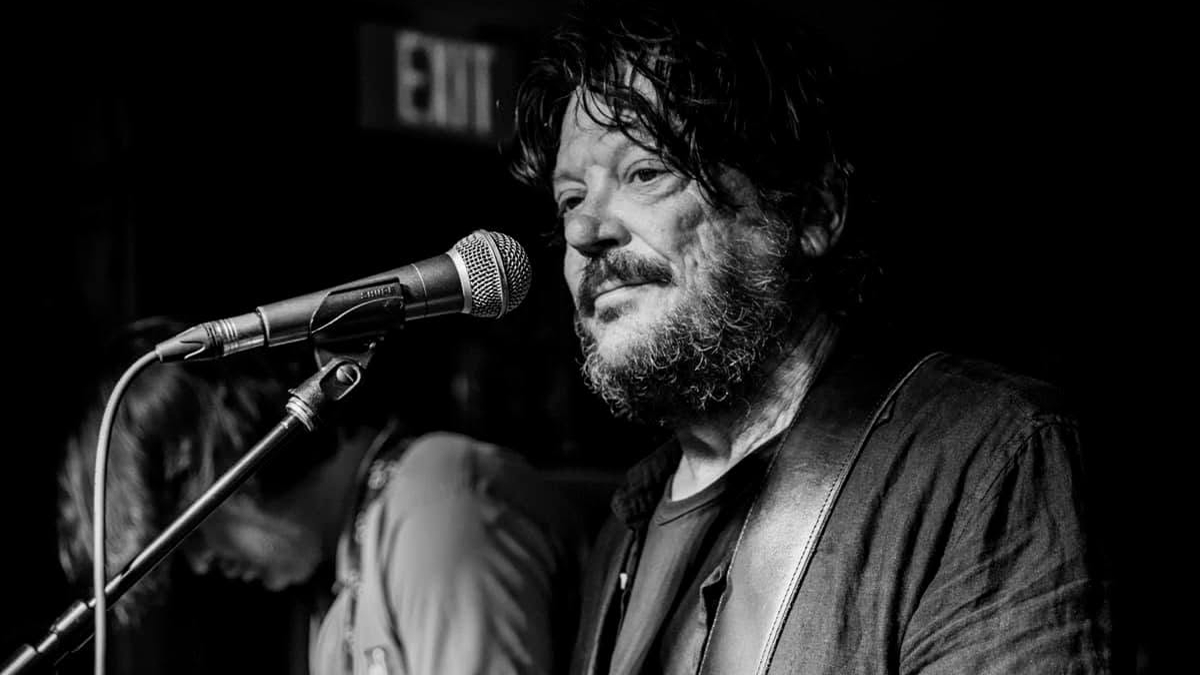
Ian Andrews is as much a blues guitarist as he is a singer-songwriter and bandleader. Based in Hamilton, Ontario, he is known for a soaring, vocal-like lead style listeners have long compared to a violin.
Born and raised in Guelph, he received his first guitar at age ten. By twelve, he was playing in bands and performing in small Guelph venues. By his early twenties, Ian Andrews was studying the tight, groove-driven bands led by Canadian stalwarts Jack de Keyzer and Steve Strongman, among a wide range of influences. That exposure taught him that blues guitar is about expression and phrasing rather than speed, a philosophy that still anchors his playing today.
After Andrews relocated from Guelph to Hamilton and immersed himself in the city’s music scene. Hamilton became the base for his career, where he developed both his musicianship and the high-energy stage physicality that now defines his live shows. In December 2012, he formed Ian Andrews & The Smokin’ Scoundrels, the flagship act carrying his original songwriting across Ontario stages, alongside a leaner trio or quartet for smaller rooms. This is where many Canadian blues fans know his name.
Over the course of his career so far, Andrews has shared bills with Canadian blues artists including Jack de Keyzer, Steve Strongman, and Philip Sayce, and even worked a Toronto studio session produced by Eddie Kramer, the engineer behind a number of classic Jimi Hendrix and Led Zeppelin recordings. His songwriting, blending blues with funk, soul, and rock and roll, earned him the 2016 Blues Recording of the Year award at the Hamilton Music Awards and the 2018 Brian Griffith Guitar Bursary.
Ian Andrews now also fronts the larger Big Bad Blues Show, built around a three-piece horn section, continuing to headline blues rooms and festivals across Ontario in the same spirit he found in the blues itself: honest, unfiltered expression of feeling.
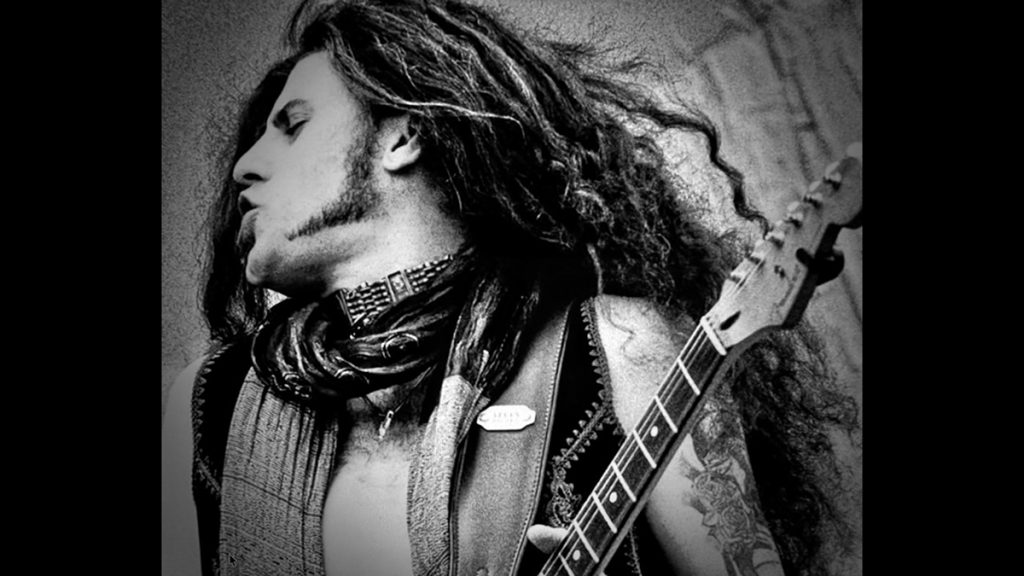
Ian Andrews’ Latest Album is “Eclipse”
Ian Andrews & The Smokin’ Scoundrels released their second full-length album, Eclipse, in 2023, ending a hiatus that began around 2018 following a lineup change.
Rather than recording new material from the ground up, Andrews assembled the record from a cache of live and studio tracks the band had cut in 2017 but never released, documenting a period when the group was already moving beyond straight blues toward a harder-edged, rock-and-roll-leaning sound.
The seven-track release comprises “L’amore,” “Night Driver,” “Fallin’ Apart (without you),” “Burn,” “Ignition-Launch,” “I’m a D.A.W.G,” and “Handsome Devil,” the latter two of which were also issued as standalone singles that same year.
The album represents a shift from the band’s 2015 debut, Foreplay, which was rooted in traditional blues shuffle. Eclipse instead showcases the fuller, horn-inflected, high-energy sound Andrews had been developing on stage with the Smokin’ Scoundrels, a direction he would later carry into his larger Big Bad Blues Show lineup.
Serving as both writer and producer, this record connects Ian Andrews’ earlier blues foundation with the rock, funk, and soul influences increasingly present in his live performances, closing out a chapter that was unfinished for half a decade.
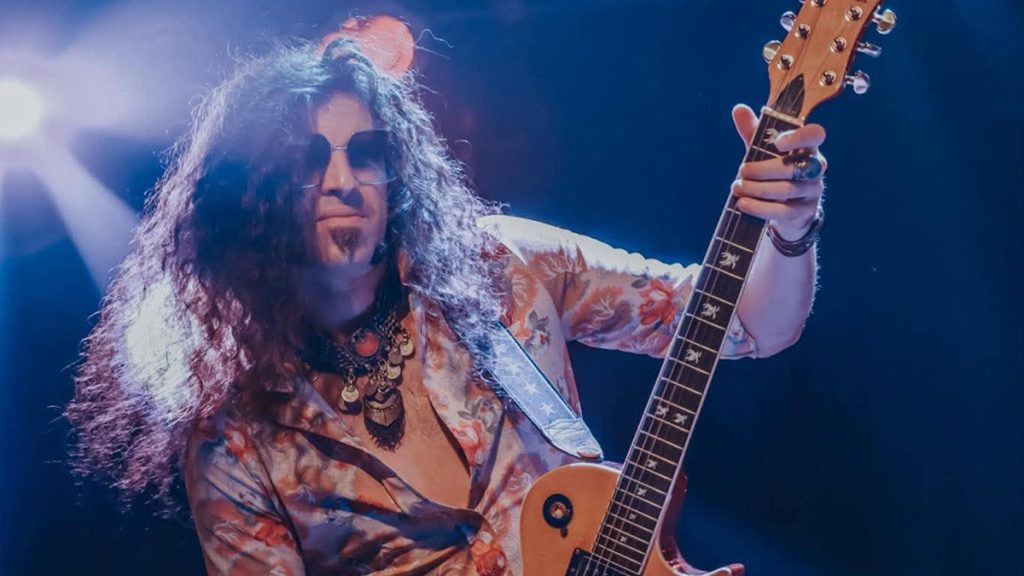
Here Is Ticketscene’s Interview with Ian Andrews
In early August of 2026, we caught up with Hamilton-based blues-rock guitarist Ian Andrews for a candid conversation spanning his early influences, his signature stage presence, and the moments that shaped his career.
Q: Take me back to the beginning. Was there a specific moment when you realized guitar wasn’t just a hobby, but the thing you’d build your life around?
IAN: To be honest, when I was a kid, I wanted to be a rockstar. I was a hyper kid that was just excited to entertain and perform to people. I was constantly expressing myself in that way as well as also being independently creative and making up song lyrics, even before I played an instrument. I remember Christmas morning when I got my guitar, I was 10 years old. I told my parents to come up to my room in 10 minutes but to knock first. I remember putting all these random pieces of necklaces, sweatbands, and other accessories on with a backwards cap just before standing on the top of the little practice amp I got as well to await that knock from my parents… The knock finally came and I flew off that little practice amp like I was Pete Townshend once my parents opened the door. I remember the shocked look on their faces as I flew through the air, likely caused by a mix between my sudden lunge through the air and the absolute chaos of sound from my in experienced fretting hand and power strumming right hand! I started playing in bands when I was around 12 and started performing publicly in very small settings as well. I was always driven to be honest but I think it really became more than a hobby when I moved away from Guelph to Hamilton at approximately 19 where I basically blew off post-secondary advertising and marketing (while paying for it), and committed to throwing myself headfirst in the music scene where I really began honing my craft, myself, and what I am truly proud to call a career now.
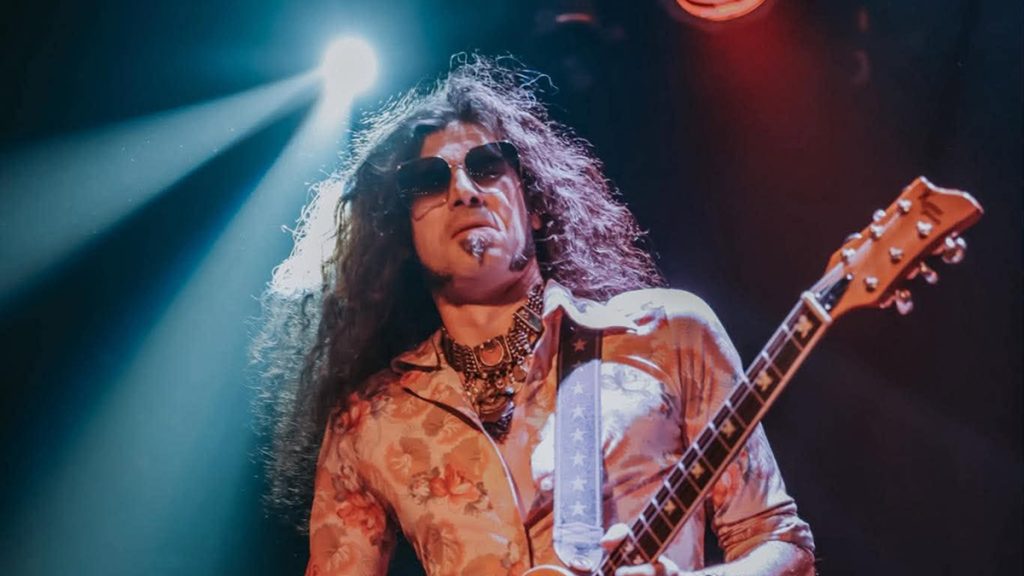
Q: Your playing has been described as a violin-like solo style and it has become kind of your signature. Walk me through how that tone and phrasing came together over the years.
IAN: I’ve appreciated hearing descriptions like that over the years. Truly my playing is always developing and always evolving. I always being inspired again and again by sounds, techniques, and approaches. When I was a kid, I was into guys like Randy Rhoads, Ritchie Blackmore, Mick Mars, and more melodic heavy metal players. Time goes by and I find myself in my late teens getting into guys like Johnny Winter, Hubert Sumlin, Albert Collins, and other blues guys. Then in my early twenties I am seeing guys like Jack de Keyzer, Steve Strongman playing. I was really at that time just falling for the blues but then getting to see those guys along with their extraordinary bands laying down tight rhythm, it completely cracked my shell! Now my rhythm, my phrasing, and my melodies started coming together because I learned that you’re supposed be saying something when a guitar plays the blues! It’s not the shredding or the speed, its the expression. Not what you say, but how you say it.
Q: On stage, you’re all over the place, dropping to your knees, right in the crowd’s face. Where did that physicality come from, and was it always natural to you?
IAN: Well, like I was saying with regards to my hyper/humble beginnings on guitar, I think I always had that. Honestly, I spent a lot of years as a shy guitar player and kept my focus. Eventually I got very comfortable with myself while simultaneously learning the art of showmanship. I find a lot of people these days play and just stare at their shoes when they are supposed to be putting on a show. I mean don’t me wrong. Stoic folks that look cool and composed also can put on a great show but I’m referring to the those other people that forget that the music is for the people and this is a show they are putting on. Look at James Brown, Triumph, Kiss, or heck George Clinton and Parliament/Funkadelic which was a whole universe of themes and characters created to co-exist with a show. You can go back and look at Screaming Jay Hawkins, probably one of the earliest examples of “Shock-Rock!” He came out on stage with a bone the size of an index finger shoved through his septum, a staff with a giant skull head on it, wearing a crazy get up… all while singing his new original song “I Put a Spell On You” and that was in 1956! Could you imagine, they were just getting over the fact that Elvis was shaking his hips and rockin his ‘Elvis Pelvis’ on national television then suddenly this warlock looking fella comes out probably 5 or 6 months later?! My point here as long as it may be is that the show itself is important and it is super important to me. So while I am just expressing myself naturally, I have come to the understanding that authentically expressing myself with a few magic tricks up my sleeve really give the people the show they’re after when they buy a ticket. Stage and concert production is such a high level these days that so much can be done and there is certainly friendly competition with it. I don’t have pyro… yet.
Q: Working with Eddie Kramer, the man behind several Jimi Hendrix classics and a co-producer of several Led Zeppelin records, is a pretty rare experience. What stuck with you most from that session?
IAN: What didn’t! Eddie is the sweetest man and fantastic to work with. I had this moment on a take where I was making the silliest mistakes and Eddie would come on the headphones, “uhhhh… what happened Ian, let’s try that again.” Of course I’m thinking, “Well you’re Eddie Kramer, I own a lot of records with your name on them and you are pretty much part what inspired rock n’ roll in me… and you are in my headphones and on the other side of the glass!” I’d have to say two things stuck out on this session. First, I remember on a break watching Eddie sit down at a beautiful Steinway Grand and he just absolutely tore it to pieces with some jazz. I was floored to watch this man go to town on this piano and simply retain that cool and composed Eddie Kramer grin. The other thing that stuck out for me was when we were tracking and sort of going for this one part of tune. A couple takes went by and he came on said “okay Ian, need you to play that lick again…” so I of course immediately started going to through the licks I had been playing on takes and over the headphones was “No… hmmm no, not that one… Nope not that one.” Then finally “you know – the Hendrix lick!” Boy that felt cool – busted by Eddie. I of course at the time just naturally went for a bit of busy swish of melody in a lick on the end of a bar not really thinking. As soon as Eddie said it, I remember going beat red before coyly playing it back and hearing “yes, that one my man.”
Q: Sharing bills with guys like Philip Sayce, Steve Strongman, and Jack de Keyzer. Did any of those nights change how you thought about your own playing?
IAN: They certainly did. It really put into perspective where I was at. Not just watching but also playing with in some cases. You really feel the energy and the heat coming off of their fire that’s burning and THAT is sure something. It was also super inspiring to not only be working with them but getting hit with their guitar laser beams, magic I tell ya! Watching those guys phrase their solo and express the blues with their guitars really helped me to see through a lens with a bit more traditional blues guitar style. Jack is a great example. He is super smooth with a tone that bites perfectly and his runs on the fret board heavenly. He’s also super cool! Strongman is another guy I really dig watching do his thing as well, his whole aura on stage is absolutely cool and you can totally see how much fun he is having. I love his versatility as a player and he has a great approach to blues. I remember opening up for Philip Sayce. Firstly, I was in awe that he had 20-year olds showing up 2 hours before show time to get guitars and amplifiers signed by him before the show. In addition to that, it brought so much joy to see that probably 85% of his sold-out audiences are between 18 and 35 which is certainly barely even rare in the blues world. People talk about the future of blues and how it important it is. What we seem to have is the torch getting passed to next generation for players but the torch needs to start getting passed in the sense of audience to keep that growing. I think guys like Philip Sayce, Spencer Mackenzie, and myself can keep connecting with that younger audience.
Q: There’s real funk and soul running through your blues-rock sound. Where did that come from, and when did it start blending in?
IAN: Well, my sound is sort of just a blend of what I am feeling at the time and my authentic expression. I was always a rock n roller growing up. I loved my Deep Purple, my Edgar Winter, Motley Crue, Kiss and so on. Thousands to name. I also really fell deep into funk, soul, and motown, I really connect and resonate with those sounds. I of course breathe the blues as well and I suppose I just sort of fell into little sprinkle of ‘this’ here and a dash of ‘that’ there. I love traditional blues but I am not a super traditional player. I used to be a bit of a purists nightmare actually! I recall in my early twenties I was actually sort of split between rockabilly and blues. The rockabilly guys liked me but they would say I was just a little to bluesy for rockabilly. Then of course I had the blues guys telling me to settle down and breathe when I play because I am just a little too rockabilly when I play the blues. Now I suppose I am a little too everything and I like it because it’s just simply authentically me. The blues is certainly built on tradition but in all seriousness the most important tradition is expressing your feeling – really just letting it out; it’s an emission you simply allow to flow out of you. The blues can come out a lot of different ways but that’s it right there – letting it out. A lot of people think the blues is a music of sadness and pain. I suppose it sort of originated in place of that through slavery and what not. It was actually just a minor pentatonic scale that people sang with and would even communicate with almost like singing in code in its earliest origins. It definitely did and will always evolve, but the main essence of it is expression. Whether happy, sad, frustrated, or whatever the feeling may be. Express it. I suppose that is perhaps how I remain pure with the blues, I simply and purely express myself while put my feelings into my performance and guitar playing. It’s certainly a special connection!
Q: How involved are the other musicians you play with in shaping the sound. Do they ever help steer things, or is the vision mostly coming from you?
IAN: Credit where credit is due. I have always played with excellent musicians who bring something special to the table and they get it – they express themselves. Generally speaking, I’ve always been the writer and arranger, producer as well. I point in the direction but the musicians definitely put their flavor into the sound. Of course, they make suggestions and come up with nifty little ideas as well. There’s a big subject worth more discussion – side musicians and hired guns. Since the dawn of musical time there was the front person and they were backed by a real hot shot band of hired guns. The front person mostly got the royalties, the fame, the fortune, but the hired guns were more like contractors and just got paid per job along with a high five. Eventually some get famous after playing on hundreds and hundreds and hundreds of legendary studio albums. The long and short of it, love your hired guns and thank your musicians. I know I am grateful for the gentlemen I play with as well as all the ones that came before them. Truly grateful.
Q: When people walk out of one of your shows, what do you hope stays with them afterward?
IAN: I hope that excitement and inspiration stays with them. Some shows you go to and it completely splits you open. You get struck by a bolt of lightning and whoever you just saw literally just turned your crank so hard that you can barely control yourself for a week afterwards – pure joy! I have seen that in a few people at my shows and had a few people come up to me and express that notion. This is exactly why I do it – inspiration and connection. Spreading the joy and reminding people that feelings like this exist in life no matter how bad things may seem. I know the feeling well and I suppose I am just using my power to give it back and spread it.
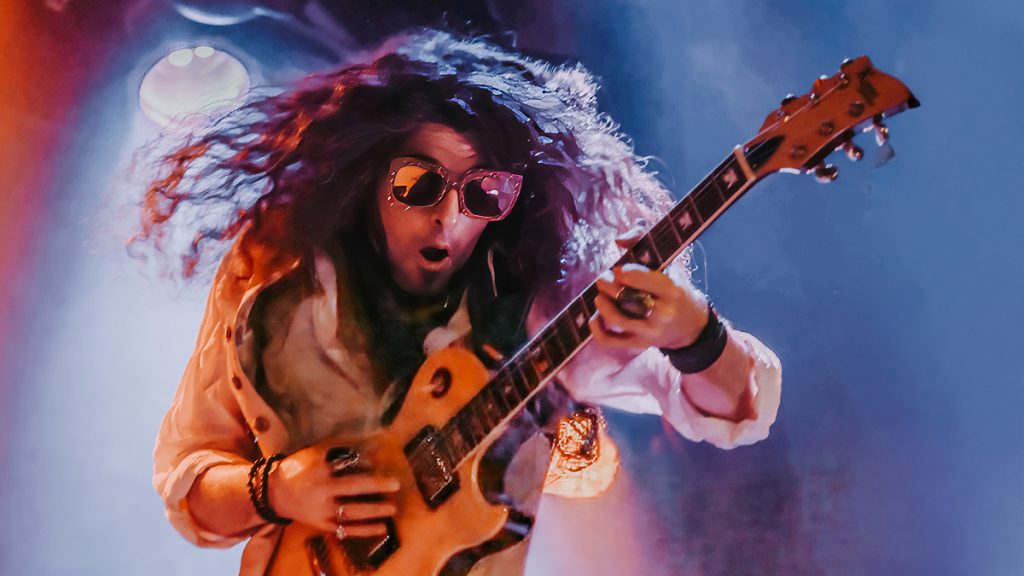
Q: The road and the stage can wear a person down. How do you look after yourself so you can keep bringing that same energy night after night?
IAN: The road can be rough and you can get worn down. It is most certainly how you operate before and after the performance. Are you going to eat crab in the morning? Gas station food or proper food? Are you going to stay up drinking with the new guy in the band or get your rest because checkout is 9 am the next morning followed by a 4-hour drive to the next sound check, and you pray there is no traffic. It is difficult to steer at times, especially when you just spun the wheel of the party super hard and now everyone wants to party with you. I’m better now than I used to be, I’ve cracked open my fair share of bottles after the gig. I try to focus on what truly matters these days, it’s the music.
Catch Ian Andrews next gig on August 2nd at the Eastside Bar & Grill alongside the multi-talented Alice Armstrong. Buy tickets here.