
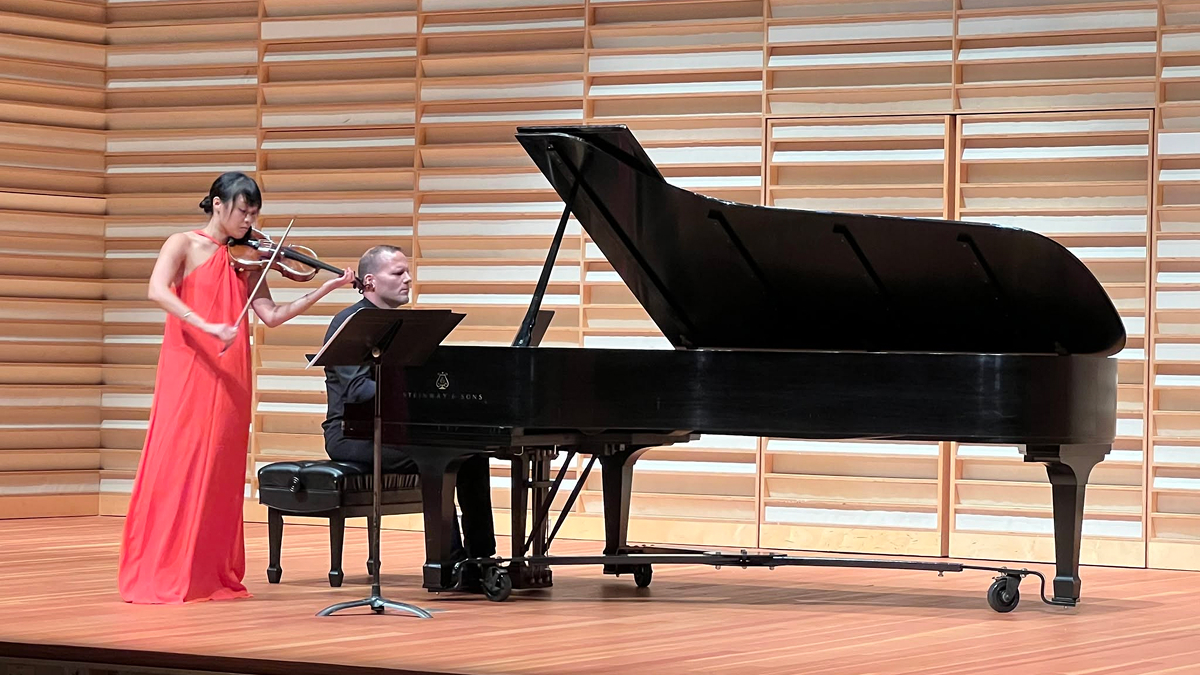
On Saturday, November 7, 2026, Canadian violinist Jessica Tong and Baltimore pianist Michael Sheppard will bring a demanding program to St. Andrew’s Presbyterian Church in Kitchener.
The K-W Chamber Music Society is presenting the violin and piano concert, with general admission at $40 and a $10 student rate.
That is remarkable value for an evening built around Bartók, Janáček, and Beethoven‘s fiery “Kreutzer” Sonata. It is also the kind of program that rewards both seasoned chamber music listeners and curious newcomers.
Tong and Sheppard met at the Peabody Institute and have performed together for more than a decade, pairing beloved masterpieces with lesser-known gems.
In this profile, we introduce both artists, delve into why each piece matters, and offer practical advice for anyone attending a chamber concert for the first time.
When and Where Is the Jessica Tong and Michael Sheppard Concert in Kitchener?
The concert takes place on Saturday, November 7, 2026, at St. Andrew’s Presbyterian Church, 54 Queen Street North, Kitchener, Ontario. Doors open at 6:30 p.m., the performance starts at 7:00 p.m., and the evening is scheduled to wrap up around 9:00 p.m.
The K-W Chamber Music Society is the presenter, and the event is listed as all ages. Tickets are sold through Ticketscene, a Canadian-owned ticketing platform, at $40 for general admission and $10 for students, plus fees.
With a listed maximum capacity of 200, this is a small-room event, and a program headlined by the “Kreutzer” Sonata can draw a full house.
The program, as listed, features Bartók’s Rhapsody, Janáček’s Sonata, and Beethoven’s Sonata No. 9, the “Kreutzer.”
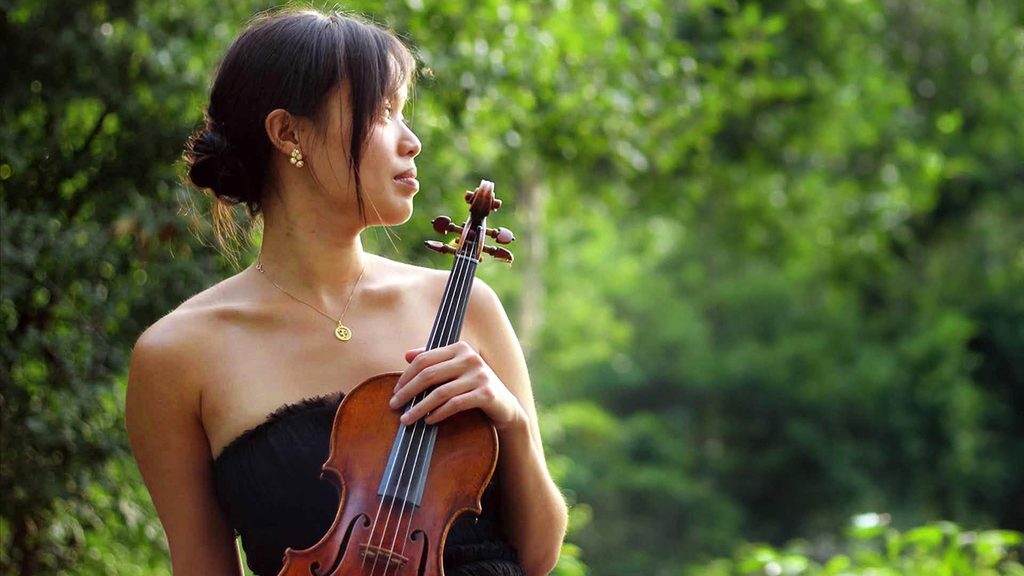
Jessica Tong: A Canadian Violinist Whose Career Spans Concert Halls, Quartets, and Classrooms
Jessica Tong is a Canadian violinist who has built an international reputation as a soloist, recitalist, and chamber musician. She is currently an Associate Professor of violin at the State University of New York at Fredonia, where she was named head of the violin area in 2019.
Critics have been consistently warm. Performing Arts in Canada called her an “outstanding talent,” while the Baltimore Sun praised the lyrical intensity of her playing. A French review in ClassiqueInfo noted that her ardor never comes at the expense of tonal beauty.
Her training reads like a map of North American string pedagogy. She studied at the Royal Conservatory of Music in Toronto and Rice University’s Shepherd School of Music before earning a master’s degree and graduate performance diploma at the Peabody Institute.
Her principal teacher was the celebrated violinist Pamela Frank, and she also worked with Kathleen Winkler, Donald Weilerstein, and Zhang Yun Zhang. As a chamber musician, she was mentored by members of the Alban Berg, Vogler, Artemis, and Brentano Quartets.
The competition record is equally strong. Tong has won top prizes at the Eckhardt-Gramatté Competition, the Toronto Symphony Competition, the Canadian Music Competition, and the Yellow Springs International Chamber Music Competition. She is also a Canada Council grant recipient, a DAAD scholar, and a winner of the David Ouchterlony Award.
Chamber music has always been the center of her artistic life. She served as first violinist of the Vinca and Larchmere String Quartets, and she held artist-in-residence posts with the Perlman Music Program in Florida, the ProQuartet Odyssée program in France, and the University of Evansville in Indiana, where she was also concertmaster of the Evansville Philharmonic Orchestra.
Her list of venues includes Weill Recital Hall at Carnegie Hall, the Kennedy Center, Merkin Hall, Les Invalides in Paris, and the Gewandhaus in Leipzig. She has collaborated with Pamela Frank, the late pianist Leon Fleisher, violinist Cho-Liang Lin, and members of the Cleveland, Vogler, Brentano, and Borromeo Quartets.
Tong is as committed to building the field as she is to performing in it. She co-founded and directs the Chamber Music Workshop of the Composers Conference, and she serves as co-artistic director of Avaloch Farm Music Institute in Boscawen, New Hampshire.
She also co-founded Music Beyond the Chamber, a residency program that arranges master classes and workshops with institutions across the United States, and she has helped lead festivals including Chamber Music of the Rockies, the University of Florida’s ChamberFest, and England’s Harlaxton Music Festival.
Her approach to performance is unusually holistic. She is an advocate for music education and for humanizing the concert experience, and her interest in the mind-body connection led her to complete yoga teacher certification at the Kripalu Center in Lenox, Massachusetts. As recently as July 2026, she was performing at Avaloch alongside cellist Ashley Bathgate and pianist David Kaplan in programs of works by Beethoven, Haydn, and Mendelssohn.
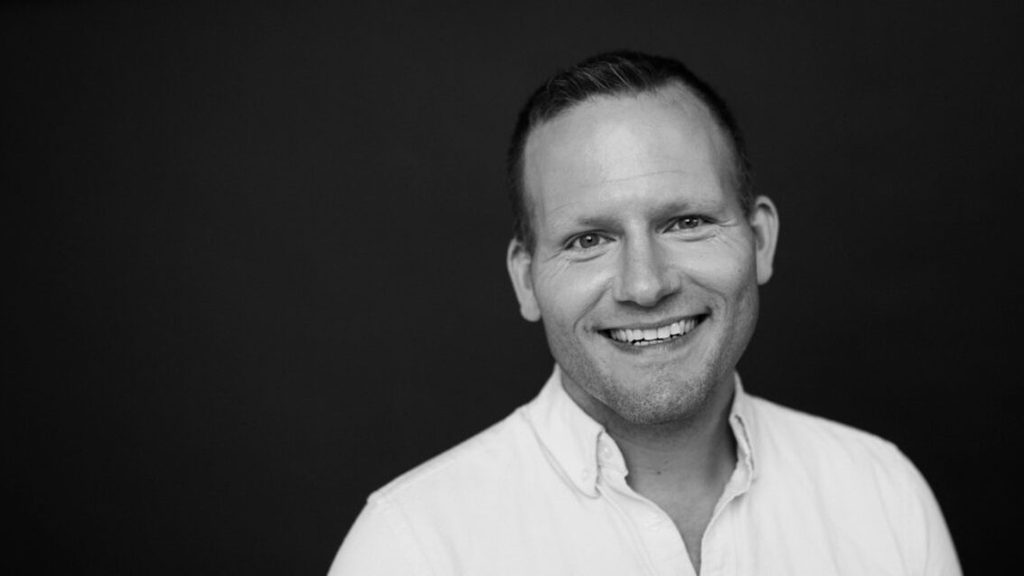
Michael Sheppard: The Peabody-Trained Pianist, Composer, and Teacher Who Plays Almost Everything
Michael Sheppard is a Philadelphia native who now lives in Baltimore, and his musical story began remarkably early.
He has said he was picking out tunes by ear as a toddler, including themes from the John Williams scores that played on his parents’ record player, such as Superman, Star Wars, and Raiders of the Lost Ark. Structured lessons took hold in second or third grade, when a school music teacher took him under her wing.
Serious training followed at the Peabody Conservatory, where he studied with Leon Fleisher and Ann Schein and earned bachelor’s and master’s degrees.
He spent two summers at the Aspen Music Festival on full scholarship and later became a piano fellow at the Tanglewood Music Center, where he worked with Emanuel Ax, Ursula Oppens, and Pamela Frank, the same violinist who taught Tong. Fellowship concerts in Toulouse, France, and Verona, Italy, came through the La Gesse Foundation.
His competition résumé includes the Cafferata-Jackson, Miecyslaw Munz, Harrison Winter, and Poulenc Plus! competitions, as well as a major prize from the National Federation of Music Clubs. The biggest honor was selection as a Classical Fellow of the American Pianists Association, which led to his 2007 Harmonia Mundi recording, Michael Sheppard Plays American Piano Music.
The Indianapolis Star described him as “a virtuosic soloist possessed of power, sensitivity, earthiness, and humor.” His touring record backs that up, with several solo recitals at Weill Recital Hall, a Kennedy Center debut, an 18-city tour of China, and engagements in southern Asia and the Middle East in collaboration with the U.S. Department of State.
He has even given solo recitals in Jihlava, the hometown of Gustav Mahler, and in Tupelo, Mississippi, the birthplace of Elvis Presley.
His concerto repertoire stretches from Bach and Mozart through Brahms, Schumann, Tchaikovsky, Rachmaninoff, Bartók, and Gershwin. On record, he has also released 12 Images, a 2018 album of fully improvised pieces, and Through Broken Time, a collaboration with flutist Jennifer Grim exploring works by Black and Afro-descended composers. A separate Azica Records release was distributed worldwide by Naxos.
Sheppard is just as comfortable at a desk or on a conductor’s podium as at the keyboard. He composes, arranges, and transcribes, and he has worked closely with composers John Corigliano, Christopher Theofanidis, Michael Hersch, Robert Sirota, and the late Nicholas Maw. His theatrical side surfaced when he served as musical director for Jason Robert Brown’s The Last Five Years and for Elegies for Angels, Punks, and Raging Queens at the Brighton Fringe, where he also made his stage acting debut.
At home in Baltimore, Sheppard serves on the collaborative piano staff at the Peabody Conservatory and teaches at the Baltimore School for the Arts. He has coached singers, instrumentalists, and conductors, played for Marin Alsop’s conducting class, and begun to conduct on occasion himself. That versatility is exactly why Tong trusts him with everything from orchestral reductions to Broadway tunes.
How a Friendship Formed at Peabody Became a Decade-Long Violin and Piano Partnership
Tong and Sheppard first crossed paths at the Peabody Institute, where he studied with Leon Fleisher and she studied with Pamela Frank.
Their first performance together was a program of Mozart violin sonatas more than ten years ago, and it revealed what both describe as a rare, shared vision of music-making.
That vision has driven a steady touring partnership ever since. The duo has appeared at the Hudson Chamber Music Series in Quebec, in 2019 and again in 2022, and at the Yukon Arts Centre in Whitehorse, a reminder of how far chamber music travels in Canada. In April 2023, they performed in the Washington and Baltimore area with a program pairing Schubert, Poulenc, Lili Boulanger, and Richard Strauss.
Their repertoire choices show genuine curiosity. An October 2023 program at Otterbein University in Ohio combined works by Schumann, Frolov, Szymanowski, and Schubert.
In September 2025, they gave a recital at SUNY Fredonia that explored sacred and profane music through Bach, Brahms, and Ernest Bloch, whose violin and piano music Tong described as rarely performed because of its fiendish intensity and technical demands.
Longevity matters in a duo. Musicians who have worked together for a decade develop an instinct for each other’s breathing, tempo, and balance, which is precisely what the Beethoven “Kreutzer” Sonata, a true dialogue between equals, demands. Tong has said that Sheppard has the breadth to play anything and everything with impeccable stylistic and technical accuracy.
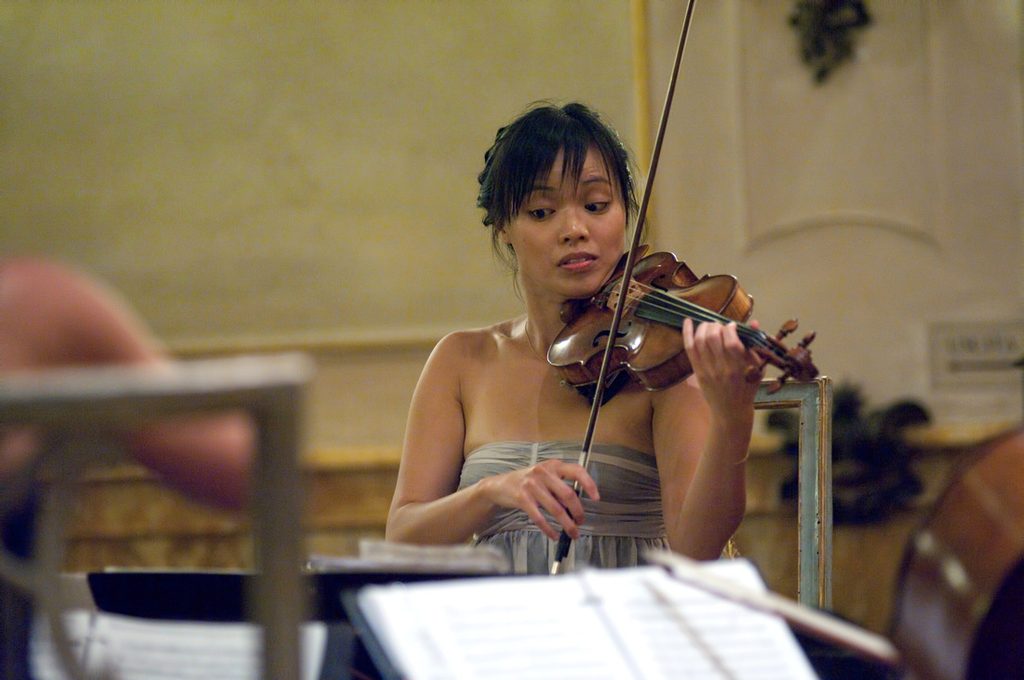
Bartók’s Rhapsody Brings Hungarian Folk Fiddling and Fiery Virtuosity to the Program
The evening opens with Béla Bartók’s Rhapsody, a showpiece for violin and piano.
The listing does not say whether the duo will play the First or Second Rhapsody, and Bartók wrote both in 1928, so audiences may not know which one until the night itself.
Both works draw on the folk music Bartók spent years collecting in the Hungarian and Romanian countryside. Each follows a two-part pattern: a lassú, a slow and improvisatory opening, and a friss, a fast and increasingly brilliant dance. Bartók noted that each section can be performed on its own, though they are most thrilling when heard together.
The First Rhapsody was dedicated to violinist Joseph Szigeti and premiered in London in March 1929 with Bartók himself at the piano. The Second was dedicated to Zoltán Székely. Each runs about ten minutes, and the writing is full of the double stops, ornamented melodies, and rhythmic snap of village fiddling.
One charming detail for listeners of the First Rhapsody is that the main folk tune of its fast section bears an uncanny resemblance to the American Shaker hymn Simple Gifts. Program annotators often call the Rhapsodies among Bartók’s most accessible music, even though he wrote them alongside some of his most radical scores.
As an opener, the piece is a smart choice. It announces the duo’s technical command in the first minutes and sets up the intensity of the two sonatas to come.
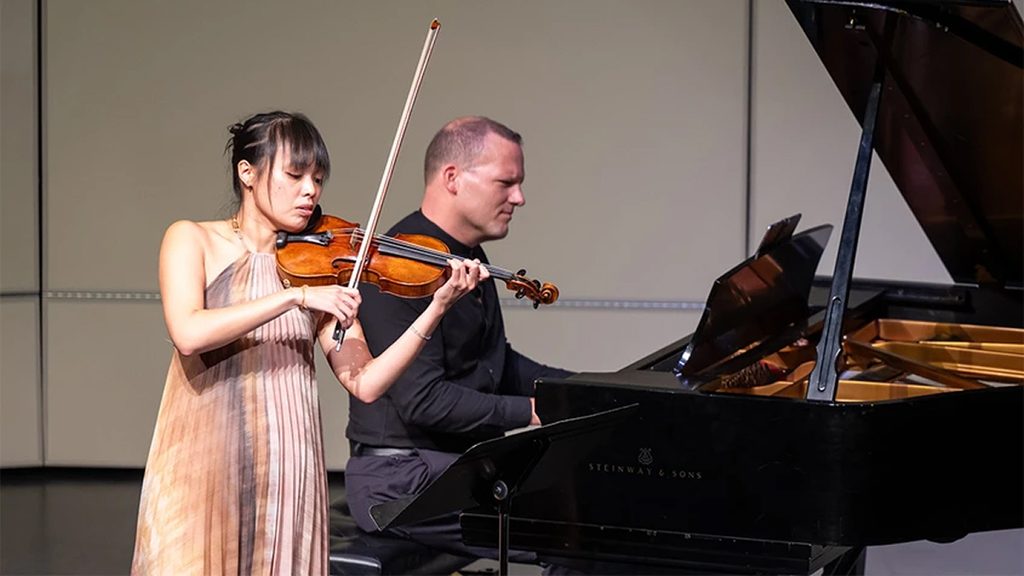
Janáček’s Violin Sonata: A Wartime Work Full of Interruptions, Folk Echoes, and Raw Emotion
Leoš Janáček’s Violin Sonata is the least familiar work on the program for many listeners, and perhaps the most rewarding. The Czech composer began it in the late summer of 1914, as World War I was starting, and he did not finish it until 1921 after repeated revisions. He later recalled that he could almost hear the clash of steel in his troubled head while writing it.
The first performance took place in Brno on April 24, 1922, with violinist František Kudláček and pianist Jaroslav Kvapil. The sonata has four movements, marked Con moto, Ballada, Allegretto, and Adagio.
The mood shifts constantly, sometimes from one bar to the next, which makes it a thrilling test for a duo that listens closely.
Janáček was a composer of vivid operas, and that theatrical instinct is everywhere.
He was also fascinated by the rhythms and pitch contours of spoken Czech, a theory he called speech-melody, so his phrases often sound like urgent sentences rather than conventional tunes. Violin and piano frequently interrupt one another: a shrieking chromatic figure cuts into a dance in the third movement, and in the finale the violin, at times muted, answers the piano’s lyrical gestures with a ferocious figure.
In 1917, while he was still revising the sonata, Janáček met Kamila Stösslová, the woman who would inspire much of his late music. For Kitchener audiences, the piece is an invitation to hear a rarely programmed masterpiece performed by two musicians who clearly enjoy adventurous repertoire.
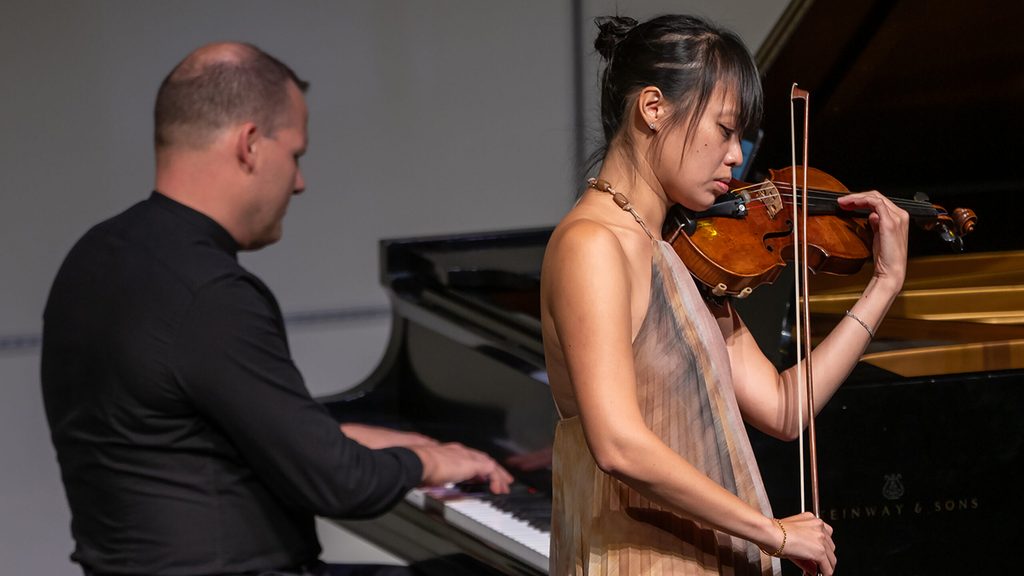
Beethoven’s Kreutzer Sonata: The Landmark Work That Inspired a Novella and a String Quartet
The program ends with Beethoven’s Violin Sonata No. 9 in A major, Opus 47, universally known as the “Kreutzer.” It runs about 35 minutes, and many musicians consider it the great showpiece of the violin sonata repertoire. Beethoven composed it in 1803, and it was a radical break from the polite sonatas of its day.
The origin story is pure drama. Beethoven wrote the sonata in great haste for the Polish-born virtuoso George Bridgetower, the son of a West Indian father and a European mother, and the two gave the premiere on May 24, 1803, with Beethoven at the piano. Bridgetower had to read the second movement from Beethoven’s manuscript during the performance because there was no time to copy out the violin part.
The friendship soon soured. According to Bridgetower’s later recollection, the two quarreled over a woman, and Beethoven rededicated the sonata to the French violinist Rodolphe Kreutzer. Kreutzer reportedly found the work baffling and never performed it, which leaves one of the most famous nicknames in chamber music attached to a violinist who never played the piece.
Musically, it is the only Beethoven violin sonata to open with a slow introduction, and its main Presto in A minor is a driven dialogue, often interrupted, between two equal partners. That is why the work needs a genuine duo rather than a soloist and an accompanist.
Its influence stretched far beyond the concert hall. In 1889, Leo Tolstoy published the novella The Kreutzer Sonata, linking Beethoven’s music to jealousy and murder. Janáček, whose own sonata appears earlier on this program, later wrote his String Quartet No. 1, subtitled “Kreutzer Sonata,” in response to Tolstoy’s story. Hearing Janáček and Beethoven on the same evening therefore creates a conversation that spans more than a century.
Why the K-W Chamber Music Society Remains One of Canada’s Busiest Concert Presenters
The K-W Chamber Music Society was founded in 1974 by Jan Narveson, a philosophy professor at the University of Waterloo who was later named an Officer of the Order of Canada in part for organizing these concerts. The society remains one of the busiest chamber music organizations in the country. It is a registered charity, and by its own account it has presented roughly 1,800 concerts over its first four decades.
Volume is the story here. The society has described itself as presenting 60 or more concerts a year, ranging from solo recitals to octets, with programs spanning medieval to contemporary music. That is a heavy schedule for a charity of its size.
Its early seasons set a high bar.
In the 1977 to 1978 season, the society presented Beethoven’s complete chamber music with piano, with Raffi Armenian at the keyboard, and in 1978 to 1979, pianist Anton Kuerti performed the complete Beethoven piano sonatas.
A summer chamber music workshop for young artists followed in 1993. Notable guests over the years include pianists Janina Fialkowska, Till Fellner, André Laplante, and Sofya Gulyak, along with the Penderecki and New Orford String Quartets.
Most concerts have traditionally been held in the society’s Music Room in Waterloo, a large, acoustically warm living room that seats about 85 people and houses a fine Steinway piano.
This concert at St. Andrew’s, with a listed capacity of 200, gives the Tong and Sheppard duo a larger room while keeping the intimacy that defines the series. The society has also used church spaces for special series, including a Beethoven string quartet cycle with the Penderecki String Quartet.
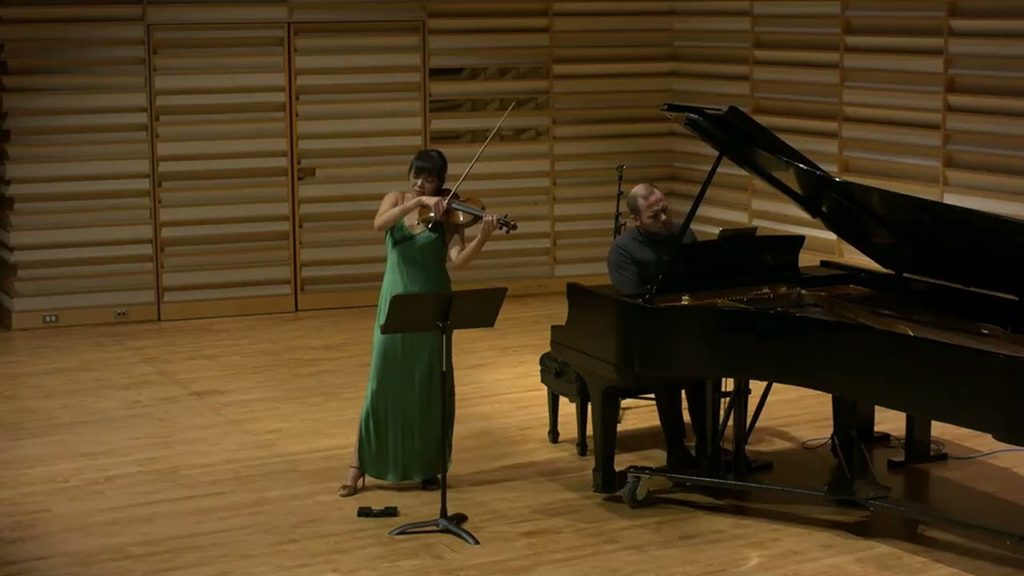
St. Andrew’s Presbyterian Church Offers a Historic Setting for an Intimate Evening of Music
St. Andrew’s Presbyterian Church sits at the corner of Queen Street North and Weber Street East in downtown Kitchener. The congregation was established in 1855, the first church on the site was built in 1857, and the present Gothic Revival building dates to the early twentieth century, completed in 1906 or 1907 depending on the source.
Local history adds charm. A postcard in the Waterloo Public Library’s digital collection shows the church labeled as being in Berlin, Canada, since Kitchener did not adopt its current name until 1916.
Doors Open Waterloo Region has also noted that Prime Minister William Lyon Mackenzie King once attended services there.
Churches have long been natural homes for chamber music, and the reasons are practical as well as aesthetic. Hard surfaces and high ceilings often give violin and piano a warm, resonant bloom, and the seating places listeners close to the performers. For a duo like Tong and Sheppard, who trade musical phrases constantly, that proximity helps the dialogue come through.
The Doors Open listing describes the building as having parking, washrooms, and partial wheelchair access. Anyone with accessibility needs should confirm details with the presenter before the concert.
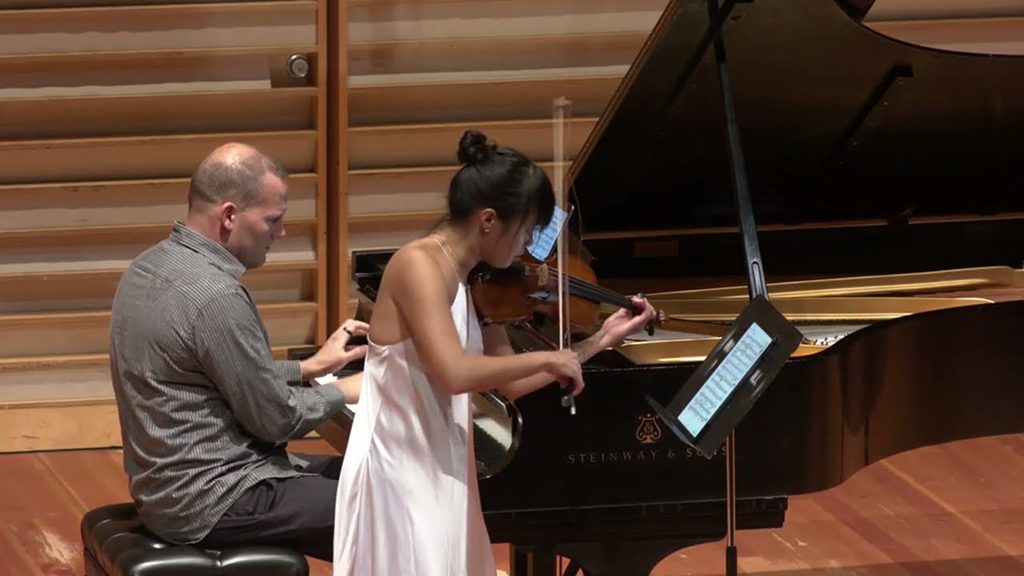
Get Your Tickets to Jessica Tong & Michael Sheppard Live in Kitchener on Nov. 7
Concerts like this one are rare in the best sense.
Two seasoned musicians with a shared history at one of America’s great conservatories will perform a program that moves from Hungarian village dances through wartime Moravia to the white-hot drama of Beethoven, all in a historic Kitchener church. The setting is small, the ticket price is modest, and the artistry is world-class.
Tong brings a résumé that spans prize-winning solo playing, quartet leadership, and a deep commitment to teaching and community building. Sheppard brings pianistic fire, a composer’s curiosity, and a lifetime of making music with singers, instrumentalists, and conductors. Together, they bring more than ten years of conversation between two instruments that Beethoven treated as equals.
The concert is on Saturday, November 7, 2026, at St. Andrew’s Presbyterian Church, 54 Queen Street North, with doors at 6:30 p.m. and music at 7:00 p.m.
Tickets are $40 for general admission and $10 for students, plus fees, and they can also be bought at the door.
If you have ever wondered why classical music keeps drawing devoted audiences more than two centuries after Beethoven’s time, this is a perfect night to find out. Come curious, sit close, and let a famous sonata do what it has done since 1803.



