A community rink in Garson, Ontario fills to capacity on a Sunday afternoon in September, and the players stepping onto the ice aren’t local beer-leaguers.
They’re retired NHL forwards, defensemen, and goaltenders who once played in front of twenty thousand people, now lacing up in front of three hundred neighbors, cops, and kids clutching hockey cards.
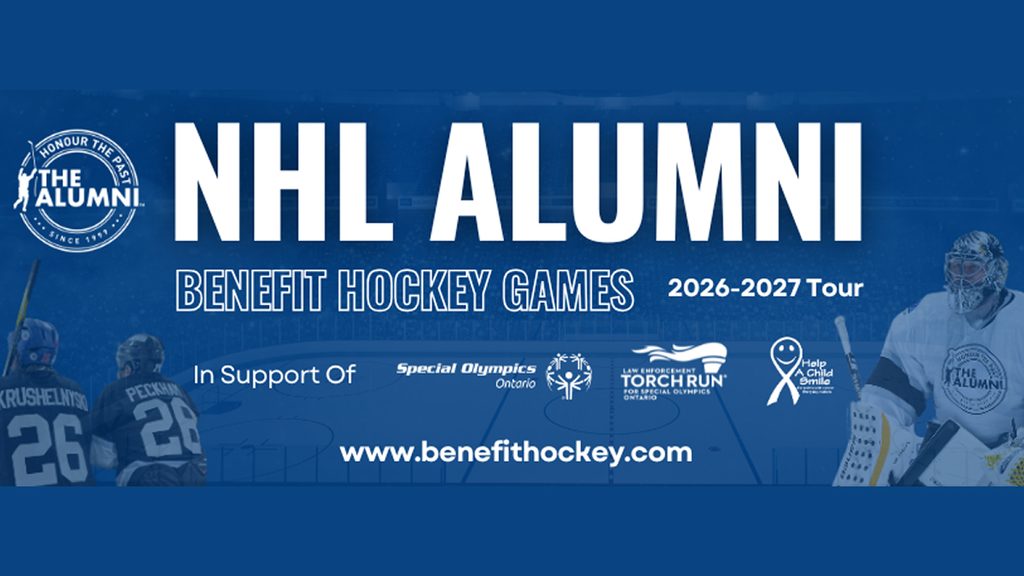
That scene repeats itself eight times between September 2026 and February 2027, in eight different Ontario communities, as the NHL Alumni Benefit Hockey Game 2026-2027 season rolls out its annual run.
The format never really changes: NHL Alumni against the local Law Enforcement All-Stars, one afternoon, one rink, one cause. What does change is the city, the roster mix, and the size of the check that gets written to Special Olympics Ontario and a Hamilton-based children’s cancer charity once the final buzzer sounds.
For anyone weighing whether to buy a ticket, sponsor a period, or just understand what this tour actually is, here’s everything currently on the record about the season.
What the NHL Alumni Benefit Hockey Game Actually Is
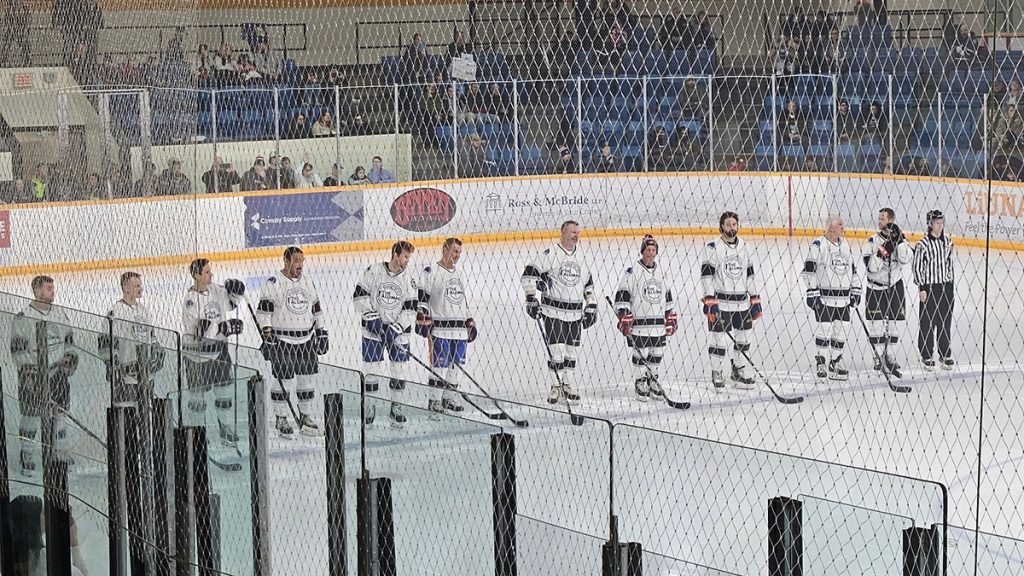
The NHL Alumni Benefit Hockey Game 2026-2027 season is an eight-stop charity hockey tour that runs from September 13, 2026 through February 28, 2027, pitting teams of former NHL players against local law enforcement squads in communities across Ontario.
The tour is organized under the NHL Alumni Benefit Tour banner at benefithockey.com.
Every game follows the same basic shape: a two-and-a-half-hour event window, doors opening an hour before puck drop, a full exhibition game between the alumni and the hometown police service, a skills competition, and enough on-ice comedy to keep the format from feeling like a serious varsity matchup. Two causes sit behind every ticket sold.
The primary beneficiary is the Law Enforcement Torch Run for Special Olympics Ontario, and the secondary beneficiary is Help A Child Smile, a Hamilton-area charity that supports children being treated for cancer at McMaster Children’s Hospital.
The tour supports roughly 23,000 Special Olympics Ontario athletes across the province, and this season marks the tour’s eighth confirmed tour stop count for 2026-2027, spread across Sudbury, London, Ottawa, Belleville, Newmarket, Belle River, Hamilton, and Cambridge.
The Full NHL Alumni Benefit Hockey 2026-2027 Schedule, City by City
The season opens on Sunday, September 13, 2026, in Garson, part of Greater Sudbury.
There, the NHL Alumni face the Greater Sudbury Police at the George Armstrong Community Centre, a rink formerly known as the Garson Community Centre, located at 100 Church Street. Doors open at 1:00 p.m. with puck drop at 2:00 p.m. and the event running until roughly 4:30 p.m.
A week later, on Sunday, September 20, 2026, the tour heads to London to face the London Police at the Sports Centre inside the Western Fair District, part of a broader Western Fair hockey programming window that runs from September 11 through September 20.
The tour then goes quiet for a few weeks before resuming on Sunday, October 25, 2026, in Ottawa, where the alumni take on the Ottawa Police at the Pinecrest Recreation Complex. Ottawa is one of the later-starting games on the schedule, with a 3:00 p.m. puck drop rather than the usual 2:00 p.m. slot.
On Sunday, November 8, 2026, the tour lands in Belleville to face the Belleville Police at the CAA Arena, 265 Cannifton Road, with the standard 1:00 p.m. doors and 2:00 p.m. start.
Newmarket follows two weeks later, on Sunday, November 22, 2026, where the alumni face York Regional Police at the Ray Twinney Recreation Complex.
December brings a single stop: Sunday, December 13, 2026, in Belle River, at the Atlas Tube Recreation Centre. This community has hosted the tour before, and last season’s roster played in January 2026 against the Essex County OPP.
The tour then pauses for nearly two months over the holidays before resuming in February 2027 with back-to-back closing stops.
Hamilton is scheduled for Sunday, February 7, 2027, at the Dave Andreychuk Mountain Arena against the Hamilton Police.
The season closes on Sunday, February 28, 2027, in Cambridge, where the alumni face the Waterloo Regional Police at Galt Arena Gardens.
Tickets, Pricing, and How to Actually Get In
General admission for the 2026-2027 season is priced at $28.25 CAD plus fees, with children three and under admitted free.
That figure represents a shift from how the tour priced the 2025-26 season, when tickets at some stops were sold at the door on a cash-only basis at tiered rates of $30 for adults, $25 for children twelve and under, and $25 for seniors.
Several of the tour’s community arenas, including Sudbury and Belleville, cap official event capacity at 300 tickets, which is something to be aware of if you are interested in buying tickets.
Tickets are issued as eTickets rather than physical stock mailed or handed out, and online sales for each stop close on a fixed cutoff, typically the Thursday before the event at 11:59 p.m. local time, unless the game sells out first.
Ticketscene’s event pages also bundle in logistics that matter for a family day out: embedded driving, walking, transit, and cycling directions to each venue, plus a geolocated nearby-hotel finder for anyone traveling in from out of town, a level of self-service trip planning that has become close to standard for mid-size ticketed community events.
As of this writing, Hamilton is the one stop on the schedule not yet open for ticket purchase, still marked “coming soon” on the tour’s own schedule page even though the date and venue are locked in.
Inside the Building: What the Game Actually Looks Like
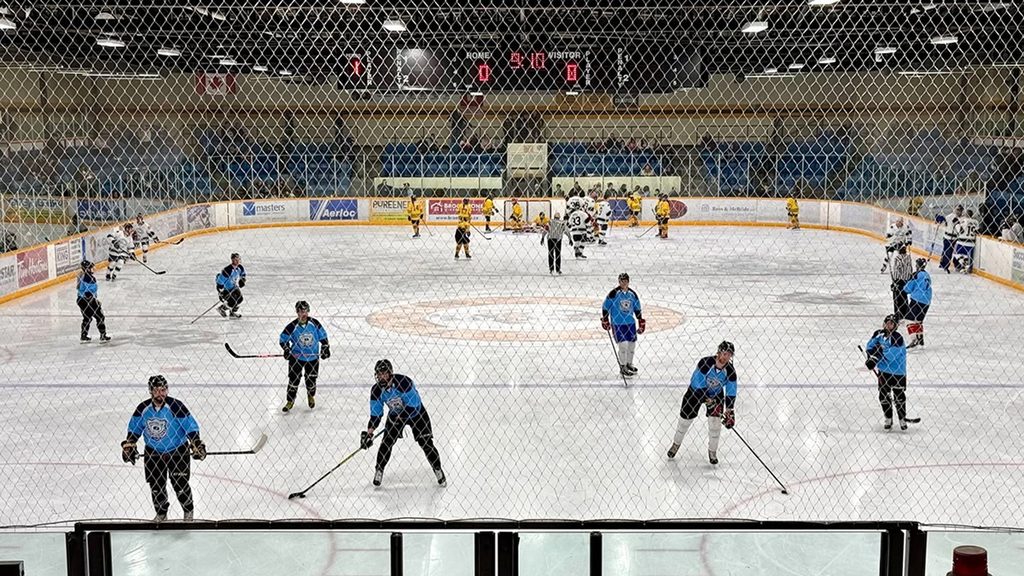
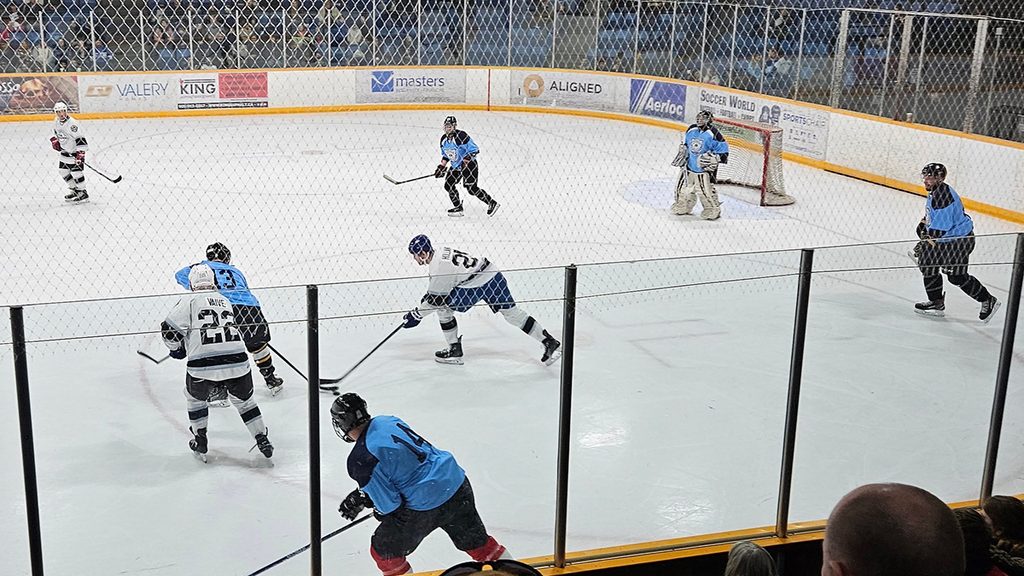
Every stop on the tour runs the same basic script, described consistently across the tour’s own event pages: a full exhibition hockey game between the NHL Alumni and that city’s Law Enforcement All-Stars, wrapped around a skills competition and on-ice bits built for a crowd that skews family and multi-generational rather than hardcore hockey purist.
The tour’s own copy leans hard into the contrast between the two rosters, promising end-to-end rushes, dazzling dekes, and powerful slap shots from a group of players who, despite being well past their competitive primes, still skate circles around amateur opposition. Historically, that gap in skill has been real rather than promotional exaggeration.
The atmosphere leans informal on purpose. Community arenas host after-game gatherings at some stops, Sudbury’s included, and sponsor activations line the boards, from Zamboni-sponsor branding to period sponsorships to a dedicated skills-competition sponsor slot.
Meet-and-greet moments with the alumni have historically been a bigger draw than the final score.
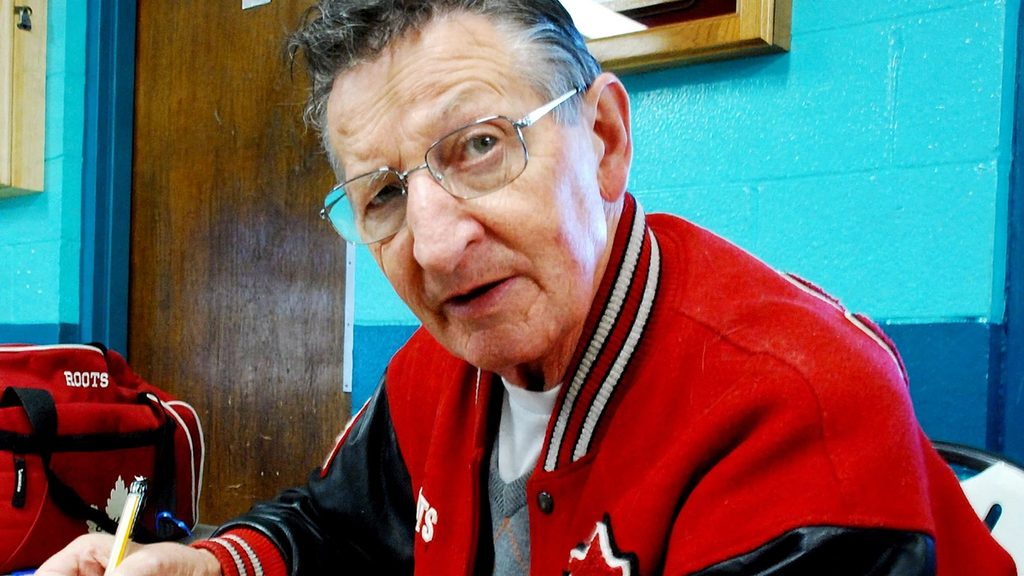
For years, the tour’s honorary coach was Wayne Gretzky’s father, Walter Gretzky, who became something of a folk hero on the circuit for staying at the autograph table long after doors closed, a habit local organizers in Peterborough once described as signing until his hand practically gave out before the line did.
Doors typically open an hour before puck drop and the full event, including the skills competition and post-game activity, runs roughly two and a half hours, making it a manageable half-day outing rather than a full evening commitment.
The Law Enforcement Torch Run: The Cause Behind Every Ticket
The Law Enforcement Torch Run for Special Olympics began in 1981 in Wichita, Kansas, when police chief Richard LaMunyon started a torch relay to raise both money and public awareness for Special Olympics athletes.
Two years later the International Association of Chiefs of Police formally endorsed the program, and it has since grown into the largest grassroots fundraising and public-awareness vehicle for Special Olympics worldwide, raising more than a billion U.S. dollars globally since its founding and operating in more than 45 countries with close to 100,000 participating law enforcement personnel.
Ontario joined the movement in 1987, under the endorsement of the Ontario Association of Chiefs of Police, and the province’s officers, known within the organization as Guardians of the Flame, carry the ceremonial Flame of Hope into the opening ceremonies of Special Olympics competitions at the local, provincial, and national level.
The financial scale of that work in Ontario has grown substantially.
The 2025-26 fiscal year set a provincial fundraising record of $3.2 million for Special Olympics Ontario athletes, a full $1 million increase over the prior year and the strongest single fundraising year in the program’s Ontario history.
That total was built from several fundraising channels working in parallel, including more than $1.2 million raised through Polar Plunge cold-water events, over $600,000 generated through a Tim Hortons “Choose to Include” retail campaign, and additional funds from community torch runs and provincial games.
The NHL Alumni Benefit Tour is one recurring line item inside that broader machine, structured specifically as the fundraising arm of Special Olympics Ontario so that the organization’s actual staff and volunteers can stay focused on athlete programming rather than event logistics and gate revenue.
Every ticket sold at a tour stop, every Zamboni sponsorship, and every period sponsorship ultimately routes back into that same provincial total.
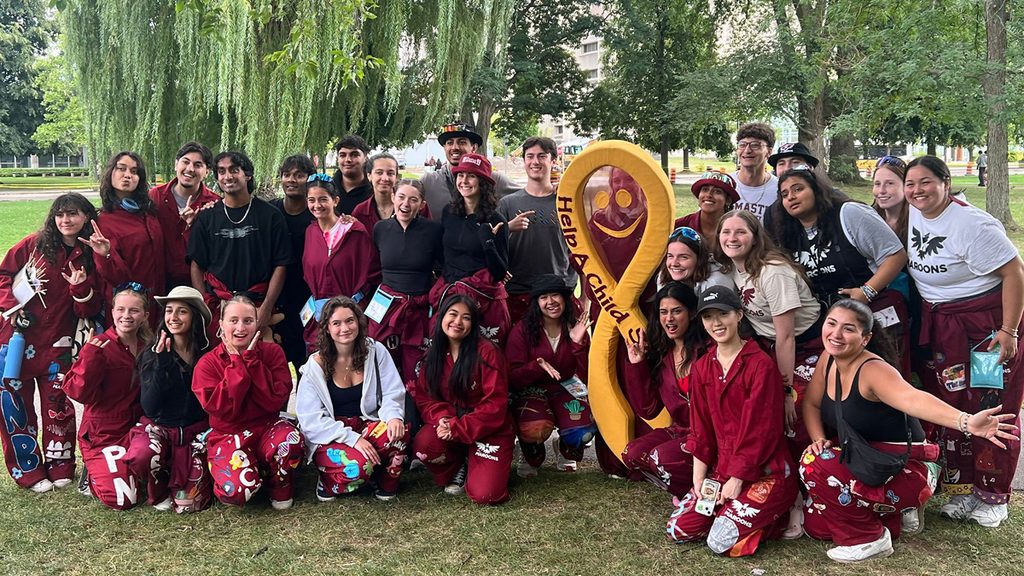
Help A Child Smile: The Second Cause on the Ice
Less prominently marketed but built into the same ticket price is Help A Child Smile, a volunteer-run Hamilton charity founded in 1987 that supports children being treated for cancer at McMaster Children’s Hospital.
The organization’s origin story traces to a single family: a young cancer patient named Kacey-Lynn Rainville, treated at McMaster, asked to visit the newly opened Canada’s Wonderland, and her mother, Lynda Rainville, organized a fundraiser that ended up sending two busloads of patients and their families on that trip. Kacey-Lynn later lost her fight with cancer, and her mother turned that single outing into a permanent charity.
Nearly four decades later, Help A Child Smile has supported more than 1,600 families whose children were treated at McMaster, and the organization still runs entirely on volunteers, accepting no government funding and relying almost exclusively on donations and community fundraising partners like the NHL Alumni Benefit Tour.
The practical support Help A Child Smile provides covers hospital parking costs for families throughout a child’s cancer treatment, a benefit that runs close to $40,000 a year given how often families are back at McMaster for appointments.
It funds fertility preservation procedures for children and teens undergoing treatment that can affect future fertility, distributes welcome packs with gas cards to newly admitted families, and administers the Sandra Allen Memorial Education Award, which hands out three $2,500 awards annually to Help A Child Smile family members pursuing further education.
None of that infrastructure shows up on a hockey ticket, but a portion of every $28.25 general admission purchase, along with sponsorship dollars from local businesses at each stop, flows toward keeping it funded.
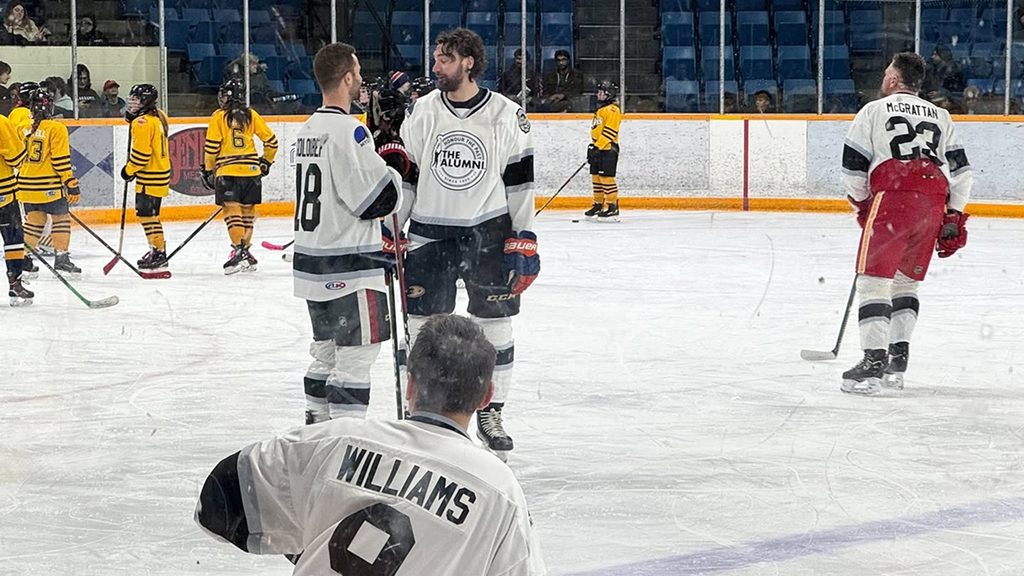
Who’s Actually on the Ice: The Alumni Roster
The tour doesn’t skate a single fixed roster city to city; it draws from a rotating pool of recently retired and long-retired NHL players who split appearances across the season’s eight stops, with certain names recurring at multiple cities in the same year.
Recent seasons have featured players including Zack Kassian, Zenon Konopka, Jordan Nolan, Keith Acton, Bryan Muir, Rob Schremp, Theo Peckham, Mike Krushelnyski, Brandon Prust, Luke Gazdic, Brian McGrattan, Kraig Nienhuis, and goaltender Adam Munro, with veteran forward and longtime tour emcee Dave Hutchison frequently doubling as referee and master of ceremonies.
Names tied to the tour’s longer history go further back and further up the star ladder, including Wendel Clark, Owen Nolan, Curtis Joseph, Theo Fleury, Tiger Williams, and Rick Vaive, all of whom have appeared on the circuit in past tour years alongside honorary coach Walter Gretzky.
The pattern that emerges from comparing rosters across cities and seasons is that four or five players tend to anchor a given tour year and appear at multiple stops, while the remaining spots rotate based on which alumni live near a given city or have personal ties to a specific police service or charity.
Specific game-by-game lineups for the 2026-2027 season are typically confirmed closer to each individual date rather than published as a single season-long roster, so the exact group that shows up in Sudbury in September will not be identical to the group that closes the season in Cambridge the following February.
Sponsorship, Community Partners, and How Businesses Get Involved
Every stop on the tour is underwritten by a layered sponsorship structure that ranges from small local activations to a season-long title position.
At the local level, businesses can sponsor the Zamboni, take an honorary coach spot on the NHL Alumni bench for the day, get featured during the skills competition, or claim a period sponsorship, with recognition tiers at Sudbury’s stop alone running from Zamboni Sponsor and First Period Sponsor up through Ultimate Fan Sponsors, Hat Trick Sponsors, and Blue Line Sponsors.
At the top of the structure sits the corporate tour sponsorship, a season-long title position that puts a company’s name across every stop on the schedule, bonus ticket allocations, a role in opening ceremonies, and branding on the NHL Alumni Tour jerseys themselves.
The organization also publishes an annual History of Hockey Magazine, now in its fifth issue, which mixes hockey history features with Law Enforcement Torch Run athlete spotlights and profiles of community sponsors, functioning as another piece of donor and sponsor recognition alongside the games themselves.
For groups or companies looking at a bulk purchase or an invoiced sponsorship package rather than a standard online ticket, the tour’s site includes a direct pay-invoice option and a listed contact line.
In fact, you can reach out at https://www.benefithockey.com/become-a-sponsor.
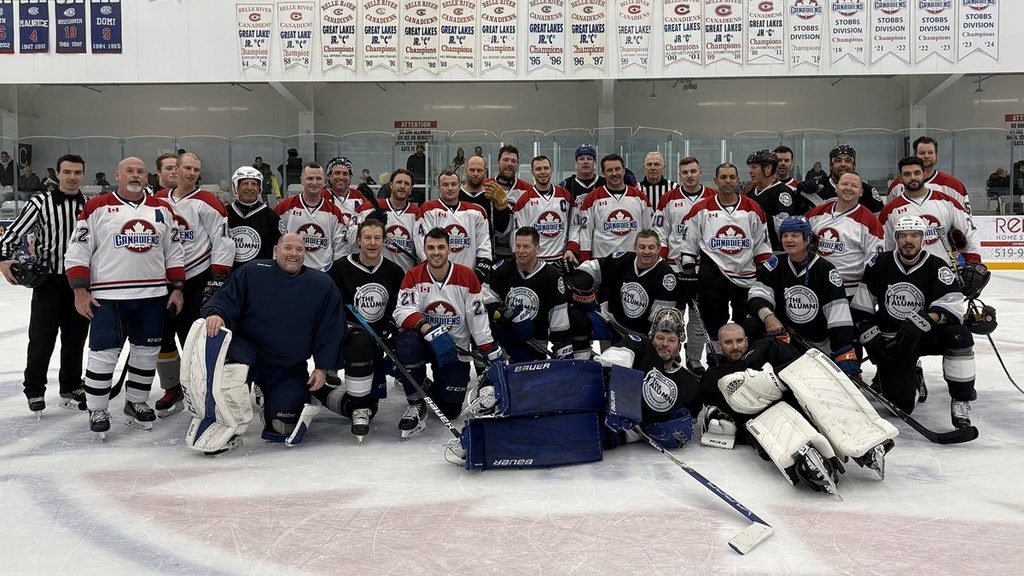
Join Us for This Season’s NHL Alumni Charity Benefit Ontario Tour in Your City
Strip away the branding and the NHL Alumni Benefit Hockey Game 2026-2027 season is a fairly simple machine:
Eight Ontario arenas, eight Sunday afternoons spread across six months, a rotating cast of recognizable former NHL players, and a $28.25 ticket that quietly funds two very different causes at once, a province-wide disability sports movement with a fundraising record it just broke, and a small Hamilton charity built out of one family’s grief.
The hockey itself is genuinely competitive entertainment rather than a token exhibition, and the format has proven durable enough to keep drawing sponsors, police services, and alumni back year after year across the same set of mid-size Ontario communities.
For anyone deciding whether a Sunday afternoon in Sudbury, Belleville, Newmarket, or Cambridge is worth the trip, the honest answer is that the hockey is only half the draw. The other half is watching a 300-seat community rink turn into a genuine hometown event, one period sponsorship and one autograph line at a time.
Check out the full NHL Alumni Benefit Hockey Game 2026-2027 season here to learn more about the tour and get your tickets today!