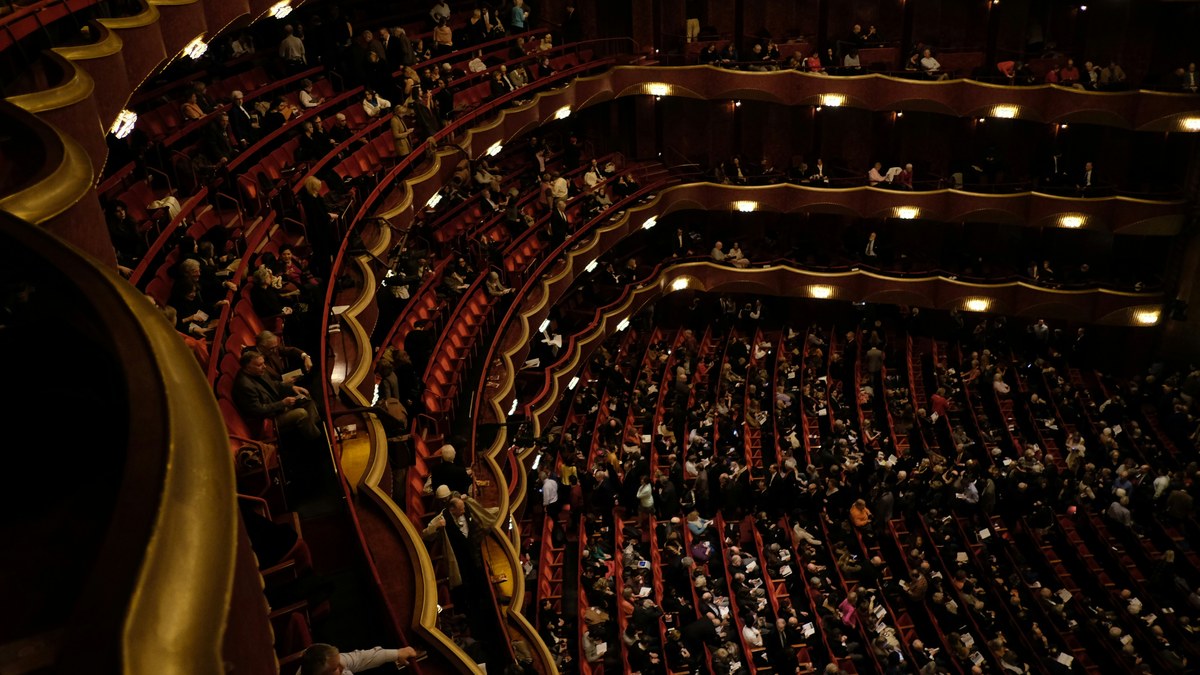
It’s 1 a.m. in a walk-up apartment, and the piano is the only thing awake. The composer plays the same eight bars for the twentieth time, chasing a melody that sounded better in the shower — while four blocks away, or four hundred miles away, a Broadway overture swells through a darkened house.
Every composer who has ever cracked how to become a Broadway composer has lived in the gap between those two rooms — the one where the music gets written and the one where it gets heard.
Between that piano bench and that opening night sits a $1.89 billion industry. Broadway’s 2024–25 season was the highest-grossing on record and the slots for new musicals are brutally few. The path from bench to boards is an apprenticeship measured in years, not months. But it is a defined pipeline, with real doors and real deadlines — not a lottery.
This guide is for aspiring composers at any stage, and for the musical-theatre obsessives who want to understand how the machine works. It covers the training options, the New York question, the breaking-in ladder, the business mechanics, six real career paths from Sondheim to Michael R. Jackson, and more.
Here’s the map.

The Reality Check: Odds, Money, and Time
Before the training, the networking, and the craft — the numbers.
How scarce the slots really are
The arithmetic of Broadway starts with the calendar. In the 2024–25 season, 21 musicals opened — 16 original, 5 revivals. In 2025–26, that number collapsed to 6 new musicals, down from 16 in each of the two seasons before.
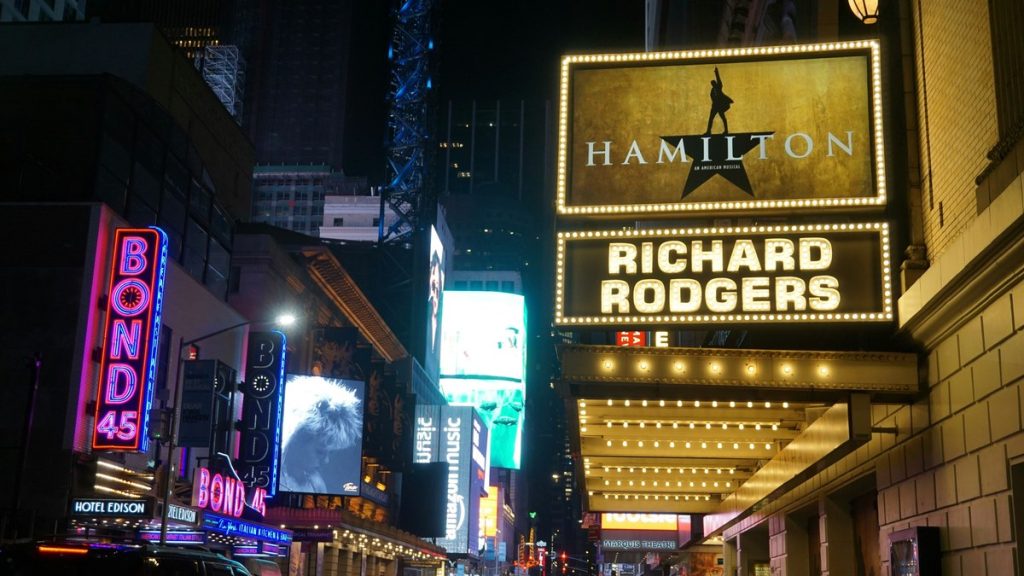
The bottleneck is physical. There are only 41 operating Broadway theatres in New York City, and every season’s worth of ambition has to fit through those 41 doors. Forty-one theatres sounds like a lot until you remember that the long-running hits never leave — a new musical isn’t competing for an empty stage, it’s competing for someone else’s lease to end.
Even working composers say the pipeline is too narrow. “We need more new musicals on Broadway. Support new musicals,” says Cinco Paul.
And the financials are brutal: roughly 1 in 10 Broadway shows ever recoups. Per the New York Times, not one of the 18 musicals that opened “last season” turned a profit.
What a show costs — and why producers are risk-averse
A new Broadway musical is capitalized at $15 to $25 million. Weekly operating costs run $650,000 to $800,000 — and that excludes rent. Roughly three-quarters of shows lose money.
The bar keeps rising. The average capitalization of announced new musicals hit $19.5 million in 2024–25, with Death Becomes Her capitalized at $31.5 million.
When a single flop can vaporize $20 million or more, producers stop gambling and start hedging. They bet on known quantities — the star, the brand, the jukebox catalog, the movie adaptation. The jukebox musical isn’t a creative failure — it’s an insurance policy. A catalog of hits is a pre-sold audience — the only thing standing between a producer and a $20 million crater.
Which is exactly why the breaking-in ladder exists. Nobody hands $20 million to an unknown; the whole apparatus of readings, workshops, and regional productions is the industry’s way of de-risking the unknown until it looks like a known.
How long it actually takes
Then there’s the clock.
Musicals take seven to ten years or more to develop — through readings, workshops, cabarets, showcases, regional productions, and rewrites. Lin-Manuel Miranda puts it at “seven years or longer.”
Those years aren’t waiting — they’re working. A song gets written for a reading, dies in rehearsal, gets rewritten for a workshop, survives a regional run, and gets cut two weeks before Broadway previews.
The extremes tell the story. Dear Evan Hansen moved “fast” at roughly five years, from 2011 to 2016. In the Heights took about nine, from 1999 to 2008. And A Strange Loop took twenty years to reach Broadway — then won the Pulitzer and the Tony for Best Musical.
As Miranda says: “It’s a mix of hard work and luck.” You can control the work. You can’t control the clock.
The Training Pipeline: Skills, Schools, and Workshops
The odds are the argument for getting good fast. Here’s what “good” actually requires.
The non-negotiable core skills
Asked what an aspiring theatre composer needs, the consensus lands blunt: “Learn to play the piano. And know your theory.” Berklee‘s own curriculum backs them up, listing accompanying and notation among the core skills a composer needs.
The piano isn’t about performance polish. It’s the instrument a composer thinks on — harmony, counterpoint, and dramatic timing all live under the hands, and theory is the vocabulary for getting what’s in the head onto the page for an orchestrator.
Per Berklee, the work demands composition, orchestration literacy, collaboration with lyricists and book writers — and the ability to write on deadline, then rewrite, then rewrite again.
But the forum’s other great piece of advice cuts against the credentialism: “Get writing! Just get out and do it, whatever you want, whatever you feel, just do it.” Volume of output beats waiting for permission.
Degree vs. self-taught — the honest split
The degree path has a flagship.
NYU Tisch‘s Graduate Musical Theatre Writing Program is a two-year MFA whose alumni and faculty span 42 countries across six continents. The alumni list does the arguing: Michael R. Jackson, Will Aronson — whose Maybe Happy Ending earned 10 Tony nominations in 2025 — Winnie Holzman, Steven Lutvak.
What a program like Tisch’s actually sells isn’t the diploma — it’s two years of enforced output, collaborators in the next room, and an audience of industry ears at the end. The structure manufactures the one thing talent can’t buy: deadlines with witnesses.
Then there’s the other road. Jonathan Larson held a drama degree from Adelphi and learned the craft by writing. Lin-Manuel Miranda was a Wesleyan theatre major whose training included improv with Freestyle Love Supreme. Alan Menken was NYU-trained, but Lehman Engel’s verdict on the young composer was “totally undisciplined” — Menken really learned as a ballet-class accompanist and a jingle writer.
The contradiction resolves into something honest: formal training helps, but no credential holds a monopoly. The portfolio is the credential.
The BMI Lehman Engel Musical Theatre Workshop
The premier free pipeline has a name: the BMI Lehman Engel Musical Theatre Workshop. Some 250 composers, lyricists, and book writers pass through; it was founded in 1961, costs participants nothing beyond a $27 badge fee, and collected both a Drama Desk Special Award and Tony Honors in 2006.
Getting in takes work. The application requires three contrasting songs — an up-tempo, a comedy number, and a ballad — plus scores with lyrics. Songwriters face an August 1 deadline; librettists, May 15.
A free workshop with a real audition bar is the industry’s quiet answer to the MFA’s tuition — the same enforced output and the same room full of collaborators, minus the debt.
Alan Menken came through the workshop, and Engel’s verdict on the young composer — “Oh he’s wildly talented but totally undisciplined” — is the place’s whole ethos in one line. Talent gets you in. Discipline gets built there.

The NYC Question: Must You Move?
Trained up. Now: where do you have to live?
The case for New York
All 41 Broadway theatres are in New York City, and the key pipelines demand a body in the room — both the BMI workshop and NAMT require writers to be in the city for workshops and rehearsals.
Berklee states the industry’s worldview plainly: “New York City (Broadway) and London (the West End) serve as the global commercial epicenters” of commercial musical theatre. The rooms where decisions get made are in those two cities.
Presence isn’t about prestige — it’s about proximity to accidents. The sub who covers a sick pit musician, the assistant who ends up in the room when a song isn’t working: those are New York stories, and they don’t happen over Zoom.
Then there’s the apprenticeship economy. The entry-level ladder — ushering, assisting, subbing in pits — runs overwhelmingly on New York labor. Those jobs go to people who are already there.
The case for the hybrid career
Self-tapes, Zoom training, and regional development mean a career can start anywhere — Goodspeed, Arena Stage, La Jolla all develop work far from Times Square. As one industry voice puts it: “Your career success depends on clarity, consistency, and visibility — not location.”
The hybrid model has a shape: write at home, develop regionally, and show up in New York for the windows that matter — the workshop, the showcase, the festival where the decision-makers are in the seats. Dear Evan Hansen was developed at Arena Stage in 2015 and Second Stage in 2016 before it ever touched Broadway — the regional-to-Broadway path is institutionalized, not exceptional.
So frame it as sequencing, not a binary. Build the portfolio anywhere — but budget, in money and calendar, for the stretches of New York presence the pipeline demands.
Breaking In: How to Become a Broadway Composer, Step by Step
Training done, address sorted. Now the actual climb — rung by rung.
The apprenticeship ladder
The apprenticeship stories all rhyme. Michael R. Jackson ushered at The Lion King for four years and Mary Poppins for one — tearing tickets by night while writing A Strange Loop by day.
Ian Weinberger‘s climb is the textbook version. He started as a Broadway music assistant, updating scores in Finale and Sibelius during rehearsals. Then came sub keyboard chairs — Chaplin, Kinky Boots, Rocky, Side Show, Book of Mormon — then rehearsal pianist, then sub conductor. In March 2015 he joined Hamilton as rehearsal pianist; by January 2020 he was its music director.
“A great opportunity for a young music director to be in the middle of the process, learn the ropes, and watch the pros work,” Weinberger says of the assistant years.
What the ladder teaches can’t be taught in a classroom: how a song behaves with forty musicians behind it, how a star’s key change ripples through an orchestration. Assistants learn the physics of the thing by standing next to it.
Alan Menken’s version was scrappier: ballet-class accompanist and jingle writer, thrilled at $135 per Sesame Street song, before he ever met Howard Ashman.
Demos and collaborators
Now the myth that costs newcomers the most money: the demo. Aspiring writers over-produce — full band, mixed and mastered — when the gatekeepers ask for far less. NAMT requires only “a demo that is an accurate representation of the music and style.” The standard is a clear piano with clear vocals, max five demos for a twenty-page submission.
An over-produced demo can actively hurt. Heavy production buries the songwriting under arrangement choices the gatekeepers didn’t ask for — and signals a writer who’d rather hide behind a mix than stand behind a melody.
The BMI workshop’s bar is the same philosophy in miniature: three contrasting songs with scores. Craft over production value, every time.
Finding the people to write with is its own skill. The BMI workshop pairs writers; the Dramatists Guild runs a “Find a Collaborator” service; MusicalWriters.com offers matchmaking.
“We sit in a room for a long time and come up with it all together,” says Justin Paul. Collaboration isn’t the compromise — it’s the job.
Readings, workshops, labs — and the two big showcases
The development chain has a shape: table read, then staged reading, then a two-to-four-week workshop with an invited audience, then six-to-ten-week full workshops — with the book, music, and lyrics getting rewritten at every stage.
The top juried gateway is NAMT‘s Festival of New Musicals.
In 2026, 8 musicals were chosen from 518 submissions — about a 1.5 percent acceptance rate. Since 1989, the festival has introduced more than 300 musicals and 600 writers, with over 85 percent going on to further development. NAMT’s rules are strict by design: the musical must be complete, unlicensed, and never produced on Broadway — and NAMT takes no royalties. The festival is a showcase, not a toll booth.
The other testing ground is a cabaret room. 54 Below — a 2022 Tony Honor recipient — runs emerging-writer series including Write Out Loud (Volume 8 landed in September 2026), the pay-what-you-can Verses and Voices, and New Musicals at 54. A song that kills at 54 Below has passed the only focus group that matters: strangers with drinks.
The Business: Options, Agents, and Royalties
The craft gets you in the room. The business decides whether you can afford to stay.
Optioning and agents
An option is not a sale. It’s permission to develop — a producer gets a defined window to try to mount the show, with scope, duration, and territory spelled out in the contract. The Dramatists Guild publishes model agreements so writers can see what standard looks like — and the writer’s leverage is highest before signing.
The agent question is genuinely two-sided. Agents scout graduate programs and fellowships, and referrals from other writers are the golden path. But the major licensing houses “are not open to submissions by un-agented writers or without first-class productions” — which means agents matter most after traction, not before it.
Plenty of writers get optioned first through festivals and direct producer relationships, agent later.
Sometimes the producer comes to you. Jeffrey Seller on Jonathan Larson: “I wrote him a letter the next day saying, I want to produce your musicals.” That letter came off a demo tape Larson dropped in 1992.
How composers actually get paid
Here’s how the money actually works.
Composer royalties generally run 5 to 10 percent of gross box office, split among the writers — a musical often lands around 6 percent, divided 2/2/2 between composer, lyricist, and book writer.
The other model is the royalty pool: roughly 35 percent of weekly operating profits shared among royalty participants, with per-point weekly guarantees (around $1,000 per point is the cited example). The pool runs about 40 percent of weekly operating profits before investors recoup, rising to about 45 percent after.
Six percent of a Broadway gross, week after week, is life-changing money — which is exactly why the development years function as a filter.
When a show goes into rehearsal, writers typically see advances of $30,000 to $35,000 — all of it recoupable against future royalties.
And then there’s the development years, which pay almost nothing. “Writers who barely earn a dime over what can be a five year or more process of developing a new musical,” as composer Benjamin Velez puts it — with no union negotiating fees for readings, workshops, or rehearsal processes.
Six Paths, Six Composers: Proof It Can Be Done
The pipeline is real, the money is real. And so are the people who walked it — six of them, six different ways.
The Mentor.
Stephen Sondheim took the mentorship path. He befriended Oscar Hammerstein II’s son as a boy, and Hammerstein mentored him from around fifteen with structured writing assignments. Sondheim was lyricist for West Side Story at twenty-five and Gypsy in 1959, and earned his first full composer-lyricist credit with A Funny Thing Happened on the Way to the Forum in 1962.
“I was 11 years old, I met Oscar Hammerstein, and he became a surrogate father, and I just wanted to do what he did.”
The Hustler.
Jonathan Larson took the hustle path. An Adelphi drama graduate waiting tables in a Greenwich Village diner, he wrote Rent from 1989 to 1996. In the fall of 1992 he dropped a demo tape at NYTW’s James Nicola, who staged a reading. Larson died on January 25, 1996 — the morning of the first preview.
Rent went on to win the Pulitzer and four Tonys, grossing more than $280 million on Broadway.
The Self-Producer.
Lin-Manuel Miranda took the self-produced path. He wrote In the Heights as a Wesleyan sophomore in 1999, recorded tracks in a Connecticut studio to fund the student production, and sold cast albums to repay the loans. He taught high school English and wrote campaign jingles while rewriting.
Workshop in 2005, off-Broadway in 2007, Broadway in 2008 — thirteen Tony nominations, four wins including Best Musical.
The Team.
Benj Pasek and Justin Paul took the college-team path. They met as University of Michigan freshmen, wrote the song cycle Edges — now with more than 200 productions worldwide — and became the youngest Jonathan Larson Award recipients at twenty.
Dear Evan Hansen developed from 2011 to 2016, from Arena Stage to Second Stage to Broadway, winning six Tonys including Best Musical and Best Score, plus a Grammy.
The Apprentice.
Alan Menken took the apprenticeship path. NYU Tisch to the BMI workshop to ballet accompanist and jingle writer — then Howard Ashman, after Maury Yeston passed on the collaboration.
God Bless You, Mr. Rosewater played WPA in 1979; Little Shop of Horrors followed at WPA in 1982, transferred to the Orpheum for a five-year run as the highest-grossing off-Broadway show ever — and then came Disney.
The Long Game.
Michael R. Jackson took the long game. An NYU dramatic writing graduate in 2002, he ushered at The Lion King and Mary Poppins while writing; a first song called “Memory Song” grew into A Strange Loop. Twenty years to Broadway — and then the Pulitzer Prize for Drama and the Tony for Best Musical in 2022.
As Joe Iconis puts it: “As long as one person likes what I’ve spent years making and gets to see it onstage, then it was well worth the wait.”
Coda: The Second Room Isn’t Found, It’s Built
Broadway doesn’t crown composers, it adopts collaborators who have already survived the part where no one is paying.
That $19.5 million capitalization, those 41 doors, that 1.5 percent at NAMT — they’re not there to measure talent, they’re there to measure stamina.
The whole apparatus exists to answer one producer question: will this person still be at the piano tomorrow, when the reading flopped, the advance is gone, and the book still doesn’t work? If you can, you can be trusted with a cast, a pit, and a weekly nut.
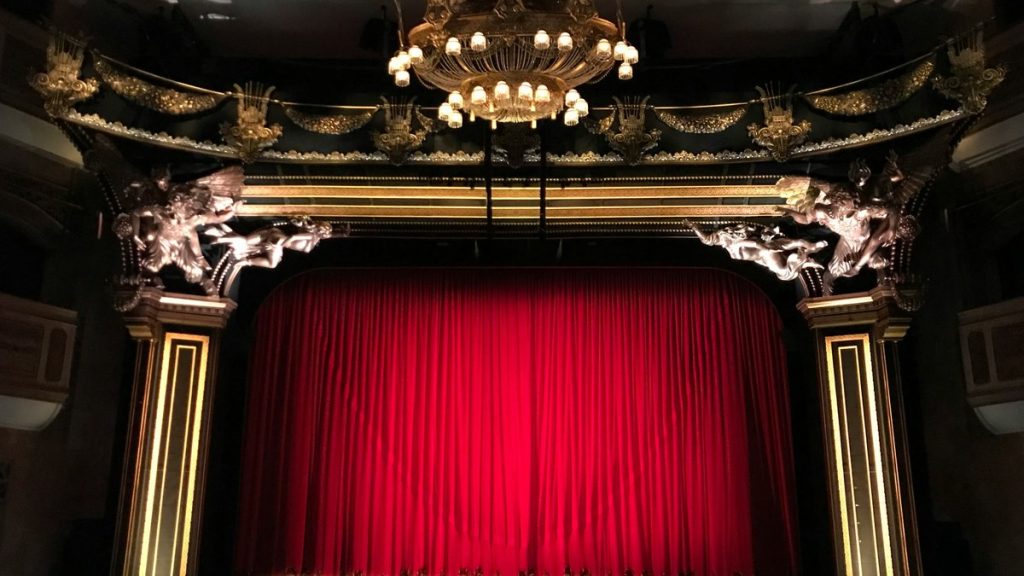
So stay in the first room. Those eight bars you’re looping at 1 a.m. don’t have to be a hit, they have to be true enough that a lyricist hears a character in them and an actor finds a breath in them, until one night a stranger four blocks away finds their own life in them. Every overture swelling through a darkened house started as a private obsession in a walk-up that was too small.
The second room was never waiting to be discovered. You build it, one rewrite at a time, until there’s finally somewhere for the music to go.