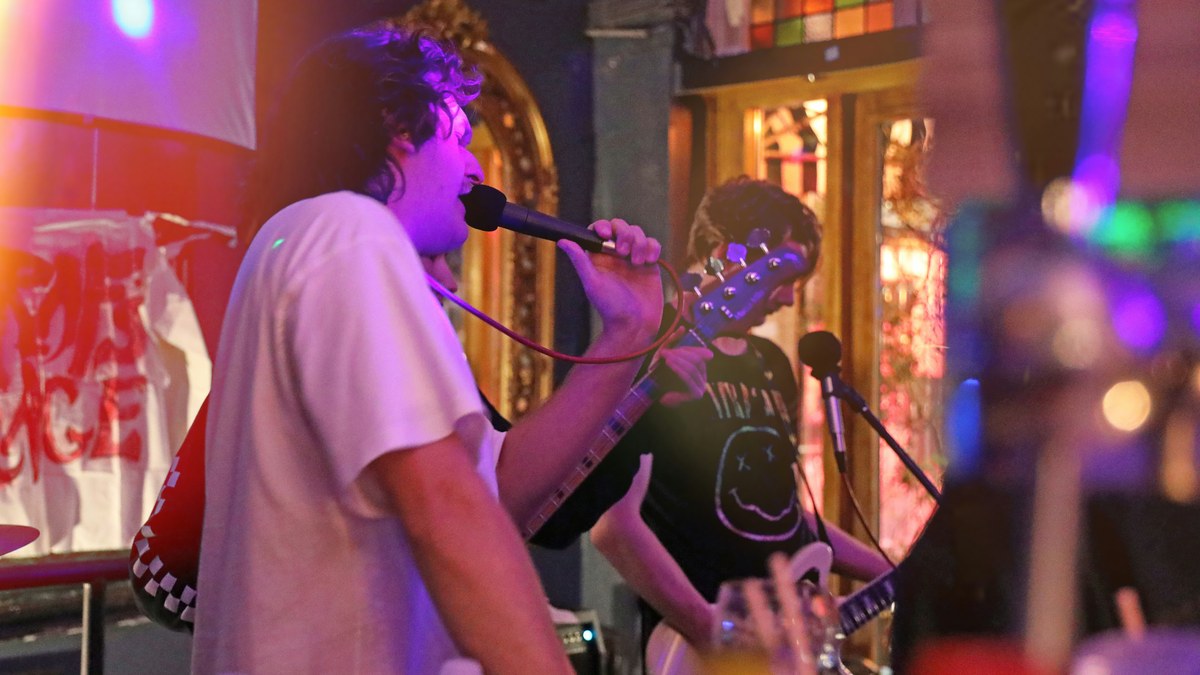
September 2025, 486 Spadina Avenue. The room at the corner of Spadina and College had hosted live music for more than fifty years — the Silver Dollar Room, a Toronto institution. Now it was getting new owners, a new name, and a new life: Dina’s Tavern.
The owners — Nickie Minshall, Tasha Potter, Jesse Borg — had about nine months from keys to opening. They called it a Hail Mary. Vintage stores for mirrors and lights. Old records dug out of boxes and brought in. Every choice aimed at one thing: a genuine feel.
From night one, Dina’s booked live music six nights a week, with booker Nick McKinlay programming the room. The ethos behind it: the city was sorely lacking smaller-capacity venues — places where musicians, new and seasoned, could develop and work.
That’s the bet every small room makes. In a small venue it can properly kick off: three hundred people watching a band, the band plays the song, and the whole room goes up — even the bar staff are on the bar. No arena can sell that.
This guide is for the person about to do the same. You’re opening a 100–300 cap live music bar, and on night one you’ll be working the door yourself. Here’s what to expect hour by hour, how to sell it out, and how to bring them all back. Start with the only thing the crowd will remember: how the room felt.
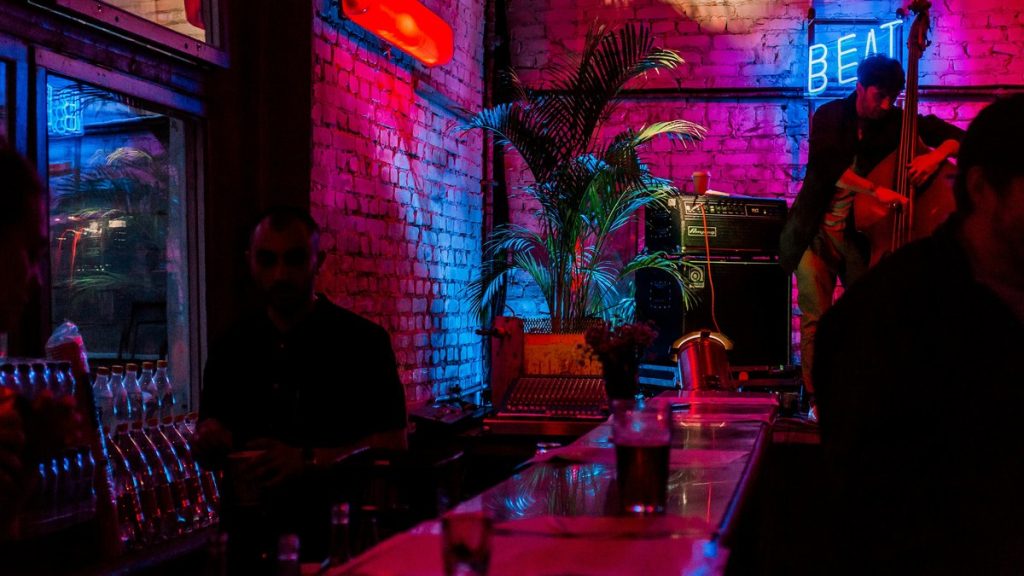
The Room Is the Show
The smart openings happen three times. First the soft opening: family and friends, where most mistakes happen and that’s the point. Then the industry sneak peek: nearby bar staff, invited on their nights off. Then, a week or two later, the public grand opening.
One Calgary operator closed for two full weeks after the soft open, left feedback forms on every table, and made the adjustments. Dry rehearsals, he found, revealed who would fit the culture and who wouldn’t — before paying customers were watching.
The dress rehearsal is literal: every light and speaker on for hours, watching for overheating and tripped breakers. Process test tickets through the whole system. Pour drinks to test the taps and the payments. Simulate a fire alarm with staff only. Then an invite-only preview night with a local band — fresh eyes catch what the team misses.
The point-of-sale system gets its own week. Day one: install. Day two: menu programming. Days three and four: staff training. Days five through seven: the soft open — where the unprogrammed modifiers, the misrouted printers, and the wrong tax rates surface.
Morning of the grand opening, the owner is on site before 10 a.m. Inventory. A staff briefing. A cleanliness sweep. POS login, cash float verified, stock checked, ambience set. Load-in starts two hours before doors for solo acts, three for full bands.
Soundcheck has a rhythm. Three hours out: line-check every input, then a 20–30 minute full-band check. Two hours out: eat. Thirty minutes before: all hands to the green room. By doors time, soundchecks are done, cases are stowed, cables are fixed in place, and stewards and security are in position.
Give every job a name. Door lead. Artist contact. Sound and floor. Close-out. A name next to every job — because at bar scale, roles blur, and unclear expectations are the root of bad service.
Load-out has a discipline too: strike in reverse priority, one pack leader calling placement, ramps kept clear until the last case is on the truck.
The bar itself will try to embarrass you. Bay Area Brewing learned on a grand opening with 900 attendees: brand-new adjustable-flow taps poured slow, carbonation bled out through weak coupler seals. They fixed it with new couplers and seals. Same opening, a plumbing self-own: they’d replumbed the toilet and dishwasher off the reverse-osmosis filter — the toilet needed replacing and the dishwasher scaled up from city water.
Syracuse’s 443 Social Club learned a different lesson: on busy nights, bartenders queued for the single Square register. The fix was a second register. Run one test sale before day one.
Cash is a system, not a trust exercise. One drawer per employee — when accountability is shared, it disappears. Every handler counts and signs off on the starting bank. Drops go to the safe. End of night: count the till back to the USD $200 float, bag the overage with the receipts into the safe, print the card processor’s end-of-day batch report. Never over-float the tills, and keep pulling high-value notes through the night.
Glassware math: a 100-cap room needs 150–200 beer glasses minimum. Running out mid-set is a failure with no excuse.
Sound in a small room is a volume war, and the war is won by going down. If the singer can’t hear themselves onstage, pushing the monitors louder only makes it worse — bring the overall stage volume down instead. PA to 200 cap: 500–1,000 watts, two tops and a sub. Two hundred to 500: 1,000–4,000 watts with subs and monitors. Lighting: even front wash first, effects second; starter rigs run USD $150–$300.
The door is a system too. One 120-cap bar’s spec, narrated: bands take 100 percent of the box office minus an agreed contribution to the sound tech; the bar provides wristbands and a card machine; guestlist comes off the saleable capacity. Numbered wristbands are the capacity counter — halt entry at the numbered limit. Charge at the door with a marking system; never pass a jar. Fire capacity is math: seven square feet per person standing.
Stagger the entry: happy-hour specials and openers worth seeing spread the rush, and know-before-you-go emails — entrances, bag and ID policies, parking — keep the line moving.
The team for a 150–250 cap room: about eight on duty, roughly one per 25 guests — two bartenders, two security, door, sound tech, runner, manager — plus a 15–25 percent buffer for no-shows. Working ratios: one bartender per 50 guests, one security per 100–200. The briefing covers emergency procedures, POS, the run of show, and the contractor on-call list.
Then read the room all night. The owner’s load is real — early mornings, the day job, the bar until the small hours. Pace it like a marathon, not a sprint.
The room is ready. Now getting people into it — starting with how.
Selling the Night: How
Announce a club show about eight weeks out. But before the announcement, tease: a rehearsal clip, a cryptic date, a behind-the-scenes video, roughly a week before the reveal. Then go public on every channel at once.
Run a six-week campaign, not a single announcement. Too many shows die from one social post and silence. The campaign has a rhythm — tease, announce, early-bird push, lineup spotlights, countdown — and it runs the full six weeks.
Give the rhythm a weekly shape. Weeks one and two belong to the announcement and the early-bird tier. Weeks three and four are the lineup spotlights — one act at a time, each with their own clip, each tagged. Weeks five and six are the countdown: low-ticket warnings, the last-chance tier, the door-price reminder. Silence in the middle is the killer. The campaign is a drumbeat, not a cannon shot.
Presale psychology is where the campaign is won. Reserve just 10–15 percent of capacity for the earliest, most heavily discounted tier, and cap it strictly. A rapid first-tier sellout creates the social proof that amplifies fear of missing out for everyone watching. Organizers who introduced tiered pricing saw 30 percent more early ticket sales — the audience learned that waiting costs more.
Reward the early buyers and they become promotional vehicles: forty-percent-off early tiers, two-for-ones, a gift with the ticket, the best-sightline seats first. Every early buyer is a walking advertisement with a stake in the night.
Content that converts is video. Artist intro clips. Time-lapse stage builds. Build the room with photo spots made for sharing — and run photo contests with show tickets as prizes. When the audience becomes the marketing team, the reach compounds.
Influencer preview nights are the modern word-of-mouth. Invite local creators as VIPs: plus-ones, waived cover, backstage tours. They post, their followers come, and the room gets a crowd that already knows the layout. Pick creators who actually go to shows, not just creators with followers — a local photographer with three thousand real followers who shoots every gig in town will move more tickets than a lifestyle account with fifty thousand. Authenticity is the whole mechanism.
Press outreach still works if you do it right. Two to four weeks out, send a short personalized email to the specific writer or editor who covers local music — who, what, where, when, plus the ticket link in the first two sentences, with one local hook. College radio, community radio, and neighborhood blogs are far more reachable than commercial stations, and they actually care.
Short-form video beats everything static. A 15–30 second rehearsal clip or behind-the-scenes moment outperforms the poster every time in 2026. The poster is a souvenir; the clip is the invitation.
And make every act promote. A multi-act show promoted by all the acts reaches two to four times the people of one promoted by the headliner alone. The single biggest ask, and the one people forget: ask each act to email their own list.
Before the doors even open, build ownership. Construction updates, behind-the-scenes videos, volunteer opportunities — people who watched the room get built show up on night one because it’s partly theirs.
That’s how. Now where.
Selling the Night: Where
Email is the highest-converting owned channel you have. Warm audiences — your list, your past buyers — convert at a fraction of the cost of cold ads. Everything else feeds the list.
Capture it at the show. Without capture mechanisms, most of the crowd flows out of the funnel and disappears. The single most effective placement: a QR code projected between songs. Nearly four in ten consumers scan specifically for exclusive content — offer the free track, the presale code, the locals discount. The offer matters as much as the placement: the scan has to buy something the poster can’t. Around the venue: Wi-Fi sign-up in exchange for email or mobile; QR codes on tables linking to a locals-club page; capture at booking and at checkout — the ticket purchase is the highest-intent moment you’ll ever get.
Flyers, realistically: fifty to a hundred is plenty. Record shops, coffee shops, gear stores, the merch tables of related shows. Flyers rarely sell tickets on their own, but they reinforce the online campaign and signal that the show is real. Always include a QR code that goes straight to tickets.
Facebook events work as the central page — but never the whole plan. Pair it with a Bandsintown listing and drive everything back to your own list.
Referral math is the quiet multiplier. Rewarding attendees who share the event can sell 20 percent more tickets. One venue’s case: USD $25,778 in referral ticket sales from USD $1,368 in rewards — roughly a twenty-times return.
Build community partnerships around the room. Cross-promote with nearby restaurants, bars, and shops via ticket-stub discounts — dinner before the show, a drink after. Partner with craft breweries for venue-branded drinks. Work with local music schools for openers; their students bring parents, siblings, and friends who have never set foot in a live room — and some of them come back for everything else.
Genre and theme nights build loyalty from the regulars who care about that particular style. And one caution from the trade: cover charges are increasingly unpopular — small venues offering live music should avoid them where possible. The door ticket is enough friction.
Attention is nice. Butts in seats pay the bills — so who fills the room? Start with the locals who already can.
Who Fills the Room
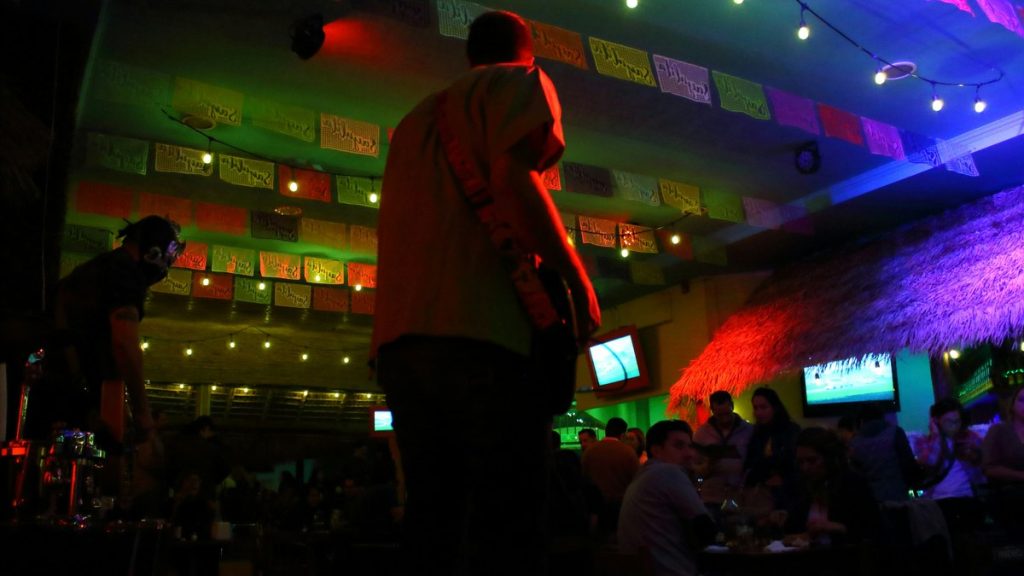
Start with the locals who already can. When a local artist can sell 150–200 tickets or more, they become the headliner — and the economics get simple. After expenses, the headliner keeps the profits; the openers take guarantees. Typical shape: USD $100–$150 for openers, USD $250–$500 for direct support.
Allocate pre-sale revenue by share of tickets sold, so the hustle gets rewarded. The band that moves fifty tickets earns more than the band that moves five — and every act on the bill learns to sell.
The local opener is infrastructure, not decoration. A good local band knows which promoter actually answers, which door person will let the drummer bring the hardware through the side entrance. That knowledge is infrastructure. Treat the openers well and the scene treats you well.
Seattle’s Tractor Tavern wrote the playbook for developing a room. An emerging band with no history starts on a weeknight in the small room. Returns as an opener. Then headlines a weekend — and sells it out. Every step earns the next one. The weeknight slot is the audition: cheap to run, honest in its feedback. A band that draws forty on a Tuesday has a future; a band that draws four has a lesson.
Opening night itself has models to steal from. The DJ-after model: Leeds’ 200-cap Howard Assembly Room launched its series with a hip-hop and electronic duo bill, closed by a DJ set to carry the inaugural edition past midnight.
The members-first model: Cambridge’s Platform opened with a members-only night before public programming began — the insiders first, everyone else after. The star-opener: London’s 600-cap Apple Music Hall opened with Elton John, then Baby Keem, Troye Sivan, Arlo Parks, Burna Boy, Chase & Status, Charli XCX — single-tier £40 tickets, the first three shows on sale the morning of opening day.
Deals at bar scale, narrated plainly. A flat guarantee is the highest venue risk: the artist gets paid no matter who walks in. A door split — typically 70/30, 80/20, or 85/15 after the house nut — shares the risk and the upside. A versus deal pays the guarantee or a percentage of net box office, whichever is higher. A four-wall rental flips it: the promoter rents your room for a flat fee. Low risk, guaranteed income, forfeited ticket upside.
Market rates for 2026: USD $200–$500 for newer local acts, USD $500–$1,500 for mid-tier regulars. Artist fees are up 30–40 percent since 2020, and a single bad deal can wipe out the profits of several good nights. The house nut at under-300 cap: USD $50–$350 is standard — anything above that for a club this size is someone taking advantage.
And sometimes the room does the work for you. One band’s first gig: Friday, 8 p.m., a new room. So many people showed up the place hit fire capacity with a line out the door. The bar was thrilled. They were a regular band there for a couple of years.
The bill is set. Now selling every last ticket.
Selling Every Last Ticket
Discounting is the last lever, not the first. The order: urgency first, then friction reduction, then warm audiences. Deep discounts train fans to wait — and a fan trained to wait is a fan who never pays full price.
Frame the last chance instead of slashing the price. Final group deals: bring the squad, save 15 percent, limited time. Or add value: last-minute buyers get a free merch item on entry. The price stays intact; the offer gets better.
The revenue math at bar scale is worth doing by hand. A sold-out 200-cap night at USD $20 advance is USD $4,000 gross at the door. On the 443’s deal — a USD $300 guarantee versus an 80/20 split on USD $15 tickets — twenty sales cover the guarantee. Everything after that is the night working.
Per-head bar math beats headcount math. Six hundred people at USD $12 a head outperforms a thousand at USD $8. Target an 18–24 percent pour cost. And gig-goers spend roughly 70 percent more at the bar than other customers — the music crowd is the drinking crowd.
The honest context, framed straight: the bar tab used to pay for live music. Clearly, it doesn’t anymore. Even sold-out shows now generate a fraction of the bar revenue they once did. One Sydney nonprofit was routinely losing around AU$1,000 a week before it launched AU$15-a-month memberships to stay alive. The old model — free music, full bar — is a memory. Price the music like it matters, because it does.
Then there’s the empty-room trap, the oldest one in the business. Bands assume the venue will promote. Venues assume the band will promote. Neither does. Nobody comes. The fix is the contract conversation before the booking: who promotes what, in writing, with the mailing-list ask included. Put it in the advance email: three social posts by these dates, one email to the list, flyers at these three shops. What gets specified gets done.
Curate to fill it. Team up with one or two acts with reliable local draws. Coordinate promotion across all the acts — same week, same assets, same links. Don’t overplay the market: a band that plays your town every month is a band nobody rushes to see. Make the night special, and say why it’s special.
Sold out. Great night. Now the harder question: how do you do it again next weekend?
Bringing Them Back
Sold out once. Now the harder question: how do you do it again next weekend? The answer is gravity. Spectacle captures attention; scene builds gravity. Gravity reduces the pressure to acquire new customers every week, stabilizes revenue, and increases what each guest is worth over a lifetime.
Regulars show up regardless of who’s playing. They come for the atmosphere and the community. Monthly memberships — ticket discounts, priority access, special events — turn that loyalty into predictable recurring revenue.
The membership models are proven. The Cornish Bank in Falmouth sells 3, 6, and 12-month memberships, patron passes, even a lifetime pass. Real Time Live in Chesterfield runs bronze, silver, and gold passes for 3, 6, and 12 shows — casual attendees turned into committed supporters. Venue friends schemes follow the same shape: around £50 a year for the basics — name on the wall, priority ticket alerts — £200 for premium, £500 for the angel tier.
Sydney’s MyGigPass, launched in February 2026: aimed at 18-to-25s, a weekly email with free entry, AU$25 tickets, two-for-one deals. Twenty-two venues on board, more than fifty offers since launch. Get the young crowd in the habit early.
Reward frequency, not discounts. Every fifth visit earns a free drink — the goal is to make regulars feel valued and recognized, not to train them to only come when there’s a deal. And paid loyalty beats free loyalty: mug clubs at USD $100 a year for bigger pours, name-etched glasses, first-access reservations. You value what you pay for.
Watch the metrics. Target year-two return rates of 30 to 45 percent. And own your data: without a direct line to past attendees, you’re hostage to ads and algorithms.
Program the follow-up before the launch. Lock the visible opening-weekend lineup plus the full first-month calendar before you open, so presales start early. If a booked act slips, presale momentum drops fast — and the fixed opening costs still hit on time.
The research backs the instincts. An immersive experience, varied bills with established fan bases, performers who interact with the audience — those are the factors that drive repeat attendance and turn a room into a place people are attached to.
The 443’s first months taught the harsher version: the opening months reveal whether a market will pay a nominal cover. Thin rooms that don’t convert bar spend reveal the room’s real ceiling — and the decision becomes economic rather than artistic. Know what your room actually is.
Then the morning after. The settlement ritual: both sides, the same stack of paper, agreeing on what the night actually produced. Cash payment of the balance is still common at club level. The textbook door-deal math: 100 people at USD $10 a ticket is USD $1,000 gross; a USD $300 house nut leaves USD $700; the artist takes 70 percent — USD $490. The fairness standards are simple: deals transparent and negotiated at booking, never decided by door polling — and an artist never owes the venue an unrecouped balance.
Day two: celebrate briefly, then debrief the team on what to improve. Opening night is just the beginning.
Which brings us to the real opening day — the one after the opening day.
One Door, One Night
The room you built. The crowd you earned. The door you worked. Days 1 to 30 are finding your feet. Learning how the room flows at different times of day. Regulars forming. Stock control dialed in. Nothing needs to be perfect immediately.
The venues in this guide that made it all started the same way. The Rat & Pigeon in Manchester, building for 25 years — nine months of renovation, their own backline bought to make it easy for promoters, one chance at opening a place. WaterBear in Brighton, pouring pints where a portion of every one supports the grassroots fund. Dina’s, six nights a week in a room with fifty years of history. All started with one door, one night, one room that felt right.
When your doors open, sell your tickets on Ticketscene.