Stand-up comedy is having its best commercial run in decades. Comedians performed for 12.3 million fans in 2025, and events featuring comedy headliners grossed $837 million worldwide, according to box office figures reported to Pollstar.
Yet the same market that produced record-setting arena tours has been unkind to rooms with a few hundred seats.
The Funny Stop, a comedy club near Akron, Ohio that opened in 1985, closed in March 2026 after its monthly rent rose from $2,300 to $4,300. In the UK, Liverpool’s longest-running comedy club, Laughterhouse, shut after almost 20 years, hit by low audiences and a rival that used social media to grow from hotel function rooms into a multi-room venue.
That contrast is the real answer to the question of how hard it is to run a comedy club. Demand is rarely the problem. Margin, rent, and fill rate are.
This guide covers what it costs to open a comedy club, how comedy clubs actually make money, how to book talent and price tickets, and the mindset that separates owners who last from owners who burn out.
So, How Hard Is It to Run a Comedy Club?
Running a comedy club is hard, but it is not mysterious.
A comedy club is a hospitality business that books live entertainment, which means you carry restaurant-style margins, fixed rent and payroll, and talent costs that are locked in before the first ticket sells. The clubs that last fill their rooms consistently, keep occupancy costs under control, and earn money from more than the bar.
The baseline odds for hospitality are sobering. Figures drawn from the U.S. Bureau of Labor Statistics and compiled by Commerce Institute put the survival rate for accommodation and food services businesses at about 55 percent at five years and roughly 38 percent at ten.
Comedy shares that exposure and adds its own, because a headliner’s fee does not shrink when the room is half full. The upside is that comedy is cheap to produce compared with concerts, since a stage, a microphone, and a light are most of the show. Your job as an owner is to keep that low production cost from being swallowed by rent, labour, and empty seats.
The Comedy Boom Is Real, but It Is Not a Business Plan
Pollstar’s comedy analysis shows how large the market has become.
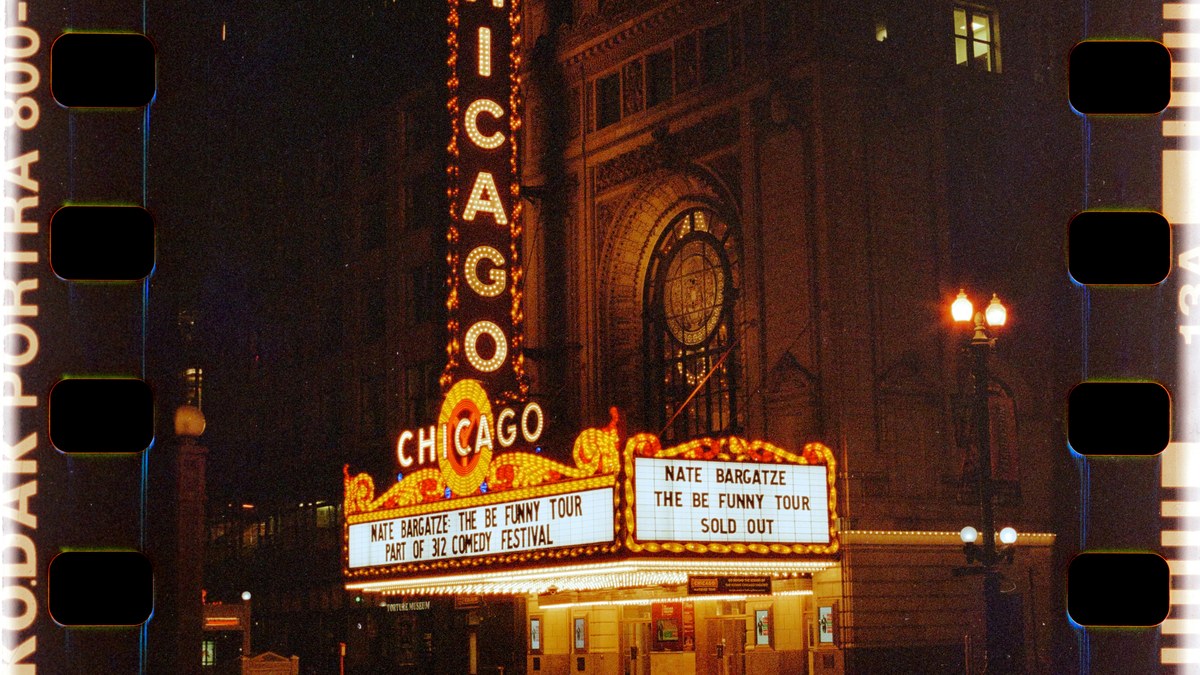
The 100 highest-grossing comedy acts brought in $696 million and sold more than 9.3 million tickets in 2025, and reported comedy performances have topped 6,000 a year for three straight years. At the very top, Nate Bargatze crossed two million tickets sold across 129 venues on his Big Dumb Eyes tour, a Guinness World Record.
But arena success does not translate directly to club success, and the market is maturing rather than climbing in a straight line. Pollstar found that grosses and ticket sales among top acts were lower in 2025 than in 2024, even though per-show averages generally rose.
Zoom out to the general public and the picture is more modest. The 2024 MRI-Simmons consumer survey found that only 6 percent of Americans had attended a comedy club or stand-up show in the previous 12 months. That means comedy is still a niche habit, and you are competing for a small slice of discretionary spending.
The audience that does attend is spreading its attention across more performers. Ticketmaster reported that stand-up shows on its UK platform rose 34 percent between 2014 and 2024, while the top five comedians’ share of its comedy sales fell from half to 35 percent.
The way people find shows has also changed completely.
In the same research, 64 percent of comedy ticket buyers said they booked after discovering a comedian online, compared with just 8 percent in 2014, and nearly a third of Gen Z said they would not pay to see a comedian live without first watching them on TikTok.
There is a social upside too: 18 percent of Brits said they would take a date to a live comedy show, up from 2 percent in 2014. For a club owner, the lesson is that audiences increasingly buy a performer or an experience rather than a venue, so your booking and your marketing have to do the work a famous brand used to do.
How Do Comedy Clubs Make Money?
Comedy clubs make money from three core streams: ticket sales, food and beverage sales, and ancillary revenue such as private events, corporate bookings, classes, and merchandise.
Tickets typically cover talent and show costs, while food and drink margins pay for the room and generate profit. The mix varies by club, and in some deals the headliner takes most of the door, which leaves the bar to carry the business.
That structure is visible in how operators describe it. Southwest Florida club operators say they earn money from tickets, beverages, and food, and that sometimes the headliner keeps all the ticket revenue so the club profits only from food and drink, usually enforced through a two-item minimum.
A newer room shows the typical format. The Comedy Club at Duckworth’s in Charlotte seats 96 people in 2,500 square feet, books a national headliner for a 45 to 60 minute set plus two or three openers, and requires a two-item food and beverage minimum.
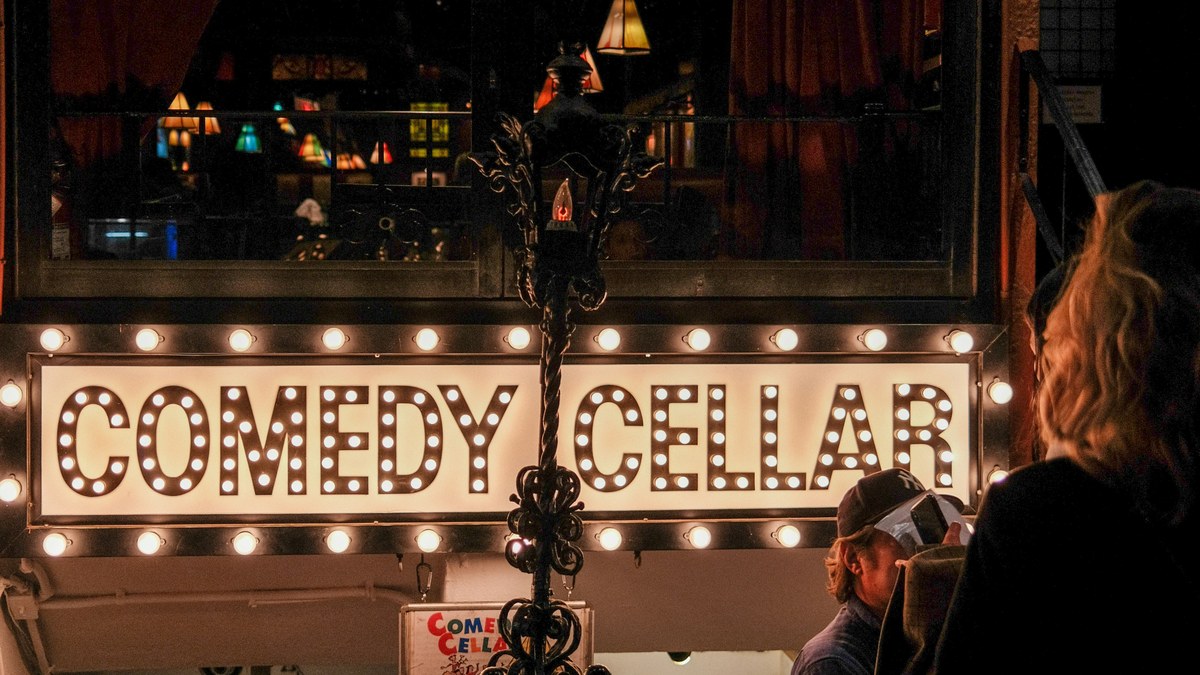
The format itself is also a strategic choice. Noam Dworman, owner of New York’s Comedy Cellar, has described his club as a showcase club rather than a headlining club, built around shorter sets from many comics.
Ancillary revenue is where smart owners find resilience. UK industry analysis points to corporate comedy and private hire as valuable add-ons, and notes that open-mic nights and new-act showcases give clubs low-cost programming for quieter nights. A Monday open mic will never be your most profitable night, but it fills a room, trains your talent pipeline, and gives a bar crew something to do on a slow evening.
The goal is to turn every night you are open into some kind of revenue, rather than paying rent on empty rooms.
What a Realistic Weekend Looks Like on Paper
To see how thin the margin can get, consider a 120-seat room running two shows each on Friday and Saturday.
What follows is an illustrative model, not an industry benchmark. It assumes a $28 ticket, $20 of average food and beverage spend per guest, a 30 percent cost of goods on that spend, $700 of blended talent cost per show (host, feature, and headliner), $450 of show-night labour, 4 percent for payment and ticketing fees, and $150 of marketing per show. At 85 percent capacity, each show draws 102 guests and about $4,896 in revenue, leaving roughly $2,790 after direct costs.
Across 16 weekend shows a month, that is about $44,600 in monthly contribution.
Now layer on fixed costs. If rent, insurance, utilities, management salaries, software, licences, and maintenance total $30,000 a month, this room clears about $14,600. Drop attendance to 60 percent, or 72 guests a show, and contribution falls to roughly $1,590 per show and $25,400 a month, which leaves the club about $4,600 in the red.
The break-even point in this model sits near 66 percent capacity, which lines up with a financial-modelling guide suggesting weekend rooms need to fill roughly 60 to 70 percent of seats before rent, staff, and booking costs stop eating most of the upside. A 25-point swing in attendance moves the monthly result by about $19,000.
The same model shows where your levers are. Raising the ticket price by $3 at 85 percent capacity adds roughly $4,900 a month before fees. Spending an extra $300 per show on a bigger headliner costs $4,800 a month, so that headliner has to bring in roughly seven or eight additional guests per show just to pay for themselves.
Every decision about talent, pricing, and promotion should be tested against the fill rate it needs to break even.
How Much Does It Cost to Open a Comedy Club?
Opening a comedy club typically costs anywhere from roughly $50,000 for a lean room inside an existing venue to $500,000 or more for a purpose-built club, with build-out, licensing, and working capital as the largest line items.
Published estimates are scattered, so treat them as a range rather than a budget.
One financial-modelling site puts a dedicated U.S. venue between about $50,000 for a small, lean operation and more than $500,000 for a full-service club in a major metro. Another estimates $300,000 to $1.1 million, with a lean room inside an existing bar shell starting nearer $175,000 to $350,000.
Your lease terms and whether you inherit a bar shell will matter more than any average. In one modelled $550,000 plan, the biggest line was build-out at $250,000, covering acoustics, sightlines, fire code, accessibility, washrooms, a green room, and HVAC.
Licensing deserves its own line in your timeline.
In Ontario, the AGCO currently charges $1,055 for a two-year liquor sales licence or $1,355 for four years. The fee is small, but the process is not. Liquor licences are not transferable when you buy an existing bar, and a standard application usually takes six to twelve weeks. The AGCO also tells applicants to confirm zoning with their municipality, and most new applications require public notice. Rules differ in other provinces, so check with your provincial regulator and a lawyer early.
Regulatory surprises can be brutal even for the best-known clubs. Dworman has said that moving a wall to expand the Cellar’s kitchen forced the club to close for six or seven months to comply with approvals. Labour costs are also rising. Ontario’s general minimum wage rose to $17.95 an hour on October 1, 2026, and servers and bartenders no longer have a separate lower rate.
The lowest-risk way to learn the business is to test demand before signing a lease.
Toronto’s LOT Stand Up Comedy Club launched as a 120-seat room run Friday through Sunday inside the cabaret space of an existing theatre. Comedy Nest launched an 80-seat room inside a wine bar and grill in Mississauga. A room-within-a-room model lets you build an audience, prove your ticket price, and learn your numbers before taking on a lease of your own.
Why Most Comedy Club Failures Are Really Lease Stories
Carolines on Broadway is the cautionary tale every owner should read twice.
After 30 years in Times Square, owner Caroline Hirsch chose not to renew when her 10-year lease was due for a rent reset and the landlord felt it could get much more for the space. The club had rebounded successfully from the pandemic, yet it still closed. The Funny Stop’s story is the small-market version of the same problem, with a rent increase that nearly doubled a modest monthly bill.
Goonie’s Comedy Club in Rochester also announced it would not reopen after failing to reach terms with its landlord, citing rising costs.
The takeaway is to negotiate the lease as carefully as you book the talent. Push for renewal options, caps on rent increases, and a clear build-out allowance. As a rule of thumb, one modelling guide suggests keeping occupancy costs below 10 to 12 percent of revenue if possible. If your projected rent exceeds that share at a realistic fill rate, the lease is the problem, not the marketing.
Capacity is the other structural bet, and it cuts both ways. A room that is too small cannot cover its overhead. Levity, a small club in Burlington, Vermont, closed after about 18 months, with its manager blaming overhead and an unchangeable low capacity despite sold-out weekends. A room that is too small also struggles to book ticket-selling acts.
Atlanta’s 225-seat Uptown Comedy Corner closed in 2025, citing competition from larger rooms (365 and 300 seats) and difficulty landing comics who sell tickets.
Size your room for the fill rate you can realistically reach on a normal Friday, not the best night you can imagine.

How to Book Comedians at a Comedy Club Without Getting Burned
Talent is your biggest variable cost, so the structure of the deal matters as much as the price. There are three common deal types: a flat guarantee, a door deal, and a “versus” deal.
A door deal pays the artist a percentage of ticket revenue with no guarantee, while a versus deal pays the higher of a guaranteed fee or a percentage of net ticket revenue. For established headliners, percentages can be generous. One booking guide puts club-scale headliners (under 500 capacity) at roughly 70 to 85 percent of net.
A comedian’s own guide describes a not-unusual door deal as 70 percent of gross box office after $400 in house fees.
For the rest of the lineup, rates are lower. One 2026 organizer playbook puts hosts at about $25 to $100 a show, features at $75 to $300, and headliners at established weekend rooms at $400 to $600. Touring names with real draw negotiate their own terms, usually through agents. Pay in proportion to the audience a comedian actually brings, not the audience they claim.
For a new club without proven demand, a shared-risk structure protects you from the downside of an empty room
Put everything in writing. One booking guide recommends a signed memo plus a deposit, or a clear guarantee-versus-percentage agreement with a cancellation clause, so a headliner cannot quietly take a better offer. Define “gross” and “net” in the contract, and use a settlement worksheet before the show.
One club bookkeeping guide warns that the most expensive accounting mistake is paying a performer from whatever cash is visible in the bank account. Treat the performer experience as part of the product, too. Dworman has said his father refused to run a check-collection spot during the last acts because it makes performers compete with the paperwork, even when it costs a show turnover.
How to Fill the Room: Seating, Pricing, and the One Number to Watch
Dworman’s views on seating are some of the most useful operating advice in comedy. He argues that everyone in the room should sit “a little bit closer than they want to be.” He says tight seating produces louder laughs and a more intense room, and that it is the one complaint he refuses to act on. Spread-out seating may feel more comfortable, but comedy is a group experience, and packed rooms are funnier rooms.
His pricing philosophy is equally instructive. In 2023 he noted that a rival club was charging $38 plus a $5 ticket fee and an $18 minimum, which he thought was too much, and said it is always better to be full than to push prices. The metric he watches is not revenue but how many people he turns away each week.
That approach is a luxury of an established club with a line out the door. A new club should price to fill first, build a reputation, and raise prices once demand is visible.
Dworman also recalls the lean years. In the 1990s, weeknights at comedy clubs were basically empty, and his father had waitresses take off their aprons and sit in the room as pretend customers so walk-ins would not feel alone. You can solve the same problem more honestly with programming: low-cost new-act showcases, open mics, and themed nights on slow evenings.
On busy nights, use pricing tools that work in comedy’s favour. Offer early-bird tiers, charge a modest door premium for walk-ups, and consider a 20 to 50 percent premium on front-row seats if you sell reserved seating. The same playbook points to two-show nights as comedy’s highest-leverage move, because one headliner booking can double your sellable inventory.
Be transparent about fees, too, because surprise charges at checkout are a quick way to lose goodwill.

Don’t Build Your Entire Model on the Two-Drink Minimum
For decades, the two-drink minimum has been the backbone of club economics, but the drinking culture underneath it is shifting.
Gallup found that the share of Americans who say they drink fell to 54 percent in 2025, the lowest in its 90-year history, down from 62 percent in 2023. Among adults aged 18 to 34, only 50 percent reported drinking. That is exactly the age group comedy clubs depend on.
Canada is moving the same way. Statistics Canada reported that alcohol sales volumes fell for a fourth straight year in 2024-25, with the decline in earnings the largest since tracking began in 2004-05. Canadians of legal drinking age bought the equivalent of about 8 standard drinks a week, down from 8.7 the year before. Cost of living, health awareness, and changing habits all play a role.
None of this means the bar stops mattering. It means a club that depends entirely on alcohol margins is carrying more risk than it used to. Build a flexible minimum that counts food, mocktails, and non-alcoholic beer.
Invest in a real kitchen or snack menu, and push private events, corporate bookings, and group packages that earn money before anyone orders a drink.
Marketing a Comedy Club in the Age of TikTok
Because audiences discover comedians online, your marketing should start where they do.
Remember that 64 percent of surveyed UK comedy buyers booked after finding a comedian online. The practical response is to book acts with an active online following, share short clips of your own shows, and tag the performers so their audiences see your room.
Operators in Southwest Florida note that comics do much of the promotion themselves on social media, so clubs do not have to spend much on advertising. That helps only if you actually book people who promote.
A venue brand can still matter, especially for newer or local acts. An older survey from Edinburgh’s The Stand found that 84 percent of customers said the acts did not matter and they simply came for a night out, and that word of mouth was the most effective way to reach new customers.
The strongest modern clubs combine both: they curate lineups people trust and they build an email list of regulars. Collect contact details at the point of sale, and treat every buyer as the start of a relationship. Your ticketing data is one of your most valuable marketing assets, because it shows who comes, how far ahead they buy, and which nights sell fastest.

The Mindset of Comedy Club Owners Who Last
The most useful mindset is humility about what you are running.
Despite the mythology around the Comedy Cellar, Dworman has described it as really just a small business. He describes his daily focus as customers being happy, people being friendly, and the food being made properly, and he credits the club’s rise to being obsessively dedicated to treating both comedians and customers well. That is a hospitality mindset applied to comedy.
Passion helps, but passion is not a business model. In Bengaluru, one club co-founder said that comic-founded clubs are driven by love for comedy rather than capitalism. That energy produces great rooms, and it also produces clubs with weak accounting, so pair your love of comedy with a spreadsheet and a lawyer.
Here is the short version of what to do and what not to do.
- Do prove demand before you sign a lease, track fill rate and spend per head on every show, build a weeknight identity, and pay talent fairly under written agreements.
- Do not rely on the bar alone, do not sign a lease without renewal and rent-increase protections, and do not forget that comps are part of comedy booking and should be planned for, not discovered at the door.
- Do not treat a sold-out night as proof of profitability, because only a full month of numbers tells you that.
Is a Comedy Club Worth Running? If You Have the Passion, Without a Doubt Do It
Running a comedy club is hard in the way most hospitality businesses are hard: thin margins, fixed costs, and relentless attention to the guest experience. The comedy boom is real, but it rewards operators who treat the room as a business, with a lease they can survive, a break-even fill rate they understand, and revenue streams that do not all depend on drinks.
The clubs that last are not necessarily the funniest. They are the ones that fill seats on a normal Tuesday, pay their talent on time, and know their numbers.
If you are serious, start small. Test a room-within-a-room, sell tickets online, learn your real fill rate, and build an audience before you build a venue.