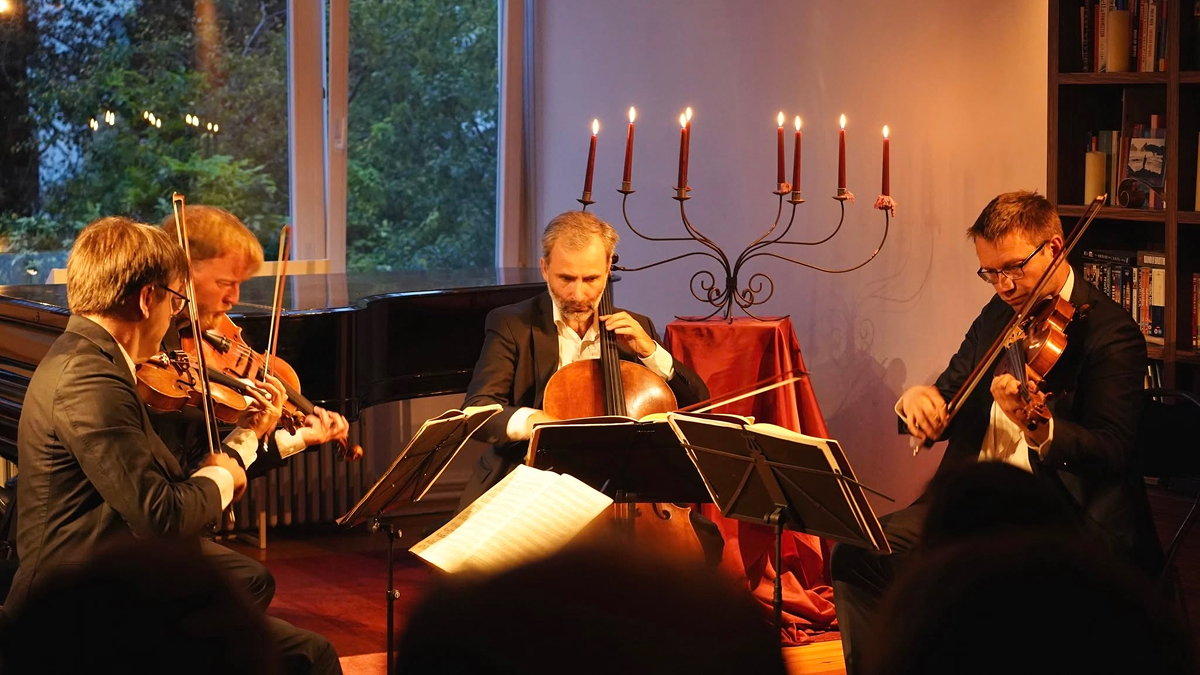
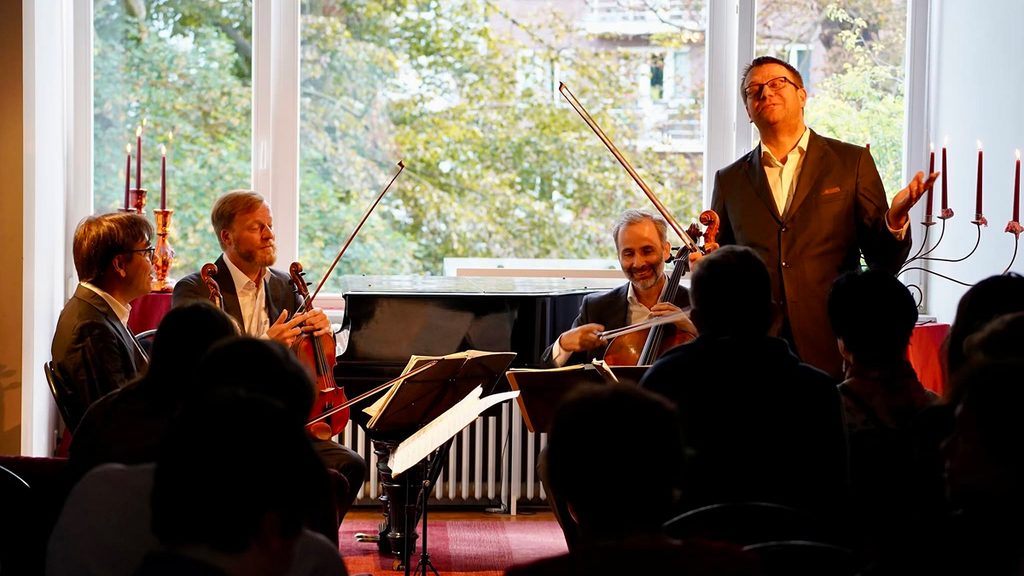
For roughly its first decade, the quartet now known as the Zemlinsky Quartet performed with a plush toy penguin at the first violinist’s feet. The players were teenagers. The first violinist was fourteen. By their own later accounts, none of them expected to turn professional; they simply wanted to play string quartets and enjoy themselves.
More than three decades later, that same group has won the top prize at the Bordeaux International String Quartet Competition, played Wigmore Hall and the Library of Congress, and built a discography of roughly two dozen releases, including what its biography describes as only the fourth complete recording of Dvořák’s string quartets. It is the resident ensemble of the Czech Chamber Music Society.
And on October 29 and November 1, it returns to Waterloo, Ontario, for two concerts presented by the Kitchener-Waterloo Chamber Music Society.
This is the story of how four Prague kids with a mascot became one of the Czech Republic’s most decorated string quartets, and what they have done with the decades since.
Four Teenagers and a Plush Penguin
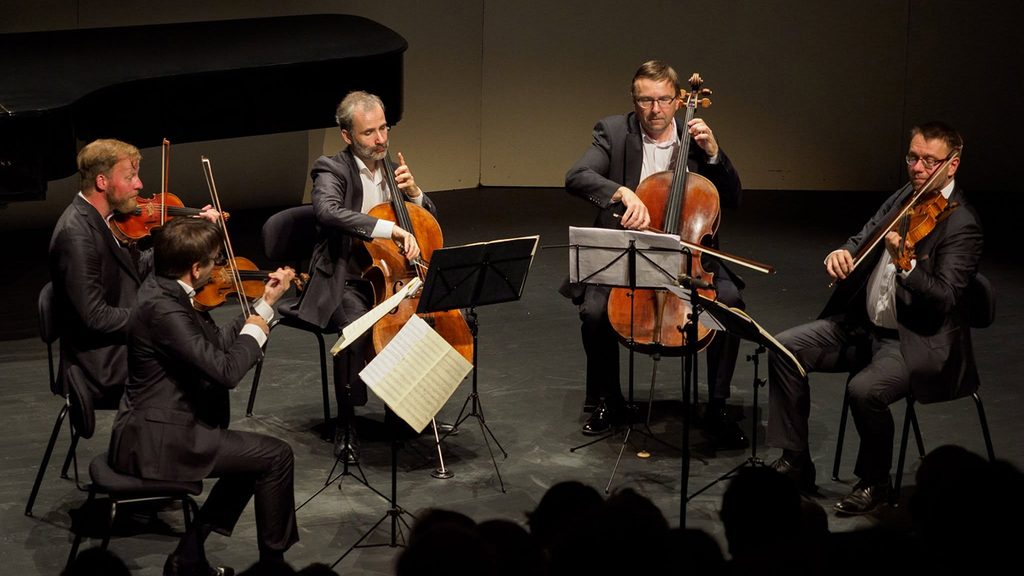
The group formed in Prague in 1994. František Souček, then a teenager, put it together with three friends: violinist David Kalista, violist Petr Holman and cellist Vladimír Fortin. Their first public concert took place on April 19, 1995, with a program that included Schubert, Borodin and Shostakovich.
They did not meet as ambitious conservatory classmates. All four came from musical families and wanted to explore the quartet repertoire for the pleasure of it. Competitions, tours and recordings were nowhere in their plans.
So they gave themselves a joke name. They called themselves the Penguin Quartet, a wink at the black jackets and white shirts of more formal ensembles, and a stuffed penguin sat by Souček’s stand at every performance. A Czech Philharmonic listing for one of the quartet’s later appearances in the Czech Chamber Music Society’s subscription series recalls that the Penguins were already known for their comedic musical performances.
The joke did not survive success. As the group improved and invitations from presenters began to arrive, Holman says, they started hearing that “Penguin” was an odd name for a professional string quartet.
They decided it wasn’t worth losing concert bookings over, and in 2005 the penguin name, and the toy, were retired.
Finding a Name
Choosing a new name turned out to be harder than dropping the old one.
The group wanted the name of a musician, whether composer, conductor or soloist, something that would carry meaning for them, rather than a reference to Greek mythology. A Czech name was the obvious first choice. But the Czech quartet tradition is so deep that the great names already belonged to famous ensembles. What remained, in Holman’s diplomatic phrasing, were the names of composers of the third rank.
Alexander Zemlinsky solved the problem. He was Austrian rather than Czech, but he spent sixteen years in Prague as a conductor at the German Theatre, and Holman describes him as a conciliator in a city where the German and Czech musical communities did not always get along.
He is remembered for bringing Mahler symphonies to Prague and for persuading Czech and German players to share a stage. He also carried Schoenberg’s music into the city.
There was a happy coincidence of timing, too. By the time the group was looking for a name, it had been taken under the wing of Walter Levin, first violinist of the legendary LaSalle Quartet, and was rehearsing Zemlinsky’s Second String Quartet under his direction. The choice made sense musically as well as historically.
The new name came with institutional ties. Since 2005 the quartet has maintained what its biography calls a special relationship with the Alexander Zemlinsky Foundation in Vienna, and it later received an award from the foundation.
Who Was Alexander Zemlinsky?
The man the quartet took its name from deserves a profile of his own, because he is one of music history’s great overlooked figures.
Zemlinsky was born in Vienna in 1871 and had a gift for being in the right place at the right moment. In March 1896, Brahms attended a performance of his String Quintet in D minor and took an interest in the young composer.
Zemlinsky briefly taught Arnold Schoenberg counterpoint, and in 1906 Schoenberg became his brother-in-law. Among Zemlinsky’s composition pupils was Alma Schindler; their passionate relationship ended when she married Gustav Mahler in 1902.
From 1911 to 1927 he was the leading opera conductor at Prague’s Deutsches Landestheater, where he premiered Schoenberg’s monodrama Erwartung in 1924. His work on the podium left little time for composing.
Even so, he produced works there that rank among his best, including the Second String Quartet, which he wrote between 1913 and 1915 and dedicated to Schoenberg. He left for Berlin in 1927 to work at the Kroll Opera, then returned to Vienna, which he left in 1938 as the Nazis tightened their grip. He fled via Prague to New York, and died in Larchmont, New York, on March 15, 1942, after a series of strokes.
For decades after his death, his music was largely ignored. His four string quartets were an important part of the revival.
The LaSalle Quartet made the first commercial recordings of them in the late 1970s. The composer Anton Webern is said to have summed up the four quartets in a single word each. No. 1 was Aufbruch (departure, from Brahms’s shadow), No. 2 was Wende (the turning point), No. 3 was Reduktion, and No. 4 was Maskenspiel (mask game).
The Zemlinsky Quartet has made those four pieces a core part of its repertoire.
It recorded the quartets and early chamber music for Praga Digitals in 2006 and 2011, and the 2011 disc of the Second and Fourth Quartets, along with Two Movements for String Quartet, was reviewed warmly by Gramophone, which called the group an excellent namesake ensemble.
Holman has described the First Quartet, which shows Zemlinsky still emerging from Brahms’s influence, with a joke: he calls it “the best Brahms quartet.” And in November 2024, the quartet played the Second Quartet in Prague at the Bohuslav Martinů Days festival, in the city where it was written.
The Four Players
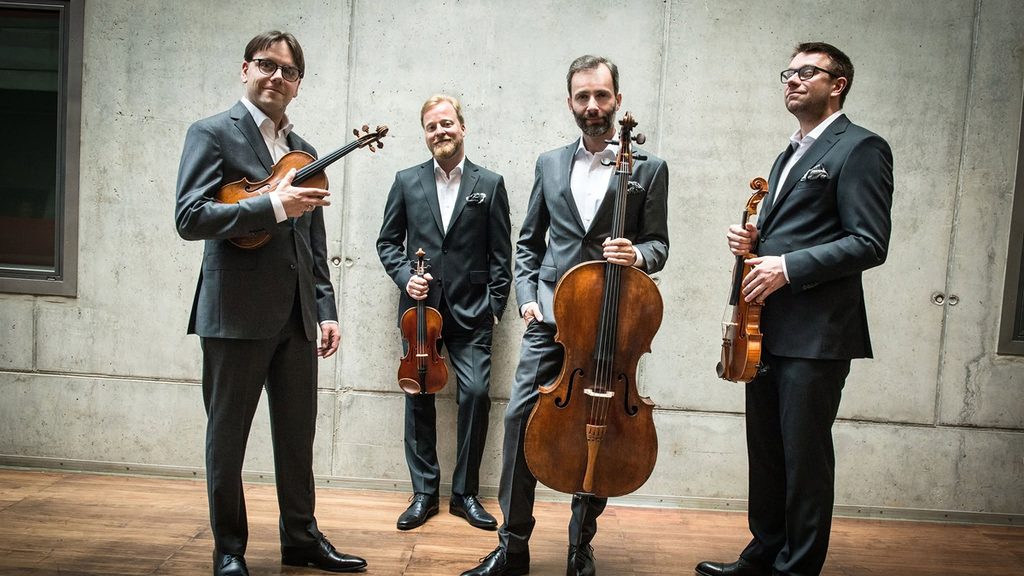
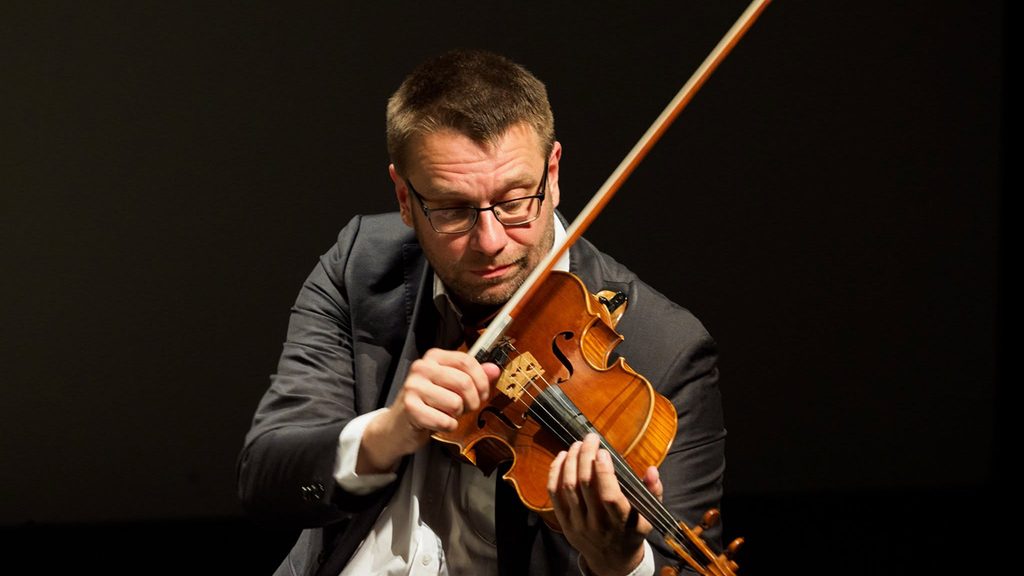
František Souček, first violin.
Souček was fourteen when the quartet began, and the group has grown up around him. He has taught solo violin and chamber music at the Prague Conservatory since 2009, and he and Holman are both professors there.
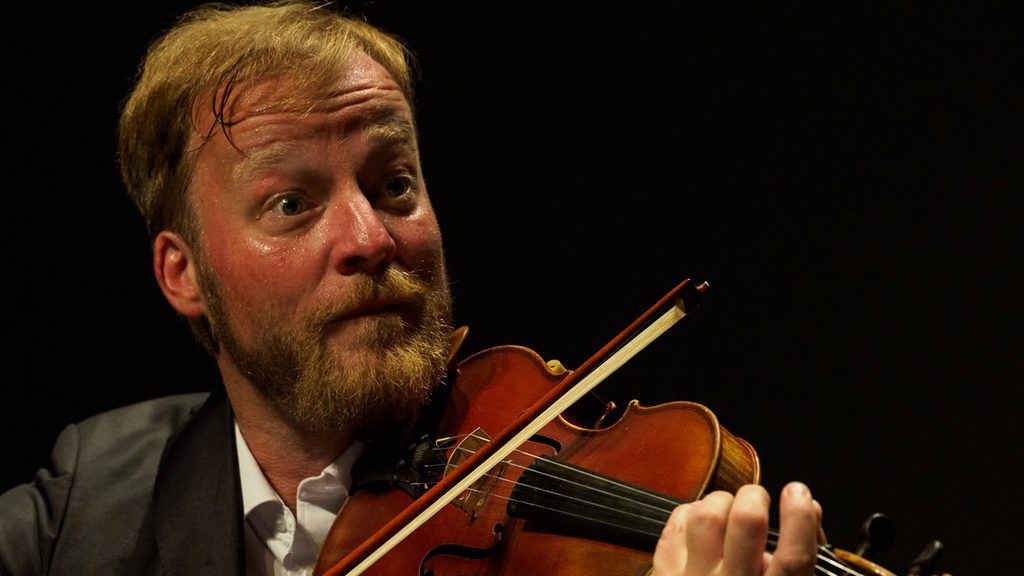
Petr Střížek, second violin.
Střížek holds the second chair, and like his colleagues he teaches, giving chamber music masterclasses in venues such as the Brussels conservatoire. His arrival reshaped the group, though no biography I could find says when it happened.
Petr Holman, viola.
Holman is the quartet’s most visible voice. He is the member who gives the interviews, writes the booklet notes and, on occasion, the arrangements. His transcription of the “Dance of the Comedians” from Smetana’s opera The Bartered Bride appears on the quartet’s 2025 Smetana album. He is also a professor at the Prague Conservatory.
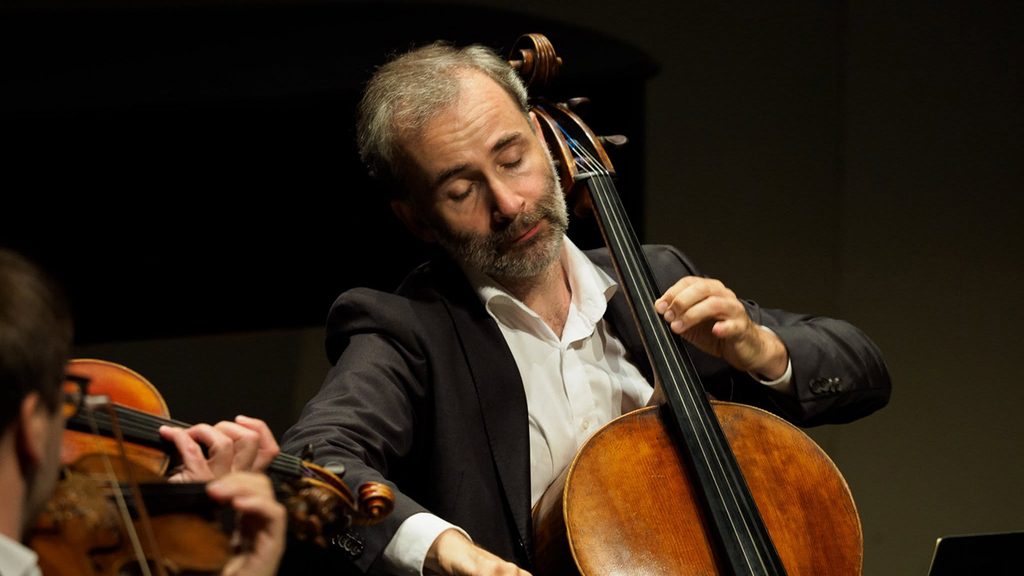
Vladimír Fortin, cello.
Fortin is the fourth founding member, with Souček and Holman, and has been in the group since the first rehearsal.
The four are also accomplished individually. The quartet’s biography lists personal prizes from the Concertino Praga competition, the Spohr International Competition in Weimar, UNESCO’s Tribune of Young Artists, the Rotary Music Competition in Nuremberg, the Beethoven International Competition and the Kocian International Competition.
Levin, Klusoň and the Czech Tradition
The quartet’s members studied at the Prague Conservatory and the Academy of Performing Arts in Prague, and their coaches read like a who’s who of Czech quartet playing: members of the Talich, Prague, Kocian and Pražák Quartets.
Two teachers stand out.
From 2005 to 2008 the group studied with Walter Levin, the first violinist of the LaSalle Quartet and one of the great quartet teachers of the twentieth century. Holman recalls that Levin loved two things above all: Beethoven and completely modern music. The most important lesson, he says, was to read the score properly and in minute detail. Beethoven and the composers of the Second Viennese School wrote exactly what they meant, and Levin expected players to honor it.
Their more recent mentor has been Josef Klusoň, violist of the Pražák Quartet. Together, Levin and Klusoň represent two traditions meeting in the group’s playing: the Czech line, which prizes singing tone, rhythmic buoyancy and folk-inflected phrasing, and the international line, which prizes exactitude.
Holman is clear about how deep the Czech tradition runs. He dates the first professional Czech string quartet to around 1890 and points to a second boom after the Second World War. A group inheriting that history carries both an advantage and a responsibility. Audiences in Prague hear the quartet’s Dvořák and Smetana against a century of benchmark performances.
The lineage now runs the other way as well. From 2006 to 2011 the quartet served as assistant quartet-in-residence at the Musikakademie Basel in Switzerland, and its members now teach in Prague and give masterclasses to students of all ages, along with educational concerts in schools.
The Competition Years
The group’s early prizes came in the Czech Republic and Slovakia: the Beethoven competition in Hradec nad Moravicí in 1999, New Talent Bratislava in 2003, the Music Critics’ Award in Žilina in 2004 and the Bohuslav Martinů Foundation competition in Prague. By then the ensemble was already attracting attention.
Then came the string of international results that changed its trajectory.
2005. A top prize at the Prague Spring International Music Competition, and the Prize of the Czech Chamber Music Society. The quartet’s 2004 recording of the complete Josef Suk string quartets had earned it an invitation to play at the Prague Spring Festival that year, and it has returned several times since.
2006. A top prize at the London International String Quartet Competition, where the quartet also won the Audience Prize. Another biography calls the honor a press prize; either way, listeners and critics were on its side.
2007. The Banff International String Quartet Competition, one of the most demanding contests in the field. The Zemlinsky Quartet took second prize, worth CAD $12,000, behind Australia’s TinAlley Quartet. The Ariel Quartet of Israel and the United States took third, and Canada’s Tokai Quartet fourth.
After the competition they came to Hamilton to perform at the Conservatory, beginning a long relationship with Ontario audiences.
2008–09. The Alexander Zemlinsky Foundation award, which gave the quartet a formal connection to its namesake’s legacy.
2010. The First Grand Prize at the Bordeaux International String Quartet Competition. For a quartet formed by teenagers who took their name as a joke, this was the capstone.
What followed is the more interesting part. Competition victories are famously unreliable predictors of long careers, because many winning quartets burn out within a few seasons. The Zemlinskys converted theirs into a permanent touring life, a teaching practice and a body of recordings. Sixteen years after Bordeaux, they are still at it.
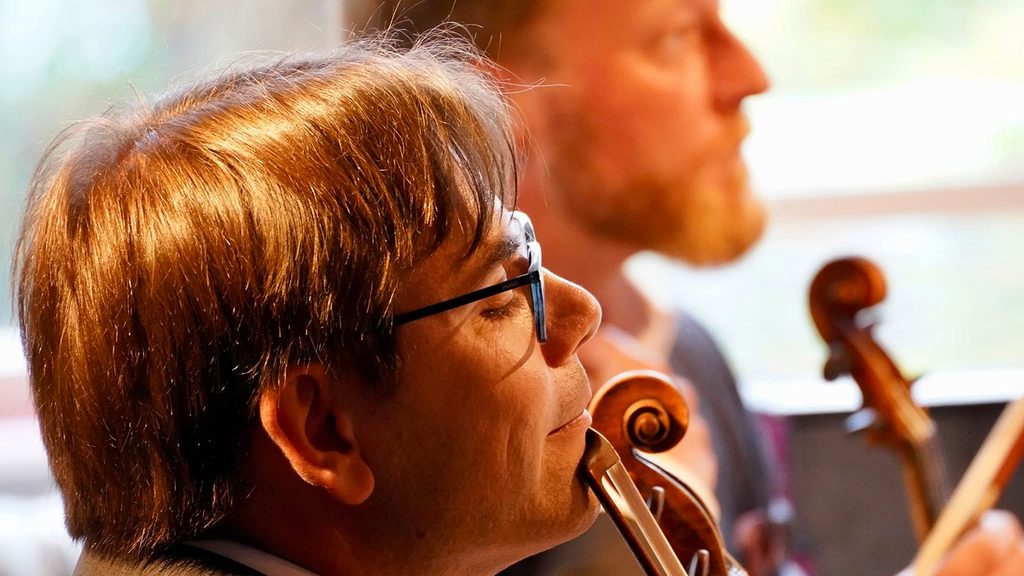
The Zemlinsky Quartet On Record
The quartet’s recording history began before its competition years.
Its first CD, released in 2003, paired works by Dvořák, Janáček, Suk and Richter, a sign of where the group’s heart lay. Its Czech-language festival biography also credits it with Czech Radio recordings that appear to include the string quartets of Franz Xaver Richter, the same composer who opens the November 1 program in Waterloo.
The 2004 Suk disc followed and led, as noted, to Prague Spring.
From early 2007 until 2018, the quartet recorded exclusively for the French label Praga Digitals, which its Czech biography says produced nineteen titles in that period. The debut was a statement: a four-CD set of Dvořák’s early string quartets, which won the Diapason d’Or in March 2007, one of the most respected prizes in classical recording.
The Praga catalogue grew steadily from there:
- The Zemlinsky quartets and early chamber music (2006 and 2011)
- A four-CD set of Schubert’s early quartets (2008)
- Two discs of Mendelssohn quartets and a disc of Glazunov (2010)
- Quartets by Haydn, Mozart and Beethoven (2011)
- A disc of Spanish music for strings (2012)
- The complete string quartets of the Czech composer Viktor Kalabis (1923–2006), recorded together with the Kocian Quartet
- Martinů’s First Quartet, praised by Gramophone as a warm-hearted, exuberant performance
The landmark was the Dvořák cycle.
Recorded and released between 2012 and 2014, four CDs covered the middle and late quartets, and with the early works already on disc, the quartet became, by its own biography’s count, only the fourth ensemble in history to record all of Dvořák’s string quartets. Reviews of the individual volumes were generally warm.
A MusicWeb International review of the disc pairing the “Slavonic” Quartet, No. 10, and No. 11 praised the tender slow movement of the tenth. It preferred an earlier Pražák Quartet recording of the eleventh, though, a reminder of how crowded the field is when you record Czech music in the Czech Republic.
Since 2018 the quartet’s main recording partner has been the Belgian label Evil Penguin.
Anyone who knows the group’s early history will appreciate the name. The collaboration has produced a Schubert disc pairing the great G major Quartet, D. 887, with the earlier D. 703 Quartettsatz, which classical-music.com awarded five stars and praised for its large-scale, urgent reading. It has also produced a 2024 disc of piano quintets by Bartók and Dohnányi with the pianist Paolo Giacometti, and a collaboration with clarinetist Eddy Vanoosthuyse.
By the time of the 2025 Smetana album, the quartet’s catalogue had reached roughly 25 releases, according to Apple Music’s biography.
The Smetana album, released in February 2025 and recorded in Belgium in January 2024, pairs the First Quartet, “From My Life,” with the darker Second. The reception was instructive. Gramophone’s Richard Bratby admired the group’s sensitivity to mood and its instinctive Czech dance rhythms, and said the performances have “soil under their fingers.”
He noted Holman’s booklet essay arguing that the Second Quartet is a sequel to the First, and Holman’s estimate that the group has played the First at least a hundred times.
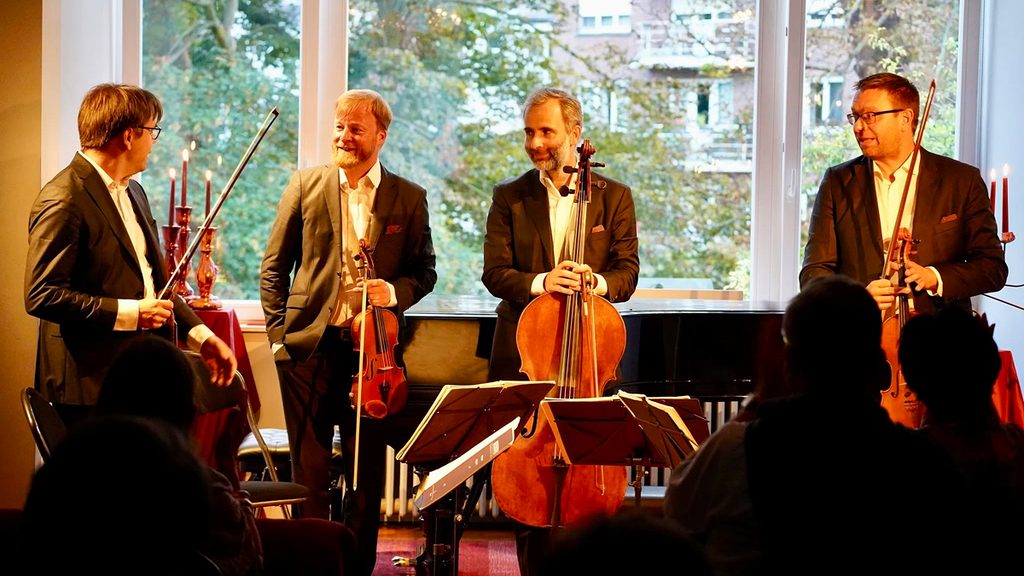
What They Play, and How It Sounds
The quartet’s repertoire has grown steadily, with more than 360 works, ranging from Mozart, Beethoven and Brahms through Dvořák to contemporary music.
The heart of that repertoire is Czech: Dvořák, Smetana, Janáček, Martinů and Suk, plus Kalabis, the Czech composer it championed on disc. Its Janáček credentials include recordings of both quartets, and the Second, “Intimate Letters,” has been a staple of its touring programs. Zemlinsky’s quartets sit beside them as a second home ground.
The group also takes in the wider canon, including Haydn, Mozart, Beethoven, Schubert and Mendelssohn, along with less familiar names. A recent tour program paired Beethoven with Germaine Tailleferre’s string quartet, a French composer often overlooked.
The group’s programming often has a story attached.
In April 2019 it performed with guests at Prague’s Jewish Museum on Yom Ha-Shoah, playing sextets by Ervín Schulhoff and Dvořák. It was a fitting program for an ensemble named after a composer who contributed so much to Czech, German and Jewish culture in Prague and who was forgotten after the war.
In 2009 it gave a concert at the Czech embassy in Ottawa to mark the twentieth anniversary of the Velvet Revolution.
As for the sound, critics keep returning to similar words. Those who have written about the quartet’s recordings praise its warmth, its sense of Czech rhythm and its willingness to play with a degree of rawness rather than polish. Its Schubert has been called epic in scale. Its Smetana divides listeners precisely because it is so personal.
This is a quartet that, after thirty years together, plays like a single instrument with four voices, and one that is willing to take risks.
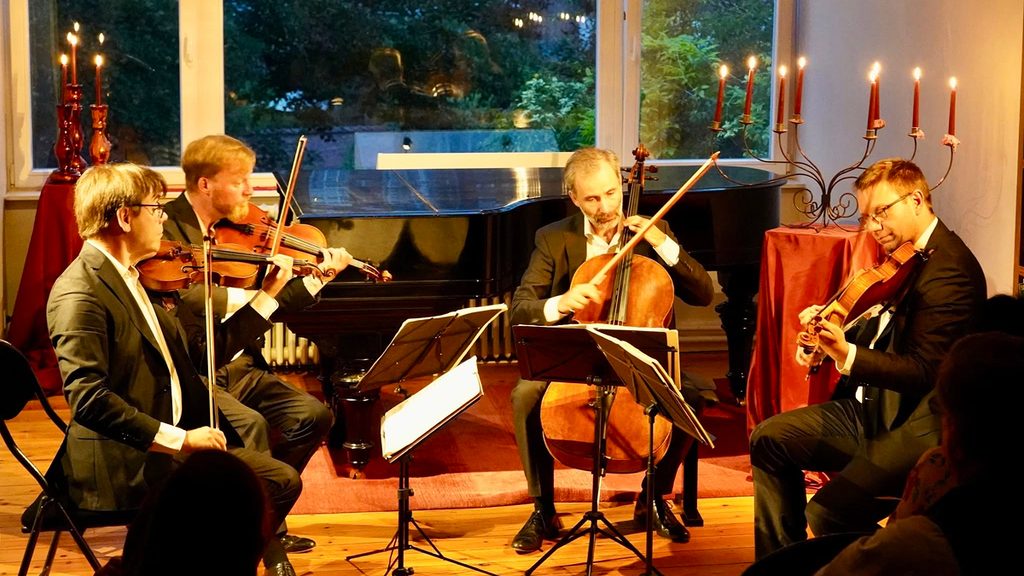
The Zemlinsky Quarter Returns Back in Waterloo on Oct. 29th and Nov. 1st
The Kitchener-Waterloo Chamber Music Society presents the quartet in two concerts.
The first is Thursday, October 29 at 7:00 p.m. at Erb Street Mennonite Church.
The second is Sunday, November 1 at 7:00 p.m. at the Maureen Forrester Recital Hall at Wilfrid Laurier University, 75 University Avenue West, with doors at 6:30 p.m.
The November 1 program has several threads that connect to the story above. It opens with a quartet by Franz Xaver Richter, a composer on the group’s first CD and in its Czech Radio recordings. It continues with Bartók’s Second Quartet and ends, after intermission, with Dvořák’s Viola Quintet, Op. 97, with guest violist Christine Vlajk, the work the group has long made a specialty of.