Somewhere right now, a stranger is standing on a city sidewalk with a paper cup of coffee and a hopeful expression, waiting to find out whether a few empty seats will open up for a film that most of the world has never seen.
That small, slightly ridiculous ritual is a big part of what makes a film festival thrilling, and it is also exactly the kind of thing that makes first-timers nervous. Film festivals have their own vocabulary, their own ticketing calendars, and their own unwritten rules, and none of it is obvious if your only experience is buying a seat for a Friday night at the multiplex.
The good news is that film festivals are far more welcoming than their glamorous reputation suggests. Most of the big names, including Toronto, Tribeca, Sundance, and Venice, sell tickets directly to the public, and the main barrier is rarely money or connections. It is simply knowing how the system works.
This guide walks you through choosing a festival, understanding passes and packages, using a rush line, building a schedule that survives contact with reality, and behaving like a seasoned regular once you are in the theater.

What Is a Film Festival, and How Is It Different From a Night at the Movies?
A film festival is a curated, time-limited event, usually lasting between a few days and two weeks, where audiences watch a programmed selection of films, often before they reach theaters or streaming services.
Unlike a regular cinema, a festival is built around discovery. Many of the films are premieres, many are made by first-time directors, and the people who made them are frequently in the building to introduce the screening or answer questions afterward. Sundance’s director of programming, Trevor Groth, has called that direct communication with the artist the secret magic of festivals.
The scale of the festival world is hard to pin down because nobody keeps an official tally. One widely cited analysis by researcher Stephen Follows counted roughly 3,000 active festivals worldwide, while the directory filmfestivals.com has listed more than 4,000 affiliated events.
At the top sit the so-called Big Five of Venice, Cannes, Berlin, Toronto, and Sundance, with Venice, founded in 1932, holding the title of the world’s oldest. Below them are hundreds of city, genre, and regional festivals where a first-timer can learn the ropes with far less pressure.
Three differences matter most to a newcomer.
- First, festival schedules are public grids of films, venues, and showtimes, and you assemble your own program rather than turning up whenever you like.
- Second, most screenings are general admission and start precisely on time, which changes how early you need to arrive.
- Third, festival films are generally unrated, so parents and anyone sensitive to intense content should read the film description before booking, as festivals like IFFBoston explicitly advise.

How to Choose Your First Film Festival
The best first festival is not necessarily the most famous one.
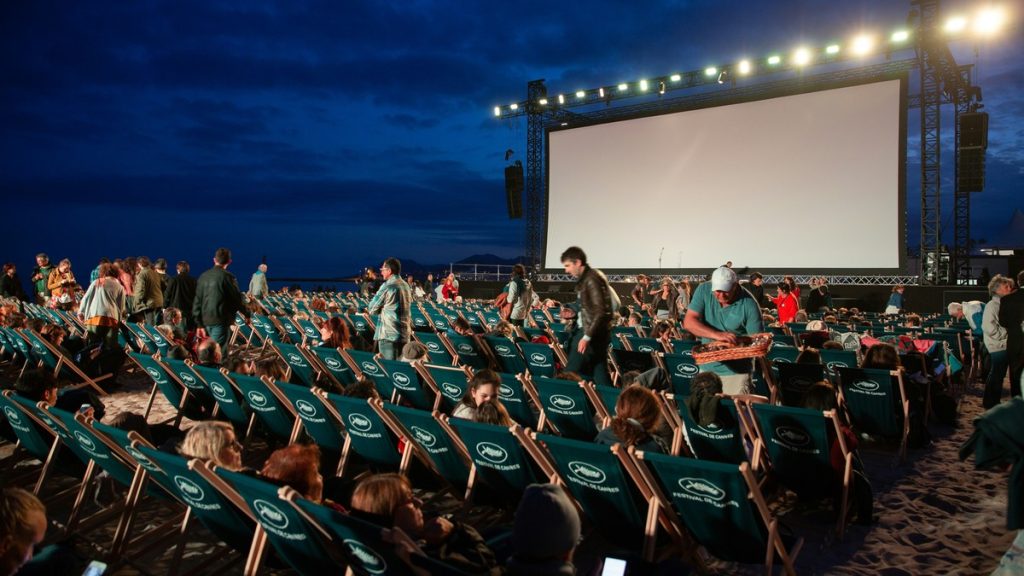
Cannes, for example, is largely an industry event. The public can reach it only through limited routes such as Cannes Cinéphiles, which offers free reservations for screenings at partner cinemas, and the free evening open-air screenings at the Cinéma de la Plage. It is a spectacular place to visit but a hard place to learn how festivals work.
Toronto is widely considered the most public-friendly of the majors, and Backstage has described it as a people’s festival with affordable tickets.
Tribeca in New York sells single tickets and passes online and offers rush tickets at the same price as advance tickets, which makes it forgiving for newcomers.
Telluride in Colorado is the opposite experience, an intimate Labor Day weekend gathering where passes are the main way in and the lineup stays secret until the festival begins.
Sundance, which moves to Boulder for 2027 after more than four decades in Utah, offers passes, packages, and single tickets, plus a short online festival for people who cannot travel.
If this is your first time, consider starting close to home. A regional or city festival lets you practice buying tickets, reading a schedule grid, and standing in a rush line without paying for flights and hotels. It also tends to be quieter, so you will learn the rhythm of arriving, queuing, watching, and staying for the Q&A before you try a festival that takes over an entire city.
Once you have one under your belt, a bigger festival feels much less intimidating.

How Film Festival Tickets Work: Passes, Packages, and Single Tickets
Festival tickets come in three basic flavors, and understanding them is the biggest step toward a stress-free experience. A single ticket admits one person to one screening. A ticket package, sometimes called a flex pack or curated package, bundles a set number of tickets, typically around ten, and often lets you choose your screenings before single tickets go on sale to the general public.
A pass or badge grants access to many or all screenings for a period of days, usually with priority entry, and it is the most expensive option and the most convenient for heavy viewers.
Sundance’s 2027 offerings show how these categories look in practice. A full-festival package of ten in-person tickets was priced at $925, a second-half package covering the final five days was $450, and an online festival pass for streaming at home was $825.
The festival also introduced new Encore and Matinee packages for 2027 and offers discounted Ignite options for people ages 18 to 25 and enrolled students. Those prices will change in future years, but the structure, with a premium for early access and a discount for flexibility, is typical across the circuit.
Policies on transferability and seating differ, so read the fine print.
Tribeca states that screening tickets are fully transferable and that it offers no reserved seating, while Telluride passes require a photo and cannot be passed to someone else. Venice sells single-screening tickets only through its official online channel, and those tickets are personal and non-transferable, with 2026 prices running from about 50 euros for regular screenings to 150 euros for premium evening slots.
Before you buy, check whether your ticket can be shared if your plans change, and whether passholders are seated ahead of single-ticket buyers, as they are at Telluride and many other festivals.
When to Buy: Reading the Ticketing Calendar
Festival ticketing follows a predictable sequence, and knowing it prevents the heartbreak of discovering that the film you wanted sold out weeks ago.
The usual order is dates announced, then passes and packages on sale (often with a presale for members and donors), then the film lineup, then the detailed screening schedule, and finally single tickets for everyone.
Toronto’s 2026 calendar is a good model: curated packages opened to members in June, the official schedule was released on August 11, member single-ticket sales began on August 21 in level-based waves, and public single tickets followed at the end of August, a little under two weeks before opening night on September 10.
Sundance’s 2027 timeline follows the same arc. Donor presales opened October 5, member presales began October 13, and the public pass and package sale started on October 15. The lineup and schedule are expected in December, package holders will select their screenings in early January, and single-film tickets go on sale on January 8, 2027, with member and donor presales a day or two earlier.
Venice compresses the sequence into days, publishing its public schedule on August 7 and opening online sales on August 11 at 3 p.m. Central European Summer Time for a festival that began on September 2.
A few habits will improve your odds. Create your account on the festival’s ticketing site well before the sale, save your payment details, and log in a few minutes early because popular titles can sell out quickly. Consider a low-tier membership if one is offered, because Toronto and Sundance both reserve presale windows for members, and early access can be worth more than the fee.
Finally, buy only from official channels. TIFF specifically warns buyers to use its own account system or Ticketmaster.ca and to watch for look-alike websites that appear in search advertising.
What Is a Rush Line, and How Does It Work?
A rush line is a standby queue for people without tickets who hope to buy seats that are unclaimed at showtime, similar to flying standby on an airline.
When a screening is sold out, staff wait until shortly before the film starts, count the empty seats, and sell that number of tickets to people in the line on a first-come, first-served basis. It is one of the most beloved traditions in festival culture and one of the most misunderstood, because nobody is guaranteed a seat.
The details vary slightly, but the pattern is consistent. At TIFF, front-of-house staff count empty seats about 15 minutes before the screening and sell a limited number of rush tickets, and TIFF recommends arriving no earlier than 60 minutes before showtime. IFFBoston follows a nearly identical model, holding seats for badgeholders and selling unfilled seats to the rush line 15 minutes before the film, with one rush ticket per person.
Tribeca sells rush tickets at the same price as advance tickets, payable on entry, though not at gala venues such as the Beacon Theatre.
How good are the odds?
That depends on the film, the venue, and how many passholders show up. In 2019, the executive director of the Hamptons International Film Festival told the local press that its rush line had a 97 percent success rate, while noting that admission is never guaranteed. Large premieres at big festivals are far harder, so do not make a rush line your only plan for the one film you cannot miss.
Some festivals sell rush access as a product. TIFF’s Festival Rush Pass, for instance, has been listed at $82 for adults and $39.50 for under-25 members on its ticketing page, and it gives unlimited rush-line access to off-sale screenings. If you plan to see many films and are flexible about which ones, a rush pass can be a bargain, but if you want specific titles, a package or single tickets are safer.
In the line itself, ask a volunteer where it begins rather than forming one early, stay in your place, and when admitted, take the first available seat quickly and quietly without wandering the aisles with a phone light.
How to Build a Festival Schedule That Actually Works
The most common beginner mistake is overbooking.
A schedule grid makes it look as though you can slide from one theater to the next all day, but real festivals include queues, long Q&As, and travel time between venues. Local hosts in Park City observed that first-time Sundance attendees almost always try to do too much, and the veterans’ advice is to anchor each day with one or two must-see screenings and leave generous space around them.
Start with the films that screen only once, because those are the constraints everything else must fit around. Then look for other films you want in the same venue or neighborhood on the same day, which keeps travel to a minimum.
SXSW‘s own scheduling advice has long suggested adding a backup for any time slot where two films you want overlap, because your first choice may be full. If you must hop between distant venues, assume the trip will take twice as long as the map suggests.
Build in time for the human side of the day.
The Traverse City Film Festival‘s survival tips recommend leaving buffer time for travel, lines, and extended Q&As, carrying water and a snack, and keeping your tickets in one designated pocket so you are not digging through a bag at every door. Telluride regulars add that line time eats into the number of films you can see, so a realistic goal at some festivals is three or four screenings a day rather than six.
Finally, leave room for gambles. Veteran guides to the Hamptons festival encourage attendees to take a chance on a film they have never heard of, because the movie that surprises you is often the one you remember longest.
If you miss a hit, remember that festivals often add repeat screenings. TIFF tallies audience votes after every screening and often adds extra showings of strong People’s Choice contenders late in the festival, while Telluride repeats its most popular films through the weekend based on passholder demand.

What to Expect on the Day of Your Screening
Plan to arrive earlier than you would for a normal movie. TIFF tells ticket holders that 30 minutes before showtime is considered on time and that 15 minutes before is already late, and staff may refuse latecomers without a refund. Seating is usually first come, first served, and passholders are often admitted ahead of ticket buyers, so the earlier you queue, the better your seat.
Most festivals now deliver tickets digitally, so download yours to your phone wallet before you leave, since venue Wi-Fi and cell service can be unreliable.
Some passes must be scanned physically rather than shown as screenshots, as TIFF notes for its rush passes, and if you hold a photo badge, wear it visibly because staff may check it at every venue. Also remember that venues have their own rules.
Tribeca does not allow dogs in festival venues, Telluride’s pass terms prohibit electronic recording or communication devices in theaters, and many festivals use bag policies or security screening, so pack light.
Once you are seated, expect the programming to feel different from a commercial release. A screening often begins with a welcome from a programmer, a sponsor message, or a filmmaker introduction, and afterward many screenings include a Q&A, which means a two-hour film can easily become a two-and-a-half-hour commitment.
Check whether your next screening leaves enough margin before you commit.
Film Festival Etiquette Every First-Timer Should Know
Festival audiences are typically more attentive than the average multiplex crowd, because people have chosen a film carefully and often waited in line for it.
The first rule is punctuality, which is both a courtesy and a practical necessity, since late arrivals may not be admitted.
The second is respecting the line, because standing in a queue is a kind of social contract. Do not save spots for a dozen friends, do not cut ahead, and if you are eating something messy outside, step aside and keep the line moving.
The third rule, which comes up in nearly every first-timer guide, is to put your phone away. A writer covering this year’s Cannes screenings described a full-brightness phone screen as distracting enough to pull attention from the film, and a Florida International University film professor calls checking your phone during a festival screening extremely rude. Silence your device, turn off notifications, and if you must photograph a poster, do it in the lobby. Never record any part of a film, which is disrespectful and often prohibited.
The fourth rule concerns leaving early. Festival culture is more forgiving of walking out than traditional cinemas, because with hundreds of films on offer, audiences treat their time as a precious investment, and a walkout can simply mean heading to a film you will enjoy more. Even so, a filmmaker may be sitting in the theater, so leave discreetly, choose an aisle seat if you think you might go, and avoid commentary on your way out.
Equally, do not bolt for the exit when the credits begin if there is a Q&A, since the people who made the film are often about to walk onstage.
Finally, be kind to staff and volunteers, who juggle sold-out houses and shifting seat counts and are the reason screenings start on time.

Q&As: How to Get the Most Out of Them
A post-screening Q&A is a moderated conversation between the audience and the filmmakers, and for many festivalgoers it is the highlight of the experience.
Festival leaders from Sundance and SXSW have said that direct access to the artist is what makes festivals special, and that the Q&A shapes how audiences talk about a film afterward. Staying for one, even for a film you only moderately enjoyed, often changes how you think about what you saw.
If you want to ask a question, preparation helps. Make it relevant to the film you just watched, keep it short, and ask a single question rather than two linked ones, which one film writer warns makes you seem to think your curiosity outranks everyone else’s. Avoid biographical questions that a quick search would answer, pitching your own screenplay, or asking performers how to break into the business, none of which will receive a satisfying answer.
Questions that probe a creative choice, such as why a scene was shot in a single take or how a location was found, tend to produce the best responses.
It is equally important to know what not to ask. TheWrap‘s guest guide on Q&A behavior recounts moments where audience members asked an actress about nudity, lectured a cast on a personal cause, or tried to recruit the room to agree with an insult, and its advice is simple: if you do not have a pertinent question, do not raise your hand.
Questions about an actor’s body or weight loss are widely considered tired and intrusive, so ask about craft instead.
And if the moderator does not call on you, be gracious, because plenty of others are waiting too.

Budgeting, Lodging, and Pacing Yourself
Festival costs go beyond the ticket. Flights, lodging, meals, and local transit often cost more than the screenings themselves, and demand spikes can be dramatic.
In Boulder, the city reports 1,848 short-term and festival lodging licenses issued or pending, Airbnb reported that searches for stays during Sundance were up 500 percent from last year, and the head of Visit Boulder said hotels were not sold out but the first weekend was tight. Venice shows the same pattern, with one flagship Lido hotel showing no rooms for the 2026 dates by early August.
The practical solution is to book lodging as soon as you know your dates, consider staying a short transit ride from the main venues, and look for official transit help.
Boulder, for example, plans free HOP bus service and shared e-bike passes for festival attendees. Ticket strategy can save money too, since packages usually cost less per film than single tickets and many festivals offer student, under-26, or senior concessions, as Venice does for under-26 and over-65 attendees and Sundance does through Ignite.
Volunteering is another route in. Sundance is seeking about 2,000 volunteers for its Boulder debut, and one SXSW budget guide points to volunteering as a way to earn a free badge.
Pacing is the final piece. A festival is a marathon, so eat real meals, drink water, and treat at least one slot a day as a free break. If you are traveling to a high-altitude destination like Telluride or Boulder, be gentle with your first day. A calm festivalgoer who sees four films and enjoys all of them has a better festival than an exhausted one who crams in eight.

Quick Answers to Common First-Timer Questions
Can anyone attend a film festival?
Yes, in most cases. The majority of festivals sell tickets, passes, or packages to the public, and you do not need industry credentials, a tuxedo, or an invitation. A few events, notably Cannes, are heavily weighted toward accredited professionals, but even there the public can reach free screenings through Cannes Cinéphiles and the Cinéma de la Plage.
If you are unsure, check the festival’s tickets or “how to attend” page, which will tell you exactly which screenings are open to the public.
What should I wear to a film festival?
Wear whatever lets you sit comfortably for hours and stand outside in a queue.
Red carpets and galas may call for dressier clothes, but regular screenings are casual, and local TIFF guides stress that you do not need a tuxedo or industry pass. Bring layers, because theaters are often cold, and choose comfortable shoes, since you will spend a surprising amount of time on your feet.
What happens if the film I want is sold out?
Check whether the festival offers a rush line, a waitlist, or additional screenings.
SXSW, for example, uses a waitlist system that lets you estimate your chances of getting in, and many festivals add repeat showings of popular titles. Arrive early to the rush line, stay flexible, and keep a backup film in mind. Many festival titles also reach theaters or streaming within months, so a missed screening is rarely a permanent loss.
Your First Film Festival Can Start Here: All You Need is Tickets
Attending your first film festival is less daunting than it looks once you understand the basic mechanics.
Choose a festival that matches your experience level, learn the difference between single tickets, packages, and passes, and mark the ticketing calendar so you are ready when sales open. Arrive early, treat the rush line as a bonus rather than a plan, and build a schedule with room to breathe, because the best festival days leave space for surprises.
Equally important is the human side. Silence your phone, respect the line, thank the volunteers, and ask Q&A questions that honor the film you just watched.
Those habits are what make festival audiences some of the most attentive in the world, and they are what will make you feel at home among them.