On June 26, 1953, half the town of Stratford, Ontario turned out to watch a tent go up. The canvas giant rising on the banks of the Avon River measured 45 metres across and 19 metres at its peak, and raising it took roughly 60 hours of work over a concrete amphitheatre that had been dug directly into the ground.
Beneath the canvas sat some 1,500 seats wrapped around a shape of stage that nobody had built since Shakespeare’s own century, and the company that would perform on it had rehearsed its first scenes in a shed on the Stratford Fairgrounds, which tells a beginner most of what matters about where all of this came from.
Eighteen days later, on July 13, 1953, Alec Guinness walked onto that stage and spoke the first lines of Richard III before an audience of about 1,500 people that included 85 theatre critics, and when the performance ended, the curtain calls ran for a full five minutes.
The Toronto Star critic Nathan Cohen went home and wrote, in substance, that something absolutely original and world-important was going on in this small Ontario town, and the season that followed him out of the tent ran six weeks with just two plays, Richard III and All’s Well That Ends Well, both of them starring Guinness.
The houses played at roughly 98 percent capacity against a hopeful projection of 60 percent, and about 10,000 people came through in the first week alone.
That tent is where Canada’s Shakespeare festivals begin, and this guide is written for the person standing exactly where those first audiences stood, which is to say outside the whole tradition and wondering whether it could possibly be for them. The beginner’s questions turn out to be three, and they are always the same three: which play to start with, whether to watch it in a theatre or out on a blanket, and why everyone who has done this before insists so stubbornly on a comedy.
Stratford is the model that answers all three, but the map runs much wider than one town, from a tent at sunset in Vancouver to a hillside in Toronto to a travelling stage in a Montreal park, and every stop on it was built, quite deliberately, for people who had never seen a play.
The tent existed in the first place, however, because a railway town was dying, and because a hometown journalist talked his council out of $125.
A $125 Bet, a Canvas Tent, a Revolutionary Stage
Stratford built its name and its living on the railway, as a junction and locomotive-shop town, and by the early 1950s the elimination of steam power was pulling that living away, with disastrous job losses following the work out of town.
The idea that saved it came from Tom Patterson, a Stratford native and Second World War veteran working as a journalist, who proposed reviving the town’s economy with a Shakespeare festival trading on the happy accident of the town sharing its name with Shakespeare’s birthplace.
The Stratford Festival‘s artistic director, Antoni Cimolino, put the founding logic plainly in 2025, explaining that the theatre was started in 1952 for the economic development of the community, not for artistic reasons.
The seed money was almost insultingly small. On January 22, 1952, Stratford City Council granted Patterson $125 to seek artistic advice in New York, and the trip failed at its first purpose when he could not connect with Laurence Olivier, the adviser he wanted.
The rescue came from home, since theatre pioneer Dora Mavor Moore put Patterson in touch with British director Tyrone Guthrie, who was intrigued by a transatlantic telephone call, visited Stratford, judged the idea viable, and became the festival’s first artistic director, while the Stratford Shakespearean Festival of Canada became a legal entity on October 31, 1952, with Patterson as general manager.
It nearly died before it opened. In May 1953 the venture was floundering for lack of funds, and building contractor Oliver Gaffney kept his men working regardless until last-minute donations from Governor General Vincent Massey and the Perth Mutual Insurance Company saved it.
Guthrie had recruited Alec Guinness and Irene Worth to work for expenses only, at the head of a company in which 74 of the 80 cast members were Canadian, and Guinness had turned down a movie to come, so when that news travelled, a New York ticket broker bought up an entire week of seats and advance sales reached $75,000 before opening night. What those first audiences found under the canvas was the invention that outlived the tent.
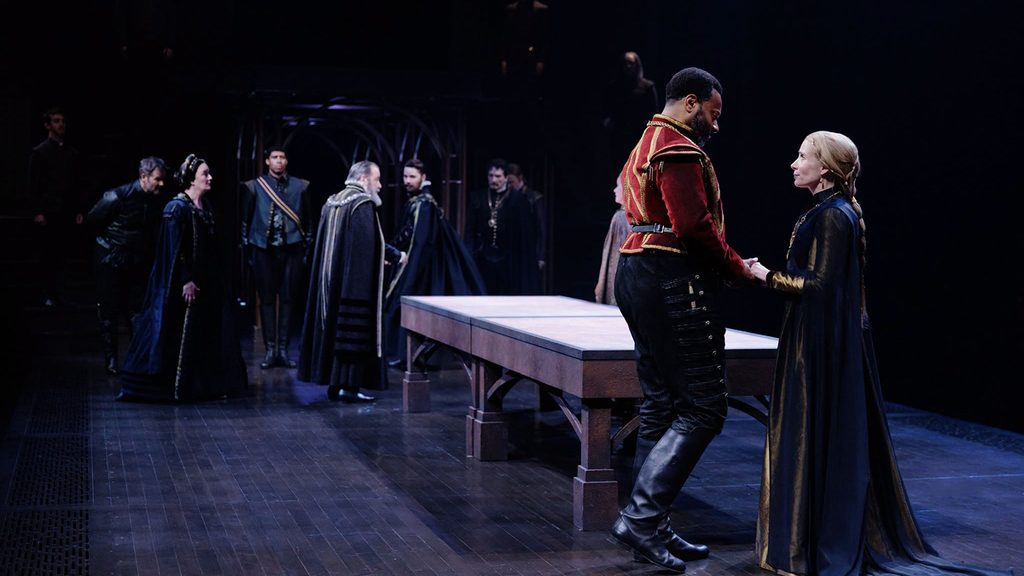
The invention was the thrust stage, conceived by Guthrie and designer Tanya Moiseiwitsch, wrapping the audience around the playing space on three sides and evoking both a Greek amphitheatre and Shakespeare’s Globe, and the Festival calls it the first open or thrust stage of the modern era, a configuration not seen since Shakespeare’s time that became a model for stages across North America and Britain.
Incoming artistic director Jonathan Church has observed that Stratford’s stage transformed the relationship between actors and audiences worldwide, and Chichester Festival Theatre in England, which he ran for a decade, performs on a thrust inspired by Stratford’s.
The tent stood for four seasons, and the permanent Festival Theatre, dedicated on June 30, 1957, kept faith with it in Robert Fairfield’s circular floor plan and pie-crust roof, opening the next night with Michael Langham’s Hamlet starring Christopher Plummer, with no seat more than 65 feet from the stage.
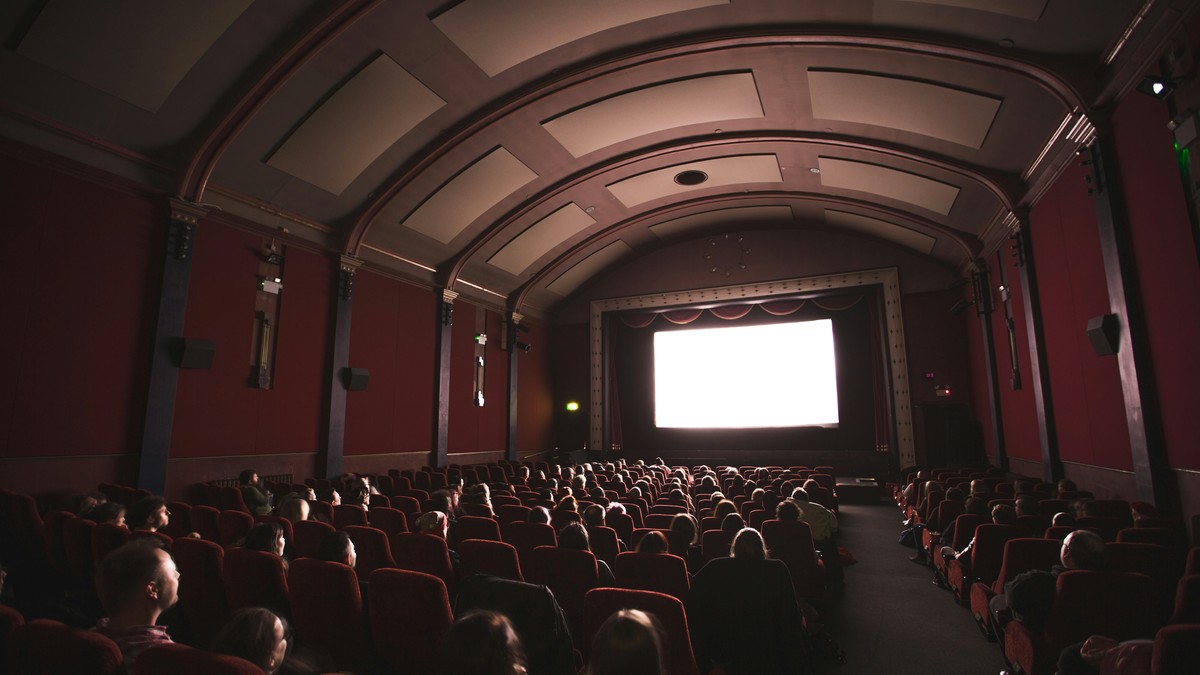
The Festival Theatre itself, at 55 Queen Street, remains the flagship, seating 1,833 on its thrust in Upper Queen’s Park beside the river, which Cimolino notes makes it bigger than every Broadway house but one, and a 2026 Tempest audience member described the intimacy from inside, with seats three or four rows back sitting level with the stage and the audience surrounding the action.
The other three houses give the beginner distinct choices, since the Avon Theatre downtown is the Festival’s only proscenium-arch stage, seating 1,077 and known for lavish sets and family-friendly shows, while the Tom Patterson Theatre, rebuilt in 2022 and named for the founder, wraps 600 custom seats around an elongated thrust with no seat more than 8.5 metres from the action, in undulating glass on the banks of the Avon.
The Studio Theatre is the smallest and most intimate of the four, a modified thrust in the Avon’s former scene shop that hosts new, experimental, and rarely seen work, so the four stages offer one company at four distances, and the beginner reasonably wants to know how the machine runs when the same actors are playing three shows at once.
How a Repertory Season Actually Works, Day to Day
The Festival describes itself as a seven-month season of a dozen or more plays in four unique venues, with Shakespeare at its core, and more than 30 million people have attended since the founding, which makes Stratford the largest classical repertory theatre company in North America, with the Shaw Festival second.
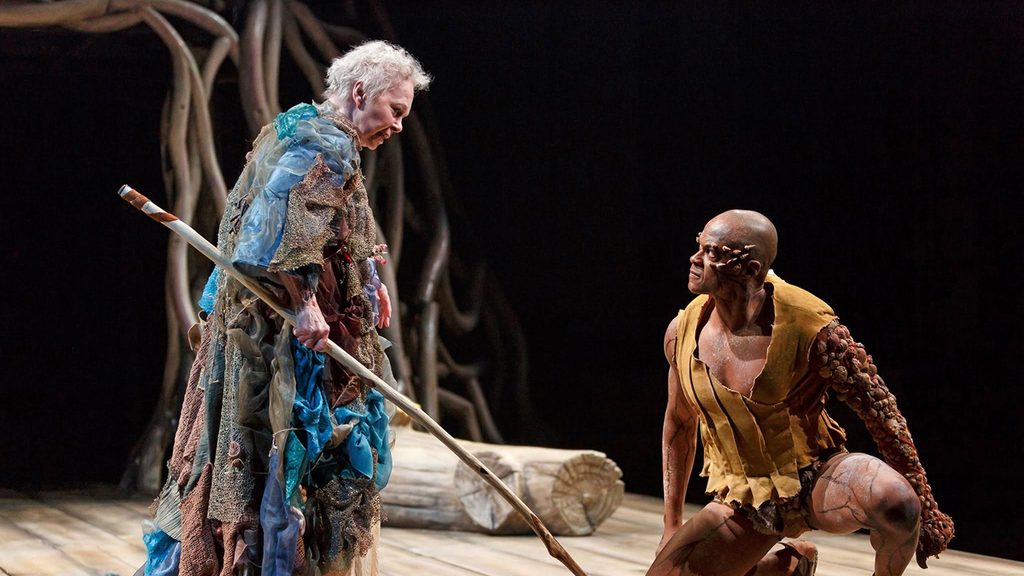
The engine is the acting company, whose members work contracts of up to about eight months and perform in two or three of roughly 15 productions concurrently, so that at the July and August peak the four houses can hold as many as eight performances on a single day, many visitors see two plays in a day, and at peak the Festival carries the responsibility of selling some 7,000 tickets every day, a workload that delivered 430,000 patrons in 2024 after 443,000 the year before.
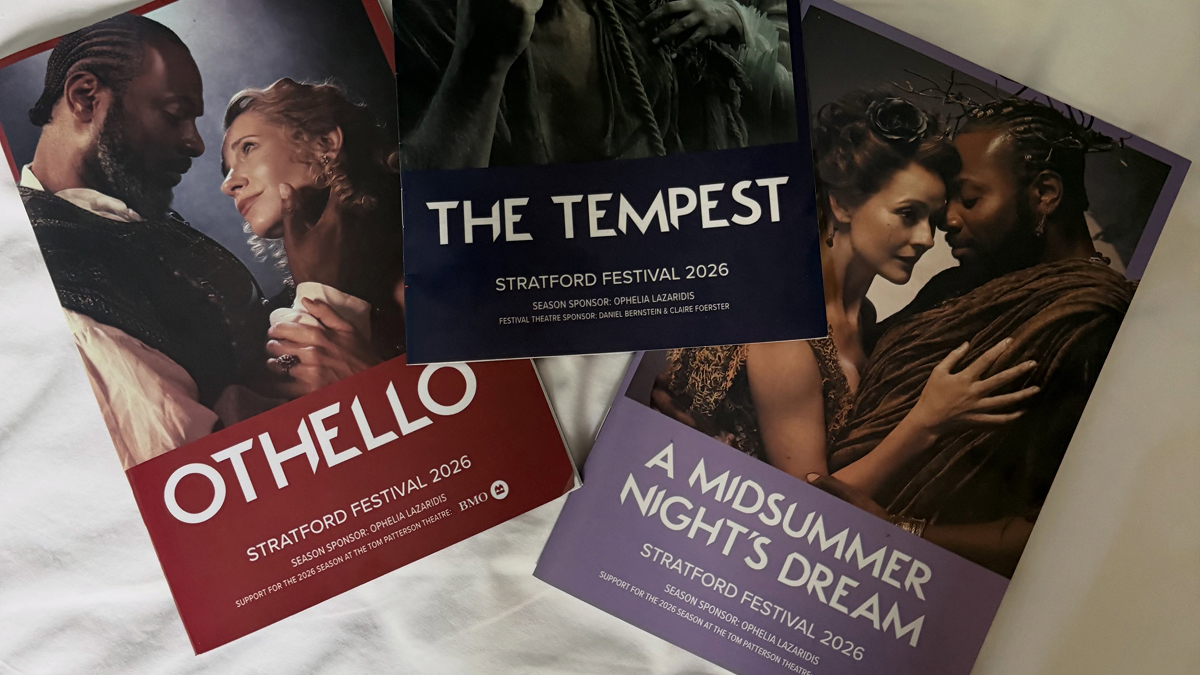
The Shakespeare slate inside that machine is balanced with a beginner in mind, because Cimolino programmed a comedy, a romance, and a tragedy in 2025 with As You Like It, The Winter’s Tale, and Macbeth, and repeated the pattern in 2026 with Othello as the tragedy, A Midsummer Night’s Dream as the comedy, and The Tempest as the romance.
Doubling is the repertory system’s party trick, since in the announced 2027 company André Sills, the Oberon of 2026, returns as Henry VIII, while Jonathan Goad plays Thomas Cromwell across both Wolf Hall plays and also appears in Present Laughter, and the Oregon Shakespeare Festival‘s Tim Bond makes the same pitch across the border, where in one long weekend a visitor can see seven plays in four days and watch the same actor transform from show to show.
What absorbs the machine each summer is a town of 33,232 people, by the 2021 census, so a 430,000-patron season works out to roughly 13 visitors for every resident in a townsite named after Stratford-upon-Avon back in 1832, whose Shakespearean Gardens near the courthouse are planted with the flowers and herbs named in the plays.
The Festival Theatre sits in Upper Queen’s Park beside Lake Victoria and the Avon River, where picnic areas and riverside paths fold into the day around a performance, and the river’s swans, a symbol of the city, among them descendants of a pair from Queen Elizabeth II’s royal herd that arrived in 1973, remain on the water all season, now returned each spring quietly since the city cancelled the formal Swan Parade on March 9, 2026, on bird-welfare grounds.
The machine is enormous and welcoming in equal measure, but none of it answers the beginner’s real obstacle, which is not logistics at all, since the obstacle is a specific and nameable fear.
The Fear Has a Name and It Melts Fast
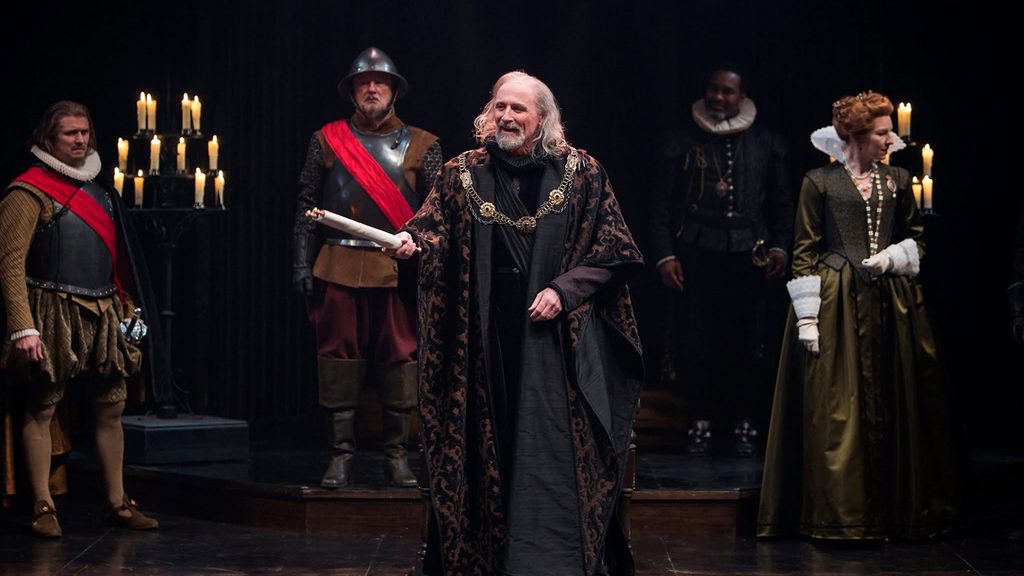
The fear is common enough that it has been given a name. Ralph Alan Cohen of the American Shakespeare Center calls it ShakesFear, the entirely unnecessary dread of going to Shakespeare convinced in advance that something will be missed and that the vocabulary will feel like an examination, and he calls it an irrational and unhelpful worry and a primary obstacle to enjoyment.
The numbers behind it are real, since a CEDAR and University of Warwick survey found 46 percent of students agreed that studying Shakespeare is boring, while a British Council and YouGov study across 15 countries found 36 percent of British respondents said they did not understand Shakespeare at all, with school teaching least associated with liking him and watching a play or film positively associated with both, in older, correlational data from 2015 and 2016.
The counter-evidence comes from the stage, and it is practitioner testimony rather than a measured study. Cohen reports that audiences at his company’s untranslated productions repeatedly say it was the first time they had no trouble understanding a Shakespeare play, and some ask who translated it into modern English when nobody had.
The mechanism, as Chicago Shakespeare Theater‘s education director explains through the Folger Shakespeare Library, is that the ears adjust to the language within a few minutes, the way eyes adjust when a room goes dark, so the advice is to stop chasing each word, listen to the tone of the actors’ voices, and watch their faces, because the story arrives through those channels anyway.
Children are better at this than adults, because a Pioneer Drama teaching account describes an actor’s eight-year-old daughter and a friend who had never seen a play sitting through Othello without complaining about archaic words, and afterward talking about adventure, intrigue, murder, betrayal, jealousy, and costumes, since children are used to not understanding every word a grownup says.
The language itself is less foreign than its reputation suggests, because only about 5 percent of Shakespeare’s words are actually obsolete, the real traps are false friends and inverted word order, and thou, thee, and thy are simply the singular you.
Every thread of practitioner advice converges on one tip, and the Folger’s education director Peggy O’Brien, reporting partner theatres across the country, puts it first: talk through the plot or read a synopsis beforehand, because almost all the plays were based on stories Shakespeare’s own audiences already knew, so a synopsis puts a first-timer exactly even with the crowd at the Globe, and it is no spoiler at all.
The festivals supply the homework, since Stratford publishes a free study guide for every production, Bard on the Beach runs short In a Nutshell story talks before every performance, the Utah Shakespeare Festival offers free half-hour orientations, and Edmonton’s Freewill opens select performances with a 15-minute puppet-show synopsis.
Translations into modern English exist and remain contested, defended as doorways and attacked as dumbing down, and Cohen’s position is that translation feeds the fear and underestimates audiences, since staging, not translation, makes the original comprehensible. The festivals stage the original language, so the fear is survivable and the homework amounts to five minutes of plot, and the remaining question is which play to spend those five minutes on, where the advice has something close to a consensus.
Why the Comedies Are Every Beginner’s Front Door
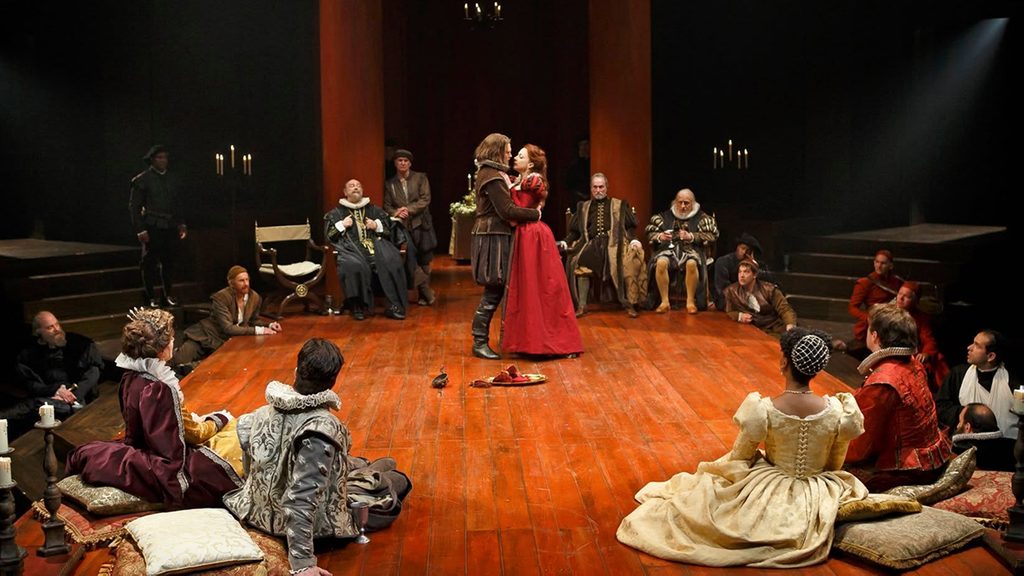
The consensus begins with the playwright and educator Ken Ludwig, whose advice to beginners is to start with the comedies, and who names A Midsummer Night’s Dream as the best first play for all ages, Twelfth Night as the other great choice from about age 12, and Much Ado About Nothing as the third starter, while a beginner who insists on a tragedy gets Macbeth or Romeo and Juliet, the plays of action, witches, and ghosts.
Laughter, on the reasoning that runs underneath the advice, carries a new audience over the language faster than anything else in the canon. No festival publishes an official best-first-play ranking, so the gateway canon rests on educators like Ludwig, the Folger’s partner theatres, the Royal Shakespeare Company‘s children’s programme, and published reading guides.
Midsummer sits at the top of the consensus because it is probably the most performed Shakespeare play of all and is generally acknowledged as the most accessible, weaving three plot lines of magic, farce, and workplace comedy through one enchanted night, with much of its humour slapstick and visual, built on Bottom and the Mechanicals rather than wordplay a beginner cannot yet hear, and Stratford’s own study guide grades it for Grade 7 and up.
The strongest evidence is what festivals do when their own survival is at stake, because Midsummer was the first production at Bard on the Beach in 1990, at Dream in High Park in 1983, and at Shakespeare on the Saskatchewan in 1985, so festivals start themselves, and their beginners, with the same play.
Behind it, Twelfth Night, High Park’s 2026 title, is the beautifully messy comedy of mistaken identity built on shipwrecked twins, while Much Ado About Nothing, Saskatoon’s 2026 title, is the original romantic comedy of feuding Beatrice and Benedick, and The Comedy of Errors makes the physical argument in its purest form, its two sets of identical twins generating a farce the Royal Shakespeare Company trusts, alongside The Tempest, as a 90-minute first introduction for children aged 7 to 13 in the original language.
The reasoning underneath the list is structural, because a comedy’s ending is legible, closing in marriages where a tragedy closes in deaths, physical and situational humour survives the language barrier, the plots map onto the romantic comedy and the farce that modern audiences already know how to watch, and laughter itself is a built-in comprehension check, since a beginner knows the play is landing when the laugh arrives in the right place.
The honest nuance is that on the page the comedies can be the hardest plays of all, their humour locked in wordplay and their plots tangled in twin-swapping convolutions, which is precisely why the advice is to see one rather than read one.
The play to avoid first is King Lear, which a Bard on the Beach review advises newcomers to leave until they have seen the festival’s other shows, given its near three hours and its demands on a newcomer’s attention, and an Amherst analysis adds its two converging plots, more than 10 major characters, and onstage brutality, in contrast to Macbeth and Othello, which focus on two to four central characters.
And the lowest-stakes place to walk through the comedies’ door is not a theatre at all, because it is a park, at sunset, on a blanket.
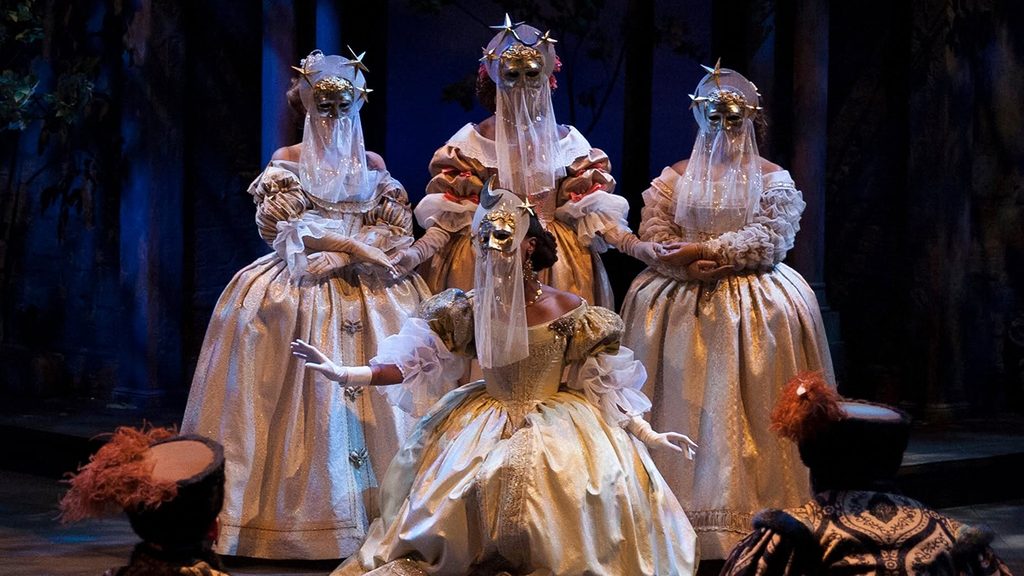
Shakespeare Festivals in the Open Air: Blankets, Sunsets, Bats
Bard on the Beach in Vancouver is the sunset gateway, founded in 1990 by Christopher Gaze as an Equity Co-op with a mandate of affordable and accessible Shakespeare, and its first season was a single Midsummer in an event tent at Vanier Park drawing about 6,000 to 8,000 patrons on roughly $35,000.
It is now Western Canada’s largest professional Shakespeare festival, averaging about 100,000 patrons a year, and its Mainstage tent is open at the back, so downtown Vancouver and English Bay form the literal backdrop and an evening show begins in daylight and ends beneath the skyline’s lights, with about 740 reserved seats under cover.
The Bard Village of picnic tables and concessions opens an hour before showtime, patrons bring their own food or pre-order picnics, and the festival’s own guidance is the beginner’s outdoor checklist, since the unheated tents make June and September nights cold enough that layers and blankets are essential.
The 2026 season, the 37th, paired The Merry Wives of Windsor reimagined in a soccer-obsessed modern Vancouver suburb with a dystopian Macbeth, at tickets from $30 CAD and half price for youth aged 6 to 18.
Toronto’s picnic gateway is Canadian Stage‘s Dream in High Park, the oldest annual outdoor theatre event in Canada, launched in 1983 with A Midsummer Night’s Dream on the grass at the bottom of the hill, where an estimated 1.3 million people had attended by 2024. Its artistic director Brendan Healy, himself converted as an audience member, describes eight or nine hundred people nightly and calls outdoor theatre democratic in a way indoor spaces are not, and for many young people it is their first experience of theatre.
Seating is on the grass, with blankets and picnics encouraged and low-profile lawn chairs rentable, and the 2026 edition, the 43rd, staging Twelfth Night from July 12 to September 6, charges $35 CAD for adults and $20 CAD for children 16 and under, with $20 CAD rush tickets at the gate, and the attendee lore, flagged honestly as lore, advises bug spray, because bats appear overhead during performances.
Saskatoon’s Shakespeare on the Saskatchewan began in 1985 on the banks of the South Saskatchewan River with an inaugural Midsummer famously staged on a golf course, where, by the festival’s own 40th-anniversary account, a stray golf ball struck an audience member during that first production, and today it plays two productions in repertory in a permanent 250-seat tiered amphitheatre, its 2026 season pairing Much Ado About Nothing with Julius Caesar.
Montreal’s Repercussion Theatre is the zero-barrier gateway, founded in 1988 on the belief that theatre should be as accessible as library books, touring one professional production to Montreal parks each summer, admission free with donations accepted, and more than 12,000 people attending across a summer, its 2026 production staging The Winter’s Tale in an Afrofuturist production.
Halifax’s Shakespeare by the Sea, founded in 1994, is the largest and longest-running outdoor theatre festival in Atlantic Canada, staged in an amphitheatre formed by the ruins of the Cambridge Battery in Point Pleasant Park, where donations supply about 70 percent of revenue, reserved seats book online, admission at the door is pay-what-you-can, and one visitor’s dusk came with two osprey and a blue heron overhead as the light went down.
Edmonton’s Freewill Shakespeare Festival, formed in 1989 by seven University of Alberta graduates in pass-the-hat spirit, returned for 2026 to the renovated Heritage Amphitheatre in Hawrelak Park with Much Ado About Nothing and Something Rotten! at $40 to $50 CAD for adults.
Ottawa’s A Company of Fools and Winnipeg’s Shakespeare in the Ruins carry park Shakespeare to their own cities, and the 2023 end of Driftwood Theatre‘s Bard’s Bus Tour is the reminder that the touring model is precious rather than evergreen.
Shakespeare Festivals Across Canada: Tickets, Timing, Captions, and What to Wear
The first practical answer is the clock. A beginner should plan on two and a half to three hours with one intermission, which is Bard’s own planning norm, matched by Stratford’s 2026 Tempest at two hours and twenty-five minutes with intermission.
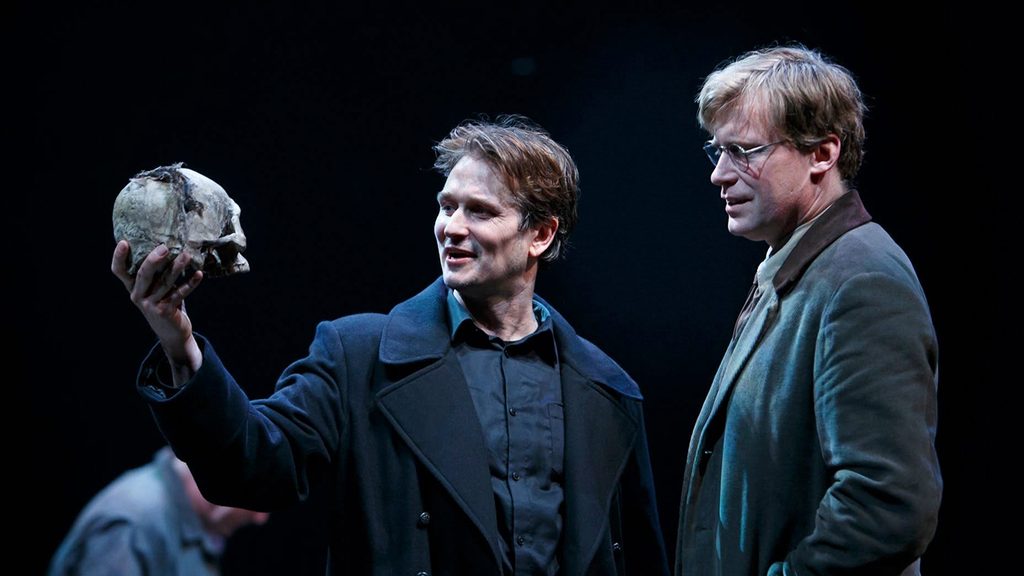
An uncut Hamlet would run over four hours, at roughly a thousand lines an hour against the play’s more than four thousand lines, and nobody stages it uncut, with professional productions trimmed to roughly two and a quarter hours of playing time.
Dress carries no barrier, because Stratford’s guidance states there is no dress code and dressing up is welcome, and a light sweater is the one essential against air-conditioned theatres, while outdoors the uniform is layers, a blanket after sunset, and flat shoes for damp grass.
Arriving early is the etiquette that matters most, because Bard’s Village opens a full hour before showtime and that hour is the picnic, Bard’s guides advise arriving at least 30 minutes ahead, and High Park regulars claim their grass early, while latecomers at Stratford are seated only at a suitable break.
Access runs on captions rather than surtitles, since Stratford offers open-captioned performances with a text screen and a reserved seating section, alongside ASL-interpreted performances and audio description, the Oregon festival offers tablet captions and access services on request two weeks ahead, and Bard, which documents no captioning product, builds its offer on audio description through VocalEye instead.
The relaxed performances at Stratford and Bard, with house lights slightly up and freedom to move, make noise, and leave and re-enter, are pitched by both festivals as good first-time experiences.
Children fit in more easily than most first-timers expect, since at Stratford much programming is fine for ages 10 and up, children over 2 need their own ticket and seat, and under-12s must be accompanied by an adult, while at Bard children under 6 are not admitted to regular performances but Family Days admit any age to the regular productions themselves.
Families planning a child’s first big outing will find the principles governing taking kids to their first concert or festival apply on the grass and in the thrust alike.
Food is simple, since Stratford sells light meals and pre-ordered picnic packages, Bard runs on bring-your-own food with pre-ordered picnics, and High Park regulars bring picnics or Roncesvalles takeout, and the remaining etiquette is three rules and a reassurance: phones fully off once seated, no photographs or recordings during the performance, and honest laughter and applause always welcome.
What it costs at Stratford comes as ranges, never fixed prices, because the festival prices dynamically, and its published 2026 ranges ran from $109 to $253 CAD for an adult play ticket and from $114 to $253 CAD for a musical.
Your First Season at Canada’s Shakespeare Festivals Starts Now
The gift is an anniversary, and its shape is a circle closing twice, because when the rebuilt Tom Patterson Theatre opened in May 2022, its ribbon was cut by child actors from that season’s Richard III, the debut production starring Colm Feore, joined by James Colbeck, an original child actor from the Richard III of 1953, and Tim Patterson, the founder’s son, in a deliberate echo of the play that opened the Festival on July 13, 1953.
The circle closes again in 2027, with Stratford’s 75th season and the first under incoming artistic director Jonathan Church, whose pitch, in substance, is breadth, since very few companies anywhere let Shakespeare, major musicals, family theatre, new Canadian plays, and large-scale historical drama share one season of 13 productions, running April 28 to November 28, 2027.
The Shakespeare slate carries the anniversary on its face, because Hamlet opens on July 13, 2027, the exact anniversary of the first performance in 1953, directed by Des McAnuff with Thomas Duplessie in the title role, joined by The Taming of the Shrew and The Merchant of Venice, while Mary Poppins, the two Wolf Hall plays, Jacob Two-Two Meets the Hooded Fang, and Present Laughter share the same stages and company.
Seasons are announced in the fall for the following spring-to-fall, with the 2027 season announced on September 23, 2026, so a first trip is planned months ahead rather than days, and a beginner starting now is aiming at an anniversary season, a new artistic director, and a Hamlet rising on the very date the tent first filled.
That is the tent town’s whole lesson, because Canada’s Shakespeare festivals were built for people who had never seen a play, by people who needed those people to come, and every structure in this guide, the thrust stage, the sunset tent, the hillside, the puppet synopsis, the $25 seat, exists to lower the distance between a stranger and a first ticket.
The fear melts, the comedy lands, the blanket unrolls, and the first ticket turns out to be the whole trick, so the only step left is choosing a date, choosing a comedy, and buying the seat while the anniversary season is still ahead.