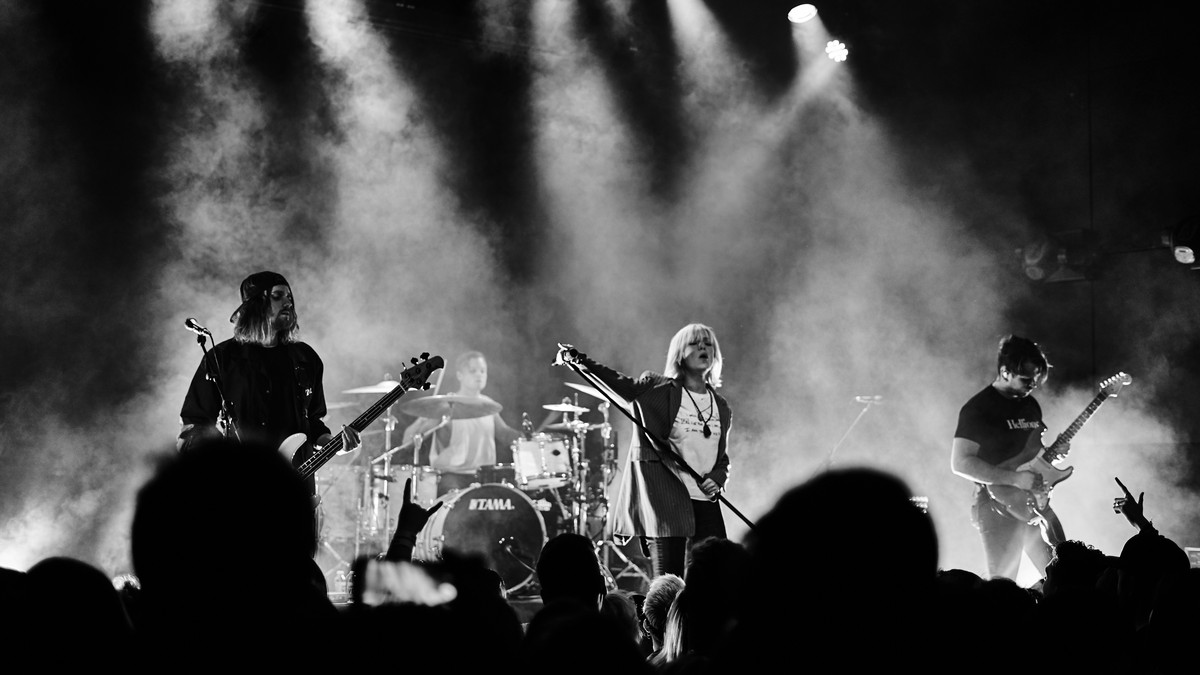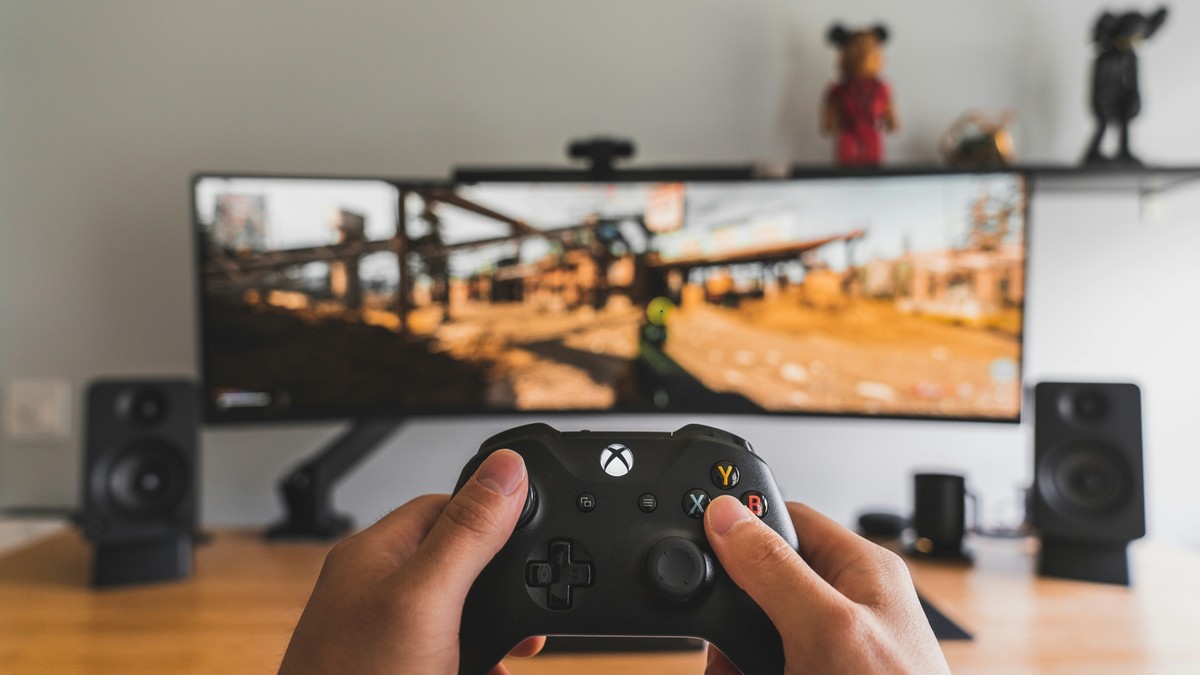
A stadium holds tens of thousands of people on a good night. On April 23, 2020, 12.3 million concurrent players joined Travis Scott’s Astronomical inside Fortnite, an all-time record for the game. Nobody scanned a barcode at the door, and nobody paid for admission.
That detail is the heart of this article. The largest audiences in live entertainment history have gathered inside video games, yet most of those events were free. For anyone in ticketing, promotion, or artist management, the obvious question is whether you can actually sell tickets to an event in a video game.
The short answer is yes, but the long answer is more interesting. Below, we look at what has been sold and what has been given away, and how artists like Travis Scott and Bruno Mars were paid. We also ask whether in-game events are a lasting channel or an expensive fad.
Can You Actually Sell Tickets to an Event Inside a Video Game?
Yes, you can sell tickets to an event inside a video game, but the “ticket” usually takes the form of a digital pass, a bundle, or an in-game item rather than a traditional barcode. Most platforms handle access and payment through their own storefronts and virtual currencies, so promoters rarely run a standalone box office inside a game.
Three models dominate today. Free events funded by cosmetics and sponsors define Fortnite and Roblox, paid passes define productions like Tomorrowland’s digital festival, and hybrids use a virtual show to sell a real-world tour.
The platform also acts as gatekeeper, because Epic Games and Roblox control the storefront and the commerce rules. Roblox developers have asked on the company’s own forum whether one-event tickets are allowed, and the community’s view was that they are acceptable if purchases run through Roblox and the ticket is clearly valid for a single event.
That informal consensus is not an official policy, so any promoter planning paid access should read the current platform terms first.
How In-Game Events Became the New Frontier for Live Entertainment
The modern era began in February 2019, when DJ Marshmello performed inside Fortnite. Travis Scott’s show surpassed the 10.7 million players who attended Marshmello’s set.
A year later, Epic reported that 27.7 million unique users attended the Astronomical run in total.
The format worked because it offered what a physical venue cannot. One PC Gamer writer, a self-described Fortnite skeptic, noted that Scott became a gigantic teleporting avatar who reshaped the map, an experience impossible at a real show. That spectacle is what turned a ten-minute set into a cultural event.
Epic kept raising the bar. Remix: The Finale on November 30, 2024 drew 14.3 million concurrent players, with Snoop Dogg, Ice Spice, Eminem, and the premiere of Juice WRLD’s Empty Out Your Pockets. Another 3 million people watched the stream without logging into the game.
The scale advantage is hard to overstate. Tomorrowland’s real festival in Belgium has a capacity of roughly 60,000, while a single Fortnite lobby system absorbed more than two hundred times that number.
Here is the tension at the center of this topic. Every one of those record-setting events was free to attend, and Ariana Grande’s Rift Tour was also free, as is the Fortnite download itself.
The audience is enormous, but the audience is not paying for admission.
What the Travis Scott Fortnite Show Taught the Industry About Money
The most quoted number in this space comes from Forbes. It reported that the nine-minute show grossed roughly $20 million, including merchandise sales. Epic declined to comment on the figure, and it is a pre-tax estimate.
The comparison with touring is striking. Scott’s 56-stop Astroworld tour earned about $53.5 million, just under $1 million per show. His single best live show the year before brought in roughly $1.7 million.
The ten minutes of stage time hide a long production. Scott and Epic spent months going back and forth on the details, and Scott never visited Epic’s North Carolina headquarters. A short show can still be an expensive and slow project to build.
For ticketing professionals, the key point is what the $20 million was not. It was not a box office number. The event included skins, emotes, and merchandise ranging from t-shirts to a Nerf gun and an action figure. It was a merchandise and licensing windfall wrapped around a free performance.
The show also anchored a wider brand portfolio. Forbes estimated that a McDonald’s meal deal brought Scott another $20 million, and a Nike deal about $10 million a year. The Fortnite set functioned as the most visible piece of a larger marketing flywheel.
Epic’s own framing is instructive. Its head of brand argued that audiences quickly tune out anything that feels like an advertisement, so the experience must be genuinely worth attending. In his words, “The landscape is changing.”
Why the Biggest In-Game Concerts Are Free and Where the Revenue Hides
Free admission is a deliberate strategy. These games run on microtransactions, so the goal is to maximize the crowd and then sell things to it. When Twenty One Pilots played Roblox, the “ticket” was free and required only a gaming account.
The numbers can still be large. Roblox’s head of music reportedly said the Lil Nas X concert, which drew about 33 million visits, generated eight-figure sales from related products. The money came from avatars, accessories, and collectibles instead of admission.
The scale is more modest for smaller artists. Zara Larsson said she earned over £700,000 from digital merchandise during her Roblox event, with small items starting at 60 Robux and her avatar costing 400 Robux. She noted that matching that figure on streaming platforms would take an enormous number of plays.
Fortnite’s infrastructure is evolving toward something that looks like a box office window. Epic launched in-game transactions for creator islands in January 2026 and has paid more than $1 billion to creators since 2023. Over 3,000 maps now earn more from in-game transactions than from engagement payouts.
A related program matters even more for promoters. Under Direct Creator Commerce, creators keep 100% of the V-Bucks value from items sold on their islands from December 2025 through the end of 2026. In principle, a branded island could sell event passes, VIP zones, or bundles and keep the proceeds, though terms may change after this introductory period.
The wider industry has long described this blended model. Wave, the virtual concert company, listed ticketed events, merchandise, and sponsorships as its core revenue streams. The ticket is one lever among several, and often not the biggest.
Real Ticketed Examples: Tomorrowland, Wave, and the Pay-Per-View Experiments
The clearest proof that fans will pay for a virtual event is Tomorrowland. Its Tomorrowland Around the World digital festival sold day tickets at €12.50 and weekend tickets at €20, and organizers said more than a million people paid to watch.
The production behind it was substantial. About 60 artists performed from studios in Belgium, Los Angeles, São Paulo, and Sydney, and a team of 200 spent three months building the 3D island environment. This was a purpose-built digital world rather than a third-party game, but it shows that paid virtual access works when the brand carries real scarcity and fandom.
The revenue is unknown, because promoters declined to share a breakdown of day versus weekend sales. A back-of-the-envelope calculation of one million buyers at the €12.50 minimum implies a gross in the eight figures. That is only an estimate, and it is probably generous, since households often shared a single purchase.
Wave offers a more mixed record. Justin Bieber’s November 2021 “Interactive Virtual Experience” was free to attend, while tickets for his Justice World Tour were on sale at the same time. The virtual show worked as marketing for a physical box office.
Wave did attempt paid shows. It scheduled a pay-per-view concert with Alison Wonderland in early 2021, and around the same time shut down its VR app, citing slow headset adoption. The company’s biggest audience came from a free show, because The Weeknd’s TikTok concert drew over 2 million unique viewers and raised $350,000 in merchandise sales for charity.
Blockchain-based worlds have struggled with friction. The free Decentraland festival drew an estimated 50,000 attendees, but visitors compared the graphics to early-2000s games and needed crypto wallets for full participation. Convenience, not technology, determines whether a virtual crowd shows up.
Roblox Takes the Crown as Concerts Move From Fortnite to Brainrot
The attendance record no longer belongs to Fortnite for a single artist. Guinness recognized Bruno Mars for the largest music concert in a videogame by a single artist, with 12,862,161 concurrent viewers on January 17, 2026. He performed his new single I Just Might and the 2012 hit Locked Out of Heaven inside the Roblox game Steal a Brainrot.
The context matters for reading that number. Steal a Brainrot had already hit 25.4 million concurrent users the previous October, so the concert drew roughly half of the game’s own peak audience. The artist borrowed an audience as much as he created one.
The hybrid model was on full display. The performance came just after Mars sold 2.1 million tickets in a single day for his upcoming stadium tour, a Live Nation and Ticketmaster record. A free virtual show and a massive physical on-sale shared the same news cycle.
Not every attempt reaches those heights. More than 11.3 million players signed up for bbno$’s July 2026 concert, but registrants received an in-game speed boost, which likely inflated sign-ups. The show peaked at 6,395,858 concurrent players, about half of Mars’s record.
The event still moved the game’s metrics. Visits to the host game hit 133.7 million on concert day versus 94.4 million the Saturday before, a 42% lift. That is the real prize for developers and a useful reminder that interest counts, concurrency, and visits are three different metrics.
Live Nation has moved from observer to participant. Its Music Festival Tycoon game on Roblox has drawn over 3.5 million visits, features Lollapalooza elements, and lets brands extend festival sponsorships through sponsored stages and virtual merchandise. Roblox says its own data shows its users overindex for attending live events.
Signs of saturation are appearing, though. Roblox built a dedicated concert venue called The Block and has hosted artists from Billie Eilish to the Rolling Stones, but one analysis argues the draw is not what it once was. Fortnite shows a similar shift, since Epic’s live events have become less frequent, and the next one is expected to be a short cinematic moment rather than a full production.
The Real Pros and Cons for Artists, Promoters, and Fans
On the positive side, virtual events solve a pricing problem. The average fan paid about $111 for a ticket to a top-100 tour in 2022, up from roughly $95 in 2019. A free in-game show reaches fans who are priced out of the arena.
Creative freedom is the second advantage. Scott said the format let him build a world that fire marshals and building codes would never permit. A virtual stage has no pyrotechnic permits, no capacity limits, and no travel logistics.
The third advantage is a discovery channel that also sells things. Larsson’s merchandise sales and the traffic lift for bbno$’s host game show that the audience will spend when the experience feels native to the game. Merchandise attached to a moment consistently outperforms admission in these environments.
The downsides start with cost and time. Tomorrowland needed a team of 200 for three months, and Scott’s ten minutes took months of planning. The economics favor a handful of superstars and large brands, not mid-sized acts.
Scarcity is the second problem. A physical show sells out because capacity is finite, which gives promoters pricing power, but a virtual venue can hold millions and pricing power collapses. That is a big reason most in-game events default to free.
Platform dependence is the third. Epic and Roblox own the storefront, the customer relationship, and the data, and revenue splits are rarely disclosed. Promoters build on rented land, and the landlord can change the rules or move the audience.
Audience and safety concerns round out the list. Roblox says only 57% of its daily users have completed age checks, and those checks slowed new-user growth. An Oklahoma lawsuit brought the number of active suits against the platform to ten. Sponsors who care about brand safety will weigh these risks, especially on a platform with a young audience.
Is This a Lasting Business or Just Another Passing Fad?
Two different ideas get conflated in this debate. One is the headset-first metaverse, and the other is events hosted inside games that already have huge audiences. The evidence treats them very differently.
The headset-first vision is retreating. Meta’s Reality Labs has lost over $70 billion since 2021, and the company announced, then reversed, the shutdown of Horizon Worlds on Quest after fans objected. It also laid off more than 1,000 Reality Labs employees in January 2026.
Wave’s history fits the same pattern. Its VR app closed after only a few years, and the company shifted toward platforms like TikTok, Twitch, and Roblox. Events succeed where audiences already live, not where promoters hope they will move.
Gaming-native platforms are thriving commercially. Roblox reported $1.47 billion in second-quarter 2026 revenue, up 36% year over year, even as daily users fell to 123 million. Epic’s creator payouts have crossed $1 billion. These are not signs of a dying channel.
The “fad” label does fit the novelty premium. Record-setting spectacles are harder to repeat when audiences have seen giant avatars before, and Fortnite’s shift toward shorter story moments suggests Epic knows it. As of late October 2026, Epic had not announced a traditional live event to close the current season.
My assessment is that the format is durable but the business model is unfinished. In-game events work as marketing, merchandise engines, and audience-building tools. Direct admission revenue remains the least proven piece, which is exactly why ticketing professionals should pay attention now.

How Promoters Can Actually Sell Access to Virtual Events
Start by deciding what the event is for. If the goal is reach, free entry with strong merchandise is the proven path, and if the goal is direct revenue, a paid pass needs scarcity, a premium experience, and an audience that already pays for your brand. Tomorrowland worked because it had both.
Use the platform’s native commerce rather than fighting it. In Fortnite, that means island items sold through Direct Creator Commerce, with creators keeping the full V-Bucks value through the end of 2026. In Roblox, it means passes and in-experience purchases, within the rules discussed earlier.
Tier the experience rather than charging for the door. Wave’s CEO said income can come from VIP virtual goods, tipping performers, and ticketed streams at different price points. A free general-admission crowd with paid upgrades protects reach while still capturing spending.
Link the virtual show to a physical or digital on-sale. The Bruno Mars and Bieber examples show that the in-game event can fuel real ticket demand rather than replace it. Exclusive cosmetics for fans who hold a real ticket are one natural bridge.
Bring sponsors in early. Live Nation’s Roblox game already sells sponsored stages, custom activations, and virtual merchandise as extensions of real-world festival sponsorships. A virtual venue gives brands inventory that has no physical equivalent.
Finally, measure honestly. Track unique players, concurrent peaks, spend per attendee, and the conversion from virtual attendees to real ticket buyers. Sign-up counts and social views flatter the numbers but rarely pay the bills, as bbno$’s boosted registrations showed.
The Virtual Stage Is Here to Stay but the Ticket Is Evolving
So, can you sell tickets to an event in a video game?
Yes, and some promoters already have, from Tomorrowland’s pay-per-view festival to creator-island commerce in Fortnite. The bigger lesson is that the ticket inside a game rarely looks like the ticket at an arena door.
The evidence shows that free admission plus merchandise, sponsorship, and tour promotion has produced the biggest audiences and the largest payouts.
A reported $20 million for a ten-minute Travis Scott set and a 42% traffic lift for a Roblox game came from engagement and commerce rather than from admission fees.
The money is real, but it is flowing through different channels than the box office.
The format will keep evolving as platforms mature and audiences get harder to impress. Headset-centered metaverse bets have faltered, while the platforms with built-in audiences keep growing and keep building tools that let creators sell. For anyone in events, the sensible move is to experiment where the crowd already is and treat the virtual venue as a companion to the real one rather than a replacement.