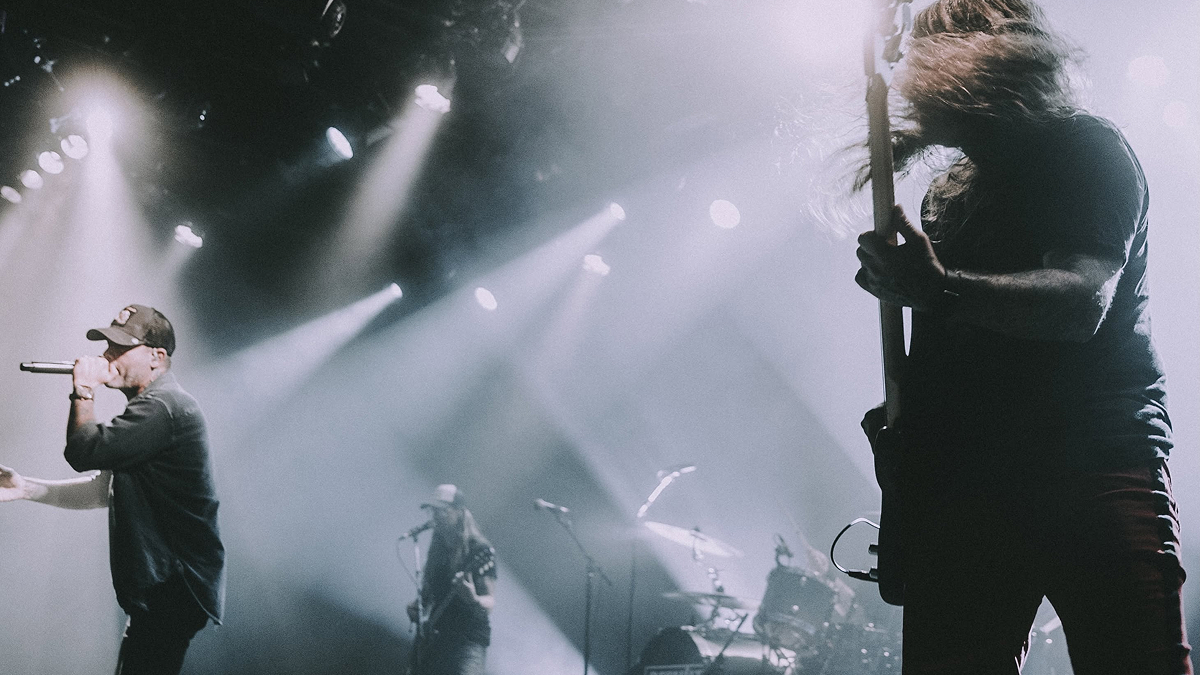
Twenty-five years after The Fallout made them one of Canada’s biggest rock exports, Default is back on the road with the record that started everything. The story behind it is messier, and more resilient, than the hits suggest.
Most singers spend years learning how to hold a stage. Dallas Smith learned in public, with a radio hit already climbing the charts behind him.
When Default’s debut album, The Fallout, came out on October 2, 2001, Smith had performed live exactly once, by his own account. Within a year the Vancouver band had a top-five rock single in the United States and a JUNO Award for Best New Group, and it would soon appear on The Tonight Show. By the spring of 2003 the album was certified platinum in both Canada and the United States.
What came next was far messier: a second album that sold respectably but not spectacularly, a record label that collapsed in the middle of the band’s career, money trouble that Smith says drained the fun out of the whole enterprise, and a singer who walked into a second life as one of the most decorated country artists in Canada. A hiatus followed in 2013.
Now, twenty-five years after The Fallout, the four men who made it are touring the record again, with a remastered anniversary edition and the album’s first-ever vinyl pressing.
The Vancouver Band That Started As ‘The Fallout’
Default’s story starts with a name the band no longer uses.
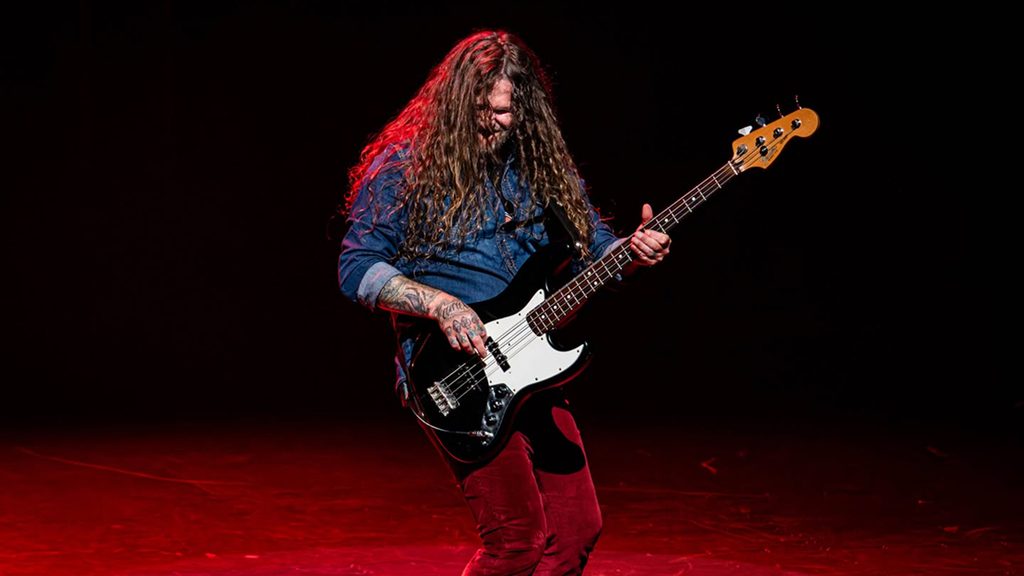
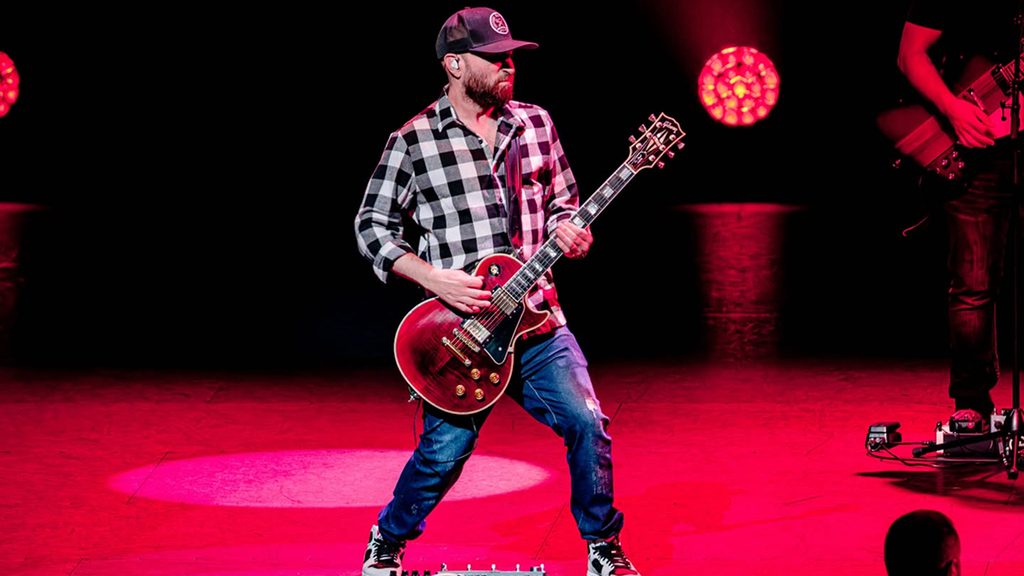
Guitarist Jeremy Hora and drummer Danny Craig formed the group in the summer of 1999 as The Fallout. Both were four-year veterans of the Vancouver scene. They auditioned several singers before settling on Dallas Smith, a former high school classmate whose raw power made up for his inexperience.
That inexperience was real.
Smith, born December 4, 1977, in New Westminster and raised in Langley, British Columbia, was a shy kid who sang only in the shower or alone in the car, he told CBC’s Q. Hora and Craig were wary of hiring him because he had little stage experience and they had not yet heard what he could do. It took a night in a friend’s garage, a few beers and a microphone for Smith to find his nerve, and that session led to the band’s first demo.
His early influences, incidentally, included The Beatles, Reba McEntire and The Judds, a hint of where he would eventually land.
The name changed before the world heard a note. After the group won a local radio station’s talent competition and a place on a compilation CD, it became Default, and the old name survived as the title of the debut album.
Bassist Dave Benedict, who did not play on the demo, joined full-time soon afterward, completing the lineup that entered the studio with producer Rick Parashar in the spring of 2001. Parashar had produced Pearl Jam’s Ten, a credential that suited a band working in heavy, melodic post-grunge.
How A Demo Tape Reached Chad Kroeger
The most repeated fact about Default’s beginnings is that Chad Kroeger discovered the band. The fuller version is more roundabout.
Hora had met producer Joey Moi at recording school and passed him the demo, Smith told CBC. Moi, who worked with Nickelback, played it for Kroeger, and both men liked it enough to offer to work on the band’s first album. Kroeger already knew Hora and Craig from an earlier band.
Radio did the rest. Deny took off on Vancouver’s CFOX-FM in 2001, and the attention led to a deal with the New York independent label TVT Records.
The credits show how deeply Kroeger was involved: he produced eight of the album’s eleven tracks and co-wrote six of its songs, including Deny and Slow Me Down. Parashar produced the other three, and Moi engineered and mixed most of Kroeger’s.
Default went out with Nickelback as How You Remind Me was topping charts, an audience most debut acts never get. Over time the relationship loosened. Fan-maintained biographies note that Kroeger’s role shrank to a single co-write on the third album, as the band moved out from under his influence.
A Singer Who Had Barely Performed Before The Album
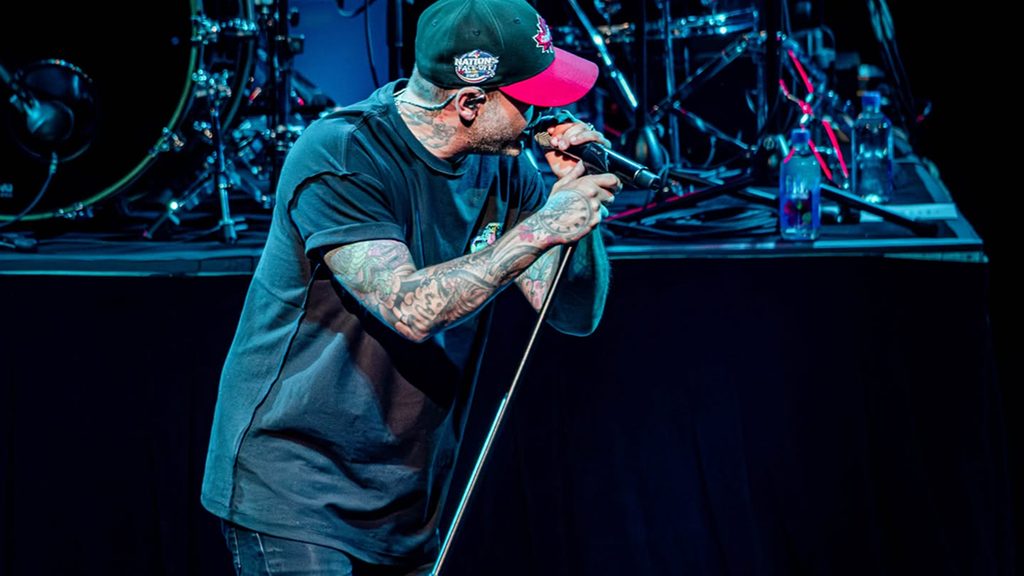
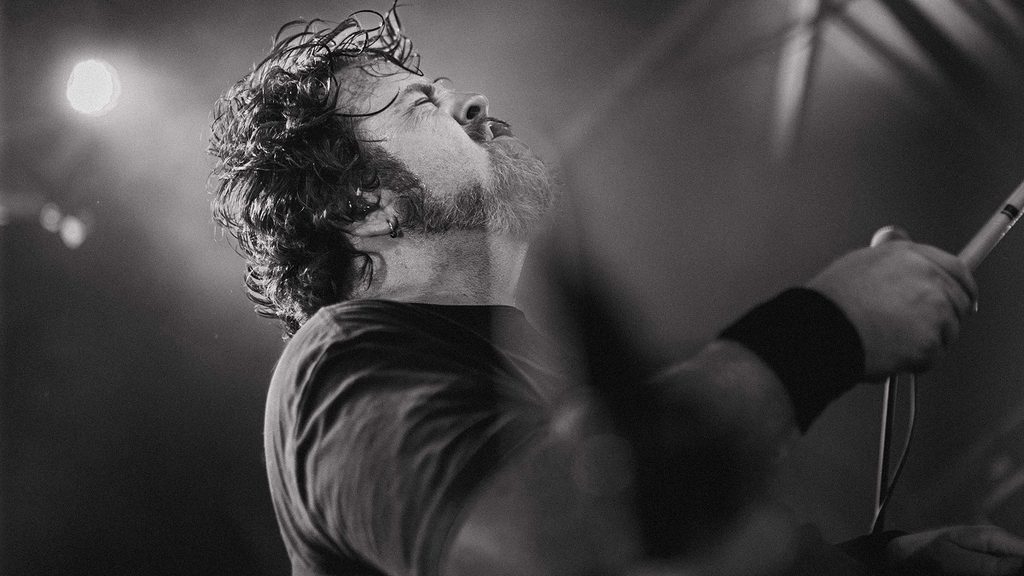
When The Fallout was released, Smith had performed live only once, and his first shows with the band were agony.
“If anybody could hide behind a single mic stand, I did it,” he told CBC.
Default’s second show was in front of 1,100 people at Vancouver’s Commodore Ballroom, the night after Pearl Jam played the same room.
The personal challenge, he told CBC, was overcoming the fear of putting himself out there while he was already out there in a very big way. The only cure was repetition. Default went on to tour North America, Europe and Australia, and played for military audiences overseas. That apprenticeship, in rooms with nowhere to hide, helps explain why the band’s live show has remained its calling card.
Inside The Fallout: Riffs, Choruses, And Two Producers
The Fallout runs eleven tracks and 37 minutes, and it wastes little of either.
Sick & Tired opens at under three minutes, with Deny and Wasting My Time back to back behind it and Slow Me Down fourth. Somewhere, Live a Lie, By Your Side and Faded carry the second half, and Let You Down, written by Hora alone, closes it. An acoustic version of that closer later ended Default’s second album too.
The sound is post-grunge in the classic sense, with grunge’s guitar textures, post-grunge’s brooding earnestness and the thick production of new alternative metal, minus the rap influences of many peers.
The credits tell a quieter story.
Hora has a lyric credit on eight of the eleven tracks, Smith on five and Kroeger on six. Wasting My Time, the song that broke the band, was written by Hora and Smith and produced by Parashar, with no Kroeger credit on either side.
Wasting My Time And The Singles That Followed
Wasting My Time went to American radio on August 28, 2001, a month ahead of the album.
It reached number two on Billboard‘s Mainstream Rock chart and number three on Modern Rock, topped Canadian rock radio and, according to CBC, climbed to number 13 on the Billboard Hot 100. It also earned the band a 2002 Teen Choice Award nomination for Choice Rock Track.
Deny proved Default was no one-hit act. It reached number seven on Mainstream Rock, number 14 on Modern Rock and number one on Canada’s rock airplay chart.
Its video featured boxer Laila Ali, daughter of Muhammad Ali, and the song landed on the soundtrack of EA Sports’ NHL 2003, reaching listeners who did not necessarily follow rock radio.
Live a Lie and Sick & Tired followed as 2002 singles, and the band appeared on The Tonight Show with Jay Leno.
The album’s chart run was solid rather than explosive: number 39 in Canada, number 51 on the Billboard 200, and number one on both the Heatseekers and Independent albums charts, a reflection of TVT’s indie status. It finished 2002 at number 97 on the Billboard 200 year-end list.
Mixed Reviews, Multi-Platinum Sales, And A Juno Award
Critics were not especially kind.
AllMusic‘s Andy Hinds singled out the first three tracks but awarded only half a star, calling the record a non-threatening way to get the look of grunge without the substance.
Entertainment Weekly gave it a C and noted, with amusement, that Slow Me Down repeats the word “never” 32 times.
PopMatters was warmer, calling it excellent for a debut while warning that the band would struggle to stand out among heavy-guitar rivals such as 3 Doors Down and Nickelback.
Audiences ignored the skeptics. The Fallout was certified platinum in Canada on August 23, 2002, and platinum in the United States on April 30, 2003, the latter signifying a million copies sold; the band’s promotional materials now call it multi-platinum in Canada. In 2002, Default also won the JUNO Award for Best New Group.
The long-term numbers hold up too.
Between 1996 and 2016, Default ranked among the top 50 best-selling Canadian bands in Canada and among the top 150 best-selling Canadian artists overall, according to Nielsen and Billboard data.
Elocation And The Pressure Of A Second Album
Default did not disappear after its debut, but the second album was a tougher sell.
Elocation, released November 25, 2003, peaked at number 49 in Canada and number 105 in the United States, and reached number three on Billboard’s Independent Albums chart. It was certified gold in Canada, making it the band’s second most commercially successful record.
The lead single, (Taking My) Life Away, was co-written with songwriter Jim Vallance, best known for his work with Bryan Adams. It reached number 25 on the US Mainstream Rock chart and number 17 on Canada’s rock chart, and it was heavily played on Muzak’s Power Rock service.
Throw It All Away climbed to number 12 on Canada’s rock chart in 2004, and All She Wrote found a home on Canadian adult-contemporary radio.
At the 2005 JUNO Awards, Elocation was nominated for Rock Album of the Year alongside releases from Thornley, The Tea Party and The Tragically Hip. Sum 41‘s Chuck won.
The band toured behind the record for roughly two years, a grind that would shape what came next.
One Thing Remains And An Unlikely Wrestling Anthem
One Thing Remains, released October 11, 2005, was produced largely by Bob Marlette, with songwriter Marti Frederiksen contributing to most of the tracks.
The exception was Count on Me, which Kroeger and Joey Moi produced and which became a Canadian radio hit before the album was in stores.
The album gave Default its strongest Canadian chart showing, peaking at number 12, and reached number 90 in the United States and number seven on the Independent Albums chart. I Can’t Win reached number 10 on Canada’s rock chart, and It Only Hurts was released as a single in 2007.
The album’s strangest afterlife belongs to The Memory Will Never Die, which was featured at WrestleMania, a peculiar but far-reaching kind of exposure for a rock band. By the middle of the decade Default had three albums of radio material, and the business underneath it was about to give way.
A Bankrupt Label And An Album Stuck In Limbo
Default’s fourth album was originally planned for 2007 and did not arrive until 2009.
The reason was TVT Records, the independent label that broke the band, which declared bankruptcy in 2008 and left Default to work through unresolved legal and business issues on its own. The unreleased album was sold on and ended up with an independent distributor called The Orchard.
Smith later called the fight to get the music out a nightmare.
The record, now titled Comes and Goes, was finally released by EMI Music Canada on September 29, 2009, four years after its predecessor, with Marlette credited as producer. It reached number 30 in Canada, number 137 in the US and number 37 on Billboard’s Top Rock Albums chart, the only Default album to chart there. All Over Me and Turn It On both reached number seven on Canada’s rock chart.
A label bankruptcy is often the end of the story for a band. Default finished its record, found it a new home and put it out.
A Text From The Back Of A Tour Bus
The business trouble was not limited to the label.
By the mid-2000s, Smith told CBC, the band had discovered that its business manager had been stealing from it and that it owed the Canada Revenue Agency $350,000 in unpaid GST. He said the fun had gone out of it, to the point that he disliked every song the band had.
He was already drifting toward country. Smith had been listening to Keith Urban and Rascal Flatts, and for two years he and Moi joked about making a country record together. He later described the change as an easy one for a man whose tastes had shifted as he aged.
The joke stopped being one after a rough run opening for Three Days Grace on a Canadian tour, when Smith texted Moi from the back of the tour bus asking, in effect, whether it was time.
Within two and a half weeks he was in Nashville, writing with country songwriters.
Default’s touring wound down around the year 2010. Smith has said the band’s overseas trips to entertain military audiences, which took the group to the Middle East and South Korea, are among his fondest memories of it.
Dallas Smith’s Second Act In Country Music
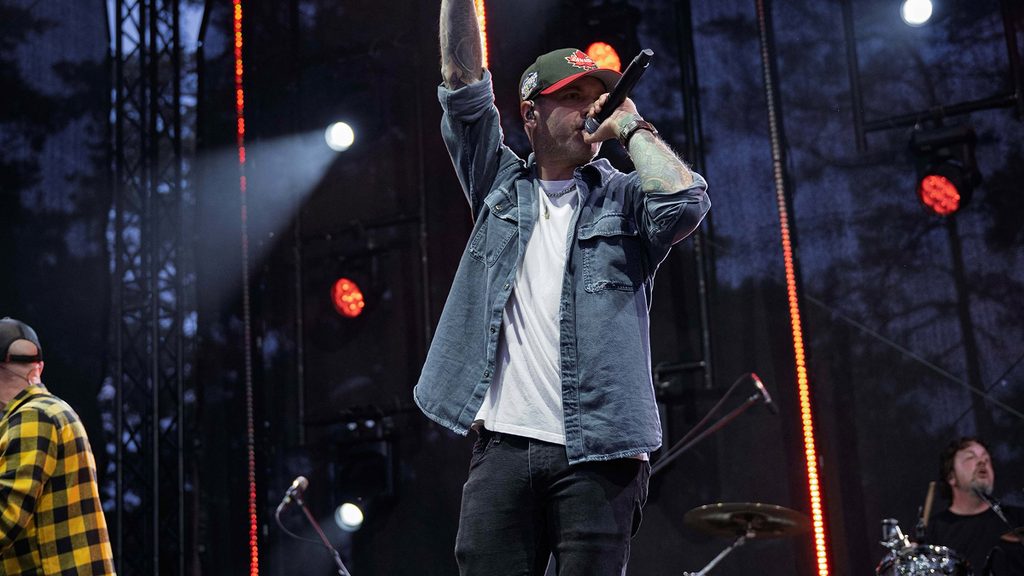
Smith’s solo debut, Jumped Right In, came out May 22, 2012, on 604 Records, produced by Moi, with Kroeger among its co-writers.
Its first single, Somebody Somewhere, got solid country airplay, and Smith has said it lifted an enormous weight off his shoulders. By the end of 2012 Mediabase had named him the most-played Canadian country act, and the album earned a JUNO nomination for Country Album of the Year. His first headline run, the Boys of Fall tour with Chad Brownlee, sold out 20 of 22 dates.
In 2013 he signed with Republic Nashville.
Lifted, released in November 2014, produced his first Canadian country number one, Wastin’ Gas, and won the 2015 JUNO Award for Country Album of the Year, making Smith a two-time JUNO winner, once with Default and once alone. Side Effects made him the first Canadian country artist in the Nielsen BDS era with four consecutive number-one singles from one album, a feat he later topped with Timeless.
He was named Entertainer of the Year at the Canadian Country Music Association Awards in 2019, 2020 and 2021, signed a global deal with Big Loud Records in 2021, and now holds the record for most number-one hits on Billboard’s Canada Country chart by a male Canadian artist, with eleven.
He made his Grand Ole Opry debut in June 2024, took his first acting role in the film Soul’s Road, toured Canada in 2025 with an all-acoustic run of more than 50 dates, and runs a charitable foundation, Lifted, that supports mental health. Through all of it he has stayed in Langley rather than moving to Nashville, to be near his family.
From Hiatus To Reunion: Default Returns In 2018
On September 28, 2013, the band announced that it was not splitting up, only taking a break and starting different projects. Smith’s solo career was taking off, and the other members were pursuing their own interests.
The reunion came five years later.
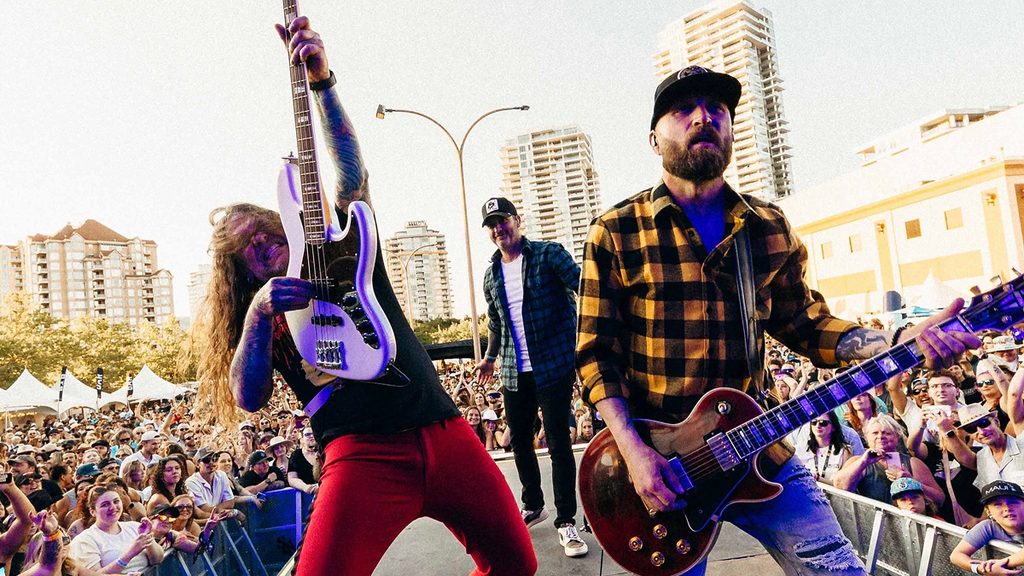
On September 4, 2018, Default announced it would join Stone Temple Pilots and Seether on a cross-Canada tour starting October 23 in Penticton, with headline dates mixed in.
Smith, a longtime STP fan, called it a full-circle moment, though he said he was hesitant at first, and the run was framed at the time as a final chapter.
To coincide with the tour, the band released Re-Cuts, a six-song EP of re-recorded material that included Count on Me, Deny and Wasting My Time. One reason, a band member explained, was that re-recording the songs meant the band would own the masters going forward.
The response surprised them.
Since 2018, Default has played sporadically while Smith focuses on country, including Edmonton’s Rockin’ Thunder festival in 2025 and summer festival dates this year. No new studio material has surfaced since the reunion.
Twenty-Five Years On, The Fallout Returns To Vinyl
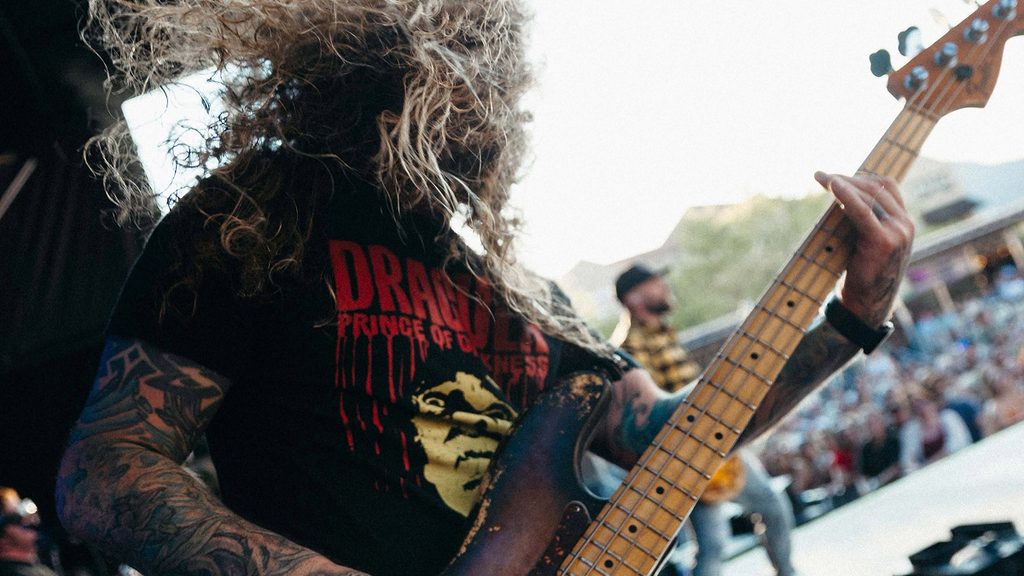
On June 8, 2026, Default announced The Fallout 25th Anniversary Tour along with a newly remastered 25th Anniversary Edition of the album, available through 604 Records on CD and, for the first time, on vinyl.
Wide Mouth Mason and Limblifter are special guests on select dates. “It’s hard to believe it’s been 25 years since we released The Fallout,” Smith said in the announcement.
The run began September 21 in Grande Prairie, Alberta, and passed through Regina, Calgary and Edmonton before reaching Vancouver on October 3. That stop was at the Commodore Ballroom, the room where Smith, then nearly a stranger to the stage, faced 1,100 people at the band’s second-ever show. Abbotsford followed on October 4.
The tour returns to Ontario in late November, with Toronto’s Danforth Music Hall on November 26, Waterloo’s Maxwell’s Concerts & Events on November 27 and London Music Hall on November 28.
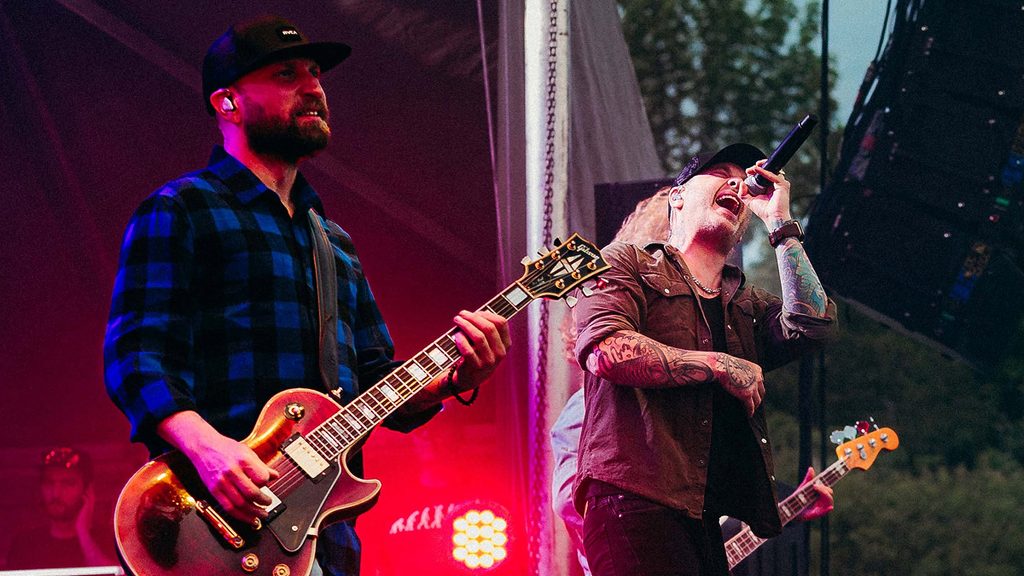
Default Stands Securely In An Era of Important Canadian Rock History
Default will probably never be remembered as the biggest Canadian rock band, but the case for it rests on something else: staying power.
A debut that went platinum in two countries, a JUNO Award, a decade of radio hits and a place among the top 50 best-selling Canadian bands of two decades. Four albums produced all of it.
The less visible achievement is what the band endured: a label bankruptcy that stranded a finished record, money problems that sapped the joy from the work, and a singer who built a second career bigger than the first. Through it all the same four musicians came back, re-recorded their hits to own the masters and went back on the road.
Twenty-five years on, The Fallout still sounds like what it was built to be, a record for rooms full of people singing back.
Get your tickets here to see Default at Maxwell’s in Waterloo, Ontario on November 27th available exclusively through Ticketscene.