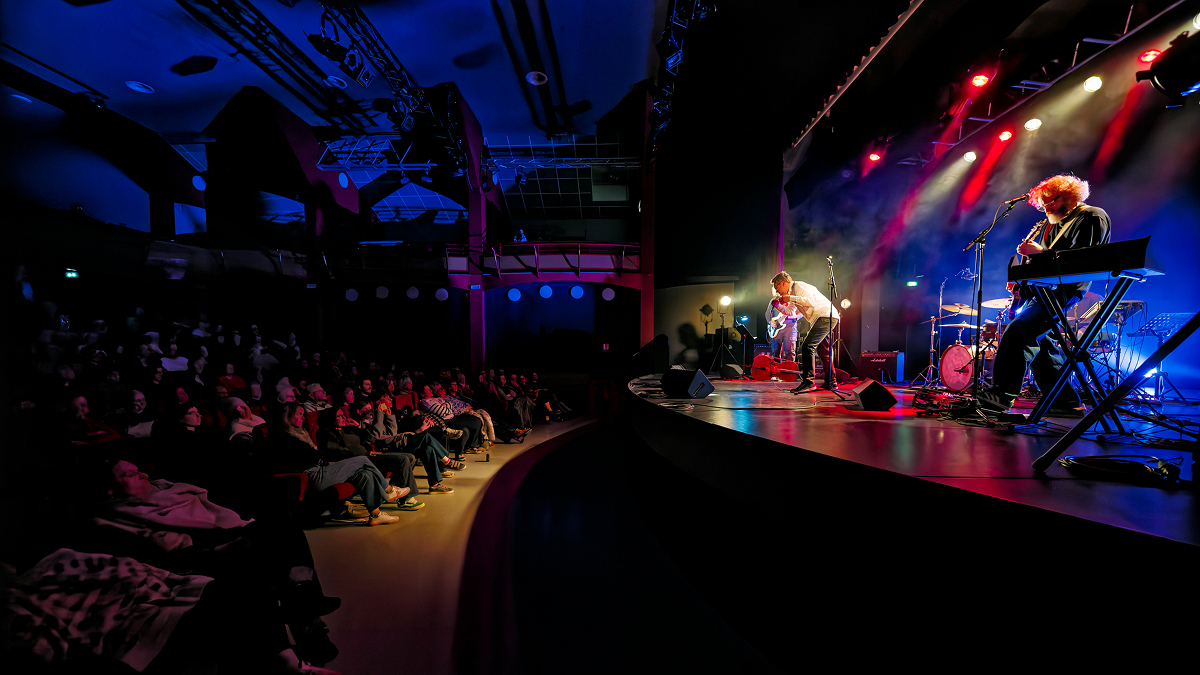
Live Nation closed 2025 with $25.2 billion in revenue and 346 million fee-bearing tickets.
Behind numbers that large sits a lot of unglamorous promotion work: price tiers, presales, bundles, and payment options that turn “maybe” into “paid.”
Independent promoters face a harder version of the same problem. Buyers are waiting longer to commit.
That shift rewards organizers who plan promotions in layers, not one-off discount codes. The tactics below are ordered by where they typically sit in a sales cycle, with the evidence for each and the mechanics for using it properly.
What Are Ticket Promotions?
Ticket promotions are time-bound or audience-specific offers, incentives, and access rules that an event organizer uses to convert interest into paid admissions. They include discounted pricing tiers, presales, bundles, referral rewards, payment plans, and targeted advertising, and they work by shifting the timing, value perception, or ease of purchase for a specific buyer.
The distinction matters because a promotion is not the same as a markdown. A well-built promotion changes who buys, when they buy, or how much they spend, and it should be designed around one of those three outcomes.
Pricing Promotions That Build Early Momentum
1. Super Early Bird Pricing
Early bird pricing rewards the fans who commit before the lineup, schedule, or venue details feel fully proven. It also hands the organizer cash and demand data months before doors open.
Ticketscene reported, based on its own event data, that organizers sell 30% to 40% of tickets during early bird phases. The same analysis recommends setting early pricing 25% to 30% below regular rates and aiming it at roughly the first 30% of capacity.
Discount depth is where most promoters overreach. Most experts put the working range at 15% to 25% off the final price, warning that deeper cuts give away margin and make the full price look like a markup.
Early sales also work as a diagnostic.
If only 20 early tickets sell, the organizer still has months to fix pricing, messaging, or the event itself.
To use it properly, announce the early bird with the event itself, publish the end date, and cap the quantity. Never extend the deadline without a reason, because the first extension teaches buyers that deadlines are negotiable.
2. Phased Price Tiers With Hard Deadlines
Phased pricing extends the early bird logic across the whole campaign.
Each tier carries a higher price and a visible end date, so every week of waiting has a cost. A simple three-step structure could be: $39 for early bird, $49 for general admission, and $59 for a last-chance tier. The price ladder is the promotion.
For professional events, a common benchmark places late registration at 10% to 15% above the regular rate.
Consumer events can use the same principle with smaller steps, since a $10 jump on a $50 ticket is already a 20% increase.
Tiers should be tied to dates or inventory, whichever comes first. A tier that closes at 200 tickets or on a set Friday, whichever arrives sooner, protects the promoter from both slow and fast sales. Communicate every transition in advance. An email that says prices rise on a named date performs better than a surprise increase, because the buyer sees the deadline as fair rather than arbitrary.
3. Scarcity Messaging and Live Inventory Counters
Scarcity is one of the best-documented effects in consumer psychology.
In a 1975 study published in the Journal of Personality and Social Psychology, Worchel, Lee, and Adewole found that identical cookies were rated as more desirable when supply was scarce.
Two other findings from that study matter to promoters. Cookies were valued more when supply dropped from abundant to scarce, and more still when the scarcity was attributed to high demand rather than an accident.
In ticketing terms, that means “only 50 tickets left at this price” outperforms vague urgency. It also means the claim has to be true, since a fabricated shortage collapses the moment someone checks the event page a week later.
Many event organizers will show the remaining ticket count accelerated purchases by 35% once inventory fell below 15% of capacity. That is a vendor figure, but the direction matches the research.
Use counters on the last block of each price tier and on the final 10% to 15% of total capacity. Pair them with a real deadline so the message is both honest and actionable.
Access-Based Promotions That Reward Fans
4. Presales and Fan Registration
A presale gives a defined group first access, usually before the general on-sale. The group can be an email list, a fan club, a venue membership, or a sponsor’s customers.
A verified fan program is the most visible version of this approach. A representative told NBC News that about 5% of tickets from verified fan sales end up on the secondary market, compared with 20% to 30% during non-verified fan sales.
Registration also builds a list. Guidance for fans states that registering does not guarantee tickets, which tells promoters that the sign-up itself is a demand signal, separate from the purchase.
Smaller organizers can run the same play without special technology. Collect emails with a “get the presale code first” prompt, send unique codes, and cap the presale at 24 to 72 hours.
Presales work best when the reward is clear. Give the list a better price, a better seat, or simply a head start, and say which one in the first line of the email.
5. VIP Upgrades and Add-On Bundles
Bundles raise revenue per attendee without lowering the base price. They also give higher-intent fans a reason to buy early.
Live Nation’s third-quarter 2025 filing reported 6% growth in per-fan spend at its larger festivals, driven largely by higher food and beverage and VIP sales. Premium add-ons are now a core revenue line for the biggest promoter in the world.
Many musical festivals show how bundles can layer onto early pricing. An early bird plus express entry sells at $65 against a $100 regular price, and an early bird plus meet-and-greet sells at $85 against $125.
Build bundles around access and convenience rather than discounts. Fast entry, a dedicated bar, premium restrooms, a lounge, or a merchandise item cost less to deliver than they appear to be worth to a fan.
6. Sold-Out Waitlists
A sold-out sign ends most promotions. A waitlist keeps the demand alive and converts it into data and, often, extra sales.
Ticketscene lets organizers switch on a waiting list when an event sells out. Returned tickets are offered in order, with a reservation window of 20 minutes to two hours, and the original buyer is refunded. No-shows make the waitlist more valuable than it sounds. Ticketscene data showed 17% of gigs were missed by ticket holders, with cheaper tickets under $10 missed most often at 21%.
Publish a “notify me” list on the sold-out page, email it first when a date is added, and treat waitlist size as proof that a second show is viable.

Discount Promotions That Widen Reach
7. Buy-One-Get-One Offers
BOGO deals work because they change the buying decision from “should I go?” to “who can I bring?” The second ticket costs the organizer little if capacity is available, and it adds a guest who may spend on food, drinks, and merchandise.
Ticketscene reports that events with public BOGO offers sold 2.2 times more tickets and saw 2.6 times more views on its marketplace.
The company’s tools display public promotions directly on the event listing, which likely contributes to the visibility. Treat that number as correlation rather than a guarantee. Events that choose to run a BOGO may differ from those that do not, and the figure comes from the platform that sells the feature.
Use BOGO for slower nights, secondary dates, or the final 30 days before an event.
It is a poor fit for a show that is already selling briskly, where it simply discounts tickets that would have sold anyway.
Set an expiry, cap the quantity, and require both tickets to be bought in a single order. That keeps the offer clean and prevents one buyer from stacking it across several transactions.
8. Group Discounts and Bring-a-Crew Pricing
Group pricing targets the social nature of live events. A fan who buys one ticket often wants three more, and a clear break for four or more removes the friction of asking friends to chip in.
Some festival models offer an additional 10% off per ticket for orders of five or more and 15% for orders of ten or more. That is a template, not a universal benchmark, but the tiered structure is common.
Group offers also help with attendance, not only sales. A roundup of referral programs describes a festival rewarding friends who bought in bulk and notes that commitments made inside a group tend to be honored.
Keep the group threshold realistic for the venue. A threshold of ten works for a festival or a corporate event, while four or six works better for a club night or a theater show.
Assign one person as the group lead who buys and distributes the tickets.
Platforms that support ticket transfer make this easier, and the lead’s name becomes a trackable referral source.
9. Flash Sales and Trackable Promo Codes
A flash sale is a short, loud discount window, usually 24 to 72 hours. It works best as a midcampaign jolt when sales slow between the early bird and the final push.
The mechanics are simple. One platform example describes a code such as FLASH53 that is active only on sale days and paused the rest of the time, and it limits buyers to one promo code per order.
Trackability is the larger benefit. Ticketscene’s promo code reports show which codes were used and on which orders, so an organizer can tell whether a partner, newsletter, or influencer actually drove sales.
Give each channel its own code. A code for the venue’s newsletter, another for a podcast sponsor, and another for a student group turns a vague promotion into an attribution system.
The timing evidence supports a late flash sale. If a large share of buyers wait until the final month, as a lot of festival data suggests, a limited-time offer in that window meets them when they are ready to buy.
Social and Referral Promotions
10. Post-Purchase Share Prompts
The moment right after purchase is when a fan is most enthusiastic about the event.
That makes the confirmation page one of the most valuable pieces of promotional real estate an organizer has.
The average post-purchase Facebook share drove 20% more ticket sales per share than a pre-purchase one. About 60% of the sharing it measured happened on the order confirmation page. The average value of a share across all networks at $3.23 in additional revenue.
To use the tactic, add a share button and a prewritten message to the confirmation page and the confirmation email. Include the event name, date, and a trackable link, and ask for the share in one sentence.
Add a small incentive when the event has room for it. A free drink token or a raffle entry for each share costs little and gives the fan a reason to act.
11. Referral Rewards
Referral programs convert satisfied buyers into a sales channel.
They work because people trust people they know, and Nielsen’s 2021 study found that 88% of global respondents trusted recommendations from people they know more than any other channel. The survey covered more than 40,000 consumers, and the finding measures trust rather than purchase behavior. Still, it explains why a message from a friend outperforms a banner ad.
A built-in referral system can deliver up to 15% to 25% in sales boosts. A unique link for each buyer and a reward when someone purchases through it.
Reward both sides. A friend discount of 10% to 20% lowers the barrier for the new buyer, while a merchandise voucher, drink coupon, or upgrade raffle entry thanks the referrer.
Tiered rewards create momentum.
Offer a small reward for one referral, a larger one for three, and a VIP upgrade for five, then show a leaderboard if the event is a festival or conference.
12. Ambassador and Street Team Programs
Ambassadors are referral programs with a human face. They are local fans, students, or community organizers who receive free or discounted access in exchange for promoting the event in their networks.
A small festival that, in 2022, enlisted volunteer ambassadors in nearby towns a week out. According to that case, the group drove nearly 150 last-minute sales, around 10% of attendance, at the cost of some T-shirts.
It is a single anecdote, so it should not be treated as a forecast. It does show the best use case for ambassadors: filling regional gaps that paid media reaches poorly.
Recruit people who already have an audience, such as a campus club leader, a local DJ, a gym owner, or a neighborhood newsletter writer. Give each one a unique code, a short brief, shareable images, and a clear reward tied to tickets sold.
Keep the group small and communicate often. Ten engaged ambassadors with weekly updates outperform fifty who received a welcome email and nothing else.
Payment and Trust Promotions
13. Payment Plans and Buy-Now-Pay-Later
For high-priced events, the barrier is often the lump sum rather than the price.
Splitting payment into installments lets a fan lock in a ticket while spreading the cost. Festivals have used this for years. Coachella historically offered a layaway plan, with a pass of about $500 secured by $50 down and the balance paid over several months.
Third-party payment providers have also entered the category. Buy-now-pay-later providers now partner with ticketing platforms so buyers can split ticket costs at checkout.
Payment plans suit tickets above roughly $150, multi-day passes, and travel-adjacent events. They add little for a $20 club night, where the processing cost may exceed the benefit.
Set the plan to finish well before the event, and publish the deadline for the final installment. The complete payment should land at least two to four weeks before doors open so that failed payments can be resolved and tickets reissued.
14. An All-In Pricing Promise
Transparent pricing used to be a courtesy. In the United States, it is now a legal requirement for live-event tickets.
The FTC’s Rule on Unfair or Deceptive Fees, 16 C.F.R. Part 464, took effect on May 12, 2025. It requires sellers who advertise ticket prices to disclose the total price, including mandatory fees, upfront.
Live Nation said it had already adopted all-in pricing at its venues and festivals, according to a statement. The FTC estimated, per a PIRG summary, that the rule would save consumers up to 53 million hours a year in time spent hunting for final prices.
Smart promoters turn compliance into a selling point. A line such as “The price you see is the price you pay” on the event page and in ads signals fairness at a time when fee frustration is high. Check every promotional price against the rule. Early bird prices, flash sale prices, and bundle prices should all display the full amount, and any fee that is mandatory must be included in the number a buyer sees first.
Paid and Owned-Channel Promotions
15. Retargeting Ads and Abandoned-Cart Email
The last promotion targets people who already showed intent.
Visitors who viewed the event page or started checkout are far more likely to buy than a cold audience.
Ticketscene reports that its retargeting technology delivers an average 6x return on ad spend, and that events promoted with ads see 9x more visibility and sell 4x more tickets.
Cart recovery borrows from e-commerce, where benchmarks are better documented. Darkroom Agency’s 2026 benchmarks put the median abandoned-cart recovery rate at 3% to 5%, with top performers reaching 8% to 12% using multistep flows.
Those figures come from online retail, not ticketing, so they should be used as a rough guide. For events, the equivalent setup is a pixel on the event page, a retargeting audience of visitors from the last 14 to 30 days, and a three-message email sequence for abandoned checkouts.
Send the first email within an hour, the second the next day, and the third as a deadline reminder. Add scarcity or a price-rise date only if it is accurate.
What Are the Next Steps for Event Promoters Who Want to Sell the Most Tickets?
The strongest ticket promotions share three traits.
They have a clear deadline or limit, they reward a specific behavior, and they can be measured by channel.
Start with a pricing structure of two or three tiers and an early bird in the 15% to 25% range. Add a presale for the email list and a unique promo code for every marketing channel.
Then pick one social promotion, either a post-purchase share prompt or a referral reward, and set up retargeting before the general on-sale. Review the data weekly, and cut anything that is not moving tickets.
It’s as simple as that.