Every week, a flood of event announcements lands in the inboxes of local reporters, entertainment editors, and lifestyle bloggers, and most of them die there without ever being opened.
Event promoters and marketers pour real budget and creative energy into a lineup, a venue, a ticket on-sale strategy, and then compress all of that effort into a press release that reads like an internal memo. The data backs up what most working publicists already suspect: journalists respond to roughly one in thirty pitches they receive, and the single biggest reason coverage never happens has nothing to do with the quality of the event itself.
The good news is that getting opened is a solvable problem, not a mystery.
Journalists have told researchers, in survey after survey, exactly what makes them click and exactly what makes them delete. This feature walks through what the current data says about press release performance in the events space specifically, why most event announcements are structured backwards, and what a promoter or venue marketer can change this week to see a real lift in coverage, ticket-driving mentions, and inbound media interest.

Why Most Event Press Releases Never Get Opened: Look At the Data
The scale of the problem is bigger than most marketers realize.
The average response rate for media pitches sits at just 3.43%, a figure drawn from behavioral analysis of hundreds of thousands of actual pitches rather than self-reported survey opinion, and only about 8% of all pitches ultimately turn into published coverage.
That means a promoter sending out a hundred pitches for a festival announcement should realistically expect a small handful of responses, not a wave of them, unless the release itself is doing something the other ninety-plus are not.
Relevance is the single biggest gatekeeper standing between your event and a reporter’s attention. Lack of relevance is the top reason journalists reject PR outreach, cited by 86% of respondents, ahead of poor timing or weak newsworthiness.
Compounding this, 88% of journalists say they immediately delete pitches that miss their beat entirely, which means a promoter blasting the same festival announcement to a business reporter, a food critic, and a music editor is actively burning trust with two of the three. Newsrooms are also thinner and faster than they used to be: 36% of journalists reported layoffs or downsizing at their organization in the past year, 64% work more than 40 hours a week, and only 20% say they consistently have enough time to do their job to the standard they’d like.
None of this means press releases are dead as a format, and event promoters shouldn’t read it that way.
Approximately 74% of journalists say they still want to receive news announcements and press releases directly from PR professionals, and 72% name the press release as their single most useful piece of PR content, with 79% relying on releases specifically for story ideas. The format works. What fails is treating it as an advertisement instead of a piece of usable news, which is the exact distinction that separates the releases that get picked up from the ones that get archived.

Start With Genuine News in Your Event’s Press Release
The most common mistake in event PR is confusing internal excitement with public newsworthiness.
Press releases fail not because the format is outdated, but because too many are written as internal announcements rather than as actual news, and that gap is especially visible in the events world, where “we’re thrilled to announce” often substitutes for a real hook.
A reporter does not care that your team is thrilled. A reporter cares whether their readers will care, and that filter gets applied in the first three seconds of reading a subject line.
Event press releases succeed when they lean into what makes the gathering genuinely stand out to the audience the outlet already serves. Highlighting big-name performers, unique venue features, or special experiences that create a sense of urgency and fear of missing out is what turns a routine listing into a pitch worth opening.
This is where specificity beats enthusiasm every time. Compare “an unforgettable night of music” against a release that names the headliner, the exact date tickets go live, and the one thing about the show that has never happened at that venue before; the second version gives an editor something concrete to run with, while the first gives them nothing to verify or quote.
Numbers do a lot of the persuasive work that adjectives cannot. Specific figures build credibility in a way vague language never will, so a release should say “30-plus speakers, three stages, and a headlining act with two platinum albums” instead of “an incredible lineup of talent”. This matters even more in the current live events climate, where audiences are unusually cost-conscious.
Nearly 60% of consumers say they have skipped a live event they wanted to attend because of price, a phenomenon researchers have started calling “funflation,” with average concert tickets running around $150 and sporting event tickets around $132. A press release that clearly answers what the event costs, why it is worth it, and what makes it different is doing real work for a budget-strapped audience, not just for the newsroom.
It is also worth remembering that one event can justify several distinct news moments rather than a single release. Every subsequent press release for the same event needs a genuinely new angle, whether that is a newly announced artist for a festival lineup or a fresh ticket-tier reveal, and most promoters should plan to send multiple releases across the lifecycle of an event rather than treating the initial announcement as the only shot at coverage. A tour kickoff, a lineup addition, a presale window, and a sold-out milestone are each their own legitimate news hook, and spacing them out keeps a promoter’s name in front of editors without triggering the fatigue that comes from repetitive pitching.
The Subject Line Is Doing More Work Than Your Headline So Work On It
Before a journalist ever reaches your carefully written lead paragraph, they are making a split-second decision based entirely on a line of text in their inbox.
Journalists spend an average of seven seconds evaluating each pitch, which is barely enough time to read a sentence, let alone absorb a paragraph of context. That subject line is the single highest-leverage piece of copy in the entire release, and most promoters spend the least amount of time on it.
Length discipline matters more than clever phrasing here. The safest target is under ten words or fifty characters, since Gmail alone truncates inbox previews to somewhere between 38 and 98 characters depending on the device, and anything cut off mid-thought loses its impact before it is even fully read.
As a general rule, needing more than eight to ten words in a subject line is a sign the pitch itself is not focused enough, because a genuinely newsworthy event announcement can almost always be compressed into a tight, specific phrase.
Tone control is just as important as length. Salesy language, excessive capitalization, and heavy punctuation are exactly the signals that trigger spam filters and erode trust with a recipient who already gets a dozen pitches a day, so a subject line built around genuine urgency, like a presale window closing or a same-day lineup reveal, will always outperform one built around forced hype.
Urgency does not require all-caps or exclamation points; it requires clearly showing relevance and timeliness in plain language. A line like “Arena Adds Second Show After Sellout” does more persuasive work than “HUGE NEWS!!! You Won’t Believe This Announcement,” because the first one is verifiable news and the second is noise a spam filter is trained to catch.
Personalization compounds every other subject line tactic. Referencing a journalist’s beat, a past article they wrote about a similar act, or the specific readership they serve signals that this pitch was not blasted to five hundred inboxes at once, and that signal alone raises the odds of an open before a single word of the body copy is read.
For event marketers running lineup announcements across dozens of local markets, this is the argument for building a genuinely segmented media list rather than a single spreadsheet of every reporter who has ever covered live entertainment.

Structure the Body Like a Journalist and Steer Clear of Event Marketing Speak
Once the subject line earns the open, the body of the release needs to reward that decision immediately. The most important information has to go in the first paragraph, because journalists frequently stop reading after the lead, and if the actual news is not there, the rest of the release was wasted effort.
This is the inverted pyramid structure that has governed news writing for more than a century, and it exists for a practical reason: editors skim from the top down and make keep-or-kill decisions before reaching paragraph two.
That opening paragraph carries a specific job. It needs to answer who, what, when, where, and why in a single tight passage, because for a large share of journalists that first paragraph is the only part of the release they will read in full.
For an event announcement, that means naming the event, the date, the venue, the headline attraction, and the reason it matters, all before a reader has to scroll. Burying the venue name in paragraph three, or leading with a mission statement about “bringing communities together,” pushes the actual news past the point where most readers have already decided to move on.
Length discipline applies to the full release, not just the subject line.
A press release should generally run between 300 and 500 words, giving enough room to cover the essential details without padding it with jargon or repetition, and the 300-to-400-word range is a reliable sweet spot for most standard announcements. Anything longer risks losing the reader before the second half; anything shorter often means the release is missing a quote, a data point, or the ticketing details a reporter would need to actually write the story without calling you back.
Quotes are one of the most underused tools in event PR, and the temptation is almost always to include too many mediocre ones instead of a single strong one. One good quote is worth five average ones, and training spokespeople to deliver a genuinely quotable, ready-to-use statement saves an editor the work of paraphrasing something vague.
A promoter’s quote that says “we’re excited to bring this show to our city” gives a writer nothing to work with, while a quote that says “we booked this act eighteen months ago after their sold-out warehouse show, before anyone else in the region even knew who they were” hands a reporter an actual anecdote they can run verbatim.
The boilerplate at the bottom deserves the same discipline: it should stay to roughly 75 to 100 words and remain consistent across every release the organization sends, functioning as a stable reference point rather than a rewritten sales pitch each time.
When You Release A Press Release For An Event is Strategic Timing 101
Even a flawlessly written release underperforms if it lands in an inbox at the wrong moment, and the data on timing is more specific than most promoters assume.
Tuesday and Wednesday are consistently the strongest days to pitch, with late morning between 10 a.m. and noon showing the best engagement, while Thursday distribution has been shown to push open rates above 26%, with the broader 10 a.m. to 2 p.m. window capturing about a third of all editor opens. Monday mornings and Friday afternoons are the two windows to avoid almost universally, since inboxes are either flooded with weekend backlog or already checked out for the week.
Lead time changes based on the type of announcement, and event promoters have more flexibility here than a typical corporate PR team. Concert and festival announcements generally perform best when distributed four to six weeks before tickets go on sale, giving outlets enough runway to plan coverage while keeping the news close enough to feel current.
For anything tied to a specific season or calendar date, sending the release three to four weeks ahead of that date gives editors room to slot the story into their editorial calendar rather than scrambling to fit it in last minute.
Embargoes deserve careful handling, especially for high-profile lineup reveals where a promoter wants simultaneous coverage across multiple outlets. When news is shared under embargo, sending it three to five days ahead of the announcement date gives journalists time to prepare their story without the pressure of an immediate deadline.
This is standard practice for major festival lineup drops, where organizers want dozens of outlets publishing within the same hour rather than staggered over a week, but it only works if the embargo terms are stated clearly and the promoter has built enough trust that reporters will actually honor the hold date rather than jump it
Follow-up etiquette has tightened noticeably in the past year, and event marketers who ignore this risk burning relationships they will need again for the next tour or festival cycle.
62% of journalists say only one follow-up is appropriate after the initial pitch, and among U.S.-based reporters specifically, 69% say a single follow-up is acceptable while 24% say a promoter should never follow up at all. One well-timed nudge, ideally with a small new piece of information attached rather than a bare “just checking in,” is the ceiling. A second or third follow-up on the same pitch is far more likely to get a promoter’s domain quietly filtered than to produce coverage.
Multimedia Turns a Text Wall Into a Story Editors Want to Use
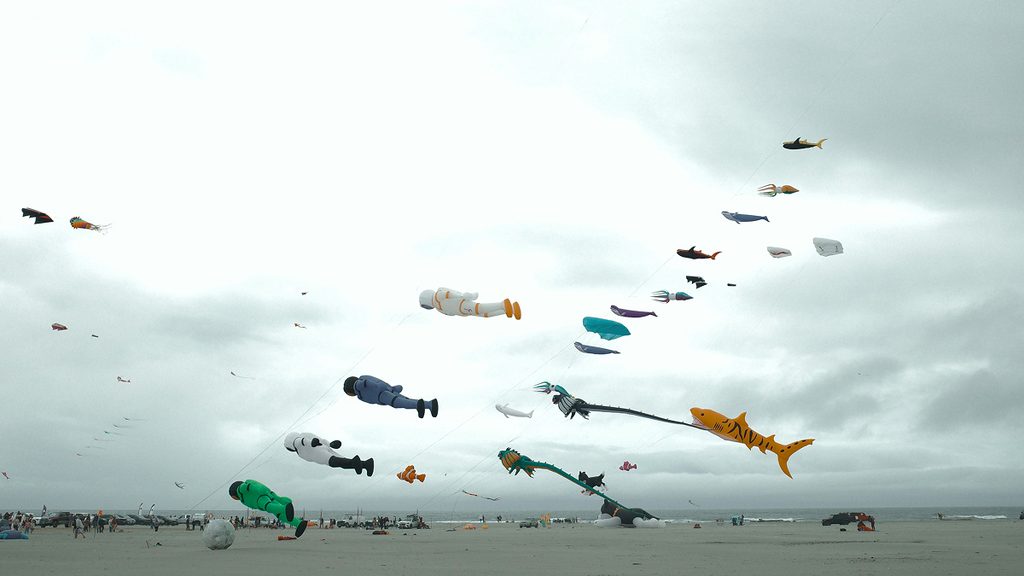
Event announcements have a natural advantage that a lot of corporate press releases lack: they are inherently visual, and promoters who fail to use that advantage are leaving coverage on the table.
Press releases distributed with visual content see up to 9.7 times more views than plain-text releases, and journalists actively prefer pitches that include usable visuals. For a concert, festival, or theatre production announcement, that means a high-resolution artist photo, a venue shot, or a short teaser clip is not decoration; it is a functional part of the pitch that makes an editor’s job easier.
The engagement lift from multimedia is not a marginal effect either. Multimedia press releases can earn up to 50% more engagement than plain-text announcements, and roughly 63% of companies now plan to include photos, video, or graphics as a standard part of every release they send.
Event marketers who are still sending a wall of text with a single low-resolution flyer attached are competing against a rising baseline where visuals are increasingly the expectation, not the exception.
The type of visual should match the moment in the event’s news cycle. For events and trade shows specifically, event photography, highlight reels, and recap videos are particularly effective, since they capture atmosphere and extend engagement well beyond the people who actually attended.
A pre-event release benefits most from artist photography, venue imagery, and a short promotional clip that gives a sense of production scale, while a post-event release benefits from real crowd photography and highlight footage that proves the turnout and energy an outlet’s readers missed. Building a simple, centralized media kit with these assets ready to go, rather than scrambling to find a usable image every time a reporter asks, is one of the lowest-effort, highest-return habits a promotions team can build.

Especially At A Local Level, Build the Relationship Before You Need It
The data is unambiguous about how journalists want to be approached, and it runs directly counter to the mass-blast instinct that a lot of event marketing teams default to under deadline pressure.
83% of journalists prefer to be pitched one-to-one by email rather than through mass distribution, phone calls, or social media messages, and that preference for email has actually strengthened over the past two years, climbing to 96% from 87%.
A promoter sending one thoughtful, tailored email to a beat reporter who has covered similar shows before will consistently outperform the same promoter blasting five hundred generic emails through a distribution platform.
Journalists are also telling researchers, in very specific terms, what separates a pitch worth their time from one that gets deleted. The elements journalists rate most valuable in a pitch are clear relevance, credible sources, original data, and strong visuals, and 78% say a pitch feels genuinely relevant when it connects to something that actually affects their audience or their community, not just their general coverage area.
This is a meaningful distinction for local event promoters in particular: a festival pitch that frames itself around “this is the first time a festival of this scale has come to our region” speaks directly to community relevance in a way that a generic “check out our lineup” pitch never will.
There is also a hard ceiling on how much volume can substitute for targeting. Roughly 40% of journalists now choose their own stories rather than having them assigned by an editor, while only about 3% report having stories assigned to them, and short, relevant, story-driven pitches sent to a carefully selected handful of reporters consistently outperform a spray-and-pray approach sent to hundreds.
The average PR professional now pitches around 31 journalists just to secure a single response, which underscores that quantity without targeting is close to the least efficient strategy available, even though it often feels like the fastest one when a deadline is looming.
AI adoption inside newsrooms has changed the landscape too, though not in the way many marketers assume. 82% of journalists now report using at least one AI tool in their workflow, but the majority are using it to research, gather background, and prepare for stories faster, not to write the finished piece, and they remain highly sensitive to pitches that feel generic or templated as a result.
A promoter who leans too heavily on AI-generated boilerplate for every release risks producing exactly the kind of homogenized copy that a more discerning, AI-literate reporter is now faster at spotting and dismissing.
Event PR Distribution: Wires, Direct Pitching, and Local Media Angles
The choice between a paid newswire and direct outreach is not an either-or decision for most event promoters; it is a question of what each channel is actually good for.
A wire service like PR Newswire or Business Wire is effective for broad visibility, search engine optimization value, and getting the release indexed and searchable, which matters when fans and ticket buyers search the artist or event name directly.
Direct pitching to a specific reporter, by contrast, is what actually produces an original story with a byline, since that outcome depends on relationships and relevance far more than on distribution reach.
Local and regional angles deserve more attention than most touring acts and national promoters give them.
89% of younger event-goers say it matters that an event helps them feel connected to their local community, which means a press release pitched to a hyperlocal outlet or community publication, framed around what the event means for that specific city or neighborhood, often lands better than the same release sent untouched to a national entertainment desk already drowning in tour announcements.
A regional business journal, a city magazine’s events editor, and a neighborhood newsletter each want a slightly different framing of the same underlying facts, and giving each one a tailored angle costs very little extra effort for a meaningfully higher chance of pickup.
Measuring What Actually Matters: Did Your Press Release Get Opened?
Open rate is a useful diagnostic, but it is not the finish line, and promoters who stop tracking there are missing the point of the exercise.
Press releases distributed by email to journalists and media contacts see an average open rate hovering around 25%, which provides a reasonable baseline; rates well above 30% typically indicate the release found a genuinely relevant audience. If a promoter’s open rate sits meaningfully below that baseline, the subject line and the list targeting are the first two places to look before assuming the event itself was the problem.
The metric that actually correlates with business outcomes is coverage and, further downstream, ticket action tied to that coverage. A well-executed press release can deliver a return on investment in the range of 100% to 175% over a 90-day window, and press releases have been shown to increase website traffic by as much as 220% when they successfully drive readers back to a ticketing or event page.
For a promoter running paid and earned media side by side, that traffic lift is worth tracking against actual on-sale conversion, not just against vanity open and click numbers that look good in a report but don’t move inventory.
It is also worth building a feedback loop between what gets covered and what doesn’t, treating each release as a small experiment rather than a one-off task. If a specific angle, like a new-artist reveal or a local-impact framing, consistently outperforms a generic lineup announcement, that pattern should shape how the next twelve months of releases get written.
Promotions teams that track which subject lines got opens, which reporters actually responded, and which quotes got used verbatim in published coverage build an internal playbook that gets more effective with every event cycle, which is a far more durable asset than any single successful pitch.

An Event Press Release Is Smart Content and Can Help Sell More Tickets
Getting a press release opened in 2026 is not about giving them a journalist a reason to click.
Event promoters who lead with a genuinely newsworthy angle, write a subject line under ten words, keep the body between 300 and 500 words with the actual news in the first paragraph, attach real visuals, and pitch a short, targeted list of relevant reporters one at a time are working with the grain of how journalists actually operate rather than against it.
The events industry has an advantage here that a lot of other sectors don’t, since a great show, a can’t-miss lineup, or a milestone sellout is inherently more interesting than another product update or corporate reorg.
The job of the press release is simply to get out of that story’s way and present it clearly, quickly, and with the details a journalist needs to run with it. Do that consistently, and the open rate stops being the hard part.