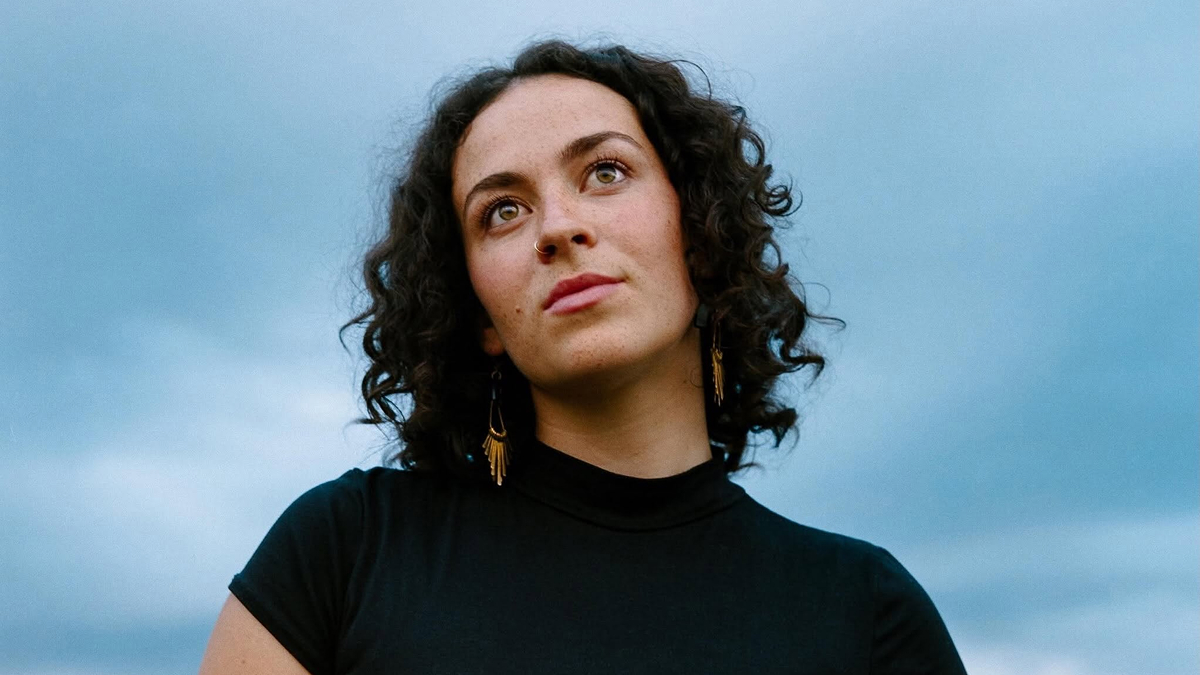
The Gatineau singer-songwriter made her name writing about other people, a river, and the weight of hard years. On her third album, she turns toward joy, and toward herself.
Mia Kelly talks the way she writes: quickly, warmly, and without much wasted motion.
At twenty-three, she has already assembled a résumé most songwriters would need a decade to build: an EP recorded as a high school assignment, three full-length albums in under four years, two Canadian Folk Music Awards, a place on Team Canada at the Jeux de la Francophonie, and a first tour of Australia.
What she lacked, until now, was a record written squarely from her own point of view.
Big Time Roller Coaster Feeling, released May 22, 2026, is the first of her albums built that way. It is also, by her own account, her happiest, and it marks a deliberate turn away from the slow-burning, melancholy folk that first made her name.
The path to that record runs through musical theatre, a youth program at Ottawa Bluesfest, a river she surfs year-round, two albums made in a producer’s home studio outside Ottawa, and a van parked beside a Laurentian recording studio during a snowstorm. Together they describe an artist who treats every stage, and every collaborator, as a classroom.
A Seven-Year-Old With Too Much Energy, On Stage
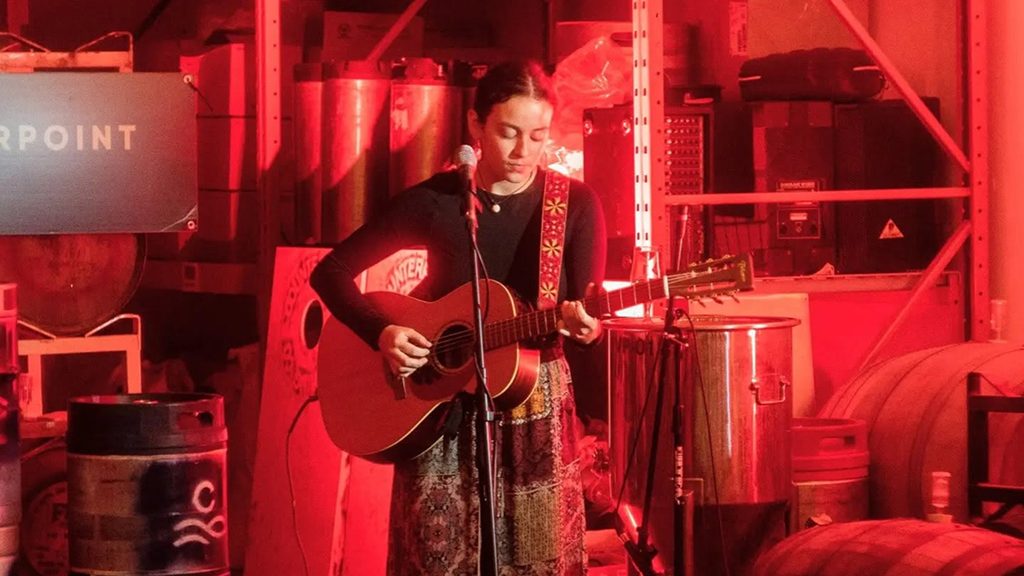
Mai Kelly describes her younger self as an overly energetic seven-year-old, and her parents’ answer to all that energy was musical theatre.
As a teenager she took roles in stage productions of Oliver Twist, Anne of Green Gables, and Cats, and she still remembers the moment she fell for performing: singing for an audience for the first time. Things snowballed from there. She took music lessons, then was encouraged to join community programs run by Ottawa Bluesfest, in particular Be In the Band, a youth program.
She grew up in Gatineau, directly across the river from Ottawa, in a family that moves easily between languages. Her father represents the French-speaking side of the family, and Kelly sings in French and English without treating it as a decision. She has said it simply isn’t a conscious choice.
The region shaped her in other ways, too. The Ottawa River runs steps from her home. She learned to swim in it, picnicked beside it with close friends, and would eventually build much of her repertoire around it.
Her first release was never meant as a career move. She recorded the EP Cardboard Box as a class assignment while still in high school and put it out independently in 2018, though some promotional material dates it to 2019. Even on that small first record, the mix that still defines her was already in place: folk storytelling, rock energy, and the weight of the blues.
The EP found listeners fast. The Ottawa Citizen named her one of the city’s top ten local artists to watch, and by the time she was nineteen she had been featured by Châtelaine, CTV Morning Live, and CBC Ottawa Morning.
Kelly Symes of Bluesfest later called her one of Ottawa’s most promising emerging artists, a notable endorsement from the organization that had helped raise her.
The River That Became Her First Signature Song
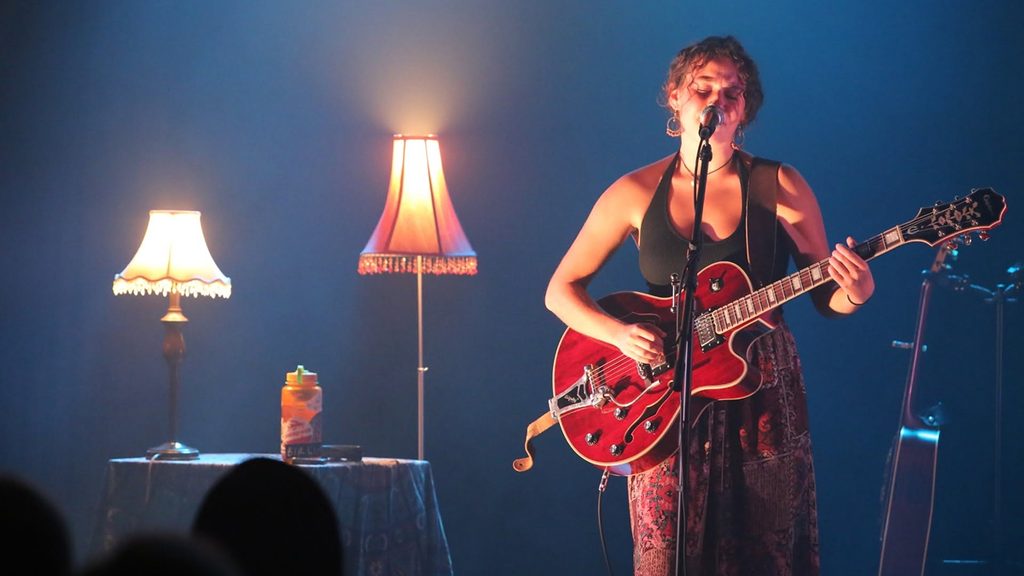
During the COVID-19 pandemic, Kelly found solace in river surfing, the lesser-known cousin of ocean surfing in which riders carve standing waves on moving water. She took it up on the Ottawa River and practised daily, using it as an outlet for frustration and for the low moods of lockdown.
Partway through that routine, inspiration struck, and she wrote Kitchissippi, named for the river’s original Algonquin name. The recording even includes the sound of the river trickling past, a sound she says she finds comforting every single day. She has described the river as “a place of healing and comfort in a loud, crazy world.”
The song’s video was a family affair. Her father, Randy Kelly, directed it with Canadian Screen Award-nominated cinematographer Patrick Kaplin, shooting over two days of good weather and cutting in slow-motion footage of Kelly surfing. It premiered in August 2022 in partnership with Ottawa Riverkeeper, and Kelly pledged all proceeds from its Bandcamp sales to river-preservation work.
The relationship has lasted. In August 2025 she returned to the Riverkeeper’s River House for a night of songs and conversation about her bond with the water, part of the organization’s summer speaker series.
The river was never a hobby that stayed separate from the music. Performing in 2023, she told one festival crowd she had come to depend on it for her sanity, and that she surfs standing waves all year round. Fans in other cities respond to it, too. Kelly has said that when she explains these songs on stage, listeners from far outside the Ottawa Valley connect with them on an emotional level, proof that very local stories can travel.
Kitchissippi arrived just ahead of the debut album, Garden Through the War, released August 26, 2022, when Kelly was nineteen.
Ottawa songwriter and producer Jim Bryson, whose credits her bios link to Kathleen Edwards and The Tragically Hip, produced and mixed it at his Fixed Hinge Studio in Stittsville, Ontario. Grammy-nominated Phillip Shaw Bova mastered it. Drummer Olivier Fairfield, who has played with Leif Vollebekk and Andy Shauf, joined Kelly, who played guitar and piano.
The record explores resilience and growth in the aftermath of hardship, and its title carries that thesis: something cultivated in difficult ground. Americana UK singled out the title track as a gorgeously melodic example of vulnerable storytelling.
The album drew recognition from the SOCAN Foundation, and, according to her official biography, a nomination for Album of the Year at the 2023 Folk Music Awards.
Her French-language song Morphée is also on that record.
Two Folk Awards And A Trip To Kinshasa
Recognition came in clusters.
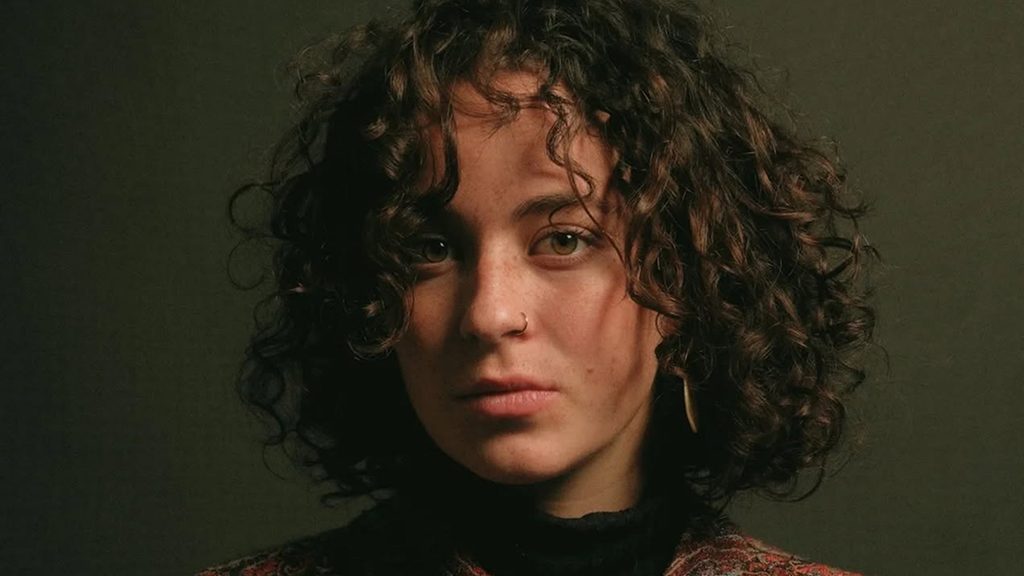
Culture Outaouais named her its Emerging Artist of the Year, and in 2023 Kelly joined the Winnipeg Folk Festival’s Young Performers Program. That summer she traveled to Kinshasa, in the Democratic Republic of the Congo, for the ninth Jeux de la Francophonie, held July 28 to August 6.
The Games bring together roughly three thousand artists and athletes between eighteen and thirty-five from across the French-speaking world. Canadian artists are pre-selected through a national competition run by the Canada Council for the Arts, then confirmed by an international jury. Kelly competed in the song category as one of fourteen artists on Team Canada, performing in a cultural lineup that also included a storyteller and a painter.
The trip mattered beyond the trophy case. It put her French songs, not just her English ones, in front of an international francophone audience, and it did so before the national folk awards had weighed in at all.
They did in the spring of 2024. At that year’s Canadian Folk Music Awards, Kelly won both New/Emerging Artist of the Year and Young Performer of the Year, two wins for the debut album. Americana UK, reporting on a new single shortly afterward, noted she had “just picked up” the pair.
That July, she played the River Stage at Ottawa Bluesfest on its thirtieth edition, taking the stage at 8 p.m. ahead of Noah Cyrus. Her set drew from Garden Through the War and from a brand-new single, Meaning Well.
The Ottawa Citizen’s Lynn Saxberg wrote a story tracing Kelly’s path from Be In the Band to the Cyrus bill, a full circle for an artist who came up through the festival’s own youth program. Allison Russell, who shared a bill with Kelly, has said it was a joy to hear her exquisite music for the first time. The Ottawa Citizen has praised a “stunningly expressive voice.”
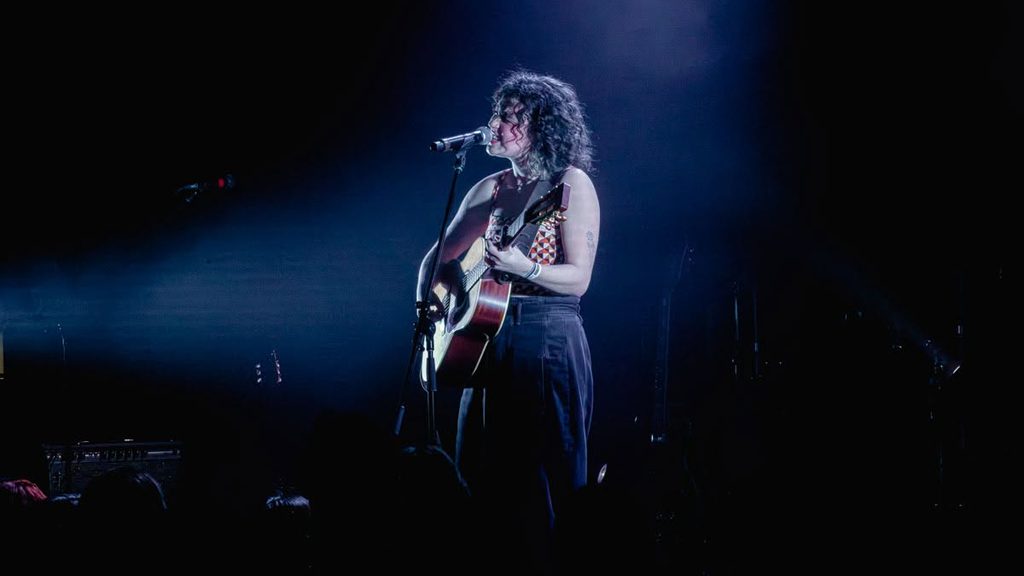
Honesty As A Songwriting Method: The Second Album
Kelly returned to Fixed Hinge for her second album, To Be Clear, released October 4, 2024.
Bryson again co-produced, and Kelly credits him as a guiding light through the process. The two handled most of the instrumentation themselves, joined by drummers Dani Nash (Sarah Harmer, July Talk) and Olivier Fairfield, horn player Brian Sanderson, Nick Loyer, and backing vocalist Allysann Foehring.
The album blurs intimate memoir with semi-fictional narrative, and it travels widely across styles, from soft ballads to rock and blues, in both English and French. Its through-line is vulnerability.
The opener, Bonefish Boys, is a bluesy ballad about a man Kelly met while travelling, a former seadog who had served in the British navy. She and Bryson built its atmosphere from unusual textures: güiros, mellotron, and a rusted steel drum, kept sparse to leave room for the story. Its video, again directed by Randy Kelly, assembled a cast that included Bryson himself, Norm Kelly, and a dog named Björn.
Watercolor Girl grew out of a line from Kelly’s grandmother about a fear of starting to cry and never stopping, and the album also takes on heavier subjects: Rideau tombe, the second of its two French songs, confronts domestic abuse, while Si j’étais franche is the first.
The record’s emotional center is Meaning Well. The song is a soft, introspective acoustic number about a hard decision: ending a relationship for logistical reasons. Kelly has called it probably the hardest song she has ever written, because it was so raw and honest. Its opening idea comes from her mother’s advice that being clear is a way of being kind, which also gave the album its title.
Touring materials for her shows with British singer-songwriter Blair Dunlop credit the pair as co-writers. Kelly, who laughs about how many songs she got out of that breakup, says an album about vulnerability only works if the writing is vulnerable too.
The water kept running through the record. The video for Remedy River features Kelly river surfing, and she has said the song’s imagery comes from the waterways she visits and rides.
The critical response stretched across three award cycles. Meaning Well earned a Single of the Year nomination at the 2025 Canadian Folk Music Awards, held in the Ottawa-Gatineau area, where Kelly was back on home turf. At the 2025 Capital Music Awards on May 22, she received four nominations and won two: Single of the Year for Bonefish Boys, and Video of the Year for Si j’étais franche.
The album then earned two 2026 Canadian Folk Music Award nominations, for Contemporary Singer of the Year and English Songwriter of the Year. Julian Taylor, with whom Kelly has shared stages, and Terra Spencer took those prizes at the April 2026 ceremony in Calgary.
Being nominated three years running, even without a win, is its own kind of milestone for an artist this young.
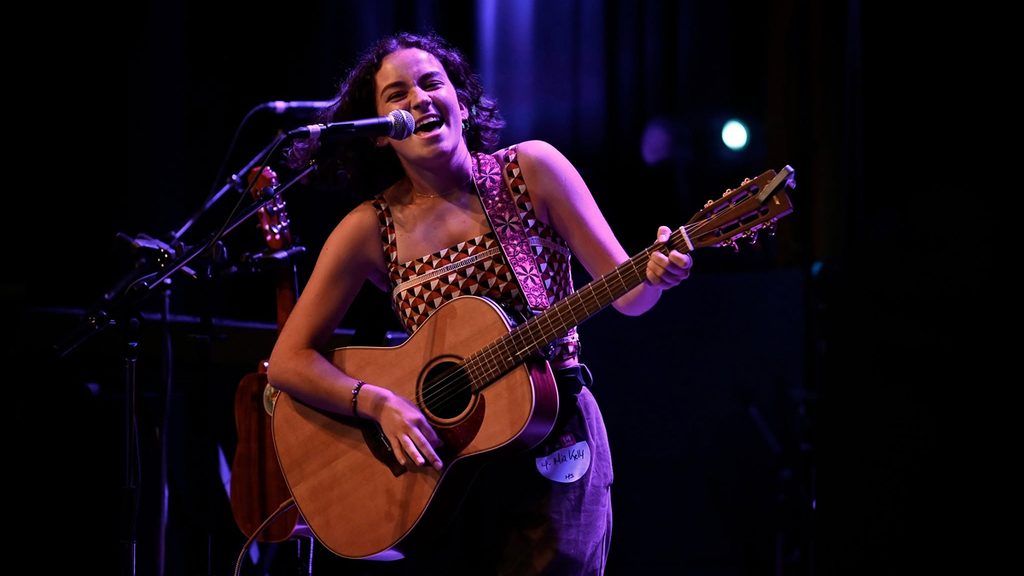
Blair Dunlop, John Smith, And The Transatlantic Years
The To Be Clear cycle turned Kelly into an international touring act.
The most important partnership of that period began in Kansas City in 2023, when she met British singer-songwriter Blair Dunlop, a winner of a BBC Folk Award, and the two felt an instant connection through songwriting. In February 2025 he invited her as special guest on five intimate shows in the United Kingdom, and she returned the favour with a run of Ontario dates a few weeks later.
They co-wrote Sea to the Moon during one of those tours, a folk-pop ballad about unrequited love that Kelly describes as feeling like a conversation. She recorded it with producer Connor Seidel, with string arrangements by Vincent Ott, subtle percussion from Fairfield, and Dunlop’s harmonies.
It was released September 10, 2025, and Kelly and Dunlop toured Western Canada, Ontario, and Quebec beginning September 24. At the end of October, she crossed the Atlantic again to support the English singer-songwriter John Smith.
It was not her first British run. In June 2024 she opened for the sister duo Charm of Finches in Wales, and Americana UK, which covered the Bonefish Boys single, has called her one to watch.
Her festival résumé reads like a map of the folk world. In Canada she has played Ottawa Bluesfest, CityFolk, Mariposa Folk Festival, Summerfolk, the Ontario Festival of Small Halls, Live from the Rock, Festival des Montgolfières, the Lunenburg Folk Harbour Festival, and the Winnipeg Folk Festival. Internationally she has performed at Tallinn Music Week in Estonia and at Folk Alliance International.
She has also shared stages with Basia Bulat, Aysanabee, Julian Taylor, The Franklin Electric, Daniel Champagne, Jeremie Albino, Lloyd Spiegel, Bobby Bazini, Good Lovelies, and Kim Churchill, a long list for someone who had not yet turned twenty-five.
That range shows in the press file. French-language outlets such as La Presse, Le Droit, Châtelaine, and Radio-Canada have covered her alongside English ones, including the Ottawa Citizen, Roots Music Canada, Americana UK, and CBC. SiriusXM’s North Americana channel and CKUA have carried her songs to radio audiences far from any festival field.
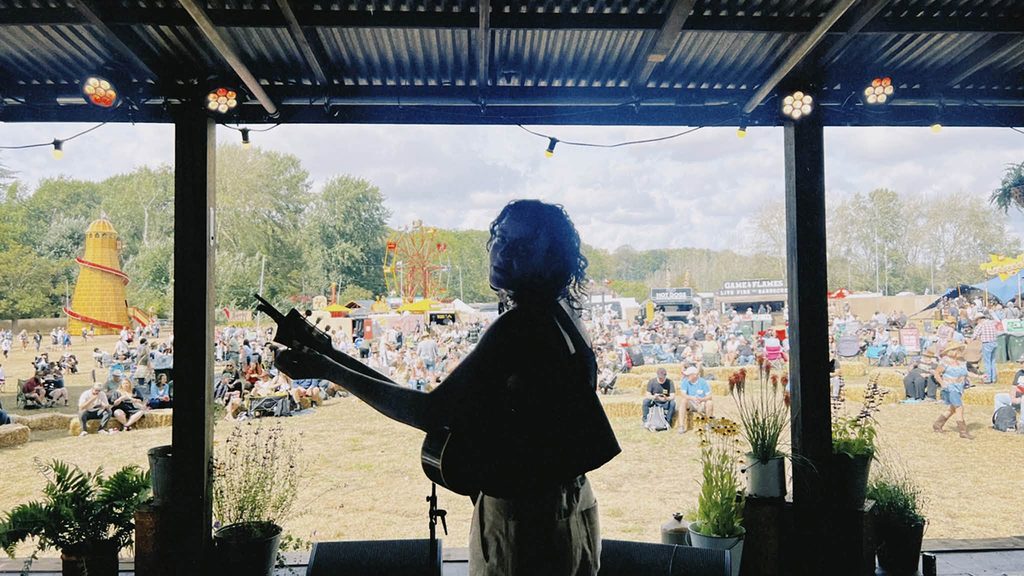
Writing Other People’s Stories To Find Her Own
Kelly’s method has long set her apart from the confessional norm. Rather than writing directly about herself, she adapted the stories of people she had connected with, then built characters around them. The result is a catalogue full of lovers, travellers, river people, and a former seadog.
She has been unusually candid about why. “I’ve always been an emotional sponge,” she told an interviewer this spring. When something emotional is happening to people she loves, it takes up space in her head and heart, so when she began songwriting she wrote about the feelings others were sharing with her.
Writing from someone else’s perspective felt safer, she explained, because it was less vulnerable. Gradually, as she grew more comfortable with songwriting and with herself, she discovered that telling other people’s stories had been teaching her to tell her own.
It is an unusual path. Many young songwriters begin with themselves because their own lives are all they know. Kelly did the opposite, and her third album is the result of that long apprenticeship.
The habit of listening shows on stage too. She says she explains her songs a lot on stage, introducing each by way of the person or place that inspired it.
At one 2023 festival set, she paused to reflect on the long tradition of murder ballads and how many of them end with a woman at the bottom of a river, a history she says she only learned about earlier that year and found horrifying. Away from the stage she journals and reads. She says she can be driving when a song hits and have to pull over and take out the guitar.
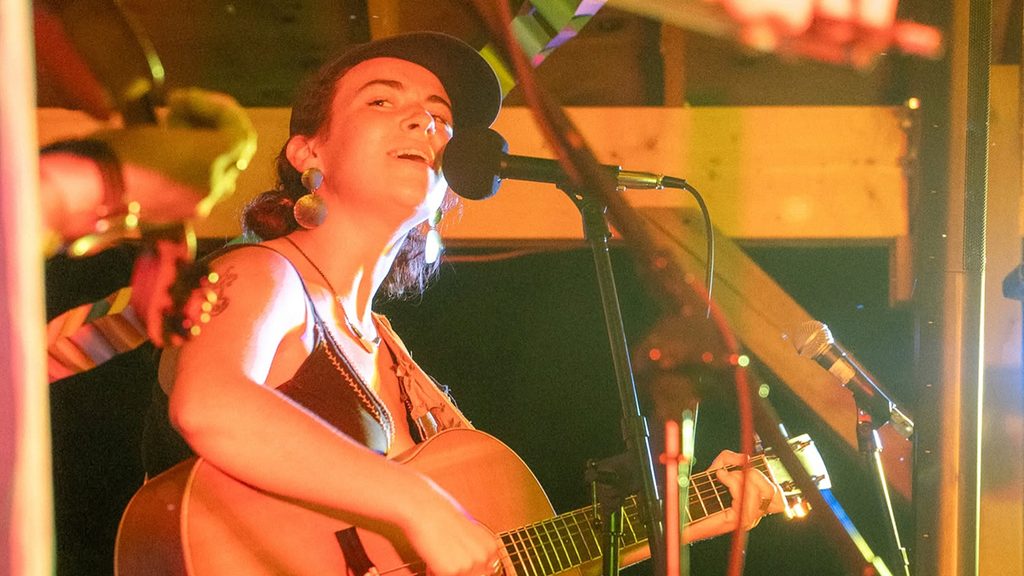
Two Languages And One Songbook
Bilingualism is not a marketing angle for Kelly. It is simply how she lives. Her father is the French side of her family, and the two languages feel different in her hands: French, she says, is more floral and has far more words, but both come from the same place.
Listeners tell her she sings differently in French, with a different delivery, something she says she had not noticed until it was pointed out.
She has made a practice of putting at least one or two French songs on every album. Morphée appeared on the debut. Si j’étais franche and Rideau tombe shared the second record, and the video for the first of them won a Capital Music Award. On the new album, Le vent qui m’emménera is the French presence, a piano-and-voice piece that serves as a change of pace.
She has also said that if something major happened in her life in French, such as falling in love in French, she would happily make an entire French-language record. For now, the language remains a thread rather than the whole garment. It is part of who she is, she says, and so it belongs on the page.
That approach has paid off beyond Quebec. The Jeux de la Francophonie put her on an international stage, and the Capital Music Award for Si j’étais franche proved the French material can win on its own terms.
A Van, A Snowstorm, And A Treehouse Studio
For her third album Kelly changed producers.
After two records with Bryson at Fixed Hinge, she wanted to hear what a different set of ears would do with the new songs. She chose Connor Seidel, a Montreal-based producer whose credits include Charlotte Cardin, Half Moon Run, and Leif Vollebekk. She had wanted to work with him for a long time, and says he exceeded her expectations.
The sessions took place at Seidel’s Treehouse studio in Sainte-Adèle, in the Laurentians. As snowstorms battered the area, Kelly lived out of her van steps from the door, embracing the cozy isolation while bringing the record to life. Out of that setup came what she calls her most joyful album to date, and in another interview, the happiest record she has put out so far.
Introducing you to Big Time Roller Coaster Feeling.
The joy is not a pose. Kelly says the title song is about falling in love, or having a big crush, the moment your stomach drops when someone looks at you. The album opens with Holy Grail / Big Magic, inspired by the magic of making art, and closes with Stand-Up Woman, a song about female strength and resilience backed by a string quartet.
Between them sit the tender Salish Sea and Blind Horse, a pointed reflection on privilege and the rigged systems people mistake for fairness. She wrote all but two of the songs alone. One exception is the Dunlop co-write Sea to the Moon.
The lead song, Coin in the Cake, draws on a family tradition: Kelly’s grandmother wraps coins in parchment paper and hides them in birthday cakes, and whoever finds one is the lucky one.
The song is a love letter to friends, family, and community, and Kelly says it feels like her own version of My Favorite Things from The Sound of Music. The arrangement took several attempts. She and Seidel tried different directions before settling on a sound she compares to someone running through a field with arms wide open.
The record’s other major collaboration came together almost by accident. Time’s Easy to Blame features Australian singer-songwriter Kim Churchill, whose music Kelly had admired for more than a decade.
She had tried to record the song three times over the years. Seidel took one listen and recognized a happy, catchy pop song, and Churchill, who lives in Australia, happened to have a Montreal session booked with Seidel at just the right moment. It became a reviewer’s pick for best track on the album.
That reviewer, writing for Next Mag, gave the album four out of five and called it a subtle reinvention, noting that it keeps the acoustic heart of her earlier work while adding string-based arrangements and a rollicking country-flavoured title track.
Kelly says she wanted to capture the gratitude, love, luck, and spontaneity she felt that her first two records, both heavy topically, had left out.
Testing The New Songs On The Road
Kelly spent early 2026 introducing the album in two hemispheres.
She made her first tour of Australia, with festival slots announced for the Nannup Music Festival, Port Fairy Folk Festival, and Blue Mountains Music Festival, then returned to Canada for roughly seven weeks as special guest on Kim Churchill’s spring tour.
Those support slots became a laboratory. With about thirty minutes a night, she could compress the many facets of her music: a French song, the bluesier material, the vulnerable songs, and the happy ones.
She calls support shows a little testing tray, a way to preview a new sound without the stress of a headline set, and says audiences were attentive.
The more upbeat songs, which she describes as accessible and ear-hooky, helped win over listeners who had never heard her.
It also changes her shows. Earlier albums created the kind of atmosphere where an audience holds up phone lights and shares quiet tears. The new songs invite a more danceable energy, and Kelly says the contrast keeps the show dynamic, letting her pair the vulnerable songs with uplifting ones.
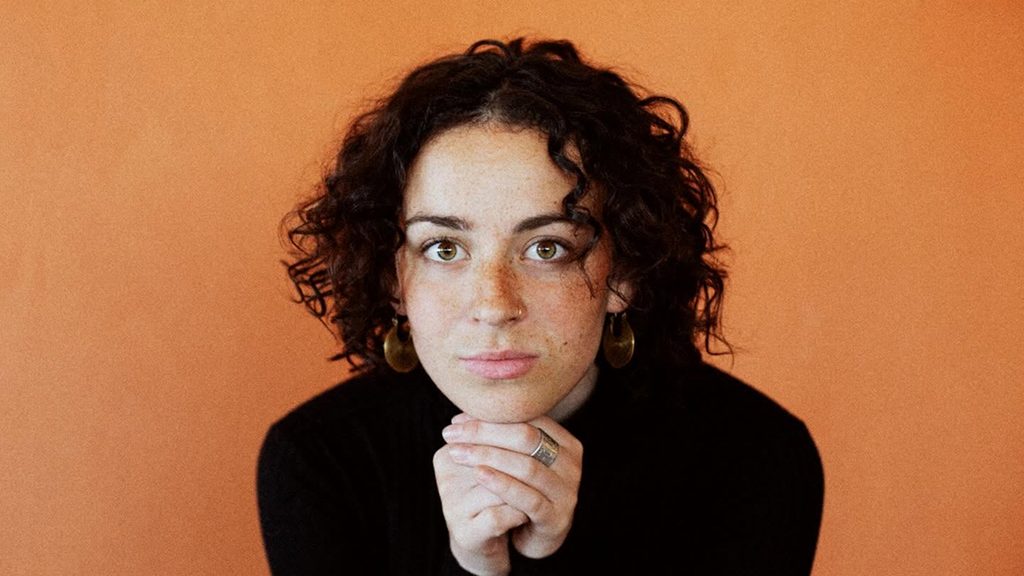
Get Your Tickets to Mia Kelly at the Broom Factory in Kingston on Nov. 6
Kelly brings the new songs to Kingston on Friday, Nov. 6, at the Broom Factory, 305 Rideau Street.
KPP Concerts presents the show, which starts at 7:30 p.m. and is seated, licensed, and all ages. Toronto harmony duo Basset, made up of Sam Clark and Yasmine Shelton, opens. Tickets are $22.50 through Ticketscene.
A seated room suits her material. She moves between English and French, between the vulnerable songs and the uplifting ones, and she explains each song from the stage by way of the person or place behind it. Audiences can reasonably expect music from Big Time Roller Coaster Feeling alongside favourites such as Meaning Well and Kitchissippi, though no setlist has been announced.